

|
시장보고서
상품코드
2100270
사이버 보안 컨설팅 시장 : 시장 점유율 분석, 업계 동향 및 통계, 성장 예측(2026-2031년)Cybersecurity Consulting - Market Share Analysis, Industry Trends & Statistics, Growth Forecasts (2026 - 2031) |
||||||
 Mordor Intelligence
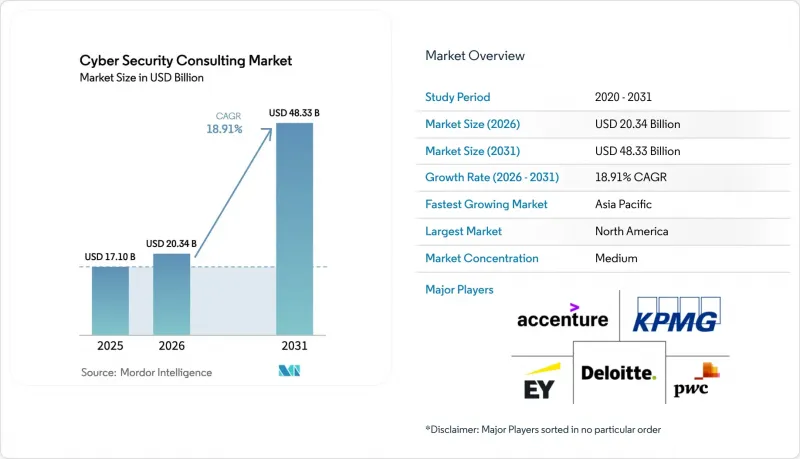
Mordor Intelligence에 의하면, 사이버 보안 컨설팅 시장 규모는 2025년에 171억 달러로 평가되었고, 2026년 203억 4,000만 달러에서 2031년까지 483억 3,000만 달러에 이를 것으로 예측되며, 예측 기간(2026-2031년) CAGR은 18.91%를 나타낼 전망입니다.
본 보고서는 보안 유형별(네트워크 보안, 엔드포인트 보안 등), 서비스 유형별(위험 평가·관리, 규정 준수·감사 등), 계약 형태별(프로젝트 기반 등), 조직 규모별(대기업 및 중소기업), 업종별(헬스케어 및 생명과학 등), 그리고 지역별로 분류되어 있습니다. 시장 전망은 금액(달러)으로 표시되어 있습니다.
세계의 사이버 보안 컨설팅 시장 동향 및 인사이트
다각적인 공격의 빈도와 고도화 추세
2024년에는 랜섬웨어, 공급망 공격 및 협박 캠페인의 건수와 복잡성이 폭발적으로 증가했습니다. 베라이즌(Verizon)의 보고서에 따르면, 취약점을 악용한 침해 사고는 180% 증가했으며, 기록된 전체 사고 중 랜섬웨어가 32%를 차지했습니다. 전 세계 평균 잠복 기간은 16일에서 10일로 단축되었으며, 기업들은 감지부터 봉쇄까지의 주기를 단축할 수 있는 연중무휴 24시간 체제의 위협 헌팅 파트너를 확보해야만 하는 상황에 처해 있습니다. 피해자의 절반 이상은 여전히 제3자를 통해 사고를 알게 되고 있어, 외부 자문에 대한 수요가 더욱 뒷받침되고 있습니다. 공격 측과 방어 측 모두에서 AI를 활용한 도구가 도입됨에 따라, 사내 팀만으로는 대응하기 어려울 정도의 복잡성이 증가하고 있습니다. 그 결과, 조직들이 포렌식 조사, 위기 관리 커뮤니케이션, 규제 당국에 대한 보고를 포함한 사고 대응에 대한 정액제 계약을 요구하게 되면서 사이버 보안 컨설팅 시장이 확대되었습니다.
전 세계적 및 산업별 규정 준수 요건의 강화
미국에 상장된 기업은 2023년 9월 시행된 SEC(미국 증권거래위원회) 규정에 따라 중대한 사이버 사고를 4영업일 이내에 보고해야 할 의무가 있습니다. 또한, 상장 기업은 전 세계 250개가 넘는 개인정보 보호 관련 법규를 준수해야 하며, TSA(미국 교통안전청)가 파이프라인 및 철도 사업자를 대상으로 제안한 규정의 시행에는 향후 10년간 22억 달러의 비용이 소요될 것으로 예측됩니다. 유럽에서는 ‘사이버 유럽 2024’ 훈련에서 5,000명의 실무자가 동원되어 국경을 초월한 대응 태세가 검증되었습니다. 이는 규제 당국이 책상 위 훈련을 제도화하고 있음을 여실히 보여줍니다. 이러한 중복되는 규제 요건으로 인해 컨설팅 대상은 개인정보 보호에 그치지 않고 수출 관리, 강제 노동 규정 준수, 공급망 건전성까지 확대되고 있으며, 이는 사이버 보안 컨설팅 시장을 더욱 성장시키고 있습니다.
인증을 받은 사이버 보안 인력의 심각한 부족이 프로젝트 비용을 상승시키고 있습니다.
ISC2의 2024년 인력 조사에 따르면, 전 세계 인력 부족 규모는 480만 명에 달하며, 필요한 직위의 불과 72%만 채워진 상태입니다. IBM은 이 비용을 정량화한 결과, 인력 부족을 겪는 기업은 인력이 충실한 동종 업계 경쟁사에 비해 정보 유출로 인한 평균 손실액이 456만 달러에 달하는 것으로 밝혀졌습니다. 컨설팅 기업들은 희소한 인증 자격을 보유한 인재에게 고액의 급여를 지급하고 있으며, 그 부담은 결국 고객에게 전가되고 있지만, 그럼에도 불구하고 수요는 공급을 상회하여 프로젝트 처리 능력을 제한하고 사이버 보안 컨설팅 시장 전체의 성장을 둔화시키고 있습니다.
부문 분석
클라우드 보안 관련 계약은 연평균 19.85%의 성장이 예상되며, 이는 사이버 보안 컨설팅 시장의 하위 부문 중 가장 높은 성장률입니다. 이는 설정 오류가 있는 ID나 서버리스 아키텍처가 현재 보안 침해 비율을 증가시키고 있기 때문입니다. 네트워크 보안은 2025년에도 여전히 사이버 보안 컨설팅 시장의 23.80%를 차지하고 있지만, 제로 트러스트 정책의 보급에 따라 경계 방어에 대한 비중은 점차 줄어들고 있습니다. 엔드포인트 보안은 원격 근무의 정착으로 혜택을 보고 있는 반면, DevSecOps가 테스트를 CI/CD 파이프라인에 통합함에 따라 애플리케이션 보안의 중요성이 높아지고 있습니다. OT 네트워크와 IT의 융합이 진행되고 안전성의 중요성이 커짐에 따라, 인프라 및 ICS(산업 제어 시스템)에 관한 컨설팅도 심화되고 있습니다. ID 및 액세스 관리 도입은 착실히 진행되고 있으며, NIST의 PQC(양자 내성 암호화) 기준 제정에 따라 양자 내성 대책이 프리미엄 자문 분야로 부상하고 있습니다. 전반적으로, 이러한 분야 전반에 걸친 다각화가 사이버 보안 컨설팅 시장의 회복력을 높이고 있습니다.
클라우드 보안 분야의 사이버 보안 컨설팅 시장은 SaaS 도입이 규제가 엄격한 산업에 확산됨에 따라 2030년까지 3배 이상 확대될 전망입니다. ERP 워크로드의 플랫폼 이전을 추진하는 조직은 섀도 관리자 계정, 보안 조치가 미흡한 API, 그리고 데이터 소재지와 관련된 규정 준수 문제에 직면해 있습니다. 컨설턴트는 클라우드 네이티브 보안 태세 관리를 통합하고, 인프라-어-코드(IaC) 스캔을 자동화하며, 최소 권한 ID 모델을 설계합니다. 한편, 양자 컴퓨팅 대비에 관한 컨설팅에서는 알고리즘의 민첩성, 암호자산 인벤토리 및 전환 일정이 다루어지고 있습니다. 레거시 환경 전반에 걸쳐 네트워크 마이크로 세분화은 여전히 필수적이지만, 현재는 방화벽 단독이 아닌 제로 트러스트 브로커와 통합되는 추세입니다. 5G 및 엣지 IoT의 보급이 확대됨에 따라 ICS/OT 감사가 활성화되고 있으며, 제조업 및 공공 서비스 분야에서 새로운 수요의 물결을 일으키고 있습니다. 기존의 경계 방어와 차세대 클라우드 제어의 결합을 통해 기업의 성숙도 수준에 관계없이 사이버 보안 컨설팅 시장은 견조한 성장을 유지하고 있습니다.
위험 평가는 여전히 핵심을 이루고 있으며, 2025년 사이버 보안 컨설팅 시장 지출의 30.70%를 차지했습니다. 한편, 관리형 보안 서비스는 19.10%의 속도로 확대되고 있으며, 인력 부족 속에서 지속적인 모니터링을 원하는 구매자의 요구에 부응하고 있습니다. 개인정보 보호 규제가 증가함에 따라 규정 준수 및 감사 분야는 장기적인 성장세를 유지하고 있으며, 공격자의 수법이 교묘해짐에 따라 위협 인텔리전스 및 포렌식 관련 업무도 확대되고 있습니다. 사고 대응 및 복원력 계획은 공격의 잠복 시간이 단축됨에 따라 예산상 우선순위가 높아지고 있습니다. 사이버 보험과 ESG 보고를 융합한 자문 서비스는 아직 시작 단계이지만, 보험 인수사 및 신용평가 기관이 보안 지표를 도입함에 따라 급증할 것으로 예측됩니다.
더 자세히 분석해 보면, 사이버 보안 컨설팅 시장에서 MSS(관리형 보안 서비스)의 성장세가 기존의 프로젝트 기반 업무를 앞지르고 있음을 알 수 있습니다. 고객들은 전문 SOC(보안 운영 센터)에 아웃소싱함으로써 감지까지 걸리는 평균 시간(MTD)이 40% 단축되었다고 밝혔습니다. 공급업체들은 SOAR(보안 운영·분석·대응) 자동화, 엄선된 인텔리전스 피드, 독자적인 AI 분석 기능을 통합하고 있으며, 그 결과 진입 장벽이 높아지고 있습니다. 위험 평가와 관련하여, 조사 기법이 NIST CSF 2.0 및 ISO/IEC 27001의 최신 개정판을 점점 더 준수하게 되어 분석의 심도와 재현성이 향상되고 있습니다. 규정 준수 감사의 대상은 현재 CCPA, CPRA, GDPR(EU 개인정보보호규정), 슈렘스 II의 데이터 이전 조항은 물론, 새로운 AI 관련 법규까지 확대되고 있습니다. 디지털 포렌식은 모바일 악성코드의 리버스 엔지니어링부터 블록체인을 활용한 증거 보존에 이르기까지 그 범위를 확대되고 있습니다. 이러한 서비스들이 결합되어 수익원의 다각화를 가져오며, 사이버 보안 컨설팅 시장이 경기 변동에 미치는 영향을 완화하고 있습니다.
지역별 분석
북미는 SEC의 공시 규정, 18개 주의 개인정보 보호법, 그리고 사이버 보험의 높은 보급률을 배경으로 2025년 매출의 37.50%를 차지했습니다. 캐나다의 ‘국가 사이버 위협 평가’에서는 랜섬웨어와 국가가 개입한 스파이 활동이 가장 큰 위험 요인으로 지적되어, 기업들은 자문 로드맵에 대한 투자를 서둘러야 하는 상황입니다. 멕시코에서는 USMCA(미국·멕시코·캐나다 협정)에 따른 무역 감시 및 국경을 넘는 데이터 전송에 관한 감사가 증가함에 따라 수요가 높아지고 있어, 사이버 보안 컨설팅 시장을 더욱 확대시키고 있습니다.
아시아태평양은 연평균 성장률(CAGR) 19.35%를 기록하며 가장 빠르게 성장하는 지역입니다. 중국에서는 데이터 현지화 규제가 시행되고 있는 반면, 일본에서는 양자 내성 암호화 시범 사업에 자금이 투입되고 있습니다. 인도의 빅4 계열사에서는 자문 매출이 25% 증가했으며, 3,300명의 파트너가 합류했습니다. 이 매출의 절반 이상은 기술 및 사이버 관련 계약에서 비롯된 것입니다. 한국 시장은 SOC 자동화를 중심으로 통합되고 있으며, 호주는 중요 인프라 개혁을 추진하고 있습니다. 이러한 요인들이 맞물려 사이버 보안 컨설팅 시장에서 아시아태평양의 점유율을 뒷받침하고 있습니다.
유럽에서는 GDPR(EU 개인정보보호규정) 및 새로운 NIS2 의무화를 배경으로 꾸준한 성장이 나타나고 있습니다. 독일은 산업용 SOC 인증을 의무화하고, 영국은 브렉시트 이후 DPIA 절차를 정교화하며, 프랑스는 주권 클라우드 및 암호화 서비스에 투자하고 있습니다. ENISA가 주최하는 ‘Cyber Europe’ 훈련에서는 준비 상황 평가가 제도화되어 있으며, 훈련 결과 해석을 위해서는 컨설팅 지원이 필요합니다. 러시아는 제재로 인한 고립화에 따라 국내 컨설팅 공급이 필요해지면서 경쟁 환경이 재편되고 있습니다. 법제도의 다양성으로 인해 국경을 넘어 사업을 전개하는 기업은 여러 관할 구역에 걸친 프로그램을 총괄해야 하며, 이로 인해 지역 사이버 보안 컨설팅 시장이 확대되고 있습니다.
기타 혜택 :
- 엑셀 형식 시장 예측(ME) 시트
- 3개월간의 애널리스트 지원
자주 묻는 질문
목차
제1장 서론
제2장 조사 방법
제3장 주요 요약
제4장 시장 구도
제5장 시장 규모 및 성장 예측
제6장 경쟁 구도
제7장 시장 기회 및 향후 전망
AJY 26.08.07According to Mordor Intelligence, the cybersecurity consulting market size was valued at USD 17.10 billion in 2025 and estimated to grow from USD 20.34 billion in 2026 to reach USD 48.33 billion by 2031, at a CAGR of 18.91% during the forecast period (2026-2031).
This report is Segmented by Security Type (Network Security, Endpoint Security, and More), Service Type (Risk Assessment and Management, Compliance and Audit, and More), Engagement Model (Project-Based, and More), Organization Size (Large Enterprises and SMEs), Industry Vertical (Healthcare and Life Sciences, and More), and by Geography. The Market Forecasts are Provided in Terms of Value (USD).
Global Cybersecurity Consulting Market Trends and Insights
Rising frequency and sophistication of multi-vector attacks
The volume and complexity of ransomware, supply-chain, and extortion campaigns exploded in 2024, with Verizon logging a 180% rise in vulnerability-led breaches and ransomware representing 32% of all recorded incidents. Median global dwell time tightened to 10 days, down from 16, forcing companies to source 24/7 threat-hunting partners capable of compressing detection-to-containment cycles. Over half of the victims still learn of incidents from third parties, further validating the external advisory demand. AI-enabled tooling on both attacker and defender sides adds complexity that few in-house teams can manage. Consequently, the Cybersecurity Consulting Market grew as organizations sought incident response retainers that include forensics, crisis communications and regulatory reporting.
Escalating global and sector-specific compliance mandates
Public companies listed in the United States must now report material cyber events within four business days under SEC rules enacted September 2023. Firms also navigate more than 250 privacy laws worldwide, while the TSA's proposed rules for pipeline and rail operators will cost USD 2.2 billion over ten years. In Europe, the Cyber Europe 2024 exercise mobilized 5,000 practitioners to test cross-border readiness, underscoring how regulators institutionalize tabletop drills. These overlapping mandates extend consulting beyond privacy into export-control, forced-labor compliance and supply-chain integrity, swelling the Cybersecurity Consulting Market.
Acute shortage of certified cyber talent inflates project costs
ISC2's 2024 workforce study places the global shortfall at 4.8 million practitioners, leaving only 72% of required seats filled. IBM quantifies the cost: firms with shortages incurred average breach losses of USD 4.56 million, versus better-staffed peers. Consulting providers pay premium wages for scarce certifications, a burden ultimately borne by clients, yet demand still outstrips supply, limiting project throughput and tempering total Cybersecurity Consulting Market growth.
Other drivers and restraints analyzed in the detailed report include:
- Cloud, SaaS and edge adoption widening attack surfaces
- Cyber-insurance clauses mandating third-party audits
- Rising carbon-accounting scrutiny on energy-intensive labs
For complete list of drivers and restraints, kindly check the Table Of Contents.
Segment Analysis
Cloud security engagements are projected to grow 19.85% annually, the fastest rate among sub-segments of the Cybersecurity Consulting Market because mis-configured identities and serverless architectures now account for a rising share of breaches. Network security still commands 23.80% of the Cybersecurity Consulting Market share in 2025, yet its perimeter focus erodes under zero-trust policies. Endpoint security benefits from remote-work persistence, while application security gains relevance as DevSecOps integrates testing into CI/CD pipelines. Infrastructure and ICS consulting deepens as OT networks converge with IT, raising safety stakes. Identity and access management sees steady uptake, and quantum-readiness appears as a premium advisory niche following NIST's PQC standards. All told, diversification across these lines adds resilience to the Cybersecurity Consulting Market.
The Cybersecurity Consulting Market for cloud security is positioned to expand more than threefold by 2030 as SaaS adoption penetrates heavily regulated verticals. Organizations re-platforming ERP workloads confront shadow admin accounts, insecure APIs, and compliance concerns around data residency. Consultants embed cloud-native security posture management, automate infrastructure-as-code scanning, and design least-privilege identity models. Meanwhile, quantum readiness consulting addresses algorithm agility, crypto-asset inventory, and migration timelines. Across legacy environments, network micro-segmentation remains mandatory, yet now integrates with zero-trust brokers rather than firewalls alone. As 5G and edge IoT footprints grow, ICS/OT audits escalate, feeding a separate wave of demand in manufacturing and utilities. The mix of traditional perimeter hygiene and next-gen cloud controls keeps the Cybersecurity Consulting Market robust across enterprise maturity bands.
Risk assessment remained the anchor, capturing 30.70% of 2025 spend within the Cybersecurity Consulting Market. Yet Managed Security Services accelerate at 19.10%, matching buyers' need for continuous monitoring amid workforce shortages. Compliance and audit lines enjoy secular momentum as privacy regimes multiply; threat intelligence and forensics engagements grow with attacker sophistication. Incident response and resiliency planning win budget priority after dwell times compress. Advisory blending cyber-insurance and ESG reporting is nascent but expected to surge as underwriters and rating agencies incorporate security metrics.
A deeper dive shows the Cybersecurity Consulting Market for MSS growth, outpacing traditional project-based work. Buyers cite mean-time-to-detect reductions of 40% after outsourcing to specialist SOCs. Providers embed SOAR automations, curated intelligence feeds and proprietary AI analytics, which in turn elevate barriers to entry. For risk assessment, methodologies increasingly align with NIST CSF 2.0 and ISO/IEC 27001 updates, adding depth and repeatability. Compliance audits now span CCPA, CPRA, GDPR, Schrems II transfer clauses and novel AI-act provisions. Digital forensics has expanded to include mobile malware reverse engineering and blockchain-enabled evidence preservation. Together, these services diversify revenue streams and cushion cyclical swings in the Cybersecurity Consulting Market.
Complete Report Scope:
- By Security Type
- Network Security
- Endpoint Security
- Cloud Security
- Application Security
- Infrastructure/ICS Security
- Identity and Access Management
- Other Security Types (IoT, OT, Quantum-Readiness)
- By Service Type
- Risk Assessment and Management
- Compliance and Audit
- Threat Intelligence and Digital Forensics
- Managed Security Services (MSS)
- Incident Response and Resiliency Planning
- Advisory for Cyber-Insurance and ESG Reporting
- By Engagement Model
- Project-Based
- Retainer / Subscription
- Outcome-Based and Shared-Risk
- By Organization Size
- Large Enterprises
- Small and Medium Enterprises (SMEs)
- By Industry Vertical
- Banking, Financial Services and Insurance (BFSI)
- Healthcare and Life Sciences
- IT and Telecommunications
- Government and Defense
- Retail and E-Commerce
- Manufacturing and Industrial
- Energy and Utilities
- Other Verticals (Education, Media)
- By Geography
- North America
- United States
- Canada
- Mexico
- Europe
- Germany
- United Kingdom
- France
- Italy
- Spain
- Russia
- Rest of Europe
- Asia-Pacific
- China
- Japan
- India
- South Korea
- Australia and New Zealand
- Rest of Asia-Pacific
- South America
- Brazil
- Argentina
- Rest of South America
- Middle East and Africa
- Middle East
- United Arab Emirates
- Saudi Arabia
- Turkey
- Rest of Middle East
- Africa
- South Africa
- Nigeria
- Rest of Africa
- Middle East
- North America
Geography Analysis
North America held 37.50% of 2025 revenue, anchored by SEC disclosure rules, 18 state privacy laws, and deep cyber-insurance penetration. Canada's National Cyber Threat Assessment flags ransomware and state-sponsored espionage as top risks, pressing companies to invest in advisory road maps. Mexico sees heightened demand as USMCA trade scrutiny and cross-border data transfer audits rise, further inflating the Cybersecurity Consulting Market.
Asia-Pacific is the fastest-growing region with a 19.35% CAGR. China enforces data-localization rules, while Japan funds quantum-safe encryption pilots. India's Big Four affiliates added 3,300 partners as advisory revenue grew 25%, with more than half sourced from tech and cyber contracts. South Korea's market coalesces around SOC automation, and Australia pushes critical-infrastructure reforms. Collectively, these drivers underpin the Asia-Pacific share of the Cybersecurity Consulting Market.
Europe posts steady gains under GDPR and new NIS2 obligations. Germany mandates industrial SOC certification; the United Kingdom refines post-Brexit DPIA processes; France invests in sovereign cloud and crypto services. ENISA's Cyber Europe drills institutionalize readiness assessment, requiring advisory help to interpret exercise findings. Russia's sanctions-driven isolation necessitates a domestic consulting supply, reshaping competitive contours. The diversity of legal regimes means cross-border corporates must orchestrate multi-jurisdiction programs, expanding the regional Cybersecurity Consulting Market.
- Accenture
- Deloitte
- PwC
- KPMG
- EY
- IBM
- Booz Allen Hamilton
- Cisco
- CrowdStrike
- Broadcom (Symantec Enterprise)
- McAfee
- Check Point
- Atos
- Capgemini
- Wipro
- Tata Consultancy Services
- BAE Systems
- CGI
- Optiv Security
- Palo Alto Networks (Unit 42)
- CyberArk
- Infosys
- Mandiant (Google Cloud)
- Rapid7
Additional Benefits:
- The market estimate (ME) sheet in Excel format
- 3 months of analyst support
TABLE OF CONTENTS
1 INTRODUCTION
- 1.1 Study Assumptions and Market Definition
- 1.2 Scope of the Study
2 RESEARCH METHODOLOGY
3 EXECUTIVE SUMMARY
4 MARKET LANDSCAPE
- 4.1 Market Overview
- 4.2 Market Drivers
- 4.2.1 Rising frequency and sophistication of multi-vector attacks
- 4.2.2 Escalating global and sector-specific compliance mandates
- 4.2.3 Cloud, SaaS and edge adoption widening attack surfaces
- 4.2.4 Cyber-insurance policy clauses mandating third-party audits
- 4.2.5 Board-level ESG scoring now factoring data-breach metrics
- 4.2.6 Quantum-ready encryption road-maps accelerating advisory spend
- 4.3 Market Restraints
- 4.3.1 Acute shortage of certified cyber talent inflates project costs
- 4.3.2 High switching costs from incumbent MSSP/tool lock-in
- 4.3.3 Rising carbon-accounting scrutiny on energy-intensive testing labs
- 4.3.4 Geopolitical export-control rules limiting cross-border forensics
- 4.4 Value / Supply-Chain Analysis
- 4.5 Regulatory Landscape
- 4.6 Technological Outlook
- 4.7 Porter's Five Forces
- 4.7.1 Bargaining Power of Suppliers
- 4.7.2 Bargaining Power of Buyers
- 4.7.3 Threat of New Entrants
- 4.7.4 Threat of Substitutes
- 4.7.5 Intensity of Competitive Rivalry
- 4.8 Pricing Dynamics
5 MARKET SIZE AND GROWTH FORECASTS (VALUES)
- 5.1 By Security Type
- 5.1.1 Network Security
- 5.1.2 Endpoint Security
- 5.1.3 Cloud Security
- 5.1.4 Application Security
- 5.1.5 Infrastructure/ICS Security
- 5.1.6 Identity and Access Management
- 5.1.7 Other Security Types (IoT, OT, Quantum-Readiness)
- 5.2 By Service Type
- 5.2.1 Risk Assessment and Management
- 5.2.2 Compliance and Audit
- 5.2.3 Threat Intelligence and Digital Forensics
- 5.2.4 Managed Security Services (MSS)
- 5.2.5 Incident Response and Resiliency Planning
- 5.2.6 Advisory for Cyber-Insurance and ESG Reporting
- 5.3 By Engagement Model
- 5.3.1 Project-Based
- 5.3.2 Retainer / Subscription
- 5.3.3 Outcome-Based and Shared-Risk
- 5.4 By Organization Size
- 5.4.1 Large Enterprises
- 5.4.2 Small and Medium Enterprises (SMEs)
- 5.5 By Industry Vertical
- 5.5.1 Banking, Financial Services and Insurance (BFSI)
- 5.5.2 Healthcare and Life Sciences
- 5.5.3 IT and Telecommunications
- 5.5.4 Government and Defense
- 5.5.5 Retail and E-Commerce
- 5.5.6 Manufacturing and Industrial
- 5.5.7 Energy and Utilities
- 5.5.8 Other Verticals (Education, Media)
- 5.6 By Geography
- 5.6.1 North America
- 5.6.1.1 United States
- 5.6.1.2 Canada
- 5.6.1.3 Mexico
- 5.6.2 Europe
- 5.6.2.1 Germany
- 5.6.2.2 United Kingdom
- 5.6.2.3 France
- 5.6.2.4 Italy
- 5.6.2.5 Spain
- 5.6.2.6 Russia
- 5.6.2.7 Rest of Europe
- 5.6.3 Asia-Pacific
- 5.6.3.1 China
- 5.6.3.2 Japan
- 5.6.3.3 India
- 5.6.3.4 South Korea
- 5.6.3.5 Australia and New Zealand
- 5.6.3.6 Rest of Asia-Pacific
- 5.6.4 South America
- 5.6.4.1 Brazil
- 5.6.4.2 Argentina
- 5.6.4.3 Rest of South America
- 5.6.5 Middle East and Africa
- 5.6.5.1 Middle East
- 5.6.5.1.1 United Arab Emirates
- 5.6.5.1.2 Saudi Arabia
- 5.6.5.1.3 Turkey
- 5.6.5.1.4 Rest of Middle East
- 5.6.5.2 Africa
- 5.6.5.2.1 South Africa
- 5.6.5.2.2 Nigeria
- 5.6.5.2.3 Rest of Africa
- 5.6.5.1 Middle East
- 5.6.1 North America
6 COMPETITIVE LANDSCAPE
- 6.1 Market Concentration
- 6.2 Strategic Moves
- 6.3 Market Share Analysis
- 6.4 Company Profiles (includes Global level Overview, Market level overview, Core Segments, Financials as available, Strategic Information, Market Rank/Share for key companies, Products and Services, and Recent Developments)
- 6.4.1 Accenture
- 6.4.2 Deloitte
- 6.4.3 PwC
- 6.4.4 KPMG
- 6.4.5 EY
- 6.4.6 IBM
- 6.4.7 Booz Allen Hamilton
- 6.4.8 Cisco
- 6.4.9 CrowdStrike
- 6.4.10 Broadcom (Symantec Enterprise)
- 6.4.11 McAfee
- 6.4.12 Check Point
- 6.4.13 Atos
- 6.4.14 Capgemini
- 6.4.15 Wipro
- 6.4.16 Tata Consultancy Services
- 6.4.17 BAE Systems
- 6.4.18 CGI
- 6.4.19 Optiv Security
- 6.4.20 Palo Alto Networks (Unit 42)
- 6.4.21 CyberArk
- 6.4.22 Infosys
- 6.4.23 Mandiant (Google Cloud)
- 6.4.24 Rapid7
7 MARKET OPPORTUNITIES AND FUTURE OUTLOOK
- 7.1 White-space and Unmet Need Analysis


