

|
시장보고서
상품코드
2113547
남미의 살진드기제 : 시장 점유율 분석, 업계 동향 및 통계, 성장 예측(2026-2031년)South America Acaricides - Market Share Analysis, Industry Trends & Statistics, Growth Forecasts (2026 - 2031) |
||||||
 Mordor Intelligence
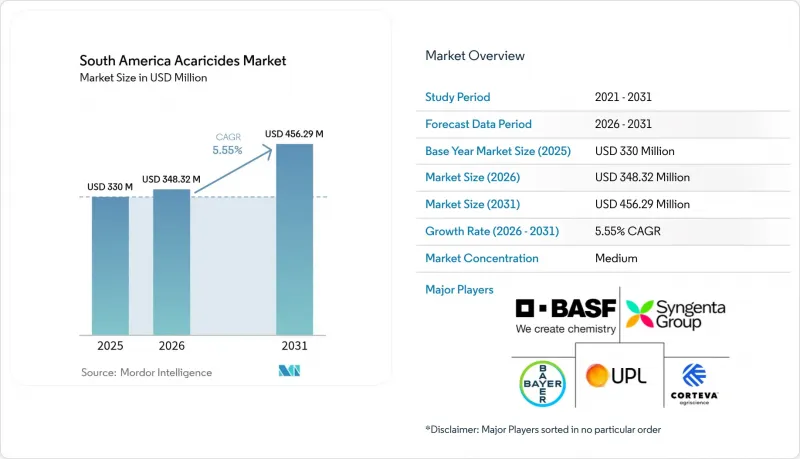
Mordor Intelligence에 의하면, 남미의 살진드기제 시장 규모는 2025년에 3억 3,000만 달러, 2026년 3억 4,832만 달러에서 2031년까지 4억 5,629만 달러에 이를 것으로 추정되고 있어 예측 기간(2026년-2031년) CAGR은 5.55%를 기록할 전망입니다.
본 보고서는 화학 물질 유형별(유기인계, 카바메이트계, 유기염소계, 피레트린, 피레스로이드계 등), 용도별(살포, 침지, 수동 도포 등), 지역별(브라질, 아르헨티나 등)로 분류되어 있습니다. 시장 예측은 금액(달러) 기준으로 제시되어 있습니다.
남미의 살진드기제 시장 동향 및 인사이트
정밀 살포기 도입으로 투입 비용 절감
브라질 농업연구공사(Embrapa)의 포장 시험에 따르면, 2023년부터 2024년 시즌 동안 마토그로소주에서 GPS 유도식 붐 분무기와 가변 살포량 제어 장치를 도입한 결과,헥타르당 살진드기제 사용량이 15%에서 25%까지 감소한 것으로 나타났습니다. 대규모 농장에서는 농약비와 연료비 절감으로 인해 3사이클 이내에 초기 투자 비용을 회수하고 있습니다. 브라질 내 500헥타르 이상의 농지에서 보급률은 2020년 22%에서 2024년 38%에 달했으며, 특히 면화와 대두의 주요 생산지에서 가장 빠른 성장세를 보였습니다. 아르헨티나에서는 장비 가격의 급등과 보조금 지원 기계 대출의 제한으로 인해 도입률은 여전히 18% 전후에 머물러 있습니다. 정밀 살포는 최적의 살포량을 정확하게 조절할 수 있기 때문에 아바멕틴이나 스피로메시펜과 같은 고효능 유효 성분이 선호됩니다. 살포기 점검 서비스를 제품 판매와 함께 제공하는 판매업체는 생산자와의 신뢰 관계를 강화하고, 가격이 아닌 서비스 측면에서 차별화를 꾀하고 있습니다.
기후 변화에 따른 온대 지역으로의 진드기 이동
아르헨티나 팜파스 지역 및 브라질 남부의 겨울 평균 최저 기온은 2019년부터 2023년 사이에 1.2°C 상승했으며, 이로 인해 진드기와 감귤류 녹진드기가 일년내내 생존할 수 있게 되었습니다. 『Journal of Applied Entomology』지에 게재된 조사에 따르면, 이 기간 동안 Tetranychus urticae가 200킬로미터 남쪽으로 이동한 것이 확인되었으며, 이로 인해 살포 가능 기간이 4-6주 연장되었습니다. 칠레의 식용 포도 및 아보카도 농장에서는 현재 싹이 트기 전에 예방 처리를 실시하도록 일정을 짜고 있는데, 이는 2020년 이전에는 필요 없었던 조치입니다. 천적의 개체 수는 이동하는 해충의 진행 속도를 따라가지 못하고 있어, 화학적 방제가 그 공백을 메우고 있습니다. 기후 변화로 인한 압박으로 살포 빈도도 증가하고 있으며, 수출 시장에서 허용되는 저잔류성 제제에 대한 수요가 확대되고 있습니다. 해충 발생 예측 지도를 제공하는 공급업체는 시기적절한 개입을 통해 대발생을 최소화할 수 있기 때문에 서비스 수수료에 프리미엄을 받고 있습니다.
브라질의 농약 재등록 기준 강화
2023년 법률 제14785호 및 2024년 12월 결의안 제950호에 따라, 기업은 2010년 이전에 등록된 모든 유효 성분에 대해 최신 독성학, 생태독성학 및 잔류 데이터를 제공해야 할 의무가 있습니다. 규정 준수 비용의 급증으로 인해 소규모 제제 제조업체들은 시장에서 철수할 수밖에 없을 가능성이 높으며, 2027년까지 클로르피리포스나 메타미도포스가 시장에서 퇴출될 우려가 있습니다. 파라과이와 우루과이는 기술적 동등성 인증에 있어 브라질의 데이터에 의존하고 있기 때문에 브라질에서의 판매 중단은 양국공급망에 혼란을 초래할 가능성이 있습니다. 생산자들은 비용이 높은 대체품으로 전환할 수밖에 없거나, 조정 기간 동안 수확량 감소를 겪을 가능성이 있습니다.
부문 분석
2025년 현재, 유기인계 살진드기제는 남미 시장 점유율의 37.60%를 차지하고 있으며, 많은 대두 및 감귤류 재배 프로그램의 기반을 이루고 있습니다. 그러나 유기인계 살진균제의 성장 궤도는 2027년까지 클로르피리포스가 등록 취소될 가능성이 있는 더욱 엄격해진 재등록 요건에 의해 제약을 받고 있습니다. 피레트로이드 계열은 2026년부터 2031년까지 연평균 성장률(CAGR) 7.35%로 가장 높은 성장을 보일 것으로 예측됩니다. 이는 농가가 내성 발생을 지연시키기 위해 피레트로이드 계열을 전신성 유효 성분과 함께 사용하고 있기 때문입니다. 비펜트린과 람다-시할로트린은 기존 대안에 비해 헥타르당 사용량을 15%에서 20% 줄이면서도 동등한 방제 효과를 발휘한다는 점에서 두드러지며, 가변 살포량식 분무기에 투자하고 있는 농가들에게 매력적입니다.
신젠타 그룹과 바이엘 AG의 나노캡슐화 연구에 따르면, 서방형 피레스로이드는 잔류 기준치를 초과하지 않으면서 잔효성을 최대 60%까지 연장할 수 있는 것으로 나타났으며, 2026년에 상용화될 전망입니다. 카르바메이트계 약제는 프로폭수르나 카르바릴이 신속한 노크다운 효과를 발휘하는 가축 침지 처리 분야에서 여전히 틈새 제품으로 남아 있습니다. 식물 유래 피레트린은 유기농 생산자의 요구를 충족시키고 있지만, 잔효 기간이 5일을 넘는 경우가 드물기 때문에 빈번한 재살포가 필요합니다. 2025년 1월에 출시된 BASF사의 ‘에피콘’의 유효 성분인 딤프로피리다즈는 곤충과 진드기 방제를 동시에 가능하게 하는 듀얼 모드 제품의 좋은 예이며, 살포 일정을 효율화합니다.
기타 혜택:
- 엑셀 형식 시장 예측(ME) 시트
- 3개월간의 애널리스트 지원
자주 묻는 질문
목차
제1장 서론
제2장 조사 방법
제3장 주요 요약
제4장 시장 구도
제5장 시장 규모와 성장 예측
제6장 경쟁 구도
제7장 시장 기회와 향후 동향
LSH 26.08.25According to Mordor Intelligence, the South America acaricides market size was valued at USD 330 million in 2025 and estimated to grow from USD 348.32 million in 2026 to reach USD 456.29 million by 2031, at a CAGR of 5.55% during the forecast period (2026-2031).
This report is Segmented by Chemical Type (Organophosphates, Carbamates, Organochlorines, Pyrethrins, Pyrethroids, and More), by Application (Spray, Dipping, Hand Dressing, and More), and by Geography (Brazil, Argentina, and More). The Market Forecasts are Provided in Terms of Value (USD).
South America Acaricides Market Trends and Insights
Precision-Sprayer Adoption Cuts Input Costs
Field trials by the Brazilian Agricultural Research Corporation (Embrapa) showed that global positioning system guided boom sprayers and variable-rate controllers reduced miticide use per hectare by 15% to 25% in Mato Grosso during the 2023-2024 season . Large farms recover capital outlays within three cycles through lower chemical spend and reduced fuel. Penetration among Brazilian properties above 500 hectares reached 38% in 2024, up from 22% in 2020, with cotton and soybean belts posting the fastest growth. Argentine uptake remains close to 18% because of higher equipment prices and limited subsidized machinery credit. Precision delivery favors high-potency actives such as abamectin and spiromesifen because optimal rates can be calibrated precisely. Dealers that bundle sprayer audits with product sales strengthen grower loyalty and differentiate on service rather than price.
Climate-Linked Mite Migration into Temperate Zones
Average winter lows in Argentina's Pampas and southern Brazil rose by 1.2 °C between 2019 and 2023, allowing two-spotted spider mites and citrus rust mites to survive year-round. Research published in the Journal of Applied Entomology traced a 200-kilometer southward shift of Tetranychus urticae during that period, extending the spray window by four to six weeks. Chilean table grape and avocado farms now schedule preventive treatments before bud break, a practice unnecessary before 2020. Natural predator populations lag behind migrating pest fronts, so chemical control fills the gap. Climate pressure also raises application frequency, expanding demand for low-residue formulas acceptable to export markets. Suppliers offering predictive pest maps earn a service premium because timely intervention minimizes flare-ups.
Stricter Chemical Re-Registration in Brazil
Law 14 785 of 2023 and Resolution 950 of December 2024 require companies to provide updated toxicology, ecotoxicology, and residue data for all active ingredients registered before 2010. The high compliance costs are likely to force smaller formulators out of the market and could lead to the removal of chlorpyrifos and methamidophos by 2027. Paraguay and Uruguay rely on Brazilian dossiers for technical equivalence, meaning any withdrawal in Brazil could disrupt their supply chains. Growers may need to transition to higher-cost substitutes or face potential yield losses during the adjustment period.
Other drivers and restraints analyzed in the detailed report include:
- Government Soybean Revitalization Programs
- Push for Export-Compliant Maximum Residue Limits (MRLs)
- High Upfront Cost of Patented Actives
For complete list of drivers and restraints, kindly check the Table Of Contents.
Segment Analysis
Organophosphates captured 37.60% of the South America acaricides market share in 2025 share in 2025, making them the bedrock of many soybean and citrus programs. The organophosphates reached their trajectory is limited by stricter re-registration requirements that could delist chlorpyrifos by 2027. Pyrethroids posted the fastest forecast growth at 7.35% CAGR from 2026 to 2031 because growers combine them with systemic actives to delay resistance. Bifenthrin and lambda-cyhalothrin stand out for delivering comparable control at 15% to 20% lower rates per hectare than legacy options, which appeals to farms investing in variable-rate sprayers.
Nano-encapsulation research from Syngenta Group and Bayer AG indicates that controlled-release pyrethroids can extend residual effectiveness by up to 60% without exceeding residue limits, with commercial launches projected in 2026. Carbamates remain niche products in livestock dipping, where propoxur and carbaryl provide rapid knockdown. Botanical pyrethrins satisfy organic producers but require frequent reapplication because their residual activity seldom exceeds five days. Dimpropyridaz, the active in BASF's Efficon, launched in January 2025, exemplifies dual-mode products that bridge insect and mite control, streamlining spray calendars.
Complete Report Scope:
- By Chemical Type
- Organophosphates
- Carbamates
- Organochlorines
- Pyrethrins
- Pyrethroids
- Other Chemical Types
- By Application
- Spray
- Dipping
- Hand Dressing
- Other Applications
- By Geography
- Brazil
- Argentina
- Rest of South America
List of Companies Covered in this Report:
- Bayer AG
- UPL Limited
- Syngenta Group
- BASF SE
- Corteva Agriscience
- FMC Corporation
- Sumitomo Chemical Co., Ltd.
- Nufarm Ltd.
- Gowan Company
- Koppert BV
- Sipcam Nichino (Sipcam-Oxon / Nichino JV)
- Nortox S.A.
- Ihara Corporation
- Alta Defensivos Agricolas Ltda.
Additional Benefits:
- The market estimate (ME) sheet in Excel format
- 3 months of analyst support
TABLE OF CONTENTS
1 INTRODUCTION
- 1.1 Study Assumptions and Market definition
- 1.2 Scope of the Study
2 RESEARCH METHODOLOGY
3 EXECUTIVE SUMMARY
4 MARKET LANDSCAPE
- 4.1 Market Overview
- 4.2 Market Drivers
- 4.2.1 Precision-sprayer adoption cuts input costs
- 4.2.2 Climate-linked mite migration into temperate zones
- 4.2.3 Government soybean revitalization programs
- 4.2.4 Push for export-compliant Maximum Residue Limits (MRLs)
- 4.2.5 Adoption of long-residual systemic miticides
- 4.2.6 E-commerce agro-retail penetration
- 4.3 Market Restraints
- 4.3.1 Stricter chemical re-registration in Brazil
- 4.3.2 High upfront cost of patented actives
- 4.3.3 Registration backlog delaying access to new chemistries
- 4.3.4 Emerging mite resistance to pyrethroids
- 4.4 Technological Outlook
- 4.5 Regulatory Landscape
- 4.6 Porter's Five Force Analysis
- 4.6.1 Bargaining Power of Suppliers
- 4.6.2 Bargaining Power of Buyers/Consumers
- 4.6.3 Threat of New Entrants
- 4.6.4 Threat of Substitute Products
- 4.6.5 Intensity of Competitive Rivalry
5 MARKET SIZE AND GROWTH FORECASTS (VALUE)
- 5.1 By Chemical Type
- 5.1.1 Organophosphates
- 5.1.2 Carbamates
- 5.1.3 Organochlorines
- 5.1.4 Pyrethrins
- 5.1.5 Pyrethroids
- 5.1.6 Other Chemical Types
- 5.2 By Application
- 5.2.1 Spray
- 5.2.2 Dipping
- 5.2.3 Hand Dressing
- 5.2.4 Other Applications
- 5.3 By Geography
- 5.3.1 Brazil
- 5.3.2 Argentina
- 5.3.3 Rest of South America
6 COMPETITIVE LANDSCAPE
- 6.1 Market Concentration
- 6.2 Strategic Moves
- 6.3 Market Share Analysis
- 6.4 Company Profiles (Includes Global Level Overview, Market Level Overview, Core Segments, Financials as Available, Strategic Information, Market Rank/Share for Key Companies, Products and Services, and Recent Developments)
- 6.4.1 Bayer AG
- 6.4.2 UPL Limited
- 6.4.3 Syngenta Group
- 6.4.4 BASF SE
- 6.4.5 Corteva Agriscience
- 6.4.6 FMC Corporation
- 6.4.7 Sumitomo Chemical Co., Ltd.
- 6.4.8 Nufarm Ltd.
- 6.4.9 Gowan Company
- 6.4.10 Koppert BV
- 6.4.11 Sipcam Nichino (Sipcam-Oxon / Nichino JV)
- 6.4.12 Nortox S.A.
- 6.4.13 Ihara Corporation
- 6.4.14 Alta Defensivos Agricolas Ltda.


