
|
시장보고서
상품코드
2113646
사료용 카로티노이드 : 시장 점유율 분석, 업계 동향 및 통계, 성장 예측(2026-2031년)Feed Carotenoids - Market Share Analysis, Industry Trends & Statistics, Growth Forecasts (2026 - 2031) |
||||||
 Mordor Intelligence
Mordor Intelligence에 의하면, 2026년 사료용 카로티노이드 시장 규모는 34억 1,000만 달러로 추정되고 있으며, 2025년 32억 1,000만 달러에서 2031년에는 45억 9,000만 달러에 달할 것으로 예측됩니다.
또한, 2026-2031년 연평균 성장률(CAGR) 6.14%를 기록할 전망입니다.
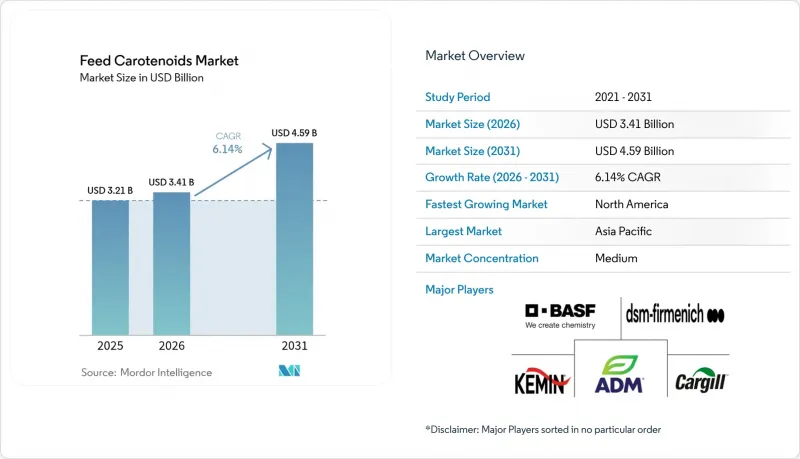
본 보고서는 제품 유형별(베타카로틴, 리코펜, 루테인, 아스타잔틴, 칸타잔틴, 기타),형태별(비즈렛, 분말, 기타) 분류, 동물 종별(반추동물, 가금류, 돼지, 수산 양식, 기타 동물 종), 지역별(북미, 유럽, 아시아태평양, 남미, 기타)로 분류되어 있습니다. 시장 예측은 금액(달러)으로 제시되어 있습니다.
전 세계 사료용 카로티노이드 시장 동향 및 인사이트
연어과 어류용 수산 사료에서의 착색 수요 증가
연어과 어류 양식업자들은 살색의 선명도와 소비자의 프리미엄 가격 지불 의향을 직접적으로 연결 짓고 있으며, 노르웨이 생산자에 따르면 최적의 착색 상태를 띤 어류의 경우 15-20%의 가격 상승이 나타난다고 합니다. 유럽 식품안전청(EFSA)이 2024년에 관상어용 아스타잔틴의 안전 기준치를 100 mg/kg으로 재확인함으로써 규제상의 명확성이 확보되었고, 상업 양식에서의 사용 확대가 촉진되고 있습니다. 원격지에서 온도 관리가 필요한 카로티노이드의 운송 비용은 원료 가치의 12%에 달하며, 양식장은 인근에 창고를 확보하고 농장 내에서 안정성 시험을 실시해야 하는 상황에 처해 있습니다.
신흥 경제국에서의 산업 규모 가금류 생산
아시아태평양 시장의 가금류 부문 통합으로 인해, 대규모 생산량에서 달걀 노른자의 색조와 육계의 껍질 외관을 일정하게 유지하는 표준화된 착색 솔루션에 대한 수요가 집중되고 있습니다. 기존의 소규모 농가 시스템에서 통합형 경영으로의 전환은 기술 지원 및 품질 보증 프로그램을 제공할 수 있는 프리미엄 카로티노이드 공급업체에게 기회를 창출하고 있습니다. 브라질의 가금류 수출이 성장함에 따라 국제 색상 기준을 준수하는 것이 필수적이 되었으며, 다양한 유전 계통과 생산 환경에서 제품의 외관을 일관되게 유지하는 표준화된 카로티노이드 첨가 프로토콜의 채택이 촉진되고 있습니다.
카로티노이드가 풍부한 바이오매스 공급의 변동성
금잔화 꽃잎, 파프리카 및 기타 식물 원료로부터 카로티노이드를 농업적으로 추출하는 과정은 기후 변화와 토지 이용 경쟁의 압력으로 인해 원자재의 가용성 및 가격에 영향을 미치므로 변동성이 높아지고 있습니다. 주요 생산 지역의 기상 이변은 같은 시즌 내에서도 가격 변동을 일으킬 가능성이 있어, 사료 제조업체는 더 많은 재고 완충분을 유지해야 하며, 그 결과 운전 자본 수요가 증가합니다. 추출 시설이 특정 지리적 지역에 집중되어 있다는 점은 공급망의 취약성으로 이어집니다. 이는 최근 여러 원료 범주에 동시에 영향을 미친 공급 차질에서 드러난 바와 같습니다. 대체 조달 전략은 철저한 검증과 규제 당국의 승인이 필요하며, 이를 완료하는 데 18-24개월이 소요될 수 있어 공급 차질에 대응하는 데 있어 단기적인 유연성이 제한됩니다.
부문 분석
2025년, 아스타잔틴은 연어 착색 프리미엄에 힘입어 사료용 카로티노이드 시장에서 31.95%의 점유율을 차지했습니다. 소매업체들이 비합성 수산물 라벨을 추진하고 있는 만큼, 아스타잔틴은 연평균 성장률(CAGR) 7.36%로 성장을 주도하고 있습니다. 베타카로틴에 기인하는 사료용 카로티노이드 시장 규모는 비타민 A로서의 이중 역할로 인해 가금류 및 돼지 분야에서 여전히 큰 규모를 유지하고 있습니다. 식용 계란 생산 프로그램에서 루테인의 사용은 차별화된 껍질 달걀 SKU(재고 관리 단위)를 뒷받침하고 있지만, 칸타크산틴의 사용은 투여량 상한선에 의해 여전히 제약을 받고 있습니다.
아스타잔틴 시장 지배력으로 인해 가격 보호막이 형성되어, 제아잔틴과 같은 틈새 카로티노이드가 전문성이 높은 프리미엄 가격으로 유통될 수 있게 되었습니다. 연어 가공업체들은 필레의 색상 지표에 보너스 지급을 연동하고 있어, 이로 인해 사료 비용 인플레이션 국면에서도 안정적인 수요가 확보되고 있습니다. 규제 상황은 안전성에 대한 우려 없이 유사한 착색 효과를 제공하는 아스타잔틴이나 베타-카로틴의 대체품에 경쟁상의 우위를 부여하고 있습니다. 제아잔틴 및 캡산틴을 포함한 기타 카로티노이드는 특정 색상 특성이나 기능적 이점을 바탕으로, 주류 대체품에 비해 프리미엄 가격 책정이 정당화되는 틈새 용도를 목표로 하고 있습니다.
지역별 분석
2025년, 아시아태평양은 사료용 카로티노이드 시장 전체의 29.55%를 차지했습니다. 중국은 전 세계 양식 생산량에서 큰 비중을 차지하고 있으며, 대규모 양식장의 통합이 진행됨에 따라 영양소의 표준화가 가속화되고 있습니다. 인도와 베트남에서는 유럽식 육계 유전자가 채택되고 있으며, 수출용 수산물의 껍질 색을 선명하게 하기 위해 더 높은 카로티노이드 농도가 요구되고 있습니다. 각 지역 정부는 순환식 양식 시스템에 보조금을 지급하고 있어, 생산되는 어류 1메트르톤당 아스타잔틴 사용량이 증가하고 있습니다.
북미는 2026-2031년 7.55%라는 가장 높은 연평균 성장률(CAGR)을 나타낼 전망입니다. 북미에서는 대규모 가금류 복합 시설과 혁신의 속도 및 안전성 간의 균형을 유지한 규제 환경의 뒷받침으로 꾸준한 성장이 기대됩니다. 발효 유래 원료에 대한 FDA의 승인 절차는 EU보다 신속하여 벤처 투자자를 유치하고, 미국 내 제조 거점 구축을 촉진하고 있습니다. 캐나다의 대서양 연어 양식장은 BASF SE 및 DSM의 가동 중단 위험 완화 조치를 포함한 공급 계약을 체결했습니다. 남미에서는 브라질의 가금류 수출 급증에 힘입어 표준화된 착색 프로토콜 도입이 진행되고 있습니다. 한편, 아프리카의 신생 틸라피아 양식장에서는 수확 가치를 높이기 위해 저비용 비즐렛이 검토되고 있습니다.
유럽에서는 노르웨이 연어 밸류체인과 독일의 프리믹스 거점이 주요 수요 거점으로 기능하고 있습니다. EFSA의 엄격한 심사 절차에 따라 사료 배합은 천연 유래 원료로 기울고 있으며, 독일은 비즐릿 캡슐화 라인을 고도화하는 기술 거점을 제공합니다. 북유럽의 수산 사료 공장에서는 필레 1kg당 25mg이라는 목표치를 준수하고, 잔류 손실을 최소화하기 위해 아스타잔틴의 투여량을 미세 조정하고 있습니다.
기타 혜택:
- 엑셀 형식 시장 예측(ME) 시트
- 3개월간의 애널리스트 지원
자주 묻는 질문
목차
제1장 서론
제2장 조사 방법
제3장 주요 요약
제4장 시장 구도
제5장 시장 규모와 성장 예측
제6장 경쟁 구도
제7장 시장 기회와 향후 전망
LSH 26.08.25According to Mordor Intelligence, feed carotenoids market size in 2026 is estimated at USD 3.41 billion, growing from 2025 value of USD 3.21 billion with 2031 projections showing USD 4.59 billion, growing at 6.14% CAGR over 2026-2031.
This report is Segmented by Product Type (Beta-Carotene, Lycopene, Lutein, Astaxanthin, Canthaxanthin, and Other Types), by Form (Beadlet, Powder, and More), by Animal Type (Ruminant, Poultry, Swine, Aquaculture, and Other Animal Types), and by Geography (North America, Europe, Asia-Pacific, South America, and More). The Market Forecasts are Provided in Terms of Value (USD).
Global Feed Carotenoids Market Trends and Insights
Rising Demand for Salmonid Aquafeed Pigmentation
Salmon farmers link flesh coloration directly with consumer premium willingness, and Norwegian producers report a 15 - 20% price uplift for optimally pigmented fish. The European Food Safety Authority's 2024 reaffirmation of astaxanthin safety limits at 100 mg/kg for ornamental fish provides regulatory clarity that supports expanded usage in commercial aquaculture. Freight cost for temperature-controlled carotenoids reaches 12% of ingredient value in remote sites, pushing farms to secure nearby warehousing and on-farm stability testing.
Industrial-Scale Poultry Production in Emerging Economies
Poultry sector consolidation in Asia-Pacific markets creates concentrated demand for standardized pigmentation solutions that ensure consistent egg yolk coloration and broiler skin appearance across large production volumes. The shift from traditional smallholder systems to integrated operations creates opportunities for premium carotenoid suppliers who can provide technical support and quality assurance programs. Brazil's poultry export growth necessitates compliance with international color standards, driving the adoption of standardized carotenoid supplementation protocols that ensure consistent product appearance across diverse genetic lines and production environments.
Volatility in Carotenoid-Rich Biomass Supplies
Agricultural extraction of carotenoids from marigold petals, paprika, and other plant sources faces increasing volatility due to climate variability and competing land use pressures that affect raw material availability and pricing. Weather disruptions in major growing regions can create price swings within single seasons, forcing feed manufacturers to maintain larger inventory buffers that increase working capital requirements. The concentration of extraction facilities in specific geographic regions creates supply chain vulnerabilities, as demonstrated by recent disruptions that affected multiple ingredient categories simultaneously. Alternative sourcing strategies require extensive validation and regulatory approvals that can take 18-24 months to complete, limiting short-term flexibility in responding to supply disruptions.
Other drivers and restraints analyzed in the detailed report include:
- Shift from Synthetic to Natural Carotenoids
- Microalgae and Precision-Fermentation Cost Breakthroughs
- Regulatory Uncertainty Around Novel Fermentation Strains
For complete list of drivers and restraints, kindly check the Table Of Contents.
Segment Analysis
Astaxanthin held 31.95% feed carotenoids market share in 2025, driven by salmon pigmentation premiums. It leads growth at a 7.36% CAGR as retailers promote non-synthetic seafood labels. The feed carotenoids market size attributable to beta-carotene remains sizable in poultry and swine due to its dual Vitamin A role. Lutein retention in table-egg programs supports differentiated shell-egg Stock keeping units (SKU), while canthaxanthin usage stays constrained by dosage ceilings.
The dominance of astaxanthin creates a price umbrella enabling niche carotenoids such as zeaxanthin to float at specialty premiums. Salmon processors tie bonus payments to fillet hue metrics, cementing steady demand even during feed cost inflation cycles. The regulatory landscape creates competitive advantages for astaxanthin and beta-carotene alternatives that offer similar pigmentation benefits without associated safety concerns. Other carotenoid types, including zeaxanthin and capsanthin, target niche applications where specific color profiles or functional benefits justify premium pricing compared to mainstream alternatives.
Complete Report Scope:
- By Product Type
- Beta-Carotene
- Lycopene
- Lutein
- Astaxanthin
- Canthaxanthin
- Other Types
- By Form
- Beadlet
- Powder
- Oil Suspension
- Emulsion
- By Animal Type
- Ruminant
- Poultry
- Swine
- Aquaculture
- Other Animal Types
- By Geography
- North America
- United States
- Canada
- Mexico
- Rest of North America
- Europe
- Germany
- United Kingdom
- France
- Spain
- Italy
- Russia
- Rest of Europe
- Asia-Pacific
- China
- India
- Japan
- Australia
- Rest of Asia-Pacific
- South America
- Brazil
- Argentina
- Rest of South America
- Middle East
- Saudi Arabia
- Turkey
- Rest of Middle East
- Africa
- South Africa
- Egypt
- Rest of Africa
- North America
Geography Analysis
Asia-Pacific contributed 29.55% of the feed carotenoids market in 2025. China accounts for a significant share of the world's aquaculture harvest, and the consolidation of mega-farms accelerates the standardization of nutrients. India and Vietnam adopt European-style broiler genetics, demanding higher carotenoid density for export-grade skin coloration. Regional governments subsidize recirculating aquaculture systems, magnifying astaxanthin uptake per metric ton of fish produced.
North America is projected to register the fastest CAGR of 7.55% from 2026 to 2031. North America posts steady gains backed by large poultry complexes and a regulatory environment that balances innovation speed with safety. FDA approvals for fermentation-derived inputs move faster than EU processes, enticing venture investors to build United States manufacturing. Canada's Atlantic salmon farms secure supply contracts that include delivery contingencies tied to BASF SE and DSM outage risk mitigation. South America leverages Brazil's poultry export surge to integrate standardized pigmentation protocols, whereas Africa's emerging tilapia farms explore low-cost beadlets to raise harvest value.
Europe, with Norway's salmon value chain and Germany's premix hubs acting as anchor demand centers. EFSA's stringent review procedures tilt formulations toward natural inputs, and Germany offers technical hubs that refine beadlet encapsulation lines. Nordic aquafeed factories fine-tune astaxanthin dosage to comply with 25 mg/kg fillet targets and minimize residual loss.
- BASF SE
- DSM-Firmenich AG
- Kemin Industries, Inc.
- Synthite Industries Ltd.
- Nutrex NV
- Divi's Laboratories Limited
- Archer-Daniels-Midland Company
- Cargill Inc.
- Zhejiang NHU Co., Ltd. (NHU Holding Group Co.,Ltd)
- Givaudan SA
- Allied Biotech Corporation
- Impextraco NV
- EW Nutrition GmbH
- Novus International, Inc. (Mitsui & Co., Ltd. and Nippon Soda Co., Ltd)
Additional Benefits:
- The market estimate (ME) sheet in Excel format
- 3 months of analyst support
TABLE OF CONTENTS
1 Introduction
- 1.1 Study Assumptions and Market Definition
- 1.2 Scope of the Study
2 Research Methodology
3 Executive Summary
4 Market Landscape
- 4.1 Market Overview
- 4.2 Market Drivers
- 4.2.1 Rising demand for salmonid aquafeed pigmentation
- 4.2.2 Industrial-scale poultry production in emerging economies
- 4.2.3 Shift from synthetic to natural carotenoids
- 4.2.4 Microalgae and precision-fermentation cost breakthroughs
- 4.2.5 Tariff-driven reshoring of carotenoid supply chains
- 4.2.6 AI-enabled pigment optimization for species-specific outcomes
- 4.3 Market Restraints
- 4.3.1 Volatility in carotenoid-rich biomass supplies
- 4.3.2 Regulatory uncertainty around novel fermentation strains
- 4.3.3 Photodegradation losses during tropical feed logistics
- 4.3.4 Sub-clinical toxicity risks at supra-nutritional doses
- 4.4 Regulatory Landscape
- 4.5 Technological Outlook
- 4.6 Porter's Five Forces Analysis
- 4.6.1 Bargaining Power of Suppliers
- 4.6.2 Bargaining Power of Buyers
- 4.6.3 Threat of New Entrants
- 4.6.4 Threat of Substitutes
- 4.6.5 Intensity of Competitive Rivalry
5 Market Size and Growth Forecasts (Value)
- 5.1 By Product Type
- 5.1.1 Beta-Carotene
- 5.1.2 Lycopene
- 5.1.3 Lutein
- 5.1.4 Astaxanthin
- 5.1.5 Canthaxanthin
- 5.1.6 Other Types
- 5.2 By Form
- 5.2.1 Beadlet
- 5.2.2 Powder
- 5.2.3 Oil Suspension
- 5.2.4 Emulsion
- 5.3 By Animal Type
- 5.3.1 Ruminant
- 5.3.2 Poultry
- 5.3.3 Swine
- 5.3.4 Aquaculture
- 5.3.5 Other Animal Types
- 5.4 By Geography
- 5.4.1 North America
- 5.4.1.1 United States
- 5.4.1.2 Canada
- 5.4.1.3 Mexico
- 5.4.1.4 Rest of North America
- 5.4.2 Europe
- 5.4.2.1 Germany
- 5.4.2.2 United Kingdom
- 5.4.2.3 France
- 5.4.2.4 Spain
- 5.4.2.5 Italy
- 5.4.2.6 Russia
- 5.4.2.7 Rest of Europe
- 5.4.3 Asia-Pacific
- 5.4.3.1 China
- 5.4.3.2 India
- 5.4.3.3 Japan
- 5.4.3.4 Australia
- 5.4.3.5 Rest of Asia-Pacific
- 5.4.4 South America
- 5.4.4.1 Brazil
- 5.4.4.2 Argentina
- 5.4.4.3 Rest of South America
- 5.4.5 Middle East
- 5.4.5.1 Saudi Arabia
- 5.4.5.2 Turkey
- 5.4.5.3 Rest of Middle East
- 5.4.6 Africa
- 5.4.6.1 South Africa
- 5.4.6.2 Egypt
- 5.4.6.3 Rest of Africa
- 5.4.1 North America
6 Competitive Landscape
- 6.1 Market Concentration
- 6.2 Strategic Moves
- 6.3 Market Share Analysis
- 6.4 Company Profiles (Includes Global Level Overview, Market Level Overview, Core Segments, Financials as Available, Strategic Information, Market Rank/Share, Products and Services, Recent Developments)
- 6.4.1 BASF SE
- 6.4.2 DSM-Firmenich AG
- 6.4.3 Kemin Industries, Inc.
- 6.4.4 Synthite Industries Ltd.
- 6.4.5 Nutrex NV
- 6.4.6 Divi's Laboratories Limited
- 6.4.7 Archer-Daniels-Midland Company
- 6.4.8 Cargill Inc.
- 6.4.9 Zhejiang NHU Co., Ltd. (NHU Holding Group Co.,Ltd)
- 6.4.10 Givaudan SA
- 6.4.11 Allied Biotech Corporation
- 6.4.12 Impextraco NV
- 6.4.13 EW Nutrition GmbH
- 6.4.14 Novus International, Inc. (Mitsui & Co., Ltd. and Nippon Soda Co., Ltd)