
|
시장보고서
상품코드
2113654
금연 보조제 : 시장 점유율 분석, 업계 동향 및 통계, 성장 예측(2026-2031년)Smoking Cessation Aids - Market Share Analysis, Industry Trends & Statistics, Growth Forecasts (2026 - 2031) |
||||||
 Mordor Intelligence
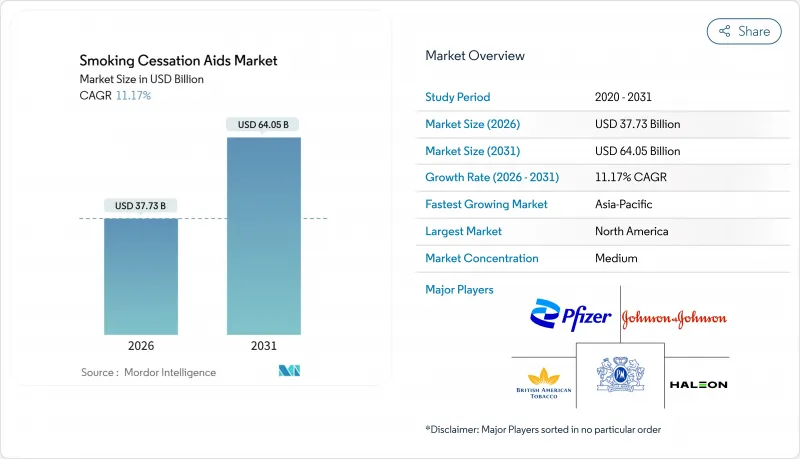
Mordor Intelligence에 의하면, 금연 보조제 시장 규모는 2026년에 377억 3,000만 달러로 추정되고 예측 기간(2026-2031년) CAGR 11.17%로 성장을 지속하여, 2031년에는 640억 5,000만 달러에 이를 전망입니다.
본 보고서는 제품 유형(니코틴 대체 요법(NRT) (패치, 껌 등), 처방약에 의한 약물 요법 (바레니클린 등) 등), 유통 채널(소매 약국 및 드럭스토어, 병원 약국 등), 최종 사용자(개인의 자가 사용 등), 지역(북미 등)별로 분류되어 있습니다. 시장 전망은 금액(미 달러) 단위로 제시되어 있습니다.
세계의 금연 보조제 시장 동향 및 인사이트
코로나19 팬데믹 이후 금연 시도 증가
입원 데이터에 따르면, 흡연자는 중증 COVID-19에 걸릴 위험이 1.8배 더 높으며, 이로 인해 2024년 금연 핫라인 문의 건수는 팬데믹 이전 수준에 비해 23% 급증했습니다. 지속적인 호흡기 합병증으로 인해 많은 회복 환자에게 흡연을 계속하는 것은 생리적으로 어렵기 때문에 금연은 현재 필수적인 치료로 간주되고 있습니다. 영국의 ‘Swap to Stop’ 캠페인은 2025년 중반까지 성인 35만 명에게 무료 전자담배 스타터 키트를 배포하여, 지원 없이 금연을 시도할 때보다 6개월간 금연 성공률을 2배로 높였습니다. 이러한 급증세는 2028년까지 정점에 달할 것으로 예상되지만, WHO의 ‘담배 규제 기본 협약’에 기반한 지속적인 공중보건 계몽 활동 덕분에 금연에 대한 압력은 높은 수준으로 유지되고 있습니다. 이러한 요인들이 맞물려, 금연 보조제 시장에는 금연을 열망하는 사람들이 대거 유입되고 있습니다.
정부의 담배 규제세 및 금연법
호주는 2024년에 한 갑당 가격을 50호주달러(33미국달러)로 인상하여 성인 흡연율을 8.3%까지 낮췄습니다. 캐나다와 인도에서도 유사한 단계적 증세가 시행되어, 담배와 2주 분량 35캐나다달러인 시판 니코틴 패치의 가격 차이가 좁혀졌습니다. 브라질에서는 2025년에 금연 구역이 확대되면서 흡연을 조장하는 사회적 요인이 감소하는 동시에, 금연이 당연한 일이 되어가고 있습니다. 이러한 조치로 인해 담배 구매가 경제적으로 어려워지면서 금연 시도가 증가하고, 금연 보조제 시장을 뒷받침하고 있습니다.
유해 사건에 따른 회수(바레니클린의 니트로소아민)
화이자사의 리콜 조치로 인해 바레니클린은 3년 동안 시장에서 사라졌으며, 의사들은 2024년에 성분이 변경된 정제가 다시 출시될 때까지 어쩔 수 없이 효과가 낮은 대체 약물을 사용해야만 했습니다. 2024년 말 기준, 처방량은 이전 수준의 62%에 그쳤는데, 이는 임상의들이 장기적인 안전성 데이터를 기다리고 있었기 때문입니다. 인도의 제약사가 더 저렴한 가격으로 유럽 시장에 새로운 제네릭 의약품을 출시했으나, 로트별 검사 규정으로 인해 비용 증가에 직면해 있습니다. 이 일련의 사건은 환자들의 신뢰를 훼손했으며, 현재 34%의 환자가 규제 대상이 아닌 대체품을 선호하는 것으로 나타났습니다.
부문 분석
2025년, 전자 니코틴 공급 시스템은 금연 보조제 시장 매출의 47.25%를 차지했습니다. 이 부문 내에서 IQOS ILUMA와 Zyn의 판매 확대에 힘입어 가열식 담배 기기와 니코틴 파우치가 가장 빠르게 성장했습니다. 니코틴 대체 요법(NRT)은 28%를 차지했으며, 패치는 1일 1회 투여와 확립된 보험 환급 제도 덕분에 NRT 매출의 42%를 차지했습니다. 처방약 치료는 18%를 차지했으나, 최근 바레니클린의 리콜 및 시티신의 승인 현황에 따른 불규칙성으로 인해 여전히 성장세가 주춤하고 있습니다.
보험사가 상담과 의약품을 세트로 제공하게 됨에 따라, 행동 지원 및 서비스는 2031년까지 연평균 성장률(CAGR) 14.76%를 기록하며 다른 모든 분야를 능가하는 성장을 보일 것으로 예측됩니다. 디지털 앱과 금연 핫라인은 현재 규모는 작지만, 많은 보험 플랜에서 필수 요소로 자리 잡고 있습니다. 이러한 변화로 인해 총 잠재 수요가 확대되고, 소프트웨어 전문 사업자에게도 시장 진입 기회가 넓어집니다. 전반적으로 제품 구성 측면에서 볼 때, 순수한 약물 치료에서 의료기기, 의약품, 코칭을 융합한 종합적인 패키지로의 단계적 전환이 엿보입니다. 이러한 구조는 신규 진출기업에게 금연 지원 시장 점유율을 확대할 기회를 제공해 줍니다.
지역별 분석
북미는 2025년 매출의 34.83%를 차지했습니다. 미국만 해도 124억 달러를 기록했는데, 이는 메디케어의 상담 급여 범위 확대와 민간 보험사들이 듀얼 폼 NRT(니코틴 대체 요법)에 대한 자금 지원에 적극적인 태도를 보이고 있는 데 힘입은 결과입니다. 일부 주에서 시행된 향료 금지 조치는 ENDS(전자담배) 수요에 단기적인 억제요인이 되었으나, 동시에 패치와 껌의 매출을 끌어올렸습니다. 캐나다의 지수 연동형 소비세는 가격 차이를 더욱 축소시켜 규제 대상 대체품에 대한 수요를 뒷받침하고 있습니다.
아시아태평양은 가장 높은 성장률을 보이며, 연평균 성장률(CAGR)은 12.79%로 예측됩니다. 2024년 중국에서 시행된 향이 첨가된 전자담배 금지 조치로 인해, 소비자들은 패치나 처방약이 주를 이루는 병원 약국 채널로 이동했습니다. 인도에서는 2024년 흡연 가능 연령 상향 조정과 그림 경고 확대에 따라, 특히 이미 담배 가격 급등에 직면한 도시 지역 흡연자들 사이에서 금연 시도가 증가하고 있습니다. 양국의 고용주들은 현재 금연 프로그램에 대한 지원을 제공하고 있어 중산층의 접근성이 확대되고 있습니다. 또한, 저비용의 시티딘도 예산이 제한된 계층에게 지지를 받고 있습니다.
2025년 매출의 4분의 1 가까이를 유럽이 차지했으며, 영국, 독일, 프랑스가 이를 주도했습니다. 영국의 ‘Swap to Stop’ 프로그램은 36만 명의 신규 사용자를 확보하며, 해악 감소(harm reduction)에 대한 정책적 개방성을 보여주었습니다. 동유럽 시장에서는 매력적인 가격 책정으로 시치신이 수용된 반면, 서유럽의 보험사에서는 여전히 바레니클린이나 듀얼 폼 NRT가 우선시되고 있습니다. 중동 및 아프리카에서는 걸프 국가들의 국내 금연 핫라인 투자가 뒷받침되고 있으며, 남미에서는 외딴 지역의 유통 격차가 존재하지만, 브라질이 약물 요법에 대한 보편적인 보험 적용을 약속하고 있는 점이 기반이 되고 있습니다. 전반적으로 이러한 동향은 지역별 촉진요인이 다양함을 여실히 보여주고 있으나, 모두 금연 보조제 시장에 추가적인 수익을 가져다주고 있습니다.
기타 혜택 :
- 엑셀 형식 시장 예측(ME) 시트
- 3개월간의 애널리스트 지원
자주 묻는 질문
목차
제1장 서론
제2장 조사 방법
제3장 주요 요약
제4장 시장 구도
제5장 시장 규모 및 성장 예측
제6장 경쟁 구도
제7장 시장 기회 및 향후 전망
KTH 26.08.26According to Mordor Intelligence, the smoking cessation aids market size is estimated at USD 37.73 billion in 2026, and is expected to reach USD 64.05 billion by 2031, at a CAGR of 11.17% during the forecast period (2026-2031).
This report is Segmented by Product Type (Nicotine Replacement Therapy (NRT) [Patches, Gums and More], Prescription Pharmacotherapies [Varenicline and More] and More), Distribution Channel (Retail Pharmacies and Drug Stores, Hospital Pharmacies, and More), End User (Individual Self-Use, and More), and Geography (North America, and More). Market Forecasts are Provided in Value (USD).
Global Smoking Cessation Aids Market Trends and Insights
Rising Quit Attempts Post-COVID-19 Pandemic
Hospital admission data showed smokers experienced a 1.8-fold higher risk of severe COVID-19, driving a 23% spike in quitline calls during 2024 compared with pre-pandemic levels. Persisting respiratory complications make continued use physiologically difficult for many former patients, so cessation is now seen as essential care. The United Kingdom's Swap to Stop campaign distributed free starter vape kits to 350,000 adults by mid-2025 and doubled six-month quit rates compared with unaided attempts. Although the surge is expected to plateau by 2028, sustained public-health messaging under the WHO Framework Convention on Tobacco Control keeps the pressure high. These combined forces provide the smoking cessation aids market with a large influx of motivated quitters.
Government Tobacco-Control Taxes and Smoke-Free Laws
Australia lifted pack prices to AUD 50 (USD 33) in 2024 and cut adult smoking prevalence to 8.3%. Similar tax escalators in Canada and India narrowed the price gap between cigarettes and OTC patches that cost CAD 35 per two-week supply. Brazil's 2025 extension of smoke-free zones reduces social triggers and normalizes abstinence. These measures compress combustibles' affordability, inducing more quit attempts and buoying the smoking cessation aids market.
Adverse-Event Recalls (Varenicline Nitrosamines)
Pfizer's recall removed varenicline for three years, forcing physicians to default to less effective options until reformulated tablets returned in 2024. By late 2024, prescriptions regained only 62% of prior volume, as clinicians waited for long-term safety data. New generics from Indian manufacturers entered Europe at lower prices yet face batch-testing rules that raise costs. The episode dented patient trust, with 34% now favoring unregulated alternatives.
Other drivers and restraints analyzed in the detailed report include:
- OTC Switch and Wider Reimbursement of NRT Products
- Digital Health Integration (Apps, Quitlines)
- Stringent E-Cigarette Flavor Bans
For complete list of drivers and restraints, kindly check the Table Of Contents.
Segment Analysis
Electronic nicotine delivery systems accounted for 47.25% of smoking cessation aids market revenue in 2025. Heated tobacco devices and nicotine pouches grew fastest inside the segment, fueled by IQOS ILUMA and Zyn distribution. Nicotine-replacement therapy (NRT) held 28%, with patches making up 42% of NRT receipts thanks to once-daily dosing and established reimbursement tracks. Prescription therapies contributed 18% but still lag due to the recent varenicline recall and uneven cytisine approvals.
Behavioral support and services will outpace all other lines with a 14.76% CAGR through 2031 as payers bundle counseling with medicines. Digital apps and quitlines, while small today, are mandatory components for many insurance plans. That shift enlarges total addressable demand and broadens competitive entry points for software-only players. Overall, the product mix highlights an incremental transition from pure pharmacotherapy toward holistic packages that blend devices, drugs, and coaching, a structure that broadens smoking cessation aids market share opportunities for newcomers.
Complete Report Scope:
- By Product Type
- Nicotine Replacement Therapy (NRT)
- Patches
- Gums
- Lozenges
- Sprays & Inhalers
- Other Oral & Transdermal
- Prescription Pharmacotherapies
- Varenicline
- Bupropion
- Cytisine
- Combination Therapies
- Electronic Nicotine Delivery Systems (ENDS)
- E-cigarettes / Vaping Devices
- Heated Tobacco Products
- Nicotine Pouches (Tobacco-Free Oral)
- Behavioral Support & Services
- Digital / Mobile Apps
- Telephone Quitlines
- In-person Counseling Programs
- Nicotine Replacement Therapy (NRT)
- By Distribution Channel
- Retail Pharmacies & Drug Stores
- Hospital Pharmacies
- Online Pharmacies & E-commerce
- Specialist Smoke/Vape Shops
- By End User
- Individual / Consumer Self-Use
- Healthcare-Professional-Supervised (Clinics & De-addiction Centers)
- By Geography
- North America
- United States
- Canada
- Mexico
- Europe
- Germany
- France
- United Kingdom
- Italy
- Spain
- Rest of Europe
- Asia-Pacific
- China
- Japan
- India
- South Korea
- Australia
- Rest of Asia-Pacific
- Middle East & Africa
- GCC
- South Africa
- Rest of Middle East & Africa
- South America
- Brazil
- Argentina
- Rest of South America
- North America
Geography Analysis
North America generated 34.83% of 2025 revenue. The United States alone contributed USD 12.4 billion, buoyed by Medicare's expanded counseling coverage and private payers' willingness to fund dual-form NRT. Flavor bans in several states created a near-term drag on ENDS but simultaneously drove patch and gum sales. Canada's indexed excise tax further narrowed price gaps, sustaining demand for regulated substitutes.
Asia-Pacific posted the fastest growth, projected at a 12.79% CAGR. China's ban on flavored e-cigarettes in 2024 redirected consumers to hospital pharmacy channels where patches and prescriptions dominate. India's 2024 legal age hike and expanded pictorial warnings increase quit attempts, especially among urban smokers who already face higher cigarette prices. Employers in both countries now subsidize cessation programs, broadening access for middle-income groups. Low-cost cytisine also resonates in budget-constrained populations.
Europe supplied nearly 1/4th of 2025 turnover, led by the UK, Germany, and France. The UK's Swap to Stop added 360,000 users and showed policy openness to harm-reduction pathways. Eastern European markets embraced cytisine due to attractive pricing, while Western payers still prioritize varenicline and dual-form NRT. The Middle East & Africa is supported by Gulf state investments in national quitlines, while South America is anchored by Brazil's promise of universal pharmacotherapy coverage despite distribution gaps in remote regions. Collectively, these dynamics underscore varied regional drivers yet all funnel additional revenue into the smoking cessation aids market.
- 22nd Century Group Inc.
- Alkalon A/S
- Axsome Therapeutics
- British American Tobacco plc
- Cipla
- Ditch Labs Inc.
- Dr. Reddy's Laboratories Ltd.
- Enorama Pharma AB
- Glenmark Pharmaceuticals
- Haleon plc
- Imperial Brands plc
- Japan Tobacco International
- Johnson & Johnson (McNeil)
- Lucy Goods Inc.
- Perrigo Company
- Pfizer
- Philip Morris International Inc.
- Rubicon Research Pvt. Ltd.
- Rusan Pharma Ltd.
- Sparsha Pharma International Pvt. Ltd.
Additional Benefits:
- The market estimate (ME) sheet in Excel format
- 3 months of analyst support
TABLE OF CONTENTS
1 Introduction
- 1.1 Study Assumptions & Market Definition
- 1.2 Scope of the Study
2 Research Methodology
3 Executive Summary
4 Market Landscape
- 4.1 Market Overview
- 4.2 Market Drivers
- 4.2.1 Rising Quit Attempts Post-COVID-19 Pandemic
- 4.2.2 Government Tobacco-Control Taxes & Smoke-Free Laws
- 4.2.3 OTC Switch & Wider Reimbursement of NRT Products
- 4.2.4 Digital Health Integration (Apps, Quitlines)
- 4.2.5 Venture-Backed Psychedelic-Assisted Cessation Trials
- 4.2.6 Employer-Funded Cessation Benefits in Emerging Markets
- 4.3 Market Restraints
- 4.3.1 Adverse-Event Recalls (E.G., Varenicline Nitrosamines)
- 4.3.2 Stringent E-Cigarette Flavour Bans in Key Countries
- 4.3.3 Stagnant Pharmacy Shelf Space Versus Nutraceuticals
- 4.3.4 High Relapse Rates Dampening Repeat Purchases
- 4.4 Value / Supply-Chain Analysis
- 4.5 Regulatory Landscape
- 4.6 Technological Outlook
- 4.7 Porter's Five Forces Analysis
- 4.7.1 Threat of New Entrants
- 4.7.2 Bargaining Power of Suppliers
- 4.7.3 Bargaining Power of Buyers
- 4.7.4 Threat of Substitutes
- 4.7.5 Competitive Rivalry
5 Market Size & Growth Forecasts (Value in USD)
- 5.1 By Product Type
- 5.1.1 Nicotine Replacement Therapy (NRT)
- 5.1.1.1 Patches
- 5.1.1.2 Gums
- 5.1.1.3 Lozenges
- 5.1.1.4 Sprays & Inhalers
- 5.1.1.5 Other Oral & Transdermal
- 5.1.2 Prescription Pharmacotherapies
- 5.1.2.1 Varenicline
- 5.1.2.2 Bupropion
- 5.1.2.3 Cytisine
- 5.1.2.4 Combination Therapies
- 5.1.3 Electronic Nicotine Delivery Systems (ENDS)
- 5.1.3.1 E-cigarettes / Vaping Devices
- 5.1.3.2 Heated Tobacco Products
- 5.1.3.3 Nicotine Pouches (Tobacco-Free Oral)
- 5.1.4 Behavioral Support & Services
- 5.1.4.1 Digital / Mobile Apps
- 5.1.4.2 Telephone Quitlines
- 5.1.4.3 In-person Counseling Programs
- 5.1.1 Nicotine Replacement Therapy (NRT)
- 5.2 By Distribution Channel
- 5.2.1 Retail Pharmacies & Drug Stores
- 5.2.2 Hospital Pharmacies
- 5.2.3 Online Pharmacies & E-commerce
- 5.2.4 Specialist Smoke/Vape Shops
- 5.3 By End User
- 5.3.1 Individual / Consumer Self-Use
- 5.3.2 Healthcare-Professional-Supervised (Clinics & De-addiction Centers)
- 5.4 By Geography
- 5.4.1 North America
- 5.4.1.1 United States
- 5.4.1.2 Canada
- 5.4.1.3 Mexico
- 5.4.2 Europe
- 5.4.2.1 Germany
- 5.4.2.2 France
- 5.4.2.3 United Kingdom
- 5.4.2.4 Italy
- 5.4.2.5 Spain
- 5.4.2.6 Rest of Europe
- 5.4.3 Asia-Pacific
- 5.4.3.1 China
- 5.4.3.2 Japan
- 5.4.3.3 India
- 5.4.3.4 South Korea
- 5.4.3.5 Australia
- 5.4.3.6 Rest of Asia-Pacific
- 5.4.4 Middle East & Africa
- 5.4.4.1 GCC
- 5.4.4.2 South Africa
- 5.4.4.3 Rest of Middle East & Africa
- 5.4.5 South America
- 5.4.5.1 Brazil
- 5.4.5.2 Argentina
- 5.4.5.3 Rest of South America
- 5.4.1 North America
6 Competitive Landscape
- 6.1 Market Concentration
- 6.2 Market Share Analysis
- 6.3 Company Profiles (includes Global level Overview, Market level overview, Core Segments, Financials as available, Strategic Information, Market Rank/Share for key companies, Products and Services, and Recent Developments)
- 6.3.1 22nd Century Group Inc.
- 6.3.2 Alkalon A/S
- 6.3.3 Axsome Therapeutics Inc.
- 6.3.4 British American Tobacco plc
- 6.3.5 Cipla Ltd.
- 6.3.6 Ditch Labs Inc.
- 6.3.7 Dr. Reddy's Laboratories Ltd.
- 6.3.8 Enorama Pharma AB
- 6.3.9 Glenmark Pharmaceuticals Ltd.
- 6.3.10 Haleon plc
- 6.3.11 Imperial Brands plc
- 6.3.12 Japan Tobacco International
- 6.3.13 Johnson & Johnson (McNeil)
- 6.3.14 Lucy Goods Inc.
- 6.3.15 Perrigo Company plc
- 6.3.16 Pfizer Inc.
- 6.3.17 Philip Morris International Inc.
- 6.3.18 Rubicon Research Pvt. Ltd.
- 6.3.19 Rusan Pharma Ltd.
- 6.3.20 Sparsha Pharma International Pvt. Ltd.
7 Market Opportunities & Future Outlook
- 7.1 White-space & Unmet-Need Assessment