

|
시장보고서
상품코드
2113718
근거리 무선통신(NFC) : 시장 점유율 분석, 업계 동향 및 통계, 성장 예측(2026-2031년)Near Field Communication - Market Share Analysis, Industry Trends & Statistics, Growth Forecasts (2026 - 2031) |
||||||
 Mordor Intelligence
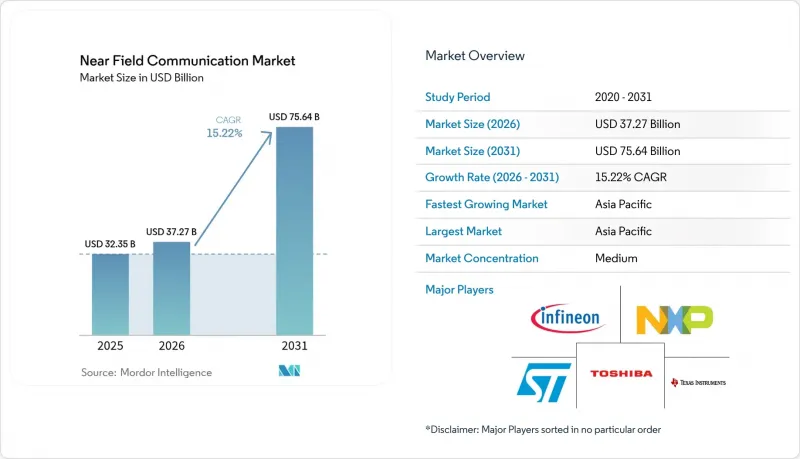
Mordor Intelligence에 의하면, 2026년 근거리 무선통신(NFC) 시장 규모는 372억 7,000만 달러로 추정되고 2025년 323억 5,000만 달러에서 확대해, 2031년에는 756억 4,000만 달러에 이를 것으로 예측됩니다.
2026년부터 2031년에 걸쳐 연평균 성장률(CAGR) 15.22%로 성장할 것으로 전망됩니다.
본 보고서는 제품 유형(NFC 태그, NFC 리더 등), 작동 모드(읽기/쓰기, 피어 투 피어, 카드 에뮬레이션 등),용도(결제, 접근 제어, 페어링 및 커미셔닝 등), 단말기(스마트폰, 웨어러블 기기, 의료기기 등), 최종 사용자 산업(헬스케어 등), 지역별로 분류되어 있습니다. 시장 전망은 금액(미 달러) 기준으로 제시되어 있습니다.
세계의 근거리 무선통신(NFC) 시장 동향 및 인사이트
코로나19 이후 비접촉식 결제의 보급
소비자들은 팬데믹 기간 동안 ‘탭하고 결제하기’라는 행동을 습관화했으며, 그 속도와 편의성 덕분에 현재도 이를 지속하고 있습니다. 마스터카드의 보고서에 따르면, 사용자의 74%가 앞으로도 비접촉 결제를 계속할 의향을 나타냈습니다. 프랑스에서는 현금 인출이 급감하고 있어, ATM에 대한 의존도가 구조적으로 낮아지고 있음을 시사합니다. 50개 이상 시장에서 비접촉 결제 한도가 상향 조정됨에 따라 평균 거래액은 더욱 증가하고 있습니다. 신흥국에서는 가맹점이 QR 코드 기반 지갑과 NFC 지원 단말기를 병행 사용함으로써, 마그네틱 스트라이프 인프라를 건너뛰는 형태로 보급이 진행되고 있습니다. 2030년까지 전자상거래에서 수동 카드 정보 입력을 폐지하는 것을 목표로 하는 결제 네트워크 각사의 토큰화 로드맵은 NFC를 매장 내 주요 인증 수단으로서의 지위를 공고히 하는 한편, 마찰 없는 온라인 결제를 위한 기반도 마련하고 있습니다.
스마트폰 제조업체의 NFC 칩 사전 탑재
2018년 이후, 모든 아이폰에 NFC를 탑재하겠다는 애플의 결정이 업계 표준이 되었으며, 안드로이드 제조업체들도 스냅드래곤 및 엑시노스 플랫폼에서 보안 요소(Secure Element) 지원을 신속하게 따랐습니다. 칩 통합이 확산됨에 따라 NFC는 단순한 프리미엄 부가 기능에서 모바일 상거래, 교통권, 디지털 키를 위한 표준 기반으로 변화하고 있습니다. 2024년에 공개된 NFC 포럼의 ‘Multi-Purpose Tap’ 사양에 따라, 한 번의 탭으로 결제, 포인트 프로그램,접근 조작을 동시에 수행할 수 있게 되어, 사용자의 일상적인 이용을 촉진합니다. 2025년 6월에 최종 확정된 새로운 릴리스 15의 보안 강화로 인해, 암호화의 유연성이 확대되고 상호 운용성이 향상됨에 따라, 각 OEM 업체들은 시스템 수준의 통합을 더욱 심화하도록 촉진받고 있습니다. 그 결과, NFC 지원 스마트폰의 보급 대수는 개발자들에게 임계 질량을 형성하여, 하드웨어의 파편화를 초래하지 않으면서도 수십억 대의 기기를 대상으로 삼을 수 있게 되었습니다.
데이터 보안 및 개인정보 보호에 대한 우려
거래량 증가에 따라 학술 문헌에 보고된 NFC 릴레이 공격, 클론 공격, 스키밍 공격의 영향이 확대되고 있습니다. 토큰화된 인증 정보는 카드 번호 도난을 줄여주지만, 온라인 거래의 25%는 여전히 토큰화를 회피하고 있어 보안 체인에 취약점이 드러나고 있습니다. 인피니온(Infineon)의 생체 인증 카드와 현재 개발 중인 거리 제한 프로토콜은 더욱 강력한 방어 기능을 약속하지만, 도입 비용과 통합의 복잡성도 높이고 있습니다. EU 규제 당국은 PSD3의 준수 요건을 강화하고 있으며, 발행사에게 다중 요소 인증과 지속적인 부정 행위 모니터링 도입을 의무화하고 있습니다. 이러한 추가 절차는 결제 시 번거로움을 가중시킬 가능성이 있으며, 최고 수준의 보안보다는 원활한 결제 흐름을 중시하는 업계(예 : 퀵서비스 소매업 등)에서는 도입 지연으로 이어질 우려가 있습니다.
부문 분석
2025년, 리더는 근거리 무선통신(NFC) 시장 점유율의 40.78%를 차지했으며, 이는 가맹점들의 EMV 준수 POS(판매 시점 정보 관리) 하드웨어에 대한 막대한 투자를 반영한 것입니다. 책임 전가 의무화 시한을 앞두고 소매업체들은 마그네틱 스트라이프, 칩, 탭을 모두 지원하는 올인원 단말기를 선호하게 되었으며, 그 결과 판매 대수와 평균 판매 가격(ASP)이 상승했습니다. 인도, 인도네시아, 브라질에서 중소기업의 디지털화를 뒷받침하는 정부의 경제 대책도 추가적인 추진력을 더했습니다. 리더 부문은 진화하는 카드 체계의 요구 사항에 맞추어 단말기를 최신 상태로 유지하는 소프트웨어 기반 펌웨어 업데이트 기능의 혜택도 받고 있습니다. 한편, 태그는 수익 기반으로는 작지만 2031년까지 연평균 성장률(CAGR) 16.55%를 나타낼 것으로 예측되며, 이는 근거리 무선통신(NFC) 시장 내에서 가장 높은 성장률입니다. 유럽의 ‘디지털 제품 여권’ 규정에 따라 명품, 전자기기, 자동차 브랜드는 제품에 위조가 불가능한 추적 기능을 탑재해야 할 의무가 있으며, NFC 태그는 이 규정을 준수하기 위한 저비용의 표준화된 방법을 제공합니다. 아시아 전역에서 스마트 선반, 인터랙티브 패키지, 위조 방지 라벨의 채택이 확대되고 있는 점도 해당 태그 시장 규모를 더욱 넓히고 있습니다.
안테나 및 디스크리트 IC와 같은 2층 하드웨어 제품군은 주요 부문에는 미치지 못하지만, 웨어러블 기기 및 의료기기에서의 풍부한 설계 채택으로 인해 혜택을 보고 있습니다. 소형화된 안테나 어레이는 현재 금속 재질의 스마트 워치 케이스에서도 주파수 편차를 일으키지 않고 작동합니다. 소프트웨어 및 서비스는 매출에서 차지하는 비중이 한 자릿수에 그치지만, 이미 도입된 하드웨어 위에 토큰 수명 주기 관리, 분석 대시보드, 로열티 엔진을 더함으로써 더 높은 매출 총이익률을 기록하고 있습니다. 캠페인 연동형 태그를 도입한 소매업체의 보고에 따르면, QR 코드를 NFC로 대체한 결과 전환율이 30% 가까이 향상되었다고 하며, 이는 도입 후 서비스가 가져다주는 지속적인 수익 가능성을 보여줍니다.
2025년에는 출입 카드, 포스터 탭, 파일 전송 등 기존의 활용이 뒷받침되어 읽기/쓰기 모드가 근거리 무선통신(NFC) 시장 규모의 45.55%를 차지하며 시장을 주도했습니다. 이 모드는 태그와 리더기만 있으면 되는 단순성 덕분에 보안보다 비용을 중시하는 도서관, 박물관, 스마트 포스터 등에서 채택이 확대되고 있습니다. 한편, 카드 에뮬레이션은 오픈 월렛 이니셔티브와 디지털 ID 프로젝트를 배경으로 연평균 성장률(CAGR) 16.78%로 성장이 가속화될 것으로 예측됩니다. 호스트 카드 에뮬레이션(HCE)을 통해 소프트웨어가 물리적 보안 요소 없이 카드 애플릿을 재현할 수 있으므로, 대중용 스마트폰의 부품 비용을 절감할 수 있습니다. 릴리스 15에서는 보안 채널에 기반한 피어 인증이 강화되어, 은행이나 교통 기관이 자신 있게 소프트웨어 기반 티켓을 도입하도록 장려하고 있습니다. 피어 투 피어(P2P)는 블루투스의 빠른 파일 전송 속도로 인해 뒤처지고 있지만, Wi-Fi 인증 정보나 Zigbee(Zigbee) 키를 클라우드 연결 없이 안전하게 전달해야 하는 기기 페어링 프로비저닝에서는 여전히 중요한 역할을 하고 있습니다.
원활한 조작에 대한 소비자의 관심이 높아지는 가운데, NFC 포럼의 ‘Multi-Purpose Tap’은 에뮬레이션과 읽기/쓰기 작업을 단일 제스처로 통합함으로써 모드 간의 경계를 모호하게 만들 가능성이 있습니다. 소매 업계의 시범 도입 결과, 결제 시간이 최대 15% 단축된 것으로 나타나, UX 개선이 모드 선호도를 어떻게 변화시키는지를 여실히 보여주고 있습니다. 마찬가지로, 개발자들은 앱 전환으로 인한 번거로움을 피하기 위해 텔레메트리 데이터 업로드, 소프트웨어 라이선스 검증, 포인트 적립을 한 번의 탭으로 통합하고 있습니다.
지역별 분석
아시아태평양은 근거리 무선통신(NFC) 시장을 주도하고 있으며, 2025년에는 37.45%의 점유율을 차지했고 2026년부터 2031년까지 연평균 성장률(CAGR) 16.55%로 성장할 것으로 추정됩니다. 모바일 우선 경제권에서는 인구의 63% 이상의 스마트폰 보급률의 혜택을 누리고 있으며, 모바일 서비스는 이미 지역 GDP의 5.3%를 차지하고 있습니다. 2024년, 중국의 교통 사업자는 600억 회 이상의 NFC를 통한 지하철 승차 처리를 수행한 반면, 인도의 통합 결제 인터페이스(UPI)에서는 일일 탭 앤 페이(Tap & Pay) 거래량이 전년 대비 3배 증가했습니다. 정부 주도의 전자 신분증 및 국민건강보험 카드 제도가 본인 확인 및 인증의 활용 사례를 더욱 촉진하고 있으며, 이는 이 지역이 세계 평균을 상회하는 성장을 이룬 요인 중 하나입니다.
유럽은 단말기 수준의 NFC 개방을 의무화하고 강력한 고객 인증을 추진하는 규제적 호재에 힘입어 시장 규모에서 2위를 차지하고 있습니다. EU의 ‘디지털 제품 여권’ 규제는 명품 및 자동차 부품에 추적성 태그 사용을 의무화하고 있어, 태그에 대한 공급망 수요의 급증을 뒷받침하고 있습니다. 카드 네트워크를 통한 토큰화 노력은 금세기 말까지 카드 정보의 수기 입력 작업을 없애는 것을 목표로 하고 있으며, 브라우저 내 탭 결제 흐름이 급증할 것으로 예측됩니다. 북유럽 은행에서는 비접촉식 직불카드 시장 침투율이 이미 90%에 달하고, 시장의 성숙도를 보여주는 한편, 거래액 면에서는 여전히 견조한 성장을 이어가고 있습니다.
북미에서는 전기차 충전 인프라의 급속한 확산과 기업의 보안 강화에 힘입어 15% 중반대의 꾸준한 성장을 기록하고 있습니다. 2025년에 시행된 연방 정부의 ‘유니버설 플러그 앤 차지(Universal Plug and Charge)’ 프레임워크는 전국적인 상호 운용성 기준을 정립하여 충전기 및 리더기 도입을 대폭 촉진했습니다. ‘CHIPS 법’에 기반한 제조업 온쇼어링 프로그램 및 세액 공제는 국내 NFC 부품 제조를 촉진하여 전 세계적인 공급 부족을 일부 완화하고 있습니다. 한편, 중동 및 아프리카에서는 규제 분절화와 POS 보급률 저하로 인해 보급이 초기 단계에 머물러 있지만, 저비용의 안전한 근거리 결제를 우선시하는 모바일 머니 이니셔티브가 이를 뒷받침하고 있습니다.
기타 혜택 :
- 엑셀 형식 시장 예측(ME) 시트
- 3개월간의 애널리스트 지원
자주 묻는 질문
목차
제1장 서론
제2장 조사 방법
제3장 주요 요약
제4장 시장 구도
제5장 시장 규모 및 성장 예측
제6장 경쟁 구도
제7장 시장 기회 및 향후 전망
KTH 26.08.26According to Mordor Intelligence, near field communication market size in 2026 is estimated at USD 37.27 billion, growing from 2025 value of USD 32.35 billion with 2031 projections showing USD 75.64 billion, growing at 15.22% CAGR over 2026-2031.
This report is Segmented by Product Type (NFC Tags, NFC Readers, and More), Operating Mode (Read / Write, Peer-To-Peer, and Card Emulation), Application (Payments, Access Control, Pairing and Commissioning, and More), End-Device (Smartphones, Wearables, Medical Equipment, and More), End-User Vertical (Healthcare, and More), and Geography. The Market Forecasts are Provided in Terms of Value (USD).
Global Near Field Communication Market Trends and Insights
Proliferation of Contactless Payments Post-COVID-19
Consumers embraced tap-to-pay behaviour during the pandemic and have retained it for speed and convenience. Mastercard reports that 74% of users plan to keep paying contactlessly in the future. Cash withdrawals in France have fallen sharply, signalling a structural decline in ATM reliance. Rising contactless limits in more than 50 markets further lift average transaction values. In emerging economies, merchants leapfrog mag-stripe infrastructure by adopting QR-based wallets and NFC-enabled terminals in tandem. Payment networks' tokenisation roadmaps, aimed at removing manual card entry for e-commerce by 2030, cement NFC's role as the foremost in-store authentication method while positioning it for friction-free online checkout.
Smartphone OEMs Pre-Installing NFC Chips
Apple's decision to include NFC in every iPhone since 2018 set an industry standard, and Android brands quickly followed suit with secure element support in Snapdragon and Exynos platforms.Broader chip integration turns NFC from a premium extra into default plumbing for mobile commerce, transit ticketing, and digital keys. The NFC Forum's Multi-Purpose Tap specification, published in 2024, enables a single tap to launch payment, loyalty, and access actions simultaneously, thereby boosting daily user engagement. New Release 15 security upgrades, finalised in June 2025, extend cryptographic agility and improve interoperability, encouraging OEMs to deepen system-level integration. As a result, the installed base of NFC-ready phones provides a critical mass for developers, allowing them to target billions of devices without hardware fragmentation.
Data-Security and Privacy Concerns
Higher transaction volumes magnify the consequences of NFC relay, cloning, and skimming attacks documented in academic literature. While tokenised credentials mitigate card-number theft, 25% of online transactions still bypass tokenisation, exposing gaps in the security chain. Biometric cards from Infineon and distance-bounding protocols under development promise stronger defences, yet they also raise deployment costs and integration complexity. Regulators in the EU are tightening PSD3 compliance requirements, obliging issuers to adopt multifactor authentication and continuous fraud monitoring. The extra steps can increase friction at checkout and may slow adoption in sectors that favour frictionless flows over maximum security, such as quick-service retail.
Other drivers and restraints analyzed in the detailed report include:
- Regulatory Opening of Handset NFC to Third-Party Wallets
- EV "Plug-and-Charge" Authentication via NFC
- Short-Range / Interference Limits versus BLE and UWB
For complete list of drivers and restraints, kindly check the Table Of Contents.
Segment Analysis
In 2025, readers captured 40.78% of the Near Field Communication (NFC) market share, reflecting significant merchant investment in EMV-compliant point-of-sale (POS) hardware. Mandatory liability-shift deadlines prompted retailers to favor all-in-one terminals that support mag-stripe, chip, and tap, thereby boosting unit volumes and ASPs. Government stimulus for small-business digitisation in India, Indonesia, and Brazil added further momentum. The reader segment also benefits from software-updatable firmware that keeps terminals current with evolving card-scheme requirements. Conversely, tags, although accounting for a smaller revenue base, are forecast to register a 16.55% CAGR to 2031, the fastest within the Near Field Communication market. Europe's Digital Product Passport regulation requires luxury goods, electronics, and automotive brands to embed immutable traceability into their products, and NFC tags provide a low-cost, standards-based method for compliance. Growing adoption of smart shelves, interactive packaging, and anti-counterfeit labels across Asia further widens the addressable tag pool.
Second-tier hardware lines, such as antennas and discrete ICs, lag behind the main segments yet benefit from design-win richness in wearables and medical devices. Miniaturised antenna arrays now support metal-backed smartwatch casings without detuning. Software and services, though only a single-digit slice of revenue, record higher gross margins by layering token-lifecycle management, analytical dashboards and loyalty engines on top of installed hardware. Retailers using campaign-linked tags report conversion-rate uplifts approaching 30% after replacing QR codes with NFC, illustrating the recurring-revenue potential of post-deployment services.
Read/write mode dominated the Near Field Communication market size with 45.55% share in 2025, thanks to legacy uptake in access cards, poster tapping and file transfer. The mode's simplicity, requiring only a tag and a reader, underpins adoption in libraries, museums and smart posters where cost trumps security. Card emulation, however, is projected to accelerate at a 16.78% CAGR on the back of open-wallet initiatives and digital-ID projects. Host Card Emulation lets software replicate a card applet without a physical secure element, cutting bill-of-materials for mass-market phones. Release 15 elevates secure-channel-based peer authentication, persuading banks and transit authorities to roll out software-based tickets confidently. Peer-to-peer lags due to Bluetooth's faster file-transfer speeds, yet it remains relevant in device-pair provisioning where Wi-Fi credentials or Zigbee keys must pass securely without cloud connectivity.
As consumer interest in frictionless interactions grows, the NFC Forum's Multi-Purpose Tap could blur mode boundaries by chaining emulation and read/write operations into a single gesture. Retail pilots indicate checkout time reductions of up to 15%, illustrating how UX gains may reshape mode preferences. Developers are likewise bundling telemetry upload, software licence validation and loyalty accrual into one tap to avoid app-switching fatigue
Complete Report Scope:
- By Product Type
- NFC Tags
- NFC ICs / Secure Elements
- NFC Readers
- NFC Antennas
- Software and Services
- By Operating Mode
- Read / Write
- Peer-to-Peer
- Card Emulation
- By Application
- Payments
- Access Control
- Pairing and Commissioning
- Identity and Authentication
- Smart Posters and Marketing
- Other Applications
- By End-Device
- Smartphones
- Wearables
- PCs and Other Consumer Electronics
- Medical Equipment
- Automotive Infotainment / EV Chargers
- Other End-Devices
- By End-User Vertical
- BFSI
- IT and Telecommunications
- Retail and e-Commerce
- Healthcare
- Hospitality and Transportation
- Government and Public Sector
- By Geography
- North America
- United States
- Canada
- Mexico
- South America
- Brazil
- Argentina
- Rest of South America
- Europe
- United Kingdom
- Germany
- France
- Italy
- Spain
- Rest of Europe
- Asia-Pacific
- China
- India
- Japan
- South Korea
- ASEAN
- Rest of Asia-Pacific
- Middle East and Africa
- Middle East
- Saudi Arabia
- United Arab Emirates
- Rest of Middle East
- Africa
- South Africa
- Nigeria
- Rest of Africa
- Middle East
- North America
Geography Analysis
The Asia-Pacific region leads the Near Field Communication market, accounting for a 37.45% share in 2025 and is estimated to grow at 16.55% CAGR from 2026 to 2031. Mobile-first economies benefit from smartphone penetration exceeding 63% of the population, and mobile services already account for 5.3% of regional GDP. China's transit operators processed more than 60 billion NFC metro rides in 2024, while India's Unified Payments Interface saw daily tap-and-pay volumes triple year-on-year. Government e-ID and national health-card schemes further stimulate identity and authentication use cases, helping the region outpace global averages.
Europe sits second in value, thanks to regulatory tailwinds that mandate handset-level NFC openness and promote strong customer authentication. The EU's Digital Product Passport regulation mandates the use of traceability tags for luxury goods and automotive components, catalyzing a surge in tag supply chain demand. Tokenisation initiatives by card networks aim to eliminate manual card entry by the end of the decade, promising a surge in in-browser tap-to-pay flows. Nordic banks have already achieved 90% market penetration for contactless debit, signaling maturity while still experiencing healthy growth in transaction value.
North America records steady mid-teen growth, buoyed by its rapid roll-out of EV charging infrastructure and enterprise security upgrades. The federal universal plug-and-charge framework, effective 2025, sets a baseline for nationwide interoperability and is expected to lift charger-reader deployments sharply. Manufacturing onshoring programmes and tax credits under the CHIPS Act encourage domestic NFC component fabrication, partly mitigating global supply tightness. Meanwhile, Middle East and Africa exhibit early-stage adoption, constrained by fragmented regulation and lower POS penetration but aided by mobile-money initiatives that prioritise low-cost, secure proximity payments.
- NXP Semiconductors
- STMicroelectronics N.V.
- Infineon Technologies AG
- Broadcom Inc.
- Sony Group Corporation
- Samsung Electronics
- Qualcomm Technologies
- Toshiba Electronic Devices & Storage Corporation
- Texas Instruments Inc.
- Zebra Technologies Corporation
- HID Global
- Thales (Gemalto)
- Renesas Electronics
- Shanghai Fudan Microelectronics
- Identiv Inc.
- Smartrac Technology
- Marvell Technology Group
- Inside Secure (Verimatrix)
- Huawei Technologies
- Apple Inc.
Additional Benefits:
- The market estimate (ME) sheet in Excel format
- 3 months of analyst support
TABLE OF CONTENTS
1 INTRODUCTION
- 1.1 Study Assumptions and Market Definition
- 1.2 Scope of the Study
2 RESEARCH METHODOLOGY
3 EXECUTIVE SUMMARY
4 MARKET LANDSCAPE
- 4.1 Market Overview
- 4.2 Market Drivers
- 4.2.1 Proliferation of contactless payments post-COVID-19
- 4.2.2 Smartphone OEMs pre-installing NFC chips
- 4.2.3 Regulatory opening of handset NFC to third-party wallets
- 4.2.4 EV "plug-and-charge" authentication via NFC
- 4.2.5 EU Digital Product Passport mandates for embedded NFC tags
- 4.2.6 Foldable/XR wearables adopting NFC for spatial UX
- 4.3 Market Restraints
- 4.3.1 Data-security and privacy concerns
- 4.3.2 Short-range/interference limits vs BLE and UWB
- 4.3.3 13.56 MHz front-end chip supply constraints
- 4.3.4 Merchant tokenisation fees slowing acceptance in emerging markets
- 4.4 Industry Value Chain Analysis
- 4.5 Regulatory Landscape
- 4.6 Technological Outlook
- 4.7 Porter's Five Forces Analysis
- 4.7.1 Bargaining Power of Suppliers
- 4.7.2 Bargaining Power of Buyers/Consumers
- 4.7.3 Threat of New Entrants
- 4.7.4 Threat of Substitute Products
- 4.7.5 Intensity of Competitive Rivalry
- 4.8 Impact of Macroeconomic Factors on the Market
5 MARKET SIZE AND GROWTH FORECASTS (VALUE)
- 5.1 By Product Type
- 5.1.1 NFC Tags
- 5.1.2 NFC ICs / Secure Elements
- 5.1.3 NFC Readers
- 5.1.4 NFC Antennas
- 5.1.5 Software and Services
- 5.2 By Operating Mode
- 5.2.1 Read / Write
- 5.2.2 Peer-to-Peer
- 5.2.3 Card Emulation
- 5.3 By Application
- 5.3.1 Payments
- 5.3.2 Access Control
- 5.3.3 Pairing and Commissioning
- 5.3.4 Identity and Authentication
- 5.3.5 Smart Posters and Marketing
- 5.3.6 Other Applications
- 5.4 By End-Device
- 5.4.1 Smartphones
- 5.4.2 Wearables
- 5.4.3 PCs and Other Consumer Electronics
- 5.4.4 Medical Equipment
- 5.4.5 Automotive Infotainment / EV Chargers
- 5.4.6 Other End-Devices
- 5.5 By End-User Vertical
- 5.5.1 BFSI
- 5.5.2 IT and Telecommunications
- 5.5.3 Retail and e-Commerce
- 5.5.4 Healthcare
- 5.5.5 Hospitality and Transportation
- 5.5.6 Government and Public Sector
- 5.6 By Geography
- 5.6.1 North America
- 5.6.1.1 United States
- 5.6.1.2 Canada
- 5.6.1.3 Mexico
- 5.6.2 South America
- 5.6.2.1 Brazil
- 5.6.2.2 Argentina
- 5.6.2.3 Rest of South America
- 5.6.3 Europe
- 5.6.3.1 United Kingdom
- 5.6.3.2 Germany
- 5.6.3.3 France
- 5.6.3.4 Italy
- 5.6.3.5 Spain
- 5.6.3.6 Rest of Europe
- 5.6.4 Asia-Pacific
- 5.6.4.1 China
- 5.6.4.2 India
- 5.6.4.3 Japan
- 5.6.4.4 South Korea
- 5.6.4.5 ASEAN
- 5.6.4.6 Rest of Asia-Pacific
- 5.6.5 Middle East and Africa
- 5.6.5.1 Middle East
- 5.6.5.1.1 Saudi Arabia
- 5.6.5.1.2 United Arab Emirates
- 5.6.5.1.3 Rest of Middle East
- 5.6.5.2 Africa
- 5.6.5.2.1 South Africa
- 5.6.5.2.2 Nigeria
- 5.6.5.2.3 Rest of Africa
- 5.6.5.1 Middle East
- 5.6.1 North America
6 COMPETITIVE LANDSCAPE
- 6.1 Market Concentration
- 6.2 Strategic Moves and Funding
- 6.3 Market Share Analysis
- 6.4 Company Profiles (includes Global level Overview, Market level overview, Core Segments, Financials as available, Strategic Information, Market Rank/Share for key companies, Products and Services, and Recent Developments)
- 6.4.1 NXP Semiconductors
- 6.4.2 STMicroelectronics N.V.
- 6.4.3 Infineon Technologies AG
- 6.4.4 Broadcom Inc.
- 6.4.5 Sony Group Corporation
- 6.4.6 Samsung Electronics
- 6.4.7 Qualcomm Technologies
- 6.4.8 Toshiba Electronic Devices & Storage Corporation
- 6.4.9 Texas Instruments Inc.
- 6.4.10 Zebra Technologies Corporation
- 6.4.11 HID Global
- 6.4.12 Thales (Gemalto)
- 6.4.13 Renesas Electronics
- 6.4.14 Shanghai Fudan Microelectronics
- 6.4.15 Identiv Inc.
- 6.4.16 Smartrac Technology
- 6.4.17 Marvell Technology Group
- 6.4.18 Inside Secure (Verimatrix)
- 6.4.19 Huawei Technologies
- 6.4.20 Apple Inc.
7 MARKET OPPORTUNITIES AND FUTURE OUTLOOK
- 7.1 White-space and Unmet-need Assessment


