

|
시장보고서
상품코드
2114090
온라인 광고 시장 : 시장 점유율 분석, 업계 동향 및 통계, 성장 예측(2026-2031년)Online Advertising - Market Share Analysis, Industry Trends & Statistics, Growth Forecasts (2026 - 2031) |
||||||
 Mordor Intelligence
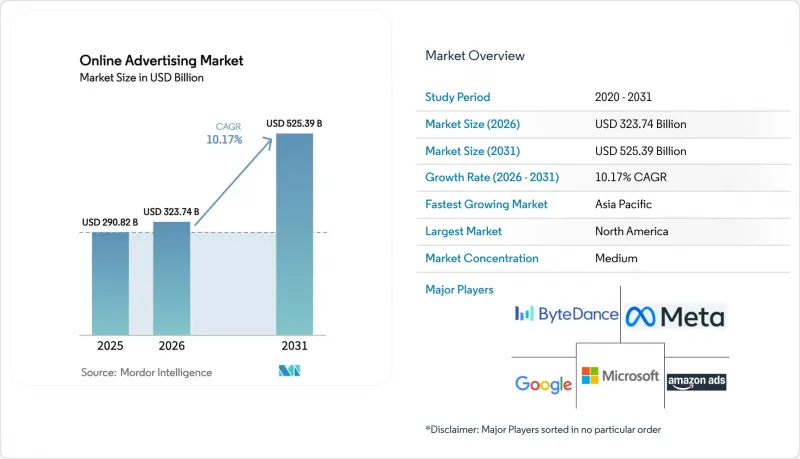
Mordor Intelligence에 의하면, 온라인 광고 시장 규모는 2025년 2,908억 2,000만 달러로 평가되었고, 2026년 3,237억 4,000만 달러에서 2031년까지 5,253억 9,000만 달러로 확대될 것으로 예측되며, 2026-2031년 연평균 복합 성장률(CAGR)은 10.17%를 나타낼 전망입니다.
본 보고서는 광고 형식별(소셜 미디어, 검색 엔진, 동영상, 이메일, 디스플레이 광고), 플랫폼별(모바일, 데스크톱 및 노트북, 커넥티드 TV, 기타 플랫폼), 최종 사용자 산업별(자동차, 소매 및 전자상거래 등), 광고 구매 모델별(프로그래매틱·실시간 입찰 등), 그리고 지역별로 분류되어 있습니다. 시장 예측은 금액(달러) 기준으로 제시되어 있습니다.
세계의 온라인 광고 시장 동향 및 인사이트
리테일 미디어 네트워크를 통한 수익화가 CPG 브랜드의 클로즈드 루프 ROAS를 견인
2025년, Amazon Ads, Walmart Connect, Instacart Ads가 합쳐서 연간 약 500억 달러의 광고비를 유치함에 따라 리테일 미디어 네트워크는 전략적인 수익원으로 성장했습니다. 각 브랜드는 사이트 내 노출과 확인된 결제 과정을 연결하는 클로즈드 루프 어트리뷰션을 중시하고 있으며, 이를 통해 가시성 대체 지표에 대한 추측의 필요성이 배제되었습니다. 베인 앤 컴퍼니의 추산에 따르면, 2025년 리테일 미디어의 광고 투자 수익률(ROAS)은 오픈 웹의 디스플레이 광고에 비해 3배에서 5배 더 높습니다. Sam’s Club은 ‘회원 액세스 플랫폼’을 확장하고 공급업체에 거래 데이터를 제공함으로써, 기존 퍼블리셔로는 실현할 수 없었던 세밀한 오디언스 세분화 기능을 가능하게 했습니다. 그 결과, 기존 디스플레이 광고 매체는 예산 점유율을 잃게 되었고, 광고 서버와 판매 시점 정보 관리(POS)를 모두 보유한 수직 통합형 생태계로 광고 인벤토리 공급이 집중되고 있습니다.
스마트폰 보급률의 확대가 전 세계적으로 모바일 광고 노출 수를 끌어올리고 있습니다.
2025년에는 전 세계 스마트폰 가입자 수가 68억 건에 달했고, 모바일 광고에 대한 총 광고비 비중은 63.79%로 상승하여, 광고주에게는 매일의 미디어 이용 시간을 지배하는 ‘상시 켜져 있는 화면’이 제공되었습니다. 사용자는 하루 평균 4.8시간을 모바일 단말기에서 보내고 있으며, 이는 데스크톱 이용 시간의 2배 이상에 해당합니다. 인도, 인도네시아, 나이지리아에서는 저가형 5G 지원 스마트폰이 보급되고 있어, 데스크톱 보유율이 20% 미만에 그치는 지역에서도 광고 대상이 되는 잠재 고객층이 확대되고 있습니다. 2025년 상반기, 구글의 ‘Performance Max’ 캠페인에서 모바일 광고 공간의 1달러당 전환 수는 데스크톱보다 18% 더 많았으며, 광고주들이 모바일 우선 크리에이티브 전략을 선호하는 경향이 더욱 강해지고 있습니다.
유럽연합(EU)의 써드파티 쿠키 폐지에 따른 신호 상실로 타겟팅이 약화
구글의 써드파티 쿠키 단계적 폐지로 인해 2025년 중반까지 유럽 웹 사용자의 65%에서 크로스사이트 ID가 삭제되었습니다. IAB Europe의 기록에 따르면, 2025년 상반기 오픈 웹 퍼블리셔를 대상으로 한 프로그래매틱 CPM은 23% 감소했습니다. Criteo의 2025년 2분기 유럽 매출은 커머스 데이터 제휴가 결정론적 쿠키를 완전히 대체하지는 못했기 때문에 전년 동기 대비 11% 감소했습니다. 2025년 12월 현재, 프라이버시 샌드박스 API의 채택률은 여전히 30% 미만에 머물러 있으며, 월드가든과 오픈 웹 간의 성과 격차가 확대되고 있습니다.
부문 분석
동영상 광고는 2025년 광고비의 29%를 차지했으며, 연평균 성장률(CAGR) 10.59%로 성장하고 있어 온라인 광고 시장 전체를 웃도는 속도로 확대되었습니다. YouTube Shorts는 2025년에 하루 700억 회의 조회수를 기록했으며, Alphabet은 2분기에 미드롤 광고 수익화를 시작하여 새로운 광고 슬롯을 개방했습니다. TikTok의 피드 내 광고 유닛은 2024년에 145억 달러의 수익을 창출하며 전년 대비 35%의 성장률을 기록했습니다. 광고주들은 원터치 구매를 실현하기 위해 동영상 프레임 내에 상품 태그를 삽입하여 커머스와 엔터테인먼트를 융합하고 있습니다. 검색은 2025년에도 39.16%라는 최고 점유율을 유지했습니다. 이는 구매 의도가 높은 검색 쿼리가 시청을 중단시키는 광고 슬롯에 비해 2-3배 높은 전환율을 가져오기 때문이지만, 검색 쿼리 수 증가가 정점에 다다르면서 성장은 둔화되고 있습니다. 디스플레이 광고는 쿠키 폐지로 인한 구조적인 역풍에 직면해 있으며, CPM이 낮은 컨텍스트 광고로 광고비가 이동하고 있습니다. 이메일 광고는 플랫폼 수수료를 회피하기 위해 자체 리스트를 활용하는 D2C(소비자 직접 판매) 브랜드에게는 여전히 틈새 시장이지만, 수신함의 포화와 스팸 필터의 엄격화로 인해 규모 확대에는 한계가 있습니다.
두 번째 혁신의 물결로, 동영상이 거래 데이터와 직접 연계되고 있습니다. 아마존의 Fire TV는 Prime Checkout과 연동된 구매 가능한 오버레이 기능을 통합하고 있으며, 메타의 Advantage+는 동영상 크리에이티브를 즉석에서 생성하여 파일럿 조사에서 CPA를 12% 절감했습니다. 동영상이 커머스 및 자동화와 융합됨에 따라, 온라인 광고 시장 전체에서 동영상이 차지하는 비중은 예측 기간 동안 계속 확대될 전망입니다.
2025년에는 스마트폰이 사용자의 일상에 항상 함께하며 멀티 세션 행동을 촉진함에 따라, 모바일 광고비의 63.79%를 계속 차지했습니다. 커넥티드 TV의 점유율은 여전히 작지만 연평균 성장률(CAGR) 11.09%로 상승하고 있으며, 온라인 광고 시장에서 가장 빠른 성장 궤도를 그리고 있습니다. 아마존의 프라임 비디오는 전 세계 2억 명의 시청자에게 광고를 도입했으며, 2024년 1분기에는 수요가 따라잡을 때까지 CPM을 일시적으로 12% 인하했습니다. 로쿠(Roku)는 2024년 말 기준 8,500만 개의 활성 계정을 보유하고 있으며, 삼성 애즈(Samsung Ads)는 현재 북미 및 유럽 전역의 6,000만 대 스마트 TV에서 시청 데이터를 수집하고 있습니다. 모바일 우선 소비를 선호하는 젊은 층 사이에서는 데스크톱 사용이 감소하고 있지만, 직장 대상 B2B 캠페인에서는 여전히 그 가치를 유지하고 있습니다. 게임 내 및 디지털 옥외 광고(DOOH)와 같은 기타 스크린은 도달 범위를 확대하고 있는 반면, 통일된 측정 기준이 부족하여 현재로서는 예산 유입이 제한되고 있습니다.
크로스 스크린 ID 솔루션은 커넥티드 TV에서의 가구 단위 노출과 모바일 리타게팅을 연계하는 것을 목표로 합니다. The Trade Desk의 ‘Ventura OS’는 디스플레이, 오디오, 스트리밍을 아우르는 기획을 위한 단일 대시보드를 제공하여, 프로그래매틱 바이잉에 진입하는 중규모 광고주의 워크플로를 간소화합니다. 타겟팅 능력이 향상됨에 따라 커넥티드 TV는 특히 방송에서 전환되는 브랜드 동영상 예산 부문에서 모바일과 추가 예산 확보를 놓고 경쟁하게 될 것입니다.
지역별 분석
2025년 광고 지출 중 북미가 35.19%를 차지했습니다. 그 중심에는 미국이 있었으며, 1인당 지출액은 650달러에 달했고, Google, Meta, Amazon이 예산의 60% 이상을 차지했습니다. 캐나다에서는 Loblaw사의 ‘PC Optimum’이나 Canadian Tire사의 ‘Triangle Rewards’와 같은 소매 네트워크에 힘입어 2025년에 9% 증가했습니다. 멕시코에서는 Mercado Libre가 쇼핑객 데이터를 수익화함으로써 12%의 성장률을 기록했습니다. 캘리포니아주 소비자 개인정보 보호법(CCPA) 등의 개인정보 보호 규제로 인해 규정 준수 부담은 증가하고 있지만, 고가치 소비자층이 프리미엄 CPM을 유지하고 있습니다.
아시아태평양은 연평균 성장률(CAGR) 11.37%를 기록하며 가장 빠르게 성장하는 지역입니다. 중국에서는 타오바오와 도우인이 동영상, 전자상거래, 결제를 융합한 결과, 2025년 광고 수익이 약 1,200억 달러에 달했습니다. 인도, 인도네시아, 베트남은 모바일 전용 사용자에 의존하고 있어, 광고주는 데스크톱 시대의 인프라를 생략할 수 있습니다. 일본에서는 NHK와 후지 TV가 광고 수익형 스트리밍 서비스를 시작함에 따라 예산이 커넥티드 TV로 이동했습니다. 한국에서는 네이버와 카카오가 슈퍼앱 생태계에 대한 투자를 더욱 강화하고 있습니다. 호주의 CartologyAI는 프로그래매틱 오디오를 추진하고 있으며, 뉴질랜드도 이러한 모델을 따르고 있습니다.
유럽에서는 쿠키 폐지와 디지털 서비스세가 도입되면서 오픈 웹에서의 수익 창출이 저해되고 있습니다. 독일, 영국, 프랑스가 지역 전체 광고비의 55%를 차지하고 있습니다. 영국에서는 브랜드들이 ‘월드 가든’으로 대피함에 따라 2025년에도 7%의 성장을 기록했습니다. 프랑스에서는 Canal+의 프로그래매틱 광고 삽입 덕분에 커넥티드 TV 광고비가 18% 증가했습니다. 이탈리아와 스페인은 모바일 커머스를 배경으로 각각 9%와 8%의 성장을 달성했습니다.
남미는 2025년에 13%의 성장률을 기록했으며, 마르케도 리브레와 매거진 루이자가 리테일 미디어를 확대함에 따라 브라질이 전체 지역 지출의 60%를 차지했습니다. 아르헨티나는 통화 불안 속에서 5%의 마이너스 성장을 기록했습니다. 1인당 지출액이 85달러로 낮아 상승 여력은 제한적이며, 광대역 보급 격차로 인해 커넥티드 TV의 성장도 더딘 상황입니다.
중동 및 아프리카는 규모는 가장 작지만 빠르게 성장하고 있습니다. 중동 광고비의 70%는 아랍에미리트와 사우디아라비아에 집중되어 있습니다. 튀르키예는 리라 환율 변동에도 불구하고 2025년에 15% 증가할 전망이며, 남아프리카공화국은 모바일용 WhatsApp Business 광고 도입으로 11% 증가했습니다. 인프라 병목 현상이 광대역 포맷의 보급을 저해하고 있지만, 젊은 인구 구성은 온라인 광고 시장의 장기적인 잠재력을 시사하고 있습니다.
기타 혜택 :
- 엑셀 형식 시장 전망(ME) 시트
- 3개월간의 애널리스트 지원
자주 묻는 질문
목차
제1장 서론
제2장 조사 방법
제3장 주요 요약
제4장 시장 구도
제5장 시장 규모 및 성장 예측
제6장 경쟁 구도
제7장 시장 기회 및 향후 전망
AJY 26.08.26According to Mordor Intelligence, the online advertising market size is projected to expand from USD 290.82 billion in 2025 and USD 323.74 billion in 2026 to USD 525.39 billion by 2031, registering a CAGR of 10.17% between 2026 to 2031.
This report is Segmented by Advertising Format (Social Media, Search Engine, Video, and Email, and Display Advertising), Platform (Mobile, Desktop and Laptop, Connected TV, and Other Platforms), End-User Vertical (Automotive, Retail and E-Commerce, and More), Ad Buying Model (Programmatic Real-Time Bidding, and More), and Geography. The Market Forecasts are Provided in Terms of Value (USD).
Global Online Advertising Market Trends and Insights
Retail Media Networks Monetization Driving Closed-Loop ROAS for CPG Brands
Retail media networks grew into strategic profit centers in 2025 as Amazon Ads, Walmart Connect, and Instacart Ads jointly attracted roughly USD 50 billion in annual spend. Brands value the closed-loop attribution that links on-site impressions to confirmed checkouts, eliminating guesswork around viewability proxies. Bain and Company calculated three-to-five-times higher return on ad spend for retail media versus open-web display in 2025. Sam's Club extended its Member Access Platform by giving suppliers transactional data for granular audience segmentation capabilities that conventional publishers cannot match. As a result, legacy display outlets lose budget share, and inventory supply is concentrating in vertically integrated ecosystems that own both ad server and point of sale.
Increasing Smartphone Penetration Boosting Mobile Ad Impressions Globally
Global smartphone subscriptions hit 6.8 billion in 2025, lifting mobile to 63.79% of total spend and giving advertisers an always-on screen that dominates daily media time. Users average 4.8 hours per day on handheld devices, more than double desktop engagement. Cheaper 5G phones in India, Indonesia, and Nigeria are enlarging addressable audiences where desktop ownership remains below 20%. Google's Performance Max campaigns generated 18% more conversions per dollar on mobile placements than desktop during H1 2025, reinforcing advertiser preference for mobile-first creative strategies.
Signal-Loss from Third-Party-Cookie Deprecation in the European Union Undermining Targeting
Google's staged phase-out of third-party cookies removed cross-site IDs for 65% of European web users by mid-2025. IAB Europe recorded a 23% decline in programmatic CPMs for open-web publishers during H1 2025. Criteo's European revenue slid 11% year-over-year in Q2 2025 as commerce-data partnerships failed to fully replace deterministic cookies. Privacy Sandbox APIs remain below 30% adoption as of December 2025, widening the performance gap between walled gardens and open web.
Other drivers and restraints analyzed in the detailed report include:
- Shift of TV Budgets to Connected-TV Platforms Expanding Programmatic Video Inventory
- 5G-Enabled Immersive Video Ads Accelerating Spend in South-East Asia
- Digital-Services Taxes in the United Kingdom and France Squeezing Platform Margins
For complete list of drivers and restraints, kindly check the Table Of Contents.
Segment Analysis
Video accounted for 29% of 2025 spend and is growing at a 10.59% CAGR, outpacing the broader online advertising market. YouTube Shorts logged 70 billion daily views in 2025, and Alphabet activated mid-roll monetization in Q2, unlocking fresh inventory. TikTok's in-feed units generated USD 14.5 billion in 2024 revenue, expanding 35% year-over-year. Advertisers embed product tags inside video frames for one-tap purchases, blending commerce with entertainment. Search retained a leading 39.16% share in 2025 because intent-rich queries convert two-to-three times better than interruptive placements, though growth moderates as incremental query volume plateaus. Display faces structural headwinds from cookie deprecation, steering spend to contextual placements that carry lower CPMs. Email remains niche for direct-to-consumer brands using owned lists to bypass platform fees, yet inbox saturation and tightening spam filters cap scale.
A second wave of innovation ties video directly to transaction data. Amazon's Fire TV integrates shoppable overlays tied to Prime checkout, while Meta's Advantage+ generates video creatives on the fly, trimming CPA by 12% in pilot studies. As video merges with commerce and automation, the format's share within online advertising market size is poised to keep widening over the forecast horizon.
Mobile maintained 63.79% of spend in 2025 because smartphones accompany users throughout the day and drive multisession behavior. Connected-TV share remains smaller but rises at an 11.09% CAGR, the fastest platform trajectory within the online advertising market. Amazon's Prime Video introduced ads to 200 million global viewers, temporarily softening CPMs by 12% in Q1 2024 before demand caught up. Roku finished 2024 with 85 million active accounts, and Samsung Ads now reads viewing data from 60 million smart TVs across North America and Europe. Desktop usage declines among younger cohorts who favor mobile-first consumption, though it retains value for workplace B2B campaigns. Other screens such as in-game or digital out-of-home add incremental reach but lack unified measurement, limiting budget flows for now.
Cross-screen identity solutions seek to tie household-level exposure on connected-TV to mobile retargeting. The Trade Desk's Ventura OS offers a single dashboard for planning across display, audio, and streaming, simplifying workflow for midsize advertisers entering programmatic buying. As addressability improves, connected-TV could challenge mobile for incremental dollars, especially for brand video budgets relocating from broadcast.
Complete Report Scope:
- By Advertising Format
- Social Media
- Search Engine
- Video
- Display Advertising
- By Platform
- Mobile
- Desktop and Laptop
- Connected TV
- Other Platforms
- By End-User Vertical
- Automotive
- Retail and E-commerce
- Healthcare and Pharma
- BFSI
- Telecom
- Other End-User Verticals
- By Ad Buying Model
- Programmatic Real-Time Bidding
- Programmatic Guaranteed
- Direct Insertion Order
- Self-Serve
- By Geography
- North America
- United States
- Canada
- Mexico
- South America
- Brazil
- Argentina
- Rest of South America
- Europe
- Germany
- United Kingdom
- France
- Italy
- Spain
- Rest of Europe
- Asia Pacific
- China
- Japan
- South Korea
- India
- Australia
- New Zealand
- Rest of Asia Pacific
- Middle East and Africa
- Middle East
- United Arab Emirates
- Saudi Arabia
- Turkey
- Rest of Middle East
- Africa
- South Africa
- Rest of Africa
- Middle East
- North America
Geography Analysis
North America contributed 35.19% of 2025 spending, anchored by the United States where per-capita outlay reached USD 650 and Google, Meta, and Amazon absorbed over 60% of budget. Canada rose 9% in 2025, powered by Loblaw's PC Optimum and Canadian Tire's Triangle Rewards retail networks. Mexico advanced 12% as Mercado Libre monetized shopper data. While privacy regulation such as the California Consumer Privacy Act lifts compliance overhead, high-value consumers sustain premium CPMs.
Asia Pacific is the fastest-growing region at an 11.37% CAGR. China generated roughly USD 120 billion in 2025 advertising revenue as Taobao and Douyin blended video, commerce, and payments. India, Indonesia, and Vietnam rely on mobile-only users, letting advertisers skip desktop era infrastructure. Japan shifted budgets to connected-TV where NHK and Fuji Television launched ad-supported streaming. South Korea doubles down on super-app ecosystems from Naver and Kakao. Australia's CartologyAI pushes programmatic audio while New Zealand emulates these models.
Europe faces cookie deprecation and digital-services taxes that damp open-web monetization. Germany, the United Kingdom, and France deliver 55% of regional spend. The United Kingdom still grew 7% in 2025 as brands took refuge within walled gardens. France saw 18% connected-TV growth thanks to Canal+ programmatic ad insertion. Italy and Spain expanded 9% and 8% respectively on back of mobile commerce.
South America added 13% in 2025, with Brazil at 60% of regional spend as Mercado Libre and Magazine Luiza grew retail media. Argentina contracted 5% amid currency stress. Lower per-capita outlay at USD 85 limits upside, and connected-TV trails due to broadband gaps.
Middle East and Africa are the smallest yet expanding swiftly. The United Arab Emirates and Saudi Arabia concentrate 70% of Middle East spend. Turkey rose 15% in 2025 despite lira volatility, and South Africa increased 11% on mobile WhatsApp Business placements. Infrastructure bottlenecks restrain high-bandwidth formats but young demographics offer long-run potential within the online advertising market.
- Google LLC
- Meta Platforms Inc.
- Amazon.com Inc. (Amazon Ads)
- ByteDance Ltd. (TikTok)
- Microsoft Corp. (LinkedIn, Bing Ads)
- Alibaba Group (Alimama)
- Tencent Holdings Ltd. (WeChat, Tencent Ads)
- Baidu Inc.
- Snap Inc.
- Pinterest Inc.
- X Corp. (Twitter)
- Spotify Technology S.A.
- Roku Inc.
- Comcast Corp. (FreeWheel)
- Samsung Ads
- Verizon Media (Yahoo)
- Adobe Inc.
- Oracle Advertising
- The Trade Desk Inc.
- Magnite Inc.
- Criteo S.A.
- Taboola Inc.
- PubMatic Inc.
Additional Benefits:
- The market estimate (ME) sheet in Excel format
- 3 months of analyst support
TABLE OF CONTENTS
1 INTRODUCTION
- 1.1 Study Assumptions and Market Definition
- 1.2 Scope of the Study
2 RESEARCH METHODOLOGY
3 EXECUTIVE SUMMARY
4 MARKET LANDSCAPE
- 4.1 Market Overview
- 4.2 Market Drivers
- 4.2.1 Retail Media Networks Monetization Driving Closed-Loop ROAS for CPG Brands
- 4.2.2 Increasing Smartphone Penetration Boosting Mobile Ad Impressions Globally
- 4.2.3 Shift of TV Budgets to Connected TV Platforms Expanding Programmatic Video Inventory
- 4.2.4 5G-Enabled Immersive Video Ads Accelerating Spend in South-East Asia
- 4.2.5 AI-Generated Dynamic Creative Optimisation Reducing CPA in North America
- 4.2.6 Commerce-Search Integration in Super-Apps Fueling In-App Ads Across China and South-East Asia
- 4.3 Market Restraints
- 4.3.1 Signal-Loss from Third-Party-Cookie Deprecation in the EU Undermining Targeting
- 4.3.2 Digital-Services Taxes in the United Kingdom and France Squeezing Platform Margins
- 4.3.3 Strict Privacy Regulations such as CCPA and LGPD Raising Compliance Costs
- 4.3.4 Fraudulent Traffic from AI-Generated Bots Inflating CPMs in Emerging Markets
- 4.4 Regulatory Outlook
- 4.5 Technological Outlook (AI, Privacy Sandbox, Clean Rooms)
- 4.6 Impact of Macroeconomic Factors on the Market
- 4.7 Industry Value-Chain Analysis
- 4.8 Porter's Five Forces Analysis
- 4.8.1 Threat of New Entrants
- 4.8.2 Bargaining Power of Suppliers
- 4.8.3 Bargaining Power of Buyers
- 4.8.4 Threat of Substitutes
- 4.8.5 Intensity of Rivalry
5 MARKET SIZE AND GROWTH FORECASTS (VALUE)
- 5.1 By Advertising Format
- 5.1.1 Social Media
- 5.1.2 Search Engine
- 5.1.3 Video
- 5.1.4 Email
- 5.1.5 Display Advertising
- 5.2 By Platform
- 5.2.1 Mobile
- 5.2.2 Desktop and Laptop
- 5.2.3 Connected TV
- 5.2.4 Other Platforms
- 5.3 By End-User Vertical
- 5.3.1 Automotive
- 5.3.2 Retail and E-commerce
- 5.3.3 Healthcare and Pharma
- 5.3.4 BFSI
- 5.3.5 Telecom
- 5.3.6 Other End-User Verticals
- 5.4 By Ad Buying Model
- 5.4.1 Programmatic Real-Time Bidding
- 5.4.2 Programmatic Guaranteed
- 5.4.3 Direct Insertion Order
- 5.4.4 Self-Serve
- 5.5 By Geography
- 5.5.1 North America
- 5.5.1.1 United States
- 5.5.1.2 Canada
- 5.5.1.3 Mexico
- 5.5.2 South America
- 5.5.2.1 Brazil
- 5.5.2.2 Argentina
- 5.5.2.3 Rest of South America
- 5.5.3 Europe
- 5.5.3.1 Germany
- 5.5.3.2 United Kingdom
- 5.5.3.3 France
- 5.5.3.4 Italy
- 5.5.3.5 Spain
- 5.5.3.6 Rest of Europe
- 5.5.4 Asia Pacific
- 5.5.4.1 China
- 5.5.4.2 Japan
- 5.5.4.3 South Korea
- 5.5.4.4 India
- 5.5.4.5 Australia
- 5.5.4.6 New Zealand
- 5.5.4.7 Rest of Asia Pacific
- 5.5.5 Middle East and Africa
- 5.5.5.1 Middle East
- 5.5.5.1.1 United Arab Emirates
- 5.5.5.1.2 Saudi Arabia
- 5.5.5.1.3 Turkey
- 5.5.5.1.4 Rest of Middle East
- 5.5.5.2 Africa
- 5.5.5.2.1 South Africa
- 5.5.5.2.2 Rest of Africa
- 5.5.5.1 Middle East
- 5.5.1 North America
6 COMPETITIVE LANDSCAPE
- 6.1 Market Concentration
- 6.2 Strategic Developments
- 6.3 Market Share Analysis
- 6.4 Company Profiles (includes Global Level Overview, Market Level Overview, Core Segments, Financials as Available, Strategic Information, Market Rank/Share for Key Companies, Products and Services, and Recent Developments)
- 6.4.1 Google LLC
- 6.4.2 Meta Platforms Inc.
- 6.4.3 Amazon.com Inc. (Amazon Ads)
- 6.4.4 ByteDance Ltd. (TikTok)
- 6.4.5 Microsoft Corp. (LinkedIn, Bing Ads)
- 6.4.6 Alibaba Group (Alimama)
- 6.4.7 Tencent Holdings Ltd. (WeChat, Tencent Ads)
- 6.4.8 Baidu Inc.
- 6.4.9 Snap Inc.
- 6.4.10 Pinterest Inc.
- 6.4.11 X Corp. (Twitter)
- 6.4.12 Spotify Technology S.A.
- 6.4.13 Roku Inc.
- 6.4.14 Comcast Corp. (FreeWheel)
- 6.4.15 Samsung Ads
- 6.4.16 Verizon Media (Yahoo)
- 6.4.17 Adobe Inc.
- 6.4.18 Oracle Advertising
- 6.4.19 The Trade Desk Inc.
- 6.4.20 Magnite Inc.
- 6.4.21 Criteo S.A.
- 6.4.22 Taboola Inc.
- 6.4.23 PubMatic Inc.
7 MARKET OPPORTUNITIES AND FUTURE OUTLOOK
- 7.1 White-Space and Unmet-Need Assessment


