

|
시장보고서
상품코드
2114124
불면증 치료 시장 : 시장 점유율 분석, 업계 동향 및 통계, 성장 예측(2026-2031년)Insomnia Treatment - Market Share Analysis, Industry Trends & Statistics, Growth Forecasts (2026 - 2031) |
||||||
 Mordor Intelligence
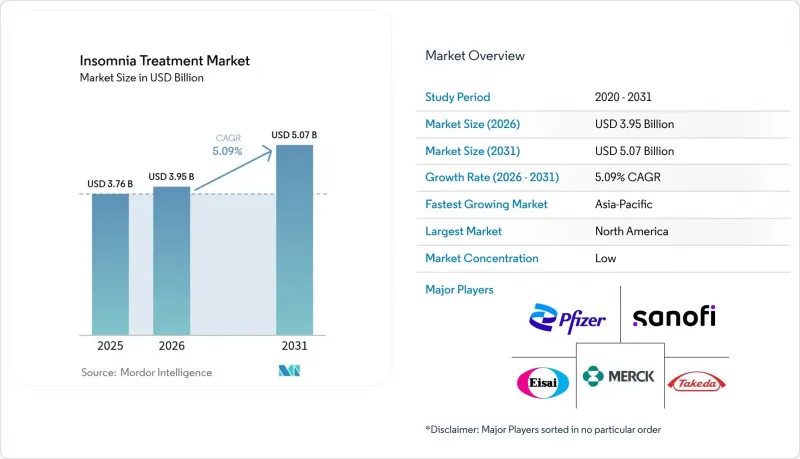
Mordor Intelligence에 의하면, 불면증 치료 시장 규모는 2025년 37억 6,000만 달러로 평가되었고, 2026년에는 39억 5,000만 달러로 추정되고, 2026-2031년 CAGR 5.09%로 성장을 지속할 전망이며, 2031년에는 50억 7,000만 달러에 이를 것으로 예측됩니다.
본 보고서는 치료 유형별(약물 요법, 비약물 요법), 불면증 유형별(원발성 불면증, 동반성 불면증), 환자 연령대별(소아, 성인, 고령자), 진료 및 서비스 제공 장소별(병원 입원 환자, 수면 클리닉 및 전문센터 등), 그리고 지역별(북미, 유럽 등)로 분류되어 있습니다. 시장 예측은 금액(달러) 기준으로 제시되어 있습니다.
세계의 불면증 치료 시장 동향 및 인사이트
수면 장애를 동반하는 고령 인구
65-79세 성인의 4명 중 1명이 만성 불면증을 보고하는 반면, 젊은 층에서는 16%에 그치고 있습니다. 노화에 따른 다제 병용, 인지 기능 저하 및 심혈관계 동반 질환은 치료를 복잡하게 만들고 있으며, 다음 날 현저한 기능 장애를 동반하지 않으면서 수면 구조를 유지할 수 있는 오렉신 길항제에 대한 관심을 높이고 있습니다. 2025년 경증에서 중등도의 알츠하이머형 치매에 대한 수보렉산트가 FDA 승인을 받음에 따라, 대상 고령 환자층이 확대되었고, 연령에 따른 투여 전략의 유효성이 입증되었습니다. 현재 제약사의 파이프라인에서는 이처럼 확대되는 시장을 선점하기 위해 고령층을 배려한 제제가 우선적으로 개발되고 있습니다.
차세대 오렉신 길항제의 상용화
달리도렉산 및 렌보렉산은 치료의 초점을 GABA 조절에서 오렉신 경로 억제로 전환하여, 주요 임상시험에서 입수 잠복기를 최대 35분 단축하고, 수면 시작 후 각성 시간을 29분 단축했습니다. 2025년 중국에서의 DAYVIGO 승인은 1억 7,250만 명의 환자 시장을 개척하며, 이 작용기전에 대한 전 세계적인 수요가 높음을 여실히 보여주었습니다. 2033년까지의 특허 보호는 혁신 기업을 보호하고, 충분한 이익 마진과 투자 여력을 제공합니다.
특허 만료에 따른 제네릭 의약품의 급속한 시장 침투
졸피뎀의 독점권 상실에 따라 13종의 제네릭 의약품이 승인되었으며, 가격 수준이 재설정되었습니다. 이는 일반적으로 18개월 이내에 80%에 달하는 이익률 압박을 여실히 보여줍니다. 브랜드 의약품 보유 기업들은 서방형 제제나 라이프사이클 전략을 통해 대응하고 있지만, 그 영향은 여전히 고가 의약품의 매출에 실질적인 걸림돌이 되고 있습니다. 2024년에 ‘앰비엔(Ambien)’ 브랜드가 코제트(CoZet)사에 3,900만 달러에 매각된 사실은 독점권 만료 후의 환경에서도 브랜드 가치는 여전히 존재하지만 그 가치가 하락하고 있음을 보여줍니다.
부문 분석
2025년, 불면증 치료 시장 매출의 76.72%는 확고한 처방 관행과 증상 신속한 완화에 대한 기대를 배경으로 약리학적 부문이 차지했습니다. 비벤조디아제핀계 Z약 및 기존 벤조디아제핀계 약물이 처방전의 대부분을 차지했으나, 2024-2025년 여러 건의 승인을 받은 오렉신 수용체 길항제가 시장 점유율을 확대했습니다. 디지털 CBT-I를 필두로 한 비약물 요법은 5.39%의 연평균 성장률(CAGR)로 가장 빠른 성장을 기록했습니다. 이는 보험사의 수용과 비약물 요법에 대한 소비자의 선호도를 반영한 것입니다. 칸나비디올을 함유한 일반의약품은 자가 치료를 하는 사용자를 끌어모았으며, 수면의 질이 62.9% 개선된 것으로 보고되었습니다.
현재 통합형 케어 모델에서는 복약 순응도를 최적화하기 위해 의약품과 수면 코칭 앱, 원격 모니터링, 행동 유도가 결합되고 있습니다. FDA 승인을 받은 처방전 대상 디지털 치료제는 보험 급여의 정당성을 뒷받침하며, 장기적인 유효성을 높이는 하이브리드 치료의 기반을 마련하고 있습니다. 통합 플랫폼을 보유한 기업들은 이중 수익원을 확보하는 동시에, 지불 주체가 요구하는 실세계 증거 패키지를 강화하고 있습니다. 이러한 변화는 분자 수준의 차이가 아닌 종합적인 치료 성과를 둘러싼 경쟁 심화를 의미하며, 약리학과 기술을 융합하는 기업들에게 혜택을 가져다주고 있습니다.
원발성 불면증은 2025년 매출의 61.88%를 차지했으나, 그 성장률은 동반성 불면증보다 둔화되고 있습니다. 동반성 불면증은 연평균 성장률(CAGR) 5.98%로 확대될 것으로 예측되며, 2031년까지 불면증 치료 시장 규모에서 차지하는 비중이 점차 커질 것으로 전망됩니다. 우울증, 불안 장애, 심혈관 질환을 동반한 다중 질환 병존증에는 협력적인 관리 전략이 요구되며, 오렉신 길항제와 같이 약물 상호작용 위험이 최소화된 약제가 선호됩니다. 2025년 수보렉산트의 적응증이 알츠하이머형 치매로 확대됨에 따라 질환 특이적인 비즈니스 기회가 증가했고, 신경퇴행성 질환을 동반한 동반 질환에 대한 연구가 촉진되었습니다.
표적화된 모듈을 통해 불면증과 그 근본 원인인 기분 장애를 모두 해결할 수 있는 디지털 치료제는 통합 치료의 가치 제안을 강화하고 있습니다. 보험사들은 근본 원인을 치료하는 종합적인 솔루션에 대한 보험 적용을 점점 확대하고 있으며, 이는 의료 시스템 간의 협력을 촉진하고 있습니다. 헬스케어가 성과 기반 환급으로 전환되는 가운데, 동반 질환 사례는 전반적인 경제적 부담이 크기 때문에 전략적 성장의 원동력이 되고 있습니다.
지역별 분석
북미가 주도적인 위치를 차지하고 있는 배경에는 정교한 지불자 제도, 고용주의 웰니스 프로그램과의 통합, 그리고 디지털 치료제에 대한 FDA의 지지적인 태도가 있습니다. 2025년 매출 중 북미가 37.64%를 차지했습니다. 메디케어는 주요 수면 검사를 보장하고 있지만, 만성 불면증에 대한 수면 다원 검사는 여전히 보장 대상에서 제외되어 있어, 저비용의 가정용 검사 보급이 촉진되고 있습니다. 유럽에서는 확실한 성장세를 보이고 있지만 그 속도는 완만합니다. EMA는 달리드렉산트를 승인한 반면, 라멜테온은 기각했는데, 이는 엄격한 증거 기준을 반영한 것입니다. 도입 현황에는 여전히 격차가 존재하며, 지침에 의해 제한되어 있음에도 불구하고 벤조디아제핀 계열 약물이 과도하게 처방되는 사례가 종종 관찰됩니다.
아시아태평양은 연평균 성장률(CAGR) 6.63%로 다른 지역을 앞지르고 있습니다. 2025년 중국에서의 렌보렉산트 출시와 한국에서 진행 중인 달리드렉산트의 3상 임상시험은 규제 측면에서의 급속한 진전을 상징합니다. 일본에서 오렉신 작용제의 조기 도입은 의사들의 수용도가 높음을 보여주는 반면, 호주에서 원격의료의 확대는 지방 지역의 접근성을 넓히고 있습니다. 일본에서는 2020년부터 합법화된 칸나비놀 제품이 병행되는 일반의약품 시장을 형성하고 있어, 처방약 브랜드는 임상 데이터를 통한 차별화를 모색해야 하는 상황에 놓여 있습니다. 남미 및 중동은 여전히 시장이 미성숙한 상태이지만, 진단 인프라에 대한 투자가 진행 중이며, 장기적으로는 평균 이상의 성장이 예상됩니다. 다국적 기업들은 이 지역에서의 가격 책정 및 유통의 복잡성을 극복하기 위해 현지 제네릭 의약품 기업과의 제휴를 추진하고 있습니다.
기타 혜택 :
- 엑셀 형식 시장 예측(ME) 시트
- 3개월간의 애널리스트 지원
자주 묻는 질문
목차
제1장 서론
제2장 조사 방법
제3장 주요 요약
제4장 시장 구도
제5장 시장 규모 및 성장 예측
제6장 경쟁 구도
제7장 시장 기회 및 향후 전망
AJY 26.08.26According to Mordor Intelligence, the insomnia treatment market size is expected to grow from USD 3.76 billion in 2025 to USD 3.95 billion in 2026 and is forecast to reach USD 5.07 billion by 2031 at 5.09% CAGR over 2026-2031.
This report is Segmented by Treatment Type (Pharmacological Treatment, Non-Pharmacological Treatment), Insomnia Type (Primary Insomnia, Comorbid Insomnia), Patient Age Group (Paediatric, Adults, Geriatric), Care/Service Setting (Hospital In-Patient, Sleep Clinics & Specialty Centres, and More), and Geography (North America, Europe, and More). The Market Forecasts are Provided in Terms of Value (USD).
Global Insomnia Treatment Market Trends and Insights
Aging population with comorbid sleep disorders
One in four adults aged 65-79 years reports chronic insomnia, versus 16% in younger cohorts. Age-related polypharmacy, cognitive decline, and cardiovascular comorbidities complicate care and elevate interest in orexin antagonists, which preserve sleep architecture without marked next-day impairment. The 2025 FDA approval of suvorexant for mild-to-moderate Alzheimer's dementia enlarged the elder addressable pool and validated age-specific dosing strategies. Pharma pipelines now prioritize geriatric-friendly formulations to capture this expanding segment.
Commercial launch of next-gen orexin antagonists
Daridorexant and lemborexant have shifted treatment focus from GABA modulation to orexin pathway inhibition, reducing sleep latency by up to 35 minutes and trimming wake-after-sleep onset by 29 minutes in pivotal trials. China's 2025 approval of DAYVIGO opened a 172.5 million-patient market, underscoring global appetite for this mechanism. Patent protection to 2033 shields innovators, giving them margin headroom and investment runway.
Patent expiries driving rapid generic erosion
Zolpidem's loss of exclusivity spawned 13 generic approvals and re-set price points, illustrating margin compression that typically reaches 80% within 18 months. Branded holders counter via extended-release formats and lifecycle tactics, but the effect remains a net drag on premium drug revenue. The 2024 sale of Ambien brands to Cosette for USD 39 million signals continuing though diminished brand equity in post-LOE environments.
Other drivers and restraints analyzed in the detailed report include:
- Expansion of digital CBT-I platforms via telehealth
- Expansion of digital CBT-I platforms via telehealth
- Dependency & safety concerns of hypnotics
For complete list of drivers and restraints, kindly check the Table Of Contents.
Segment Analysis
The pharmacological segment generated 76.72% of insomnia treatment market revenue in 2025 given entrenched prescribing habits and rapid symptom relief expectations. Non-benzodiazepine Z-drugs and legacy benzodiazepines comprised most scripts, but orexin receptor antagonists captured a growing slice following multiple 2024-2025 approvals. Non-pharmacological solutions, led by digital CBT-I, delivered the fastest growth at a 5.39% CAGR, reflecting payer acceptance and consumer preference for non-drug options. Over-the-counter products, including cannabidiol, attracted self-medicating users reporting 62.9% sleep-quality improvement.
Converging care models now bundle drugs with sleep-coaching apps, remote monitoring, and behavioral nudges to optimize adherence. Prescription digital therapeutics cleared by the FDA validate reimbursement and set the stage for hybrid regimens that improve long-term efficacy. Companies with integrated platforms tap dual revenue streams while strengthening real-world evidence packages demanded by payers. The shift implies rising competition on holistic outcomes rather than molecule-level distinctions, rewarding firms that marry pharmacology with technology.
Primary insomnia delivered 61.88% of 2025 revenue yet grows slower than comorbid insomnia, which is forecast to expand at 5.98% CAGR and widen its contribution to the insomnia treatment market size through 2031. Multi-morbidity involving depression, anxiety, and cardiovascular disease calls for coordinated management strategies and favors medications with minimal interaction liabilities such as orexin antagonists. The 2025 label expansion of suvorexant to Alzheimer's dementia elevated disease-specific opportunities and spurred research into neurodegenerative comorbidities.
Digital therapeutics capable of addressing both insomnia and underlying mood disorders through targeted modules strengthen the value proposition for integrated care. Insurers increasingly reimburse bundled solutions that treat root causes, encouraging health-system partnerships. As healthcare shifts toward outcome-based reimbursement, comorbid cases become a strategic growth lever given their higher overall economic burden.
Complete Report Scope:
- By Treatment Type (Value)
- Pharmacological Treatment
- Prescription Drugs
- Non-Benzodiazepines (Z-drugs)
- Benzodiazepines
- Orexin Receptor Antagonists
- Melatonin Receptor Agonists
- Antidepressants & Others
- Over-the-Counter Drugs
- Prescription Drugs
- Non-Pharmacological Treatment
- Cognitive Behavioural Therapy
- Device-based Therapy
- Pharmacological Treatment
- By Insomnia Type (Value)
- Primary Insomnia
- Comorbid Insomnia
- By Patient Age Group (Value)
- Paediatric (0-17 yrs)
- Adults (18-64 yrs)
- Geriatric (>=65 yrs)
- By Care / Service Setting (Value)
- Hospital In-patient
- Sleep Clinics & Specialty Centres
- Out-patient / Ambulatory Care
- Homecare / Self-administratio
- By Geography (Value)
- North America
- United States
- Mexico
- Canada
- Europe
- Germany
- United Kingdom
- France
- Italy
- Spain
- Rest of Europe
- Asia-Pacific
- China
- India
- Japan
- South Korea
- Australia
- Rest of Asia-Pacific
- South America
- Brazil
- Argentina
- Rest of South America
- Middle East and Africa
- GCC
- South Africa
- Rest of Middle East and Africa
- North America
Geography Analysis
North America's leadership rests on sophisticated payer systems, employer wellness integration, and the FDA's supportive stance toward digital therapeutics. North America accounted for 37.64% of 2025 revenue. Medicare covers key sleep studies but still excludes chronic insomnia polysomnography, encouraging uptake of lower-cost home studies. Europe provides reliable but slower growth; the EMA approved daridorexant yet rejected ramelteon, reflecting stringent evidence standards. Adoption gaps remain, with benzodiazepines often over-prescribed despite guideline limits.
Asia-Pacific outpaces other regions at a 6.63% CAGR; China's 2025 lemborexant launch and South Korea's ongoing daridorexant Phase 3 trial exemplify rapid regulatory movement. Japan's early embrace of orexin agents demonstrates high physician receptivity, while Australia's telehealth expansion widens rural access. Cannabinol products, legal since 2020 in Japan, present a parallel over-the-counter market and compel prescription brands to differentiate on clinical data. South America and the Middle East remain nascent but invest in diagnostic infrastructure, positioning them for above-average long-term growth. Multinationals cultivate local generics alliances to navigate pricing and distribution complexities in these regions.
- Eisai
- Merck
- Idorsia Ltd
- Sumitomo Pharma Co., Ltd.
- Takeda Pharmaceuticals
- Sanofi
- Pfizer
- Viatris
- Teva Pharmaceutical Industries
- Dr. Reddy's Laboratories Ltd.
- Bayer
- GlaxoSmithKline
- Johnson & Johnson
- Procter & Gamble
- Reckitt Benckiser Group
- Vanda Pharmaceuticals
- H. Lundbeck
- Eli Lilly and Company
- Avadel Pharmaceuticals plc
- Aurobindo Pharma Ltd.
Additional Benefits:
- The market estimate (ME) sheet in Excel format
- 3 months of analyst support
TABLE OF CONTENTS
1 Introduction
- 1.1 Study Assumptions & Market Definition
- 1.2 Scope of the Study
2 Research Methodology
3 Executive Summary
4 Market Landscape
- 4.1 Market Overview
- 4.2 Market Drivers
- 4.2.1 Rising prevalence of stress-related insomnia
- 4.2.2 Ageing population with comorbid sleep disorders
- 4.2.3 Commercial launch of next-gen orexin antagonists
- 4.2.4 Expansion of digital CBT-I platforms via telehealth
- 4.2.5 Wearable-based phenotyping enabling personalised dosing
- 4.2.6 Employer-sponsored sleep-health benefits boosting prescriptions
- 4.3 Market Restraints
- 4.3.1 Patent expiries driving rapid generic erosion
- 4.3.2 Dependency & safety concerns of hypnotics
- 4.3.3 Shift to cannabis-based OTC sleep aids
- 4.3.4 Tighter reimbursement scrutiny on long-term pharmacotherapy
- 4.4 Value / Supply-Chain Analysis
- 4.5 Regulatory Landscape
- 4.6 Technological Outlook
- 4.7 Porter's Five Forces
- 4.7.1 Supplier Power
- 4.7.2 Buyer Power
- 4.7.3 Threat of New Entrants
- 4.7.4 Threat of Substitutes
- 4.7.5 Competitive Rivalry
5 Market Size & Growth Forecasts (Value)
- 5.1 By Treatment Type (Value)
- 5.1.1 Pharmacological Treatment
- 5.1.1.1 Prescription Drugs
- 5.1.1.1.1 Non-Benzodiazepines (Z-drugs)
- 5.1.1.1.2 Benzodiazepines
- 5.1.1.1.3 Orexin Receptor Antagonists
- 5.1.1.1.4 Melatonin Receptor Agonists
- 5.1.1.1.5 Antidepressants & Others
- 5.1.1.2 Over-the-Counter Drugs
- 5.1.1.1 Prescription Drugs
- 5.1.2 Non-Pharmacological Treatment
- 5.1.2.1 Cognitive Behavioural Therapy
- 5.1.2.2 Device-based Therapy
- 5.1.1 Pharmacological Treatment
- 5.2 By Insomnia Type (Value)
- 5.2.1 Primary Insomnia
- 5.2.2 Comorbid Insomnia
- 5.3 By Patient Age Group (Value)
- 5.3.1 Paediatric (0-17 yrs)
- 5.3.2 Adults (18-64 yrs)
- 5.3.3 Geriatric (>=65 yrs)
- 5.4 By Care / Service Setting (Value)
- 5.4.1 Hospital In-patient
- 5.4.2 Sleep Clinics & Specialty Centres
- 5.4.3 Out-patient / Ambulatory Care
- 5.4.4 Homecare / Self-administratio
- 5.5 By Geography (Value)
- 5.5.1 North America
- 5.5.1.1 United States
- 5.5.1.2 Mexico
- 5.5.1.3 Canada
- 5.5.2 Europe
- 5.5.2.1 Germany
- 5.5.2.2 United Kingdom
- 5.5.2.3 France
- 5.5.2.4 Italy
- 5.5.2.5 Spain
- 5.5.2.6 Rest of Europe
- 5.5.3 Asia-Pacific
- 5.5.3.1 China
- 5.5.3.2 India
- 5.5.3.3 Japan
- 5.5.3.4 South Korea
- 5.5.3.5 Australia
- 5.5.3.6 Rest of Asia-Pacific
- 5.5.4 South America
- 5.5.4.1 Brazil
- 5.5.4.2 Argentina
- 5.5.4.3 Rest of South America
- 5.5.5 Middle East and Africa
- 5.5.5.1 GCC
- 5.5.5.2 South Africa
- 5.5.5.3 Rest of Middle East and Africa
- 5.5.1 North America
6 Competitive Landscape
- 6.1 Market Concentration
- 6.2 Market Share Analysis
- 6.3 Company Profiles (includes Global level Overview, Market level overview, Core Segments, Financials as available, Strategic Information, Market Rank/Share for key companies, Products & Services, and Recent Developments)
- 6.3.1 Eisai Co., Ltd.
- 6.3.2 Merck & Co., Inc.
- 6.3.3 Idorsia Ltd
- 6.3.4 Sumitomo Pharma Co., Ltd.
- 6.3.5 Takeda Pharmaceutical Company Limited
- 6.3.6 Sanofi S.A.
- 6.3.7 Pfizer Inc.
- 6.3.8 Viatris Inc.
- 6.3.9 Teva Pharmaceutical Industries Ltd.
- 6.3.10 Dr. Reddy's Laboratories Ltd.
- 6.3.11 Bayer AG
- 6.3.12 GlaxoSmithKline plc
- 6.3.13 Johnson & Johnson
- 6.3.14 Procter & Gamble Co.
- 6.3.15 Reckitt Benckiser Group plc
- 6.3.16 Vanda Pharmaceuticals Inc.
- 6.3.17 H. Lundbeck A/S
- 6.3.18 Eli Lilly and Company
- 6.3.19 Avadel Pharmaceuticals plc
- 6.3.20 Aurobindo Pharma Ltd.
7 Market Opportunities & Future Outlook
- 7.1 White-space & Unmet-Need Assessment


