|
시장보고서
상품코드
2114280
고압 산소 요법(HBOT) : 시장 점유율 분석, 업계 동향 및 통계, 성장 예측(2026-2031년)Hyperbaric Oxygen Therapy - Market Share Analysis, Industry Trends & Statistics, Growth Forecasts (2026 - 2031) |
||||||
 Mordor Intelligence
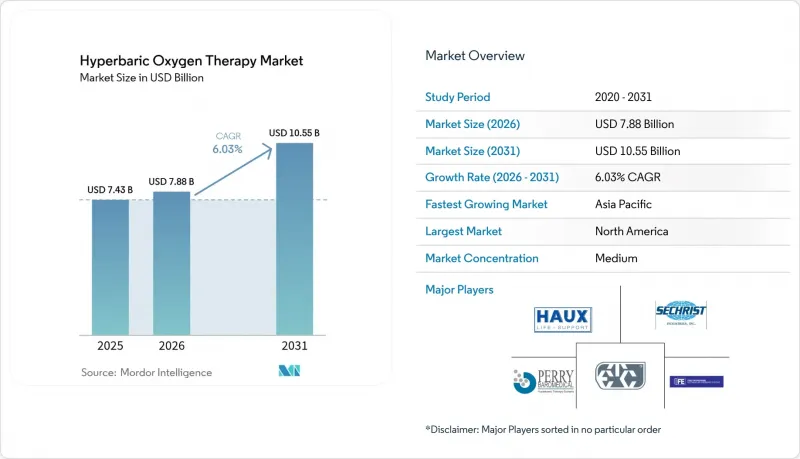
Mordor Intelligence에 의하면, 고압 산소 요법(HBOT) 시장 규모는 2025년에 74억 3,000만 달러로 평가되었습니다. 2026년 78억 8,000만 달러에서 2031년까지 105억 5,000만 달러에 이를 것으로 예상되며, 예측 기간(2026-2031년) CAGR은 6.03%를 나타낼 전망입니다.
본 보고서는 용도별(감압증, 당뇨병성 족부 궤양, 기체 색전증, 감염증 치료, 상처 치유, 기타 용도), 제품 유형별(1인용 고압산소치료기, 다인용 고압산소치료기 등), 최종 사용자별(병원 등),지역별(북미 등)로 분류되어 있습니다. 시장 예측은 금액(달러) 기준으로 제시되어 있습니다.
세계의 고압 산소 요법(HBOT) 시장 동향 및 인사이트
급성 및 만성 상처 부담 증가
당뇨병성 족부 궤양은 전 세계 당뇨병 환자의 15%에게 영향을 미치며, 입원 비용의 상당 부분을 차지하고 있습니다. 고압 산소 요법 세션은 조직의 산소 수준을 높이고 혈관 신생을 촉진하며, 표준 치료와 비교하여 상처 크기가 30% 감소하는 첫 번째 이정표에 도달하기까지의 기간을 44배 단축시킵니다. 이에 따라 보험사들은 만성 상처 치료 프로토콜에 대한 보험 적용 범위를 확대하고 있으며, 한편 병원 상처 센터들은 의뢰 수요에 대응하기 위해 추가 1인용 챔버 도입에 자금을 할당하고 있습니다.
당뇨병 및 당뇨병성 족부 궤양의 유병률 증가
메타 분석에 따르면, 당뇨병성 상처에 고압 산소 요법(HBOT)을 적용한 경우, 혈액학적 및 염증성 마커의 유의미한 개선이 관찰되었으며, 상처 치유율도 높아지는 것으로 나타났습니다. 또한, 임상의들은 말초 신경 장애의 회복이 빨라진다는 점도 보고하고 있으며, 이를 통해 HBOT는 내분비과에서 다각적인 효과를 가져오는 치료법으로서의 입지를 확고히 하고 있습니다. 아시아태평양의 당뇨병 발병률 급증에 따라, 향후 절단율을 억제하고자 하는 지역 병원들에서는 고압 산소 챔버 도입이 진행되고 있습니다.
고가의 HBOT 도입에 따른 초기 투자 비용(Capex) 및 운영 비용(Opex)
엔트리 레벨의 1인용 장비조차 4만-20만 달러의 비용이 들며, 전용 환기 설비, 소화 설비 및 인증 비용을 더하면 시설을 완벽하게 갖추는 데 25만-75만 달러가 필요합니다. 연간 유지보수 계약 및 운영자 교육 비용이 총 소유 비용을 끌어올려, 소규모 진료소의 도입을 가로막고 있습니다. 리스를 이용하면 초기 비용을 절감할 수 있지만, 환자 수가 적은 시설에서는 투자 회수 기간이 5년 이상 소요됩니다.
부문별 분석
상처 치유를 적응증으로 하는 고압 산소 요법(HBOT) 시장 규모는 2025년에 28억 5,000만 달러에 달하며, 매출 점유율 38.32%로 1위를 유지했습니다. 통합형 상처 치료 센터에서는 욕창, 정맥성 궤양, 복합 외과적 상처에 대해 감염 위험을 줄이고 상처 치유를 촉진하기 위해 고압 산소 요법(HBOT)을 활용하고 있습니다. 당뇨병성 족부 궤양 하위 부문은 전 세계 당뇨병 유병률 증가에 더해, 체계적 문헌고찰을 통한 근거(12개월 이내 완전 치유율 67.5%, 재발률 17.5%에 불과)가 뒷받침되면서 연평균 성장률(CAGR) 8.52%로 가장 빠르게 성장하고 있습니다. 감압증 치료 수요는 상업 다이빙 및 관광 거점에서 안정적으로 유지되고 있으며, 태국의 한 센터에서 연간 최대 50만 명의 방문 다이버를 치료하고 있다는 점이 이를 뒷받침하고 있습니다.
임상의들이 방사선 유발성 방광염 및 출혈성 합병증에 대한 고압 산소 요법(HBOT)의 유효성을 검증하는 가운데, 다각화가 진행되고 있으며, 표준 치료로는 효과를 얻지 못했던 고령 환자에서도 유망한 증상 완화가 보고되고 있습니다. 또한, 롱코비드 환자 집단에서도 개인 맞춤형 고압 산소 요법 시행 후 인지 기능 개선 및 피로감 완화가 확인되어, 이 요법의 신경학적 적용 범위가 확대되고 있습니다. 이를 종합해 보면, 다학제적 병원 프로그램 전반에 걸쳐 장비 이용률을 높게 유지해야 하는 수요 구조가 확립되어 있습니다.
지역별 분석
북미는 2025년에 매출의 42.08%를 차지했으며, 연구 및 보험 급여 분야에서 계속해서 주도적인 위치를 유지하고 있습니다. 듀크 대학교나 메이요 클리닉과 같은 학술 기관들은 동료 심사를 거친 치료 성과 연구를 발표하고 있으며, 이는 전 세계 임상 지침 수립자들에게 영향을 미치고 있습니다. 보험사는 FDA 승인 적응증에 대해 보험 급여를 제공하고 있으며, 이는 고압 산소 챔버의 안정적인 운영을 뒷받침하고 있습니다. 2025년 오클랜드 카운티에서 발생한 폭발 사고를 계기로 인증 제도에 대한 관심이 다시 높아졌으며, 규제 당국은 현장 검사를 강화하고 신규 진입 업체에 대한 규정 준수 기준을 높였습니다. 턴키 방식의 안전 대책 패키지를 제공하는 유서 깊은 제조업체들은 이러한 상황에서 혜택을 볼 수 있는 유리한 위치에 있습니다.
아시아태평양은 2031년까지 연평균 성장률(CAGR) 7.32%로 가장 높은 성장률을 기록하고 있습니다. 필리핀은 주요 다이빙 섬에 고압 산소 치료 허브를 설립하기 위해 5,000만 필리핀 페소를 예산에 편성했습니다. 이 전략을 통해 관광 수입 증가와 다이버의 안전성 향상이 기대됩니다. 태국 방콕의 한 병원은 미국과 동등한 수준의 치료를 50%에서 90% 저렴한 가격에 제공하는 국제용 패키지를 판매하고 있으며, 상처 치료나 스포츠 부상 회복 치료를 원하는 자비 부담 환자들을 유치하고 있습니다. 중국은 여전히 세계 최대의 도입 대수를 자랑하지만, 노후화된 강철 챔버가 수명 한계에 다다르고 있어 교체 물결에 직면해 있으며, 이는 공급업체들에게 개보수의 호기가 되고 있습니다. 유럽은 성숙해 가고 있지만 혁신 지향적인 시장으로, 각국의 국민건강보험 서비스가 승인된 종양학 및 재건외과 용도의 고압 산소 요법(HBOT) 비용을 부담하고 있습니다. 독일의 엄격한 장비 시험 제도는 CE 마크를 획득한 고압 용기를 취급하는 고급 공급업체에 유리하게 작용하고 있습니다. 한편, 영국에서는 외래 진료소 내에 고압 산소 요법 챔버를 병설한 지역 밀착형 상처 치료 센터에 대한 신규 투자가 진행되고 있습니다. 중동 및 아프리카 시장은 걸프 지역 국가들의 병원이 화상 치료 프로토콜에 고압 산소 요법(HBOT)을 추가함에 따라 소규모 기반에서 성장하고 있습니다. 남미에서는 브라질의 민간 정형외과 체인이 수술 후 고압 산소 요법을 재활 패키지에 포함시키는 것을 선도하며, 적당한 수준의 보급이 이루어지고 있습니다.
기타 혜택 :
- 엑셀 형식 시장 예측(ME) 시트
- 3개월간의 애널리스트 지원
자주 묻는 질문
목차
제1장 서론
제2장 조사 방법
제3장 주요 요약
제4장 시장 구도
제5장 시장 규모 및 성장 예측
제6장 경쟁 구도
제7장 시장 기회 및 향후 전망
KTH 26.08.28According to Mordor Intelligence, the hyperbaric oxygen therapy market size was valued at USD 7.43 billion in 2025 and estimated to grow from USD 7.88 billion in 2026 to reach USD 10.55 billion by 2031, at a CAGR of 6.03% during the forecast period (2026-2031).
This report is Segmented by Application (Decompression Sickness, Diabetic Foot Ulcers, Gas Embolism, Infection Treatment, Wound Healing, and Other Applications), Product Type (Monoplace HBOT Devices, Multiplace HBOT Devices, and More), End User (Hospitals, and More), Geography (North America, and More). The Market Forecasts are Provided in Terms of Value (USD).
Global Hyperbaric Oxygen Therapy Market Trends and Insights
Rising Burden of Acute & Chronic Wounds
Diabetic-foot ulcers affect 15% of the global diabetes population and account for a disproportionate share of inpatient costs. Hyperbaric sessions elevate tissue oxygen levels, support angiogenesis and achieve a 44-fold improvement in reaching the first 30% wound-size reduction milestone compared with standard care. Payers respond by broadening coverage for chronic-wound protocols, while hospital wound centers allocate capital for additional monoplace chambers to meet referral demand.
Growing Prevalence of Diabetes & Diabetic-Foot Ulcers
Meta-analyses show significant gains in hematological and inflammatory markers and higher closure percentages when diabetic wounds receive hyperbaric oxygen therapy. Clinicians also record faster peripheral-neuropathy recovery, which positions HBOT as a multi-benefit intervention in endocrine clinics. Asia-Pacific's accelerating diabetes incidence drives chamber installations in regional hospitals that seek to curb future amputation rates.
High Capex & Opex of HBOT Installations
Even an entry-level monoplace unit can cost USD 40,000 to USD 200,000, and complete facility build-outs range from USD 250,000 to USD 750,000 once specialized ventilation, fire suppression and accreditation fees are added. Annual service contracts and operator training push total ownership higher, curbing adoption in smaller clinics. Leasing trims upfront expense but extends payback periods beyond five years for low-volume sites.
Other drivers and restraints analyzed in the detailed report include:
- Technological Advances in Portable, Digital & Hybrid Chambers
- Expanding Use in Cosmetic & Sports-Medicine Procedures
- FDA-Approved Vs. Off-Label Indication Gap
For complete list of drivers and restraints, kindly check the Table Of Contents.
Segment Analysis
The hyperbaric oxygen therapy market size for wound-healing indications reached USD 2.85 billion in 2025 and maintained leadership with a 38.32% revenue share. Integrated wound-care centers rely on HBOT to lower infection risk and speed closure for pressure ulcers, venous ulcers and complex surgical wounds. The diabetic-foot-ulcer sub-segment grows fastest at an 8.52% CAGR due to rising global diabetes prevalence and systematic-review evidence showing 67.5% full-healing rates with only 17.5% recurrence within 12 months. Decompression-sickness demand stays stable among commercial dive and tourism hubs, supported by centers in Thailand that treat up to 500,000 visiting divers each year.
Diversification continues as clinicians test HBOT in radiation-induced cystitis and hemorrhagic complications, reporting promising symptoms relief even in elderly patients who exhausted standard measures. Long-COVID patient cohorts also benefit from improved cognition and reduced fatigue after individualized hyperbaric regimens, broadening the therapy's neurologic footprint. Together, these applications anchor a demand profile that keeps equipment utilization high across multidisciplinary hospital programs.
Complete Report Scope:
- By Application
- Decompression Sickness
- Diabetic Foot Ulcers
- Gas Embolism
- Infection Treatment
- Wound Healing
- Other Applications
- By Product Type
- Monoplace HBOT Devices
- Multiplace HBOT Devices
- Topical / Portable HBOT Devices
- Hybrid Low-Pressure Chambers
- By End User
- Hospitals
- Ambulatory Surgical & Specialty Clinics
- Stand-alone Hyperbaric Treatment Centers
- Home-Care Settings
- Geography
- North America
- United States
- Canada
- Mexico
- Europe
- Germany
- United Kingdom
- France
- Italy
- Spain
- Rest of Europe
- Asia-Pacific
- China
- Japan
- India
- Australia
- South Korea
- Rest of Asia-Pacific
- Middle East & Africa
- GCC
- South Africa
- Rest of Middle East & Africa
- South America
- Brazil
- Argentina
- Rest of South America
- North America
Geography Analysis
North America held 42.08% revenue in 2025 and remains the research and reimbursement leader. Academic centers such as Duke and Mayo Clinic publish peer-reviewed outcome studies that influence global clinical-guideline writers. Insurers reimburse FDA-approved indications, which underpins steady chamber utilization. The 2025 Oakland County explosion renewed focus on accreditation, prompting regulators to intensify on-site inspections and raising the compliance bar for new entrants. Established manufacturers that offer turnkey safety packages are well positioned to benefit.
Asia-Pacific records the highest growth at a 7.32% CAGR up to 2031. The Philippines earmarked PHP 50 million to create hyperbaric hubs in key dive islands, a strategy expected to lift tourism revenue and improve diver safety. Thailand's Bangkok Hospital markets international packages priced 50% to 90% below United States equivalents, attracting self-pay patients seeking wound-care or sports-recovery treatments. China still hosts the world's largest installed base but faces a replacement wave as aging steel chambers approach end-of-life certification, creating a retrofit opportunity for suppliers. Europe is a mature yet innovation-oriented arena where national health services fund HBOT for approved oncologic and reconstructive applications. Germany's stringent equipment-testing regime favors premium vendors with CE-marked pressure vessels, while the United Kingdom directs new spending toward community-based wound-care centers that include hyperbaric suites inside outpatient clinics. Middle East and Africa markets grow from a smaller base as Gulf state hospitals add HBOT to burn-unit protocols. South America sees moderate uptake, led by Brazil's private orthopedic chains bundling post-surgery hyperbaric sessions into rehab packages.
- Environmental Tectonics
- HAUX-LIFE-SUPPORT
- Sechrist Industries
- Perry Baromedical Corp.
- Fink Engineering
- Hearmec
- Hyperbaric SAC
- Hyperbaric Modular Systems Inc. (HMS)
- Pan America Hyperbarics Inc.
- OxyHeal Health Group
- IHC Hytech B.V.
- BioBarica
- BAROKS Hyperbaric
- AHA Hyperbarics
- Tekna Manufacturing
- Gulf Coast Hyperbarics
- Submarine Mfg & Products Ltd
- Eternalhealth Medical Equip.
- OxyVal Hyperbaric
- Hyperbaric Medical Solutions
Additional Benefits:
- The market estimate (ME) sheet in Excel format
- 3 months of analyst support
TABLE OF CONTENTS
1 Introduction
- 1.1 Study Assumptions & Market Definition
- 1.2 Scope of the Study
2 Research Methodology
3 Executive Summary
4 Market Landscape
- 4.1 Market Overview
- 4.2 Market Drivers
- 4.2.1 Rising Burden of Acute & Chronic Wounds
- 4.2.2 Growing Prevalence of Diabetes & Diabetic-Foot Ulcers
- 4.2.3 Technological Advances (Portable, Digital & Hybrid Chambers)
- 4.2.4 Expanding Use in Cosmetic & Sports-Medicine Procedures
- 4.2.5 AI-Driven Oxygen-Dosing & Remote-Monitoring Platforms
- 4.2.6 Repurposing Surplus Industrial Pressure Vessels In EMS
- 4.3 Market Restraints
- 4.3.1 High Capex & Opex of HBOT Installations
- 4.3.2 FDA-Approved Vs. Off-Label Indication Gap
- 4.3.3 Escalating Fire-Safety Insurance Premiums for Centers
- 4.3.4 Shortage of Certified Hyperbaric Clinicians & Technicians
- 4.4 Regulatory Landscape
- 4.5 Porter's Five Forces Analysis
- 4.5.1 Bargaining Power of Suppliers
- 4.5.2 Bargaining Power of Buyers/Consumers
- 4.5.3 Threat of New Entrants
- 4.5.4 Threat of Substitute Products
- 4.5.5 Intensity of Competitive Rivalry
5 Market Size & Growth Forecasts (Value, USD)
- 5.1 By Application
- 5.1.1 Decompression Sickness
- 5.1.2 Diabetic Foot Ulcers
- 5.1.3 Gas Embolism
- 5.1.4 Infection Treatment
- 5.1.5 Wound Healing
- 5.1.6 Other Applications
- 5.2 By Product Type
- 5.2.1 Monoplace HBOT Devices
- 5.2.2 Multiplace HBOT Devices
- 5.2.3 Topical / Portable HBOT Devices
- 5.2.4 Hybrid Low-Pressure Chambers
- 5.3 By End User
- 5.3.1 Hospitals
- 5.3.2 Ambulatory Surgical & Specialty Clinics
- 5.3.3 Stand-alone Hyperbaric Treatment Centers
- 5.3.4 Home-Care Settings
- 5.4 Geography
- 5.4.1 North America
- 5.4.1.1 United States
- 5.4.1.2 Canada
- 5.4.1.3 Mexico
- 5.4.2 Europe
- 5.4.2.1 Germany
- 5.4.2.2 United Kingdom
- 5.4.2.3 France
- 5.4.2.4 Italy
- 5.4.2.5 Spain
- 5.4.2.6 Rest of Europe
- 5.4.3 Asia-Pacific
- 5.4.3.1 China
- 5.4.3.2 Japan
- 5.4.3.3 India
- 5.4.3.4 Australia
- 5.4.3.5 South Korea
- 5.4.3.6 Rest of Asia-Pacific
- 5.4.4 Middle East & Africa
- 5.4.4.1 GCC
- 5.4.4.2 South Africa
- 5.4.4.3 Rest of Middle East & Africa
- 5.4.5 South America
- 5.4.5.1 Brazil
- 5.4.5.2 Argentina
- 5.4.5.3 Rest of South America
- 5.4.1 North America
6 Competitive Landscape
- 6.1 Market Concentration
- 6.2 Market Share Analysis
- 6.3 Company Profiles (includes Global level Overview, Market level overview, Core Business Segments, Financials, Headcount, Key Information, Market Rank, Market Share, Products and Services, and analysis of Recent Developments)
- 6.3.1 Environmental Tectonics Corporation
- 6.3.2 HAUX-LIFE-SUPPORT GmbH
- 6.3.3 Sechrist Industries Inc.
- 6.3.4 Perry Baromedical Corp.
- 6.3.5 Fink Engineering
- 6.3.6 Hearmec Co. Ltd
- 6.3.7 Hyperbaric SAC
- 6.3.8 Hyperbaric Modular Systems Inc. (HMS)
- 6.3.9 Pan America Hyperbarics Inc.
- 6.3.10 OxyHeal Health Group
- 6.3.11 IHC Hytech B.V.
- 6.3.12 BioBarica
- 6.3.13 BAROKS Hyperbaric
- 6.3.14 AHA Hyperbarics
- 6.3.15 Tekna Manufacturing
- 6.3.16 Gulf Coast Hyperbarics
- 6.3.17 Submarine Mfg & Products Ltd
- 6.3.18 Eternalhealth Medical Equip.
- 6.3.19 OxyVal Hyperbaric
- 6.3.20 Hyperbaric Medical Solutions
7 Market Opportunities & Future Outlook
- 7.1 White-space & unmet-need assessment