

|
시장보고서
상품코드
2114499
결막염 치료 시장 : 시장 점유율 분석, 업계 동향 및 통계, 성장 예측(2026-2031년)Conjunctivitis Treatment - Market Share Analysis, Industry Trends & Statistics, Growth Forecasts (2026 - 2031) |
||||||
 Mordor Intelligence
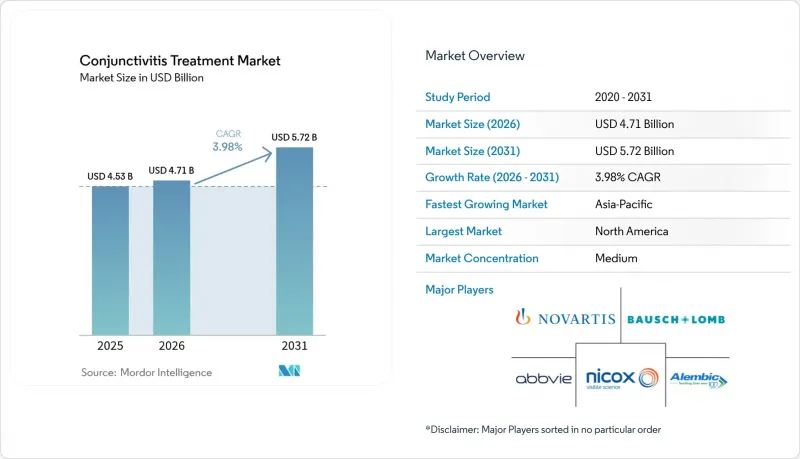
Mordor Intelligence에 의하면, 결막염 치료 시장 규모는 2025년에 45억 3,000만 달러로 평가되었고, 2026년 47억 1,000만 달러에서 2031년까지 57억 2,000만 달러에 이를 것으로 예측되며, 예측 기간(2026-2031년) CAGR은 3.98%를 나타낼 전망입니다.
본 보고서는 질환 유형별(알레르기성 결막염, 세균성 결막염, 바이러스성 결막염), 제형별(연고, 점안액, 경구·비경구용 약물), 지역별(북미, 유럽, 아시아태평양, 중동 및 아프리카, 남미)로 분류되어 있습니다. 시장 전망은 금액(달러) 기준으로 제시되어 있습니다.
세계의 결막염 치료제 시장 동향 및 인사이트
바이러스성 및 알레르기성 결막염 유병률 증가
계절적인 아데노바이러스 유행과 기후로 인한 알레르겐의 급증으로 인해 전체적인 환자 수는 계속 증가하고 있습니다. 아데노바이러스 균주는 일반적인 항생제에 내성을 보이기 때문에 표적 항바이러스제에 대한 수요가 높아지고 있습니다. 기후 변화로 인해 꽃가루 날림 기간이 길어지고 있으며, 도시 지역의 대기 질 악화가 알레르기 증상을 악화시키고 있습니다. 어린이들의 디지털 라이프스타일 확산으로 염증 발생률이 높아지면서, 항염증 작용과 항감염 작용을 겸비한 제품에 대한 필요성이 더욱 커지고 있습니다. 현재 의료계에서는 결막염을 종합적인 안구 건강 관리가 필요한 ‘입문 질환’으로 규정하고 있습니다.
항감염성 점안제의 OTC 전환 확대
미국, 유럽 및 아시아 일부 규제 당국은 과거 처방전이 필요했던 여러 항균제를 OTC(일반의약품)로 재분류했습니다. 구하기 쉬워짐에 따라, 특히 안과 의사가 적은 지역에서 증상 완화가 빨라지고 있습니다. 각 제약사는 자극이 강한 방부제를 제거하고 투여 방법을 간소화하기 위해 점안약 제형을 재설계하고 있습니다. 규제 당국은 소비자 교육 및 디지털 의사결정 지원 도구를 활용하여 항균제의 오용 위험에 대응하고 있습니다.
안과 병원체에서 증가하는 항생제 내성
감시 연구에 따르면 포도상구균 및 연쇄상구균 분리주에서 내성이 증가하는 것으로 확인되어, 1차 선택 요법의 유효성이 제한되고 있습니다. 병원 측은 약물 적정 사용 프로그램 시행 및 차세대 약물에 대한 수요 증가를 통해 대응하고 있으나, 개발 주기의 장기화가 시장 확장의 걸림돌이 되고 있습니다.
부문 분석
2025년, 세균성 결막염은 결막염 치료 시장 전체의 36.90% 점유율을 차지했습니다. 이 부문에서는 배양 검사에 기반한 항생제 선정이 여전히 임상적 표준이므로, 환자 1인당 의료비가 고액으로 나타납니다. 그러나 항생제 내성 동향으로 인해 기존 약물의 수명이 짧아지고 있어, 고가대의 차세대 약물 출시가 촉진되고 있습니다. 세균성 감염증에 대한 결막염 치료 시장 규모는 표적 치료를 가능하게 하는 진단 기술의 혁신에 따라 꾸준히 확대될 것으로 예측됩니다. 알레르기성 결막염 시장은 연평균 성장률(CAGR) 6.90%로 확대되고 있으며, 일반의약품(OTC) 항히스타민제의 보급과 기후 변화로 인한 꽃가루 양의 급증이 성장 동력이 되고 있습니다. 각 제약사는 급성 가려움증과 만성 충혈 모두에 대응하기 위해 1회 투여용 바이알에 비만세포 안정화제 및 항염증 성분을 배합하고 있습니다. 바이러스성 결막염의 사례 수는 여전히 많지만, 대부분의 감염증이 자연 치유되는 특성상 성장세는 완만하며, 수요는 윤활제나 증상 완화제에 집중되어 있습니다.
현재, 방부제 무첨가 다회 투여용 병으로의 전환이 질환 범주를 불문하고 제품 선택에 영향을 미치고 있습니다. 양이온성 오일 마이크로 에멀젼과 같은 혁신적인 기술로 인해 각막에 머무는 시간이 연장되어 점안 빈도가 감소하고 있습니다. 임상 지침에서는 복합 원인의 증례에 대한 병용 요법이 점점 더 권장되고 있으며, 이로 인해 평균 판매 가격이 더욱 상승하고 있습니다. 이러한 배경 속에서 광범위한 효과를 발휘하는 제제나 이중 작용기전을 가진 제제로 전환을 꾀하는 기업들은 결막염 치료 시장에서 더 폭넓은 처방 목록에 등재되고, 더욱 확고한 브랜드 충성도를 확보하고 있습니다.
지역별 분석
2025년, 북미는 32.40%의 점유율을 차지하며 결막염 치료 시장을 주도했습니다. 이 시장의 확장을 주도하고 있는 것은 브랜드 의약품의 본인 부담금을 보전해 주는 보험 적용, 원인 병원체를 특정하는 첨단 진단 검사, 그리고 신약을 신속하게 임상 현장에 도입하는 FDA의 승인 절차 가속화입니다. 그러나 제네릭 의약품의 진입으로 인한 혼란은 공급 측면의 취약성을 드러내고, 경우에 따라 치료제의 대체를 불가피하게 만들기도 하여, 국내 API(유효 성분) 공급 거점 구축을 요구하는 목소리가 높아지고 있습니다. 캐나다의 국민건강보험 제도는 공평한 접근성을 뒷받침하고 있는 반면, 멕시코에서는 소매 약국 체인의 확장이 OTC(일반의약품) 부문의 성장을 견인하고 있습니다.
아시아태평양은 연평균 성장률(CAGR) 7.18%를 기록하며 가장 빠르게 성장하고 있는 지역입니다. 중국의 병원 개혁으로 안과 업무 프로세스가 합리화되고 대기 시간이 단축되면서 처방전 수가 증가하고 있습니다. 인도에서는 원격 안과 진료 시범 사업을 통해 농촌 지역 주민을 선별 검사하고, 확진된 사례를 지역 의료 센터로 의뢰함으로써 치료를 받는 환자 수가 증가하고 있습니다. 일본에서는 급속한 고령화에 따라 안구건조증으로 인한 감염 위험이 높아지면서, 윤활 작용이 있는 항생제 점안액 수요가 증가하고 있습니다. 한국에서는 디지털 컨텐츠 소비량이 많아 안구건조증 발병 빈도가 높고, 이것이 이차적인 세균성 결막염으로 진행되기 때문에 프리미엄 점안액의 매출이 견조한 추세를 보이고 있습니다.
유럽은 성숙한 시장 점유율을 차지하고 있으며, 안정적인 성장을 보이고 있습니다. 이 지역의 엄격한 항균제 적정 사용 프로토콜로 인해 불필요한 항생제 사용이 억제되고, 배양 결과가 이를 뒷받침하는 경우에만 협역 스펙트럼 제제나 복합 제제에 대한 수요가 유도되고 있습니다. 독일이나 프랑스 등 개별 시장에서는 벤잘코늄 클로라이드 노출에 대한 우려로 인해 방부제 무첨가 제제가 선호되고 있습니다. 남유럽 국가에서는 기후로 인한 알레르기 시즌이 길어지면서 치료 기간이 연장되고 있습니다. 중동 및 아프리카에서는 여전히 시장 침투율이 낮은 상태이지만, 걸프협력회의(GCC) 내 민관 안과 의료 파트너십이 주목받고 있어 브랜드 제제에 대한 접근성이 점차 개선되고 있습니다. 남미에서는 도시화와 더 폭넓은 계층으로 안과 진료 보험 적용을 확대하는 보험 제도 개혁을 배경으로, 수요가 완만하게 증가하는 추세입니다.
기타 혜택 :
- 엑셀 형식 시장 예측(ME) 시트
- 3개월간의 애널리스트 지원
자주 묻는 질문
목차
제1장 서론
제2장 조사 방법
제3장 주요 요약
제4장 시장 구도
제5장 시장 규모 및 성장 예측
제6장 경쟁 구도
제7장 시장 기회 및 향후 전망
AJY 26.08.26According to Mordor Intelligence, the conjunctivitis treatment market size was valued at USD 4.53 billion in 2025 and estimated to grow from USD 4.71 billion in 2026 to reach USD 5.72 billion by 2031, at a CAGR of 3.98% during the forecast period (2026-2031).
This report is Segmented by Disease Type (Allergic Conjunctivitis, Bacterial Conjunctivitis, and Viral Conjunctivitis), Formulation Type (Ointment, Eye Drops, and Oral/Parenteral Drugs), and Geography (North America, Europe, Asia-Pacific, Middle East and Africa, and South America). The Market Forecasts are Provided in Terms of Value (USD).
Global Conjunctivitis Treatment Market Trends and Insights
Rising Prevalence of Viral & Allergic Conjunctivitis
Seasonal adenoviral outbreaks and climate-linked allergen surges continue to lift overall case counts. Adenovirus strains resist standard antibiotics, pushing demand for targeted antivirals. Climate change is extending pollen seasons, and poor urban air quality magnifies allergic episodes. Pediatric digital lifestyles increase inflammation rates, reinforcing the need for combination anti-inflammatory and anti-infective products. Health systems now frame conjunctivitis as a gateway issue that warrants comprehensive ocular-health management.
Growing OTC Availability of Anti-Infective Eye Drops
Regulators in the United States, Europe, and parts of Asia have reclassified several once-prescription antibiotics for OTC sale. Easier access speeds symptom relief, especially where ophthalmologist density is low. Manufacturers reformulate drops to remove harsh preservatives and simplify dosing. Oversight bodies counter antibiotic misuse risks with consumer education and digital decision-support tools.
Rising Antimicrobial Resistance in Ocular Pathogens
Surveillance studies have documented escalating resistance among Staphylococcus and Streptococcus isolates, limiting first-line therapy effectiveness. Hospitals respond with stewardship programs and demand for next-generation agents, but prolonged development cycles weigh on market expansion.
Other drivers and restraints analyzed in the detailed report include:
- Expedited FDA Approvals for Ophthalmic Formulations
- Surge in Screen-Time-Induced Dry-Eye Triggering Secondary Infections
- API Supply-Chain Disruptions for Ophthalmic Antibiotics
For complete list of drivers and restraints, kindly check the Table Of Contents.
Segment Analysis
Bacterial conjunctivitis held 36.90% of conjunctivitis treatment market share in 2025. The segment commands higher per-patient spending because culture-guided antibiotic selection is still the clinical norm. Yet antimicrobial resistance trends are reducing the lifespan of established molecules, encouraging premium-priced next-generation launches. The conjunctivitis treatment market size for bacterial infections is expected to rise steadily alongside diagnostic innovations that enable targeted therapy. Allergic conjunctivitis, advancing at a 6.90% CAGR, benefits from OTC antihistamine uptake and climate-driven pollen surges. Manufacturers add mast-cell stabilizers and anti-inflammatory actives to single-dose vials that address both acute itch and chronic redness. Viral cases remain sizeable, though growth is tempered by the self-limited nature of most infections; demand centers on lubricants and symptom-control formulations.
A shift toward preservative-free multidose bottles now influences product choice across disease categories. Innovations such as cationic-oil micro-emulsions deliver prolonged corneal residence, reducing instillation frequency. Clinical guidelines increasingly advocate combination therapy for mixed-etiology presentations, further expanding average selling prices. Against this backdrop, companies that pivot to broad-spectrum or dual-mechanism formulations secure wider formularies and stronger brand loyalty within the conjunctivitis treatment market.
Complete Report Scope:
- By Disease Type
- Allergic Conjunctivitis
- Bacterial Conjunctivitis
- Viral Conjunctivitis
- By Formulation Type
- Ointments
- Eye Drops
- Oral/Parenteral Drugs
- Geography
- North America
- United States
- Canada
- Mexico
- Europe
- Germany
- United Kingdom
- France
- Italy
- Spain
- Rest of Europe
- Asia-Pacific
- China
- Japan
- India
- South Korea
- Australia
- Rest of Asia-Pacific
- Middle East and Africa
- GCC
- South Africa
- Rest of Middle East and Africa
- South America
- Brazil
- Argentina
- Rest of South America
- North America
Geography Analysis
North America led the conjunctivitis treatment market in 2025 with a 32.40% share. Uptake is driven by insurance coverage that defrays branded-drug copays, sophisticated diagnostic labs that pinpoint causative pathogens, and expedited FDA approvals that fast-track novel agents into clinical practice. Generic disruptions, however, expose supply vulnerabilities and occasionally force therapeutic substitutions, stimulating calls for domestic API hubs. Canada's universal coverage supports equitable access, while Mexico's expanding retail pharmacy chains boost OTC category growth.
Asia-Pacific is the fastest-expanding territory, registering a 7.18% CAGR. China's hospital reforms are streamlining ophthalmology workflows, cutting wait times and lifting prescription volumes. India's tele-ophthalmology pilots screen rural residents and direct confirmed cases to district-level centers, increasing treated incidence. Japan's rapidly aging population remains susceptible to dry-eye-linked infections, propelling demand for lubricating antibiotics. South Korea's high digital-content consumption translates into elevated dry-eye episodes that convert to secondary bacterial conjunctivitis, sustaining premium drop sales.
Europe holds a mature share with stable growth. The region's strict antimicrobial- stewardship protocols temper unnecessary antibiotic use, channeling demand toward narrow-spectrum or combination agents only when culture results justify. Individual markets such as Germany and France favor preservative-free formulations given benzalkonium chloride exposure concerns. Southern European countries are seeing climatically driven allergy seasons that lengthen treatment duration. Middle East and Africa remain under-penetrated but notable public-private eye-care partnerships in the Gulf Cooperation Council are improving access to branded formulations. South America presents restrained, though rising, demand driven by urbanization and insurance reforms that extend ophthalmic cover to broader populations.
- Abbvie
- Novartis
- Bausch + Lomb
- Santen Pharmaceutical
- Pfizer
- Sanofi
- Nicox
- Alembic Pharma
- Auven Therapeutics
- Sun Pharmaceuticals Industries
- Teva Pharma
- Cipla
- Lupin
- Ocular Therapeutix
- Akorn
- Johnson & Johnson
- IBA Vision Ophthalmics
- Sirion Therapeutics
- Roche
- Zhaoke Ophthalmology
Additional Benefits:
- The market estimate (ME) sheet in Excel format
- 3 months of analyst support
TABLE OF CONTENTS
1 Introduction
- 1.1 Study Assumptions & Market Definition
- 1.2 Scope of the Study
2 Research Methodology
3 Executive Summary
4 Market Landscape
- 4.1 Market Overview
- 4.2 Market Drivers
- 4.2.1 Rising Prevalence Of Viral & Allergic Conjunctivitis
- 4.2.2 Growing OTC Availability Of Anti-Infective Eye Drops
- 4.2.3 Expedited FDA Approvals For Ophthalmic Formulations
- 4.2.4 Surge In Screen-Time Induced Dry-Eye Triggering Secondary Infections
- 4.2.5 Climate-Change-Driven Allergen Seasons Lengthening
- 4.2.6 Tele-Ophthalmology Boosting Early Diagnosis In Rural Areas
- 4.3 Market Restraints
- 4.3.1 Rising Antimicrobial Resistance In Ocular Pathogens
- 4.3.2 Growing Popularity Of Herbal & Home-Remedy Alternatives
- 4.3.3 Stringent Preservatives-Related Regulatory Scrutiny
- 4.3.4 API Supply-Chain Disruptions For Ophthalmic Antibiotics
- 4.4 Porter's Five Forces
- 4.4.1 Threat of New Entrants
- 4.4.2 Bargaining Power of Buyers
- 4.4.3 Bargaining Power of Suppliers
- 4.4.4 Threat of Substitute Products
- 4.4.5 Intensity of Competitive Rivalry
5 Market Size & Growth Forecasts (Value, USD)
- 5.1 By Disease Type
- 5.1.1 Allergic Conjunctivitis
- 5.1.2 Bacterial Conjunctivitis
- 5.1.3 Viral Conjunctivitis
- 5.2 By Formulation Type
- 5.2.1 Ointments
- 5.2.2 Eye Drops
- 5.2.3 Oral/Parenteral Drugs
- 5.3 Geography
- 5.3.1 North America
- 5.3.1.1 United States
- 5.3.1.2 Canada
- 5.3.1.3 Mexico
- 5.3.2 Europe
- 5.3.2.1 Germany
- 5.3.2.2 United Kingdom
- 5.3.2.3 France
- 5.3.2.4 Italy
- 5.3.2.5 Spain
- 5.3.2.6 Rest of Europe
- 5.3.3 Asia-Pacific
- 5.3.3.1 China
- 5.3.3.2 Japan
- 5.3.3.3 India
- 5.3.3.4 South Korea
- 5.3.3.5 Australia
- 5.3.3.6 Rest of Asia-Pacific
- 5.3.4 Middle East and Africa
- 5.3.4.1 GCC
- 5.3.4.2 South Africa
- 5.3.4.3 Rest of Middle East and Africa
- 5.3.5 South America
- 5.3.5.1 Brazil
- 5.3.5.2 Argentina
- 5.3.5.3 Rest of South America
- 5.3.1 North America
6 Competitive Landscape
- 6.1 Market Concentration
- 6.2 Market Share Analysis
- 6.3 Company Profiles (includes Global level Overview, Market level overview, Core Segments, Financials as available, Strategic Information, Market Rank/Share for key companies, Products & Services, and Recent Developments)
- 6.3.1 AbbVie Inc
- 6.3.2 Novartis AG
- 6.3.3 Bausch + Lomb
- 6.3.4 Santen Pharmaceutical
- 6.3.5 Pfizer Inc
- 6.3.6 Sanofi SA
- 6.3.7 Nicox SA
- 6.3.8 Alembic Pharma
- 6.3.9 Auven Therapeutics
- 6.3.10 Sun Pharma
- 6.3.11 Teva Pharma
- 6.3.12 Cipla
- 6.3.13 Lupin Ltd
- 6.3.14 Ocular Therapeutix
- 6.3.15 Akorn
- 6.3.16 Johnson & Johnson Vision
- 6.3.17 IBA Vision Ophthalmics
- 6.3.18 Sirion Therapeutics
- 6.3.19 F. Hoffmann-La Roche
- 6.3.20 Zhaoke Ophthalmology
7 Market Opportunities & Future Outlook
- 7.1 White-space & Unmet-Need Assessment


