

|
시장보고서
상품코드
2114658
광산용 윤활유 : 시장 점유율 분석, 업계 동향 및 통계, 성장 예측(2026-2031년)Mining Lubricants - Market Share Analysis, Industry Trends & Statistics, Growth Forecasts (2026 - 2031) |
||||||
 Mordor Intelligence
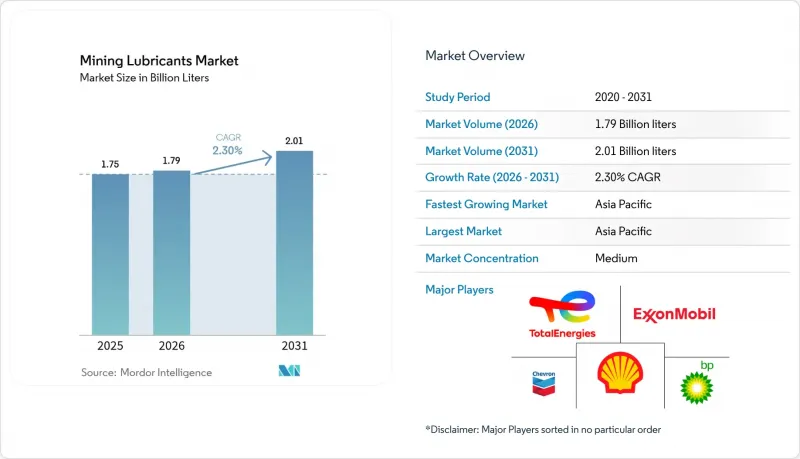
광산용 윤활유 시장 규모는 2025년에 17억 5,000만 리터로 평가되었고, 2026년 17억 9,000만 리터에서 2031년까지 20억 1,000만 리터에 이를 것으로 추정되고 있으며, 예측 기간(2026년-2031년) CAGR은 2.30%를 기록할 전망입니다.
본 보고서는 기유(광물유, 기타 기유), 제품 유형(엔진 오일, 기어 오일, 작동유, 변속기 오일, 기타 제품 유형), 지역(아시아태평양, 북미, 유럽, 남미, 중동 및 아프리카)별로 분류되어 있습니다. 시장 예측은 수량(리터) 기준으로 제시되어 있습니다.
전 세계 광산용 윤활유 시장 동향 및 인사이트
석탄 자원이 풍부한 광업 활동의 확대
탈탄소화 압력에도 불구하고, 호주, 중국, 인도, 미국의 생산자들이 일반 석탄 생산량을 안정적으로 유지하고 있어, 탄광 확장에 따라 차량 가동 시간이 연장되고 윤활유 사용량이 증가하고 있습니다. 호주에서는 철광석 및 석탄 생산 능력을 확대하기 위해 광업 부문에 대한 투자액을 두 배로 늘려, 드래그라인 및 운반 트럭에 사용되는 고부하용 엔진 오일 및 그리스 수요를 견인했습니다. 캐나다의 오일샌드 생산량은 2024년 말 190만 배럴/일로 증가했으며, 병목 현상 해소 프로젝트를 통해 업그레이더의 처리 능력이 60만 배럴/일로 향상됨에 따라 극한 온도 및 고오염 조건 하에서의 윤활유 수요가 촉진되었습니다. 석탄 채굴 현장에서 사용되는 대형 기계의 경우, 예기치 않은 가동 중단을 줄이기 위해 정비 주기가 긴 고성능 윤활유가 필수적입니다. 그러나 전력 부문의 탈탄소화에 따른 전 세계 석탄 수요의 불확실성으로 인해, 이러한 수요 요인의 지속 기간은 제한적일 수 있습니다.
경암 광산에서의 급속한 생산 능력 확대
새로운 구리, 금, 희토류 노천 광산에서는 지하 더 깊은 곳에서 가동되는 자동화된 고압 설비가 도입되면서 윤활유에 대한 요구 사항이 점점 더 복잡해지고 있습니다. 사업자들은 다수의 센서가 장착된 유압 굴삭기나 높은 감속비를 가진 기어박스를 도입하고 있으며, 이러한 장비에는 뛰어난 열 안정성을 갖춘 합성유가 필수적입니다. 2030년까지 화석 연료를 사용하지 않는 시스템을 목표로 하는 리프헬(Leephel)사의 제로 배출 굴착 로드맵은 전기 및 하이브리드 구동 시스템으로의 전환을 제시하고 있지만, 그럼에도 변속기 및 베어링 세트에는 용도에 맞는 윤활유가 여전히 필요합니다. 예지保全 플랫폼은 마찰 및 온도에 관한 실시간 데이터를 수집하여 교환 주기를 최적화함으로써, 폐기물을 줄이면서 가동 시간을 확보하고 있습니다. 칠레의 구리 광대나 서호주의 금광에서 경암 광산의 확장이 진행되는 가운데, 고부하 및 급격한 온도 상승에 대응하는 특수 윤활유는 고가에 거래되고 있습니다.
원유 가격 변동이 기유 비용을 상승시키며
그룹 II 기유는 석유 벤치마크에 연동되기 때문에 원유 가격이 급등하면 윤활유 제조업체는 이익률 압박에 직면합니다. 쉘(Shell)사가 독일의 하이드로크래커를 그룹 III 기유(연산 30만 톤) 생산 라인으로 전환함에 따라 지역 공급 탄력성이 향상되고 이산화탄소 배출량을 연간 62만 톤 감축했으나, 광산 사업자에 대한 비용 전가는 여전히 피할 수 없는 상황입니다. 각 광산 기업들은 윤활유 사용량을 줄이는 상태 기반 유지보수를 도입하여 가격 변동의 영향을 상쇄하고 있으며, 공급업체들은 가격 책정과 부가가치가 높은 기술 지원 간의 균형을 맞추도록 압박받고 있습니다. 고급 합성 윤활유는 리터당 가치가 높기 때문에 이익률 변동을 부분적으로 헤지하고 있습니다.
부문별 분석
2025년, 광물유는 비용 면에서의 우위와 확립된 공급 체제를 바탕으로 광산용 윤활유 시장에서 66.58%의 점유율을 유지했습니다. 그러나 고출력 기계, 더 깊은 광산, 그리고 극한 환경 조건이 광물유 성능의 한계를 뛰어넘음에 따라, 합성 윤활유 시장 점유율은 2031년까지 연평균 성장률(CAGR) 3.03%로 확대되고 있습니다. 광산용 윤활유 시장에서 합성 윤활유의 점유율 확대는 안정적인 점도, 내산화성, 그리고 교환 주기 연장에 따른 가동 중단 시간 단축과 같은 이점에 힘입은 것입니다. 쉐브론이 출시한 헤비 듀티용 합성 및 반합성 윤활유는 연비 효율을 향상시키는 장수명 윤활유에 대한 OEM 제조업체의 지지를 뒷받침하고 있습니다. 바이오 윤활유는 여전히 틈새 시장에 머물러 있지만, 특히 북극권, 아마존, 섬 지역의 광산 등 환경 허가에서 엄격한 생분해성이 요구되는 지역에서는 성장이 예상됩니다.
합성 윤활유의 높은 품질은 오일 교환 주기 연장에 따라 광물유와의 비용 격차를 좁혀, 수명 주기 비용의 효율화를 도모합니다. 자율 주행 운송 차량과의 결합을 통해 합성 윤활유의 뛰어난 윤활막 유지 능력이 베어링 고장을 줄여주므로, 높은 초기 비용이 정당화되며 가동 시간을 중시하는 성과 기반 계약으로의 조달 경향이 강해지고 있습니다.
지역별 분석
2025년 아시아태평양의 광산용 윤활유 시장 점유율 39.28%는 호주, 인도네시아, 인도의 막대한 광물 생산량을 반영하고 있습니다. 지속적인 투자를 통해 필바라와 칼리만탄의 철광석 및 석탄 수출이 유지되고 있으며, 중국의 부동산 시장 둔화에도 불구하고 수요가 뒷받침되고 있습니다. 호주 중앙은행은 윤활유 판매량을 뒷받침하는 광업 분야의 설비 투자액이 2배로 증가했다고 지적했습니다. 쉘(Shell)사의 태국 그리스 공장은 연간 생산량을 1만 5,000톤으로 3배 확대하여 동남아시아 최대 규모를 자랑하며, 지역 공급을 뒷받침하는 거점이 되었습니다. 엑슨모빌이 싱가포르에서 실시한 일일 2만 배럴 규모의 기유 생산 능력 확대는 고품질 EHC 등급공급을 실현하여 원료의 안정적인 확보에 기여하고 있습니다. 중국의 수입 수요는 둔화되고 있지만, 인도의 도시화가 진행되고 있는 것이 이를 상쇄하고 있어, 2031년까지의 연평균 성장률(CAGR)은 3.68%로 유지될 것으로 전망됩니다.
북미는 계속해서 기술적으로 선진적이며, 캐나다의 오일샌드와 미국의 구리 광산에서 자율주행 차량이 도입되면서 IoT 연계형 윤활 시스템의 보급이 가속화되고 있습니다. 쉘-휘트모어의 합작 사업은 그리스, 오일, 자동 공급 하드웨어에 걸친 턴키 방식의 신뢰성 솔루션을 제공하여 광산 사업자의 가동 시간을 향상시키고 있습니다. 2024년 오일샌드 생산량이 사상 최고치인 190만 b/d에 달하고, 업그레이더의 처리 능력이 확대됨에 따라 극한의 추위 속에서도 윤활유 수요가 견조한 추세를 보이고 있습니다. 환경 규제가 강화됨에 따라 수로 인근 지역에서는 생분해성 윤활유의 사용이 촉진되고 있으며, 틈새 시장인 합성유 및 바이오 오일의 도입이 진행되고 있습니다.
유럽의 광업 규모는 비교적 작아 생산량은 제한적이지만, 환경 규제 준수에 있어 선도적인 역할을 하고 있으며, EU 에코라벨 인증을 받은 윤활유의 조기 도입을 주도하고 있습니다. 쉘의 독일 기유 프로젝트는 국내 수요의 40%, EU 수요의 9%를 충족하게 되어, 그룹 III 기유공급 부족을 완화하고 배출량을 감축할 것입니다. 스칸디나비아 및 이베리아 반도의 광산에서는 오일 교환 주기를 연장하는 첨단 상태 모니터링 시스템이 도입되어, 판매량에서 가동 시간 확보로 초점이 이동하고 있습니다. 이 지역의 순환 경제와 탄소 배출 감축에 대한 집중으로 인해, 전체 광업 생산량은 부진하지만 고성능 합성유 및 바이오 오일의 성장이 예상됩니다.
기타 혜택:
- 엑셀 형식 시장 전망(ME) 시트
- 3개월간의 애널리스트 지원
자주 묻는 질문
목차
제1장 서론
제2장 조사 방법
제3장 주요 요약
제4장 시장 구도
제5장 시장 규모와 성장 예측
제6장 경쟁 구도
제7장 시장 기회와 향후 전망
LSH 26.08.26According to Mordor Intelligence, the mining lubricants market size was valued at 1.75 billion liters in 2025 and estimated to grow from 1.79 billion liters in 2026 to reach 2.01 billion liters by 2031, at a CAGR of 2.30% during the forecast period (2026-2031).
This report is Segmented by Base Stock (Mineral Oil, Other Base Stocks), Product Type (Engine Oil, Gear Oil, Hydraulic Fluids, Transmission Fluids, Other Product Types), and Geography (Asia-Pacific, North America, Europe, South America, Middle East and Africa). The Market Forecasts are Provided in Terms of Volume (Liters).
Global Mining Lubricants Market Trends and Insights
Expansion of Coal-Rich Mining Activities
Coal mine expansions extend fleet operating hours and raise lubricant loads as producers in Australia, China, India, and the United States keep thermal-coal output stable despite decarbonization pressure. Australia doubled mining-sector investment to lift iron ore and coal capacity, reinforcing volume demand for heavy-duty engine oils and greases used in draglines and haul trucks. Canadian oil-sands production climbed to 1.9 million b/d in late-2024, and debottlenecking projects raised upgrader capacity to 600,000 b/d, spurring lubricant needs for extreme-temperature and high-contamination conditions. Bigger equipment in coal pits relies on high-performance lubricants with longer service intervals to cut unscheduled stoppages. Yet global coal demand uncertainties tied to power-sector decarbonization may cap the longevity of this driver.
Rapid Capacity Additions in Hard-Rock Mines
New copper, gold, and rare-earth pits deploy automated, high-pressure equipment operating deeper underground, intensifying lubricant complexity. Operators install sensor-laden hydraulic shovels and high-ratio gearboxes that necessitate synthetic oils with superior thermal stability. Liebherr's zero-emission excavation roadmap, targeting fossil-free systems by 2030, illustrates the shift to electric and hybrid drive trains that still depend on tailored lubricants for transmissions and bearing sets. Predictive-maintenance platforms feed real-time friction and temperature data to optimize change intervals, reducing waste while safeguarding uptime. As hard-rock expansions proliferate in Chilean copper belts and Western Australian goldfields, specialized lubricants that manage high loads and temperature spikes command premium pricing.
Crude-Price Volatility Inflating Base-Oil Costs
Lubricant producers face margin pressure when crude prices spike since Group-II base stocks track petroleum benchmarks. Shell's conversion of a German hydrocracker to 300,000 t/y of Group-III base oils improves regional supply resilience and trims carbon emissions by 620,000 t/y, but cost pass-throughs to mine operators remain inevitable. Miners offset volatility by adopting condition-based maintenance that cuts oil use, pressuring suppliers to balance pricing with value-added technical support. Premium synthetics partially hedge margin swings through higher per-liter value.
Other drivers and restraints analyzed in the detailed report include:
- Modern, High-Horsepower Equipment Boosting Lube Intensity
- Autonomous Haulage Requiring Smart Centralized Lubrication
- Longer Drain Intervals from Real-Time Condition Monitoring
For complete list of drivers and restraints, kindly check the Table Of Contents.
Segment Analysis
Mineral oils retained 66.58% mining lubricants market share in 2025 owing to cost advantages and established supply. Synthetic variants, however, accelerate at a 3.03% CAGR to 2031 as high-horsepower machinery, deeper pits, and ambient extremes outstrip mineral capabilities. The synthetic slice of the mining lubricants market size benefits from stable viscosity, oxidation resistance, and extended drains that reduce service downtime. Chevron's heavy-duty synthetic and semi-synthetic rollout underscores OEM endorsement for longer-life fluids that deliver fuel efficiency gains. Bio-based lubricants remain a niche but grow where environmental permits require stringent biodegradability, particularly in Arctic, Amazon, and island mines.
The premium nature of synthetics narrows the cost differential versus mineral alternatives as drain intervals stretch, improving lifecycle economics. Coupled with autonomous haulage, synthetics' superior film retention lowers bearing failures, justifying higher upfront price and tilting procurement toward performance-based contracts that reward uptime.
Complete Report Scope:
- By Base Stock
- Mineral Oil
- Other Base Stocks (Synthetic Oils, Bio-based, etc.)
- By Product Type
- Engine Oil
- Gear Oil
- Hydraulic Fluids
- Transmission Fluids
- Other Product Types (Greases, Compressor Oils, etc.)
- By Geography
- Asia-Pacific
- China
- Japan
- India
- South Korea
- ASEAN Countries
- Rest of Asia-Pacific
- North America
- United States
- Canada
- Mexico
- Europe
- Germany
- United Kingdom
- France
- Italy
- Spain
- Russia
- NORDIC Countries
- Rest of Europe
- South America
- Brazil
- Argentina
- Rest of South America
- Middle East and Africa
- Saudi Arabia
- South Africa
- Rest of Middle East and Africa
- Asia-Pacific
Geography Analysis
Asia-Pacific's 39.28% mining lubricants market share in 2025 reflects massive mineral output in Australia, Indonesia, and India. Ongoing investment keeps iron-ore and coal exports flowing from the Pilbara and Kalimantan, sustaining demand despite China's property slowdown. The Reserve Bank of Australia noted a doubling of mining capital expenditures that underpin lubricant volumes. Shell's grease plant in Thailand tripled to 15,000 t/y, becoming Southeast Asia's largest and anchoring regional supply. ExxonMobil's 20,000 b/d base-oil expansion in Singapore supplies advanced EHC grades and bolsters feedstock security. While China's import pull eases, India's urban growth helps compensate, anchoring a 3.68% CAGR through 2031.
North America remains technologically advanced, with autonomous fleets in Canadian oil sands and US copper pits pushing uptake of IoT-linked lubrication. Shell-Whitmore's joint venture offers turnkey reliability solutions spanning greases, oils, and automated delivery hardware, enhancing operational uptime for mine operators. Record 1.9 million b/d oil-sands production in 2024 and upgrader capacity hikes translate into steady lubricant demand across extreme cold operations. Environmental scrutiny encourages biodegradable fluids in regions adjacent to waterways, fostering niche synthetic and bio-oil uptake.
Europe's smaller mining footprint limits volume but leads in environmental compliance, driving early adoption of EU Ecolabel-certified lubricants. Shell's German base-oil project will meet 40% of domestic demand and 9% of EU requirements, easing Group-III supply tightness and cutting emissions. Scandinavian and Iberian mines fit advanced condition monitoring that extends drain intervals, underscoring the shift from litres sold to uptime delivered. The region's focus on circularity and carbon cuts positions high-performance synthetics and bio-oils for growth despite sluggish overall mining output.
- BP p.l.c.
- Chevron Corporation
- China Petrochemical Corporation (Sinopec)
- Engen Petroleum (PTY) LTD
- Exxon Mobil Corporation
- Freudenberg
- FUCHS
- Gulf Oil International
- Idemitsu Kosan Co.,Ltd.
- LUKOIL
- Petro-Canada Lubricants Inc.
- PetroChina Company Limited
- Quaker Houghton
- Shell plc
- Suncor Energy Inc.
- TotalEnergies
- Valvoline
Additional Benefits:
- The market estimate (ME) sheet in Excel format
- 3 months of analyst support
TABLE OF CONTENTS
1 Introduction
- 1.1 Study Assumptions and Market Definition
- 1.2 Scope of the Study
2 Research Methodology
3 Executive Summary
4 Market Landscape
- 4.1 Market Overview
- 4.2 Market Drivers
- 4.2.1 Expansion of coal-rich mining activities
- 4.2.2 Rapid capacity additions in hard-rock mines
- 4.2.3 Modern, high-horsepower equipment boosting lube intensity
- 4.2.4 Autonomous haulage requiring smart centralized lubrication
- 4.2.5 Environmental push for biodegradable lubricants in fragile biomes
- 4.3 Market Restraints
- 4.3.1 Crude-price volatility inflating base-oil costs
- 4.3.2 Group-II base-oil supply tightness from refinery rationalization
- 4.3.3 Longer drain-intervals from real-time condition monitoring
- 4.4 Value Chain Analysis
- 4.5 Regulatory Landscape
- 4.6 Technological Outlook
- 4.7 Porter's Five Forces
- 4.7.1 Bargaining Power of Suppliers
- 4.7.2 Bargaining Power of Buyers
- 4.7.3 Threat of New Entrants
- 4.7.4 Threat of Substitutes
- 4.7.5 Degree of Competition
5 Market Size and Growth Forecasts (Volume)
- 5.1 By Base Stock
- 5.1.1 Mineral Oil
- 5.1.2 Other Base Stocks (Synthetic Oils, Bio-based, etc.)
- 5.2 By Product Type
- 5.2.1 Engine Oil
- 5.2.2 Gear Oil
- 5.2.3 Hydraulic Fluids
- 5.2.4 Transmission Fluids
- 5.2.5 Other Product Types (Greases, Compressor Oils, etc.)
- 5.3 By Geography
- 5.3.1 Asia-Pacific
- 5.3.1.1 China
- 5.3.1.2 Japan
- 5.3.1.3 India
- 5.3.1.4 South Korea
- 5.3.1.5 ASEAN Countries
- 5.3.1.6 Rest of Asia-Pacific
- 5.3.2 North America
- 5.3.2.1 United States
- 5.3.2.2 Canada
- 5.3.2.3 Mexico
- 5.3.3 Europe
- 5.3.3.1 Germany
- 5.3.3.2 United Kingdom
- 5.3.3.3 France
- 5.3.3.4 Italy
- 5.3.3.5 Spain
- 5.3.3.6 Russia
- 5.3.3.7 NORDIC Countries
- 5.3.3.8 Rest of Europe
- 5.3.4 South America
- 5.3.4.1 Brazil
- 5.3.4.2 Argentina
- 5.3.4.3 Rest of South America
- 5.3.5 Middle East and Africa
- 5.3.5.1 Saudi Arabia
- 5.3.5.2 South Africa
- 5.3.5.3 Rest of Middle East and Africa
- 5.3.1 Asia-Pacific
6 Competitive Landscape
- 6.1 Market Concentration
- 6.2 Strategic Moves
- 6.3 Market Share(%)/Ranking Analysis
- 6.4 Company Profiles (includes Global level Overview, Market-level Overview, Core Segments, Financials as available, Strategic Information, Market Rank/Share for key companies, Products and Services, and Recent Developments)
- 6.4.1 BP p.l.c.
- 6.4.2 Chevron Corporation
- 6.4.3 China Petrochemical Corporation (Sinopec)
- 6.4.4 Engen Petroleum (PTY) LTD
- 6.4.5 Exxon Mobil Corporation
- 6.4.6 Freudenberg
- 6.4.7 FUCHS
- 6.4.8 Gulf Oil International
- 6.4.9 Idemitsu Kosan Co.,Ltd.
- 6.4.10 LUKOIL
- 6.4.11 Petro-Canada Lubricants Inc.
- 6.4.12 PetroChina Company Limited
- 6.4.13 Quaker Houghton
- 6.4.14 Shell plc
- 6.4.15 Suncor Energy Inc.
- 6.4.16 TotalEnergies
- 6.4.17 Valvoline
7 Market Opportunities and Future Outlook
- 7.1 White-space and Unmet-need Assessment
- 7.2 Growing Demand for High Performance Lubricants


