
|
시장보고서
상품코드
2115836
요트 차터 : 시장 점유율 분석, 업계 동향과 통계, 성장 예측(2026-2031년)Yacht Charter - Market Share Analysis, Industry Trends & Statistics, Growth Forecasts (2026 - 2031) |
||||||
 Mordor Intelligence
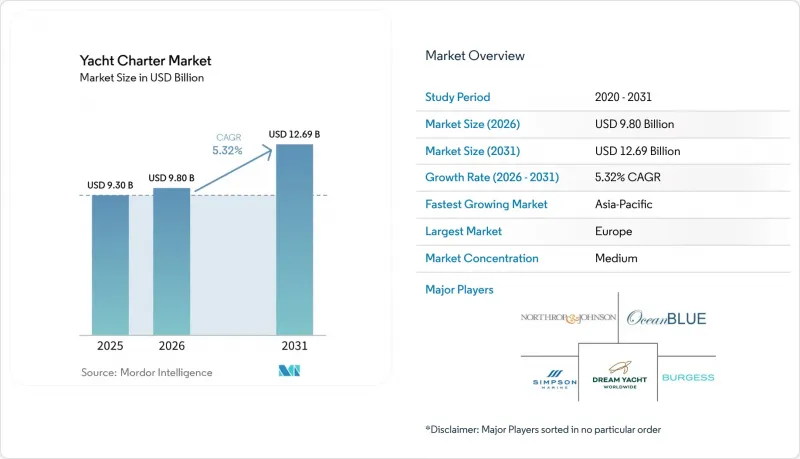
Mordor Intelligence에 따르면 요트 차터 시장 규모는 2025년 93억 달러에서 2026년에는 98억 달러로 확대되고, 2026년부터 2031년까지 CAGR 5.32%를 기록하며 2031년에는 126억 9,000만 달러에 달할 것으로 예측됩니다.
본 보고서는 전세 유형(베어보트, 캐빈 등), 요트 유형(세일링 요트, 모터 요트 등), 요트 크기(24미터 미만, 24-40미터, 기타), 예약 채널(브로커를 통한 오프라인 및 온라인 마켓플레이스), 전세 기간(1일 단위, 1주 단위, 기타), 최종사용자(개인·레저, 기타), 및 지역별로 분류되어 있습니다. 시장 전망은 금액(달러) 기준으로 제시되어 있습니다.
세계 요트 차터 시장의 동향 및 인사이트
아시아 및 중동 지역의 초고액 자산가(UHNWI) 급증으로 인해 첫 차터 이용이 촉진되고 있습니다
아시아 및 중동의 초고액 자산가(UHNWI) 인구 증가는 요트 차터 시장을 근본적으로 변화시키고 있으며, 2025년에는 패밀리 오피스의 약 44%가 요트 투자를 포함한 고급 자산에 대한 배분을 늘리는 것을 검토하고 있습니다. 이러한 자산의 급증으로 인해 요트를 지위의 상징이자 점점 더 과밀해지는 도시 지역에서 벗어난 특별한 은신처로 여기는 새로운 계층의 첫 차터 고객이 등장하고 있습니다. 이러한 추세는 중국에서 특히 두드러지며, 2024년에는 투자 가능 자산이 3,000만 달러를 초과하는 개인의 수가 15% 증가하여 전 세계 요트 대여 시장 전체에 파급 효과를 가져오고 있습니다. 나이트 프랭크(Knight Frank)의 'Wealth Report 2025'에 따르면, 이러한 신규 진입자들은 단순한 수동적 소비자가 아니라 요트의 디자인과 설비에 적극적으로 영향을 미치며, 전세 업체들이 이에 대응해야 할 만큼 문화적으로 특화된 경험을 추구하고 있는 것으로 밝혀졌습니다. 그 영향은 아시아 해역에 그치지 않고, 지중해의 전세 업체에 따르면 2024년에는 아시아인 고객이 22% 증가하여, 호화 선박에서의 서비스 제공 및 문화적 배려 측면에서 혁신이 촉진되고 있습니다.
온라인 플랫폼의 확장이 유럽 내 이용률을 끌어올리고 있다
디지털 마켓플레이스 플랫폼은 요트의 유휴 시간을 획기적으로 줄이고, 고객 기반을 기존의 부유층이라는 틀을 넘어 확장함으로써 유럽 요트 차터 업계에 혁명을 일으키고 있습니다. 유럽을 대표하는 요트 차터 플랫폼인 ‘Click&Boat’는 주로 프랑스와 이탈리아에서의 접속을 통해 28.13%의 트래픽 점유율을 확보하고 있는 반면, ‘Boataround’와 같은 신흥 플랫폼도 중부 유럽에서 큰 성장세를 보이고 있습니다. 이러한 플랫폼들은 예약 절차를 완전히 바꿔놓았으며, 사용자는 한 번의 세션당 평균 11분 동안 게시된 정보를 열람하고 있습니다. 그 결과, 기존의 중개인 중심 모델과 비교하여 선단 전체의 가동률이 30% 향상되었습니다. 이러한 ‘민주화’의 효과는 크로아티아에서 특히 두드러졌으며, PlainSailing.com의 보고에 따르면 2024년에는 디지털 예약이 영국 출발 전세 건수를 7% 증가시키는 요인이 되었습니다. 또한, 그리스의 레프카스는 합리적인 가격과 양호한 항해 조건 덕분에 특히 인기 있는 여행지로 부상하고 있습니다. 이러한 디지털 전환은 단순히 요트 예약 방식을 바꾸는 데 그치지 않고, 누가 예약하는가라는 점에서도 근본적인 변화를 가져왔으며, 현재 유럽의 온라인 요트 차터 이용자 중 35%를 밀레니얼 세대가 차지하고 있습니다.
성수기 승무원 부족이 지중해 요트 차터 비용을 끌어올리고 있다
지중해 요트 차터 시장은 성수기에 심각한 승무원 부족에 직면해 있으며, 2024년에는 운영 비용이 15-20% 상승하여 사업자들은 서비스 품질과 수익성 사이에서 어려운 절충을 강요받고 있습니다. 이러한 부족 현상은 엔지니어나 셰프 등 전문직에서 특히 심각하며, 일부 소유주는 서비스 품질에 미칠 잠재적 영향에도 불구하고 비용 절감을 위해 최소 승무원 기준을 선택하고 있습니다. 전세 업체에 따르면, 기업들이 유능한 인재 확보를 놓고 경쟁을 벌이는 가운데 2025년 시즌을 앞두고 승무원 급여가 최대 25% 상승하고 있으며, 이러한 비용은 필연적으로 전세 요금 인상을 통해 고객에게 전가될 것입니다. 이러한 인력 부족은 선단 배치에도 전략적인 영향을 미치고 있으며, 일부 사업자는 노동 시장이 더 안정적인 지역으로 선박을 재배치하는 한편, 경쟁이 치열해지는 노동 시장에서 인재를 확보하기 위해 연중 고용 보장 및 전문 역량 개발 기회를 포함한 승무원 유지 프로그램에 투자하고 있습니다.
부문 분석
2025년, 승무원이 포함된 전세 서비스는 초보자와 시간적 제약이 있는 여행객에게 매력적인 풀스태프 체제의 서비스를 제공함에 따라 요트 차터 시장 점유율의 61.58%를 차지했습니다. 이 등급의 선박에서는 대개 게스트 2명당 승무원 1명이 배정되어, 세심한 서비스를 통해 부가가치를 높이고 있습니다. 수익 규모는 소폭이지만, 캐빈 전세는 연평균 성장률(CAGR) 9.31%라는 급속한 성장을 이루며, 선박 단위가 아닌 캐빈 단위로 요금을 지불하는 중산층으로 요트 차터 시장의 기반을 넓히고 있습니다. 동남아시아에서는 현재 예약 5건 중 1건이 캐빈 전세이며, 시장 확대에 있어 그 역할이 부각되고 있습니다.
디지털 예약 플랫폼 보고서에 따르면, 2025년 캐빈 및 승무원 포함 전세 예약의 70%가 온라인 채널을 통해 이루어졌으며, 투명성과 편의성이 기존에 의존해 왔던 개인 중개인에 대한 의존도를 능가하고 있는 것으로 나타났습니다. 승무원 포함 전세보다 약 40-60% 저렴한 베어보트 전세는 면허를 소지한 선원들에게 여전히 인기 있는 선택지이며, 무역풍이 부는 지역에서는 비수기 동안 안정적인 수입원이 되고 있습니다. 첨단 항해 소프트웨어와 원격 지원 덕분에 베어보트의 안전성이 향상되어 적격 고객층이 확대되고 있습니다. 유연한 승무원 배치, 추가 셰프 패키지, 간편한 온라인 결제를 결합한 운영사들은 요트 차터 업계의 다음 수요 물결을 포착할 준비를 마쳤습니다.
2025년 총 수익의 57.52%를 모터 요트가 차지하고 있으며, 넓은 살롱과 인기 명소 간 신속한 이동이 가능하다는 점이 호평을 받고 있습니다. 그러나 환경 의식이 높아짐에 따라 세일링 요트는 연평균 성장률(CAGR) 8.20%를 기록하고 있으며, 특히 지중해 섬들을 순회하는 크루즈에서는 바람 조건이 양호하여 저탄소 크루징에 적합합니다. 한편, 쌍동선 요트 대여 시장 규모는 급속히 확대되고 있습니다. 이는 두 개의 선체로 구성된 설계가 가족 단위 여행객이 선호하는 널찍한 데크 구조의 안정성과 양립하기 때문입니다.
한때 틈새 시장으로 여겨졌던 하이브리드 추진 시스템은 2024년에 전 세계 선단에 300척 이상의 요트가 추가되면서, 규제상의 의무와 조용한 정박지를 선호하는 전세 고객들의 요구를 모두 충족시키고 있습니다. 돛과 하이브리드 기술을 결합한 운항 사업자들은 20-30%의 연료비 절감을 실현하고 있으며, 연료 가격 변동에 따라 예산에 민감한 전세 고객들의 공감을 얻고 있습니다. 현재 선택의 기준은 순수한 속도보다는 여행의 이념과 여행자의 가치관을 일치시키는 데 중점을 두고 있습니다. 모터 요트 제조사들은 태양광 패널과 배터리 뱅크를 통합함으로써 이에 부응하고 있으며, 이는 요트 차터 시장에서 지속가능성이 ‘선택 사항’에서 ‘기본 요건’으로 전환되었음을 보여줍니다.
지역별 분석
2025년, 유럽은 밀집된 마리나 네트워크와 표준화된 전세 규정의 뒷받침을 받아 전 세계 매출의 45.05% 점유율을 유지했습니다. 그리스의 새로운 ‘e-Charter Permission’ 제도는 EU 역외의 슈퍼요트 유입을 촉진한 반면, 크로아티아의 달마티아 해안은 가격에 민감한 예약 고객을 유치했습니다. 승무원 임금이 최대 25% 상승하고 성수기 계류 공간이 제한되어 비용이 상승하고 있지만, 온라인 포털 사이트를 통해 2차 항구의 인지도가 높아지면서 연중 수요가 평준화되고 있습니다.
아시아는 가장 빠르게 성장하는 시장으로, 2026년부터 2031년까지 연평균 성장률(CAGR) 8.35%로 확대될 것으로 예측됩니다. 중국에서는 3,000만 달러 이상의 유동 자산을 보유한 개인의 수가 2024년에 15% 급증했으며, 하이난섬, 푸켓, 발리의 마리나는 더 깊은 흘수(draught)를 가진 선박을 수용할 수 있도록 규모를 확대하고 있습니다. 디지털 검색이 중개인의 역할을 대체함에 따라, 처음 요트를 대여하는 사람들도 기업의 세일링 행사나 가족 모임을 쉽게 준비할 수 있게 되었습니다. 지역 정부는 신규 마리나에 세제 혜택을 제공하여 민간 투자를 촉진하고 있습니다.
카리브해는 2시즌에 걸친 수익을 목적으로 유럽에서 요트가 이동해 오기 때문에 겨울철 매력적인 여행지가 되고 있습니다. 섬 투어를 하기에 적합한 넉넉한 설계 덕분에 2024년 쌍동선(카타마란) 전세 이용은 전년 대비 15% 증가했습니다. 영국령 버진아일랜드와 바하마에서는 계류 시설 부족이 성장의 걸림돌이 되고 있는 반면, 캘리포니아주의 ‘상업용 항만 선박 규제’ 등 미국 내 환경 규제가 강화됨에 따라 태평양 연안 항구로 선박을 이동시키는 사업자들에게는 규정 준수 부담이 커지고 있습니다. 북미는 견고한 국내 시장과 선상 기업 인센티브 증가라는 혜택을 누리고 있으며, 회의와 레저를 결합한 테마형 전세 기회가 확대되고 있습니다.
기타 혜택:
- 엑셀 형식의 시장 예측(ME) 시트
- 3개월간의 애널리스트 지원
자주 묻는 질문
목차
제1장 소개
제2장 조사 방법
제3장 주요 요약
제4장 시장 구도
제5장 시장 규모와 성장 예측
제6장 경쟁 구도
제7장 시장 기회와 향후 전망
KSM 26.08.26According to Mordor Intelligence, the yacht charter market size is expected to grow from USD 9.30 billion in 2025 to USD 9.80 billion in 2026 and is forecast to reach USD 12.69 billion by 2031 at 5.32% CAGR over 2026-2031.
This report is Segmented by Charter Type (Bareboat, Cabin, and More), Yacht Type (Sailing Yacht, Motor Yacht, and More), Yacht Size (Less Than 24 Meters, 24 To 40 Meters, and More), Booking Channel (Broker-Assisted Offline and Online Marketplace), Charter Duration (Daily, Weekly, and More), End-User (Private and Leisure, and More), and Geography. The Market Forecasts are Provided in Terms of Value (USD).
Global Yacht Charter Market Trends and Insights
Surge in UHNWIs in Asia and Middle East catalyzing First-time Charters
The expanding UHNWI population in Asia and the Middle East is fundamentally reshaping the yacht charter market, with approximately 44% of family offices looking to increase allocations to luxury assets, including yacht investments, in 2025. This wealth surge creates a new class of first-time charterers who view yachting as a status symbol and an exclusive retreat from increasingly dense urban centers. The trend is particularly pronounced in China, where the number of individuals with investable assets exceeding USD 30 million grew by 15% in 2024, creating ripple effects across the global charter market. Knight Frank's Wealth Report 2025 reveals that these new entrants are not merely passive consumers but actively influence yacht design and amenities, demanding culturally specific experiences that charter companies must adapt to. The impact extends beyond Asia's waters, with Mediterranean charter operators reporting a 22% increase in Asian clientele in 2024, driving innovation in service offerings and cultural accommodations aboard luxury vessels.
Expansion of Online Platforms Boosting Utilization in Europe
Digital marketplace platforms are revolutionizing the European yacht charter landscape by dramatically reducing idle vessel time and expanding the customer base beyond traditional wealthy demographics. Click&Boat, Europe's leading yacht charter platform, has achieved a 28.13% traffic share, primarily from France and Italy, while emerging platforms like Boataround are gaining significant traction in Central Europe. These platforms have transformed the booking process, with users spending an average of 11 minutes per session exploring listings, resulting in a 30% increase in overall fleet utilization rates compared to traditional broker-only models. The democratization effect is particularly evident in Croatia, where PlainSailing.com reports that digital bookings have contributed to a 7% increase in UK-originated charters in 2024, with Lefkas in Greece emerging as a particularly popular destination due to its affordability and favorable sailing conditions. This digital transformation is not merely changing how yachts are booked but is fundamentally altering who books them, with millennials now representing 35% of all online yacht charter customers in Europe.
Peak-season Crew Shortages Inflating Mediterranean Charter Costs
The Mediterranean yacht charter market is grappling with a critical crew shortage during peak seasons, driving operational costs up by 15-20% in 2024 and forcing operators to make difficult trade-offs between service quality and profitability. This shortage is particularly acute for specialized roles such as engineers and chefs, with some owners opting for minimum crewing standards to reduce costs despite the potential impact on service quality. Charter operators report that crew salaries have increased by up to 25% for the 2025 season as companies compete for qualified personnel, with these costs inevitably passed on to clients through higher charter rates. The shortage has strategic implications for fleet deployment, with some operators redirecting vessels to regions with more stable labor markets or investing in crew retention programs that include year-round employment guarantees and professional development opportunities to secure talent in an increasingly competitive labor market.
Other drivers and restraints analyzed in the detailed report include:
- Experiential Tourism Demand Driving Catamaran Charters in the Caribbean
- Relaxed Mediterranean Charter Regulations Unlocking Capacity
- IMO Tier III Compliance Refits Pressuring Margins
For complete list of drivers and restraints, kindly check the Table Of Contents.
Segment Analysis
Crewed Charters had a 61.58% of the yacht charter market share in 2025, due to a fully staffed service that appeals to newcomers and time-pressed travelers. Vessels in this class often assign one crew member per guest pair, reinforcing value through personalized care. While modest in revenue, Cabin charters are scaling quickly at a 9.31% CAGR, broadening the yacht charter market to middle-income groups who pay per cabin rather than per vessel. In Southeast Asia, cabin offers now represent one in five bookings, underscoring their role in market expansion.
Digital booking hubs report that 70% of 2025 cabin and crewed reservations came via online channels, indicating transparency and convenience outweigh the historical reliance on personal brokers. Bareboat charters, roughly 40-60% cheaper than crewed trips, remain the choice for licensed sailors and contribute steady off-season income in tradewind regions. Enhanced navigation software and remote support deepen bareboat safety, enlarging the qualified client pool. Operators combining flexible staffing, add-on chef packages, and easy online checkout stand to capture the next wave of demand in the yacht charter industry.
Motor yachts accounted for 57.52% of the 2025 revenue pool, favored for expansive saloons and faster repositioning between hotspots. Yet rising eco-awareness is steering an 8.20% CAGR for sailing yachts, especially on Mediterranean island loops where wind availability suits carbon-light cruising. Meanwhile, the yacht charter market size for catamarans has surged, as two-hull designs match the stability of generous deck plans prized by families.
Hybrid propulsion, once a niche, saw more than 300 yachts added to global fleets in 2024, meeting both regulatory obligations and tenant preference for quiet anchorage stays. Operators blending sail and hybrid tech market fuel-savings of 20-30%, resonating with budget-sensitive renters as fuel prices fluctuate. Choice is now less about pure speed and more about aligning trip ethos with traveler values. Motor-yacht builders answer by integrating solar arrays and battery banks, signaling that sustainability has moved from optional to baseline expectation within the yacht charter market.
Complete Report Scope:
- By Charter Type
- Bareboat
- Cabin
- Crewed
- By Yacht Type
- Sailing Yacht
- Motor Yacht
- Catamaran and Others
- By Yacht Size
- Less than 24 meters
- 24 to 40 meters
- 40 to 60 meters
- More than 60 meters
- By Booking Channel
- Broker-Assisted Offline
- Online Marketplace
- By Charter Duration
- Daily
- Weekly
- Monthly/Seasonal
- By End-user
- Private and Leisure
- Corporate and MICE
- Government and Institutional
- By Geography
- North America
- United States
- Canada
- Mexico
- Rest of North America
- South America
- Brazil
- Argentina
- Rest of South America
- Europe
- United Kingdom
- Germany
- France
- Italy
- Spain
- Greece
- Croatia
- Rest of Europe
- Middle East and Africa
- Saudi Arabia
- United Arab Emirates
- Egypt
- Turkey
- South Africa
- Rest of Middle East and Africa
- Asia-Pacific
- China
- Japan
- India
- South Korea
- Thailand
- Rest of Asia Pacific
- North America
Geography Analysis
Europe retained a 45.05% share of global revenue in 2025, underpinned by dense marina networks and standardized charter rules. Greece's new e-Charter Permission drew a wave of non-EU superyachts, while Croatia's Dalmatian Coast captured price-sensitive bookings. Crew wage inflation of up to 25% and limited peak-season berths raise costs; online portals make secondary ports visible, smoothing demand over the entire year.
Asia is the fastest-rising market, predicted to expand at an 8.35% CAGR from 2026 to 2031. China's pool of individuals with more than USD 30 million in liquid assets jumped 15% in 2024, and marinas in Hainan, Phuket, and Bali are scaling to meet larger hull drafts. Digital discovery replaces broker gatekeeping, helping first-time charterers arrange corporate sail-aways and family reunions. Regional governments offer tax breaks on new marinas, spurring private investment.
The Caribbean holds winter appeal as yachts migrate from Europe for dual-season revenue. Catamaran charters climbed 15% year-on-year in 2024 thanks to spacious designs suited to island hopping. Growth is capped by berth shortages in the British Virgin Islands and Bahamas, while tightened U.S. environmental rules, such as California's Commercial Harbor Craft Regulation, raise compliance stakes for operators repositioning to Pacific ports. North America benefits from a strong domestic base and rising corporate incentives afloat, opening chances for themed charters that merge meetings with leisure.
- Dream Yacht Worldwide
- The Moorings
- Sunsail
- Burgess
- Ocean Independence
- Northrop and Johnson (MarineMax, Inc.)
- Y.CO (THE YACHT COMPANY)
- Fraser Yachts (MarineMax, Inc.)
- Imperial Yachts
- Camper and Nicholsons
- Edmiston
- Bluewater Yachting
- CharterWorld
- Boatsetter
- GetMyBoat
- Zizoo
- Navtours
- Asta Yachting
- Yachtico
- OceanBLUE Yachts Ltd.
Additional Benefits:
- The market estimate (ME) sheet in Excel format
- 3 months of analyst support
TABLE OF CONTENTS
1 Introduction
- 1.1 Study Assumptions and Market Definition
- 1.2 Scope of the Study
2 Research Methodology
3 Executive Summary
4 Market Landscape
- 4.1 Market Overview
- 4.2 Market Drivers
- 4.2.1 Surge in UHNWIs in Asia and Middle East Catalysing First-time Charters
- 4.2.2 Expansion of Online Platforms Boosting Utilisation in Europe
- 4.2.3 Experiential Tourism Demand Driving Catamaran Charters in Caribbean
- 4.2.4 Relaxed Mediterranean Charter Regulations Unlocking Capacity
- 4.2.5 Corporate Incentive Travel Adoption in North America
- 4.2.6 Eco-friendly Hybrid-Propulsion Yachts Attracting Scandinavian and Oceania Clientele
- 4.3 Market Restraints
- 4.3.1 Peak-season Crew Shortages Inflating Mediterranean Charter Costs
- 4.3.2 IMO Tier III Compliance Refits Pressuring Margins
- 4.3.3 Limited Marina Berths on Caribbean Islands Constraining Fleet Growth
- 4.3.4 High Discretionary-Spend Sensitivity in European Market
- 4.4 Value/Supply-Chain Analysis
- 4.5 Regulatory and Technological Outlook
- 4.6 Porter's Five Forces Analysis
- 4.6.1 Threat of New Entrants
- 4.6.2 Bargaining Power of Buyers
- 4.6.3 Bargaining Power of Suppliers
- 4.6.4 Threat of Substitutes
- 4.6.5 Intensity of Competitive Rivalry
5 Market Size and Growth Forecasts (Value (USD))
- 5.1 By Charter Type
- 5.1.1 Bareboat
- 5.1.2 Cabin
- 5.1.3 Crewed
- 5.2 By Yacht Type
- 5.2.1 Sailing Yacht
- 5.2.2 Motor Yacht
- 5.2.3 Catamaran and Others
- 5.3 By Yacht Size
- 5.3.1 Less than 24 meters
- 5.3.2 24 to 40 meters
- 5.3.3 40 to 60 meters
- 5.3.4 More than 60 meters
- 5.4 By Booking Channel
- 5.4.1 Broker-Assisted Offline
- 5.4.2 Online Marketplace
- 5.5 By Charter Duration
- 5.5.1 Daily
- 5.5.2 Weekly
- 5.5.3 Monthly/Seasonal
- 5.6 By End-user
- 5.6.1 Private and Leisure
- 5.6.2 Corporate and MICE
- 5.6.3 Government and Institutional
- 5.7 By Geography
- 5.7.1 North America
- 5.7.1.1 United States
- 5.7.1.2 Canada
- 5.7.1.3 Mexico
- 5.7.1.4 Rest of North America
- 5.7.2 South America
- 5.7.2.1 Brazil
- 5.7.2.2 Argentina
- 5.7.2.3 Rest of South America
- 5.7.3 Europe
- 5.7.3.1 United Kingdom
- 5.7.3.2 Germany
- 5.7.3.3 France
- 5.7.3.4 Italy
- 5.7.3.5 Spain
- 5.7.3.6 Greece
- 5.7.3.7 Croatia
- 5.7.3.8 Rest of Europe
- 5.7.4 Middle East and Africa
- 5.7.4.1 Saudi Arabia
- 5.7.4.2 United Arab Emirates
- 5.7.4.3 Egypt
- 5.7.4.4 Turkey
- 5.7.4.5 South Africa
- 5.7.4.6 Rest of Middle East and Africa
- 5.7.5 Asia-Pacific
- 5.7.5.1 China
- 5.7.5.2 Japan
- 5.7.5.3 India
- 5.7.5.4 South Korea
- 5.7.5.5 Thailand
- 5.7.5.6 Rest of Asia Pacific
- 5.7.1 North America
6 Competitive Landscape
- 6.1 Market Concentration
- 6.2 Strategic Moves
- 6.3 Market Share Analysis
- 6.4 Company Profiles (Includes Global Level Overview, Market Level Overview, Core Segments, Financials as Available, Strategic Information, Market Rank/Share for Key Companies, Products and Services, SWOT Analysis, and Recent Developments)
- 6.4.1 Dream Yacht Worldwide
- 6.4.2 The Moorings
- 6.4.3 Sunsail
- 6.4.4 Burgess
- 6.4.5 Ocean Independence
- 6.4.6 Northrop and Johnson (MarineMax, Inc.)
- 6.4.7 Y.CO (THE YACHT COMPANY)
- 6.4.8 Fraser Yachts (MarineMax, Inc.)
- 6.4.9 Imperial Yachts
- 6.4.10 Camper and Nicholsons
- 6.4.11 Edmiston
- 6.4.12 Bluewater Yachting
- 6.4.13 CharterWorld
- 6.4.14 Boatsetter
- 6.4.15 GetMyBoat
- 6.4.16 Zizoo
- 6.4.17 Navtours
- 6.4.18 Asta Yachting
- 6.4.19 Yachtico
- 6.4.20 OceanBLUE Yachts Ltd.
7 Market Opportunities and Future Outlook
- 7.1 White-space and Unmet-need Assessment