

|
시장보고서
상품코드
2116597
불소화 폴리이미드 시장 : 점유율 분석, 업계 동향과 통계, 성장 예측(2026-2031년)Fluorinated Polyimide - Market Share Analysis, Industry Trends & Statistics, Growth Forecasts (2026 - 2031) |
||||||
 Mordor Intelligence
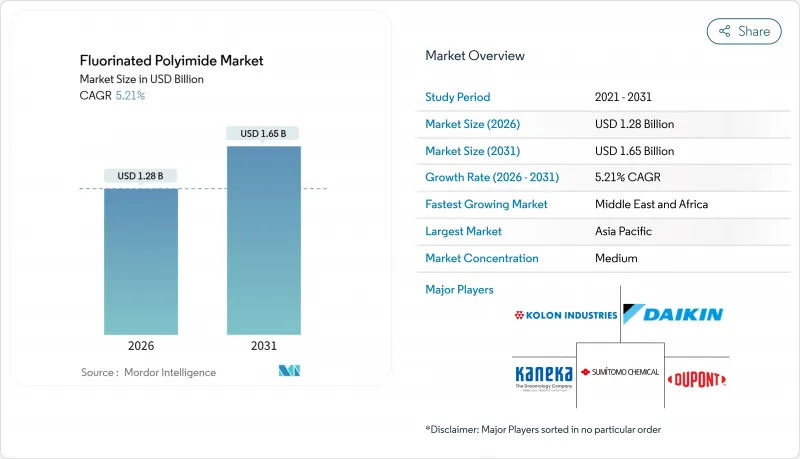
Mordor Intelligence에 의하면, 불소화 폴리이미드 시장 규모는 2026년에 12억 8,000만 달러로 추정되며, 예측 기간(2026-2031년)에서 CAGR 5.21%로 성장을 지속하여, 2031년에는 16억 5,000만 달러에 이를 전망입니다.
본 보고서는 용도별(플렉서블 디스플레이 소재, 전기 절연재, 구조용 수지, 태양전지, 조명 기기, 기타 용도), 최종 사용자 산업별(전자, 항공우주 및 방위, 태양에너지, 자동차, 의료, 기타 최종 사용자 산업), 지역별(아시아태평양, 북미, 기타)로 분류되어 있습니다. 시장 전망은 금액(달러) 기준으로 제시되어 있습니다.
세계 불소화 폴리이미드 시장 동향 및 인사이트
플렉서블 디스플레이 기기에 대한 소비자 수요의 급증
폴더블 스마트폰은 컨셉에서 주류로 자리 잡았으며, 현재 한국과 중국에서 플렉서블 OLED 생산 라인 도입 수는 15개 공장을 넘어섰습니다. 각 생산 라인에서는 두께 50μm 미만의 무색 불소화 폴리이미드 필름이 사용되고 있으며, 이 필름은 20만 회의 접힘 주기를 견디고 균열이 발생하지 않아야 합니다. 불소화 처리를 통해 굴절률이 낮아지고 황변이 억제되므로, 디바이스는 수명 기간 동안 색 영역을 유지할 수 있습니다. 삼성의 ‘Galaxy Z’ 시리즈는 2025년에 수백만 대를 출하했습니다. 접이식 폼 팩터를 중저가 가격대까지 확대함에 따라, 패널 제조업체들은 2028년까지 기판 생산량을 두 배로 늘릴 전망입니다. 초박형 유리와 불소화 폴리이미드를 결합한 하이브리드 스택은 내 스크래치성과 유연성의 균형을 동시에 갖추고 있으며, 이러한 추세는 자동차용 클러스터나 웨어러블 기기의 화면으로도 확대될 것으로 보입니다.
5G/고주파 인프라 확장에 따라 저유전율 필름이 필수적
24GHz를 초과하는 주파수에서 작동하는 밀리파 안테나에는 낮은 유전율과 유전 정접이 요구됩니다. 불소화 폴리이미드는 높은 유리전이 온도를 유지하기 때문에 뒤틀림 위험 없이 안테나 인 패키지(AIP) 모듈에 매끄럽게 통합할 수 있습니다. 2025년에는 기지국 도입이 급증하고, 스몰 셀을 통한 고밀도화 추세가 저손실 플렉서블 회로 기판에 대한 수요를 더욱 끌어올렸습니다. IEEE의 적층 기판 지침에 따라 인증 주기가 단축되어, 소재 공급업체는 기존 무선 세대보다 더 신속하게 파일럿 플랜트의 생산량을 상업적 규모로 전환할 수 있게 되었습니다.
높은 생산 비용과 원자재 가격 변동
헥사플루오로이소프로파일리덴계 디산 무수물은 다단계 합성 공정과 특수한 격리 처리가 필요하기 때문에 기존의 방향족 화합물에 비해 가격이 몇 배나 비쌉니다. 단일 공급업체에서 예상치 못한 가동 중단이 발생하면, 몇 주 만에 현물 가격이 급등할 가능성이 있습니다. 또한, 많은 계약이 유로화나 엔화로 체결되어 있어 환율 변동에 따라 가격 변동이 더욱 확대됩니다. 듀폰이나 다이킨과 같은 수직 통합형 기업은 모노머로의 역통합을 통해 공급 차단의 영향을 완화할 수 있지만, 소규모 컨버터에게는 이러한 헤지 수단이 없어 시장이 핍박할 때 할당 위험에 직면하게 됩니다.
부문별 분석
플렉서블 디스플레이용 소재는 2025년 매출의 38.46%를 차지하며, 이는 접이식 및 롤러블 OLED 제품의 보급을 반영합니다. 불소화 폴리이미드 시장의 이 분야는 6세대(Gen-6) 라인을 확장하는 한국 및 중국의 제조 공장과, 곡면 대시보드의 시범 도입을 추진하는 자동차 OEM 제조업체들에 의해 뒷받침되고 있습니다. 전기 절연용 와이어 코팅, 모터 슬롯 라이너, 변압기용 테이프 등은 전력 회사가 저렴한 대체품보다 실적이 입증된 유전체를 선호하기 때문에 안정적인 판매량을 유지하고 있습니다.
태양전지는 메가 콘스텔레이션 및 중동의 집광형 태양광 발전소에서 내방사선성 및 내자외선성이 뛰어난 백시트가 요구됨에 따라, 응용 분야 중 가장 높은 연평균 성장률(CAGR) 6.34%를 나타낼 것으로 예측됩니다. OLED 조명 기구 등의 조명 디바이스에서는 건축용 및 자동차용 앰비언트 조명을 위해 얇고 투명한 필름이 채택되고 있으며, 그 시장 규모는 소폭이지만 확대 추세를 보이고 있습니다. 의료용 카테터부터 고주파 커넥터에 이르는 틈새 용도가 응용 분야 구성을 보완하고 있으며, 이는 이 소재의 범용성을 입증하고 있습니다.
지역별 분석
아시아태평양은 한국의 플렉서블 OLED 시장 지배력과 중국의 5G 확산을 배경으로 2025년 시장 규모의 49.28%를 차지했습니다. 삼성디스플레이, LG디스플레이, BOE 등 3개사가 전 세계 접이식 패널 생산량의 대부분을 장악하고 있으며, 대량의 무색 필름을 소비하고 있습니다. 일본은 모노머 합성에 대한 전문 지식을 유지하고 있으며, 카네카(Kaneka)나 우베 화학공업(Ube Chemical Industries)과 같은 공급업체들이 고순도 원료를 공급함으로써 비용과 품질 면에서 타의 추종을 불허하는 지역 생태계를 뒷받침하고 있습니다. 인도에서는 전자기기 조립이 확대되고 있지만, 기판은 여전히 대부분 수입에 의존하고 있습니다.
북미의 성장은 항공우주 및 위성 프로젝트에 의해 주도되고 있습니다. 듀폰(DuPont)은 오하이오주 서클빌(Circleville)에서의 확장을 통해 카프톤(Kapton) 및 파이락스(Pyrax)의 생산 능력을 증강하고, 전기차(EV)용 배터리 배선재와 5G 안테나 모듈을 주요 타겟으로 삼고 있습니다. PFAS에 대해 CERCLA(종합적 환경 대응·보상·책임법)의 책임이 적용되는 미국의 규제적 제약은 이익률을 압박하고 있으며, 일부 가공업체로 하여금 2차 가공을 해외로 이전하도록 촉진하고 있습니다.
유럽에서는 시장이 독일의 차량용 전자기기, 프랑스 및 영국의 항공우주용 복합재료, 그리고 특수 산업 분야로 양분되어 있습니다. 남미, 중동 및 아프리카를 합친 매출액은 소규모이지만, 중동 및 아프리카은 사우디아라비아와 UAE가 기가와트 규모의 태양광 발전소를 구축함에 따라 내열성이 높고 아웃가스량이 적은 백시트가 의무화됨에 따라 5.92%의 성장이 예상됩니다.
기타 혜택:
- 엑셀 형식 시장 예측(ME) 시트
- 3개월간의 애널리스트 지원
자주 묻는 질문
목차
제1장 서론
제2장 조사 방법
제3장 주요 요약
제4장 시장 구도
제5장 시장 규모와 성장 예측
제6장 경쟁 구도
제7장 시장 기회와 향후 전망
JHS 26.08.28According to Mordor Intelligence, the fluorinated polyimide market size is estimated at USD 1.28 billion in 2026, and is expected to reach USD 1.65 billion by 2031, at a CAGR of 5.21% during the forecast period (2026-2031).
This report is Segmented by Application (Flexible Display Materials, Electrical Insulation, Structural Resins, Solar Cells, Lighting Devices, and Other Applications), End-User Industry (Electronics, Aerospace and Defense, Solar Energy, Automotive, Medical, and Other End-User Industries), and Geography (Asia-Pacific, North America, and More). The Market Forecasts are Provided in Terms of Value (USD).
Global Fluorinated Polyimide Market Trends and Insights
Surge in Consumer Demand for Flexible Display Devices
Foldable smartphones have shifted from concept to mainstream, and the installed base of flexible OLED lines now exceeds 15 plants in South Korea and China. Each line consumes colorless fluorinated polyimide films thinner than 50 µm that must survive 200,000-fold cycles without cracking. Fluorination lowers the refractive index and curbs yellowing, helping devices maintain color gamut across their service life. Samsung's Galaxy Z series shipped several million units in 2025; by extending foldable form factors to mid-tier price points, panel makers expect to double substrate throughput by 2028. Hybrid stacks combining ultra-thin glass and fluorinated polyimide balance scratch resistance with flexibility, a trend likely to spread to automotive clusters and wearable screens.
Ramp-up of 5G/High-Frequency Infrastructure Necessitating Low-Dk Films
Millimeter-wave antennas operating beyond 24 GHz demand low dielectric constants and dissipation factors. Fluorinated polyimides maintain a high glass-transition temperature, allowing for seamless integration into antenna-in-package modules without the risk of warpage. In 2025, base station deployments surged, and the trend of densifying with small cells further amplified the demand for low-loss flex circuits. IEEE laminate guidelines have shortened qualification cycles, permitting material suppliers to convert pilot-plant output to commercial scale faster than in prior wireless generations.
High Production Costs and Raw-Material Volatility
Hexafluoroisopropylidene-based dianhydrides command multiples of conventional aromatics, reflecting multi-step syntheses and specialized containment. An unplanned outage at a single supplier can spike spot prices within weeks, and currency swings magnify volatility because many contracts are denominated in euros or yen. Integrated players such as DuPont and Daikin can buffer disruptions by back-integrating into monomers, but smaller converters lack this hedge and face allocation risk during tight markets.
Other drivers and restraints analyzed in the detailed report include:
- Electronics Miniaturization Demanding Ultra-Thin, Heat-Resistant Substrates
- Space-Grade Solar-Array Substrates Requiring Radiation-Hardened FPIs
- Stringent PFAS-Related Environmental Regulations
For complete list of drivers and restraints, kindly check the Table Of Contents.
Segment Analysis
Flexible display materials captured 38.46% of 2025 revenue, mirroring the proliferation of foldable and rollable OLED products. This slice of the fluorinated polyimide market is sustained by South Korean and Chinese fabs expanding Gen-6 lines and by automotive OEMs piloting curved dashboards. Electrical insulation-wire coatings, motor slot liners, transformer tapes-delivers stable volume because utilities favor proven dielectrics over cheaper substitutes.
Solar cells are projected to log a 6.34% CAGR, the highest among applications, as mega-constellations and Middle East concentrator farms demand radiation-hardened and UV-stable backsheets. Lighting devices such as OLED luminaires adopt thin, transparent films for architectural and automotive ambient lighting, a modest but rising outlet. Niche uses-from medical catheters to high-frequency connectors-round out the application mix, underscoring material versatility.
Complete Report Scope:
- By Application
- Flexible Display Materials
- Electrical Insulation
- Structural Resins
- Solar Cells
- Lighting Devices
- Other Applications
- By End-User Industry
- Electronics
- Aerospace and Defense
- Solar Energy
- Automotive
- Medical
- Other End-User Industries
- By Geography
- Asia-Pacific
- China
- India
- Japan
- South Korea
- Rest of Asia-Pacific
- North America
- United States
- Canada
- Mexico
- Europe
- Germany
- United Kingdom
- France
- Italy
- Rest of Europe
- South America
- Brazil
- Argentina
- Rest of South America
- Middle-East and Africa
- Saudi Arabia
- South Africa
- Rest of Middle-East and Africa
- Asia-Pacific
Geography Analysis
Asia-Pacific held 49.28% of the 2025 value on the back of South Korea's flexible OLED dominance and China's 5G rollout. Samsung Display, LG Display, and BOE collectively control most of the world's foldable-panel throughput, consuming large volumes of colorless films. Japan retains expertise in monomer synthesis; suppliers like Kaneka and Ube provide high-purity feedstocks, sustaining a regional ecosystem unbeatable on cost and quality. India is ramping up electronics assembly, though substrates remain largely imported.
Growth in North America is propelled by aerospace and satellite projects. DuPont's Circleville, Ohio, expansion added Kapton and Pyralux capacity, targeting EV battery interconnects and 5G antenna modules. Regulatory drag in the United States-where CERCLA liability applies to PFAS-pressures margins and encourages some converters to shift secondary processing offshore.
In Europe, the market is divided between Germany's in-car electronics, France and the UK's aerospace composites, and specialized industrial niches. The broad PFAS restriction proposal lengthens approval cycles and deters greenfield investment. Airbus and satellite primes continue to specify fluorinated films, but consumer-electronics manufacturing remains minimal compared with Asia. South America and the Middle East and Africa together account for small revenue; the latter will expand at 5.92% as Saudi Arabia and the UAE roll out gigawatt-scale solar farms that mandate heat-stable, low-outgassing backsheets.
- AGC Inc.
- Arkema
- Capchem
- CAPCHEM
- Daikin Industries Ltd.
- DuPont
- I.S.T Corporation
- Kaneka Corporation
- Kolon Industries
- Mitsubishi Gas Chemical Company, Inc.
- Nexolve
- SKC
- Solstice Advanced Materials
- Solvay
- Sumitomo Chemical Co. Ltd.
- Taimide Tech. Inc.,
- Toray TCAC Holding B.V.
- UBE Corporation
- Zhuzhou Times New Material Technology Co., Ltd. (TMT)
Additional Benefits:
- The market estimate (ME) sheet in Excel format
- 3 months of analyst support
TABLE OF CONTENTS
1 Introduction
- 1.1 Study Assumptions and Market Definition
- 1.2 Scope of the Study
2 Research Methodology
3 Executive Summary
4 Market Landscape
- 4.1 Market Overview
- 4.2 Market Drivers
- 4.2.1 Surge in consumer demand for flexible display devices
- 4.2.2 Ramp-up of 5G/high-frequency infrastructure necessitating low-Dk films
- 4.2.3 Electronics miniaturization demanding ultra-thin, heat-resistant substrates
- 4.2.4 Space-grade solar-array substrates requiring radiation-hardened FPIs
- 4.2.5 Additive manufacturing unlocks on-site custom aerospace components
- 4.3 Market Restraints
- 4.3.1 High production costs and raw-material volatility
- 4.3.2 Stringent PFAS-related environmental regulations
- 4.3.3 OLED image-sticking failures linked to fluoride-ion migration
- 4.4 Value Chain Analysis
- 4.5 Porter's Five Forces
- 4.5.1 Bargaining Power of Suppliers
- 4.5.2 Bargaining Power of Buyers
- 4.5.3 Threat of New Entrants
- 4.5.4 Threat of Substitutes
- 4.5.5 Degree of Competition
5 Market Size and Growth Forecasts(Value)
- 5.1 By Application
- 5.1.1 Flexible Display Materials
- 5.1.2 Electrical Insulation
- 5.1.3 Structural Resins
- 5.1.4 Solar Cells
- 5.1.5 Lighting Devices
- 5.1.6 Other Applications
- 5.2 By End-User Industry
- 5.2.1 Electronics
- 5.2.2 Aerospace and Defense
- 5.2.3 Solar Energy
- 5.2.4 Automotive
- 5.2.5 Medical
- 5.2.6 Other End-User Industries
- 5.3 By Geography
- 5.3.1 Asia-Pacific
- 5.3.1.1 China
- 5.3.1.2 India
- 5.3.1.3 Japan
- 5.3.1.4 South Korea
- 5.3.1.5 Rest of Asia-Pacific
- 5.3.2 North America
- 5.3.2.1 United States
- 5.3.2.2 Canada
- 5.3.2.3 Mexico
- 5.3.3 Europe
- 5.3.3.1 Germany
- 5.3.3.2 United Kingdom
- 5.3.3.3 France
- 5.3.3.4 Italy
- 5.3.3.5 Rest of Europe
- 5.3.4 South America
- 5.3.4.1 Brazil
- 5.3.4.2 Argentina
- 5.3.4.3 Rest of South America
- 5.3.5 Middle-East and Africa
- 5.3.5.1 Saudi Arabia
- 5.3.5.2 South Africa
- 5.3.5.3 Rest of Middle-East and Africa
- 5.3.1 Asia-Pacific
6 Competitive Landscape
- 6.1 Market Concentration
- 6.2 Strategic Moves
- 6.3 Market Share/Ranking Analysis
- 6.4 Company Profiles (includes Global level Overview, Market level overview, Core Segments, Financials as available, Strategic Information, Market Rank/Share, Products and Services, Recent Developments)
- 6.4.1 AGC Inc.
- 6.4.2 Arkema
- 6.4.3 Capchem
- 6.4.4 CAPCHEM
- 6.4.5 Daikin Industries Ltd.
- 6.4.6 DuPont
- 6.4.7 I.S.T Corporation
- 6.4.8 Kaneka Corporation
- 6.4.9 Kolon Industries
- 6.4.10 Mitsubishi Gas Chemical Company, Inc.
- 6.4.11 Nexolve
- 6.4.12 SKC
- 6.4.13 Solstice Advanced Materials
- 6.4.14 Solvay
- 6.4.15 Sumitomo Chemical Co. Ltd.
- 6.4.16 Taimide Tech. Inc.,
- 6.4.17 Toray TCAC Holding B.V.
- 6.4.18 UBE Corporation
- 6.4.19 Zhuzhou Times New Material Technology Co., Ltd. (TMT)
7 Market Opportunities and Future Outlook
- 7.1 White-space and Unmet-Need Assessment


