
|
시장보고서
상품코드
2116601
유럽의 LCV 렌탈 시장 : 점유율 분석, 업계 동향과 통계, 성장 예측(2026-2031년)Europe LCV Rental - Market Share Analysis, Industry Trends & Statistics, Growth Forecasts (2026 - 2031) |
||||||
 Mordor Intelligence
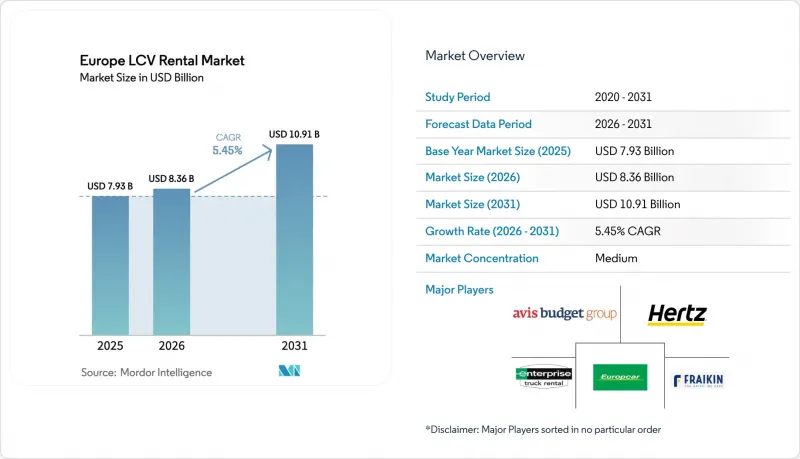
Mordor Intelligence에 의하면, 유럽의 LCV 렌탈 시장 규모는 2025년에 79억 3,000만 달러로 평가되었고 2026년 83억 6,000만 달러에서 2031년까지 109억 1,000만 달러에 이를 것으로 예측되며, 예측 기간(2026-2031년) CAGR은 5.45%를 나타낼 전망입니다.
본 보고서는 예약 유형(온라인 예약 및 오프라인 예약), 렌탈 유형(단기 및 장기), 차량 유형(컴팩트 밴,대형 밴, 픽업 트럭 및 크루 캡, 박스 트럭), 추진 방식(디젤, 배터리 전기자동차, 하이브리드 및 대체 연료), 최종 사용자 산업(CEP 및 전자상거래 물류 등), 그리고 국가별로 분류되어 있습니다. 시장 예측은 금액(미 달러) 기준으로 제시되어 있습니다.
유럽 LCV 렌탈 시장 동향 및 인사이트
전자상거래로 인한 소포 처리량 급증
온라인 소매의 폭발적인 확대로 인해 일일 소포 처리량이 급증하고 있으며, 성수기에 대응하기 위해서는 유연한 밴 이용이 필수적입니다. 당일 및 익일 배송 수요가 높아짐에 따라, 유럽의 대형 LCV 렌탈 시장 네트워크만이 충족시킬 수 있는 분산형 배송 거점에 대한 수요도 더욱 높아질 것으로 예측됩니다. 블랙 프라이데이와 연말 연시 시즌 수요 급증에 따른 단기적인 피크가 연간 소포 유통량에서 차지하는 비중을 점점 더 크게 만들고 있어, 일 단위 및 주 단위의 렌탈 수요를 더욱 높이고 있습니다. 렌탈 차량은 비수기 동안 자산의 유휴화라는 부담을 배송 업체가 피하는 데에도 도움이 되며, 이는 소유형과 비교했을 때 중요한 비용상의 차이점입니다. 창고의 입지가 인구 밀집도가 높은 도심부로 이동함에 따라 소형 밴의 중요성은 더욱 커지고 있습니다. 전국적인 네트워크와 실시간 예약 API를 결합한 사업자는 가동률과 수익률 면에서 타사를 앞지르고 있습니다.
자산 부담이 적은 긱 경제 배송 차량으로의 전환
Uber Eats나 Gorillas와 같은 플랫폼형 배송 업체는 운전기사에게 자가용 차량을 준비할 것을 요구하지만, 많은 운전기사에게는 차량을 전액 구매할 자금이 부족합니다. 유럽의 LCV(소형 상용차) 렌탈 시장은 유연한 계약 조건과 이용량에 따른 요금 체계를 통해 확장 가능한 해결책을 제공합니다. TIMOCOM의 보고서에 따르면, 2024년 화물 운송 의뢰 건수는 전년 대비 대폭 증가하여 기존 차량 계획의 부담이 커지고 있음을 여실히 보여주고 있습니다. 렌탈 업체들은 현재 단기 계약, 낮은 보증금, 앱을 활용한 등록 절차를 결합한 긱 경제 특화 플랜을 고안하고 있습니다. 이러한 서비스는 독립 운전자가 보험 및 배기가스 규제를 준수하면서도 운전 자금 부담을 최소화하는 데 도움이 됩니다. 이에 대응하여 대형 렌탈 업체들도 음식 배달 피크 시간대에 맞춘 ‘주말 한정’이나 ‘야간 한정’ 요금제를 선보이고 있습니다.
EU 27개국의 엄격한 WLTP 배기가스 규제가 차량 비용을 상승시키고
WLTP 각 단계의 도입에 따라 렌터카 업체들은 더 비싼 유로 6e 규격 차량이나 전기차를 구매할 수밖에 없는 상황입니다. 독일에서는 2025년 개정으로 보고 의무가 확대되어 관리 비용 증가에 더해, 텔레매틱스 추적 시스템을 위한 인도 전 개조 작업이 발생하고 있습니다. 프랑스에서는 EU 규제에 더해 차량 중량에 따른 과태료가 부과되고 있어, 이로 인해 디젤 밴의 구매 가격이 더욱 상승하고 있습니다. 이러한 비용은 추가 요금으로 전가되지 않는 한 EBITDA 마진을 압박하게 되지만, 추가 요금을 부과할 경우 가격에 민감한 중소기업 고객 수요가 위축될 우려가 있습니다. 많은 사업자들이 보조금 만료 전에 보조금을 확보하기 위해 전기차 주문을 앞당기고 있어, 이로 인해 일시적으로 자본 지출이 증가하고 있습니다. 장기적으로는 더 엄격한 기준이 간접적으로 차량의 현대화를 가속화하여 잔존 가치를 높이고, 렌탈 1일당 정비 빈도를 낮추게 될 것입니다.
부문 분석
2025년, 유럽 LCV 렌탈 시장 점유율의 가장 큰 부분을 차지한 것은 오프라인 계약(52.84%)이었으며, 이는 다년간의 물류 계약에서 관계 중심의 조달 방식이 정착되어 있음을 보여줍니다. 한편, 온라인 포털은 연평균 성장률(CAGR) 5.49%로 성장을 지속하고, 있으며, 2031년까지 시장 전체의 성장률을 계속해서 상회할 것으로 예측됩니다.
디지털 예약 증가는 배송 거점 관리자나 긱 경제(gig economy) 운전기사들 사이에서 스마트폰 보급이 확대되고 있음을 반영합니다. SIXT가 2024년에 도입한 앱 내 결제 기능은 애플리케이션 프로그래밍 인터페이스(API)가 부가 서비스를 얼마나 효율적으로 운영하고 재예약을 촉진하는지를 보여주었습니다. 온라인 플랫폼은 오프라인 채널에서는 재현할 수 없는 동적 가격 책정과 실시간 예약 가능 정보 등을 제공함으로써 차량 가동률을 높이고 있습니다. 인공지능(AI) 기반 수요 예측이 성숙해짐에 따라, 디지털 채널은 일별 가격 책정을 우편번호별 소포 처리량 변동에 연동함으로써 이익률 확대를 뒷받침할 것입니다. 따라서 유럽의 LCV 렌탈 시장에서는 계정 관리자가 기본 계약을 관리하고, 수요가 정점에 달할 때는 앱을 통해 예약을 접수하는 하이브리드 모델이 보급될 전망입니다.
2025년, 유럽 LCV 렌탈 시장 규모 중 장기 리스가 63.05%를 차지하여, 사업자들에게 수년에 걸친 차량 금융을 뒷받침할 수 있는 예측 가능한 현금 흐름을 가져다주었습니다. 한편, 단기 렌탈은 연평균 성장률(CAGR) 5.52%로 더 빠르게 성장하고 있으며, 이러한 추세는 소포 처리량의 변동과 온디맨드 식품 배달 스타트업에 의해 뒷받침되고 있습니다.
장기 리스를 통해 대형 물류 기업은 배기가스 규제를 준수하는 밴을 고정 요금으로 확보할 수 있으며, 잔존 가치 변동으로부터 예산을 보호할 수 있습니다. 렌탈 회사는 감가상각 일정을 WLTP의 단계적 도입에 맞추어 조정하여 가동률을 높게 유지할 수 있습니다. 한편, 단기 리스의 확대는 주말 플래시 세일이나 며칠 동안만 택배 수요가 급증하는 축제 성수기에 힘입고 있습니다. 텔레매틱스 대시보드를 활용함으로써 사업자는 야간 시간을 이용해 각 거점 간에 유휴 차량을 이동시켜 재배치 비용을 최소화할 수 있습니다. 구독 경제가 승용차에서 소형 상용차로 확대됨에 따라, 3-12개월의 중기 계약을 통해 유럽 LCV 렌탈 시장에서 기존의 ‘장기’와 ‘단기’ 구분이 모호해질 가능성이 있습니다.
기타 혜택:
- 엑셀 형식 시장 예측(ME) 시트
- 3개월간의 애널리스트 지원
자주 묻는 질문
목차
제1장 서론
제2장 조사 방법
제3장 개요
제4장 시장 구도
제5장 시장 규모와 성장 예측
제6장 경쟁 구도
제7장 시장 기회와 향후 전망
JHS 26.09.01According to Mordor Intelligence, the Europe LCV rental market size was valued at USD 7.93 billion in 2025 and estimated to grow from USD 8.36 billion in 2026 to reach USD 10.91 billion by 2031, at a CAGR of 5.45% during the forecast period (2026-2031).
This report is Segmented by Booking Type (Online Booking and Offline Booking), Rental Type (Short-Term and Long-Term), Vehicle Type (Compact Vans, Large Vans, Pick-Ups & Crew-Cabs, and Box Trucks), Propulsion Type (Diesel, Battery-Electric, and Hybrid & Alternative Fuels), End-User Industry (CEP & E-Commerce Logistics and More), and Country. The Market Forecasts are Provided in Terms of Value (USD).
Europe LCV Rental Market Trends and Insights
Accelerated E-Commerce Parcel Volumes
Explosive online retail activity lifts daily parcel counts, making flexible van access indispensable for peak-season coverage . Same-day and next-day delivery promises to intensify the call for distributed depots that only large European LCV rental market networks can satisfy. Short-term peaks tied to Black Friday and holiday surges now account for an increasingly large slice of annual parcel flows, sharpening demand for daily and weekly hires. Rental fleets also help couriers avoid the idle-asset burden during off-peak months, a key cost distinction versus ownership. Compact van formats become even more vital as warehouse footprints migrate closer to dense city cores. Operators combining a nationwide footprint with real-time booking APIs outperform peers on utilization and yield.
Shift to Asset-Light Gig-Economy Delivery Fleets
Platform-based couriers such as Uber Eats and Gorillas push drivers to furnish their own vehicles, yet many lack the capital for outright purchases. The European LCV rental market offers a scalable workaround with flexible terms and usage-based pricing. TIMOCOM reported a high year-on-year jump in freight requests in 2024, underlining the strain on traditional fleet planning at . Rental providers now craft gig-focused packages that blend short-duration contracts, lower deposits, and app-enabled onboarding. Such offerings help independent drivers comply with insurance and emission rules while minimizing working-capital exposure. In response, mainstream rental firms are rolling out weekend-only or evening-only rates aligned with peak food-delivery slots.
Tight EU-27 WLTP Emission Caps Raising Fleet Costs
Successive WLTP stages oblige rental firms to purchase pricier Euro 6e and electric models. Germany's 2025 updates expand reporting obligations, adding administrative costs and pre-delivery retrofit work for telematics tracking . France complements EU rules with weight-based penalties that further elevate diesel van acquisition prices. These costs squeeze EBITDA margins unless passed through as surcharges, which can temper demand from price-sensitive SME clients. Many operators respond by front-loading electric orders to secure subsidies before expiry, temporarily inflating capital outlays. Over the long term, stricter standards indirectly accelerate fleet modernization, lifting residual values and lowering maintenance events per rental day.
Other drivers and restraints analyzed in the detailed report include:
- Corporate ESG Targets Boosting Electric LCV Leasing
- Post-Brexit Cross-Border Rental Synergies
- Chip-Shortage-Induced Delivery Lags
For complete list of drivers and restraints, kindly check the Table Of Contents.
Segment Analysis
Offline contracts controlled the most significant slice of the European LCV rental market share in 2025 at 52.84%, underscoring entrenched relationship-based procurement for multi-year logistics agreements. Online portals, however, posted a 5.49% CAGR and are forecast to keep outpacing overall market growth through 2031.
Growth in digital reservations reflects rising smartphone penetration among depot managers and gig-economy drivers. SIXT's 2024 roll-out of in-app charging integration showcased how application programming interfaces streamline ancillary services, driving repeat bookings. Online platforms offer dynamic pricing and real-time availability that offline channels cannot replicate, lifting fleet utilization. As artificial intelligence-based demand forecasting matures, digital channels will underpin margin expansion by aligning day-to-day pricing with parcel activity fluctuations across postal codes. Therefore, the European LCV rental market will see hybrid models where account managers handle framework contracts while tactical peaks flow through apps.
Long-term leases contributed 63.05% to the Europe LCV rental market size in 2025, giving operators predictable cash flows that support multi-year fleet financing. Short-term hires are growing faster at 5.52% CAGR, a trend fueled by volatile parcel volumes and on-demand food delivery startups.
Extended leases allow logistics majors to lock in emission-compliant vans at fixed rates, shielding budgets from residual-value swings. Rental firms can align depreciation schedules with WLTP phase-ins, keeping utilization high. Short-term expansion, meanwhile, is underpinned by weekend flash sales and festival peaks where courier demand multiplies for a few days. Telematics dashboards let operators shift idle inventory across depots overnight, minimizing repositioning costs. As subscription economics spread from passenger cars to light commercials, mid-length contracts of 3-12 months may blur the conventional long-versus short-term divide within the European LCV rental market.
Complete Report Scope:
- By Booking Type
- Online Booking
- Offline Booking
- By Rental Type
- Short-Term
- Long-Term
- By Vehicle Type
- Compact Vans (<3.0 t GVW)
- Large Vans (3.0-3.5 t GVW)
- Pick-ups & Crew-cabs
- Box Trucks (3.5-7.5 t)
- By Propulsion Type
- Diesel
- Battery-Electric
- Hybrid & Alternative Fuels (CNG/LNG/H2)
- By End-User Industry
- CEP & E-commerce Logistics
- FMCG & Retail
- Construction & Utilities
- Passenger Shuttle & Ride-pool
- By Country
- Germany
- United Kingdom
- France
- Spain
- Italy
- Rest of Europe
List of Companies Covered in this Report:
- Enterprise Holdings Inc.
- Europcar Mobility Group
- Sixt SE
- Avis Budget Group
- The Hertz Corporation
- Fraikin SAS
- LeasePlan Corp NV
- ALD Automotive
- Northgate plc
- Ryder System Inc
- Penske Truck Leasing
Additional Benefits:
- The market estimate (ME) sheet in Excel format
- 3 months of analyst support
TABLE OF CONTENTS
1 Introduction
- 1.1 Study Assumptions & Market Definition
- 1.2 Scope of the Study
2 Research Methodology
3 Executive Summary
4 Market Landscape
- 4.1 Market Overview
- 4.2 Market Drivers
- 4.2.1 Accelerated E-Commerce Parcel Volumes
- 4.2.2 Shift To Asset-Light Gig-Economy Delivery Fleets
- 4.2.3 Corporate ESG Targets Boosting Electric LCV Leasing
- 4.2.4 Post-Brexit Cross-Border Rental Synergies
- 4.2.5 Adoption Of Real-Time Telematics & Usage-Based Billing
- 4.2.6 OEM-Captive Subscription Pilots For LCVs
- 4.3 Market Restraints
- 4.3.1 Tight EU-27 WLTP Emission Caps Raising Fleet Costs
- 4.3.2 Chip-Shortage-Induced Delivery Lags
- 4.3.3 Rising Insurance Premiums For Gig-Economy Drivers
- 4.3.4 Municipal Access Charges For Diesel Vans In ULEZ Zones
- 4.4 Value / Supply-Chain Analysis
- 4.5 Regulatory Landscape
- 4.6 Technological Outlook
- 4.7 Porter's Five Forces
- 4.7.1 Threat of New Entrants
- 4.7.2 Bargaining Power of Buyers/Consumers
- 4.7.3 Bargaining Power of Suppliers
- 4.7.4 Threat of Substitute Products
- 4.7.5 Intensity of Competitive Rivalry
5 Market Size & Growth Forecasts (Value (USD))
- 5.1 By Booking Type
- 5.1.1 Online Booking
- 5.1.2 Offline Booking
- 5.2 By Rental Type
- 5.2.1 Short-Term
- 5.2.2 Long-Term
- 5.3 By Vehicle Type
- 5.3.1 Compact Vans (<3.0 t GVW)
- 5.3.2 Large Vans (3.0-3.5 t GVW)
- 5.3.3 Pick-ups & Crew-cabs
- 5.3.4 Box Trucks (3.5-7.5 t)
- 5.4 By Propulsion Type
- 5.4.1 Diesel
- 5.4.2 Battery-Electric
- 5.4.3 Hybrid & Alternative Fuels (CNG/LNG/H2)
- 5.5 By End-User Industry
- 5.5.1 CEP & E-commerce Logistics
- 5.5.2 FMCG & Retail
- 5.5.3 Construction & Utilities
- 5.5.4 Passenger Shuttle & Ride-pool
- 5.6 By Country
- 5.6.1 Germany
- 5.6.2 United Kingdom
- 5.6.3 France
- 5.6.4 Spain
- 5.6.5 Italy
- 5.6.6 Rest of Europe
6 Competitive Landscape
- 6.1 Market Concentration
- 6.2 Strategic Moves
- 6.3 Market Share Analysis
- 6.4 Company Profiles {(Includes Global level Overview, Market level overview, Core Segments, Financials as available, Strategic Information, Market Rank/Share for key companies, Products & Services, and Recent Developments)}
- 6.4.1 Enterprise Holdings Inc.
- 6.4.2 Europcar Mobility Group
- 6.4.3 Sixt SE
- 6.4.4 Avis Budget Group
- 6.4.5 The Hertz Corporation
- 6.4.6 Fraikin SAS
- 6.4.7 LeasePlan Corp NV
- 6.4.8 ALD Automotive
- 6.4.9 Northgate plc
- 6.4.10 Ryder System Inc
- 6.4.11 Penske Truck Leasing
7 Market Opportunities & Future Outlook
- 7.1 White-space & Unmet-need Assessment