
|
시장보고서
상품코드
2117599
크리에이터 이코노미 소프트웨어 : 시장 점유율 분석, 업계 동향 및 통계, 성장 예측(2026-2031년)Creator Economy Software - Market Share Analysis, Industry Trends & Statistics, Growth Forecasts (2026 - 2031) |
||||||
 Mordor Intelligence
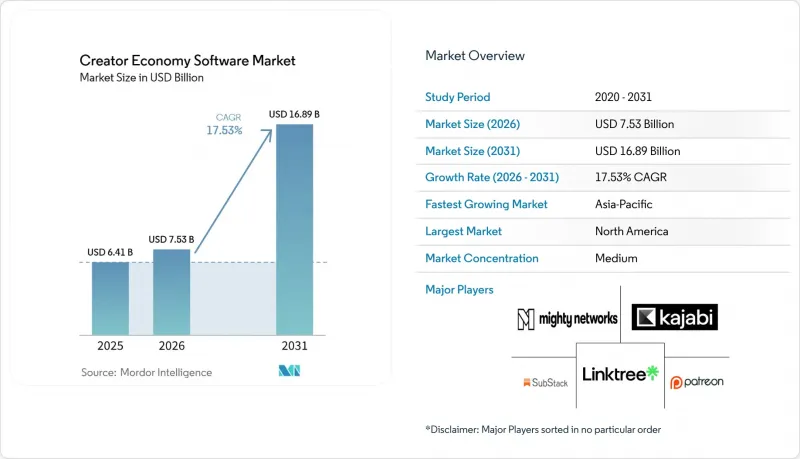
Mordor Intelligence에 의하면, 크리에이터 이코노미 소프트웨어 시장 규모는 2025년에 64억 1,000만 달러로 평가되었습니다. 2026년 75억 3,000만 달러에서 2031년까지 168억 9,000만 달러에 이를 것으로 예측됩니다.
예측 기간인 2026-2031년까지의 연평균 성장률(CAGR)은 17.53%가 될 것으로 전망됩니다.
본 보고서는 플랫폼 유형(콘텐츠 제작·배포 플랫폼, 시청자 확대 및 커뮤니티 관리 플랫폼, 크리에이터 수익화 플랫폼, 기타), 배포 방식(클라우드 기반, On-Premise), 최종 사용자 산업(미디어 및 엔터테인먼트, 브랜드 및 마케팅 대행사, 스포츠 및 게임, 기타), 지역별로 분류되어 있습니다. 시장 예측은 금액(달러)으로 표시되어 있습니다.
세계의 크리에이터 이코노미 소프트웨어 시장 동향 및 인사이트
팬을 대상으로 한 직접 수익화 솔루션에 대한 수요 증가
팬을 대상으로 한 직접 수익화는 크리에이터 이코노미 소프트웨어 시장의 주요 수요 요인입니다. 크리에이터들은 소셜 플랫폼의 광고 정책에 의존하지 않는 구독 수익, 멤버십, 유료 커뮤니티, 디지털 상품 판매를 점점 더 많이 추구하고 있습니다. Patreon은 크리에이터에게 지급한 총액이 100억 달러를 넘어섰으며, 유료 멤버십 수는 2,500만 건 이상에 달할 전망입니다. 또한, 소셜 미디어의 보상 체계 변화에 따라 크리에이터들이 수익원을 다각화함에 따라 구독 플랫폼도 혜택을 보고 있습니다. 이러한 변화가 중요한 이유는 크리에이터가 직접 결제와 자체 보유한 오디언스 데이터를 활용하여 보다 안정적인 상업적 관계를 구축할 수 있기 때문입니다. 미국 크리에이터들의 광고 지출 증가 또한 결제, 구독자 관리, 오디언스와의 소통, 커머스 워크플로우를 처리하는 소프트웨어에 대한 수요를 뒷받침하고 있습니다.
AI를 활용한 콘텐츠 운영의 급속한 확산
AI 도구는 크리에이터 이코노미 소프트웨어 시장 전반에 걸쳐 크리에이터가 콘텐츠를 기획, 제작, 배포, 평가하는 방식을 변화시키고 있습니다. 자동화를 통해 캠페인 보고서 작성, 구독자 그룹화, 스폰서십 가격 책정, 콘텐츠 일정 관리에 소요되는 시간을 줄일 수 있습니다. 이를 통해 개인 크리에이터나 소규모 팀도 이전에는 제작, 마케팅, 운영 담당자를 각각 따로 배치해야 했던 업무를 수행할 수 있게 됩니다. AI 기능은 개별 기능으로 제공되는 것보다 퍼블리싱, 커뮤니티, 커머스, 분석 도구에 통합되었을 때 더 유용합니다. 또한 기업 사용자의 경우, 대규모 캠페인 전반에 걸쳐 크리에이터의 적격성 평가와 브랜드 안전성 심사를 강화해야 합니다. CreatorIQ의 보고서에 따르면, 조직은 크리에이터의 적격성을 평가하기 위해 평균 3개의 도구를 사용하고 있으며, 이는 더욱 통합된 거버넌스 플랫폼에 대한 수요를 뒷받침합니다.
관할 구역별로 분산된 결제, 세무, 규정 준수 워크플로우
국경을 넘는 결제 및 규정 준수 요건은 크리에이터 이코노미 소프트웨어 시장의 도입을 제한하는 요인이 될 수 있습니다. 대규모 기업 캠페인의 경우, 15개국 이상에 걸쳐 200명 이상의 크리에이터가 참여할 수 있으며, 국가별로 원천징수, 부가가치세(VAT),신원 확인, 보고 요건이 다릅니다. 유럽연합(EU)의 DAC7 요건으로 인해 수익 창출 활동을 중개하는 디지털 플랫폼의 보고 책임이 증가하고 있습니다. 소규모 플랫폼의 경우, 다중 관할 구역을 지원하는 네이티브 세무 기능을 구축하는 데 필요한 규제 대응 및 엔지니어링 자원이 부족할 수 있습니다. 또한, 미국의 양식 1099-K 적용 기준액이 플랫폼당 연간 600달러로 상향 조정됨에 따라, 소규모 크리에이터에 대한 결제 관련 관리 요건도 증가하고 있습니다. ‘Merchant of Record(기록상 판매자)’ 모델이나 내장형 세무 자동화를 통해 이러한 부담을 경감할 수는 있지만, 이러한 기능을 개발하려면 막대한 인프라 투자가 필요합니다.
부문별 분석
2025년, 콘텐츠 제작 및 배포 플랫폼은 크리에이터 이코노미 소프트웨어 시장 점유율의 29.18%를 차지했습니다. 이 부문은 개별 크리에이터나 독립 퍼블리셔에게 출판 및 배포가 대개 가장 먼저 필요한 소프트웨어라는 사실로부터 혜택을 받고 있습니다. 이러한 플랫폼은 콘텐츠 일정 관리, 이메일 발송, 검색 엔진 최적화, 텍스트·음성·동영상 형태의 배포를 지원합니다. 크리에이터의 워크플로우에서 이러한 플랫폼이 차지하는 역할은 크리에이터가 아카이브, 구독자 목록, 정기적인 배포 프로세스를 구축한 후에는 이를 대체하기 어려울 정도로 중요합니다. 또한, 소셜 네트워크상의 팔로워 수로는 자사가 소유한 구독자 커뮤니티만큼의 통제력을 얻을 수 없기 때문에 시청자 확대 및 커뮤니티 관리 플랫폼에 대한 수요도 높아지고 있습니다.
크리에이터 커머스 플랫폼은 2026년부터 2031년까지 연평균 성장률(CAGR) 19.82%를 나타낼 것으로 예측됩니다. 이 부문은 크리에이터가 굿즈, 디지털 다운로드, 멤버십, 제휴 판매를 자신의 콘텐츠에 직접 연계함으로써 혜택을 보고 있습니다. 이러한 접근 방식을 통해 외부 스토어프론트에 대한 의존도가 낮아지고, 크리에이터는 구매 과정을 더욱 세밀하게 제어할 수 있게 됩니다. 커머스에 특화된 도구 분야의 크리에이터 이코노미 소프트웨어 시장 규모는 자체 거래 데이터에 의해 뒷받침되며, 이는 상품 추천 및 재구매율 향상으로 이어집니다. 따라서 결제, 주문 처리, 멤버십, 시청자 관리 기능이 유기적으로 연동되어야 하므로, 커머스 제공업체들은 스토어프론트 디자인을 넘어선 측면에서 경쟁을 펼치고 있습니다.
지역별 분석
2025년, 북미는 크리에이터 이코노미 소프트웨어 시장 점유율의 37.49%를 차지했습니다. 이 지역에는 전문 크리에이터들이 집중되어 있으며, 확립된 구독 서비스와 대규모 브랜드 마케팅 예산이 존재합니다. 2025년, 미국의 크리에이터 대상 광고 지출은 370억 달러에 달했습니다. 이러한 상업적 기반은 퍼블리셔, 개인 크리에이터, 기업 마케팅 팀이 이용하는 크리에이터 관리 플랫폼을 뒷받침하고 있습니다. 또한, 미국은 벤처 캐피털을 통한 크리에이터 이코노미 소프트웨어 개발의 주요 거점으로 자리매김하고 있습니다. 게다가 2026년 4월까지 12개월 동안 미국의 크리에이터 경제 인프라에 대한 자금 조달액은 6억 7,000만 달러를 넘어섰습니다. 자금 조달 라운드당 중앙값은 1,900만 달러에 육박했습니다. 이러한 자본 집중으로 인해 미국에 기반을 둔 플랫폼의 제품 개발 및 기능 출시가 가속화될 것입니다. 남미 역시, 특히 브라질에서 중요한 수요 지역으로 발전하고 있습니다. 브라질에서는 소셜 미디어 참여도가 높으며, 인터넷 접속 환경 개선과 플랫폼의 현지화가 구독형 및 커뮤니티 기반의 크리에이터 활동을 뒷받침하고 있습니다. 멕시코에서는 디지털 크리에이터층의 확대와 모바일 디지털 소비 증가에 따라 수요가 증가하고 있습니다.
유럽은 영국, 독일, 프랑스의 지원에 힘입어 크리에이터 이코노미 소프트웨어 시장에서 중요한 위치를 차지하고 있습니다. 이들 국가에서는 독립 출판, 뉴스레터, 팟캐스트, 구독 기반 커뮤니티가 확고히 자리 잡고 있습니다. 유럽의 규제는 플랫폼 제공업체에게 비용 부담이 되는 한편, 기회도 제공합니다. DAC7 준수는 소규모 플랫폼에 부담이 될 수 있지만, 여러 관할 구역에 걸친 세무 기능을 갖춘 제공업체는 규정 준수 역량을 활용하여 서비스 차별화를 꾀할 수 있습니다. 러시아에는 수많은 크리에이터가 존재하지만, 보다 폐쇄적인 디지털 환경에 놓여 있어 세계 플랫폼은 접근 및 결제 제약에 직면하고 있습니다.
아시아태평양은 2026년부터 2031년까지 연평균 성장률(CAGR) 23.59%를 나타낼 것으로 예측됩니다. 일본의 국내 크리에이터 경제는 중요한 산업으로 성장하고 있으며, 그 견고한 시장 입지와 큰 확장 가능성이 추정치를 통해서도 뚜렷이 드러나고 있습니다. 일본 크리에이터 경제 협회와 미쓰비시 UFJ 리서치에 따르면, 이 분야는 큰 기회를 내포하고 있으며, 그 방대한 대상 시장은 미래의 디지털 및 경제 생태계 형성에서 크리에이터가 수행하는 중요성을 부각시키고 있습니다. 한국의 디지털 크리에이터 미디어 산업은 2024년 평균 환율(1달러=1,363원)을 기준으로 2024년에 5조 5,503억 원(40억 7,000만 달러 상당) 시장 규모를 창출했습니다. 또한, 중동 및 아프리카는 크리에이터 이코노미 소프트웨어 수요가 부상하고 있는 지역입니다. 사우디아라비아와 아랍에미리트는 크리에이터와 디지털 비즈니스를 지원할 수 있는 디지털 경제 인프라에 대한 투자를 추진하고 있습니다. 아프리카의 크리에이터들은 결제, 커뮤니티, 이벤트, 시청자와의 소통에서 모바일 우선 도구를 점점 더 많이 활용하고 있습니다. 이 지역 수요는 모바일 결제 및 현지 통화로 거래를 지원하는 제공업체에 유리하게 작용할 가능성이 있습니다. 이러한 요구 사항은 지역 금융 인프라에 맞추어 설계된 현지 플랫폼에 새로운 기회를 창출할 수 있습니다.
기타 혜택
- 엑셀 형식 시장 예측(ME) 시트
- 3개월간의 애널리스트 지원
자주 묻는 질문
목차
제1장 서론
제2장 조사 방법
제3장 개요
제4장 시장 상황 개요
제5장 시장 규모 및 성장 예측
제6장 경쟁 구도
제7장 시장 기회 및 향후 전망
KTH 26.09.02According to Mordor Intelligence, the creator economy software market size was valued at USD 6.41 billion in 2025 and is estimated to grow from USD 7.53 billion in 2026 to reach USD 16.89 billion by 2031, at a CAGR of 17.53% during the forecast period 2026-2031.
This report is Segmented by Platform Type (Content Creation and Publishing Platforms, Audience Growth and Community Management Platforms, Creator Monetization Platforms, and More), Deployment (Cloud-Based, and On-Premises), End-User Industry (Media and Entertainment, Brands and Marketing Agencies, Sports and Gaming, and More), and Geography. The Market Forecasts are Provided in Terms of Value (USD).
Global Creator Economy Software Market Trends and Insights
Rising Demand for Direct-to-Fan Monetization Suites
Direct-to-fan monetization is a central demand driver for the creator economy software market. Creators are increasingly seeking subscription income, memberships, paid communities, and digital product sales that are not dependent on social platform advertising policies. Patreon had distributed more than USD 10 billion in creator payments and served more than 25 million paid memberships. Subscription platforms have also benefited as creators diversify after changes to social media payout structures. The shift matters because creators can use direct payments and first-party audience data to build more stable commercial relationships. Higher U.S. creator advertising spending also supports demand for software that handles payments, subscriber records, audience communication, and commerce workflows.
Rapid Adoption of AI-Enabled Content Operations
AI tools are changing how creators plan, produce, distribute, and assess content across the creator economy software market. Automation can reduce the time spent on campaign reporting, subscriber grouping, sponsorship pricing, and content scheduling. This helps individual creators and smaller teams perform tasks that previously required separate production, marketing, and operations staff. AI functions are becoming more useful when they are integrated within publishing, community, commerce, and analytics tools rather than offered as separate features. Enterprise users also need stronger creator suitability and brand safety reviews across large campaigns. CreatorIQ reported that organizations use an average of 3 tools to assess creator suitability, which supports demand for more integrated governance platforms.
Fragmented Payments, Tax, and Compliance Workflows Across Jurisdictions
Cross-border payment and compliance requirements can limit adoption in the creator economy software market. A large enterprise campaign may involve more than 200 creators across 15 or more countries with different withholding, value-added tax, identity verification, and reporting requirements. The European Union's DAC7 requirements have increased reporting responsibilities for digital platforms that facilitate income-generating activity. Smaller platforms may lack the regulatory and engineering resources needed to build native multi-jurisdiction tax functions. The revised U.S. Form 1099-K threshold of USD 600 per platform per year also increases administrative requirements for smaller creator payments. Merchant of Record models and embedded tax automation can reduce this burden, but developing those capabilities requires significant infrastructure investment.
Other drivers and restraints analyzed in the detailed report include:
- Expansion of Creator-Owned Commerce Workflows
- Growth of Subscription-Based Audience Ownership Models
- Creator Churn Across Multi-Platform Monetization Stacks
For complete list of drivers and restraints, kindly check the Table Of Contents.
Segment Analysis
Content creation and publishing platforms held 29.18% of the creator economy software market share in 2025. The segment benefits from the fact that publishing and distribution are often the first software needs for individual creators and independent publishers. These platforms support content scheduling, email delivery, search optimization, and the distribution of written, audio, and video formats. Their role in a creator workflow makes it difficult to replace them once creators build archives, subscriber lists, and recurring publishing processes. Audience Growth and Community Management Platforms also serve a growing need because follower counts on social networks do not provide the same control as owned subscriber communities.
Creator commerce platforms are projected to grow at a CAGR of 19.82% from 2026 to 2031. The segment benefits as creators connect merchandise, digital downloads, memberships, and affiliate sales directly to their content. This approach reduces reliance on external storefronts and gives creators more control over the buyer journey. The creator economy software market size for commerce-focused tools is supported by first-party transaction information, which can improve product recommendations and repeat sales. Commerce providers are therefore competing on more than storefront design because payment, fulfillment, membership, and audience functions need to work together.
Complete Report Scope:
- By Platform Type
- Content Creation and Publishing Platforms
- Audience Growth and Community Management Platforms
- Creator Monetization Platforms
- Creator Commerce Platforms
- Creator Analytics and Business Management Platforms
- Link-in-Bio and Discovery Platforms
- By Deployment
- Cloud-Based
- On-Premises
- By End-user Industry
- Media and Entertainment
- Brands and Marketing Agencies
- Education and E-learning
- Retail and Consumer Brands
- Sports and Gaming
- Other End-user Industries
- By Geography
- North America
- United States
- Canada
- Mexico
- South America
- Brazil
- Argentina
- Rest of South America
- Europe
- United Kingdom
- Germany
- France
- Italy
- Spain
- Russia
- Rest of Europe
- Asia-Pacific
- China
- India
- Japan
- South Korea
- Australia
- Rest of Asia-Pacific
- Middle East and Africa
- Middle East
- Turkey
- Saudi Arabia
- United Arab Emirates
- Rest of Middle East
- Africa
- South Africa
- Egypt
- Rest of Africa
- Middle East
- North America
Geography Analysis
North America held 37.49% of the creator economy software market share in 2025. The region has a high concentration of professional creators, established subscription services, and large brand marketing budgets. U.S. creator advertising spending reached USD 37 billion in 2025. This commercial base supports creator management platforms used by publishers, individual creators, and enterprise marketing teams. The United States also remains a major source of venture-backed creator software development. Furthermore, creator economy infrastructure funding in the United States exceeded USD 670 million during the 12 months through April 2026. Median funding rounds were close to USD 19 million. This capital concentration can support product development and faster feature releases by U.S.-based platforms. South America is also developing as an important demand area, especially in Brazil. Brazil has high social media engagement, while improved internet access and platform localization are supporting subscriptions and community-based creator activity. Mexico is contributing to demand as its digital creator base and mobile digital consumption expand.
Europe has a meaningful position in the creator economy software market, supported by the United Kingdom, Germany, and France. These countries have established independent publishing, newsletter, podcasting, and subscription communities. European regulation creates both costs and opportunities for platform providers. DAC7 compliance can burden smaller platforms, while providers with multi-jurisdiction tax functions can use compliance capabilities to differentiate their services. Russia has a large creator population, but global platforms face access and payment constraints in its more isolated digital environment.
Asia-Pacific is projected to grow at a CAGR of 23.59% from 2026 to 2031. Japan's domestic creator economy has grown into a significant industry, with estimates highlighting its strong market presence and substantial potential for expansion. According to the Creator Economy Association of Japan and Mitsubishi UFJ Research, the sector represents a major opportunity, with a vast addressable market that underscores the importance of creators in shaping future digital and economic ecosystems. South Korea's digital creator media industry generated KRW 5.5503 trillion, equivalent to USD 4.07 billion, in 2024, based on an average 2024 exchange rate of KRW 1,363 per USD. Moreover, the Middle East and Africa represent an emerging demand area for creator software. Saudi Arabia and the United Arab Emirates are investing in digital economy infrastructure that can support creators and digital businesses. African creators are increasingly using mobile-first tools for payments, communities, events, and audience engagement. Regional demand can favor providers that support mobile payments and local currency transactions. These requirements may create opportunities for local platforms that are designed around regional financial infrastructure.
- Patreon, Inc.
- Substack Inc.
- Kajabi LLC
- Linktree Pty Ltd
- Mighty Networks, Inc.
- Circle Co.
- Ghost Foundation
- beehiiv, Inc.
- ConvertKit, LLC
- Podia Labs, Inc.
- Teachable, Inc.
- Thinkific Labs Inc.
- Gumroad, Inc.
- Buy Me a Coffee, Inc.
- Ko-fi Labs Ltd.
- Stan, Inc.
- Beacons, Inc.
- Lemon Squeezy, Inc.
- Shopify Inc.
- Wix.com Ltd.
- Adobe Inc.
- Pearpop, Inc.
- Fourthwall, Inc.
- Supercast, Inc.
- Passionfroot GmbH
Additional Benefits:
- The market estimate (ME) sheet in Excel format
- 3 months of analyst support
TABLE OF CONTENTS
1 INTRODUCTION
- 1.1 Study Assumptions and Market Definition
- 1.2 Scope of the Study
2 RESEARCH METHODOLOGY
3 EXECUTIVE SUMMARY
4 MARKET LNANDSCAPE
- 4.1 Market Overview
- 4.2 Market Drivers
- 4.2.1 Rising Demand for Direct-to-Fan Monetization Suites
- 4.2.2 Expansion of Creator-Owned Commerce Workflows
- 4.2.3 Rapid Adoption of AI-Enabled Content Operations
- 4.2.4 Growth of Subscription-Based Audience Ownership Models
- 4.2.5 Platform Bundling Across Community, Email, and Payments
- 4.2.6 Enterprise Demand for Creator Collaboration and Governance tools
- 4.3 Market Restraints
- 4.3.1 Creator Churn Across Multi-Platform Monetization Stacks
- 4.3.2 Fragmented Payments, Tax, and Compliance Workflows Across Jurisdictions
- 4.3.3 Rising Take-Rate Sensitivity Among Mid-Tier Creators
- 4.3.4 Limited Interoperability Between Audience, Commerce, and Analytics Modules
- 4.4 Industry Value-Chain Analysis
- 4.5 Impact of Macroeconomic Factors on the Market
- 4.6 Regulatory Landscape
- 4.7 Technological Outlook
- 4.8 Porter's Five forces Analysis
- 4.8.1 Bargaining Power of Buyers
- 4.8.2 Bargaining Power of Suppliers
- 4.8.3 Threat of New Entrants
- 4.8.4 Threat of Substitutes
- 4.8.5 Intensity of Competitive Rivalry
5 MARKET SIZE AND GROWTH FORECASTS (VALUE)
- 5.1 By Platform Type
- 5.1.1 Content Creation and Publishing Platforms
- 5.1.2 Audience Growth and Community Management Platforms
- 5.1.3 Creator Monetization Platforms
- 5.1.4 Creator Commerce Platforms
- 5.1.5 Creator Analytics and Business Management Platforms
- 5.1.6 Link-in-Bio and Discovery Platforms
- 5.2 By Deployment
- 5.2.1 Cloud-Based
- 5.2.2 On-Premises
- 5.3 By End-user Industry
- 5.3.1 Media and Entertainment
- 5.3.2 Brands and Marketing Agencies
- 5.3.3 Education and E-learning
- 5.3.4 Retail and Consumer Brands
- 5.3.5 Sports and Gaming
- 5.3.6 Other End-user Industries
- 5.4 By Geography
- 5.4.1 North America
- 5.4.1.1 United States
- 5.4.1.2 Canada
- 5.4.1.3 Mexico
- 5.4.2 South America
- 5.4.2.1 Brazil
- 5.4.2.2 Argentina
- 5.4.2.3 Rest of South America
- 5.4.3 Europe
- 5.4.3.1 United Kingdom
- 5.4.3.2 Germany
- 5.4.3.3 France
- 5.4.3.4 Italy
- 5.4.3.5 Spain
- 5.4.3.6 Russia
- 5.4.3.7 Rest of Europe
- 5.4.4 Asia-Pacific
- 5.4.4.1 China
- 5.4.4.2 India
- 5.4.4.3 Japan
- 5.4.4.4 South Korea
- 5.4.4.5 Australia
- 5.4.4.6 Rest of Asia-Pacific
- 5.4.5 Middle East and Africa
- 5.4.5.1 Middle East
- 5.4.5.1.1 Turkey
- 5.4.5.1.2 Saudi Arabia
- 5.4.5.1.3 United Arab Emirates
- 5.4.5.1.4 Rest of Middle East
- 5.4.5.2 Africa
- 5.4.5.2.1 South Africa
- 5.4.5.2.2 Egypt
- 5.4.5.2.3 Rest of Africa
- 5.4.5.1 Middle East
- 5.4.1 North America
6 COMPETITIVE LANDSCAPE
- 6.1 Market Concentration
- 6.2 Strategic Moves
- 6.3 Market Share Analysis
- 6.4 Company Profiles (includes Global Level Overview, Market Level Overview, Core Segments, Financials as available, Strategic Information, Market Rank/Share, Products and Services, Recent Developments)
- 6.4.1 Patreon, Inc.
- 6.4.2 Substack Inc.
- 6.4.3 Kajabi LLC
- 6.4.4 Linktree Pty Ltd
- 6.4.5 Mighty Networks, Inc.
- 6.4.6 Circle Co.
- 6.4.7 Ghost Foundation
- 6.4.8 beehiiv, Inc.
- 6.4.9 ConvertKit, LLC
- 6.4.10 Podia Labs, Inc.
- 6.4.11 Teachable, Inc.
- 6.4.12 Thinkific Labs Inc.
- 6.4.13 Gumroad, Inc.
- 6.4.14 Buy Me a Coffee, Inc.
- 6.4.15 Ko-fi Labs Ltd.
- 6.4.16 Stan, Inc.
- 6.4.17 Beacons, Inc.
- 6.4.18 Lemon Squeezy, Inc.
- 6.4.19 Shopify Inc.
- 6.4.20 Wix.com Ltd.
- 6.4.21 Adobe Inc.
- 6.4.22 Pearpop, Inc.
- 6.4.23 Fourthwall, Inc.
- 6.4.24 Supercast, Inc.
- 6.4.25 Passionfroot GmbH
7 MARKET OPPORTUNITIES AND FUTURE OUTLOOK
- 7.1 White-Space and Unmet-Need Assessment

(주말 및 공휴일 제외)


