

|
시장보고서
상품코드
2117994
양자 난수 생성 소프트웨어 시장 : 시장 점유율 분석, 업계 동향 및 통계, 성장 예측(2026-2031년)Quantum Random Number Generation Software - Market Share Analysis, Industry Trends & Statistics, Growth Forecasts (2026 - 2031) |
||||||
 Mordor Intelligence
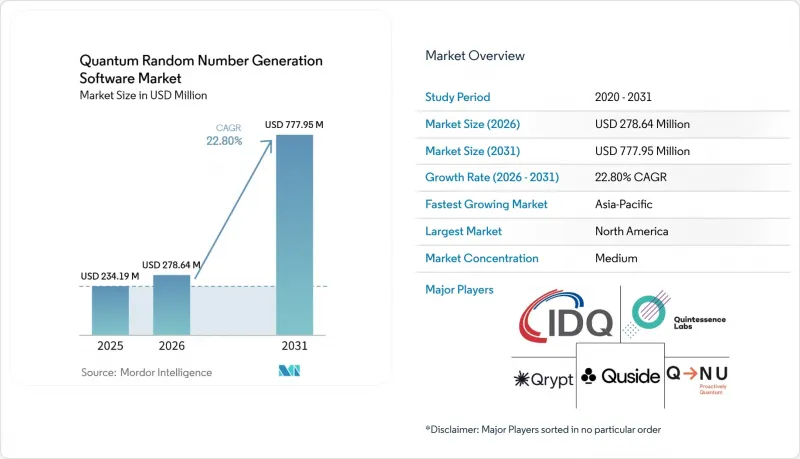
Mordor Intelligence에 의하면, 양자 난수 생성 소프트웨어 시장 규모는 2025년에 2억 3,419만 달러로 평가되었고, 2026-2031년 CAGR 22.80%로 확대될 전망이며, 2031년에는 7억 7,795만 달러에 이를 것으로 예측됩니다.
본 보고서는 제품군별(소프트웨어 솔루션, 서비스), 배포 방식별(클라우드 기반, 온프레미스, 하이브리드), 기능별(QRNG 개발 플랫폼, 기타),최종 사용자별(IT 및 통신, 은행, 금융서비스 및 보험(BFSI), 헬스케어 및 생명과학, 소매 및 전자상거래, 항공우주 및 방위, 기타), 지역별로 분류되어 있습니다. 시장 예측은 금액(달러) 기준으로 제시되어 있습니다.
세계의 양자 난수 생성 소프트웨어 시장 동향 및 인사이트
심화되는 사이버 보안 위협과 암호화 요구 사항
'Harvest-now-decrypt-later(지금 수집하고 나중에 복호화)' 유형의 공격으로 인해, 조직이 암호화된 정보의 유효 기간을 평가하는 방식이 바뀌었습니다. 공격자는 현재 암호화된 데이터를 보유했다가, 실용적인 양자 컴퓨팅이 이용 가능해지면 이를 해독하려고 시도할 수 있습니다. 따라서 10년 이상 기밀성을 유지해야 하는 기록이나 통신의 경우, 암호의 민첩성과 엔트로피의 품질에 관해 더 조기에 대책을 마련해야 합니다. 은행, 의료, 국방, 정보 기관은 엔트로피를 계획, 모니터링, 거버넌스가 필요한 보안 요소로 취급하고 있습니다. 소프트웨어 기반 엔트로피는 별도의 하드웨어를 조달하지 않고도 기존 키 관리 시스템에 연결할 수 있기 때문에 양자 난수 생성(QRNG) 소프트웨어 시장이 그 혜택을 누리고 있습니다. 2026년 3월에 발행된 ETSI 지침에서는 규제 대상인 QRNG 도입 시 지속적인 건전성 모니터링과 하드웨어 신뢰의 근원(Root of Trust)에 대한 인증이 요구됨이 명시되었습니다.
포스트 양자암호화로의 전환과 엔트로피의 현대화
NIST는 2024년 8월에 FIPS 203, FIPS 204, FIPS 205를 승인하여 연방 정부 시스템 및 관련 공급업체의 포스트 양자암호화 구현을 위한 로드맵을 수립했습니다. 이 표준들은 ML-KEM, ML-DSA, SLH-DSA를 포괄하며, 모두 키 생성 및 서명을 위해 강력한 시드를 갖춘 난수성을 필요로 합니다. 소프트웨어 QRNG 제품은 라이브러리나 서비스 계층의 변경 형태로 도입할 수 있으므로, 인증된 암호화 환경에 미치는 영향을 최소화할 수 있습니다. Quantinuum의 ‘Quantum Origin’은 2025년 4월 NIST SP 800-90B에 기반한 ‘검증된 엔트로피 소스’로 인증을 획득하여, 구매자들에게 소프트웨어 중심의 규정 준수 지침이 되었습니다. 대규모 금융 네트워크에서는 키 생성 시점뿐만 아니라 대량의 HSM 작업 전반에 걸친 엔트로피 문제도 해결해야 합니다. 따라서 양자 난수 생성 소프트웨어 시장에는 기존 암호화 작업 전반에 걸친 엔트로피 제공을 추상화하는 서비스 모델을 개발할 기회가 있습니다.
레거시 암호화 스택 간의 통합 복잡성
레거시 HSM, PKIX 인프라, 구형 암호화 라이브러리를 도입한 조직은 엔트로피 소스를 변경할 때 막대한 통합 작업에 직면할 가능성이 있습니다. 이 작업은 HSM의 펌웨어, 애플리케이션 프로그래밍 인터페이스(API), 엔트로피 풀 관리에 영향을 미칠 수 있습니다. ETSI는 QRNG 구현이 더 높은 보안 수준이 요구되는 환경에서의 FIPS 140-3 요건을 포함한 보증 요건을 준수해야 한다고 지적하고 있습니다. 양자암호화 기술 전반에 걸쳐 공통된 QRNG 인터페이스 및 제어 플레인 표준은 아직 채택되지 않았습니다. 이로 인해 여러 공급업체의 환경이나 여러 세대에 걸친 보안 장비를 혼용하고 있는 구매자에게는 추가적인 업무 부담이 발생합니다. 양자 난수 생성 소프트웨어 시장에서는 규정 준수가 필요한 경우나, 엔지니어링 자원이 제한적인 중규모 금융 기관 및 의료 네트워크에서 도입 속도가 둔화되고 있습니다.
부문 분석
2025년, 소프트웨어 솔루션은 양자 난수 생성 소프트웨어 시장 점유율의 72.41%를 차지하며 주요 제공 범주가 되었습니다. 구매자들은 사용자당 하드웨어 비용을 들이지 않고 여러 클라우드 환경에 배포해야 하는 경우, 소프트웨어를 선호합니다. 이 카테고리는 엔트로피 생성에 그치지 않고, 배포, 키 관리, 무결성 모니터링, 포스트 양자암호화 라이브러리를 결합한 플랫폼으로 전환되고 있습니다. 파로알토 네트웍스와 그 QRNG 기술 파트너들은 보안 플랫폼 간의 상호 운용성을 향상시키기 위해 2025년 1월 QRNG Open API 프레임워크를 도입했습니다. 공통 인터페이스가 보급됨에 따라 기본적인 엔트로피 배포의 차별화는 점차 희미해질 가능성이 있습니다. 또한 인증 범위, 통합의 깊이, 관리형 서비스의 중요성이 높아질 가능성이 있습니다.
서비스 부문은 2026-2031년 연평균 성장률(CAGR) 25.83%를 나타낼 것으로 예측되며, 이는 해당 부문 내에서 가장 높은 성장률입니다. 관리형 엔트로피 제공, 통합 지원, 규정 준수 서비스는 사내에서 양자 보안 기능을 운영하기를 원하지 않는 조직에게 매력적입니다. 금융 및 보험·증권(BFSI) 및 의료 분야의 구매자는 모니터링, 감사 로그, 장애 복구, 엔트로피 출처에 대한 증거 지원을 필요로 합니다. 또한 게임 사업자들도 RTS 7에 기반한 인증 및 감사 요건을 충족할 수 있는 난수 생성 시스템을 필요로 합니다. 따라서 양자 난수 생성 소프트웨어 시장은 일회성 소프트웨어 도입에서 지속적인 서비스 계약으로 전환될 가능성이 있습니다. 지속적인 검증 보고서와 변조 방지 기능을 갖춘 감사 추적을 제공할 수 있는 공급업체는 가장 까다로운 프로그램에도 대응할 수 있는 입지에 있습니다.
2025년 시점에서 양자 난수 생성 소프트웨어 시장 규모의 68.19%를 클라우드 기반 도입이 차지했습니다. 이러한 상황은 클라우드 네이티브 보안 워크로드와 EaaS(Entropy-as-a-Service) 제공 방식 간의 친화성을 반영합니다. 클라우드 리소스에서는 빈번한 키 갱신, 트랜잭션 서명, 보호된 ID 처리가 필요한 경우가 많습니다. AWS 마켓플레이스는 EC2 리소스에서 사용하기 위한 엔트로피 소스를 결합한, 클라우드 지향적 QRNG 제공의 한 예를 보여줍니다. 엄격한 네트워크 분리 규칙을 적용하는 국방 기관, 금융 기관, 데이터센터의 경우 온프레미스형 시스템이 여전히 중요합니다. 이러한 구매자들은 앞으로도 로컬형 또는 에어갭형 엔트로피 생성 장치를 선호하는 경향이 지속될 것으로 보입니다.
하이브리드 배포는 2031년까지 연평균 성장률(CAGR) 24.43%를 나타낼 것으로 예측됩니다. 이 모델은 로컬에서의 엔트로피 생성 또는 제어와 클라우드 기반 배포 및 애플리케이션 접근을 결합한 것입니다. 이는 조직이 암호화 키의 수명 주기를 문서화하고 데이터 상주 요건을 관리해야 하는 경우에 적합합니다. Quantropi의 ‘QiSpace’ 서비스는 멀티 벤더 엔트로피 공급을 활용하며, 격리된 환경에서의 배포를 위한 고객 주도형 구성도 가능합니다. 하이브리드 구성에서는 온프레미스형 어플라이언스, 클라우드 서비스, 액세스 제어의 연동이 필요합니다. 이러한 복잡성은 여러 지역에 걸쳐 인증된 지원을 제공할 수 있는 공급자에게 전문 서비스 분야의 비즈니스 기회를 창출합니다. 양자 난수 생성 소프트웨어 시장에서는 클라우드 통합과 온프레미스 배포 능력을 모두 갖춘 공급업체가 우위를 점할 가능성이 있습니다.
지역별 분석
2025년, 북미는 양자 난수 생성 소프트웨어 시장의 34.62%를 차지했습니다. 이 지역에는 잘 정비된 연방 정부의 사이버 보안 조달 시스템이 있으며, QRNG 소프트웨어 공급업체가 집중되어 있습니다. NIST가 승인한 포스트 양자 표준에 기반한 미국의 전환 요건은 정부 기관, 계약업체 및 공급업체 간 수요를 뒷받침하고 있습니다. 2025년 4월 Quantinuum이 수행한 NIST SP 800-90B 검증으로 인해 정부 조달에서 소프트웨어 기반 엔트로피에 대한 공식적인 경로가 확립되었습니다. 캐나다와 멕시코에서는 금융 부문 및 정부의 준비 프로그램을 통해 2차 수요가 발생하고 있습니다. 또한 CURBy라는 공개 양자 난수 서비스도 이 지역의 검증 가능한 난수에 관한 연구 기반을 강화했습니다.
아시아태평양은 2026-2031년 연평균 성장률(CAGR) 25.91%를 나타낼 것으로 예측됩니다. 중국, 일본, 한국의 국가 차원 양자 프로그램이 양자 보안 기능 도입을 뒷받침하고 있습니다. 이 지역의 통신 및 금융 인프라는 QRNG 통합을 위한 실용적인 환경을 제공합니다. 한국이 5G 기기에 QRNG를 통합하기 위해 노력하고 있는 점은 이 기술을 상용 환경에 도입하는 데 있어 통신 산업이 수행하는 역할을 보여줍니다. 인도는 국내 기업들이 국제적인 연구 및 상업적 관계를 구축함에 따라 새로운 기여국으로 부상하고 있습니다. 동남아시아 및 기타 아시아태평양은 여전히 초기 단계 시장이며, 그 발전은 금융의 디지털화와 정부의 사이버 보안 현대화와 밀접하게 연관되어 있습니다.
유럽은 북미에 이어 매출 규모 3위 지역으로, 독일, 영국, 프랑스가 그 핵심을 이루고 있습니다. 금융 기관은 운영상의 복원력을 관리하고, 암호화 관리 조치를 문서화해야 합니다. 이를 통해 엔트로피의 출처에 대한 주의가 요구됩니다. ETSI가 2026년 3월에 발표한 QRNG 구현 지침에는 FIPS 140-3, NIST SP 800-90B, BSI AIS 20/31, ISO/IEC 19790 각 규격에 기반한 도입 경로가 종합적으로 다루어져 있습니다. 남미, 중동 및 아프리카는 양자 난수 생성 소프트웨어 시장에서 규모는 작지만 발전 중인 지역입니다. 브라질과 걸프 국가들은 양자 보안 인프라에 대한 초기 투자를 추진하고 있습니다. 남아프리카공화국과 사우디아라비아도 제도적인 수요를 창출할 수 있는 국가 차원의 사이버 보안 프로그램을 시작했습니다.
기타 혜택
- 엑셀 형식 시장 예측(ME) 시트
- 3개월간의 애널리스트 지원
자주 묻는 질문
목차
제1장 서론
제2장 조사 방법
제3장 주요 요약
제4장 시장 구도
제5장 시장 규모 및 성장 예측
제6장 경쟁 구도
제7장 시장 기회 및 향후 전망
AJY 26.09.03According to Mordor Intelligence, the quantum random number generation software market size was valued at USD 234.19 million in 2025 and is forecast to reach USD 777.95 million by 2031, at a CAGR of 22.80% during 2026-2031.
This report is Segmented by Offering (Software Solutions, and Services), Deployment Mode (Cloud-Based, On-Premises, and Hybrid), Function (QRNG Development Platforms, and More), End User (IT and Telecommunication, BFSI, Healthcare and Life Sciences, Retail and E-Commerce, Aerospace and Defense, and More), and Geography. The Market Forecasts are Provided in Terms of Value (USD).
Global Quantum Random Number Generation Software Market Trends and Insights
Escalating Cybersecurity Threats and Encryption Requirements
Harvest-now-decrypt-later attacks have changed how organizations assess the lifespan of encrypted information. Attackers can retain encrypted data now and seek to decrypt it after capable quantum computing becomes available. Records and communications that must remain confidential for more than 10 years therefore require earlier action on cryptographic agility and entropy quality. Banking, healthcare, defense, and intelligence organizations are treating entropy as a security input that needs planning, monitoring, and governance. The Quantum random number generation software market benefits because software-based entropy can be connected to existing key management systems without a separate hardware procurement process. ETSI guidance issued in March 2026 set expectations for continuous health monitoring and hardware root-of-trust attestation in regulated QRNG deployments.
Post-Quantum Cryptography Migration and Entropy Modernization
NIST approved FIPS 203, FIPS 204, and FIPS 205 in August 2024, placing post-quantum cryptography on a path to implementation for federal systems and related suppliers. The standards cover ML-KEM, ML-DSA, and SLH-DSA, all of which require strong-seeded randomness for key generation and signing. Software QRNG products can be introduced as library and service-layer changes, reducing disruption to certified cryptographic environments. Quantinuum's Quantum Origin received NIST SP 800-90B validation as a Validated Entropy Source in April 2025, creating a software-focused compliance reference for buyers. Large financial networks must also address entropy across high-volume HSM operations rather than only at the point of key creation. The Quantum random number generation software market, therefore, has an opportunity to develop service models that abstract entropy delivery across existing cryptographic operations.
Integration Complexity Across Legacy Cryptographic Stacks
Organizations with legacy HSMs, PKIX infrastructure, and older cryptographic libraries can face material integration work when changing entropy sources. The work can affect HSM firmware, application programming interfaces, and entropy-pool management. ETSI notes that QRNG implementation must align with assurance requirements, including FIPS 140-3 considerations in higher-security settings. A common QRNG interface and control-plane standard has not yet been adopted across quantum cryptography technologies. This creates more work for buyers with mixed vendor environments and several generations of security equipment. The Quantum random number generation software market faces slower adoption among mid-sized financial institutions and healthcare networks that need compliance but have limited engineering capacity.
Other drivers and restraints analyzed in the detailed report include:
- Cloud and Edge Expansion Creating Entropy-Starved Workloads
- Growth of Embedded Security Across IoT, Mobile, and Connected Vehicles
- Price and Familiarity Advantages of Classical PRNGs
For complete list of drivers and restraints, kindly check the Table Of Contents.
Segment Analysis
Software Solutions held 72.41% of the Quantum random number generation software market share in 2025, making it the leading offering category. Buyers prefer software when they need to deploy across multiple cloud environments without per-seat hardware costs. The category is moving beyond entropy generation toward platforms that combine delivery, key management, health monitoring, and post-quantum cryptography libraries. Palo Alto Networks and its QRNG technology partners introduced the QRNG Open API framework in January 2025 to improve interoperability in security platforms. A common interface can make basic entropy delivery less distinctive over time. It can also increase the importance of certification coverage, integration depth, and managed services.
Services are projected to record a 25.83% CAGR from 2026 to 2031, the fastest rate within this segmentation. Managed entropy delivery, integration support, and compliance services appeal to organizations that do not want to operate an internal quantum security function. BFSI and healthcare buyers need support for monitoring, audit logs, failover, and evidence of entropy provenance. Gaming operators also need random number generation systems that can support certification and audit requirements under RTS 7. The Quantum random number generation software market can therefore shift toward recurring service relationships instead of one-time software deployments. Providers with continuous verification reports and tamper-evident audit trails are positioned to serve the most demanding programs.
Cloud-Based deployment accounted for 68.19% of the Quantum random number generation software market size in 2025. This position reflects the close fit between cloud-native security workloads and entropy-as-a-service delivery. Cloud resources often need frequent key refreshes, transaction signing, and protected identity processes. AWS Marketplace offered an example of cloud-oriented QRNG delivery that combines entropy sources for use with EC2 resources. On-premises systems still matter for defense agencies, financial institutions, and data centers with strict network isolation rules. These buyers may continue to prefer local or air-gapped entropy equipment.
Hybrid deployment is projected to grow at a 24.43% CAGR through 2031. The model combines local entropy generation or control with cloud-based distribution and application access. It is relevant where organizations must document cryptographic key lifecycles and manage data residency requirements. Quantropi's QiSpace service uses a multi-vendor entropy supply and also allows customer-hosted configurations for isolated deployments. Hybrid arrangements require coordination across local appliances, cloud services, and access controls. This complexity creates a professional services opportunity for providers that can deliver certified support across multiple regions. The Quantum random number generation software market may favor suppliers with both cloud integration and on-premises deployment capability.
Complete Report Scope:
- By Offering
- Software Solutions
- Services
- By Deployment Mode
- Cloud-Based
- On-Premises
- Hybrid
- By Function
- QRNG Development Platforms
- Entropy Management and Distribution
- Randomness Validation and Health Monitoring
- Post-Processing and Entropy Conditioning
- Verification, Audit and Compliance
- By End User
- IT and Telecommunication
- BFSI
- Healthcare and Life Sciences
- Retail and E-Commerce
- Aerospace and Defense
- Industrial Manufacturing
- Education and Research Institutions
- Media and Entertainment
- Government and Administration
- Energy and Utilities
- Other End-Users
- By Geography
- North America
- United States
- Canada
- Mexico
- South America
- Brazil
- Argentina
- Rest of South America
- Europe
- Germany
- United Kingdom
- France
- Russia
- Spain
- Rest of Europe
- Asia-Pacific
- China
- Japan
- India
- South Korea
- Southeast Asia
- Rest of Asia-Pacific
- Middle East and Africa
- Middle East
- Saudi Arabia
- United Arab Emirates
- Rest of Middle East
- Africa
- South Africa
- Nigeria
- Rest of Africa
- Middle East
- North America
Geography Analysis
North America held 34.62% of the Quantum random number generation software market share in 2025. The region has a developed federal cybersecurity procurement system and a high concentration of QRNG software providers. U.S. migration requirements based on NIST-approved post-quantum standards support demand among agencies, contractors, and suppliers. Quantinuum's April 2025 NIST SP 800-90B validation established a recognized path for software-based entropy in government procurement. Canada and Mexico add secondary demand through financial-sector and government readiness programs. The CURBy public quantum randomness service also strengthened the region's research base for verifiable randomness.
Asia-Pacific is projected to grow at a 25.91% CAGR from 2026 to 2031. National quantum programs in China, Japan, and South Korea support the adoption of quantum security capabilities. Regional telecom and financial infrastructure provide practical settings for QRNG integration. South Korea's work to integrate QRNG into 5G equipment shows the role of telecommunications in bringing the technology into commercial environments. India is an emerging contributor as domestic companies build international research and commercial relationships. Southeast Asia and the rest of Asia-Pacific remain earlier-stage markets, with progress linked to financial digitalization and government cybersecurity modernization.
Europe followed North America as the third-largest revenue region, with Germany, the United Kingdom, and France forming the core. Financial institutions must manage operational resilience and document cryptographic controls, which support attention to entropy provenance. ETSI's March 2026 QRNG implementation guidance covered FIPS 140-3, NIST SP 800-90B, BSI AIS 20/31, and ISO/IEC 19790 pathways. South America, the Middle East, and Africa represent smaller but developing areas for the Quantum random number generation software market. Brazil and Gulf states are making early investments in quantum security infrastructure. South Africa and Saudi Arabia have also begun sovereign cybersecurity programs that can build institutional demand.
- ID Quantique SA
- QuintessenceLabs Pty Ltd
- Quside Technologies S.L.
- Qrypt Inc.
- QNu Labs Private Limited
- Quantum Dice Ltd.
- Crypta Labs Limited
- KETS Quantum Security Limited
- Quantropi Inc.
- Quantum eMotion Corp.
- QuantumCTek Co., Ltd.
- Qutools GmbH
- MagiQ Technologies, Inc.
- NuCrypt LLC
- Terra Quantum AG
- Alea Quantum Technologies ApS
- InfiniQuant
- Quantum Numbers Corp.
- Quantum Computing Inc.
- Quantinuum Ltd.
- Qnami AG
- SK Telecom Co., Ltd.
- Fujitsu Limited
- Atos SE
Additional Benefits:
- The market estimate (ME) sheet in Excel format
- 3 months of analyst support
TABLE OF CONTENTS
1 INTRODUCTION
- 1.1 Study Assumptions and Market Definition
- 1.2 Scope of the Study
2 RESEARCH METHODOLOGY
3 EXECUTIVE SUMMARY
4 MARKET LANDSCAPE
- 4.1 Market Overview
- 4.2 Market Drivers
- 4.2.1 Escalating Cybersecurity Threats and Encryption Requirements
- 4.2.2 Post-Quantum Cryptography Migration and Entropy Modernization
- 4.2.3 Cloud and Edge Expansion Creating Entropy-Starved Workloads
- 4.2.4 Growth of Embedded Security Across IoT, Mobile, and Connected Vehicles
- 4.2.5 Regulated Demand for Verifiable Randomness in Gaming and Financial Services
- 4.2.6 Quantum-Computing Access Expanding Software QRNG Availability
- 4.3 Market Restraints
- 4.3.1 Integration Complexity Across Legacy Cryptographic Stacks
- 4.3.2 Price and Familiarity Advantages of Classical PRNGs
- 4.3.3 Evidence and Audit Burden for Remote Quantum Entropy Provenance
- 4.3.4 Latency, Availability, and Data-Residency Friction in Cross-Border Entropy Services
- 4.4 Impact of Macroeconomic Factors on the Market
- 4.5 Industry Value-Chain Analysis
- 4.6 Technology Outlook
- 4.7 Regulatory Landscape
- 4.8 Porter's Five Forces Analysis
- 4.8.1 Threat of New Entrants
- 4.8.2 Bargaining Power of Suppliers
- 4.8.3 Bargaining Power of Buyers
- 4.8.4 Threat of Substitutes
- 4.8.5 Intensity of Competitive Rivalry
5 MARKET SIZE AND GROWTH FORECASTS (VALUE)
- 5.1 By Offering
- 5.1.1 Software Solutions
- 5.1.2 Services
- 5.2 By Deployment Mode
- 5.2.1 Cloud-Based
- 5.2.2 On-Premises
- 5.2.3 Hybrid
- 5.3 By Function
- 5.3.1 QRNG Development Platforms
- 5.3.2 Entropy Management and Distribution
- 5.3.3 Randomness Validation and Health Monitoring
- 5.3.4 Post-Processing and Entropy Conditioning
- 5.3.5 Verification, Audit and Compliance
- 5.4 By End User
- 5.4.1 IT and Telecommunication
- 5.4.2 BFSI
- 5.4.3 Healthcare and Life Sciences
- 5.4.4 Retail and E-Commerce
- 5.4.5 Aerospace and Defense
- 5.4.6 Industrial Manufacturing
- 5.4.7 Education and Research Institutions
- 5.4.8 Media and Entertainment
- 5.4.9 Government and Administration
- 5.4.10 Energy and Utilities
- 5.4.11 Other End-Users
- 5.5 By Geography
- 5.5.1 North America
- 5.5.1.1 United States
- 5.5.1.2 Canada
- 5.5.1.3 Mexico
- 5.5.2 South America
- 5.5.2.1 Brazil
- 5.5.2.2 Argentina
- 5.5.2.3 Rest of South America
- 5.5.3 Europe
- 5.5.3.1 Germany
- 5.5.3.2 United Kingdom
- 5.5.3.3 France
- 5.5.3.4 Russia
- 5.5.3.5 Spain
- 5.5.3.6 Rest of Europe
- 5.5.4 Asia-Pacific
- 5.5.4.1 China
- 5.5.4.2 Japan
- 5.5.4.3 India
- 5.5.4.4 South Korea
- 5.5.4.5 Southeast Asia
- 5.5.4.6 Rest of Asia-Pacific
- 5.5.5 Middle East and Africa
- 5.5.5.1 Middle East
- 5.5.5.1.1 Saudi Arabia
- 5.5.5.1.2 United Arab Emirates
- 5.5.5.1.3 Rest of Middle East
- 5.5.5.2 Africa
- 5.5.5.2.1 South Africa
- 5.5.5.2.2 Nigeria
- 5.5.5.2.3 Rest of Africa
- 5.5.5.1 Middle East
- 5.5.1 North America
6 COMPETITIVE LANDSCAPE
- 6.1 Market Concentration
- 6.2 Strategic Moves
- 6.3 Market Share Analysis
- 6.4 Company Profiles (includes Global Level Overview, Market Level Overview, Core Segments, Financials as available, Strategic Information, Market Rank/Share, Products and Services, Recent Developments)
- 6.4.1 ID Quantique SA
- 6.4.2 QuintessenceLabs Pty Ltd
- 6.4.3 Quside Technologies S.L.
- 6.4.4 Qrypt Inc.
- 6.4.5 QNu Labs Private Limited
- 6.4.6 Quantum Dice Ltd.
- 6.4.7 Crypta Labs Limited
- 6.4.8 KETS Quantum Security Limited
- 6.4.9 Quantropi Inc.
- 6.4.10 Quantum eMotion Corp.
- 6.4.11 QuantumCTek Co., Ltd.
- 6.4.12 Qutools GmbH
- 6.4.13 MagiQ Technologies, Inc.
- 6.4.14 NuCrypt LLC
- 6.4.15 Terra Quantum AG
- 6.4.16 Alea Quantum Technologies ApS
- 6.4.17 InfiniQuant
- 6.4.18 Quantum Numbers Corp.
- 6.4.19 Quantum Computing Inc.
- 6.4.20 Quantinuum Ltd.
- 6.4.21 Qnami AG
- 6.4.22 SK Telecom Co., Ltd.
- 6.4.23 Fujitsu Limited
- 6.4.24 Atos SE
7 MARKET OPPORTUNITIES AND FUTURE OUTLOOK
- 7.1 White-Space and Unmet-Need Assessment


