|
시장보고서
상품코드
2118968
난독증 치료 시장 : 시장 점유율 분석, 업계 동향 및 통계, 성장 예측(2026-2031년)Dyslexia Treatment - Market Share Analysis, Industry Trends & Statistics, Growth Forecasts (2026 - 2031) |
||||||
 Mordor Intelligence
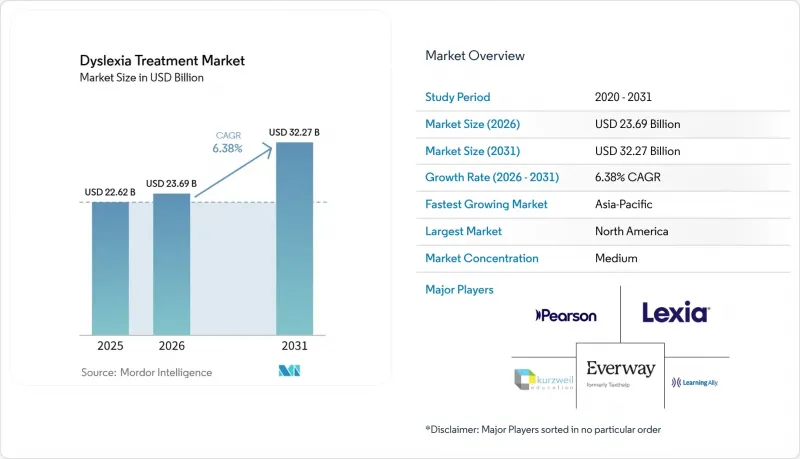
Mordor Intelligence에 의하면, 난독증 치료 시장 규모는 2025년 226억 2,000만 달러로 평가되었고, 2026년에는 236억 9,000만 달러로 추정되고, 2026-2031년 CAGR 6.38%로 성장을 지속할 전망이며, 2031년에는 322억 7,000만 달러에 이를 것으로 예측됩니다.
본 보고서는 치료법별(구조화된 문해력 및 명시적 파닉스, 언어청각 치료 등), 연령대별(소아, 성인, 고령자), 최종 사용자별(학교 및 특수 교육 프로그램, 난독증 전문센터, 병원 및 클리닉 등), 유통 채널별(소매, 병원 내 약국 등), 지역별(북미 등)로 세분화되어 있습니다. 예측치는 금액(달러)으로 표시되어 있습니다.
세계의 난독증 치료 시장 동향 및 인사이트
조기 발견 및 조기 개입의 의무화가 체계적인 선별 검사 수요를 정착시키고 있습니다.
입법 조치를 통해 난독증 진단은 사후 대응적인 과정에서 학교 내 정기적인 선별 검사로 전환되고 있습니다. 전 미주 의회 회의(NCSL) 보고서에 따르면, 2024년에는 미국 25개 주에서 최소 35건의 문해력 관련 법안이 제출되었으며, 증거 기반 평가와 난독증 선별 검사에 큰 관심이 쏠리고 있습니다. 펜실베이니아주의 ‘제135호 법안’은 구조화된 문해 교육에 대한 접근성을 확대하고, 모든 아동을 대상으로 한 독해력 선별 검사를 의무화했습니다. 조지아주의 HB 307호 법안은 난독증이 있는 아동을 대상으로 ‘독해의 과학’에 기반한 교사 연수를 의무화하고 있습니다. 유치원 입학 시 선별 검사를 통해 기존의 의뢰 패턴보다 더 이른 단계에서 아동을 지원 대상으로 지정할 수 있게 됩니다. 이를 통해 학교와 가정이 평가, 중재, 진도 모니터링 서비스를 이용할 수 있는 기간이 연장될 가능성이 있습니다.
구조화된 문해력과 ‘리딩 사이언스’의 도입 확대가 B2G 수익 채널을 창출
구조화된 문해력의 도입은 공교육 정책 및 학군의 조달과 밀접하게 관련되어 있습니다. 주 정부가 ‘리딩 사이언스’에 기반한 커리큘럼을 의무화하면, 학군은 새로운 프로그램, 교직원 연수 및 도입 지원을 필요로 하게 됩니다. Lexia사는 자사의 ‘Aspire’ 및 ‘LETRS’ 전문 연수 프로그램에 대해 주 차원의 도입 및 갱신 활동이 증가했다고 보고하고 있으며, 이는 교육자들의 학습에 대한 지속적인 투자를 반영합니다. 워싱턴주의 HB 1295 법안에 따르면, 학군은 2025-2026 학년도 동안 종합적인 문해력 프로그램을 단계적으로 도입하고, 2027-2028 학년도까지 도입을 완료해야 합니다. 이러한 요건으로 인해 개별 가정의 구매에 비해 조달 주기가 길어집니다. 또한 교사 연수, 보고 도구, 그리고 프로그램이 주 기준을 충족한다는 증거의 중요성도 높아지고 있습니다.
기술 유무와 관계없이, 치료사 부족으로 인해 지원 대상 중재 건수가 제한되고 있습니다.
인증된 문해력 전문가의 부족으로 인해 지도 하에 실시할 수 있는 치료의 양이 제한되고 있습니다. 프랑스에는 130만 명의 난독증 아동이 있지만, 언어 치료사는 2만 5,000명에 불과하여 12-24개월에 달하는 평가 대기 기간이 발생하고 있습니다. 이로 인해 디지털 선별 검사나 원격 치료 도구를 이용할 수 있더라도 서비스 이용이 제한되고 있습니다. 인디애나주의 2024년부터 시행되는 문해 교육 연수 요건에 따라, 유치원부터 초등학교 6학년까지의 교사는 면허 갱신 전에 80시간의 연수가 추가되었으며, 일부 교육자들은 인력 측면에서의 부담 증가에 대해 우려를 표명했습니다. AI 도구는 선별 검사나 연습에 도움이 되지만, 비용 상환이나 임상 프로토콜 측면에서는 여전히 자격을 갖춘 전문가의 참여가 요구되는 경우가 많습니다. 따라서 인력 부족은 수요를 셀프 서비스형 도구로 이동시키는 동시에 임상 서비스의 확장을 제한할 가능성이 있습니다.
부문 분석
2025년 기준, 구조화된 문해력 및 명시적 파닉스는 난독증 치료 시장의 24.23% 점유율을 차지했으나, 디지털 치료 솔루션은 2026-2031년 연평균 성장률(CAGR) 8.92%를 나타낼 것으로 예측됩니다. 구조화된 문해력은 주 정부의 의무화, 학교의 도입, 그리고 확립된 증거 기반(학령기 아동을 대상으로 한 체계적인 파닉스 중재에서 헤지스의 g 값 0.65)의 혜택을 받고 있습니다. 언어청각 치료는 어린 아동이나 음운 장애가 있는 사람들에게 여전히 중요합니다.
디지털 치료 솔루션은 적응형 연습, 가상현실, 게임화를 활용한 학습을 통해 도입이 진행되고 있습니다. 디지털에 관한 메타분석에서는 독해 정확도에 대해 0.54, 유창성에 대해 0.58의 통합 효과가 나타났습니다. 작업 치료는 필기 운동이나 미세 운동에 어려움을 겪는 아동을 지원하는 한편, 인지·행동 지원은 불안이나 학업에 대한 자존감 저하를 해결합니다.
2025년 시점에서 난독증 치료 시장 규모의 72.36%를 아동·청소년이 차지하고 있으며, 2026-2031년 연평균 성장률(CAGR) 6.73%를 나타낼 것으로 예측됩니다. 학교의 자금 지원, 보호자의 지원 활동, 그리고 체계적인 문해 교육에 관한 증거가 이 분야의 선도적 지위를 뒷받침하고 있습니다. 5-6세에 조기 선별 검사를 실시함으로써, 읽기 장애가 고착화되기 전에 아이들을 적절한 치료로 연결할 수 있습니다. 또한 디지털 프로그램을 활용하면 전문가와의 세션 사이사이에 음운 인식에 대한 정기적인 연습을 도입하는 것도 가능합니다.
지역별 분석
2025년, 북미는 난독증 치료 시장 점유율의 38.87%를 차지했습니다. 미국에서는 IDEA(장애 아동 교육법), 각 주의 문해력 법, 그리고 성숙한 공급업체 기반을 통해 지역 수요를 주도하고 있습니다. 전 미주 의회 회의(NCLS) 기록에 따르면, 2024년에는 25개 주에서 35건의 문해력 관련 법안이 통과되었습니다. Lexia Learning, Wilson Language Training, Learning Ally 및 Lexercise는 이 지역의 학교 및 중재 지원 생태계에 참여하고 있습니다. 전미 교육 성취도 평가(NAEP) 데이터에 따르면, 미국 학생 중 학년 수준에 상응하는 독해력을 갖춘 학생은 3분의 1 미만이며, 이는 구조화된 문해력 서비스에 대한 학군의 관심이 여전히 높음을 뒷받침합니다.
아시아태평양은 예측 기간 동안 연평균 성장률(CAGR) 8.16%를 나타낼 것으로 예측되며, 그 배경에는 진단을 받지 않은 대규모 인구층의 존재, 교육 기술에 대한 투자 증가, 그리고 디지털 인프라의 개선이 있습니다. 2025년 미국 국립보건원(NIH)이 주관한 리뷰에서 언급된 바와 같이, 인도에서는 ‘사마그라 시크샤(Samagra Shiksha)’ 및 ‘장애인 권리법’을 통해 선별 검사 캠프와 ‘PRASHAST 2’ 도구가 활용되고 있습니다. 유럽에서는 정책의 성숙도와 서비스 이용 가능성에 차이가 보입니다. 영국은 2026년 1월 ‘전국 독서의 해’를 시작하며 2,770만 파운드(3,520만 달러)를 투자했습니다.
기타 혜택 :
- 엑셀 형식 시장 예측(ME) 시트
- 3개월간의 애널리스트 지원
자주 묻는 질문
목차
제1장 서론
제2장 조사 방법
제3장 개요
제4장 시장 구도
제5장 시장 규모 및 성장 예측
제6장 경쟁 구도
제7장 시장 기회 및 향후 전망
AJY 26.09.01According to Mordor Intelligence, the dyslexia treatment market size is expected to grow from USD 22.62 billion in 2025 to USD 23.69 billion in 2026 and is forecast to reach USD 32.27 billion by 2031 at 6.38% CAGR over 2026-2031.
This report is Segmented by Treatment Modality (Structured Literacy and Explicit Phonics, Speech/Language Therapy, and More), Age Group (Children, Adults, Older Adults), End User (Schools and Special Education Programs, Dyslexia Centers, Hospitals and Clinics, and More), Distribution Channel (Retail, Hospital Pharmacies, and More), and Geography (North America and More). Forecasts are Provided in Value (USD).
Global Dyslexia Treatment Market Trends and Insights
Earlier Identification and Intervention Mandates Embed Structural Screening Demand
Legislative action is moving dyslexia identification from a reactive process toward routine screening in schools. The National Conference of State Legislatures reported at least 35 literacy bills across 25 U.S. states in 2024, with substantial attention on evidence-based assessments and dyslexia screeners. Pennsylvania's Act 135 expanded access to structured literacy and required universal reading screeners. Georgia's HB 307 requires science-of-reading-aligned teacher training that covers students with dyslexia. Screening at kindergarten entry can bring children into support earlier than past referral patterns allowed. This can extend the period in which schools and families use assessment, intervention, and progress-monitoring services.
Expansion of Structured Literacy and Science of Reading Adoption Creates a B2G Revenue Channel
Structured literacy adoption is closely tied to public education policy and district purchasing. When a state requires science-of-reading curricula, districts need new programs, staff training, and implementation support. Lexia reported increased state-level acquisition or renewal activity for its Aspire and LETRS professional learning programs, reflecting continued investment in educator learning. Washington's HB 1295 requires districts to phase in comprehensive literacy programs during the 2025-2026 school year and complete implementation by 2027-2028. These requirements create longer procurement cycles than individual family purchases. They also raise the importance of teacher training, reporting tools, and evidence that programs meet state standards.
Therapist Shortage Caps Fundable Intervention Volume Regardless of Technology
A shortage of certified literacy specialists limits the volume of supervised treatment that can be delivered. France has 1.3 million children with dyslexia and 25,000 speech therapists, contributing to assessment waits of 12-24 months. This limits access even when digital screening or teletherapy tools are available. Indiana's 2024 literacy training requirement added 80 hours of training for pre-K through sixth-grade teachers before license renewal, and some educators raised concerns about workforce pressure. AI tools can help with screening and practice, but reimbursement and clinical protocols often still require qualified professional involvement. The shortage can therefore shift demand toward self-service tools while restricting growth in clinical services.
Other drivers and restraints analyzed in the detailed report include:
- AI-Enabled Screening and Phoneme-Level Personalization Reduces the Diagnostic Bottleneck
- Growth of School-Based and Teletherapy Delivery Broadens Service Reach
- High Out-of-Pocket Costs and Coverage Gaps Stratify Access by Income
For complete list of drivers and restraints, kindly check the Table Of Contents.
Segment Analysis
Structured Literacy and Explicit Phonics held 24.23% of the Dyslexia treatment market share in 2025, while Digital Therapy Solutions are forecast to grow at an 8.92% CAGR from 2026 to 2031. Structured literacy benefits from state mandates, school procurement, and a well-established evidence base, the Hedges' g of 0.65 for systematic phonics interventions in school-age children. Speech and Language Therapy remains important for younger children and people with phonological disorders.
Digital Therapy Solutions are gaining adoption through adaptive practice, virtual reality, and gamified learning. The pooled effects were 0.54 for reading accuracy and 0.58 for fluency in digital meta-analyses. Occupational Therapy supports children with graphomotor and fine motor difficulties, while Cognitive and Behavioral Support addresses anxiety and lower academic self-esteem.
Children and Adolescents held 72.36% of the Dyslexia treatment market size in 2025 and are forecast to grow at a 6.73% CAGR from 2026 to 2031. School funding, parental advocacy, and structured literacy evidence support their leading position. Earlier screening at ages 5-6 can bring children into care before reading difficulties become more established. Digital programs can also add regular phonological-awareness practice between professional sessions.
Complete Report Scope:
- By Treatment Modality
- Structured Literacy and Explicit Phonics
- Speech and Language Therapy
- Occupational Therapy
- Cognitive and Behavioral Support
- Digital Therapy Solutions
- Assistive Reading and Writing Technology
- Pharmacological and Comorbidity-Management Support
- Others (Screening, Assessment, and Progress Monitoring, Multisensory Instruction)
- By Age Group
- Children and Adolescents
- Adults
- Older Adults
- By End User
- Schools and Special Education Programs
- Dyslexia and Learning Disability Centers
- Hospitals and Clinics
- Rehabilitation Centers
- Home Care Settings
- Others
- By Distribution Channel
- Hospital Pharmacies
- Retail Pharmacies
- Online Pharmacies
- Others (Educational Institutions and Learning Centers, Direct-to-Consumer Channels)
- By Geography
- North America
- United States
- Canada
- Mexico
- Europe
- Germany
- United Kingdom
- France
- Italy
- Spain
- Rest of Europe
- Asia-Pacific
- China
- India
- Japan
- Australia
- South Korea
- Rest of Asia-Pacific
- Middle East and Africa
- GCC
- South Africa
- Rest of Middle East and Africa
- South America
- Brazil
- Argentina
- Rest of South America
- North America
Geography Analysis
North America held 38.87% of the Dyslexia treatment market share in 2025. The United States drives regional demand through IDEA, state literacy laws, and a mature supplier base. The National Conference of State Legislatures documented 35 literacy bills enacted across 25 states in 2024. Lexia Learning, Wilson Language Training, Learning Ally, and Lexercise participate in the region's school and intervention ecosystem. National Assessment of Educational Progress data showed that fewer than one-third of U.S. students read proficiently at grade level, supporting continued district interest in structured literacy services.
Asia-Pacific is expected to grow with 8.16% CAGR through the forecast period, which is supported by large undiagnosed populations, rising education technology investment, and improving digital infrastructure. India is using screening camps and the PRASHAST 2 tool through Samagra Shiksha and the Rights of Persons with Disabilities Act, as described in a 2025 NIH-hosted review. Europe has varied levels of policy maturity and service availability. The United Kingdom launched its National Year of Reading in January 2026 with GBP 27.7 million (USD 35.2 million).
- C-Pen
- Dybuster
- Dyslexia Gold Ltd.
- Everway Ltd.
- Ghotit Ltd.
- IDL Literacy
- Kurzweil Education
- Learning Ally
- Lexercise
- Lexia Learning Systems LLC
- Lindamood-Bell Learning Processes
- MindPlay Education
- Nessy Learning Ltd.
- Novartis
- Pearson PLC
- Read Naturally, Inc.
- Takeda Pharmaceuticals
- Wilson Language Training
Additional Benefits:
- The market estimate (ME) sheet in Excel format
- 3 months of analyst support
TABLE OF CONTENTS
1 Introduction
- 1.1 Study Assumptions & Market Definition
- 1.2 Scope of the Study
2 Research Methodology
3 Executive Summary
4 Market Landscape
- 4.1 Market Overview
- 4.2 Market Drivers
- 4.2.1 Earlier Identification and Intervention Mandates
- 4.2.2 Expansion of Structured Literacy and Science of Reading Adoption
- 4.2.3 AI-Enabled Screening and Phoneme-Level Personalization
- 4.2.4 Growth of School-Based and Teletherapy Delivery
- 4.2.5 Mainstreaming of Assistive Reading and Writing Technology
- 4.2.6 Parent-Led Home Intervention and Subscription Adoption
- 4.3 Market Restraints
- 4.3.1 Shortage of Qualified Literacy Intervention Professionals
- 4.3.2 High Out-of-Pocket Cost and Uneven Reimbursement
- 4.3.3 Limited Evidence Transfer Across Languages and Writing Systems
- 4.3.4 Privacy, Bias, and Validation Risk in AI-Enabled Tools
- 4.4 Value Chain Analysis
- 4.5 Regulatory Landscape
- 4.6 Technological Outlook
- 4.7 Porter's Five Forces Analysis
- 4.7.1 Threat of New Entrants
- 4.7.2 Bargaining Power of Suppliers
- 4.7.3 Bargaining Power of Buyers
- 4.7.4 Threat of Substitutes
- 4.7.5 Industry Rivalry
5 Market Size & Growth Forecasts (Value, USD)
- 5.1 By Treatment Modality
- 5.1.1 Structured Literacy and Explicit Phonics
- 5.1.2 Speech and Language Therapy
- 5.1.3 Occupational Therapy
- 5.1.4 Cognitive and Behavioral Support
- 5.1.5 Digital Therapy Solutions
- 5.1.6 Assistive Reading and Writing Technology
- 5.1.7 Pharmacological and Comorbidity-Management Support
- 5.1.8 Others (Screening, Assessment, and Progress Monitoring, Multisensory Instruction)
- 5.2 By Age Group
- 5.2.1 Children and Adolescents
- 5.2.2 Adults
- 5.2.3 Older Adults
- 5.3 By End User
- 5.3.1 Schools and Special Education Programs
- 5.3.2 Dyslexia and Learning Disability Centers
- 5.3.3 Hospitals and Clinics
- 5.3.4 Rehabilitation Centers
- 5.3.5 Home Care Settings
- 5.3.6 Others
- 5.4 By Distribution Channel
- 5.4.1 Hospital Pharmacies
- 5.4.2 Retail Pharmacies
- 5.4.3 Online Pharmacies
- 5.4.4 Others (Educational Institutions and Learning Centers, Direct-to-Consumer Channels)
- 5.5 By Geography
- 5.5.1 North America
- 5.5.1.1 United States
- 5.5.1.2 Canada
- 5.5.1.3 Mexico
- 5.5.2 Europe
- 5.5.2.1 Germany
- 5.5.2.2 United Kingdom
- 5.5.2.3 France
- 5.5.2.4 Italy
- 5.5.2.5 Spain
- 5.5.2.6 Rest of Europe
- 5.5.3 Asia-Pacific
- 5.5.3.1 China
- 5.5.3.2 India
- 5.5.3.3 Japan
- 5.5.3.4 Australia
- 5.5.3.5 South Korea
- 5.5.3.6 Rest of Asia-Pacific
- 5.5.4 Middle East and Africa
- 5.5.4.1 GCC
- 5.5.4.2 South Africa
- 5.5.4.3 Rest of Middle East and Africa
- 5.5.5 South America
- 5.5.5.1 Brazil
- 5.5.5.2 Argentina
- 5.5.5.3 Rest of South America
- 5.5.1 North America
6 Competitive Landscape
- 6.1 Market Concentration
- 6.2 Market Share Analysis
- 6.3 Company Profiles {(includes Global level Overview, Market level overview, Core Segments, Financials as available, Strategic Information, Market Rank/Share for key companies, Products & Services, and Recent Developments)}
- 6.3.1 C-Pen
- 6.3.2 Dybuster
- 6.3.3 Dyslexia Gold Ltd.
- 6.3.4 Everway Ltd.
- 6.3.5 Ghotit Ltd.
- 6.3.6 IDL Literacy
- 6.3.7 Kurzweil Education
- 6.3.8 Learning Ally
- 6.3.9 Lexercise
- 6.3.10 Lexia Learning Systems LLC
- 6.3.11 Lindamood-Bell Learning Processes
- 6.3.12 MindPlay Education
- 6.3.13 Nessy Learning Ltd.
- 6.3.14 Novartis AG
- 6.3.15 Pearson PLC
- 6.3.16 Read Naturally, Inc.
- 6.3.17 Takeda Pharmaceutical Company Limited
- 6.3.18 Wilson Language Training
7 Market Opportunities & Future Outlook
- 7.1 White-space & unmet-need assessment