|
시장보고서
상품코드
2119076
북미의 발포 폴리스티렌 폼 : 시장 점유율 분석, 산업 동향 및 통계 데이터, 성장 예측(2026-2031년)North America Expanded Polypropylene Foam - Market Share Analysis, Industry Trends & Statistics, Growth Forecasts (2026 - 2031) |
||||||
 Mordor Intelligence
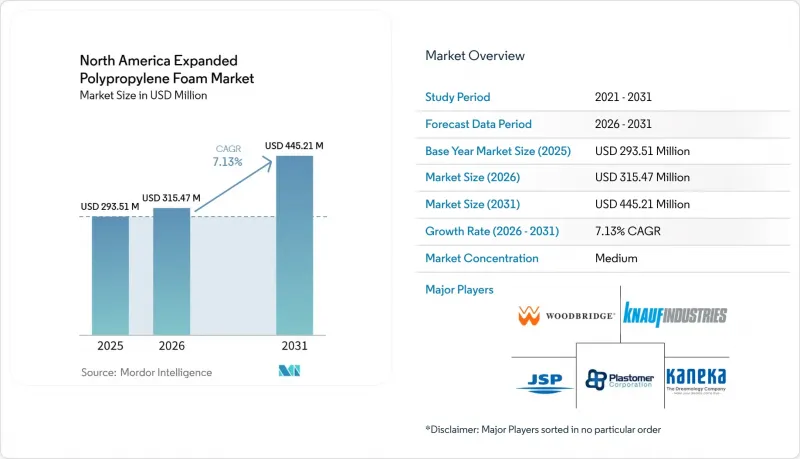
Mordor Intelligence에 따르면 북미의 발포 폴리스티렌 폼 시장 규모는 2025년에 2억 9,351만 달러로 평가되며, 2026년 3억 1,547만 달러에서 2031년까지 4억 4,521만 달러에 달할 것으로 예측되고 있으며, 예측 기간에 CAGR은 7.13%입니다(2026-2031년).
이 보고서는 원재료(합성 폴리프로필렌, 바이오 기반 폴리프로필렌), 폼의 유형(성형 EPP, 가공 EPP, 기타 폼 유형), 용도(자동차, 단네지/산업용 포장재, 가구, 식품 포장,HVAC, 스포츠·레저 등), 그리고 지역(미국, 캐나다, 멕시코)별로 분류되어 있습니다. 시장 예측은 금액(달러) 기준으로 제시되어 있습니다.
북미 발포 폴리스티렌(EPP) 폼 시장의 동향 및 인사이트
자동차·운송 기계 용도에서의 경량 소재 수요 증가
북미 발포 폴리스티렌 폼 시장은 충돌 안전성을 저해하지 않으면서 부품의 경량화를 도모하는 자동차 프로그램의 혜택을 받고 있습니다. ‘기업 평균 연비(CAFE)’ 규제 체계에서는 자동차 제조사에게 차량 설계 및 부품 선정을 통해 차량군의 연비 효율을 향상시키도록 촉구하는 요건이 정해져 있습니다. EPP는 기존의 에너지 흡수재에 비해 차량 1대당 1.2-1.8kg의 범퍼 시스템 무게를 줄일 수 있습니다. 또한 반복적인 충격 후에도 형상을 회복하는 특성 덕분에 배송용 차량의 적재 패널이나 격벽의 완충재로 사용되기도 합니다. 이러한 용도를 통해 차량이 도크에 빈번하게 접촉하는 상황에서 부품 교체 필요성을 줄일 수 있습니다. 또한 미국 남부 지역의 자동차 생산 확대에 따라 기존 미시간주를 중심으로 한 공급 거점을 넘어 수요가 확대되고 있습니다.
전기자동차 배터리 보호 및 열 관리 분야에서 EPP 폼의 채택 확대
배터리 팩에는 진동을 흡수하고, 전해액에 노출되어도 견디며, 작동 온도에서도 안정성을 유지할 수 있는 소재가 필요합니다. EPP는 배터리 모듈 하우징에서 이러한 요건을 충족하여 별도의 보호 라이너 필요성을 줄일 수 있습니다. JSP 코퍼레이션은 북미의 자동차 수요에 대응하기 위해 2025년 12월 멕시코 라모스 알리스페에 ARPRO EPP 공장을 완공했습니다. 이 시설은 자동차 제조사 및 그 공급업체가 사용하는 EPP 부품의 현지 공급원이 될 것입니다. 이러한 성능 덕분에 북미 발포 폴리스티렌 폼 시장은 기존의 범퍼나 헤드레스트 용도에 그치지 않고, 전기자동차 플랫폼에서의 채택률을 높일 수 있게 됩니다.
프로필렌 가격의 변동성과 원료에 대한 의존성
북미 발포 폴리스티렌 폼 시장은 폴리머 등급 프로필렌 가격 변동의 영향을 지속적으로 받고 있습니다. 공급은 텍사스주에 위치한 4개의 프로판 탈수소화 설비에 집중되어 있으며, 가격은 가동 중단, 프로판 비용 및 운송 차질의 영향을 받기 쉽습니다. 2026년 3월 분석에서는 프로판 가격 및 북미의 액화석유가스(LPG) 수출에 대한 무역 관련 압박에 대해서도 언급하고 있습니다. 자동차용 공급 계약에서 가격 조정 조항이 현물 가격 변동보다 1-2분기 뒤처지는 경우, 가공업체는 가격 변동 위험에 노출될 가능성이 있습니다. 프로필렌은 합성 폴리프로필렌 비드의 핵심 원료이므로, 이러한 위험은 이익률에 직접적인 영향을 미칩니다.
부문별 분석
2025년, 북미 발포 폴리스티렌 폼 시장에서 합성 폴리프로필렌의 점유율은 88.62%를 차지했습니다. 이 부문은 확립된 석유화학 인프라와 기존 프로필렌 공급에 따른 비용 및 물량 규모의 경제성이라는 이점을 누리고 있습니다. 합성 소재는 대량 및 안정적인 공급이 필요한 자동차 및 포장 업계의 고객들에게 계속해서 활용되고 있습니다. 그 원료 기반은 기존의 지역적 프로필렌 생산·가공 네트워크와 밀접하게 연결되어 있습니다. 바로 이러한 관계가 화석 유래 폴리프로필렌이 북미 발포 폴리프로필렌 산업에서 여전히 주요 원료로 자리 잡고 있는 이유를 설명해 줍니다. 또한 이러한 관계로 인해 생산자는 ‘제약 요인’ 섹션에서 설명한 원료 가격 변동 위험에 노출되게 됩니다.
바이오 기반 폴리프로필렌은 2026-2031년까지 연평균 성장률(CAGR) 11.25%로 성장할 것으로 예측됩니다. 브라스켐(Blaskem)이나 ‘I’m green PP’와 같은 기업의 바이오프로필렌 기술에 대한 투자는 바이오 기반 EPP에 잠재적인 원료 공급 경로를 제공하고 있습니다. 현재 높은 가격으로 인해 그 용도는 고급 자동차 내장재, 가전제품 케이스 및 특정 포장 형태로 제한되어 있습니다. 바이오 기반 폴리프로필렌은 화석 유래 폴리프로필렌에 비해 최대 3배의 비용이 들 수 있습니다. 자동차 제조사의 스코프 3 조달 목표는 공급업체들이 저탄소 원료 옵션을 모색함에 따라 이러한 소재에 대한 관심을 부추기고 있습니다.
기타 혜택:
- Excel 형식의 시장 예측(ME) 시트
- 3개월간의 애널리스트 지원
자주 묻는 질문
목차
제1장 서론
제2장 분석 방법
제3장 개요
제4장 시장 구도
제5장 시장 규모·성장률 예측
제6장 경쟁 구도
제7장 시장 기회와 향후 전망
KSA 26.09.02According to Mordor Intelligence, the North America expanded polypropylene foam market size was valued at USD 293.51 million in 2025 and estimated to grow from USD 315.47 million in 2026 to reach USD 445.21 million by 2031, at a CAGR of 7.13% during the forecast period (2026-2031).
This report is Segmented by Raw Material (Synthetic Polypropylene and Bio-Based Polypropylene), Foam Type (Molded EPP, Fabricated EPP, and Other Foam Types), Application (Automotive, Dunnage/Industrial Packaging, Furniture, Food Packaging, HVAC, Sports and Leisure, and More), and Geography (United States, Canada, and Mexico). The Market Forecasts are Provided in Terms of Value (USD).
North America Expanded Polypropylene Foam Market Trends and Insights
Growing Demand for Lightweight Materials in Automotive and Transportation Applications
The North America expanded polypropylene foam market benefits from vehicle programs that seek lower component mass without reducing crash protection. The Corporate Average Fuel Economy framework sets requirements that encourage manufacturers to improve fleet efficiency through vehicle design and component selection. EPP can reduce bumper-system weight by 1.2-1.8 kg per vehicle when compared with conventional energy-absorbing materials. Its ability to recover after repeated impacts also supports use in delivery-vehicle loading panels and bulkhead padding. This use can reduce replacement needs where vehicles face frequent dock contact. Automotive production in the southern United States also broadens demand beyond the traditional Michigan-centered supply base.
Increasing Adoption of EPP Foam for Electric Vehicle Battery Protection and Thermal Management
Battery packs need materials that absorb vibration, resist electrolyte exposure, and remain stable at operating temperatures. EPP meets these needs in battery module housings and can reduce the need for separate protective liners. JSP Corporation completed an ARPRO EPP plant in Ramos Arizpe, Mexico, in December 2025 to serve North American automotive demand. The facility provides a local source for EPP components used by vehicle manufacturers and their suppliers. This performance allows the North America expanded polypropylene foam market to gain content in electric vehicle platforms beyond traditional bumper and headrest uses.
Propylene Price Volatility and Feedstock Dependence
The North America expanded polypropylene foam market remains exposed to changes in polymer-grade propylene pricing. Supply is concentrated in 4 Texas-based propane dehydrogenation units, which makes values sensitive to outages, propane costs, and transport disruptions. A March 2026 analysis also described trade-related pressure on propane costs and North American Liquefied Petroleum Gas (LPG) exports. Automotive supply agreements can leave converters exposed when price-adjustment clauses lag spot movements by 1-2 quarters. This risk directly affects margins because propylene is the core feedstock for synthetic polypropylene beads.
Other drivers and restraints analyzed in the detailed report include:
- Rising Use of Reusable Protective Packaging and Industrial Dunnage Solutions
- Expansion of Closed-Loop Recycling and Bead Recovery Systems in Automotive Manufacturing
- Substitution by Lower-Cost EPS, EPE, and Polyurethane Foams
For complete list of drivers and restraints, kindly check the Table Of Contents.
Segment Analysis
Synthetic polypropylene accounted for 88.62% of the North America expanded polypropylene foam market share in 2025. The segment benefits from established petrochemical infrastructure and the cost-volume economics of conventional propylene supply. Synthetic material continues to serve automotive and packaging customers who need a dependable supply at large volumes. Its feedstock base is closely linked to existing regional propylene production and processing networks. This relationship explains why fossil-derived polypropylene remains the dominant raw material for the North America expanded polypropylene industry. It also leaves producers exposed to the feedstock volatility described in the restraints section.
Bio-based polypropylene is forecast to grow at an 11.25% CAGR between 2026 and 2031. Braskem, I'm green PP, and investment in bio-propylene technologies provides a potential feedstock path for bio-based EPP. Higher prices currently limit use to premium automotive interiors, consumer electronics housings, and selected packaging formats. The bio-based polypropylene can cost up to 3 times fossil-derived polypropylene. Automaker Scope 3 procurement goals support interest in these materials as suppliers seek lower-carbon feedstock options.
Complete Report Scope:
- By Raw Material
- Synthetic Polypropylene
- Bio-based Polypropylene
- By Foam Type
- Molded EPP
- Fabricated EPP
- Other Foam Types
- By Application
- Automotive
- Dunnage/Industrial Packaging
- Furniture
- Food Packaging
- HVAC
- Sports and Leisure
- Other Applications
- By Geography
- United States
- Canada
- Mexico
List of Companies Covered in this Report:
- Bradford Company
- DS Smith plc
- Foam Products Corporation
- JSP
- Kaneka Corporation
- Knauf Industries
- Plastomer Corporation
- SEKISUI AMERICA CORPORATION
- Signode Industrial Group LLC
- UFP Technologies, Inc.
- Woodbridge
- Zotefoams plc
Additional Benefits:
- The market estimate (ME) sheet in Excel format
- 3 months of analyst support
TABLE OF CONTENTS
1 Introduction
- 1.1 Study Assumptions and Market Definition
- 1.2 Scope of the Study
2 Research Methodology
3 Executive Summary
4 Market Landscape
- 4.1 Market Overview
- 4.2 Market Drivers
- 4.2.1 Growing Demand for Lightweight Materials in Automotive and Transportation Applications
- 4.2.2 Increasing Adoption of EPP Foam for Electric Vehicle Battery Protection and Thermal Management
- 4.2.3 Rising Use of Reusable Protective Packaging and Industrial Dunnage Solutions
- 4.2.4 Expansion of Closed-Loop Recycling and Bead Recovery Systems in Automotive Manufacturing
- 4.2.5 Advancements in Steam-Chest Molding Technologies for Customized and Complex EPP Components
- 4.3 Market Restraints
- 4.3.1 Propylene Price Volatility and Feedstock Dependence
- 4.3.2 Substitution by Lower-Cost EPS, EPE, and Polyurethane Foams
- 4.3.3 Pellet-Loss Controls and Fragmented EPP Collection Infrastructure
- 4.4 Value Chain Analysis
- 4.5 Porter's Five Forces Analysis
- 4.5.1 Threat of New Entrants
- 4.5.2 Bargaining Power of Suppliers
- 4.5.3 Bargaining Power of Buyers
- 4.5.4 Threat of Substitutes
- 4.5.5 Competitive Rivalry
5 Market Size and Growth Forecasts (Value)
- 5.1 By Raw Material
- 5.1.1 Synthetic Polypropylene
- 5.1.2 Bio-based Polypropylene
- 5.2 By Foam Type
- 5.2.1 Molded EPP
- 5.2.2 Fabricated EPP
- 5.2.3 Other Foam Types
- 5.3 By Application
- 5.3.1 Automotive
- 5.3.2 Dunnage/Industrial Packaging
- 5.3.3 Furniture
- 5.3.4 Food Packaging
- 5.3.5 HVAC
- 5.3.6 Sports and Leisure
- 5.3.7 Other Applications
- 5.4 By Geography
- 5.4.1 United States
- 5.4.2 Canada
- 5.4.3 Mexico
6 Competitive Landscape
- 6.1 Market Concentration
- 6.2 Strategic Moves
- 6.3 Market Share (%)/Ranking Analysis
- 6.4 Company Profiles (includes Global Overview, Market Overview, Core Segments, Financials as available, Strategic Information, Products and Services, and Recent Developments)
- 6.4.1 Bradford Company
- 6.4.2 DS Smith plc
- 6.4.3 Foam Products Corporation
- 6.4.4 JSP
- 6.4.5 Kaneka Corporation
- 6.4.6 Knauf Industries
- 6.4.7 Plastomer Corporation
- 6.4.8 SEKISUI AMERICA CORPORATION
- 6.4.9 Signode Industrial Group LLC
- 6.4.10 UFP Technologies, Inc.
- 6.4.11 Woodbridge
- 6.4.12 Zotefoams plc
7 Market Opportunities and Future Outlook
- 7.1 White-Space and Unmet-Need Assessment