|
시장보고서
상품코드
2119380
Rx-to-OTC 전환 : 시장 점유율 분석, 업계 동향 및 통계, 성장 예측(2026-2031년)Rx-to-OTC Switches - Market Share Analysis, Industry Trends & Statistics, Growth Forecasts (2026 - 2031) |
||||||
 Mordor Intelligence
Mordor Intelligence에 의하면, Rx-to-OTC 전환 시장 규모는 2025년에 459억 2,000만 달러로 평가되었습니다. 2026년 484억 달러에서 2031년까지 653억 9,000만 달러에 이를 것으로 추정되고 예측 기간(2026-2031년) CAGR은 6.20%를 나타낼 전망입니다.
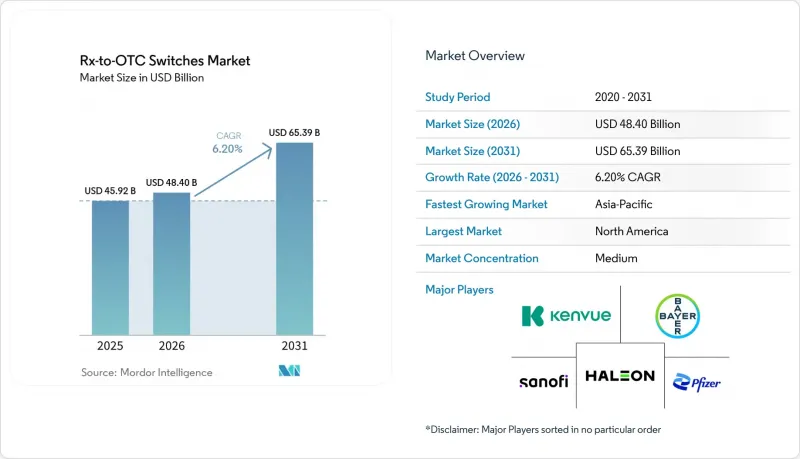
본 보고서는 제품 유형(알레르기·호흡기 제품, 위장약, 통증 관리 제품 등), 전환 유형(완전 전환, 부분 전환, 카운터 뒤 판매), 제형(정제 및 캡슐,비강 스프레이 등), 유통 채널(소매 약국, 슈퍼마켓 및 하이퍼마켓 등), 지역(북미, 유럽 등)별로 분류되어 있습니다. 예측치는 금액(달러)으로 표시되어 있습니다.
세계의 Rx-to-OTC 전환 시장 동향 및 인사이트
편의성이 높은 자가 관리에 대한 소비자 수요
자기 주도형 건강 관리에 대한 소비자의 선호는 이제 경미한 불편감에 그치지 않습니다. 사람들은 의사의 진료를 받거나 약국에서 대기 시간을 보내지 않고도 일상적인 증상을 해결할 수 있는 제품을 찾는 경우가 점점 늘고 있습니다. 소비자가 자신의 증상을 인식하고 이용 가능한 치료 옵션을 이해함에 따라, Rx-to-OTC 전환 시장은 혜택을 보게 됩니다. 한편, 유사한 제품이라 하더라도 유효 성분의 농도, 주의사항, 복용 방법이 다를 경우, 선택의 폭이 넓다는 점이 오히려 혼란을 초래할 수도 있습니다. 명확한 표시, 진열대에서의 직관적인 배치, 그리고 약사의 지원은 브랜드가 소비자의 관심을 적절한 제품 선택으로 이끌 수 있도록 돕습니다. 소비자가 약국을 방문하거나 온라인에서 상품을 선택하기 전에, 디지털 채널이 브랜드 선호도에 미치는 영향은 점점 더 커지고 있습니다.
의료비 본인 부담금 증가
의료비의 일부를 본인 부담해야 하는 소비자에게 있어 처방약의 가격 부담은 직접적인 고려 사항이 되고 있습니다. 메디케어·메디케이드 서비스 센터(CMS) 보고서에 따르면, 2024년 미국의 본인 부담금은 5.90% 증가하여 5,566억 달러에 달했습니다. 이러한 부담 증가로 인해, 소비자가 감독 없이 안전하게 관리할 수 있는 증상에 대해서는 처방약 이외의 대체품이 더 매력적으로 보일 가능성이 있습니다. 따라서 Rx-to-OTC 전환 시장은 처방약 비용이 높거나 보험 적용이 불안정한 카테고리에서 더 폭넓은 잠재 사용자층을 보유하고 있습니다. 다만, 후원 기업은 전환된 제품이 기존의 처방 환경 밖에서도 적절하게 선택·사용될 수 있음을 여전히 입증해야 합니다. 비용 절감만으로는 적절한 표시, 소비자 조사 및 지속적인 안전성 모니터링의 필요성이 사라지는 것은 아닙니다.
소비자의 오용 및 자가 선택 위험
처방전이 필요 없는 의약품에 대한 접근성이 확대됨에 따라, 소비자가 금기 사항이나 경고 신호를 인식하지 못할 경우 안전상의 우려가 발생할 수 있습니다. 세계보건기구(WHO)는 전 세계적으로 의약품의 절반 이상이 부적절하게 처방, 조제 또는 판매되고 있다고 밝혔습니다. 이러한 우려는 처방전 의약품(Rx)에서 일반의약품(OTC)으로 전환되는 시장에도 적용됩니다. 왜냐하면 특정 제품이 대다수의 소비자에게는 적합할지라도, 특정 집단에게는 안전하지 않을 가능성이 있기 때문입니다. 건강 문해력, 조언에 대한 접근성 또는 의약품 안전성 모니터링 시스템이 제한적인 경우, 그 위험은 더욱 커집니다. 신청자는 표시 내용에 대한 이해도에 관한 확실한 증거, 소비자의 자기 선택에 관한 연구, 그리고 시판 후 모니터링 계획을 제시해야 합니다. 어느 한 항목에서 미비한 점이 있다면, 심사 중인 유사 제품에 대한 규제 당국의 신중한 태도에도 영향을 미칠 수 있습니다.
부문 분석
2025년 기준으로, 알레르기 및 호흡기 계통 제품은 제품 유형별 매출의 24.56%를 차지하며, 처방약에서 일반의약품으로 전환되는 시장에서 가장 큰 점유율을 차지했습니다. 이 범주에는 소비자에게 잘 알려진 증상에 일반적으로 사용되는 항히스타민제, 비강 내 코르티코스테로이드 및 점안용 항히스타민제가 포함됩니다. 이러한 역사 덕분에 확고한 브랜드 인지도가 구축되었으며, 제네릭 의약품 및 사설 브랜드 제품에 의한 광범위한 대체품이 시장에 존재합니다. 또한, 이 제품군은 계절마다 반복되는 수요와 알레르기 증상에 대한 소비자의 명확한 인식 덕분에 혜택을 보고 있습니다.
생식 및 여성 건강 관리 제품은 2031년까지 연평균 성장률(CAGR) 7.54%를 나타낼 것으로 예측되며, 이는 제품 유형 중 가장 높은 성장률입니다. 페리고(Perrigo)사의 ‘Opill’은 2024년 3월 미국 내 매장 및 온라인에서 판매가 시작되어, 미국에서 최초로 처방전 없이 판매되는 1일 1회 복용형 경구 피임약이 되었습니다. 이번 출시를 통해 소비자가 접근하기 쉬운 정보를 바탕으로 제품을 안전하게 사용할 수 있다면, 호르몬 피임법의 길이 확립되었음이 확인되었습니다. 피부과용 제품 및 진균·기타 감염증용 제품은 명확한 전환 가능성을 지닌 비교적 소규모의 카테고리였습니다.
2025년에는 완전한 Rx-to-OTC 전환이 전환형 매출의 52.43%를 차지하며, 이 분류에서 가장 큰 시장 점유율을 기록했습니다. 이러한 위치는 완전한 재분류가 일반의약품 접근의 주요 경로였던 수십 년간의 역사를 반영하고 있습니다. 알레르기, 위장, 통증 각 카테고리의 확고한 제품들이 완전한 전환을 통한 매출의 견고한 기반을 마련해 왔습니다. 이러한 제품들의 경위는 후원사가 관련 제품에 대한 소비자 행동, 표시 요건 및 안전성 관련 과제를 이해하는 데 도움이 됩니다.
‘카운터 뒤 전환(Behind-the-Counter Switch)’은 2031년까지 연평균 성장률(CAGR) 6.78%로 확대될 것으로 예측됩니다. ‘비처방약 사용을 위한 추가 조건(Additional Condition for Nonprescription Use)’ 규정은 표시 정보만으로는 안전한 자가 선택이 보장되지 않는 경우, 이 모델을 뒷받침하는 것입니다. 약사의 설문조사나 디지털 선별 과정을 통해 제품에 접근하는 데 필요한 추가적인 안전 조치를 제공할 수 있습니다. 이러한 방식을 통해 선택에 대한 통제력을 유지하면서도 일반적인 처방 절차를 거치지 않고 소비자에게 제품을 전달할 수 있게 됩니다.
지역별 분석
2025년, 북미는 전 세계 Rx-to-OTC 전환 시장 매출의 39.67%를 차지하며, 지역별로는 가장 큰 기여를 한 지역이 되었습니다. 이 지역은 전환 사례에 대한 오랜 실적을 보유하고 있으며, 소비자용 헬스케어 제품을 위한 잘 갖춰진 소매 생태계를 갖추고 있습니다. 2025년, 미국 소비자들은 일반의약품에 582억 달러를 지출했습니다. 2024년 3월 페리고(Perigo)사가 ‘오필(Opill)’을 소매 시장에 출시한 것은 경구 피임약 접근성 측면에서 새로운 선례를 확립했습니다. 유럽은 각국 규제 당국이 확립된 심사 절차를 유지하고 있기 때문에 Rx-to-OTC 전환 시장에서 큰 점유율을 차지하고 있습니다.
아시아태평양은 2031년까지 연평균 성장률(CAGR) 7.45%를 나타낼 것으로 예측되며, 이는 Rx-to-OTC 전환 시장에서 지역별 최고 성장률입니다. 중국은 약국 네트워크, 도시 지역 확대, 전자상거래의 확산을 통해 이 지역의 기반을 뒷받침하고 있습니다. 인도에서는 조직화된 소매업, 제네릭 의약품 접근 프로그램, 스마트폰을 활용한 약국 서비스가 소비자의 일반의약품 구매 방식을 변화시키고 있어 성장 가능성이 있습니다.
기타 혜택 :
- 엑셀 형식 시장 예측(ME) 시트
- 3개월간 애널리스트 지원
자주 묻는 질문
목차
제1장 서론
제2장 조사 방법
제3장 주요 요약
제4장 시장 구도
제5장 시장 규모 및 성장 예측
제6장 경쟁 구도
제7장 시장 기회 및 향후 전망
KTH 26.09.10According to Mordor Intelligence, the rx-to-OTC switches market size was valued at USD 45.92 billion in 2025 and is estimated to grow from USD 48.40 billion in 2026 to reach USD 65.39 billion by 2031, at a CAGR of 6.20% during the forecast period (2026-2031).
This report is Segmented by Product Type (Allergy and Respiratory Products, Gastrointestinal Drugs, Pain Management Products, and More), Switch Type (Full, Partial, Behind-The-Counter), Dosage Form (Tablets and Capsules, Nasal Sprays, and More), Distribution Channel (Retail Pharmacies, Supermarkets and Hypermarkets and More), and Geography (North America, Europe, and More). Forecasts are Provided in Value (USD).
Global Rx-to-OTC Switches Market Trends and Insights
Consumer Demand for Convenient Self-Care
Consumer preference for self-directed health management now extends beyond minor ailments. People often seek products that can address familiar symptoms without an appointment or a delay at the pharmacy. The Rx-to-OTC Switches Market benefits when consumers recognize a condition and understand the available treatment choices. Choice can also create confusion when similar products present different strengths, warnings, and administration instructions. Clear labeling, shelf navigation, and pharmacist support can help brands convert interest into appropriate selection. Digital channels increasingly influence brand preference before consumers visit a pharmacy or select an item online.
Rising Out-of-Pocket Healthcare Costs
Prescription affordability has become a direct consideration for consumers who must pay part of the cost of care. The Centers for Medicare & Medicaid Services reported that U.S. out-of-pocket spending increased 5.90% to USD 556.60 billion in 2024. This pressure can make nonprescription alternatives more attractive for conditions that consumers can manage safely without supervision. The Rx-to-OTC switches market, therefore, has a broader potential user base in categories with high prescription costs or inconsistent coverage. Sponsors must still show that a switched product can be selected and used correctly outside a traditional prescribing setting. Cost savings alone do not remove the need for appropriate labeling, consumer studies, and ongoing safety oversight.
Consumer Misuse and Self-Selection Risk
Wider nonprescription access can create safety concerns when consumers do not recognize contraindications or warning signs. The World Health Organization has stated that more than half of medicines are prescribed, dispensed, or sold inappropriately worldwide. This concern is relevant to the Rx-to-OTC switches market because a product may be appropriate for many consumers but unsafe for particular groups. The risk is greater where health literacy, access to advice, or pharmacovigilance systems are limited. Sponsors need strong label-comprehension evidence, consumer self-selection studies, and post-market monitoring plans. A failure in one category can also influence regulatory caution toward similar products that are under review.
Other drivers and restraints analyzed in the detailed report include:
- Regulatory Precedents for Safe Switches
- Digital Self-Selection Under Additional Conditions
- High Cost and Long Duration of Switch Programs
For complete list of drivers and restraints, kindly check the Table Of Contents.
Segment Analysis
Allergy and Respiratory Products held 24.56% of product-type revenue in 2025, giving the category the leading share of the Rx-to-OTC switches Market size. The category includes antihistamines, intranasal corticosteroids, and ocular antihistamines that consumers commonly use for familiar symptoms. This history has created established brand awareness and a wide base of generic and store-brand alternatives. The product group also benefits from recurring seasonal demand and clear consumer recognition of allergy symptoms.
Reproductive and Women's Health Products are forecast to grow at a 7.54% CAGR through 2031, the fastest rate within product types. Perrigo's Opill became available in U.S. stores and online in March 2024 as the first daily oral contraceptive sold without a prescription in the United States. The launch confirmed a pathway for hormonal contraception when consumers can use the product safely with accessible information. Dermatology Products and Fungal and Other Infection Products represented smaller categories with defined switch potential.
Full Rx-to-OTC Switch accounted for 52.43% of switch-type revenue in 2025, representing the largest Rx-to-OTC Switches Market share within this classification. This position reflects decades in which a complete reclassification was the primary route to nonprescription access. Established products in allergy, gastrointestinal, and pain categories have created a substantial base of full-switch revenue. Their history can help sponsors understand consumer behavior, label needs, and safety questions for related products.
Behind-the-Counter Switch is forecast to expand at a 6.78% CAGR through 2031. The Additional Condition for Nonprescription Use rule supports this model when a label alone cannot ensure safe self-selection. A pharmacist questionnaire or a digital screening process can provide the extra safeguard needed for access. This route allows products to reach consumers without the normal prescription transaction while keeping controls around selection.
Complete Report Scope:
- By Product Type
- Allergy and Respiratory Products
- Gastrointestinal Drugs
- Pain Management Products
- Reproductive and Women's Health Products
- Dermatology Products
- Fungal and Other Infection Products
- Others (Smoking Cessation and Addiction Products, etc.)
- By Switch Type
- Full Rx-to-OTC Switch
- Partial Rx-to-OTC Switch
- Behind-the-Counter Switch
- By Dosage Form
- Tablets and Capsules
- Nasal Sprays
- Ophthalmic Drops
- Topical Solutions, Creams and Gels
- Transdermal Patches
- By Distribution Channel
- Retail Pharmacies
- Online Pharmacies and E-Commerce
- Supermarkets and Hypermarkets
- Others (Health and Wellness Stores, Institutional/Healthcare Channels)
- By Geography
- North America
- United States
- Canada
- Mexico
- Europe
- Germany
- United Kingdom
- France
- Italy
- Spain
- Rest of Europe
- Asia-Pacific
- China
- India
- Japan
- Australia
- South Korea
- Rest of Asia-Pacific
- Middle East and Africa
- GCC
- South Africa
- Rest of Middle East and Africa
- South America
- Brazil
- Argentina
- Rest of South America
- North America
Geography Analysis
North America held 39.67% of the global Rx-to-OTC switches market revenue in 2025, making it the largest regional contributor. The region has a long record of documented switches and a substantial retail ecosystem for consumer health products. U.S. consumers spent USD 58.20 billion on over-the-counter healthcare products in 2025. Perrigo's Opill retail launch in March 2024 established a new precedent for oral contraceptive access. Europe represented a substantial share of the Rx-to-OTC switches market because national regulators maintain established review processes.
Asia-Pacific is forecast to grow at a 7.45% CAGR through 2031, the highest regional rate in the Rx-to-OTC switches market. China supports the regional base through pharmacy networks, urban expansion, and e-commerce penetration. India has growth potential as organized retail, generic medicine access programs, and smartphone-based pharmacy services change how consumers buy nonprescription products.
- Abbott Laboratories
- Alcon
- AstraZeneca
- Bausch + Lomb Corporation
- Bayer
- Boehringer Ingelheim
- Haleon plc
- Kenvue Inc.
- Merck
- Novartis
- Perrigo Company
- Pfizer
- Prestige Consumer Healthcare
- Procter & Gamble
- Reckitt Benckiser Group
- Sandoz Group AG
- Sanofi
- Takeda Pharmaceuticals
- Teva Pharmaceutical Industries
- Viatris
Additional Benefits:
- The market estimate (ME) sheet in Excel format
- 3 months of analyst support
TABLE OF CONTENTS
1 Introduction
- 1.1 Study Assumptions & Market Definition
- 1.2 Scope of the Study
2 Research Methodology
3 Executive Summary
4 Market Landscape
- 4.1 Market Overview
- 4.2 Market Drivers
- 4.2.1 Consumer Demand for Convenient Self-Care
- 4.2.2 Rising Out-of-Pocket Healthcare Costs
- 4.2.3 Regulatory Precedents for Safe Switches
- 4.2.4 Digital Self-Selection Under Additional Conditions for Nonprescription Use
- 4.2.5 Patent Expiry and Pharmaceutical Lifecycle Optimization
- 4.2.6 Retail and E-Pharmacy Shelf Expansion
- 4.3 Market Restraints
- 4.3.1 Consumer Misuse and Self-Selection Risk
- 4.3.2 High Cost and Long Duration of Switch Programs
- 4.3.3 Brand and Generic Price Erosion After Switch
- 4.3.4 Digital Additional-Condition Infrastructure and Post-Market Governance Burden
- 4.4 Supply-Chain Analysis
- 4.5 Regulatory Landscape
- 4.6 Technological Outlook
- 4.7 Porter's Five Forces Analysis
- 4.7.1 Threat of New Entrants
- 4.7.2 Bargaining Power of Suppliers
- 4.7.3 Bargaining Power of Buyers
- 4.7.4 Threat of Substitutes
- 4.7.5 Industry Rivalry
5 Market Size & Growth Forecasts (Value, USD)
- 5.1 By Product Type
- 5.1.1 Allergy and Respiratory Products
- 5.1.2 Gastrointestinal Drugs
- 5.1.3 Pain Management Products
- 5.1.4 Reproductive and Women's Health Products
- 5.1.5 Dermatology Products
- 5.1.6 Fungal and Other Infection Products
- 5.1.7 Others (Smoking Cessation and Addiction Products, etc.)
- 5.2 By Switch Type
- 5.2.1 Full Rx-to-OTC Switch
- 5.2.2 Partial Rx-to-OTC Switch
- 5.2.3 Behind-the-Counter Switch
- 5.3 By Dosage Form
- 5.3.1 Tablets and Capsules
- 5.3.2 Nasal Sprays
- 5.3.3 Ophthalmic Drops
- 5.3.4 Topical Solutions, Creams and Gels
- 5.3.5 Transdermal Patches
- 5.4 By Distribution Channel
- 5.4.1 Retail Pharmacies
- 5.4.2 Online Pharmacies and E-Commerce
- 5.4.3 Supermarkets and Hypermarkets
- 5.4.4 Others (Health and Wellness Stores, Institutional/Healthcare Channels)
- 5.5 By Geography
- 5.5.1 North America
- 5.5.1.1 United States
- 5.5.1.2 Canada
- 5.5.1.3 Mexico
- 5.5.2 Europe
- 5.5.2.1 Germany
- 5.5.2.2 United Kingdom
- 5.5.2.3 France
- 5.5.2.4 Italy
- 5.5.2.5 Spain
- 5.5.2.6 Rest of Europe
- 5.5.3 Asia-Pacific
- 5.5.3.1 China
- 5.5.3.2 India
- 5.5.3.3 Japan
- 5.5.3.4 Australia
- 5.5.3.5 South Korea
- 5.5.3.6 Rest of Asia-Pacific
- 5.5.4 Middle East and Africa
- 5.5.4.1 GCC
- 5.5.4.2 South Africa
- 5.5.4.3 Rest of Middle East and Africa
- 5.5.5 South America
- 5.5.5.1 Brazil
- 5.5.5.2 Argentina
- 5.5.5.3 Rest of South America
- 5.5.1 North America
6 Competitive Landscape
- 6.1 Market Concentration
- 6.2 Market Share Analysis
- 6.3 Company Profiles {(includes Global level Overview, Market level overview, Core Segments, Financials as available, Strategic Information, Market Rank/Share for key companies, Products & Services, and Recent Developments)}
- 6.3.1 Abbott Laboratories
- 6.3.2 Alcon Inc.
- 6.3.3 AstraZeneca plc
- 6.3.4 Bausch + Lomb Corporation
- 6.3.5 Bayer AG
- 6.3.6 Boehringer Ingelheim International GmbH
- 6.3.7 Haleon plc
- 6.3.8 Kenvue Inc.
- 6.3.9 Merck & Co., Inc.
- 6.3.10 Novartis AG
- 6.3.11 Perrigo Company plc
- 6.3.12 Pfizer Inc.
- 6.3.13 Prestige Consumer Healthcare Inc.
- 6.3.14 Procter & Gamble Company
- 6.3.15 Reckitt Benckiser Group plc
- 6.3.16 Sandoz Group AG
- 6.3.17 Sanofi
- 6.3.18 Takeda Pharmaceutical Company Limited
- 6.3.19 Teva Pharmaceutical Industries Ltd.
- 6.3.20 Viatris Inc.
7 Market Opportunities & Future Outlook
- 7.1 White-space & unmet-need assessment