

|
시장보고서
상품코드
2119895
보안 카메라 : 시장 점유율 분석, 업계 동향과 통계, 성장 예측(2026-2031년)Security Camera - Market Share Analysis, Industry Trends & Statistics, Growth Forecasts (2026 - 2031) |
||||||
 Mordor Intelligence
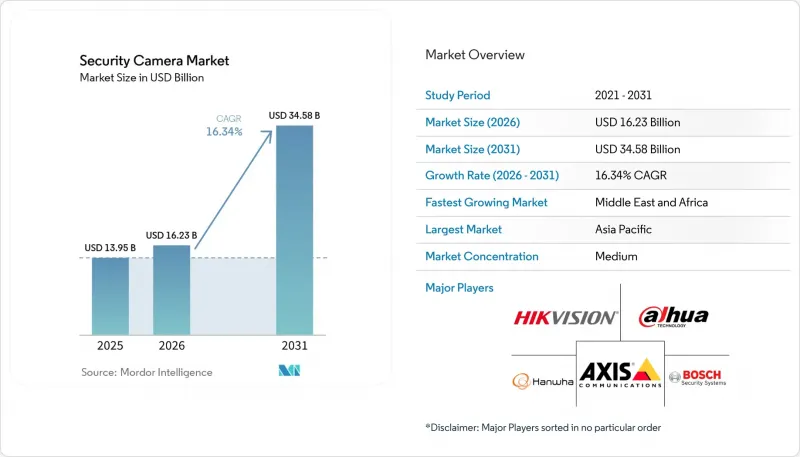
Mordor Intelligence에 따르면 보안 카메라 시장 규모는 2025년에 139억 5,000만 달러로 평가되며, 2026년 162억 3,000만 달러에서 2031년까지 345억 8,000만 달러에 달할 것으로 예측되고 있으며, 예측 기간(2026-2031년) 연평균 성장률(CAGR)은 16.34%에 달할 전망입니다.
이 보고서는 기술별(아날로그, IP, 무선, 하이브리드), 카메라 형태별(배럿형, 돔형, PTZ, 박스형 등), 해상도별(표준 화질, HD 등), 설치 장소별(실내, 실외 등),연결·전원별(유선, Wi-Fi, 이동통신망), 최종사용자 산업별(은행, 운송 등) 및 지역별로 분류되어 있습니다. 시장 전망은 금액(달러) 기준으로 제시되어 있습니다.
전 세계 보안 카메라 시장의 동향 및 인사이트
아시아 스마트 시티에서 위협을 선제적으로 탐지하기 위한 AI 탑재 분석 기능에 대한 수요
아시아의 지자체에서는 매일 수천만 장의 얼굴 이미지를 처리하는 예측형 영상 알고리즘을 도입하고 있으며, 이를 통해 유인 감시의 필요성을 줄이고 사건의 자동 우선순위 지정을 가능하게 하고 있습니다. 적층형 CMOS 센서를 탑재한 실시간 고동적 범위(HDR) 영상 기술 덕분에 조명 조건이나 인파 밀도가 변화하는 상황에서도 정확도가 향상되고 있습니다. 지역별 프로그램에서는 감시 데이터를 디지털 트윈 도시 플랫폼에 통합함으로써 긴급 대응 협력 및 공공 서비스 계획 수립을 강화하고 있습니다. 개인정보를 보호하는 온프레미스형 분석 프레임워크는 높아지는 데이터 주권 요구에 부응하며, 규제 준수를 유지하고 있습니다.
EU의 NIS2 및 CER 지침에 기반한 아날로그 카메라에서 IP 카메라로의 정부 주도 전환
유럽의 새로운 사이버 복원력 규정에서는 암호화된 영상 전송, 펌웨어 감사 추적, 네트워크 세분화가 의무화되어 있으며, 이는 기존의 아날로그 하드웨어로는 충족할 수 없는 기준입니다. 그 결과, 사업자들은 2027년까지 도입 대수의 최대 40%를 교체하고 있으며, NDAA를 준수하는 보안 강화형 IP 장치를 제공하는 벤더를 우선적으로 선택하고 있습니다. 예산 재분배에는 수명주기 전반에 걸친 사이버 보안 서비스와 직원 역량 강화가 포함되어 있으며, 이로 인해 총 소유 비용(TCO) 모델이 재구성되면서 사전 인증된 솔루션을 제공하는 유럽 제조업체에 대한 수요가 증가하고 있습니다.
NDAA 및 EU의 제재 조치로 인한 중국 OEM에 대한 장벽이 도입 주기를 지연시키고 있습니다.
원산지 추적성 요건이 강화됨에 따라 구매자가 부품 공급망을 검증해야 할 필요성이 대두되어 조달 리드타임이 3-6개월 길어졌습니다. 규제 대상 공급업체는 연방 정부 및 중요 인프라 입찰에서 철수하는 반면, 규정을 준수하는 제조업체는 프리미엄 가격을 책정하여 프로젝트 예산에 압박을 가하는 한편, 승인된 공급업체에게는 더 높은 매출 총이익률을 가져다주고 있습니다.
부문 분석
IP 도입에 따른 보안 카메라 시장 규모는 2025년 매출의 64.68%를 차지하며, 네트워크 중심의 영상 프레임워크로의 결정적인 전환을 부각시키고 있습니다. 설치 업체들이 케이블이 필요 없는 개조 공사 및 스마트 빌딩과의 호환성을 높이 평가함에 따라 무선 장비는 16.78%라는 가장 높은 연평균 성장률(CAGR)을 기록하고 있습니다. 비용을 중시하는 시설에서는 아날로그 기기가 여전히 사용되고 있지만, 하이브리드 브리지가 단계적인 전환 전략을 지원하고 있습니다. Wi-Fi 카메라에 내장된 엣지 AI는 저조도 환경에서의 선명도와 응답 지연 측면에서 유선 기종에 필적할 수 있게 되어, 적용 가능한 사용 사례를 확대하고 있습니다.
강화된 5G 백홀을 통해 실시간 4K 스트리밍이 가능해졌으며, 디바이스 상의 추론 처리가 클라우드의 계산 부하를 경감시키고 있습니다. 각 벤더는 제로 트러스트 펌웨어, 자동 인증서 로테이션, 그리고 벤더 종속성 위험을 억제하는 오픈 API 통합을 통해 차별화를 꾀하고 있습니다. 그 결과, 팝업 매장, 일시적인 행사, 분산형 지점 네트워크에서 무선 기기는 보조적인 역할에서 주요 커버리지 역할로 전환되고 있으며, 보안 카메라 시장의 판매 대수 전망이 밝아지고 있습니다.
2025년 보안 카메라 시장 매출 중 상업 및 인프라 환경이 36.54%를 차지하고 있으며, 이는 은행, 교통 기관, 정부 기관의 엄격한 규정 준수 요건을 반영한 것입니다. 주거용 스마트홈 보급률은 연평균 성장률(CAGR) 17.55%로 확대되고 있으며, 이는 보험사가 인증된 영상 장비에 대해 보험료 할인을 적용하고 있고, 주택 소유자가 통합형 홈 오토메이션 제어 허브를 활용하고 있는 것이 배경입니다. 의료 분야에서의 보급은 견고한 사이버 보안 관리의 실적이 입증되어야 하므로 여전히 신중한 태도가 이어지고 있으나, 소매 체인에서는 진열대 분석과 방범 영상을 결합하여 상품 진열을 최적화하고 있습니다.
도어벨 단말기는 양방향 음성 기능과 택배 추적 기능을 결합하여 보안 이상의 부가가치를 제공하며, 주택 분야에서의 성장세를 상징하고 있습니다. 교육 기관에서는 구역별 감시 및 옵트인형 분석 스위트를 통해 안전성과 학생의 사생활 보호 간의 균형을 맞추고 있습니다. 산업 플랜트에서는 보안과 생산 라인 검사를 통합된 카메라 네트워크에 결합하여 자본 생산성을 극대화하고 있습니다. 이러한 동향들이 맞물려 보안 카메라 시장의 지속적인 다각화를 지원하고 있습니다.
지역별 분석
아시아태평양은 대규모 스마트 시티 구축, 견고한 제조 생태계, 그리고 지속적인 공공안전에 대한 자금 투자를 바탕으로 2025년 보안 카메라 시장 매출의 41.92%를 차지했습니다. 상하이의 최신 도입 사례에서는 현재 하루 2,500만 건 이상의 얼굴 인식 기록을 처리하고 있으며, 이는 그 규모와 데이터 분석의 고도화를 모두 보여주고 있습니다. 일본과 한국은 센서의 소형화 및 엣지 추론 분야에서 선구적인 역할을 하고 있는 반면, 인도의 도시 현대화 계획은 비용 효율성이 뛰어나면서도 AI를 지원하는 기기에 대한 수요를 확대하고 있습니다.
중동 지역은 2031년까지 연평균 성장률(CAGR) 15.24%를 기록하며 가장 높은 성장률을 보일 것으로 예측됩니다. 사우디아라비아의 ‘NEOM’이나 두바이의 ‘엑스포 시티’와 같은 프로젝트에서는 차량 번호판 인식, 군중 분석, 환경 모니터링을 통합한 멀티 센서 그리드가 도입되고 있습니다. 정부의 아낌없는 자금 지원과 복원력 확보를 위한 의무화로 인해 시스템 사양이 향상되었으며, 5G를 지원하고 AI가 통합된 카메라의 조기 도입이 촉진되고 있습니다.
북미에서는 NDAA(국방수권법)에 준거한 재고 및 클라우드 전환을 중심으로 한 꾸준한 업데이트 수요가 나타나고 있습니다. 기업은 벤더 리스트을 재검토하고 있으며, 중소기업 부문에서는 예산 최적화를 위해 VSaaS로의 전환이 진행되고 있습니다. 유럽에서는 NIS2 및 CER 지침에 기반한 규제 주도형 업데이트 주기가 두드러지며, 암호화되고 펌웨어에 디지털 서명이 적용된 IP 하드웨어에 대한 선호도가 높아지고 있습니다. 남미의 도시 지역에서는 급증하는 조직 범죄에 대응하기 위해 영상 분석이 도입되고 있으며, 한편으로는 사이버 공격이 빈번해짐에 따라 클라우드로의 노출을 최소화하기 위한 엣지 처리 방식 도입에 대한 관심이 높아지고 있습니다.
기타 혜택:
- 엑셀 형식의 시장 예측(ME) 시트
- 3개월간의 애널리스트 지원
자주 묻는 질문
목차
제1장 서론
제2장 조사 방법
제3장 개요
제4장 시장 구도
제5장 시장 규모와 성장 예측
제6장 경쟁 구도
제7장 시장 기회와 향후 전망
KSA 26.09.02According to Mordor Intelligence, the security camera market size was valued at USD 13.95 billion in 2025 and estimated to grow from USD 16.23 billion in 2026 to reach USD 34.58 billion by 2031, at a CAGR of 16.34% during the forecast period (2026-2031).
This report is Segmented by Technology (Analog, IP, Wireless, Hybrid), Camera Form Factor (Bullet, Dome, PTZ, Box, and More), Resolution (Standard Definition, HD, and More), Deployment Location (Indoor, Outdoor, and More), Connectivity/Power (Wired, Wi-Fi, Cellular), End-User Industry (Banking, Transportation, and More), and Geography. The Market Forecasts are Provided in Terms of Value (USD).
Global Security Camera Market Trends and Insights
AI-enabled Analytics Demand for Proactive Threat Detection in Asian Smart Cities
Asian municipalities deploy predictive video algorithms that process tens of millions of facial images daily, reducing manned-monitoring requirements and enabling automated incident triage. Real-time high-dynamic-range imaging, powered by stacked CMOS sensors, enhances accuracy across variable lighting and crowd densities. Regional programs integrate surveillance data into digital-twin city platforms, strengthening emergency response coordination and public-service planning. Privacy-preserving, on-premise analytics frameworks answer rising data-sovereignty demands and maintain regulatory alignment.
Government-Mandated Migration from Analog to IP Cameras under EU NIS2 and CER Directives
New European cyber-resilience rules oblige encrypted video transport, firmware audit trails, and network segmentation - standards legacy analog hardware cannot satisfy. Operators are consequently replacing up to 40% of installed bases by 2027, favoring vendors offering NDAA-compliant, security-hardened IP devices. Budget re-allocations include lifecycle cybersecurity services and staff up-skilling, reshaping total ownership cost models and boosting demand for European manufacturers that ship pre-certified solutions.
NDAA and EU Sanction Barriers on Chinese OEMs Slowing Deployment Cycles
Heightened origin-traceability requirements lengthen procurement lead times by 3-6 months as buyers validate component supply chains. Restricted vendors exit federal and critical-infrastructure tenders, while compliant manufacturers command premium prices, pressuring project budgets but unlocking higher gross margins for approved suppliers.
Other drivers and restraints analyzed in the detailed report include:
- Subscription Uptake of VSaaS among U.S. SMEs Shifting to OPEX Security Budgets
- Retail Shrinkage Crisis Accelerating Video Analytics in South-American Supermarkets
- 4K Image-Sensor Shortages Constraining Premium Camera Supply Chains
For complete list of drivers and restraints, kindly check the Table Of Contents.
Segment Analysis
The security camera market size for IP deployments represented 64.68% of 2025 revenue, underlining a decisive shift toward network-centric video frameworks. Wireless units register the fastest 16.78% CAGR as installers appreciate cable-free retrofits and smart-building compatibility. Declining analog estates linger in cost-sensitive sites, while hybrid bridges support phased migration strategies. Edge-embedded AI on Wi-Fi cameras now rivals wired counterparts in low-light clarity and response latency, enlarging addressable use cases.
Enhanced 5G backhaul empowers real-time 4K streams, and on-device inference offloads cloud compute demands. Vendors differentiate through zero-trust firmware, automatic certificate rotation, and open API integration that curbs vendor lock-in risk. As a result, wireless devices shift from auxiliary to primary coverage roles in pop-up retail, temporary events, and distributed branch networks, strengthening volume prospects for the security camera market.
Commercial and infrastructure environments held 36.54% of 2025 revenue within the security camera market share, reflecting stringent compliance needs in banking, transit, and government applications. Residential smart-home uptake is expanding at 17.55% CAGR as insurers underwrite premium discounts for verified video devices, and homeowners leverage unified home-automation control hubs. Healthcare uptake remains cautious pending robust cyber-hygiene proof points, whereas retail chains couple shelf-analytics with loss-prevention video streams to sharpen merchandising.
Doorbell units symbolise residential momentum, combining two-way audio and parcel-tracking features that extend perceived value beyond security. Educational campuses balance safety with student privacy through zoned monitoring and opt-in analytics suites. Industrial plants merge security and production-line inspection into consolidated camera grids, maximizing capital productivity. Collectively, these trends reinforce sustained diversification within the security camera market.
Complete Report Scope:
- By Technology
- Analog Cameras
- IP Cameras
- Wireless Cameras
- Hybrid Cameras
- By Camera Form Factor
- Bullet Cameras
- Dome Cameras
- PTZ Cameras
- Box Cameras
- Panoramic / Multi-sensor Cameras
- Doorbell Cameras
- Others
- By Resolution
- Standard Definition (<720p)
- HD (720p-1080p)
- Full-HD (2 MP)
- 4K & Above
- By Deployment Location
- Indoor
- Outdoor
- Vehicle-mounted / Mobile
- By Connectivity / Power
- Wired (Coax / PoE)
- Wi-Fi
- Cellular (4G / 5G)
- By End-User Industry
- Banking and Financial Institutions
- Transportation and Infrastructure
- Government and Defense
- Healthcare Facilities
- Industrial and Manufacturing
- Retail and Malls
- Enterprises and Commercial Buildings
- Residential / Smart Homes
- Education Campuses
- Hospitality and Leisure
- Others
- By Geography
- North America
- United States
- Canada
- Mexico
- South America
- Brazil
- Argentina
- Rest of South America
- Europe
- United Kingdom
- Germany
- France
- Italy
- Spain
- Nordics (Denmark, Sweden, Norway)
- Rest of Europe
- Asia Pacific
- China
- Japan
- India
- South Korea
- ASEAN
- Australia
- New Zealand
- Rest of Asia Pacific
- Middle East and Africa
- Middle East
- GCC
- Turkey
- Israel
- Rest of Middle East
- Africa
- South Africa
- Nigeria
- Egypt
- Rest of Africa
- Middle East
- North America
Geography Analysis
Asia Pacific commanded 41.92% of 2025 revenue within the security camera market, supported by large-scale smart-city rollouts, strong manufacturing ecosystems, and sustained public-safety funding. Shanghai's latest deployment now processes over 25 million facial records daily, illustrating both scale and data-analytics sophistication. Japan and South Korea pioneer sensor miniaturization and edge inference, while India's urban-modernization schemes amplify demand for cost-efficient yet AI-ready devices.
The Middle East is forecast to post the fastest 15.24% CAGR through 2031. Projects such as Saudi Arabia's NEOM and Dubai's Expo City embed multi-sensor grids that integrate license-plate recognition, crowd analytics, and environmental monitoring. Generous government funding and mandates for resilience elevate system specifications, fostering early adoption of 5G-enabled, AI-embedded cameras.
North America exhibits steady replacement demand centered on NDAA-compliant inventories and cloud migration. Enterprises recalibrate vendor rosters, and small-business segments pivot toward VSaaS for budgetary alignment. Europe stands out for regulatory-driven refresh cycles under NIS2 and CER directives, intensifying preference for encrypted, firmware-signed IP hardware. South America's urban centers implement video analytics to counter soaring organized crime, while cyber-attack prevalence spurs interest in edge-processed deployments to minimize cloud exposure.
- Hangzhou Hikvision Digital Technology Co., Ltd.
- Dahua Technology Co., Ltd.
- Axis Communications AB
- Bosch Security Systems GmbH
- Hanwha Vision (Hanwha Group)
- Avigilon Corporation (Motorola Solutions)
- Johnson Controls - Tyco
- Uniview Technologies Co., Ltd.
- Vivotek Inc. (Delta Group)
- Lorex Corporation
- Pelco (Motorola Solutions Inc.)
- Honeywell Security (Honeywell International Inc.)
- Sony Group Corporation
- Panasonic Holdings Corporation
- CP PLUS GmbH & Co. KG
- FLIR Systems (Teledyne)
- Verkada Inc.
- Eagle Eye Networks Inc.
- Milestone Systems A/S
- Genetec Inc.
Additional Benefits:
- The market estimate (ME) sheet in Excel format
- 3 months of analyst support
TABLE OF CONTENTS
1 INTRODUCTION
- 1.1 Study Assumptions and Market Definition
- 1.2 Scope of the Study
2 RESEARCH METHODOLOGY
3 EXECUTIVE SUMMARY
4 MARKET LANDSCAPE
- 4.1 Market Overview
- 4.2 Market Drivers
- 4.2.1 AI-enabled Analytics Demand for Proactive Threat Detection in Asian Smart Cities
- 4.2.2 Government-Mandated Migration from Analog to IP Cameras under EU NIS2 and CER Directives
- 4.2.3 Subscription Uptake of VSaaS among U.S. SMEs Shifting to OPEX Security Budgets
- 4.2.4 Retail Shrinkage Crisis Accelerating Video Analytics in South-American Supermarkets
- 4.2.5 Multi-sensor Camera Adoption in Middle-East Mega Projects (NEOM, Expo City)
- 4.2.6 Insurance Premium Discounts Driving North-American Residential Smart Cameras
- 4.3 Market Restraints
- 4.3.1 NDAA and EU Sanction Barriers on Chinese OEMs Slowing Deployment Cycles
- 4.3.2 4K Image-Sensor Shortages Constraining Premium Camera Supply Chains
- 4.3.3 GDPR-Driven Compliance Costs for Edge Recording in Europe
- 4.3.4 Escalating IoT Cyber-attacks Deterring Cloud Deployments in Healthcare Vertical
- 4.4 Value / Supply Chain Analysis
- 4.5 Regulatory and Technological Outlook
- 4.6 Porter's Five Forces Analysis
- 4.6.1 Bargaining Power of Suppliers
- 4.6.2 Bargaining Power of Consumers
- 4.6.3 Threat of New Entrants
- 4.6.4 Threat of Substitutes
- 4.6.5 Intensity of Competitive Rivalry
5 MARKET SIZE AND GROWTH FORECASTS (VALUE)
- 5.1 By Technology
- 5.1.1 Analog Cameras
- 5.1.2 IP Cameras
- 5.1.3 Wireless Cameras
- 5.1.4 Hybrid Cameras
- 5.2 By Camera Form Factor
- 5.2.1 Bullet Cameras
- 5.2.2 Dome Cameras
- 5.2.3 PTZ Cameras
- 5.2.4 Box Cameras
- 5.2.5 Panoramic / Multi-sensor Cameras
- 5.2.6 Doorbell Cameras
- 5.2.7 Others
- 5.3 By Resolution
- 5.3.1 Standard Definition (<720p)
- 5.3.2 HD (720p-1080p)
- 5.3.3 Full-HD (2 MP)
- 5.3.4 4K & Above
- 5.4 By Deployment Location
- 5.4.1 Indoor
- 5.4.2 Outdoor
- 5.4.3 Vehicle-mounted / Mobile
- 5.5 By Connectivity / Power
- 5.5.1 Wired (Coax / PoE)
- 5.5.2 Wi-Fi
- 5.5.3 Cellular (4G / 5G)
- 5.6 By End-User Industry
- 5.6.1 Banking and Financial Institutions
- 5.6.2 Transportation and Infrastructure
- 5.6.3 Government and Defense
- 5.6.4 Healthcare Facilities
- 5.6.5 Industrial and Manufacturing
- 5.6.6 Retail and Malls
- 5.6.7 Enterprises and Commercial Buildings
- 5.6.8 Residential / Smart Homes
- 5.6.9 Education Campuses
- 5.6.10 Hospitality and Leisure
- 5.6.11 Others
- 5.7 By Geography
- 5.7.1 North America
- 5.7.1.1 United States
- 5.7.1.2 Canada
- 5.7.1.3 Mexico
- 5.7.2 South America
- 5.7.2.1 Brazil
- 5.7.2.2 Argentina
- 5.7.2.3 Rest of South America
- 5.7.3 Europe
- 5.7.3.1 United Kingdom
- 5.7.3.2 Germany
- 5.7.3.3 France
- 5.7.3.4 Italy
- 5.7.3.5 Spain
- 5.7.3.6 Nordics (Denmark, Sweden, Norway)
- 5.7.3.7 Rest of Europe
- 5.7.4 Asia Pacific
- 5.7.4.1 China
- 5.7.4.2 Japan
- 5.7.4.3 India
- 5.7.4.4 South Korea
- 5.7.4.5 ASEAN
- 5.7.4.6 Australia
- 5.7.4.7 New Zealand
- 5.7.4.8 Rest of Asia Pacific
- 5.7.5 Middle East and Africa
- 5.7.5.1 Middle East
- 5.7.5.1.1 GCC
- 5.7.5.1.2 Turkey
- 5.7.5.1.3 Israel
- 5.7.5.1.4 Rest of Middle East
- 5.7.5.2 Africa
- 5.7.5.2.1 South Africa
- 5.7.5.2.2 Nigeria
- 5.7.5.2.3 Egypt
- 5.7.5.2.4 Rest of Africa
- 5.7.5.1 Middle East
- 5.7.1 North America
6 COMPETITIVE LANDSCAPE
- 6.1 Market Concentration
- 6.2 Strategic Moves
- 6.3 Market Share Analysis
- 6.4 Company Profiles (includes Global level Overview, Market level Overview, Core Segments, Financials as available, Strategic Information, Market Rank/Share for key companies, Products & Services, and Recent Developments)
- 6.4.1 Hangzhou Hikvision Digital Technology Co., Ltd.
- 6.4.2 Dahua Technology Co., Ltd.
- 6.4.3 Axis Communications AB
- 6.4.4 Bosch Security Systems GmbH
- 6.4.5 Hanwha Vision (Hanwha Group)
- 6.4.6 Avigilon Corporation (Motorola Solutions)
- 6.4.7 Johnson Controls - Tyco
- 6.4.8 Uniview Technologies Co., Ltd.
- 6.4.9 Vivotek Inc. (Delta Group)
- 6.4.10 Lorex Corporation
- 6.4.11 Pelco (Motorola Solutions Inc.)
- 6.4.12 Honeywell Security (Honeywell International Inc.)
- 6.4.13 Sony Group Corporation
- 6.4.14 Panasonic Holdings Corporation
- 6.4.15 CP PLUS GmbH & Co. KG
- 6.4.16 FLIR Systems (Teledyne)
- 6.4.17 Verkada Inc.
- 6.4.18 Eagle Eye Networks Inc.
- 6.4.19 Milestone Systems A/S
- 6.4.20 Genetec Inc.
7 MARKET OPPORTUNITIES AND FUTURE OUTLOOK
- 7.1 White-space & Unmet-Need Assessment


