|
시장보고서
상품코드
2120316
가상현실(VR) : 시장 점유율 분석, 업계 동향 및 통계, 성장 예측(2026-2031년)Virtual Reality (VR) - Market Share Analysis, Industry Trends & Statistics, Growth Forecasts (2026 - 2031) |
||||||
 Mordor Intelligence
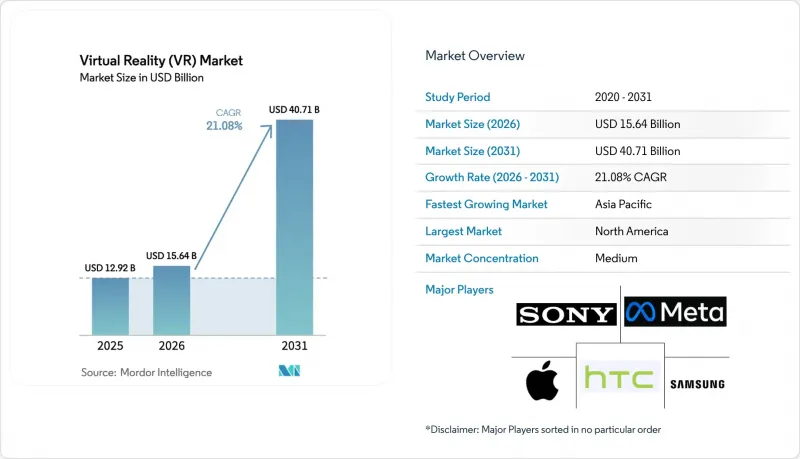
Mordor Intelligence에 의하면, 가상현실(VR) 시장 규모는 2025년에 129억 2,000만 달러로 평가되었습니다. 2026년에 156억 4,000만 달러에 달하고, 2031년까지 407억 1,000만 달러에 이를 것으로 예측되며, 2026년부터 2031년에 걸쳐 CAGR 21.08%로 성장할 전망입니다.
본 보고서는 제공 형태(하드웨어, 소프트웨어, 서비스), 기기의 폼 팩터(유선형 HMD, 독립형 HMD 등),몰입도(비몰입형, 반몰입형, 완전 몰입형), 최종 사용자 산업(게임, 미디어 및 엔터테인먼트 등), 지역(북미, 남미 등)별로 분류되어 있습니다. 시장 전망은 금액(달러) 기준으로 제시되어 있습니다.
세계의 가상현실(VR) 시장 동향 및 인사이트
기업 전반에 걸친 VR 교육 도입 확대
시뮬레이션 기반 교육은 학습 곡선을 단축하고 실무상의 실수로 인한 법적 책임을 경감하기 때문에 기업들은 몰입형 컨텐츠에 더 많은 예산을 할당하고 있습니다. 항공, 에너지, 긴급 대응 분야의 다국적 기업들은 현재 단 한 번의 실수만으로도 인명 피해나 막대한 금전적 손실로 이어질 수 있는 업무에 VR 모듈을 도입하고 있습니다. ISO 9001과 같은 국제 품질 표준에서는 VR로 기록된 역량을 실제 시연과 동등하게 인정하는 경향이 강해지고 있으며, 이를 통해 규정 준수 감사가 효율화되고 있습니다. 그러나 숙련된 3D 개발자가 여전히 부족하기 때문에 많은 조직에서 맞춤형 모듈을 제작하는 데 6-12개월의 리드 타임이 소요되고 있습니다. 이러한 컨텐츠 개발의 병목 현상으로 인해 비즈니스 타당성이 강화되고 있음에도 불구하고 성장 곡선은 완만해지고 있습니다.
혼합 현실(MR) 지원 GPU 및 SoC의 보급
각 칩 제조업체들은 주력 프로세서에 전용 VR 처리 블록을 통합하여, 과거 몰입형 기기에서 흔히 볼 수 있었던 가격 프리미엄을 해소했습니다. 애플의 M5 칩은 하드웨어 가속을 통한 포비에트 렌더링 기능을 갖추고 있어, 경량 헤드셋으로도 데스크톱급 화질을 구현하고 있습니다. 퀄컴의 스냅드래곤 XR2 Gen 2 플랫폼은 현재 500달러 미만의 독립형 기기를 구동하고 있어, 학교나 중소기업에서도 몰입형 하드웨어를 이용할 수 있게 되었습니다. 도입 비용의 감소로 인해 구매는 장기적인 IT 기기 교체 주기와 분리되어, 헤드셋은 소모품과 같은 주변 기기로 변화하고 있습니다. 주요 우려 사항은 열 관리입니다. 장시간 사용 시 여전히 아이박스 주변에 열이 축적되어 연속 사용에 제한이 발생합니다. 따라서 직장에서 더 광범위한 도입을 실현하기 위해서는 방열 및 렌즈 통기성에 대한 지속적인 기술 개발이 필수적입니다.
사이버 시크니스와 장기적인 전정계 관련 우려
시각과 전정 감각의 불일치로 인해 처음 사용하는 사용자의 25-40%에게 메스꺼움, 현기증, 눈의 피로가 발생하며, 익숙한 사용자의 15%조차 30분을 초과하는 세션 중에 불쾌감을 호소하는 경우가 있습니다. 기업은 VR에 민감한 직원을 위해 VR 이외의 대체 수단을 병행하여 유지해야 하며, 이로 인해 투자 대비 효과가 떨어지게 됩니다. 재생 빈도나 지연 시간에 관한 하드웨어 개선은 이미 한계에 도달했으며, 추가적인 성능 향상을 위해서는 현재 시점에서 아직 상업적으로 실용화되지 않은 동작 예측 알고리즘이나 약리학적 보조 수단이 필요합니다. 장기적인 전정 기능 건강에 관한 법적 책임 문제는 종단적 연구가 제한적이기 때문에 여전히 남아 있습니다. 이러한 요인들이 복합적으로 작용하여, 특히 의료 및 교육 현장에서 적극적인 도입 계획에 제동이 걸리고 있습니다.
지역별 분석
북미는 칩셋 설계 회사, 헤드셋 제조업체, 전문 컨텐츠 제작 스튜디오로 구성된 긴밀한 생태계의 지원을 받아 2025년 매출의 37.36%를 차지했습니다. 포춘 500대 제조업체, 의료 시스템 및 방위 관련 기업들은 2024년부터 2025년에 걸쳐 시범 단계에서 본격적인 도입 단계로 전환하며 VR 지표를 주요 성과 대시보드에 통합했습니다. 치료 용도에 대한 FDA 승인 및 미국 국방부의 몰입형 훈련 인프라 투자가 기관 차원 수요를 뒷받침하고 있습니다. 얼리 어답터들의 도입이 포화 상태에 도달함에 따라 성장은 둔화되고 있으며, 초점은 도입 절차 간소화와 가격 인하가 필요한 중소기업으로 이동하고 있습니다.
아시아태평양은 2026년부터 2031년에 걸쳐 연평균 성장률(CAGR) 23.49%를 기록할 전망이며, 이는 전 세계에서 가장 높은 성장률입니다. 중국, 일본, 한국, 인도에서는 첨단 제조업 분야의 숙련된 인력 부족을 해소하기 위해 VR을 활용하고 있으며, 조립 라인 교육용으로 수천 대의 헤드셋을 도입하고 있습니다. 한국에서는 5G가 널리 보급되어 있어 엣지 서버에서 워크로드를 스트리밍함으로써 헤드셋 비용을 절감하고 있습니다. 일본에서는 고령화가 진행되고 있어 후생노동성의 보조금 지원도 힘을 실어주며, 고령자 재활 분야에서의 도입이 확대되고 있습니다. 인도에서는 정부의 기술 개발 보조금과 합리적인 가격의 중국산 하드웨어를 결합하여, 전자 및 자동차 산업 클러스터에서의 교육을 확대되고 있습니다. 호주 및 뉴질랜드에서는 외딴 지역에서의 안전 훈련에 VR의 가치를 인식하는 광업·에너지 기업들의 틈새 수요가 기여하고 있습니다.
유럽, 남미, 중동 및 아프리카에서는 그 확산 상황에 편차가 보입니다. 유럽에서는 생체 인식 데이터에 관한 엄격한 GDPR(EU 개인정보보호규정) 규제로 인해 시선 추적 분석의 규정 준수 부담이 증가하고 있지만, 독일과 프랑스의 자동차 및 항공우주 업계 선도 기업들은 통제된 시설 내 도입을 여전히 추진하고 있습니다. 남미에서의 보급은 광대역 네트워크가 잘 갖춰져 교육용 VR 실험실이나 소매 쇼룸 운영을 뒷받침하고 있는 브라질과 아르헨티나의 도시 지역에 집중되어 있습니다. 아랍에미리트(UAE)와 사우디아라비아는 국가 경제 다각화 계획과 연계된 VR 관광 체험에 막대한 투자를 하고 있습니다. 아프리카 시장은 여전히 초기 단계에 있으며, 병원 부족을 보완하기 위한 기부금으로 운영되는 원격 의료 시범 사업에 중점을 두고 있습니다. 인프라의 질과 규제의 명확성이 단순한 관심 이상으로 보급 속도를 좌우하기 때문에 2031년까지 지역별 성장 곡선에는 큰 편차가 나타날 것으로 보입니다.
기타 혜택 :
- 엑셀 형식 시장 예측(ME) 시트
- 3개월간의 애널리스트 지원
자주 묻는 질문
목차
제1장 서론
제2장 조사 방법
제3장 주요 요약
제4장 시장 구도
제5장 시장 규모 및 성장 예측
제6장 경쟁 구도
제7장 시장 기회 및 향후 전망
KTH 26.09.10According to Mordor Intelligence, the virtual reality market size is projected to be USD 12.92 billion in 2025, USD 15.64 billion in 2026, and reach USD 40.71 billion by 2031, growing at a CAGR of 21.08% from 2026 to 2031.
This report is Segmented by Offering (Hardware, Software, and Services), Device Form Factor (Tethered HMD, Stand-Alone HMD, and More), Immersion Level (Non-Immersive, Semi-Immersive, and Fully-Immersive), End-User Industry (Gaming, Media and Entertainment, and More), and Geography (North America, South America, and More). The Market Forecasts are Provided in Terms of Value (USD).
Global Virtual Reality (VR) Market Trends and Insights
Rising Enterprise-Wide VR Training Adoption
Simulation-based training compresses learning curves and reduces liability from on-the-job errors, motivating corporations to allocate larger budgets to immersive content. Multinationals in aviation, energy, and emergency response now deploy VR modules for tasks where a single mistake carries high human or financial cost. International quality standards such as ISO 9001 increasingly accept VR-documented competency as equivalent to physical demonstrations, streamlining compliance audits. However, many organizations still face a six-to-twelve-month lead time to create bespoke modules because skilled 3D developers remain in short supply. These content bottlenecks moderate the growth curve even as the business case strengthens.
Mainstreaming of Mixed-Reality-Ready GPUs and SoCs
Chipmakers have embedded dedicated VR processing blocks into their flagship processors, removing the price premium once associated with immersive-capable devices. Apple's M5 chip features hardware-accelerated foveated rendering, delivering desktop-class visuals in a lightweight headset. Qualcomm's Snapdragon XR2 Gen 2 platform now powers stand-alone units priced below USD 500, placing immersive hardware within reach of schools and small businesses. Lower entry costs decouple purchases from long IT refresh cycles, turning headsets into consumable peripherals. The main concern is thermal management; extended sessions still trigger eye-box heat buildup, which limits continuous use. Continuous engineering on heat dissipation and lens ventilation is therefore essential for broader workplace adoption.
Cybersickness and Long-Term Vestibular Concerns
Visual-vestibular mismatch triggers nausea, dizziness, and eye strain in 25-40% of first-time users, with 15% of acclimated users still reporting discomfort during sessions longer than 30 minutes. Enterprises must maintain parallel non-VR pathways for sensitive employees, diluting return on investment. Hardware improvements in refresh rate and latency have reached diminishing returns, so further gains require motion-prediction algorithms or pharmacological aids not yet commercially viable. Liability questions about long-term vestibular health persist due to limited longitudinal research. These factors combine to temper aggressive rollout plans, especially in healthcare and education environments.
Other drivers and restraints analyzed in the detailed report include:
- 5G and Edge-Powered Untethered VR Streaming
- Regulatory Approvals for VR-Based Mental-Health Therapies
- Data-Privacy Compliance Costs for Eye-Tracking Analytics
For complete list of drivers and restraints, kindly check the Table Of Contents.
Geography Analysis
North America generated 37.36% of the 2025 revenue, supported by a dense ecosystem comprising chipset designers, headset manufacturers, and specialized content studios. Fortune 500 manufacturers, healthcare systems, and defense contractors transitioned from pilots to full-scale rollouts in 2024-2025, integrating VR metrics into key performance dashboards. FDA approvals of therapeutic applications and the U.S. Department of Defense's investment in immersive training infrastructure sustain institutional demand. Growth moderates as early adopters saturate, shifting focus to small and mid-sized businesses that require simplified deployment and lower pricing.
The Asia Pacific is on course to register a 23.49% CAGR from 2026 to 2031, the fastest growth rate worldwide. China, Japan, South Korea, and India are leveraging VR to bridge skilled labor shortages in advanced manufacturing, deploying thousands of headsets for assembly-line instruction. South Korea's ubiquitous 5G reduces headset costs by streaming workloads from edge servers. Japan's aging population drives the uptake of elder-care rehabilitation, aided by subsidies from the Ministry of Health. India combines government skill-development grants with affordable Chinese hardware to scale training in electronics and automotive clusters. Australia and New Zealand contribute niche demand from mining and energy firms that value VR for remote-site safety drills.
Europe, South America, the Middle East, and Africa display heterogeneous trajectories. Europe wrestles with strict GDPR rules on biometric data that add compliance overhead for eye-tracking analytics, yet automotive and aerospace leaders in Germany and France still push adoption within controlled facilities. South American uptake concentrates in Brazilian and Argentine urban centers where broadband coverage supports VR labs for education and retail showrooms. The United Arab Emirates and Saudi Arabia invest heavily in VR tourism experiences linked to national economic diversification plans. African markets remain nascent, focusing on donor-funded telemedicine pilots that circumvent hospital shortages. Infrastructure quality and regulatory clarity dictate pace more than inherent interest, ensuring regional growth curves diverge widely through 2031.
- Meta Platforms (Meta Quest)
- Sony Corporation
- HTC Corporation
- Samsung Electronics Co. Ltd
- Apple Inc.
- Qualcomm Technologies Inc.
- Lenovo Group Ltd
- Pico Interactive Inc.
- Valve Corporation
- Varjo Technologies Oy
- Microsoft Corporation
- Magic Leap Inc.
- Vuzix Corporation
- FOVE Inc.
- DPVR (Lexiang Tech Co. Ltd)
- Unity Technologies Inc.
- Unreal Engine (Epic Games Inc.)
- Autodesk Inc.
- Dassault Systemes SE
- 3D Systems Corporation
Additional Benefits:
- The market estimate (ME) sheet in Excel format
- 3 months of analyst support
TABLE OF CONTENTS
1 INTRODUCTION
- 1.1 Study Assumptions and Market Definition
- 1.2 Scope of the Study
2 RESEARCH METHODOLOGY
3 EXECUTIVE SUMMARY
4 MARKET LANDSCAPE
- 4.1 Market Overview
- 4.2 Market Drivers
- 4.2.1 Rising Enterprise-Wide VR Training Adoption
- 4.2.2 Mainstreaming of Mixed Reality-Ready GPUs and SoCs
- 4.2.3 5G and Edge-Powered Untethered VR Streaming
- 4.2.4 Corporate Net-Zero Pledges Driving Virtual-First Events
- 4.2.5 Regulatory Approvals for VR-Based Mental-Health Therapies
- 4.2.6 Ultrasound-Haptics Enabling Controller-Free Interaction
- 4.3 Market Restraints
- 4.3.1 Cybersickness and Long-Term Vestibular Concerns
- 4.3.2 Eye-Box Heat Build-Up Limiting Continuous Usage
- 4.3.3 Scarcity of AAA-Grade VR Content Outside Gaming
- 4.3.4 Data-Privacy Compliance Costs for Eye-Tracking Analytics
- 4.4 Industry Value Chain Analysis
- 4.5 Regulatory Landscape
- 4.6 Technological Outlook
- 4.7 Porter's Five Forces Analysis
- 4.7.1 Bargaining Power of Suppliers
- 4.7.2 Bargaining Power of Buyers
- 4.7.3 Threat of New Entrants
- 4.7.4 Threat of Substitutes
- 4.7.5 Intensity of Competitive Rivalry
- 4.8 Impact of Macroeconomic Factors on the Market
5 MARKET SIZE AND GROWTH FORECASTS (VALUE)
- 5.1 By Offering
- 5.1.1 Hardware
- 5.1.2 Software
- 5.1.3 Services
- 5.2 By Device Form Factor
- 5.2.1 Tethered HMD
- 5.2.2 Stand-Alone HMD
- 5.2.3 Screenless Viewer
- 5.2.4 CAVE / Immersive Rooms
- 5.3 By Immersion Level
- 5.3.1 Non-Immersive
- 5.3.2 Semi-Immersive
- 5.3.3 Fully-Immersive
- 5.4 By End-User Industry
- 5.4.1 Gaming
- 5.4.2 Media and Entertainment
- 5.4.3 Healthcare
- 5.4.4 Education and Training
- 5.4.5 Military and Defense
- 5.4.6 Retail and eCommerce
- 5.4.7 Real Estate and Architecture
- 5.5 By Geography
- 5.5.1 North America
- 5.5.1.1 United States
- 5.5.1.2 Canada
- 5.5.1.3 Mexico
- 5.5.2 South America
- 5.5.2.1 Brazil
- 5.5.2.2 Argentina
- 5.5.2.3 Rest of South America
- 5.5.3 Europe
- 5.5.3.1 Germany
- 5.5.3.2 United Kingdom
- 5.5.3.3 France
- 5.5.3.4 Italy
- 5.5.3.5 Spain
- 5.5.3.6 Russia
- 5.5.3.7 Rest of Europe
- 5.5.4 Asia Pacific
- 5.5.4.1 China
- 5.5.4.2 Japan
- 5.5.4.3 South Korea
- 5.5.4.4 India
- 5.5.4.5 Australia
- 5.5.4.6 New Zealand
- 5.5.4.7 Rest of Asia Pacific
- 5.5.5 Middle East
- 5.5.5.1 United Arab Emirates
- 5.5.5.2 Saudi Arabia
- 5.5.5.3 Turkey
- 5.5.5.4 Rest of Middle East
- 5.5.6 Africa
- 5.5.6.1 South Africa
- 5.5.6.2 Nigeria
- 5.5.6.3 Kenya
- 5.5.6.4 Rest of Africa
- 5.5.1 North America
6 COMPETITIVE LANDSCAPE
- 6.1 Market Concentration
- 6.2 Strategic Moves
- 6.3 Market Share Analysis
- 6.4 Company Profiles (includes Global Level Overview, Market Level Overview, Core Segments, Financials as Available, Strategic Information, Market Rank/Share for Key Companies, Products and Services, Recent Developments)
- 6.4.1 Meta Platforms (Meta Quest)
- 6.4.2 Sony Corporation
- 6.4.3 HTC Corporation
- 6.4.4 Samsung Electronics Co. Ltd
- 6.4.5 Apple Inc.
- 6.4.6 Qualcomm Technologies Inc.
- 6.4.7 Lenovo Group Ltd
- 6.4.8 Pico Interactive Inc.
- 6.4.9 Valve Corporation
- 6.4.10 Varjo Technologies Oy
- 6.4.11 Microsoft Corporation
- 6.4.12 Magic Leap Inc.
- 6.4.13 Vuzix Corporation
- 6.4.14 FOVE Inc.
- 6.4.15 DPVR (Lexiang Tech Co. Ltd)
- 6.4.16 Unity Technologies Inc.
- 6.4.17 Unreal Engine (Epic Games Inc.)
- 6.4.18 Autodesk Inc.
- 6.4.19 Dassault Systemes SE
- 6.4.20 3D Systems Corporation
7 MARKET OPPORTUNITIES AND FUTURE OUTLOOK
- 7.1 White-Space and Unmet-Need Assessment