

|
시장보고서
상품코드
2120548
인공 채유 시스템 : 시장 점유율 분석, 업계 동향 및 통계, 성장 예측(2026-2031년)Artificial Lift Systems - Market Share Analysis, Industry Trends & Statistics, Growth Forecasts (2026 - 2031) |
||||||
 Mordor Intelligence
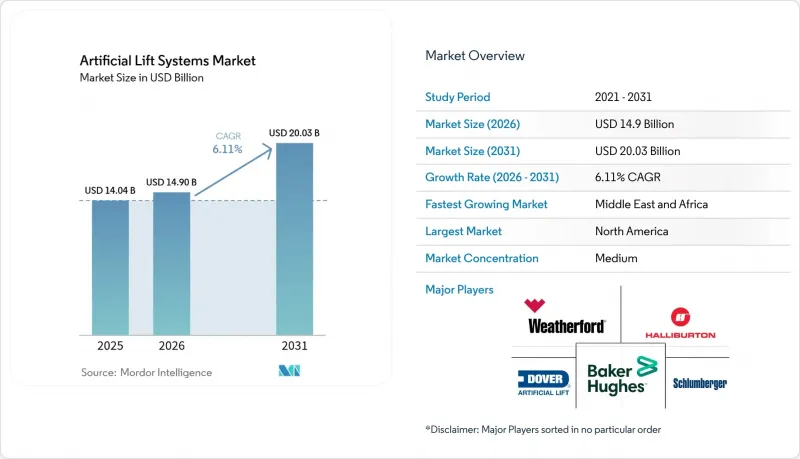
Mordor Intelligence에 의하면, 인공 채유 시스템 시장 규모는 2025년에 140억 4,000만 달러로 평가되었습니다. 2026년 149억 달러에서 2031년까지 200억 3,000만 달러에 이를 것으로 예상되며, 예측 기간(2026-2031년) CAGR은 6.11%를 나타낼 전망입니다.
본 보고서는 리프트 유형별(전동 수중 펌프(ESP), 로드 리프트, 기타), 유정 방향별(수평 유정, 수직 유정),저수지 유형별(기존, 비기존), 용도별(온쇼어, 오프쇼어), 구성품별(펌프, 모터, 기타), 서비스별(설치·시운전, 기타), 지역별(북미, 아시아태평양, 중동 및 아프리카, 기타)로 분류되어 있습니다.
세계의 인공 채유 시스템 시장 동향 및 인사이트
성숙 유정의 재생 투자 주기 확대
각 사업자들은 노후화된 유정에서 더 많은 원유를 추출하기 위해 자본을 투입하고 있습니다. 이는 워크오버 비용이 신규 시추에 비해 60-70% 저렴하고, 내부수익률(IRR)이 30% 이상에 달하기 때문입니다. 사우디 아람코만 해도 2024년에 AI를 활용한 생산 최적화를 위해 35억 달러를 배정하며, 자산 수명 연장을 위한 장기적인 노력을 강조하고 있습니다. 출처 : OilPrice 스태프, “사우디 아람코, 생산 최적화에 AI 도입”, oilprice.com 생산 엔지니어에 따르면, 적절한 인공 채유 스트링을 추가함으로써 유정의 생산 수명을 15-20년 연장하고, 폐정에 따른 부채 발생을 미룰 수 있다고 합니다. 서비스 기업 입장에서는 성숙 유전에서의 활동이 신개척지 탐사에 비해 원유 가격 변동의 영향을 덜 받기 때문에 안정적인 수요가 예상됩니다. 원유 가격이 배럴당 60달러를 계속 상회하는 것은 이러한 촉진요인을 뒷받침하겠지만, 가격이 하락하면 자본 투자의 속도는 둔화될 것으로 보입니다.
비전통적 저류층에서의 수평 시추의 급속한 진전
제2층 셰일 광구는 현재 개발 단계로 접어들었으며, 급격한 감산 곡선으로 인해 첫 원유 생산 후 12-18개월 이내에 인공 채유 시스템 도입이 시급한 상황입니다. 아르헨티나의 바카 무에르타는 2024년 12월에 일일 75만 7,122배럴에 도달하여, 계속 증가하는 수평 시추망 전체에 고도 양수 시스템이 필요하게 되었습니다. 머신러닝 도구의 도입으로 광저부 압력 예측 정확도가 향상되어, 설비의 과잉 설계를 25-30% 줄일 수 있게 됩니다. 중국 오르도스 분지에서 인공 채유 기술의 조기 도입은 타이트 가스 생산 목표를 뒷받침하며, 원유 가격이 배럴당 40달러 수준에서도 수익성을 유지하고 있습니다. 이러한 요인들이 결합되어 비전통 부문에서 인공 채유 시스템의 잠재 시장은 북미 시장을 훨씬 뛰어넘어 확대되고 있습니다.
원유 가격 변동에 따른 설비 투자(CAPEX) 축소 주기
브렌트 원유 가격이 배럴당 60달러 아래로 떨어지면, 2020년에 보았듯이 사업자들은 인공 채유 예산을 최대 30%까지 연기합니다. 단계적으로 설치 가능한 새로운 모듈식 스트링이 등장하고 있음에도 불구하고, 변동이 심한 시장 환경에서는 18-24개월의 투자 회수 기간이 여전히 위험 부담이 큰 것으로 간주됩니다. 분석가들은 2025년에 유정 비용이 1% 정도 더 낮아질 것으로 예측하고 있지만, 이것만으로는 가격의 불확실성을 완전히 상쇄할 수는 없습니다. 출처 : American Oil &Gas Reporter, 「Well-Cost Outlook 2025」, aogr.com 공급업체들은 이에 대응하여 임대 계약이나 성과 연동형 계약을 제안하고 있지만, 은행 대출 조건은 여전히 상품 가격 예측에 좌우되기 때문에 시장 침체기에는 자금 조달이 제한됩니다.
부문별 분석
2025년, 전동 수중 펌프는 매출의 38.70%를 차지하며, 하루 100-3만 배럴의 유량을 처리할 수 있는 범용성을 입증했습니다. 한편, 프로그레시브 캐비티 펌프(PCP)는 싱글 로터 설계로 인해 급속한 마모를 유발하지 않고 중질 원유나 모래를 처리할 수 있어 연평균 성장률(CAGR) 7.76%로 시장 점유율을 확대되고 있습니다. SLB의 ‘PowerEdge ESPCP’ 하이브리드는 ESP의 신뢰성과 PCP의 내마모성을 융합하여 CO2 배출량을 55% 감축하고 있습니다.
로드 리프트는 운영 비용이 낮기 때문에 여전히 기존 육상 유정의 주력 기술로 자리 잡고 있습니다. 한편, 가스 리프트는 유정 내 설비를 최소화하는 것이 중요한 해양 부문에서 뛰어난 성능을 발휘하고 있습니다. 유압 피스톤 펌프와 제트 펌프는 틈새 시장이나 모래가 많은 환경, 원격지에서의 사용에 국한되어 있습니다. 플런저 리프트는 저압 가스정에서 액체를 배출합니다. 향후 동향으로는 두 가지 이상의 방법을 결합한 하이브리드 패키징으로의 전환이 진행되고 있으며, 저수층이 성숙해짐에 따라 사업자에게 최적의 솔루션을 제공할 수 있게 될 것입니다. 영구 자석 모터로 인해 ESP의 효율이 20% 향상됨에 따라, 공급업체들은 예측 기간 동안 ESP와 PCP 플랫폼 간의 경쟁이 심화될 것으로 예상하고 있습니다.
2025년 인공 채유 시장 매출 중 수평 유정이 49.60%를 차지했으며, 2031년까지 연평균 성장률(CAGR) 6.33%로 성장할 전망입니다. 수평 유정의 복잡한 유동 상태는 가스 처리용 분리기 및 더 좁은 완공 유정에 적합한 슬림라인형 ESP 스테이지의 기술 혁신을 촉진하고 있습니다. 영구 자석 모터는 더 짧은 하우징으로 더 높은 출력을 실현할 수 있어, 2024년에는 수평 유정에서의 채택률이 11%에 달했습니다. 이는 횡방향 공간이 제한된 환경에서 큰 장점이 됩니다.
검증된 설비와 낮은 개입 비용을 중시하는 기존 생산 지역에서는 수직 유정이 여전히 필수적입니다. 수평 유정용 완공 장비의 표준화로 설치 비용 차이는 줄어들었지만, 수평 유정에서의 인공 채유 비용은 여전히 150-200% 더 높습니다. 자율형 유입 제어 장치를 통해 수평 유정에서의 물 혼합 비율을 80% 이상 줄임으로써 펌프 수명을 연장하고 양수 비용 곡선을 낮추고 있습니다. 이러한 기술적 선순환 덕분에 과거에는 수직 유정이 주류를 이루던 지역에서도 수평 유정으로의 전환이 더욱 가속화되고 있습니다.
지역별 분석
북미는 풍부한 셰일층과 기술의 신속한 도입을 중시하는 문화에 힘입어, 2025년에는 인공 채유 시스템 시장에서 35.60%의 점유율을 확보했습니다. SLB는 가스 처리 설계와 엔지니어링된 완공 공법을 결합한 결과, 퍼미안 분지에서 ESP의 가동 수명이 400% 향상되었다고 보고했습니다. 자동화는 지역적인 인력 부족 해소에 기여하고 있지만, 숙련된 작업자 부족과 특수 엘라스토머 공급 부족은 여전히 인공 유정 생산 시스템 시장의 병목 현상으로 작용하고 있습니다. 인프라가 성숙해짐에 따라 시장은 새로운 하드웨어보다 최적화 서비스로 전환되고 있습니다.
중동 및 아프리카는 2030년까지 업스트림 부문에 7,300억 달러를 투자하고, 증산 회수(EOR) 프로젝트 파이프라인에 힘입어 연평균 성장률(CAGR) 6.95%로 가장 빠르게 성장하는 지역입니다. ADNOC의 ‘RoboWell’ 프로그램을 통해 가스 리프트 사용량이 30% 감소했으며, 이는 이 지역에서 고성능 디지털 솔루션에 대한 수요가 높음을 보여줍니다. 국영 석유 기업들은 연구 개발(R&D) 노력을 대규모 조달 프로젝트와 결합함으로써 통합형 공급업체에 유리한 장기적인 서비스 관계를 구축하고 있습니다.
남미의 성장은 아르헨티나의 바카 무에르타와 브라질의 프레솔트 지층을 중심으로 전개되고 있습니다. SLB가 페트로브라스와 체결한 10억 달러 규모의 해저 계약은 부식성 CO2 및 H2S를 견디는 수명이 긴 가압 시스템에 대한 신뢰를 보여줍니다. 가이아나에서는 2025년까지 일일 80만 배럴을 초과할 것으로 예상되며, 이에 따라 해저 리프트 패키징에 대한 수요가 더욱 확대될 것으로 보입니다. 기술 이전 계약은 현지 공급 거점을 구축하고 리드 타임을 단축하는 동시에 숙련된 인력 양성을 도모하는 것을 목적으로 하고 있습니다.
기타 혜택
- 엑셀 형식 시장 예측(ME) 시트
- 3개월간의 애널리스트 지원
자주 묻는 질문
목차
제1장 서론
제2장 조사 방법
제3장 주요 요약
제4장 시장 구도
제5장 시장 규모 및 성장 예측
제6장 경쟁 구도
제7장 시장 기회 및 향후 전망
KTH 26.09.04According to Mordor Intelligence, the artificial lift systems market size was valued at USD 14.04 billion in 2025 and estimated to grow from USD 14.9 billion in 2026 to reach USD 20.03 billion by 2031, at a CAGR of 6.11% during the forecast period (2026-2031).
This report is Segmented by Lift Type (Electric Submersible Pumps, Rod Lift, and More), Well Orientation (Horizontal Wells and Vertical Wells), Reservoir Type (Conventional and Unconventional), Application (Onshore and Offshore), Component (Pump, Motor, and More), Service (Installation and Commissioning, and More), and Geography (North America, Asia-Pacific, Middle East and Africa, and More).
Global Artificial Lift Systems Market Trends and Insights
Mature Well Rejuvenation Up-cycle
Operators are redirecting capital toward squeezing more barrels from aging wells because workovers cost 60-70% less than new drilling and deliver internal rates of return above 30%. Saudi Aramco alone earmarked USD 3.5 billion for AI-driven production optimization in 2024, underscoring the long-range commitment to asset life extension. (1)Source: OilPrice Staff, "Saudi Aramco Bets on AI for Production Optimization," oilprice.com Production engineers report that adding the right artificial lift string can lengthen a well's producing life by 15-20 years and defer abandonment liabilities. Service firms see stable demand because mature-field activity is less sensitive to oil-price swings than frontier exploration. Continued crude prices above USD 60 per barrel support this driver, though lower pricing would slow capital release.
Horizontal Drilling in Unconventional Reservoirs
Tier-2 shale acreage now moves to the development phase, and its steep decline curves force lift deployment within 12-18 months of first oil. Argentina's Vaca Muerta hit 757,122 barrels per day in December 2024, requiring sophisticated lift systems across a growing inventory of laterals. Machine-learning tools improve bottom-hole pressure forecasting and reduce equipment oversizing by 25-30%. Early lift adoption in China's Ordos Basin supports tight-gas production goals and keeps the economics viable at USD 40 per barrel. These factors combine to widen the addressable artificial lift system market within the unconventional sector well past North America.
Crude-Price CAPEX Compression Cycles
When Brent drops below USD 60 per barrel, operators defer artificial lift budgets by up to 30% as seen in 2020. Despite new modular strings that can be installed incrementally, payback horizons of 18-24 months still look risky in choppy markets. Analysts expect modest 1% further well-cost reductions in 2025, which will not fully counteract price uncertainty.(2)Source: American Oil & Gas Reporter, "Well-Cost Outlook 2025," aogr.com Suppliers respond by offering rental and performance-based contracts, but bank lending terms remain tied to commodity forecasts, limiting capital availability during downturns.
Other drivers and restraints analyzed in the detailed report include:
- Digitalization of Lift Optimization (AI-Enabled VSDs)
- Shift to Deeper Offshore Pre-Salt Developments
- High Work-Over Costs in Ultra-Deepwater
For complete list of drivers and restraints, kindly check the Table Of Contents.
Segment Analysis
Electric submersible pumps retained 38.70% revenue in 2025, confirming their versatility for flow rates from 100 to 30,000 barrels per day. Progressive cavity pumps, however, are advancing at an 7.76% CAGR because their single-rotor design handles heavy crude and sand without rapid wear. SLB's PowerEdge ESPCP hybrid now blends ESP reliability with PCP tolerance for abrasives while lowering CO2 output by 55%.
Rod-lift still anchors legacy onshore wells because of low running costs, while gas-lift excels offshore, where minimal downhole hardware is valued. Hydraulic piston and jet pumps stay in niche, sandy, or remote environments. Plunger-lift clears liquids in low-pressure gas wells. The direction is toward hybrid packages that combine two or more methods, giving operators tailored solutions as reservoirs mature. As permanent-magnet motors push ESP efficiency up 20%, suppliers expect stiffer competition between ESP and PCP platforms over the forecast horizon.
Horizontal wells supplied 49.60% of the 2025 artificial lift market revenue and will expand at a 6.33% CAGR to 2031. Their complex flow regimes drive innovation in gas-handling separators and slim-line ESP stages that fit tighter completions. Permanent-magnet motors reached 11% horizontal-well adoption in 2024 because they deliver higher power in shorter housings, an asset where lateral space is scarce.
Vertical wells remain vital in conventional provinces that value proven equipment and low intervention cost. Standardization in horizontal completion tools has narrowed the installation cost gap, yet horizontal wells still carry 150-200% higher artificial lift outlays. Autonomous inflow control devices now cut water cut by more than 80% in horizontals, extending pump life and shrinking lifting cost curves. This technological feedback loop reinforces the shift toward laterals, even in regions once dominated by vertical producers.
Complete Report Scope:
- By Lift Type
- Electric Submersible Pumps (ESP)
- Progressive Cavity Pump (PCP)
- Rod Lift (Beam, Sucker-Rod)
- Gas Lift
- Hydraulic Piston and Jet Pumps
- Plunger Lift
- Other Niche Systems (Hydraulic Submersible, Capillary)
- By Well Orientation
- Horizontal Wells
- Vertical Wells
- By Reservoir Type
- Conventional
- Unconventional (Shale/Tight)
- By Application
- Onshore
- Offshore
- By Component
- Pump
- Motor
- Variable Speed Drive and Controls
- Surface Equipment
- Ancillary (Sensors, Seal-Sections, Packers)
- By Service
- Installation and Commissioning
- Optimization and Monitoring
- Maintenance, Repair and Overhaul (MRO)
- By Geography
- North America
- United States
- Canada
- Mexico
- Europe
- United Kingdom
- Germany
- France
- Spain
- Nordic Countries
- Russia
- Rest of Europe
- Asia-Pacific
- China
- India
- Japan
- South Korea
- ASEAN Countries
- Rest of Asia-Pacific
- South America
- Brazil
- Argentina
- Colombia
- Rest of South America
- Middle East and Africa
- United Arab Emirates
- Saudi Arabia
- South Africa
- Egypt
- Rest of Middle East and Africa
- North America
Geography Analysis
North America secured a 35.60% share of the artificial lift systems market in 2025, anchored by prolific shale plays and a culture of rapid technology adoption. SLB reported 400% ESP run-life improvements in the Permian Basin after combining gas-handling designs with engineered completions. Automation helps counter regional labor tightness, yet shortages of skilled crews and specialty elastomers remain bottlenecks for the artificial lift system market. The market is moving toward optimization services rather than new hardware as infrastructure matures.
The Middle East and Africa is the fastest-growing region at a 6.95% CAGR, propelled by USD 730 billion in upstream spending through 2030 and a pipeline of enhanced-oil-recovery projects. ADNOC's RoboWell program cut gas-lift use by 30%, revealing the region's appetite for high-end digital solutions. National oil companies are bundling R&D commitments with large procurement lots, locking in long-term service relationships that favor integrated suppliers.
South America's growth revolves around Argentina's Vaca Muerta and Brazil's pre-salt. SLB's USD 1 billion subsea contracts with Petrobras demonstrate confidence in long-life boosting systems that withstand corrosive CO2 and H2S. Guyana will exceed 800,000 barrels daily by 2025, further enlarging demand for subsea lift packages. Technology transfer agreements aim to build local supply hubs, shortening lead times and fostering skilled labor pools.
- Baker Hughes Company
- Halliburton Company
- Schlumberger NV
- Weatherford International Plc
- NOV Inc.
- Dover (Artificial Lift)
- Borets International Limited
- ChampionX Corp
- Alkhorayef Petroleum
- JJ Tech
- AccessESP
- Odessa Separator
- RAGHOEBAR
- Novomet
- Shengli Oilfield Highland
- Torqueflow Sydex
- Canadian Advanced ESP
- GE Power Conversion
- PCM Artificial Lift
- OptiLift
- OilSERV
Additional Benefits:
- The market estimate (ME) sheet in Excel format
- 3 months of analyst support
TABLE OF CONTENTS
1 Introduction
- 1.1 Study Assumptions & Market Definition
- 1.2 Scope of the Study
2 Research Methodology
3 Executive Summary
4 Market Landscape
- 4.1 Market Overview
- 4.2 Market Drivers
- 4.2.1 Up-cycle in mature well rejuvenation spending
- 4.2.2 Rapid horizontal drilling in unconventional reservoirs
- 4.2.3 Digitalization of lift optimization (AI-enabled VSDs)
- 4.2.4 Shift to deeper offshore pre-salt plays
- 4.2.5 ESG-driven demand for energy-efficient lift systems
- 4.2.6 Niche geothermal repurposing of ESP strings
- 4.3 Market Restraints
- 4.3.1 Volatile crude-price CAPEX compression cycles
- 4.3.2 High work-over costs in ultra-deepwater
- 4.3.3 Supply-chain bottlenecks in specialty elastomers
- 4.3.4 Skilled-labor shortages for automation retrofits
- 4.4 Supply-Chain Analysis
- 4.5 Regulatory Landscape
- 4.6 Technological Outlook
- 4.7 Porters Five Forces
- 4.7.1 Bargaining Power of Suppliers
- 4.7.2 Bargaining Power of Buyers
- 4.7.3 Threat of New Entrants
- 4.7.4 Threat of Substitutes
- 4.7.5 Intensity of Competitive Rivalry
5 Market Size & Growth Forecasts
- 5.1 By Lift Type
- 5.1.1 Electric Submersible Pumps (ESP)
- 5.1.2 Progressive Cavity Pump (PCP)
- 5.1.3 Rod Lift (Beam, Sucker-Rod)
- 5.1.4 Gas Lift
- 5.1.5 Hydraulic Piston and Jet Pumps
- 5.1.6 Plunger Lift
- 5.1.7 Other Niche Systems (Hydraulic Submersible, Capillary)
- 5.2 By Well Orientation
- 5.2.1 Horizontal Wells
- 5.2.2 Vertical Wells
- 5.3 By Reservoir Type
- 5.3.1 Conventional
- 5.3.2 Unconventional (Shale/Tight)
- 5.4 By Application
- 5.4.1 Onshore
- 5.4.2 Offshore
- 5.5 By Component
- 5.5.1 Pump
- 5.5.2 Motor
- 5.5.3 Variable Speed Drive and Controls
- 5.5.4 Surface Equipment
- 5.5.5 Ancillary (Sensors, Seal-Sections, Packers)
- 5.6 By Service
- 5.6.1 Installation and Commissioning
- 5.6.2 Optimization and Monitoring
- 5.6.3 Maintenance, Repair and Overhaul (MRO)
- 5.7 By Geography
- 5.7.1 North America
- 5.7.1.1 United States
- 5.7.1.2 Canada
- 5.7.1.3 Mexico
- 5.7.2 Europe
- 5.7.2.1 United Kingdom
- 5.7.2.2 Germany
- 5.7.2.3 France
- 5.7.2.4 Spain
- 5.7.2.5 Nordic Countries
- 5.7.2.6 Russia
- 5.7.2.7 Rest of Europe
- 5.7.3 Asia-Pacific
- 5.7.3.1 China
- 5.7.3.2 India
- 5.7.3.3 Japan
- 5.7.3.4 South Korea
- 5.7.3.5 ASEAN Countries
- 5.7.3.6 Rest of Asia-Pacific
- 5.7.4 South America
- 5.7.4.1 Brazil
- 5.7.4.2 Argentina
- 5.7.4.3 Colombia
- 5.7.4.4 Rest of South America
- 5.7.5 Middle East and Africa
- 5.7.5.1 United Arab Emirates
- 5.7.5.2 Saudi Arabia
- 5.7.5.3 South Africa
- 5.7.5.4 Egypt
- 5.7.5.5 Rest of Middle East and Africa
- 5.7.1 North America
6 Competitive Landscape
- 6.1 Market Concentration
- 6.2 Strategic Moves (M&A, Partnerships, PPAs)
- 6.3 Market Share Analysis (Market Rank/Share for key companies)
- 6.4 Company Profiles (includes Global level Overview, Market level overview, Core Segments, Financials as available, Strategic Information, Products & Services, and Recent Developments)
- 6.4.1 Baker Hughes Company
- 6.4.2 Halliburton Company
- 6.4.3 Schlumberger NV
- 6.4.4 Weatherford International Plc
- 6.4.5 NOV Inc.
- 6.4.6 Dover (Artificial Lift)
- 6.4.7 Borets International Limited
- 6.4.8 ChampionX Corp
- 6.4.9 Alkhorayef Petroleum
- 6.4.10 JJ Tech
- 6.4.11 AccessESP
- 6.4.12 Odessa Separator
- 6.4.13 RAGHOEBAR
- 6.4.14 Novomet
- 6.4.15 Shengli Oilfield Highland
- 6.4.16 Torqueflow Sydex
- 6.4.17 Canadian Advanced ESP
- 6.4.18 GE Power Conversion
- 6.4.19 PCM Artificial Lift
- 6.4.20 OptiLift
- 6.4.21 OilSERV
7 Market Opportunities & Future Outlook
- 7.1 White-space & Unmet-need Assessment


