|
시장보고서
상품코드
2122339
동물 유전학 시장 : 시장 점유율 분석, 업계 동향 및 통계, 성장 예측(2026-2031년)Animal Genetics - Market Share Analysis, Industry Trends & Statistics, Growth Forecasts (2026 - 2031) |
||||||
 Mordor Intelligence
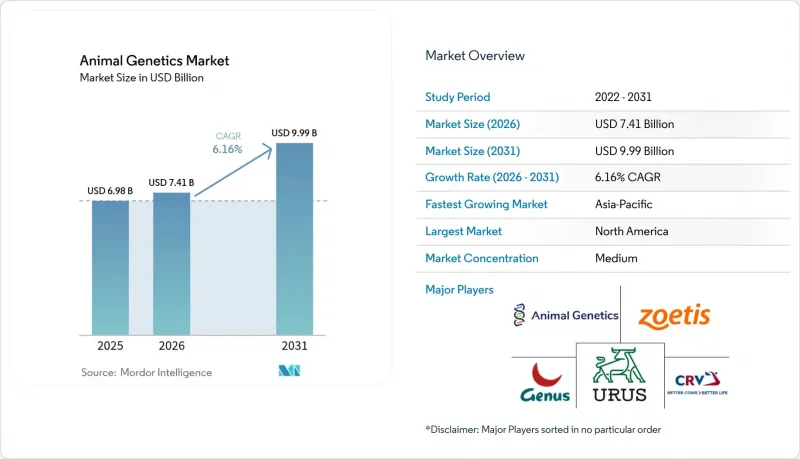
Mordor Intelligence에 의하면, 2026년 동물 유전학 시장 규모는 74억 1,000만 달러로 추정되고, 2025년 69억 8,000만 달러에서 확대해, 2031년에는 99억 9,000만 달러에 이를 것으로 예측됩니다. 2026-2031년 CAGR은 6.16%를 나타낼 전망입니다.
본 보고서에서는 동물별(가금류, 돼지 등), 동물 유전학 검사 서비스별(DNA 타이핑, 유전 형질 검사 등), 기술별(인공수정(AI), 배아 이식(ET) 등), 최종 사용자별(육종 회사, 축산 농가 등), 그리고 지역별로 세분화되어 있습니다. 시장 예측은 금액(달러) 기준으로 제시되어 있습니다.
세계의 동물 유전학 시장 동향 및 인사이트
고수확 및 병해 저항성을 갖춘 가축 품종에 대한 수요
식량 시스템에 대한 압박이 커지는 가운데, 유전적 질병 저항성은 생산성을 높이는 핵심 요소가 되고 있습니다. 현재 마커 지원 선별을 통해 저항성 유전자좌를 신속하게 특정할 수 있게 되었으며, CRISPR 기술을 이용하여 개발된 PRRS 저항성 돼지는 정밀한 유전자 편집이 비용이 많이 드는 감염병의 발생을 억제할 수 있음을 입증하고 있습니다. 또한 구매자들은 항생제 미사용 라벨을 높이 평가하고 있어, 내성 형질이 명확한 가격 프리미엄으로 이어지고 있습니다. 이에 대응하여 육종 기업들은 내성 마커를 성장성 및 효율성 형질과 결합하는 방식으로 대응하고 있으며, 한편 각국 정부는 항균제 사용을 줄이기 위한 프로젝트에 보조금을 지원하고 있습니다. 축산 시설이 밀집된 환경에 노출된 아시아태평양의 생산자들은 내성을 위험 보험으로 간주하고 있으며, 이것이 검증된 유전자 자원에 대한 지역적 수요를 견인하고 있습니다.
첨단 유전 기술의 도입 확대
시퀀싱 비용의 하락과 고처리량 SNP 어레이의 등장으로 중규모 생산자도 유전체 검사를 이용할 수 있게 되었습니다. 통합 예측 모델은 현재 유전체 데이터, 생산 성적, 환경 기록을 결합하여 사료 효율, 내열성, 메탄 배출 감소를 위한 선별을 가능하게 하고 있습니다. 예를 들어, 낙농 프로그램에서는 반추위 미생물군집과 관련된 SNP 패널을 활용하여 영양소 흡수 효율을 높이고, 사료 비용과 배출량을 줄이고 있습니다. 유럽과 북미의 민관 파트너십은 참조 집단을 구축하기 위해 공동으로 자금을 지원하며, 유전적 진보를 지속하기 위한 장기적인 데이터 흐름을 확보하고 있습니다.
유전체 시퀀싱의 높은 비용이 보급을 저해하고 있습니다.
시퀀싱 비용은 낮아졌지만, 초기 설비 투자와 시료당 비용은 여전히 소규모 농가들이 주저하게 만드는 요인입니다. 유전적 진보가 수익으로 이어지기까지 시간이 걸리는 육우 업계에서는 도입에 신중한 태도를 보이고 있습니다. 생산량에 기반한 가격 책정이나 국가 보조금을 통해 비용이 일부 상쇄되고 있지만, 이용 현황에는 여전히 편차가 존재합니다. 이러한 격차로 인해 대규모 생산자와 가족 경영 농장 간의 생산성 차이가 확대될 우려가 있어, 정책 입안자들은 공동 실험 시설이나 단계적 서비스 패키지 도입을 검토해야 한다는 촉구를 받고 있습니다.
부문 분석
2025년, 생체 동물 부문은 동물 유전학 시장의 62.02%를 차지했습니다. 이는 실적이 입증된 종축 소, 종축 돼지, 종축 양 및 생산 실적이 검증된 번식용 가축에 대해 상업적 구매자들이 여전히 높은 프리미엄을 지불하고 있음을 반영합니다. 사육자들은 농장 내 성능 시험, 쇼 서킷에서의 노출, 디지털 혈통 플랫폼에 투자함으로써 엘리트 종축의 가격이 종종 5만 달러를 초과하는 것을 정당화하고 있습니다. 이러한 거래는 국경을 넘는 이동을 간소화하는 물류 및 검역 허브 구축의 진전으로부터 혜택을 받고 있습니다.
유전자원은 절대적인 규모는 작지만, 동결보존 기술의 발전으로 운송 위험이 감소하고, 디지털화된 주문 포털을 통해 전 세계 구매자들이 다양한 유전자원 재고에 접근할 수 있게 됨에 따라 연평균 성장률(CAGR) 6.72%라는 빠른 속도로 확대되고 있습니다. 배아 유리화 보존 기술 덕분에 현재는 해동 후 생존율이 90% 이상을 달성하고 있으며, 살아있는 소를 수입하지 않고도 신속한 유전적 도약을 목표로 하는 신흥 시장의 낙농가들 사이에서 그 이용이 확대되고 있습니다. 정액은 저렴한 가격 덕분에 여전히 수량 면에서 1위를 차지하고 있지만, 고품질 배아와 DNA 라이브러리가 더 높은 수익률을 자랑하는 틈새 시장을 형성하고 있습니다. 최종 제품의 다양성과 배송의 유연성 덕분에, 유전 물질 시장은 2031년까지 동물 유전학 시장 전체의 성장률을 상회하는 속도로 확대될 것으로 전망됩니다.
2025년에는 유전적 형질 및 생산 성능 검사가 동물 유전학 시장 매출의 47.88%를 차지했습니다. 이 서비스는 우유 생산량, 도체 품질, 사료 전환율 및 내성 형질에 관한 상세한 데이터를 수집하고, 이를 DNA 마커와 통합하여 선발 지수를 정교화하고 있습니다. 클라우드 기반 대시보드를 통해 생산자에게 실시간 벤치마크 정보가 제공되어, 각 번식 주기에서 반복적인 개선이 촉진되고 있습니다. 통합형 돼지·가금류 생산 사업 수요로 인해 판매량은 높은 수준을 유지하고 있습니다. 이는 사료 효율의 미미한 향상도 수백만 마리 규모의 사육 두수에서 누적 효과를 가져오기 때문입니다.
DNA 타이핑 및 친자 감정은 연평균 성장률(CAGR) 6.75%로 예측되며, 샘플당 시퀀싱 비용의 급격한 하락과 검체를 중앙 연구소로 익일 배송할 수 있는 휴대용 채취 키트의 보급에 힘입고 있습니다. 반려동물 진료소에서 차지하는 검체 비중은 증가 추세에 있지만, 가축 업계의 사업자들도 혈통 주장을 검증하고 품종별 건강 관리 프로그램 준수를 철저히 하기 위해 친자 확인 패널을 활용하고 있습니다. DNA 타이핑과 형질 검사를 결합한 패키지는 검사 기관이 부가가치가 높은 분석 서비스를 업셀링할 수 있게 하여, 동물 유전학 시장에서의 입지를 강화하고 있습니다.
지역별 분석
북미는 여전히 가장 규모가 큰 지역으로, 2025년에는 동물 유전학 시장 점유율의 36.95%를 차지했습니다. 현대적인 검사 시설 인프라, 경험 많은 AI 기술자 기반, 그리고 유연한 규제 태도가 이 기술의 도입을 뒷받침하고 있습니다. 2025년 FDA의 유전자 편집 돼지고기 승인은 식품 공급망에서 정밀 육종의 수용이 확대되고 있음을 보여줍니다. 미국 농무부(USDA)의 전망에 따르면, 2034년까지 쇠고기, 돼지고기, 육계 생산량은 각각 11.1%, 10.0%, 11.5% 증가할 것으로 예상되며, 우수한 유전 자원에 대한 지역 전체 수요가 더욱 높아질 것으로 보입니다. 대학의 연구도 이러한 추세를 더욱 가속화하고 있습니다. 소의 미생물군집에서 발견된 소형 CRISPR 단백질 ‘SubCas9’는 오프타겟 위험을 줄이면서 더 정밀한 유전자 편집을 가능하게 할 것으로 기대됩니다.
아시아태평양은 2031년까지 연평균 성장률(CAGR) 7.28%라는 가장 높은 성장 궤도에 올라 있습니다. 중국은 토종 품종을 위한 전국적인 유전체 칩을 도입하고 있는 반면, 인도는 1두당 우유 생산량을 높이기 위해 성별 선별 정액의 보급을 추진하고 있습니다. 가처분 소득 증가와 식생활의 변화로 인해 육류, 계란, 유제품 수요가 확대되고 있으며, 생산량을 늘리고 수입을 줄이기 위한 유전적 개량에 대한 투자가 촉진되고 있습니다. 유전체 분석 분야의 민관 협력을 통해 검사 비용이 낮아지면서 중규모 농장 시장 진입이 촉진되고 있습니다. 이러한 노력들이 맞물려 예측 기간 동안 매년 해당 지역의 동물 유전학 시장 내 입지가 해마다 강화되고 있습니다.
유럽은 육종 전략을 형성하는 엄격한 복지 및 지속가능성 기준에 힘입어 큰 위상을 차지하고 있습니다. 특히 돼지와 가금류 계통에서는 생산성과 동물 복지를 양립시키는 균형 잡힌 선발 지수가 중시되고 있습니다. 남미는 계속해서 풍부한 목초 자원을 수익화하고 있으며, 브라질과 아르헨티나에서는 내열성이나 무각성 같은 형질을 가진 유전자 편집 소의 도입이 활발히 진행되고 있습니다. 중동 및 아프리카의 일부 지역은 규모는 작지만, 혹독한 기후와 제한된 사료 공급에 대처하기 위해 유전체 분석의 활용을 모색하고 있습니다. 일본과 아르헨티나에서는 특정 유전자 편집 가축이 비유전자변형(비GMO)으로 인증되는 등 규제가 명확해지고 있으며, 이는 다른 관할 구역에도 긍정적인 영향을 미쳐 유전자 제품의 국경을 넘는 거래를 원활하게 할 가능성이 있습니다.
기타 혜택 :
- 엑셀 형식 시장 예측(ME) 시트
- 3개월간의 애널리스트 지원
자주 묻는 질문
목차
제1장 서론
제2장 조사 방법
제3장 주요 요약
제4장 시장 구도
제5장 시장 규모 및 성장 예측
제6장 경쟁 구도
제7장 시장 기회 및 향후 전망
AJY 26.09.07According to Mordor Intelligence, animal genetics market size in 2026 is estimated at USD 7.41 billion, growing from 2025 value of USD 6.98 billion with 2031 projections showing USD 9.99 billion, growing at 6.16% CAGR over 2026-2031.
This report Segments by Animals (Poultry, Porcine, and More), by Animal Genetic Testing Services (DNA Typing, Genetic Trait Tests, and More), by Technology (Artificial Insemination (AI), Embryo Transfer (ET) and More), by End User (Breeding Companies, Livestock Producers/Farms and More) and by Geography. The Market Forecasts are Provided in Terms of Value (USD).
Global Animal Genetics Market Trends and Insights
Demand for high-yielding disease-resistant livestock breeds
Intensifying pressure on food systems has made genetic disease resistance a core productivity lever. Marker-assisted selection now pinpoints resistance loci quickly, and CRISPR-generated PRRS-resistant pigs demonstrate how precision edits can curb costly outbreaks. Buyers also reward antibiotic-free labels, turning resistance traits into clear price premiums. Breeding firms respond by bundling resistance markers with growth and efficiency traits, while governments channel grants toward projects that cut antimicrobial use. Asia-Pacific producers, exposed to dense farm clusters, view resistance as risk insurance, driving regional demand for verified genetics.
Increased adoption of advanced genetic technologies
Falling sequencing costs and high-throughput SNP arrays have opened genomic testing to mid-scale producers. Integrated prediction models now combine genomic, performance, and environmental records, allowing selection for feed efficiency, heat tolerance, and methane mitigation. Dairy programs, for instance, use rumen microbiome-linked SNP panels to raise nutrient absorption efficiency, lowering feed costs and emissions. Public-private partnerships in Europe and North America co-fund reference populations, ensuring long-term data flow that sustains genetic gain.
High cost of genomic sequencing limiting adoption
While sequencing has become cheaper, upfront equipment outlays and per-sample fees still deter smallholders. Beef enterprises, where genetic gains translate more slowly into cash, adopt cautiously. Output-based pricing schemes and state subsidies partially offset costs, yet access remains uneven. This disparity risks widening performance gaps between industrial players and family farms, nudging policy makers to explore shared lab facilities and tiered service packages.
Other drivers and restraints analyzed in the detailed report include:
- Rapid adoption of sexed-semen technology
- Growth of companion-animal genetic testing
- Shortage of skilled geneticists in breeding co-ops
For complete list of drivers and restraints, kindly check the Table Of Contents.
Segment Analysis
The live animal segment generated 62.02% of the animal genetics market in 2025, reflecting the persistent premium that commercial buyers place on proven bulls, boars, rams, and breeding stock with validated production records. Breeders invest in on-farm performance testing, show circuit visibility, and digital pedigree platforms to justify animal prices that often exceed USD 50,000 for elite sires. The trade benefits from improved logistics and quarantine hubs that simplify cross-border movement.
Genetic material, though smaller in absolute value, expands faster at a 6.72% CAGR as cryopreservation advances lower shipment risk and digitized ordering portals connect global buyers to diverse germplasm inventories. Embryo vitrification now achieves post-thaw viability above 90%, widening usage among emerging-market dairies that want rapid genetic leaps without importing live cattle. Semen remains the volume leader for its affordability, but premium embryos and DNA libraries create higher-margin niches. End-product diversity and delivery flexibility position genetic material to outpace overall animal genetics market growth through 2031.
Genetic trait-and-performance testing produced 47.88% of animal genetics market revenue in 2025. The service captures granular data on milk yield, carcass quality, feed conversion, and resilience traits, then integrates them with DNA markers to refine selection indices. Cloud-based dashboards now deliver real-time benchmarking to producers, encouraging iterative improvements each breeding cycle. Demand from integrated pork and poultry operations keeps volume high because small gains in feed efficiency compound across millions of head.
DNA typing and parentage testing, forecast at 6.75% CAGR, benefits from plummeting per-sample sequencing costs and the spread of handheld collection kits that mail specimens to central labs overnight. Companion-animal clinics account for a rising share of samples, but livestock players also employ parentage panels to verify pedigree claims and enforce breed-specific health program compliance. Packages that bundle DNA typing with trait testing help laboratories upsell value-added analytics, strengthening their position within the animal genetics market.
Complete Report Scope:
- By Product Type (Value)
- Animal
- Bovine
- Porcine
- Poultry
- Canine
- Equine
- Aquaculture Species
- Others
- Genetic Material
- Semen
- Embryo
- DNA & Other Germplasm
- Animal
- By Testing Service Type (Value)
- Genetic Disease Testing
- Genetic Trait & Performance Testing
- DNA Typing & Parentage Testing
- Other Specialised Tests
- By Technology (Value)
- Artificial Insemination (AI)
- Embryo Transfer (ET)
- Marker-Assisted & Genomic Selection
- CRISPR & Gene Editing
- Other Assisted-Reproduction Technologies
- By End User (Value)
- Breeding Companies & Associations
- Livestock Producers / Farms
- Veterinary Hospitals & Specialty Clinics
- Research & Academic Institutes
- Others
- By Geography
- North America
- United States
- Canada
- Mexico
- Europe
- Germany
- United Kingdom
- France
- Italy
- Spain
- Rest of Europe
- Asia-Pacific
- China
- Japan
- India
- South Korea
- Australia
- Rest of Asia-Pacific
- Middle East and Africa
- GCC
- South Africa
- Rest of Middle East and Africa
- South America
- Brazil
- Argentina
- Rest of South America
- North America
Geography Analysis
North America remained the largest region, accounting for 36.95% of the animal genetics market share in 2025. Modern laboratory infrastructure, a seasoned AI technician base, and an accommodating regulatory stance reinforce adoption. The FDA's 2025 approval of gene-edited pork signals growing acceptance of precision breeding in the food chain. USDA outlooks project beef, pork, and broiler production to climb 11.1%, 10.0%, and 11.5% respectively by 2034, reinforcing region-wide demand for superior genetics. Universities add further momentum; SubCas9, a compact CRISPR protein discovered in bovine microbiota, promises more targeted edits with fewer off-target risks.
Asia-Pacific is on course for the fastest 7.28% CAGR through 2031. China rolls out national genomic chips for local breeds, while India promotes sexed semen to lift dairy yield per cow. Rising disposable incomes and shifting diets expand demand for meat, eggs, and dairy, prompting investment in genetic upgrades to boost output and cut imports. Public-private partnerships in genomics lower test prices, helping mid-sized farms participate. These efforts collectively push the region's weight in the animal genetics market upward each year of the forecast period.
Europe holds a sizeable position anchored by stringent welfare and sustainability norms that shape breeder strategies. Emphasis lies on balanced selection indices that pair productivity with animal well-being, especially in swine and poultry lines. South America continues to monetize strong pasture resources; Brazil and Argentina see brisk uptake of gene-edited cattle for heat tolerance and hornlessness traits. The Middle East and parts of Africa, though smaller, explore genomics to counter harsh climates and limited feed supplies. Regulatory clarity in Japan and Argentina-where certain gene-edited livestock qualify as non-GMO-could inspire other jurisdictions and smooth cross-border trade in genetic products.
- Genus
- Hendrix Genetics
- Zoetis
- Topigs Norsvin
- Cobb-Vantress Inc.
- Aviagen Group
- CRV Holding BV
- Select Sires
- STgenetics
- Semex Alliance
- Alta Genetics
- Neogen
- ABS Global Inc.
- Genex Co-operative Inc.
- Grimaud Groupe
- Eurogene AI Services
- Sexing Technologies
- Envigo RMS LLC
- Bovine Elite
- Nugenomics Ltd.
Additional Benefits:
- The market estimate (ME) sheet in Excel format
- 3 months of analyst support
TABLE OF CONTENTS
1 Introduction
- 1.1 Study Assumptions & Market Definition
- 1.2 Scope of the Study
2 Research Methodology
3 Executive Summary
4 Market Landscape
- 4.1 Market Overview
- 4.2 Market Drivers
- 4.2.1 Demand for high-yielding disease-resistant livestock breeds
- 4.2.2 Increased Adoption of Advanced Genetic Technologies for Large-scale Production and Quality Breeds
- 4.2.3 Rapid adoption of sexed-semen technology in North American bovine AI
- 4.2.4 Growth of companion-animal genetic testing in urban markets
- 4.2.5 Government-subsidized swine herd rebuilding post-ASF in China & Vietnam
- 4.2.6 Expansion of dairy genetics programs targeting A2A2 B-casein in Europe
- 4.3 Market Restraints
- 4.3.1 High cost of genomic sequencing limiting adoption
- 4.3.2 Shortage of skilled geneticists in breeding co-ops
- 4.3.3 Biosecurity restrictions on cross-border germplasm trade
- 4.3.4 EU ethical & regulatory hurdles for CRISPR gene-edited
- 4.4 Supply-Chain Analysis
- 4.5 Regulatory Outlook
- 4.6 Technological Outlook
- 4.7 Porter's Five Forces
- 4.7.1 Bargaining Power of Suppliers
- 4.7.2 Bargaining Power of Buyers
- 4.7.3 Threat of Substitutes
- 4.7.4 Threat of New Entrants
- 4.7.5 Competitive Rivalry
5 Market Size & Growth Forecasts
- 5.1 By Product Type (Value)
- 5.1.1 Animal
- 5.1.1.1 Bovine
- 5.1.1.2 Porcine
- 5.1.1.3 Poultry
- 5.1.1.4 Canine
- 5.1.1.5 Equine
- 5.1.1.6 Aquaculture Species
- 5.1.1.7 Others
- 5.1.2 Genetic Material
- 5.1.2.1 Semen
- 5.1.2.2 Embryo
- 5.1.2.3 DNA & Other Germplasm
- 5.1.1 Animal
- 5.2 By Testing Service Type (Value)
- 5.2.1 Genetic Disease Testing
- 5.2.2 Genetic Trait & Performance Testing
- 5.2.3 DNA Typing & Parentage Testing
- 5.2.4 Other Specialised Tests
- 5.3 By Technology (Value)
- 5.3.1 Artificial Insemination (AI)
- 5.3.2 Embryo Transfer (ET)
- 5.3.3 Marker-Assisted & Genomic Selection
- 5.3.4 CRISPR & Gene Editing
- 5.3.5 Other Assisted-Reproduction Technologies
- 5.4 By End User (Value)
- 5.4.1 Breeding Companies & Associations
- 5.4.2 Livestock Producers / Farms
- 5.4.3 Veterinary Hospitals & Specialty Clinics
- 5.4.4 Research & Academic Institutes
- 5.4.5 Others
- 5.5 By Geography
- 5.5.1 North America
- 5.5.1.1 United States
- 5.5.1.2 Canada
- 5.5.1.3 Mexico
- 5.5.2 Europe
- 5.5.2.1 Germany
- 5.5.2.2 United Kingdom
- 5.5.2.3 France
- 5.5.2.4 Italy
- 5.5.2.5 Spain
- 5.5.2.6 Rest of Europe
- 5.5.3 Asia-Pacific
- 5.5.3.1 China
- 5.5.3.2 Japan
- 5.5.3.3 India
- 5.5.3.4 South Korea
- 5.5.3.5 Australia
- 5.5.3.6 Rest of Asia-Pacific
- 5.5.4 Middle East and Africa
- 5.5.4.1 GCC
- 5.5.4.2 South Africa
- 5.5.4.3 Rest of Middle East and Africa
- 5.5.5 South America
- 5.5.5.1 Brazil
- 5.5.5.2 Argentina
- 5.5.5.3 Rest of South America
- 5.5.1 North America
6 Competitive Landscape
- 6.1 Market Concentration
- 6.2 Strategic Moves
- 6.3 Market Share Analysis
- 6.4 Company Profiles (includes Global level Overview, Market level overview, Core Segments, Financials as available, Strategic Information, Market Rank/Share for key companies, Products & Services, and Recent Developments)
- 6.4.1 Genus PLC
- 6.4.2 Hendrix Genetics BV
- 6.4.3 Zoetis Inc.
- 6.4.4 Topigs Norsvin
- 6.4.5 Cobb-Vantress Inc.
- 6.4.6 Aviagen Group
- 6.4.7 CRV Holding BV
- 6.4.8 Select Sires Inc.
- 6.4.9 STgenetics
- 6.4.10 Semex Alliance
- 6.4.11 Alta Genetics Inc.
- 6.4.12 Neogen Corporation
- 6.4.13 ABS Global Inc.
- 6.4.14 Genex Co-operative Inc.
- 6.4.15 Grimaud Groupe
- 6.4.16 Eurogene AI Services
- 6.4.17 Sexing Technologies
- 6.4.18 Envigo RMS LLC
- 6.4.19 Bovine Elite LLC
- 6.4.20 Nugenomics Ltd.
7 Market Opportunities & Future Outlook
- 7.1 White-space & Unmet-Need Assessment