|
시장보고서
상품코드
2122814
폴리올레핀 수축 필름 : 시장 점유율 분석, 업계 동향 및 통계, 성장 예측(2026-2031년)Polyolefin (PO) Shrink Films - Market Share Analysis, Industry Trends & Statistics, Growth Forecasts (2026 - 2031) |
||||||
 Mordor Intelligence
폴리올레핀 수축 필름 시장 규모는 2025년 81억 6,000만 달러로 평가되었습니다. 2026년에는 85억 5,000만 달러로 확대되어 2026년부터 2031년에 걸쳐 CAGR 4.79%로 성장을 지속하여, 2031년까지 108억 달러에 이를 것으로 예측됩니다.

본 보고서에서는 업계를 ‘유형’(일반 수축 필름 및 가교 수축 필름), ‘소재’(폴리에틸렌 및 폴리프로필렌),‘층 구조’(단층 및 다층), ‘용도’(식품 및 음료, 산업용 포장 등), ‘지역’(아시아태평양, 북미, 유럽 등)별로 분류하고 있습니다. 시장 예측은 금액(달러) 기준으로 제시되어 있습니다.
세계의 폴리올레핀 수축 필름 시장 동향 및 인사이트
북미 전자상거래용 위변조 방지 필름 수요
전자상거래의 성장에 따라, 운송 중 상품을 보호하기 위한 위조 개봉 방지 기능을 갖춘 폴리올레핀 수축 필름 수요가 확대되고 있습니다. 북미의 소매업체들은 상품을 보호하고 소비자의 신뢰를 구축하기 위해 이러한 필름을 채택하고 있으며, 온라인 구매자의 78%가 시각적인 위조 개봉 방지 기능을 중요하게 여기고 있습니다. 인터테이프 폴리머 그룹의 ‘ExlfilmPlus PCR’은 재생 소재를 35% 함유한 폴리올레핀 수축 필름으로, 보안 및 지속가능성 요구를 충족시킵니다. 이 필름은 높은 투명성과 사용 후 제품에서 유래한 재생 소재를 겸비하여 전자상거래 포장의 과제를 해결하고 있습니다.
유럽 식품 접촉용 필름의 PVC에서 POF로의 전환
유럽의 식품 제조업체들은 2030년까지 폐기물을 5% 감축하는 것을 목표로 하는 2024년 4월 시행된 포장 관련 법규에 따라 재활용 가능한 폴리올레핀 필름으로의 전환을 추진하고 있습니다. 또한 영국, 스페인, 이탈리아에서는 재활용 소재 함유율이 30% 미만인 필름에 대해 벌금을 부과하는 플라스틱세가 병행하여 도입되고 있습니다. 크라이저(Krauser)사의 ‘Store-Drop-Off’ 인증을 받은 ‘EV-HPG’는 컨버터가 식품 안전성, 투명성, 재활용성을 어떻게 양립시키고 있는지를 보여줍니다.
PE 및 PP 수지 가격 변동
미국 내 셰일 원료 공급 차질로 인해, 완제품 필름 비용의 최대 70%를 차지하는 원자재 가격 변동이 더욱 격화되고 있습니다. OECD는 2040년까지 플라스틱 생산량이 7억 3,600만 톤에 달할 가능성이 있다고 경고하고 있으며, 이로 인해 원자재 확보 경쟁이 심화될 것으로 전망됩니다. 각 컨버터 기업들은 여러 공급처로부터의 조달, 수지 계약 기간 단축, 그리고 버진 수지에 PCR 펠릿을 혼합한 배합을 채택함으로써 리스크를 헤지하고 있습니다.
부문별 분석
2025년, 범용 수축 필름은 합리적인 가격과 폭넓은 가공 조건에 힘입어 폴리올레핀 수축 필름 시장에서 53.20%라는 최대 점유율을 차지했습니다. 이 부문은 투명성과 인쇄 용이성 덕분에 슈퍼마켓의 식품 멀티팩 및 판촉용 번들 포장재로 자리 잡았습니다. 그러나 각 컨버터 기업들은 내천자성, 내스크래치성 및 박막화를 통해 포장 파손 없이 생산 라인 속도를 높일 수 있는 가교 등급 제품을 점점 더 많이 제안하고 있습니다.
의약품 블리스터 팩, 박스 포장 화장품, 전자기기에서 열에 민감한 내용물을 보호하기 위해 낮은 밀봉 온도가 요구됨에 따라, 가교 제품의 생산량은 2026년부터 2031년에 걸쳐 연평균 성장률(CAGR) 6.55%로 확대될 것으로 예측됩니다. 아시아 및 북미의 생산 능력 확대로 가격 차이가 축소됨에 따라, 기존의 디스플레이 용도를 넘어선 폴리올레핀 스클린치 필름 시장으로의 전환이 촉진되고 있습니다.
폴리에틸렌은 투명성과 비용 경쟁력을 바탕으로 2025년 폴리올레핀 수축 필름 시장에서 56.40%라는 압도적인 점유율을 유지했습니다. 다층 PE 블렌드는 오븐 체류 시간이 짧은 경우에도 밀폐성을 확보할 수 있어, 음료 캔의 적층 포장이나 청과물 트레이의 대표적인 소재로 자리 잡고 있습니다. 가공업체들은 현재 광학적 특성을 해치지 않으면서 브랜드의 순환 경제 이니셔티브를 준수하기 위해 PCR(소비 후 재활용) 소재를 도입하고 있습니다.
폴리프로필렌(PP)은 레토르트 식품 및 의료 키트에 요구되는 높은 강성, 화학적 비활성, 그리고 높은 열변형 온도에 힘입어 2031년까지 연평균 6.92%의 성장이 예상됩니다. 새로운 5층 공압출기는 PP와 엘라스토머로 만든 타이 층을 혼합하여 광택을 유지하면서 인열 강도를 높였습니다. 이 프리미엄 배합을 통해 가공업체들은 폴리올레핀 수축 필름 시장에서 상품화된 PE 제품과의 차별화를 꾀하고 있습니다.
지역별 분석
아시아태평양은 2025년에 매출의 37.60%를 차지하며 폴리올레핀 수축 필름 시장을 주도했며, 예상 연평균 성장률(CAGR) 6.82%는 여전히 세계에서 가장 빠른 수준을 유지하고 있습니다. 중국에서는 탄탄한 기반을 갖춘 압출 성형 업체들이 다국적 FMCG(일용소비재) 포장 제조업체와 제휴하고 있는 반면, 인도에서는 도시 지역 소매업의 성장에 따라 경질 포장 수요가 급증하고 있습니다. 지역 내 각 컨버터 업체들은 자사 내 플레이트리스 디지털 프레스 설비를 구축하여, 국내 전자상거래 시장의 급속한 성장을 포착한 신속한 자사 브랜드 판촉 캠페인을 실현하고 있습니다.
일본과 한국은 높은 차단성을 지닌 다층 기술에 주력하고 있으며, 수출용 의약품을 위한 틈새 시장용 가교 롤 필름을 공급하고 있습니다. 국내 수요는 콤팩트한 공장 공간에 적합하고 자동화에 대응하는 박막 필름에 의해 지탱되고 있습니다. 업계 단체는 에너지 효율이 높은 수축 오븐에 대한 연구개발 세액 공제를 유통 채널에 부여하여, 폴리올레핀 수축 필름 시장 내 도입을 뒷받침하고 있습니다.
북미는 미국의 옴니채널 소매 생태계에 힘입어 성숙해 가면서도 혁신 주도형 시장을 형성하고 있습니다. 캐나다와 멕시코는 수지 생산지와의 근접성 및 관세 우대 조치가 적용되는 무역 회랑을 통해 지역 내 공급을 보완함으로써 가격 변동에 대한 저항력을 공고히 하고 있습니다.
유럽은 엄격한 규제 감독과 높은 구매력 사이의 균형을 유지하고 있습니다. 순환형 경제 지침에 따라 각 변환업체는 재활용 가능성 인증을 취득해야 하며, 2027년까지 PCR 블렌드로의 전환이 진행되고 있습니다. 독일, 이탈리아, 영국은 음료, 제과, 의약품 생산이 활발하여 주요 수요 거점으로 자리 잡고 있습니다. 소매 체인이 EU 역내에서 포장 규격을 통일함에 따라 남유럽 및 동유럽 회원국들도 서서히 그 추세를 따라가고 있습니다.
남미, 중동 및 아프리카는 규모는 작지만 점점 더 매력적인 신흥 시장으로 부상하고 있습니다. 브라질은 견고한 석유화학 산업 기반을 활용하여 메르코수르(Mercosur) 회원국에 공급하고 있습니다. 한편, 사우디아라비아의 ‘비전 2030’은 하류 폴리머 분야에 대한 투자를 촉진하고 있으며, 이에 따라 폴리올레핀 수축 필름 시장의 범위가 걸프협력회의(GCC) 국가들로 확대되고 있습니다.
기타 혜택 :
- 엑셀 형식 시장 예측(ME) 시트
- 3개월간의 애널리스트 지원
자주 묻는 질문
목차
제1장 서론
제2장 조사 방법
제3장 주요 요약
제4장 시장 구도
제5장 시장 규모 및 성장 예측
제6장 경쟁 구도
제7장 시장 기회 및 향후 전망
KTH 26.09.08According to Mordor Intelligence, the polyolefin shrink films market size is expected to grow from USD 8.16 billion in 2025 to USD 8.55 billion in 2026 and is forecast to reach USD 10.8 billion by 2031 at 4.79% CAGR over 2026-2031.
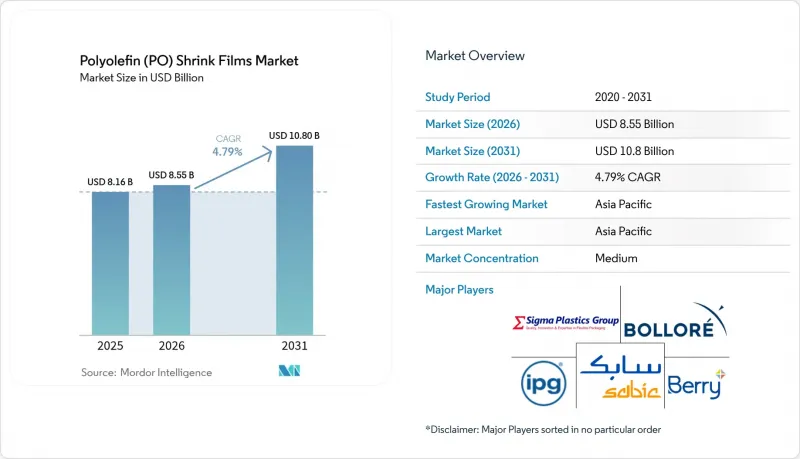
This report Segments the Industry by Type (General Shrink Film and Cross-Linked Shrink Film), Material Type (Polyethylene and Polypropylene), Layer Structure (Monolayer and Multilayer), Application (Food and Beverage, Industrial Packaging, and More), and Geography (Asia-Pacific, North America, Europe, and More). The Market Forecasts are Provided in Terms of Value (USD).
Global Polyolefin (PO) Shrink Films Market Trends and Insights
E-commerce tamper-evidence demand in North America
E-commerce growth has driven demand for tamper-evident polyolefin shrink films to secure products during transit. North American retailers use these films to protect goods and build consumer trust, with 78% of online shoppers valuing visible tamper-evidence. Intertape Polymer Group's ExlfilmPlus PCR, a polyolefin shrink film with 35% recycled content, addresses security and sustainability needs. The film combines high clarity with post-consumer recycled content, meeting e-commerce packaging challenges.
PVC-to-POF switch in European food-contact films
European food manufacturers pivot towards recyclable polyolefin films after April 2024 packaging legislation targeting a 5% waste reduction by 2030 . Parallel plastic taxes in the UK, Spain and Italy penalize films with under 30% recycled content. Clysar's Store-Drop-Off-qualified EV-HPG illustrates how converters combine food safety, clarity and recyclability.
PE & PP resin price volatility
Shale-feedstock disruptions in the United States heighten raw-material swings that already represent up to 70% of finished film cost. The OECD warns that plastic production may hit 736 million tonnes by 2040, intensifying feedstock competition. Converters hedge risks via multi-sourcing, shorter resin contracts, and recipes that dilute virgin inputs with PCR pellets.
Other drivers and restraints analyzed in the detailed report include:
- High-definition printing & branding
- Cost advantage over alternatives
- Single-use-plastic levies on over-wrap
For complete list of drivers and restraints, kindly check the Table Of Contents.
Segment Analysis
General shrink film held the largest 53.20% polyolefin shrink film market share in 2025, underpinned by affordability and wide processing windows. The segment's clarity and ease of printing keeps it entrenched in food multipacks and promotional bundles across supermarkets. Yet converters increasingly upsell cross-linked grades where puncture resistance, scuff holdout and thinner profiles allow faster line speeds without wrap failure.
Cross-linked output is forecast to grow at a 6.55% CAGR from 2026 to 2031 as pharmaceutical blister bundles, boxed cosmetics and electronics seek lower sealing temperatures that protect heat-sensitive contents. Expanded capacity in Asia and North America narrows the price delta, encouraging switchovers that stretch the polyolefin shrink film market beyond traditional displays.
Polyethylene maintained a commanding 56.40% stake within the polyolefin shrink film market size in 2025, driven by transparency and cost competitiveness. Multi-layer PE blends permit tight seals even at low oven dwell times, making them a staple in beverage can dernests and produce trays. Processors now incorporate PCR streams to comply with brand circularity pledges without diluting optical properties.
Polypropylene is expected to rise 6.92% annually to 2031, buoyed by higher stiffness, chemical inertness and elevated heat-deflection points desirable for retorted foods and medical kits. New five-layer co-extruders co-blend PP with elastomer tie layers, retaining gloss while boosting tear resistance. This premium mix separates converters from commoditised PE offerings within the polyolefin shrink film market.
Complete Report Scope:
- By Type
- General Shrink Film
- Cross-Linked Shrink Film
- By Material Type
- Polyethylene (PE)
- Polypropylene (PP)
- By Layer Structure
- Monolayer
- Multilayer
- By Application
- Food & Beverage
- Industrial Packaging
- Personal Care & Cosmetics
- Pharmaceutical
- Printing & Stationery
- Other Applications
- By Geography
- Asia-Pacific
- China
- India
- Japan
- South Korea
- Rest of Asia-Pacific
- North America
- United States
- Canada
- Mexico
- Europe
- Germany
- United Kingdom
- Italy
- France
- Rest of Europe
- South America
- Brazil
- Argentina
- Rest of South America
- Middle East and Africa
- Saudi Arabia
- South Africa
- Rest of Middle East and Africa
- Asia-Pacific
Geography Analysis
Asia Pacific dominated the polyolefin shrink film market with 37.60% revenue contribution in 2025, and its projected 6.82% CAGR remains the fastest globally. China's entrenched extruder base partners with multinational FMCG packers, while India's rigid packaging boom responds to urban retail growth. Regional converters foster in-house plateless digital presses, enabling swift private-label promotion campaigns that capture domestic e-commerce surges.
Japan and South Korea focus on high-barrier multilayer technology, supplying niche cross-linked rolls for export pharmaceuticals; domestic demand leans on automation-ready thin gauges that fit compact factory footprints. Association grants channel R&D tax credits toward energy-efficient shrink ovens, reinforcing adoption inside the polyolefin shrink film market.
North America constitutes a mature yet innovation-led arena powered by the United States' omnichannel retail ecosystem. Canada and Mexico complement regional supply through proximity to resin production and tariff-favoured trade corridors, anchoring resilience against price swings.
Europe balances stringent regulatory oversight with high purchasing power. Circular economy directives push converters to certify recyclability and shift toward PCR blends by 2027. Germany, Italy and the United Kingdom represent core demand clusters owing to strong beverage, confectionery and pharmaceutical output. Southern and Eastern member states gradually catch up as retail chains harmonise packaging briefs across the bloc.
South America and the Middle East & Africa present smaller but increasingly attractive frontiers. Brazil leverages a robust petrochemical base to serve Mercosur neighbours, while Saudi Arabia's Vision 2030 encourages downstream polymer investments that extend the reach of the polyolefin shrink film market into Gulf Cooperation Council markets.
- Allen Plastic Industries Co., Ltd.
- Berry Global Inc.
- Bollore Group
- Bonset America Corporation
- Clysar, LLC
- Cosmo Films
- Coveris
- FlexiPack
- Innovia Films
- IPG
- Harwal Group of Companies
- Hubei HYF Packaging Co., Ltd.
- Kaneka Corporation
- Klockner Pentaplast
- Polyplex Corporation
- SABIC
- Sealed Air Corporation
- Sigma Plastics Group
- SYFAN USA
- Traco Packaging
- Winpak Ltd.
Additional Benefits:
- The market estimate (ME) sheet in Excel format
- 3 months of analyst support
TABLE OF CONTENTS
1 Introduction
- 1.1 Study Assumptions & Market Definition
- 1.2 Scope of the Study
2 Research Methodology
3 Executive Summary
4 Market Landscape
- 4.1 Market Overview
- 4.2 Market Drivers
- 4.2.1 E-commerce demand for tamper-evident wrap accelerating small-pack use in North America
- 4.2.2 Shift from PVC to eco-safer POF in European food-contact films
- 4.2.3 Demand for High-Quality Printing and Branding
- 4.2.4 Cost-Effectiveness Compared to Alternatives
- 4.2.5 Automation-ready thin-gauge cross-linked films driving high-speed lines in Asia
- 4.3 Market Restraints
- 4.3.1 Escalating PE & PP resin price volatility caused shale-feedstock disruptions in US
- 4.3.2 Single-use-plastics taxes across Europe targeting shrink over-wrap
- 4.3.3 Trade-off between downgauging & shrink force limiting adoption in heavy-duty industrial packs
- 4.4 Value Chain Analysis
- 4.5 Porter's Five Forces
- 4.5.1 Bargaining Power of Suppliers
- 4.5.2 Bargaining Power of Buyers
- 4.5.3 Threat of New Entrants
- 4.5.4 Threat of Substitutes
- 4.5.5 Degree of Competition
5 Market Size & Growth Forecasts (Value)
- 5.1 By Type
- 5.1.1 General Shrink Film
- 5.1.2 Cross-Linked Shrink Film
- 5.2 By Material Type
- 5.2.1 Polyethylene (PE)
- 5.2.2 Polypropylene (PP)
- 5.3 By Layer Structure
- 5.3.1 Monolayer
- 5.3.2 Multilayer
- 5.4 By Application
- 5.4.1 Food & Beverage
- 5.4.2 Industrial Packaging
- 5.4.3 Personal Care & Cosmetics
- 5.4.4 Pharmaceutical
- 5.4.5 Printing & Stationery
- 5.4.6 Other Applications
- 5.5 By Geography
- 5.5.1 Asia-Pacific
- 5.5.1.1 China
- 5.5.1.2 India
- 5.5.1.3 Japan
- 5.5.1.4 South Korea
- 5.5.1.5 Rest of Asia-Pacific
- 5.5.2 North America
- 5.5.2.1 United States
- 5.5.2.2 Canada
- 5.5.2.3 Mexico
- 5.5.3 Europe
- 5.5.3.1 Germany
- 5.5.3.2 United Kingdom
- 5.5.3.3 Italy
- 5.5.3.4 France
- 5.5.3.5 Rest of Europe
- 5.5.4 South America
- 5.5.4.1 Brazil
- 5.5.4.2 Argentina
- 5.5.4.3 Rest of South America
- 5.5.5 Middle East and Africa
- 5.5.5.1 Saudi Arabia
- 5.5.5.2 South Africa
- 5.5.5.3 Rest of Middle East and Africa
- 5.5.1 Asia-Pacific
6 Competitive Landscape
- 6.1 Market Concentration
- 6.2 Strategic Moves
- 6.3 Market Share Analysis
- 6.4 Company Profiles (includes Global level Overview, Market level overview, Core Segments, Financials as available, Strategic Information, Market Rank/Share for key companies, Products & Services, and Recent Developments)
- 6.4.1 Allen Plastic Industries Co., Ltd.
- 6.4.2 Berry Global Inc.
- 6.4.3 Bollore Group
- 6.4.4 Bonset America Corporation
- 6.4.5 Clysar, LLC
- 6.4.6 Cosmo Films
- 6.4.7 Coveris
- 6.4.8 FlexiPack
- 6.4.9 Innovia Films
- 6.4.10 IPG
- 6.4.11 Harwal Group of Companies
- 6.4.12 Hubei HYF Packaging Co., Ltd.
- 6.4.13 Kaneka Corporation
- 6.4.14 Klockner Pentaplast
- 6.4.15 Polyplex Corporation
- 6.4.16 SABIC
- 6.4.17 Sealed Air Corporation
- 6.4.18 Sigma Plastics Group
- 6.4.19 SYFAN USA
- 6.4.20 Traco Packaging
- 6.4.21 Winpak Ltd.
7 Market Opportunities & Future Outlook
- 7.1 White-space & Unmet-Need Assessment
- 7.2 Rising demand for eco-friendly and recyclable shrink films.