

|
시장보고서
상품코드
2123031
중국의 포장 시장 : 시장 점유율 분석, 업계 동향 및 통계, 성장 예측(2026-2031년)China Packaging - Market Share Analysis, Industry Trends & Statistics, Growth Forecasts (2026 - 2031) |
||||||
 Mordor Intelligence
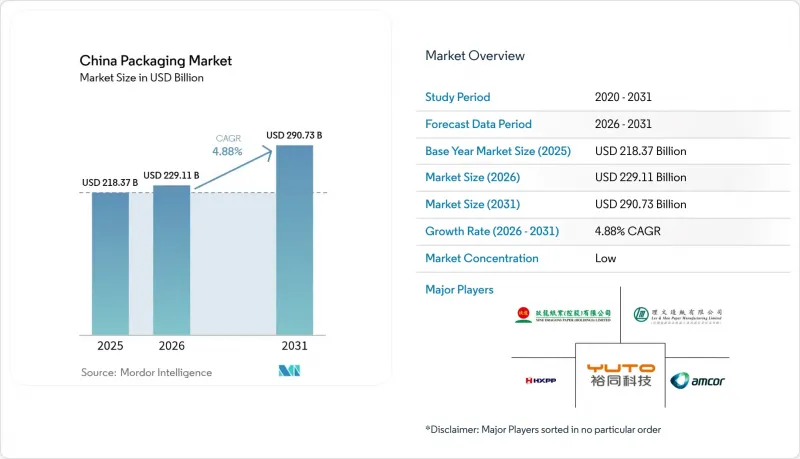
Mordor Intelligence에 의하면, 중국의 포장 시장 규모는 2025년에 2,183억 7,000만 달러로 평가되었고, 2026년에 2,291억 1,000만 달러로 추정되고, 2031년까지 2,907억 3,000만 달러에 이를 것으로 예측되며, 2026-2031년 CAGR 4.88%로 성장할 전망입니다.
본 보고서는 포장 재료별(플라스틱, 종이 및 판지, 유리, 금속 등), 포장 유형별(1차 포장, 2차 포장, 3차 포장), 포장 형태별(경질 포장, 연질 포장), 최종 사용자 산업별(식품 및 음료, 헬스케어 및 의약품, 미용·퍼스널케어 등)로 분류되어 있습니다. 시장 전망은 금액(달러) 기준으로 제시되어 있습니다.
중국의 포장 시장 동향 및 인사이트
전자상거래 소포 처리량의 폭발적인 증가
소포 처리량은 2025년 1990억 개에서 2026년에는 2140억 개에 달할 전망이며, 그 규모는 이미 미국과 EU의 합계를 웃돌고 있습니다. 물류 플랫폼에서는 공급업체의 골판지 상자 크기와 분류 센터의 설비를 동기화하여 창고 내 재포장을 없애고 있으며, 그 결과 단가가 높은 ‘진열 대응’용 2차 포장 상자에 대한 수요가 증가하고 있습니다. 2025년에는 지방 전자상거래 프로그램이 1,212개의 현급 도시로 확대되면서, 중국 포장 시장의 잠재 고객 기반은 연안 지역의 메가시티를 훨씬 뛰어넘어 확장되었습니다. 국가우정국은 현재 2026년까지 소포의 95%에 재활용 가능하거나 생분해성 소재의 사용을 의무화하고 있으며, 이로 인해 골판지 상자 비용이 약 8% 상승함에 따라 수성 접착제와 종이 테이프의 채택이 가속화되고 있습니다.
지속 가능한 종이 포장재에 대한 수요 급증
법적 구속력이 있는 친환경 포장 목표에 따라, 2030년까지 일회용 플라스틱을 2020년 대비 40% 감축해야 합니다. 나인 드래곤스 페이퍼(Nine Dragons Paper)는 2027년까지 연간 170만 톤의 재생 골판지를 생산할 충칭의 복합 시설에 60억 위안(8억 2,800만 달러)을 투자하고 있습니다. 센추리 선샤인 페이퍼(Century Sunshine Paper)는 폴리에틸렌 라미네이트 처리된 골판지 상자를 대체하기 위한 202억 위안(27억 9,000만 달러) 규모의 코팅지 프로젝트를 시작했습니다. 재사용 가능한 플라스틱 토트백을 활용한 폐쇄형 순환 프로그램에서는 50회 재활용 후 온실가스 배출량을 63% 감축할 수 있지만, 그 도입은 대도시권의 시범 사업에 국한되어 있어 소포 처리량에서 골판지 사용량을 2% 미만으로만 감축하고 있습니다.
플라스틱 금지 및 확장된 생산자 책임(EPR) 관련 규제
상하이의 폴리에틸렌 테레프탈레이트(PET) 병에 대한 보증금 반환 제도는 6개월 이내에 68%의 회수율을 달성했으나, 내륙 지역인 장쑤성에서는 아직 제도적 틀이 확정되지 않아 전국적인 준수가 복잡해지고 있습니다. 국가우정국이 2025년 6월에 공표한, 2026년까지 전자상거래 소포에서 비생분해성 플라스틱 봉투를 금지하는 규제로 인해 종이 대체재로 전환이 가속화되고 있지만,GB/T 20197 규격으로 인증된 생분해성 플라스틱은 기존 폴리에틸렌보다 40-60% 비싸며, 소규모 온라인 판매업자들이 이러한 비용 증가를 부담하는 데 소극적이기 때문에 중국 포장 시장으로의 이익 유입이 억제되고 있습니다.
부문 분석
2025년, 중국 포장 시장 규모의 45.83%를 종이 및 판지가 차지했으며, 그 배경에는 연간 5,000만 톤을 넘는 국내 컨테이너보드 생산 능력이 있습니다. 2025년 중반 시점에서 나인 드래곤스 페이퍼(Nine Dragons Paper) 한 회사만으로도 2,890만 톤의 생산 능력을 운영하고 있으며, 알리바바와 JD.com의 유통 네트워크에 대한 대규모 공급을 확보하고 있습니다. 골판지 수요는 여전히 해안 지역의 물류 허브 주변에 집중되어 있지만, 충칭과 후베이성에서의 확장 프로젝트는 내륙 지역의 생산 능력에 대한 수요가 증가하고 있음을 보여줍니다.
플라스틱은 연평균 성장률(CAGR) 4.93%로 가장 빠르게 성장하는 소재이며, 이는 즉석 음료용 파우치와 의약품용 블리스터 팩의 채택을 반영합니다. 유연성 수지는 얇은 두께 구현 가능성과 투명성을 제공하지만, 원유 가격에 연동된 비용 변동의 영향을 받기 쉬운 상황이 지속되고 있습니다. 유리는 백주 및 프리미엄 음료 분야에서 틈새 시장 지위를 유지하고 있는 반면, 금속 캔은 에너지 드링크의 유통 기한을 안정화시켜 도시 지역의 편의점 채널에서 충성도 높은 고객 기반을 유지하고 있습니다. 대체 소재의 총액은 금액 기준으로 5% 미만에 그치고 있지만, 브랜드 소유주들이 재생 가능 소재 사용 실적을 중시함에 따라 사탕수수 유래 바이오 폴리머가 화장품 분야에 서서히 침투하고 있습니다.
2025년 중국 포장 시장에서 1차 포장재는 51.48%를 차지했으나, 2차 포장재는 연평균 성장률(CAGR) 5.03%로 빠르게 성장하고 있습니다. 2025년, 월마트 차이나와 까르푸는 건조 식품 SKU의 78%에 대해 진열 준비가 완료된 2차 포장을 의무화했습니다. 이러한 변화로 인해 상자 개봉 및 진열대 진열 작업이 매장 직원에서 업스트림 공급업체로 이전되었으며, 매장당 노동 시간은 약 12% 감소한 것으로 추정됩니다. 이러한 동향은 컨버터의 전략을 재편하고 있습니다. 리 앤 맨 페이퍼(Lee & Man Paper)의 보고서에 따르면, 2025 회계연도에 진열 준비가 완료된 골판지 상자는 표준 운송용 컨테이너에 비해 15%의 가격 프리미엄이 붙어 있으며, 이는 순이익 전망치의 38-47% 증가에 기여하고 있습니다.
각 컨버터 기업들은 진열용 골판지에 대해 15%의 가격 프리미엄을 받아, 펄프 가격 변동으로부터 이익률을 보호하고 있습니다. 3차 포장용 스트레치 필름과 스트랩은 물류 분야의 기본 성장세를 따르고 있지만, JD 로지스틱스가 도입한 230만 개의 재사용 가능한 토트박스를 활용한 폐쇄형 네트워크에서는 그 수요가 줄어들고 있습니다. 역물류 비용 및 크기 표준화라는 장벽으로 인해 대도시권 이외 지역에서의 토트박스 보급은 둔화되고 있으며, 중국 포장 업계에서는 기존의 수축 필름에 여전히 성장 여지가 남아 있습니다.
기타 혜택 :
- 엑셀 형식 시장 예측(ME) 시트
- 3개월간의 애널리스트 지원
자주 묻는 질문
목차
제1장 서론
제2장 조사 방법
제3장 주요 요약
제4장 시장 구도
제5장 시장 규모 및 성장 예측
제6장 경쟁 구도
제7장 시장 기회 및 향후 전망
AJY 26.09.07According to Mordor Intelligence, the China packaging market size is projected to be USD 218.37 billion in 2025, USD 229.11 billion in 2026, and reach USD 290.73 billion by 2031, growing at a CAGR of 4.88% from 2026 to 2031.
This report is Segmented by Packaging Material (Plastic, Paper and Paperboard, Glass, Metal, and More), Packaging Type (Primary Packaging, Secondary Packaging, and Tertiary Packaging), Packaging Format (Rigid Packaging and Flexible Packaging), and End-User Industry (Food and Beverages, Healthcare and Pharmaceutical, Beauty and Personal Care, and More). The Market Forecasts are Provided in Terms of Value (USD).
China Packaging Market Trends and Insights
Explosive Growth Of E-Commerce Parcel Volume
Parcel throughput climbed from 199 billion pieces in 2025 to a targeted 214 billion in 2026, a scale that already eclipses combined U.S. and EU totals. Logistics platforms are eliminating in-warehouse repacking by synchronizing supplier carton dimensions with sorting-center equipment, thereby raising demand for shelf-ready secondary boxes with a higher unit value. Rural e-commerce programs rolled out to 1,212 county-level cities in 2025, expanding the addressable base for the China packaging market far beyond coastal megacities. The State Post Bureau now requires 95% of parcels to use recyclable or degradable materials by 2026, which bumps corrugated-box costs by roughly 8% but accelerates the adoption of water-based adhesives and paper tapes.
Demand Spike For Sustainable Paper-Based Formats
Binding green-packaging targets mandate a 40% reduction in single-use plastics versus 2020 by 2030. Nine Dragons Paper is spending RMB 6 billion (USD 828 million) on a Chongqing complex that will deliver 1.7 million tonnes annually of recycled containerboard by 2027. Century Sunshine Paper launched a RMB 20.2 billion (USD 2.79 billion) coated-paperboard project designed to displace polyethylene-laminated cartons. Closed-loop programs using reusable plastic totes can cut greenhouse-gas emissions 63% after 50 rotations, yet deployment remains limited to metropolitan pilot circles, trimming corrugated use by less than 2% of parcel volume.
Plastic-Ban and Extended-Producer-Responsibility Rules
Shanghai's deposit-return program for polyethylene terephthalate bottles achieved a 68% recovery rate within six months, but inland Jiangsu has yet to finalize its framework, complicating nationwide compliance. The State Post Bureau's June 2025 regulation banning non-degradable plastic mailers for e-commerce parcels by 2026 is accelerating the shift to paper-based alternatives, but degradable plastics certified under GB/T 20197 standards cost 40-60% more than conventional polyethylene, a premium that small online merchants are reluctant to absorb, restraining profit transfer into the China packaging market.
Other drivers and restraints analyzed in the detailed report include:
- Convenience Ready-To-Drink Food Packaging Adoption
- Pharmaceutical Cold-Chain Expansion
- Volatile Pulp and Polymer Feedstock Costs
For complete list of drivers and restraints, kindly check the Table Of Contents.
Segment Analysis
Paper and paperboard held 45.83% of the China packaging market size in 2025, led by over 50 million tonnes per year of domestic containerboard capacity. Nine Dragons Paper alone operated 28.9 million tonnes by mid-2025, ensuring scale supply to Alibaba and JD.com distribution networks. Corrugated demand continues to concentrate around coastal shipping hubs, yet expansion projects in Chongqing and Hubei show inland appetite for capacity
Plastic is the fastest-growing material at a 4.93% CAGR, reflecting pouch adoption for ready-to-drink beverages and blister packs for pharmaceuticals. Flexible resins offer down-gauging potential and transparency but remain exposed to crude-linked cost swings. Glass retains a niche in baijiu and premium beverages, while metal cans stabilize shelf life in energy drinks, keeping a loyal base in urban convenience channels. Together, alternative materials sit below 5% by value, yet bio-based polymers derived from sugarcane are edging into cosmetics as brand owners pursue renewable content credence.
Primary layers represented 51.48% of the China packaging market in 2025, but secondary formats are pacing ahead at a 5.03% CAGR. Walmart China and Carrefour mandated shelf-ready secondary packaging for 78% of dry-grocery SKUs in 2025, a shift that transfers box-opening and shelf-stacking tasks from store employees to upstream suppliers, cutting labor hours per store by an estimated 12%. This trend is reshaping converter strategies; Lee and Man Paper reported that shelf-ready corrugated boxes commanded a 15% price premium versus standard shipping containers in fiscal 2025, contributing to a 38-47% increase in net profit guidance
Converters receive a 15% price premium on shelf-ready corrugated, protecting margins against pulp volatility. Tertiary stretch-film and strapping track baseline logistics growth but face dilution in closed-loop networks using 2.3 million reusable totes installed by JD Logistics. Reverse-logistics costs and size standardization barriers slow tote penetration beyond megacities, ensuring a runway for conventional shrink film inside the China packaging industry.
Complete Report Scope:
- By Packaging Material
- Plastic
- Paper and Paperboard
- Glass
- Metal
- Other Materials
- By Packaging Type
- Primary Packaging
- Secondary Packaging
- Tertiary Packaging
- By Packaging Format
- Rigid Packaging
- Flexible Packaging
- By End-User Industry
- Food and Beverages
- Healthcare and Pharmaceutical
- Beauty and Personal Care
- Industrial
- Other End-User Industries
List of Companies Covered in this Report:
- Nine Dragons Paper (Holdings) Ltd.
- Lee and Man Paper Manufacturing Ltd.
- Shanying International Holdings Co., Ltd.
- Hexing Packaging Co., Ltd.
- Greatview Aseptic Packaging Co., Ltd.
- Wuxi Huatai Co., Ltd.
- Shanghai Zijiang Enterprise Group Co., Ltd.
- YUTO Packaging Technology Co., Ltd.
- Zhejiang Xinlei Packaging Co., Ltd.
- Guangdong Champ New Material Co., Ltd.
- Crown Holdings, Inc.
- Amcor Plc
- Berry Global Group, Inc.
- International Paper Company
- WestRock Company
- Sealed Air Corporation
- Tetra Pak (China) Ltd.
- Beijing Hualian Printing Co., Ltd.
- Zhejiang Jiashan Dingxin Packaging Co., Ltd.
- Shenzhen Yutong Packaging Technology Co., Ltd.
- Smurfit Kappa Group Plc
- DS Smith Plc
- Huhtamaki Oyj
- Mondi Group
Additional Benefits:
- The market estimate (ME) sheet in Excel format
- 3 months of analyst support
TABLE OF CONTENTS
1 INTRODUCTION
- 1.1 Study Assumptions and Market Definition
- 1.2 Scope of the Study
2 RESEARCH METHODOLOGY
3 EXECUTIVE SUMMARY
4 MARKET LANDSCAPE
- 4.1 Market Overview
- 4.2 Market Drivers
- 4.2.1 Explosive Growth of E-Commerce Parcel Volume
- 4.2.2 Demand Spike for Sustainable Paper-Based Formats
- 4.2.3 Convenience Ready-to-Drink Food Packaging Adoption
- 4.2.4 Pharmaceutical Cold-Chain Expansion
- 4.2.5 IoT-Enabled Track and Trace Packaging Rollout
- 4.2.6 Ultra-Low-Temperature Bio-Pharma Logistics Packaging
- 4.3 Market Restraints
- 4.3.1 Plastic Ban and Extended Producer Responsibility Rules
- 4.3.2 Volatile Pulp and Polymer Feedstock Costs
- 4.3.3 Patchy Provincial Recycling Infrastructure
- 4.3.4 Reusable Tote Pilots Eroding Urban Corrugated Demand
- 4.4 Industry Value Chain Analysis
- 4.5 Regulatory Landscape
- 4.6 Porter's Five Forces Analysis
- 4.6.1 Threat of New Entrants
- 4.6.2 Bargaining Power of Suppliers
- 4.6.3 Bargaining Power of Buyers
- 4.6.4 Threat of Substitutes
- 4.6.5 Competitive Rivalry
- 4.7 Impact of Macroeconomic Factors on the Market
5 MARKET SIZE AND GROWTH FORECASTS (VALUES)
- 5.1 By Packaging Material
- 5.1.1 Plastic
- 5.1.2 Paper and Paperboard
- 5.1.3 Glass
- 5.1.4 Metal
- 5.1.5 Other Materials
- 5.2 By Packaging Type
- 5.2.1 Primary Packaging
- 5.2.2 Secondary Packaging
- 5.2.3 Tertiary Packaging
- 5.3 By Packaging Format
- 5.3.1 Rigid Packaging
- 5.3.2 Flexible Packaging
- 5.4 By End-User Industry
- 5.4.1 Food and Beverages
- 5.4.2 Healthcare and Pharmaceutical
- 5.4.3 Beauty and Personal Care
- 5.4.4 Industrial
- 5.4.5 Other End-User Industries
6 COMPETITIVE LANDSCAPE
- 6.1 Market Concentration
- 6.2 Strategic Moves
- 6.3 Market Share Analysis
- 6.4 Company Profiles (includes Global Level Overview, Market Level Overview, Core Segments, Financials as available, Strategic Information, Market Rank/Share, Products and Services, Recent Developments)
- 6.4.1 Nine Dragons Paper (Holdings) Ltd.
- 6.4.2 Lee and Man Paper Manufacturing Ltd.
- 6.4.3 Shanying International Holdings Co., Ltd.
- 6.4.4 Hexing Packaging Co., Ltd.
- 6.4.5 Greatview Aseptic Packaging Co., Ltd.
- 6.4.6 Wuxi Huatai Co., Ltd.
- 6.4.7 Shanghai Zijiang Enterprise Group Co., Ltd.
- 6.4.8 YUTO Packaging Technology Co., Ltd.
- 6.4.9 Zhejiang Xinlei Packaging Co., Ltd.
- 6.4.10 Guangdong Champ New Material Co., Ltd.
- 6.4.11 Crown Holdings, Inc.
- 6.4.12 Amcor Plc
- 6.4.13 Berry Global Group, Inc.
- 6.4.14 International Paper Company
- 6.4.15 WestRock Company
- 6.4.16 Sealed Air Corporation
- 6.4.17 Tetra Pak (China) Ltd.
- 6.4.18 Beijing Hualian Printing Co., Ltd.
- 6.4.19 Zhejiang Jiashan Dingxin Packaging Co., Ltd.
- 6.4.20 Shenzhen Yutong Packaging Technology Co., Ltd.
- 6.4.21 Smurfit Kappa Group Plc
- 6.4.22 DS Smith Plc
- 6.4.23 Huhtamaki Oyj
- 6.4.24 Mondi Group
7 MARKET OPPORTUNITIES AND FUTURE OUTLOOK
- 7.1 White-Space and Unmet-Need Assessment


