

|
시장보고서
상품코드
2123323
자산 추적 시장 : 점유율 분석, 업계 동향과 통계, 성장 예측(2026-2031년)Asset Tracking - Market Share Analysis, Industry Trends & Statistics, Growth Forecasts (2026 - 2031) |
||||||
 Mordor Intelligence
Mordor Intelligence에 의하면, 자산 추적 시장 규모는 2026년에 324억 5,000만 달러에 이르고, 2031년까지 542억 9,000만 달러로 확대될 것으로 예측되고 있어 예측 기간 중 연평균 복합 성장률(CAGR)은 10.84%가 될 전망입니다.
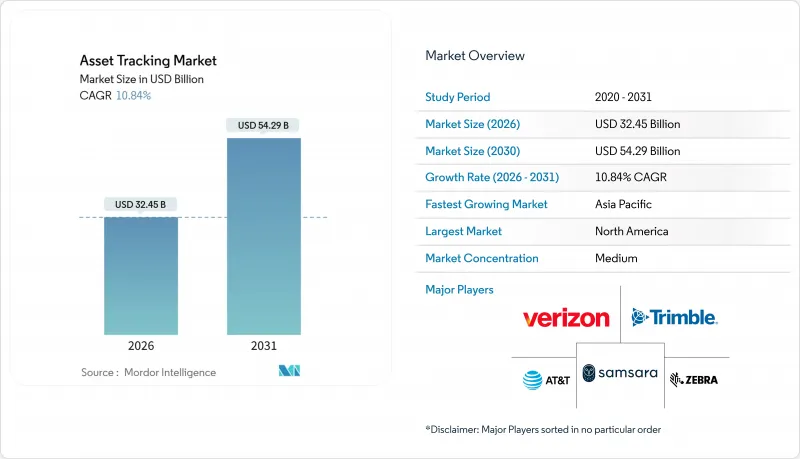
본 보고서는 구성 요소(하드웨어 및 소프트웨어), 도입 모델(클라우드 및 On-Premise), 기술 유형(RFID, GPS/GNSS 등), 최종 사용자 산업(운송 및 물류, 항공, 의료, 기타), 자산 유형(차량, 비동력 트레일러 및 컨테이너, 중장비·기계, 기타), 그리고 지역별로 분류되어 있습니다. 시장 예측은 금액(미 달러) 기준으로 제시되어 있습니다.
세계 자산 추적 시장 동향 및 인사이트
실시간 가시성이 필요한 3PL 및 전자상거래 물류의 확대
현재, 제3자 물류(3PL) 제공업체들은 최종 사용자에게 실시간 배송 지도를 공개하는 마켓플레이스를 위해 급증하는 소포 처리량을 관리하고 있습니다. 아마존은 모든 배송에 GPS 좌표 표기를 의무화하고 있으며, 지역 운송업체들은 차량 개조를 강요받고 있으며, 그렇지 않을 경우 계약을 잃을 위험에 직면해 있습니다. 월마트는 도크 출발 후 15분 이내에 팔레트 단위로 RFID 스캔을 의무화하고 있으며, 규정을 준수하지 않는 공급업체에는 분기당 5만 달러 이상의 차감금이 부과되고 있습니다. 동남아시아 세관에서는 블록체인에 연동된 GPS 추적 데이터를 시범적으로 도입하여 관세 신고서를 자동으로 입력함으로써 통관 시간을 단축하고 있습니다. 또한, 클라우드 기반 대시보드를 지속적으로 활용함으로써 사업자가 분기별 대조를 상시 감사로 대체한 결과, 청구서와 관련된 분쟁이 30% 감소했습니다. 이러한 가시성 요건으로 인해 자산 추적 시장은 온라인 소매의 핵심 서비스 약속에 통합되어, 운임이 하락하더라도 지출이 지속될 것이 보장되고 있습니다.
IoT 센서 및 GPS 추적기의 비용 감소
GPS 및 온도 센서가 통합된 셀룰러 IoT 모듈은 반도체의 6나노미터 공정 전환으로 실리콘 면적이 절반으로 줄어들어 2025년에는 4.80달러까지 하락했습니다. 블루투스 저에너지(BLE) 비콘의 소매 가격은 3달러 미만으로 떨어졌으며, 식료품점의 시범 사업에서 상자 단위로 태그를 부착할 수 있게 되어 식품 폐기물을 18% 절감하고 있습니다. 패시브형 UHF RFID 태그의 가격은 현재 0.06달러로, 의류 기업들은 모든 의류를 추적할 수 있게 되었습니다. Vodafone은 5년 데이터 계약을 기반으로 초기 비용 없이 NB-IoT 기기를 번들로 제공하여, 자본 지출을 예측 가능한 운영 비용으로 전환하고 있습니다. 하드웨어 진입 장벽이 낮아짐에 따라 중소 통신사의 진입 기반이 확대되고, 자산 추적 시장 전체가 성장하고 있습니다.
중소기업의 고액 초기 하드웨어 및 통합 비용
차량 50대 미만의 차량 함대의 경우, 추적기, 배선, 시스템 통합에 드는 도입 비용이 5만 달러를 초과하는 경우가 흔합니다. 인건비는 차량 1대당 평균 300달러이며, ERP 플랫폼과의 API 연동을 위해서는 시간당 150달러의 컨설팅 비용이 200시간 이상 소요됩니다. SaaS의월이용료는 자산 1건당 25-40달러가 추가됩니다. 라틴아메리카와 동남아시아의 화물 운송 이익률이 6-9%에 불과하기 때문에 투자 회수에는 2년 이상 소요되어, 소규모 사업자로의 보급이 더딘 상황입니다.
부문 분석
2025년 매출액 중 하드웨어가 58.14%를 차지하며 자산 추적 시장에서 가장 큰 점유율을 차지하고 있지만, 각 벤더사가 분석 기능, API 커넥터, 규제 보고 도구를 묶은 구독 모델로 전환하고 있어 소프트웨어 매출액은 연평균 성장률(CAGR) 11.20%로 확대되고 있습니다. 이러한 변화로 인해 단일 소프트웨어 라이선스를 새로운 자산 클래스로 업셀링할 수 있으며, 추가 하드웨어 비용이 필요하지 않아 매출 총이익률이 향상됩니다. 이러한 추세에 힘입어 2031년까지 자산 추적 시장 전체 규모가 확대될 전망입니다. 블루투스 비콘의 가격 하락으로 인해 하드웨어 공급업체들은 셀룰러 데이터 사용량을 최대 30% 절감하는 무선 펌웨어 업데이트나 엣지 분석을 통해 차별화를 꾀할 수밖에 없게 되었습니다. 한편, 차량 관리자들은 이용률이나 유지보수 위험을 바탕으로 자산을 자동으로 순위를 매기는 대시보드를 선호하는 경향이 있습니다. 예지보전 알고리즘은 이미 건설용 차량에서 예기치 않은 가동 중단 시간을 28% 줄였으며, 초기 라이선스 비용을 상회하는 간접적인 비용 절감 효과를 창출하여 계약 갱신율을 높이고 있습니다.
지속적인 수익은 공급업체와 고객 간의 힘의 균형도 변화시키고 있습니다. 고객은 월 단위 계약을 해지할 수 있기 때문에 플랫폼은 현재 5분 내 온보딩이나 서로 다른 유형의 차량이 혼재된 차량의 단일 화면 관리와 같은 사용자 경험 지표에 주력하고 있습니다. 디지털 납품 증명 및 전자 운전 기록을 포함한 자동화된 규정 준수 모듈은 소프트웨어 계층을 일상 업무에 더욱 깊이 통합하고 있습니다. 독립 소프트웨어 공급업체는 전자 서명 수집 기능을 통합하여 FDA 21 CFR Part 11의 문서화 과정을 효율화하고 있습니다. 이는 하드웨어만 제공하는 경쟁사들은 재현할 수 없는 기능입니다. 이러한 높은 정착도를 보이는 워크플로우 덕분에 소프트웨어는 자산 추적 시장의 전략적 성장 동력이 되고 있는 반면, 상품화된 디바이스는 호환 가능한 엔드포인트 역할을 하고 있습니다.
클라우드 서비스는 2025년 매출의 63.15%를 차지하며 연평균 성장률(CAGR) 11.38%로 확대되고 있는데, 이는 중견 포워더들이 데이터센터에 대한 설비 투자를 피하려는 경향을 반영한 것입니다. 사용량 기반 요금 체계에 따라 지출은 출하량에 따라 조정되므로, 성수기인 연말연시에 계절 한정 트레일러를 추가하는 고객은 새로운 라이선스를 통째로 구매하는 대신, 기기 크레딧을 추가로 구매하기만 하면 됩니다. 멀티테넌트 아키텍처를 통해 매주 출시되는 기능이 즉시 반영되므로, 사용자는 계획된 다운타임 없이 지오펜스 템플릿, 실시간 이상 알림, 운송업체 API와의 통합을 활용할 수 있습니다. 그 결과, 클라우드 부문은 자산 추적 시장 규모에서 가장 큰 점유율을 차지하고 있으며, 포화 징후는 보이지 않습니다.
On-Premise형 솔루션은 데이터 주권이나 검증된 컴퓨팅 환경이 여전히 필수 조건인 국방, 항공기 정비, 제약 업계의 콜드체인 분야에서 여전히 뿌리 깊게 자리 잡고 있습니다. 그러나 규제 대상 기업들조차도 기밀성이 높은 데이터는 로컬에 저장하면서, 중요도가 낮은 텔레메트리 데이터는 분석을 위해 퍼블릭 클라우드로 전송하는 하이브리드형 토폴로지를 채택하고 있습니다. 이러한 모델은 보고서 생성 및 머신 러닝 워크로드를 오프사이트로 전환함으로써 순수한 On-Premise형 지출을 줄이고 클라우드 점유율 확대를 뒷받침하고 있습니다. 유럽 및 북미 일부 지역의 전력비 및 냉각 비용 상승은 총 소유 비용(TCO) 분석에서 클라우드 구독의 우위를 더욱 공고히 하고 있습니다. 예측 기간 동안 클라우드 아키텍처의 민첩성 덕분에 클라우드는 자산 추적 시장에서 주요 성장 동력으로 남아 있을 것입니다.
지역별 분석
아시아태평양은 2025년에 매출의 40.28%를 차지하며, 이 지역의 자산 추적 시장 규모는 2031년까지 연평균 성장률(CAGR) 11.56%로 확대될 것으로 전망됩니다. 중국의 ‘일대일로’ 노선에서는 통관 절차를 신속하게 처리하기 위해 GPS 위치 정보가 기록된 서류가 필요하며, 인도의 e-way bill 시스템에서는 50킬로미터를 초과하는 주간 운송 시 실시간 차량 추적이 의무화되어 있습니다. 일본의 스마트 물류 프로젝트에서는 자율 주행 트럭과 IoT 태그가 부착된 화물이 통합되어 있으며, 이는 가시화 기술에 대한 정부의 지원을 보여줍니다. 중국의 택배 처리 건수는 2025년에 1,350억 건에 달하며, 이는 RFID 스캐너를 이용해 분류 작업을 자동화한 운송업체에 이점을 제공합니다.
북미 시장은 여전히 성숙한 상태이며, 연방자동차운송안전국(FMCSA)이 350만 대의 트럭을 대상으로 전자 운전 일지 작성을 의무화한 것이 그 기반이 되고 있습니다. 아마존의 판매자 대상 요건은 지역의 제3자 물류(3PL) 사업자에게도 파급되고 있습니다. 캘리포니아주와 텍사스주에서 화물 도난이 빈번히 발생하는 지역을 배경으로, 보험사의 추적 의무화가 진행되면서 기초적인 수요를 끌어올리고 있습니다. 캐나다의 외딴 지역 광산 사업자들은 휴대전화 통신 사각지대를 메우기 위해 위성·IoT 연동을 도입하고 있으며, 이는 공급업체의 잠재적 수익을 확대되고 있습니다.
유럽에서는 엄격한 일반 데이터 보호 규정(GDPR(EU 개인정보보호규정))의 동의 요건과 자동차 제조 분야의 인더스트리 4.0 투자 간 균형이 이루어지고 있습니다. 폭스바겐과 BMW는 RFID를 활용하여 JIS(Just-In-Sequence) 배송을 동기화함으로써 규정 준수의 복잡성을 상쇄하고 있습니다. 동부 회랑 지역의 도난 위험이 은폐형 비콘 도입을 촉진하는 한편, ESG 보고가 가동률 대시보드 채택을 뒷받침하고 있습니다. 이러한 동향들이 맞물리면서 유럽 전역에서 자산 추적 시장은 완만하지만 꾸준한 성장을 유지하고 있습니다.
기타 혜택:
- 엑셀 형식 시장 예측(ME) 시트
- 3개월간의 애널리스트 지원
자주 묻는 질문
목차
제1장 서론
제2장 조사 방법
제3장 주요 요약
제4장 시장 구도
제5장 시장 규모와 성장 예측
제6장 경쟁 구도
제7장 시장 기회와 향후 전망
JHS 26.09.07According to Mordor Intelligence, the asset tracking market size reached USD 32.45 billion in 2026 and is projected to climb to USD 54.29 billion by 2031, reflecting a CAGR of 10.84% over the forecast window.
This report is Segmented by Component (Hardware, and Software), Deployment Model (Cloud, and On-Premise), Technology Type (RFID, GPS/GNSS, and More), End-User Industry (Transportation and Logistics, Aviation, Healthcare, and More), Asset Type (Fleet Vehicles, Non-Powered Trailers and Containers, Heavy Equipment and Machinery, and More), and Geography. The Market Forecasts are Provided in Terms of Value (USD).
Global Asset Tracking Market Trends and Insights
Expansion of 3PL and E-commerce Logistics Requiring Real-Time Visibility
Third-party logistics providers now manage surging parcel volumes for marketplaces that publish live shipment maps to end customers. Amazon requires every handoff to include GPS coordinates, forcing regional carriers to retrofit fleets or risk contract loss. Walmart imposes pallet-level RFID scans within 15 minutes of dock departure, with chargebacks topping USD 50,000 per quarter for non-compliant suppliers. Southeast Asian customs pilots blockchain-anchored GPS trails to auto-populate duty declarations, shortening clearance times. Continuous, cloud-based dashboards cut invoice disputes by 30% as operators replace quarterly reconciliations with perpetual audits. These visibility mandates embed the asset tracking market in the core service promise of online retail, ensuring sustained spending even when freight rates soften.
Falling IoT Sensor and GPS-Tracker Costs
Cellular IoT modules incorporating GPS and temperature sensors fell to USD 4.80 in 2025 as semiconductor migrations to 6-nanometer nodes halved silicon area. Bluetooth Low Energy beacons retail below USD 3, enabling crate-level tagging that reduces food waste 18% in grocery pilots. Passive UHF RFID tags now cost USD 0.06, letting apparel firms track every garment. Vodafone bundles NB-IoT devices at zero upfront cost under five-year data contracts that convert capital expenditure into predictable operating fees. Lower hardware barriers widen the addressable base of small carriers, expanding the overall asset tracking market.
High Upfront Hardware and Integration Costs for SMEs
Fleets under 50 vehicles often face installation bills exceeding USD 50,000 for trackers, wiring, and systems integration. Labor averages USD 300 per vehicle, while API work with ERP platforms consumes 200-plus consulting hours at USD 150 each. Monthly SaaS fees add USD 25-40 per asset. With freight margins at 6-9% in Latin America and Southeast Asia, payback stretches beyond two years, slowing penetration among small operators.
Other drivers and restraints analyzed in the detailed report include:
- Escalating Cargo-Theft Losses Driving Insurer-Mandated Tracking
- AI-Powered Multi-Sensor Fusion Improves Accuracy
- GNSS Jamming and Spoofing Incidents Raise Liability Risk
For complete list of drivers and restraints, kindly check the Table Of Contents.
Segment Analysis
Hardware delivered 58.14% of 2025 revenue, giving it the largest asset tracking market share, yet software revenue is expanding at an 11.20% CAGR as vendors pivot toward subscriptions that bundle analytics, application-programming-interface connectors, and regulatory reporting tools. This shift improves gross margins because a single software license can be upsold across new asset classes without further hardware costs, a dynamic that will increase the overall asset tracking market size through 2031. Price erosion in Bluetooth beacons forces hardware suppliers to differentiate through over-the-air firmware and edge analytics that reduce cellular data usage by up to 30%, while fleet managers gravitate to dashboards that auto-rank assets by utilization or maintenance risk. Predictive-maintenance algorithms already cut unplanned downtime 28% in construction fleets, creating a soft cost saving that outweighs initial license fees and strengthens renewal rates.
Recurring revenue also changes vendor-customer power dynamics. Because clients can cancel month-to-month contracts, platforms now focus on user-experience metrics such as five-minute onboarding and single-pane management of mixed fleets. Automated compliance modules, including digital proof-of-delivery and electronic driver logs, further embed the software layer in daily operations. Independent software vendors integrate electronic signature capture to streamline FDA 21 CFR Part 11 documentation, a feature hardware-only competitors cannot replicate. These sticky workflows make software the strategic growth engine of the asset tracking market, while commoditized devices become interchangeable endpoints.
Cloud services held 63.15% of 2025 revenue and are expanding at an 11.38% CAGR, reflecting the preference of mid-market freight forwarders to avoid data-center capital expenditure. Consumption-based fees align outlays with shipment volumes, so customers who add seasonal trailers during holiday peaks simply pay for more device credits instead of buying new licenses outright. Because weekly feature releases flow instantly through multitenant architectures, users gain geofence templates, real-time anomaly alerts, and carrier-API integrations without planned downtime. Consequently, the cloud segment commands the largest slice of the asset tracking market size and shows no sign of saturation.
On-premise solutions persist in defense, aviation maintenance, and pharmaceutical cold chains, where data sovereignty and validated computing environments remain non-negotiable. Yet even regulated entities adopt hybrid topologies that store sensitive payloads locally while forwarding non-critical telemetry to public clouds for analytics. Such models erode pure on-premise spending by shifting report generation and machine-learning workloads off-site, reinforcing the cloud's share gains. Rising electricity and cooling costs in Europe and parts of North America further tip total-cost-of-ownership analyses in favor of cloud subscriptions. Over the forecast period, cloud's architectural agility will keep it the principal growth lever in the asset tracking market.
Complete Report Scope:
- By Component
- Hardware
- Software
- By Deployment Model
- Cloud
- On-Premise
- By Technology Type
- RFID
- GPS / GNSS
- Bluetooth Low Energy
- Wi-Fi
- NB-IoT and LTE-M
- Ultra-Wideband
- Satellite and Hybrid LPWAN
- By End-user Industry
- Transportation and Logistics
- Aviation
- Healthcare
- Manufacturing
- Food and Beverage
- Other End-user Industry (Construction etc.)
- By Asset Type
- Fleet Vehicles
- Non-powered Trailers and Containers
- Heavy Equipment and Machinery
- Returnable Transport Items
- High-value Portable Assets
- Livestock and Agriculture Assets
- By Geography
- North America
- United States
- Canada
- Mexico
- South America
- Brazil
- Argentina
- Rest of South America
- Europe
- Germany
- United Kingdom
- France
- Italy
- Spain
- Russia
- Rest of Europe
- Asia Pacific
- China
- India
- Japan
- South Korea
- Southeast Asia
- Australia and New Zealand
- Rest of Asia Pacific
- Middle East
- Saudi Arabia
- United Arab Emirates
- Turkey
- Rest of Middle East
- Africa
- South Africa
- Nigeria
- Rest of Africa
- North America
Geography Analysis
Asia Pacific accounted for 40.28% revenue in 2025, and its asset tracking market size is projected to expand at an 11.56% CAGR through 2031. China's Belt and Road corridors require GPS-stamped documentation to speed customs clearances, and India's e-way bill system mandates real-time vehicle tracking for interstate loads exceeding 50 kilometers. Japan's smart-logistics projects integrate autonomous trucks with IoT-tagged cargo, demonstrating government support for visibility tech. Express parcel deliveries in China reached 135 billion in 2025, rewarding carriers that automate sorting with RFID scanners.
North America remains mature, anchored by Federal Motor Carrier Safety Administration electronic logging mandates for 3.5 million trucks. Amazon's seller requirements ripple across regional 3PLs. Cargo-theft hot spots in California and Texas trigger insurer tracking mandates that shore up baseline demand. Canada's remote mining operators adopt satellite-IoT links to bridge cellular gaps, broadening supplier addressable revenue.
Europe balances stringent General Data Protection Regulation consent rules with Industry 4.0 investment in automotive manufacturing. Volkswagen and BMW synchronize just-in-sequence deliveries via RFID, offsetting compliance complexity. Eastern corridor theft risks spur rollout of covert beacons, while ESG reporting drives adoption of utilization dashboards. Combined, these dynamics sustain moderate but steady asset tracking market growth across the continent.
- Verizon Communications Inc.
- Zebra Technologies Corporation
- AT&T Inc.
- Trimble Inc.
- Samsara Inc.
- ORBCOMM Inc.
- CalAmp Corp.
- Fleet Complete
- Spireon Inc.
- OnAsset Intelligence Inc.
- Asset Panda LLC
- Ubisense Ltd.
- Trackunit A/S
- Semtech Corporation
- Link Labs Inc.
- Tive Inc.
- Geoforce Inc.
- Tenna LLC
- Queclink Wireless Solutions Co. Ltd.
- Sensitech Inc.
- Project44 Inc.
- Qualcomm Technologies Inc.
- IBM Corporation
- Oracle Corporation
Additional Benefits:
- The market estimate (ME) sheet in Excel format
- 3 months of analyst support
TABLE OF CONTENTS
1 INTRODUCTION
- 1.1 Study Assumptions and Market Definition
- 1.2 Scope of the Study
2 RESEARCH METHODOLOGY
3 EXECUTIVE SUMMARY
4 MARKET LANDSCAPE
- 4.1 Market Overview
- 4.2 Market Drivers
- 4.2.1 Expansion of 3PL and e-commerce logistics requiring real-time visibility
- 4.2.2 Falling IoT sensor and GPS-tracker costs
- 4.2.3 Escalating cargo-theft losses driving insurer-mandated tracking
- 4.2.4 AI-powered multi-sensor fusion boosts indoor and outdoor accuracy
- 4.2.5 Satellite-IoT constellations unlock remote-area asset visibility
- 4.2.6 ESG-driven asset-utilization KPIs push lifecycle transparency
- 4.3 Market Restraints
- 4.3.1 High upfront hardware and integration costs for SMEs
- 4.3.2 GNSS jamming and spoofing incidents raise liability risk
- 4.3.3 Data-privacy laws limit location-data monetization
- 4.3.4 Spectrum congestion for LPWAN and satellite bands
- 4.4 Industry Value-Chain Analysis
- 4.5 Regulatory Landscape
- 4.6 Technological Outlook
- 4.7 Porter's Five Forces Analysis
- 4.7.1 Bargaining Power of Suppliers
- 4.7.2 Bargaining Power of Buyers
- 4.7.3 Threat of New Entrants
- 4.7.4 Threat of Substitutes
- 4.7.5 Intensity of Competitive Rivalry
- 4.8 Impact of Macroeconomic Factors on the Market
5 MARKET SIZE AND GROWTH FORECASTS (VALUE)
- 5.1 By Component
- 5.1.1 Hardware
- 5.1.2 Software
- 5.2 By Deployment Model
- 5.2.1 Cloud
- 5.2.2 On-Premise
- 5.3 By Technology Type
- 5.3.1 RFID
- 5.3.2 GPS / GNSS
- 5.3.3 Bluetooth Low Energy
- 5.3.4 Wi-Fi
- 5.3.5 NB-IoT and LTE-M
- 5.3.6 Ultra-Wideband
- 5.3.7 Satellite and Hybrid LPWAN
- 5.4 By End-user Industry
- 5.4.1 Transportation and Logistics
- 5.4.2 Aviation
- 5.4.3 Healthcare
- 5.4.4 Manufacturing
- 5.4.5 Food and Beverage
- 5.4.6 Other End-user Industry (Construction etc.)
- 5.5 By Asset Type
- 5.5.1 Fleet Vehicles
- 5.5.2 Non-powered Trailers and Containers
- 5.5.3 Heavy Equipment and Machinery
- 5.5.4 Returnable Transport Items
- 5.5.5 High-value Portable Assets
- 5.5.6 Livestock and Agriculture Assets
- 5.6 By Geography
- 5.6.1 North America
- 5.6.1.1 United States
- 5.6.1.2 Canada
- 5.6.1.3 Mexico
- 5.6.2 South America
- 5.6.2.1 Brazil
- 5.6.2.2 Argentina
- 5.6.2.3 Rest of South America
- 5.6.3 Europe
- 5.6.3.1 Germany
- 5.6.3.2 United Kingdom
- 5.6.3.3 France
- 5.6.3.4 Italy
- 5.6.3.5 Spain
- 5.6.3.6 Russia
- 5.6.3.7 Rest of Europe
- 5.6.4 Asia Pacific
- 5.6.4.1 China
- 5.6.4.2 India
- 5.6.4.3 Japan
- 5.6.4.4 South Korea
- 5.6.4.5 Southeast Asia
- 5.6.4.6 Australia and New Zealand
- 5.6.4.7 Rest of Asia Pacific
- 5.6.5 Middle East
- 5.6.5.1 Saudi Arabia
- 5.6.5.2 United Arab Emirates
- 5.6.5.3 Turkey
- 5.6.5.4 Rest of Middle East
- 5.6.6 Africa
- 5.6.6.1 South Africa
- 5.6.6.2 Nigeria
- 5.6.6.3 Rest of Africa
- 5.6.1 North America
6 COMPETITIVE LANDSCAPE
- 6.1 Market Concentration
- 6.2 Strategic Moves
- 6.3 Market Share Analysis
- 6.4 Company Profiles (includes Global Level Overview, Market Level Overview, Core Segments, Financials as Available, Strategic Information, Market Rank/Share for Key Companies, Products and Services, and Recent Developments)
- 6.4.1 Verizon Communications Inc.
- 6.4.2 Zebra Technologies Corporation
- 6.4.3 AT&T Inc.
- 6.4.4 Trimble Inc.
- 6.4.5 Samsara Inc.
- 6.4.6 ORBCOMM Inc.
- 6.4.7 CalAmp Corp.
- 6.4.8 Fleet Complete
- 6.4.9 Spireon Inc.
- 6.4.10 OnAsset Intelligence Inc.
- 6.4.11 Asset Panda LLC
- 6.4.12 Ubisense Ltd.
- 6.4.13 Trackunit A/S
- 6.4.14 Semtech Corporation
- 6.4.15 Link Labs Inc.
- 6.4.16 Tive Inc.
- 6.4.17 Geoforce Inc.
- 6.4.18 Tenna LLC
- 6.4.19 Queclink Wireless Solutions Co. Ltd.
- 6.4.20 Sensitech Inc.
- 6.4.21 Project44 Inc.
- 6.4.22 Qualcomm Technologies Inc.
- 6.4.23 IBM Corporation
- 6.4.24 Oracle Corporation
7 MARKET OPPORTUNITIES AND FUTURE OUTLOOK
- 7.1 White-space and Unmet-need Assessment


