|
시장보고서
상품코드
2123397
수축 및 스트레치 슬리브 라벨 시장 : 점유율 분석, 업계 동향과 통계, 성장 예측(2026-2031년)Shrink And Stretch Sleeve Labels - Market Share Analysis, Industry Trends & Statistics, Growth Forecasts (2026 - 2031) |
||||||
 Mordor Intelligence
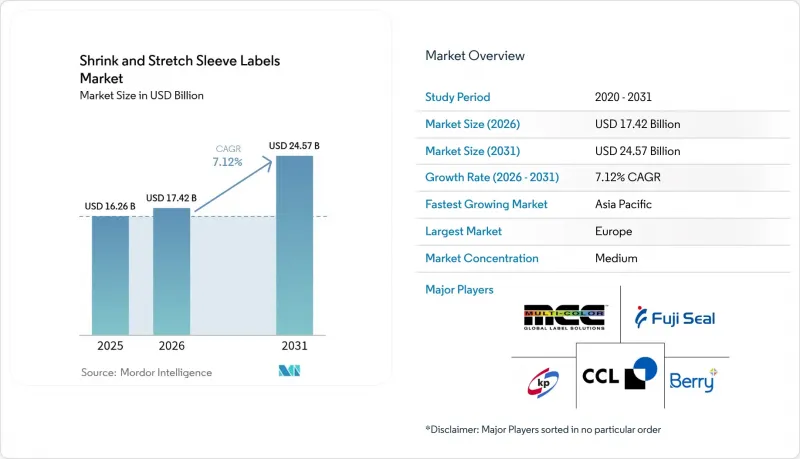
Mordor Intelligence에 의하면, 수축 및 스트레치 슬리브 라벨 시장 규모는 2025년에 162억 6,000만 달러로 평가되었고 2026년 174억 2,000만 달러에서 2031년까지 245억 7,000만 달러에 이를 것으로 예측되며, 예측 기간(2026-2031년) CAGR은 7.12%를 나타낼 전망입니다.
본 보고서는 유형별(수축 슬리브, 스트레치 슬리브), 소재별(PVC, PET/PET-G, PE, OPP 및 OPS, 기타 소재), 최종 사용자별(식품, 청량음료,주류, 화장품 및 가정용품, 의약품, 기타 최종 사용자) 및 지역별(북미, 남미, 유럽, 아시아태평양, 중동 및 아프리카)로 분류되어 있습니다. 시장 전망은 금액(달러) 기준으로 제시되어 있습니다.
전 세계 수축 및 스트레치 슬리브 라벨 시장 동향 및 인사이트
포장 음료 및 기능성 음료의 성장
기능성 음료의 경우, 빛에 민감한 영양소를 보호하고 영양 성분 표시를 확대하기 위해 슬리브 기술이 활용되고 있습니다. 현재 쇼핑객 3명 중 1명이 ‘면역력 강화’를 구매의 최우선 기준으로 삼고 있어, 비타민 C, 엘더베리, 프로바이오틱스가 함유된 음료에 대한 수요가 증가하고 있습니다. 제품 전체에 그래픽을 인쇄할 수 있기 때문에 브랜드는 점착 라벨에 비해 150% 더 넓은 인쇄 면적을 확보하여 표시 문구, QR 코드, 진위성 스티커를 기재할 수 있습니다. ‘프리미어 프로틴(Premier Protein)’사는 재활용 시 쉽게 떼어낼 수 있도록 절취선이 들어간 차광 수축 슬리브로 감싼 PET 병으로 전환함으로써 플라스틱 사용량을 35% 줄였습니다. 이전에는 장식 캔을 10만 개 단위로 발주해야 했던 크래프트 맥주 제조업체도, 현재는 수축 슬리브가 부착된 캔을 단 7,000개부터 조달할 수 있게 되어, 시즌 한정 상품 출시 기회가 확대되고 있습니다.
디지털 잉크젯을 활용한 소량 인쇄로 틈새 시장 SKU의 최소 주문 수량(MOQ)을 낮췄습니다.
수성 잉크젯 인쇄기는 기존 시스템에 비해 2.3배 빠른 생산 속도를 실현하는 동시에, 식품 포장에서의 용제 잔류 우려를 해소하고 있습니다. 각 컨버터 업체들은 플렉소 인쇄에서 요구되던 10만 단위라는 최소 주문 수량이라는 장벽을 극복하고, 1,000 단위 주문으로도 수익을 낼 수 있게 되었습니다. 이를 통해 지역 한정 프로모션이나 전자상거래용 번들 상품 등, 타겟을 극도로 좁힌 SKU의 전개가 가능해졌습니다. 디자인 수정도 몇 주가 아닌 며칠 만에 완료되므로, 마케터는 실시간 피드백 루프를 확보할 수 있습니다. 디지털 인쇄 시장 점유율은 2029년까지 라벨 총 생산량의 9.7%를 나타낼 것으로 예측되며, 제곱미터 기준으로 연평균 성장률(CAGR) 4.4%로 성장할 전망입니다. 잉크젯 헤드와 인라인 마감 기능을 통합한 수축 및 스트레치 슬리브 라벨 시장에 진출한 기업들은 기존의 그라비아 인쇄 라인에서는 실현할 수 없었던 기동성을 확보하고 있습니다.
스탠드업 파우치 및 용기 직접 인쇄와의 경쟁
경량 파우치는 경질 병에 비해 플라스틱 사용량을 60% 줄일 수 있으며, 단위당 비용은 0.20달러인 반면, 동등한 PET 용기는 0.50달러가 듭니다. Velox와 같은 디지털 캔 인쇄기는 현재 분당 500캔을 처리할 수 있으며, 슬리브 필름을 완전히 배제할 수 있어 지속가능성을 중시하는 크래프트 브랜드로부터 지지를 얻고 있습니다. 직접 데코레이션을 통해 수축 라인 고유의 히트 터널, 트림 스크랩 및 접착제 사용이 불필요해집니다. 대량 생산되는 탄산음료의 경우, 비용 차이는 더욱 커집니다. 슬리브 부착은 오프셋 인쇄에 비해 단가가 2-2.5배 더 비싸기 때문입니다. 그렇지만 수축 및 스트레치 슬리브 라벨 시장은 파우치나 캔에서는 재현할 수 없는 불규칙한 형태의 용기에 대응함으로써 여전히 그 존재 의의를 유지하고 있습니다.
부문 분석
2025년 시점에서 수축 슬리브는 수축 및 스트레치 슬리브 라벨 시장의 72.60%를 차지하고 있으며, 이는 복잡한 병 모양이나 부정 개봉 방지 씰에 대한 적합성이 입증되었음을 반영합니다. 고속 자동 부착기는 분당 800병 이상의 처리 능력을 갖추고 있으며, 오류율은 0.5% 미만으로, 다른 방식으로는 달성하기 어려운 성능 지표를 실현하고 있습니다. 스트레치 슬리브는 히트 터널이 필요하지 않아 에너지 사용량을 최대 40%까지 절감할 수 있을 뿐만 아니라, 소비자가 폐기하기 전에 쉽게 떼어낼 수 있어 재활용에도 기여합니다. 유럽의 음료 브랜드들이 Scope 3 목표를 달성하기 위해 저탄소 포장을 채택하고 있는 만큼, 이 부문의 2031년까지 연평균 성장률(CAGR)은 8.05%로 시장 전체의 성장 속도를 상회하고 있습니다.
수축 기술이 여전히 주류를 이루고 있지만, 향후 생산은 듀얼 솔루션 생태계로 진화할 전망입니다. 수축 형태는 형태에 딱 맞는 피복이 요구되는 의약품 바이알, 기능성 음료, 그리고 곡면이 있는 가정용 세제 분야에서 확고한 입지를 다질 것입니다. 스트레치 슬리브는 가격 민감도와 지속가능성에 대한 관심이 교차하는 물, 유제품 및 저가 콜라 시장에서 성장이 예상됩니다. 생산 라인에서는 서보 구동 맨드릴 어플리케이터와 슬리브 배치를 실시간으로 검사하는 비전 시스템을 결합하는 사례가 증가하고 있어, 재작업의 필요성을 최소화하고 있습니다. 공급업체에 따르면, 현재 두 슬리브 유형 모두에 동일한 수성 잉크젯 잉크를 사용할 수 있게 되어 그래픽 전환이 간소화되었으며, 이는 수축 및 스트레치 슬리브 라벨 시장에서 유연한 제조 전략을 강화하고 있습니다.
지역별 분석
유럽은 견고한 환경 정책과 고급 포장 문화 덕분에 2025년 매출의 29.55%를 차지했습니다. 독일, 프랑스, 영국에서는 에너지 효율이 뛰어난 적외선 터널을 갖춘 슬리브 필름 생산 라인에 상당한 비율의 설비 투자가 이루어지고 있습니다. EU의 ‘포장 및 포장 폐기물 규정’에서는 2030년까지 재활용 가능성을 의무화하고 있으며, 이는 세척 설비에서 깨끗하게 박리되는 PET 기반 슬리브에 대한 수요를 견인하고 있습니다. 이 지역의 슬리브 1,000개당 평균 판매 가격은 정교한 그래픽 요구 사항과 고급 주류 제조업체의 소량 생산 요청으로 인해 세계 평균보다 12% 높습니다.
아시아태평양은 가처분 소득의 급증, 도시화, 기능성 음료의 부상으로 인해 연평균 성장률(CAGR) 7.86%라는 가장 빠른 성장 궤도를 기록하고 있습니다. 중국의 특급 포장 규격인 ‘GB 43352-2023’은 잉크 내 중금속을 규제하고 있어, 현지 가공업체들은 이 규격을 준수하는 화학 물질을 채택할 수밖에 없는 상황입니다. 태국에서는 캡에 인쇄된 QR 코드에 제품 데이터를 저장하는 라벨리스 PET 병에 대한 실증 실험이 진행되고 있으며, 이는 기존의 슬리브 수요에 압박을 가하는 한편, 스마트한 인터랙티브 필름으로의 새로운 길을 열어주고 있습니다. 일본에서는 유연한 필름용 수성 잉크젯 기술이 조기에 도입되었으며, 이는 ‘플라스틱 자원 순환법’과 부합하여 지역 시장 전체로 파급되는 일본발 혁신을 촉진하고 있습니다.
북미는 활기찬 크래프트 맥주 생태계와 확립된 의료 체계의 혜택을 누리고 있습니다. 의약품 및 일반 영양 보조 식품에 대한 위조 방지 기능에 대한 수요는 안정적인 수요 기반을 보장하고 있습니다. 남미는 풍부한 PET 수지 공급을 활용하고 있지만, 환율 변동의 영향을 쉽게 받아 고성능 인쇄기에 대한 설비 투자를 제한하고 있습니다. 중동 및 아프리카는 생산 능력 면에서 뒤처져 있지만, 브랜드 가치를 높이기 위해 슬리브 라벨에 의존하는 고급 수입 주류 및 퍼스널케어 제품 분야에서 고부가가치 시장이 곳곳에 분포되어 있습니다. 이를 종합해 보면, 지리적 다양성이 수축 및 스트레치 슬리브 라벨 시장의 장기적인 회복력을 뒷받침하고 있습니다.
기타 혜택:
- 엑셀 형식 시장 예측(ME) 시트
- 3개월간의 애널리스트 지원
자주 묻는 질문
목차
제1장 서론
제2장 조사 방법
제3장 주요 요약
제4장 시장 구도
제5장 시장 규모와 성장 예측
제6장 경쟁 구도
제7장 시장 기회와 향후 전망
JHS 26.09.07According to Mordor Intelligence, the shrink and stretch sleeve labels market size was valued at USD 16.26 billion in 2025 and estimated to grow from USD 17.42 billion in 2026 to reach USD 24.57 billion by 2031, at a CAGR of 7.12% during the forecast period (2026-2031).
This report is Segmented by Type (Shrink Sleeve, Stretch Sleeve), Material (PVC, PET/PET-G, PE, OPP and OPS, Other Materials), End User (Food, Soft Drinks, Alcoholic Drinks, Cosmetics and Household, Pharmaceutical, Other End Users), and Geography (North America, South America, Europe, Asia-Pacific, Middle East and Africa). The Market Forecasts are Provided in Terms of Value (USD).
Global Shrink And Stretch Sleeve Labels Market Trends and Insights
Growth in Packaged Beverages and Functional Drinks
Functional drinks use sleeve technology to protect light-sensitive nutrients and display expanded nutritional panels. One in three shoppers now ranks immune support as a top purchase criterion, strengthening demand for drinks formulated with vitamin C, elderberry, and probiotics. Full-body graphics give brands 150% more printable area than pressure-sensitive labels, allowing claims, QR codes, and authenticity seals. Premier Protein trimmed plastic by 35% by migrating to PET bottles wrapped in light-blocking shrink sleeves that feature perforations for easy removal during recycling. Craft brewers that previously needed orders of 100,000 decorated cans now source as few as 7,000 cans fitted with shrink sleeves, widening access for seasonal releases.
Digital Inkjet Short-Run Printing Lowering MOQ for Niche SKUs
Water-based inkjet presses achieve production speeds 2.3 times higher than earlier systems while eliminating solvent residue concerns in food packaging. Converters now profitably accept 1,000-unit jobs versus the 100,000-unit threshold required for flexography, enabling hyper-targeted SKUs for regional promotions and e-commerce bundles. Design iterations finalize in days, not weeks, giving marketers real-time feedback loops. Digital volume is projected to reach 9.7% of total label output by 2029, expanding at a 4.4% CAGR in square-meter terms. Shrink and stretch sleeve labels market participants that integrate inline finishing with inkjet heads gain agility that legacy gravure lines cannot match.
Competition from Stand-Up Pouches and Direct-to-Container Printing
Lightweight pouches use 60% less plastic than rigid bottles and cost only USD 0.20 per unit compared with USD 0.50 for comparable PET containers.Digital can printers such as Velox now run 500 cans per minute, eliminating sleeve film altogether and appealing to sustainability-focused craft brands. Direct decoration removes the heat tunnel, trim scrap, and adhesive usage inherent to shrink lines. Cost differentials widen in high-volume carbonated beverages where sleeve application adds 2-2.5 times unit cost relative to offset printing. The shrink and stretch sleeve labels market nonetheless preserves relevance by serving irregular containers that pouches or cans cannot mimic.
Other drivers and restraints analyzed in the detailed report include:
- Demand for 360° High-Definition Graphics to Boost Shelf Appeal
- Shift Toward Recyclable PETG and Floatable Sleeve Films
- Resin-Price Volatility from Geopolitical Supply Shocks
For complete list of drivers and restraints, kindly check the Table Of Contents.
Segment Analysis
Shrink sleeves controlled 72.60% of the shrink and stretch sleeve labels market in 2025, reflecting their proven fit for complex bottle geometries and tamper-evident safety seals. High-speed automatic applicators run beyond 800 bottles per minute with error rates under 0.5%, a performance metric difficult for alternate formats. Stretch sleeves need no heat tunnel, trimming energy use by up to 40%, and support recycling because consumers can easily remove them before disposal. The segment's 8.05% CAGR through 2031 surpasses overall market pace as European beverage brands adopt low-carbon packaging to achieve Scope 3 commitments.
Although shrink technology retains primacy, future production likely evolves toward a dual-solution ecosystem. Shrink formats will secure pharmaceutical vials, functional drinks, and contoured household cleaners that demand form-fitting coverage. Stretch sleeves will expand in water, dairy, and economy cola where price sensitivity intersects with sustainability positioning. Production lines increasingly pair servo-driven mandrel applicators with vision systems that inspect sleeve placement in real time, minimizing rework. Suppliers confirm that both sleeve types now accept the same water-based inkjet inks, simplifying graphic changeovers and reinforcing flexible manufacturing strategies in the shrink and stretch sleeve labels market.
Complete Report Scope:
- By Type
- Shrink Sleeve
- Stretch Sleeve
- By Material
- PVC
- PET / PET-G
- PE
- OPP and OPS
- Other Materials (PO, PLA, etc.)
- By End User
- Food
- Soft Drinks
- Alcoholic Drinks
- Cosmetics and Household
- Pharmaceutical
- Other End Users
- By Geography
- North America
- United States
- Canada
- South America
- Brazil
- Argentina
- Rest of South America
- Europe
- United Kingdom
- Germany
- France
- Italy
- Spain
- Russia
- Rest of Europe
- Asia-Pacific
- China
- India
- Japan
- South Korea
- Australia and New Zealand
- Rest of Asia-Pacific
- Middle East and Africa
- Middle East
- Saudi Arabia
- UAE
- Turkey
- Rest of Middle East
- Africa
- South Africa
- Egypt
- Nigeria
- Rest of Africa
- Middle East
- North America
Geography Analysis
Europe retained 29.55% revenue in 2025 due to robust environmental policies and a culture of premium packaging. Germany, France, and the United Kingdom direct a sizable share of capital expenditure toward sleeve film lines fitted with energy-efficient infrared tunnels. EU Packaging and Packaging Waste Regulation stipulates recyclability by 2030, driving demand for PET-based sleeves that detach cleanly in wash plants. The region's average selling price per thousand sleeves exceeds the global mean by 12% because of sophisticated graphic requirements and low minimum runs requested by boutique spirits.
Asia-Pacific records the fastest trajectory at an 7.86% CAGR thanks to surging disposable income, urbanization, and the rise of functional beverages. China's express packaging standard GB 43352-2023 restricts heavy metals in inks, compelling local converters to adopt compliant chemistries. Thailand pilots label-free PET bottles that store product data in QR codes printed on caps, pressuring traditional sleeve volumes yet opening new avenues for smart interactive films. Japan's early adoption of water-based inkjet for flexible film aligns with its plastics resource circulation act, fostering home-grown innovations that resonate across regional markets.
North America benefits from a vibrant craft beer ecosystem and a well-established healthcare framework. Tamper-evident needs in pharmaceuticals and over-the-counter nutritional supplements ensure a baseline of steady demand. South America leverages abundant PET resin supply yet remains exposed to currency swings that limit capital spending on high-end presses. The Middle East and Africa trail in installed capacity but exhibit pockets of high value in premium imported spirits and personal care, which rely on sleeves for brand elevation. Taken together, geographic diversity underpins the long-term resilience of the shrink and stretch sleeve labels market.
- CCL Industries
- Fuji Seal International
- Berry Global Group
- Multi-Color Corporation
- KP Klockner Pentaplast
- Amcor PLC
- Huhtamaki Oyj
- Fort Dearborn Company
- Taghleef Industries
- Siegwerk Druckfarben
- Macfarlane Labels
- Avery Dennison Corp.
- Clondalkin Group
- Cenveo Worldwide
- Schur Flexibles
- Hammer Packaging
- Sleeve Seal Inc.
- PDC-Europe
- Fortalab Labels
- Akar Shrink Packs
Additional Benefits:
- The market estimate (ME) sheet in Excel format
- 3 months of analyst support
TABLE OF CONTENTS
1 INTRODUCTION
- 1.1 Study Assumptions and Market Definition
- 1.2 Scope of the Study
2 RESEARCH METHODOLOGY
3 EXECUTIVE SUMMARY
4 MARKET LANDSCAPE
- 4.1 Market Overview
- 4.2 Market Drivers
- 4.2.1 Demand for 360 degrees high-definition graphics to boost shelf appeal
- 4.2.2 Rising demand for tamper-evident and anti-counterfeit packaging
- 4.2.3 Growth in packaged beverages and functional drinks
- 4.2.4 Shift toward recyclable PETG and floatable sleeve films
- 4.2.5 Digital inkjet short-run printing lowering MOQ for niche SKUs
- 4.2.6 Smart interactive features (thermochromic, QR) enabling marketing
- 4.3 Market Restraints
- 4.3.1 Recycling hurdles of multimaterial sleeves contaminating PET streams
- 4.3.2 Competition from stand-up pouches and direct-to-container printing
- 4.3.3 Resin-price volatility from geopolitical supply shocks
- 4.3.4 EU/NA curbs on PVC sleeves inflating compliance costs
- 4.4 Supply-Chain Analysis
- 4.5 Regulatory Landscape
- 4.6 Technological Outlook
- 4.7 Porter's Five Forces Analysis
- 4.7.1 Bargaining Power of Suppliers
- 4.7.2 Bargaining Power of Buyers
- 4.7.3 Threat of New Entrants
- 4.7.4 Threat of Substitutes
- 4.7.5 Intensity of Rivalry
- 4.8 Assesment of macroeconomic Factors on the market
5 MARKET SIZE AND GROWTH FORECASTS (VALUE)
- 5.1 By Type
- 5.1.1 Shrink Sleeve
- 5.1.2 Stretch Sleeve
- 5.2 By Material
- 5.2.1 PVC
- 5.2.2 PET / PET-G
- 5.2.3 PE
- 5.2.4 OPP and OPS
- 5.2.5 Other Materials (PO, PLA, etc.)
- 5.3 By End User
- 5.3.1 Food
- 5.3.2 Soft Drinks
- 5.3.3 Alcoholic Drinks
- 5.3.4 Cosmetics and Household
- 5.3.5 Pharmaceutical
- 5.3.6 Other End Users
- 5.4 By Geography
- 5.4.1 North America
- 5.4.1.1 United States
- 5.4.1.2 Canada
- 5.4.2 South America
- 5.4.2.1 Brazil
- 5.4.2.2 Argentina
- 5.4.2.3 Rest of South America
- 5.4.3 Europe
- 5.4.3.1 United Kingdom
- 5.4.3.2 Germany
- 5.4.3.3 France
- 5.4.3.4 Italy
- 5.4.3.5 Spain
- 5.4.3.6 Russia
- 5.4.3.7 Rest of Europe
- 5.4.4 Asia-Pacific
- 5.4.4.1 China
- 5.4.4.2 India
- 5.4.4.3 Japan
- 5.4.4.4 South Korea
- 5.4.4.5 Australia and New Zealand
- 5.4.4.6 Rest of Asia-Pacific
- 5.4.5 Middle East and Africa
- 5.4.5.1 Middle East
- 5.4.5.1.1 Saudi Arabia
- 5.4.5.1.2 UAE
- 5.4.5.1.3 Turkey
- 5.4.5.1.4 Rest of Middle East
- 5.4.5.2 Africa
- 5.4.5.2.1 South Africa
- 5.4.5.2.2 Egypt
- 5.4.5.2.3 Nigeria
- 5.4.5.2.4 Rest of Africa
- 5.4.5.1 Middle East
- 5.4.1 North America
6 COMPETITIVE LANDSCAPE
- 6.1 Market Concentration
- 6.2 Strategic Moves
- 6.3 Market Share Analysis
- 6.4 Company Profiles (includes Global level Overview, Market level overview, Core Segments, Financials as available, Strategic Information, Market Rank/Share for key companies, Products and Services, and Recent Developments)
- 6.4.1 CCL Industries
- 6.4.2 Fuji Seal International
- 6.4.3 Berry Global Group
- 6.4.4 Multi-Color Corporation
- 6.4.5 KP Klockner Pentaplast
- 6.4.6 Amcor PLC
- 6.4.7 Huhtamaki Oyj
- 6.4.8 Fort Dearborn Company
- 6.4.9 Taghleef Industries
- 6.4.10 Siegwerk Druckfarben
- 6.4.11 Macfarlane Labels
- 6.4.12 Avery Dennison Corp.
- 6.4.13 Clondalkin Group
- 6.4.14 Cenveo Worldwide
- 6.4.15 Schur Flexibles
- 6.4.16 Hammer Packaging
- 6.4.17 Sleeve Seal Inc.
- 6.4.18 PDC-Europe
- 6.4.19 Fortalab Labels
- 6.4.20 Akar Shrink Packs
7 MARKET OPPORTUNITIES AND FUTURE OUTLOOK
- 7.1 White-space and Unmet-Need Assessment