

|
시장보고서
상품코드
2123582
협골 및 익상돌기 임플란트 시장 : 시장 점유율 분석, 업계 동향 및 통계, 성장 예측(2026-2031년)Zygomatic And Pterygoid Implants - Market Share Analysis, Industry Trends & Statistics, Growth Forecasts (2026 - 2031) |
||||||
 Mordor Intelligence
Mordor Intelligence에 의하면, 협골 및 익상돌기 임플란트 시장 규모는 2025년에 2억 6,483만 달러로 평가되었고, 2026년에 2억 8,034만 달러로 추정되고, 2031년까지 3억 8,159만 달러에 이를 것으로 예측되며, 2026-2031년 CAGR 6.36%로 성장할 전망입니다.
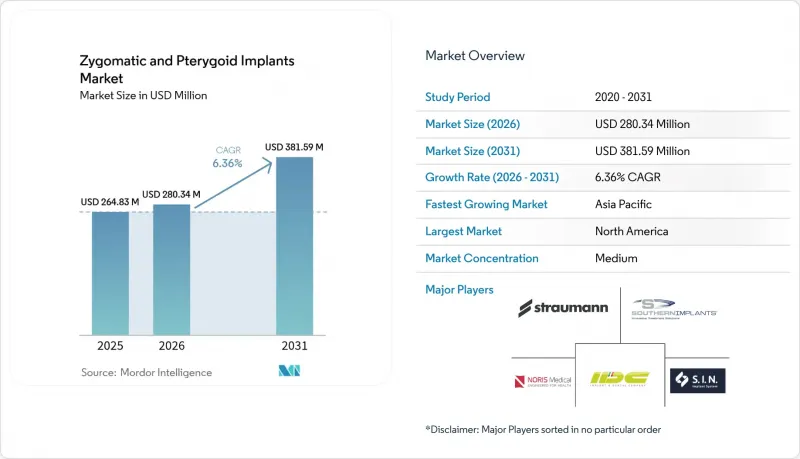
본 보고서는 제품 유형별(협골 임플란트, 날개돌기 임플란트), 임플란트 길이별(30mm 이하, 31-50mm, 50mm 초과), 적응증별(상악골의 중증 위축, 기타), 시술 방식별(즉시 하중, 지연 하중), 최종 사용자별(병원, 기타), 지역별(북미, 유럽, 기타)에 따라 분류되어 있습니다. 시장 예측은 금액(달러) 단위로 제시되어 있습니다.
세계의 협골 및 익상돌기 임플란트 시장 동향 및 인사이트
심각한 상악 위축 및 무치악 유병률 증가
세계보건기구(WHO)는 2024년, 중증 치주질환이 성인의 20%에 영향을 미쳤으며, 65세 이상 인구와 암 생존자 사이에서 유병률이 급증하고 있다고 지적했습니다. 상악골 위축은 수직 및 수평 방향의 골흡수를 유발하여 기존 임플란트 식립을 불가능하게 만들기 때문에 몇 주 이내에 고정식 보철물을 장착할 수 있는 협골 및 익상돌기 임플란트의 채택이 증가하고 있습니다. 치료 기간이 짧다는 점은 긴 이식 조직 치료 기간을 견디기 어려운 당뇨병이나 골다공증을 앓고 있는 환자들에게 매력적입니다. 유엔의 예측에 따르면, 2050년까지 전 세계 65세 이상 인구는 15억 명에 달할 것으로 예상되어, 장기적인 수요가 확실시되고 있습니다.
골 이식을 동반하지 않는 즉시 하중을 가하는 보철의 임상적 이점
국제 임플란트학 팀(International Team for Implantology)이 발표한 통합 분석에 따르면, 즉시 하중이 가해진 협골 임플란트의 생존율은 98.1%인 것으로 나타났습니다. 이식 과정을 생략함으로써 수술 시간을 최대 40% 단축하고, 이식 재료비도 절감할 수 있습니다. 2024년의 전향적 연구에서는 스웨덴의 ZAGA 임플란트가 46.5개월 동안 100%의 생존율을 달성했으며, 해부학적 프로토콜을 따를 경우 예측 가능한 결과를 얻을 수 있음이 입증되었습니다. 경제적 및 임상적 이점으로 인해 즉시 하중 방식은 주류로 자리 잡아가고 있습니다.
높은 시술비와 임플란트 비용
북미에서 협골 임플란트를 이용한 한 아치 재활 비용은 1만 5,000-4만 달러 범위이며, 표준 임플란트 치료에 비해 150-200% 더 비쌉니다. Cigna와 같은 대형 보험사들은 보장 범위를 암, 선천성 기형 또는 외상으로 제한하고 있으며, 대부분의 경우 치주질환은 보장 대상에서 제외됩니다. 환자들은 해외에서 더 저렴한 치료처를 찾지만, 국경을 넘는 치료는 경과 관찰 및 보증 적용을 복잡하게 만듭니다.
부문 분석
2025년 매출액 중 협골 임플란트가 74.02%를 차지했으며, 대부분의 풀 아치 사례를 뒷받침함과 동시에 NobelZygoma와 Straumann ZAGA의 리더십을 공고히 하고 있습니다. 익상돌기 임플란트는 규모는 작지만, 외과의가 전방의 협골 고정과 후방의 익상돌기 고정을 조합하여 하중을 균형 있게 분산시키기 때문에 연간 7.29%의 속도로 성장하고 있습니다. 하이브리드 치료에 대한 수요로 인해, 협골 및 익상돌기 임플란트 시장에서 익상돌기 임플란트의 점유율은 계속해서 상승할 전망입니다.
익상돌기 임플란트의 채택이 증가하고 있는 것은 6년간의 성공률이 95.6%로 입증된 점과, 풀 아치 보철물에서 캔틸레버 길이를 단축하고자 하는 수요를 반영한 결과입니다. 지속적인 교육과 디지털 가이드 도입으로 두 제품 라인 간의 치료 결과 격차가 줄어들며, 협골 및 익상돌기 임플란트 시장에서 최종 사용자에게 이익을 가져다주는 건전한 경쟁이 유지될 것으로 예측됩니다.
2025년 식립 건수에서 31-50mm 임플란트가 47.87%를 차지했으나, 50mm를 초과하는 길이의 임플란트는 연평균 성장률(CAGR) 9.93%로 가장 빠르게 성장하고 있습니다. 임상의들이 중증 골결손이나 암 치료 후 상악골 절제술을 받은 환자를 치료함에 따라, 협골 및 익상돌기 임플란트 시장에서 장축 고정체의 점유율은 상승하고 있습니다. 장축 임플란트는 양측 피질골에 고정할 수 있으며, 35N·cm를 초과하는 식립 토크를 발휘합니다. 이는 협골 및 익상돌기 임플란트 시장에서 즉시 하중을 가하기 위한 필수 조건입니다.
NobelZygoma TiUltra가 제공하는 최대 60mm 길이의 장축 임플란트는 상악동의 기화 현상이 현저한 해부학적 구조에 적합합니다. 이 부문의 성장은 중요한 구조물을 손상시키지 않고 복잡한 통로를 정확하게 관통하기 위한 디지털 내비게이션에 대한 외과의사의 높은 신뢰를 입증하고 있습니다.
지역별 분석
2025년 협골 및 익상돌기 임플란트 시장에서 북미는 시장 규모의 41.23%를 차지했습니다. 암 치료에 대한 유리한 보험 환급, 탄탄한 지속 교육 네트워크, 높은 가처분 소득이 프리미엄 제품의 채택을 뒷받침하고 있습니다. 미국의 민간 보험사는 암 관련 사례를 보장하고 있으며, 캐나다의 주 정부 보험 제도는 의학적으로 필요한 재건 수술에 보조금을 지급하고 있어 안정적인 수요가 창출되고 있습니다.
유럽은 2위를 차지했습니다. MDR에 따른 통일된 CE 마킹 덕분에 여러 국가에서의 사업 전개가 용이해졌습니다. 독일, 프랑스, 영국이 핵심 수요를 지탱하는 한편, 스페인과 헝가리는 30-50%의 비용 절감을 원하는 국경을 넘는 환자들을 유치하고 있습니다. 통화 안정성과 즉시 하중이 가능한 치과 치료의 광범위한 수용이 거시경제적 압박에도 불구하고 견조한 성장을 뒷받침하고 있습니다.
아시아태평양은 가장 성장세가 두드러지는 지역으로, 연평균 9.63%의 성장률을 보이고 있습니다. 중국의 도시 지역과 인도는 방대한 환자 수를 창출하는 반면, 일본과 한국은 고가 진료 사례를 확보하고 있습니다. 태국과 싱가포르는 의료 관광 체계를 활용하여 CBCT, 임플란트 수술, 보철물 장착을 한 번의 방문으로 완료하는 패키지 상품을 추진하고 있으며, 협골 및 익상돌기 임플란트 시장에 대한 지역적 기여도를 강화하고 있습니다.
중동 및 아프리카에서는 특히 걸프협력회의(GCC) 회원국의 부유층을 중심으로 수요가 집중되고 있습니다. 아랍에미리트와 사우디아라비아의 정부 자금을 지원받는 전문센터에서는 디지털 임플란트 수술실을 운영하기 위해 유럽에서 연수를 받은 외과의를 채용하고 있습니다. 남미 지역의 성장은 브라질의 대규모 민간 치과 부문과 비용 경쟁력이 있는 아르헨티나의 클리닉에 의해 주도되고 있으며, 이들은 칠레의 고객을 유치하고 있지만 통화 변동이 성장세를 둔화시키고 있습니다.
기타 혜택
- 엑셀 형식 시장 예측(ME) 시트
- 3개월간의 애널리스트 지원
자주 묻는 질문
목차
제1장 서론
제2장 조사 방법
제3장 주요 요약
제4장 시장 구도
제5장 시장 규모 및 성장 예측
제6장 경쟁 구도
제7장 시장 기회 및 향후 전망
AJY 26.09.11According to Mordor Intelligence, the zygomatic and pterygoid implants market size is projected to be USD 264.83 million in 2025, USD 280.34 million in 2026, and reach USD 381.59 million by 2031, growing at a CAGR of 6.36% from 2026 to 2031.
This report is Segmented by Product Type (Zygomatic Implants, Pterygoid Implants), Length of Implant (Up To 30 Mm, 31-50 Mm, Above 50 Mm), Application (Severe Atrophy of Maxillary Bone, and More), Procedure Approach (Immediate Loading, Delayed Loading), End User (Hospitals, and More), and Geography (North America, Europe, and More). The Market Forecasts are Provided in Terms of Value (USD).
Global Zygomatic And Pterygoid Implants Market Trends and Insights
Rising Prevalence of Severe Maxillary Atrophy & Edentulism
The World Health Organization noted in 2024 that severe periodontal disease affects 20% of adults, with prevalence spiking among people older than 65 and oncologic survivors. Maxillary atrophy results in vertical and horizontal bone loss, precluding the placement of conventional implants, prompting the adoption of zygomatic and pterygoid solutions that deliver fixed prostheses within weeks. Rapid execution appeals to patients managing diabetes or osteoporosis who cannot tolerate lengthy graft healing. United Nations projections show that the global population aged 65 and older will reach 1.5 billion by 2050, locking in long-term demand.
Clinical Advantage of Graft-Less, Immediate-Loading Rehabilitation
Pooled analyses published by the International Team for Implantology documented a 98.1% survival rate for immediately loaded zygomatic implants. Removing graft steps cuts operating-room time up to 40% and eliminates graft material costs. A 2024 prospective study achieved 100% survival for Straumann's ZAGA implants over 46.5 months, validating predictable outcomes when anatomical protocols are followed. Economic and clinical benefits continue to push immediate loading toward mainstream dominance.
High Procedural & Implant Costs
One arch of zygomatic rehabilitation in North America ranges from USD 15,000 to USD 40,000, 150-200% above standard implant therapy. Major insurers such as Cigna limit coverage to cancer, congenital defects, or trauma, excluding periodontal disease in most circumstances. Patients seek lower-cost destinations abroad, but cross-border care complicates follow-up and warranty enforcement.
Other drivers and restraints analyzed in the detailed report include:
- Adoption of Digital Dentistry
- Quad-Zygomatic Protocols Expanding Eligible Patient Pool
- Steep Surgical Learning Curve & Limited Specialist Base
For complete list of drivers and restraints, kindly check the Table Of Contents.
Segment Analysis
Zygomatic implants held 74.02% of 2025 revenue, anchoring most full-arch cases and reinforcing the leadership of NobelZygoma and Straumann ZAGA. Pterygoid implants, while smaller, are expanding 7.29% a year as surgeons combine anterior zygomatic and posterior pterygoid fixation for balanced load distribution. Hybrid demand is set to keep pterygoid share climbing within the zygomatic and pterygoid implants market.
Increasing adoption of pterygoid fixtures reflects documented 95.6% six-year success and the desire to shorten cantilevers in full-arch prostheses. Ongoing training and digital guides are expected to narrow outcome gaps between the two product lines, sustaining healthy rivalry that benefits end users within the zygomatic and pterygoid implants market.
Implants 31-50 mm accounted for 47.87% of 2025 placements, yet lengths above 50 mm are rising fastest at a 9.93% CAGR. The zygomatic and pterygoid implants market share for long fixtures is climbing as clinicians treat patients with severe bone loss or post-oncology maxillectomy. Extended lengths provide bicortical anchorage and exceed 35 N cm insertion torque, prerequisites for immediate loading in the zygomatic and pterygoid implant markets.
Longer implants, offered up to 60 mm by NobelZygoma TiUltra, suit anatomies with aggressive sinus pneumatization. Growth in this category underscores surgeons' confidence in digital navigation to accurately traverse complex trajectories without breaching critical structures.
Complete Report Scope:
- By Product Type
- Zygomatic Implants
- Pterygoid Implants
- By Length of Implant
- Up to 30 mm
- 31 - 50 mm
- Above 50 mm
- By Application
- Severe Atrophy of Maxillary Bone
- Maxillary Sinuses
- Trauma & Other Indications
- By Procedure Approach
- Immediate Loading
- Delayed Loading
- By End User
- Hospitals
- Dental Clinics
- Ambulatory Surgical Centers
- By Geography
- North America
- United States
- Canada
- Mexico
- Europe
- Germany
- United Kingdom
- France
- Italy
- Spain
- Rest of Europe
- Asia-Pacific
- China
- Japan
- India
- Australia
- South Korea
- Rest of Asia-Pacific
- Middle East & Africa
- GCC
- South Africa
- Rest of Middle East & Africa
- South America
- Brazil
- Argentina
- Rest of South America
- North America
Geography Analysis
North America contributed 41.23% of 2025 value to the zygomatic and pterygoid implants market. Favorable oncology reimbursement, dense continuing-education networks, and high disposable incomes sustain premium adoption. U.S. private insurers cover cancer-related cases, while Canada's provincial plans subsidize medically necessary reconstructions, creating steady volume.
Europe ranks second. Harmonized CE-marking under MDR eases multicountry rollout; Germany, France, and the United Kingdom anchor core demand, while Spain and Hungary attract cross-border patients seeking 30-50% fee reductions. Currency stability and widespread acceptance of immediate-load dentistry underpin resilient growth despite macroeconomic pressures.
Asia-Pacific is the fastest-growing territory, expanding 9.63% annually. Urban China and India generate sheer volume, whereas Japan and South Korea capture premium case values. Thailand and Singapore leverage medical tourism frameworks, promoting bundled packages that include CBCT, implant surgery, and prosthetic delivery in a single trip, strengthening regional contributions to the zygomatic and pterygoid implants market.
Middle East & Africa present concentrated demand pockets, especially among affluent populations in the Gulf Cooperation Council. Government-funded specialty centers in the United Arab Emirates and Saudi Arabia are recruiting European-trained surgeons to run digital implant suites. South America's upswing is paced by Brazil's large private dental sector and Argentina's cost-competitive clinics, which are drawing Chilean clients, though currency volatility tempers momentum.
- Adin Dental Implant Systems
- B&B Dental Implant Co.
- BioHorizons
- Bioline Dental Implants
- Danaher
- Dentsply Sirona
- IDC Implant & Dental Co.
- Implant Swiss
- JDentalCare
- Neoss
- Nobel Biocare (Envista)
- Noris Medical
- OsseoSource
- Osstem Implant
- S.I.N. Implant System
- Silimed
- Southern Implants
- Straumann Group
- TitaniumFix
- Zimmer Biomet
Additional Benefits:
- The market estimate (ME) sheet in Excel format
- 3 months of analyst support
TABLE OF CONTENTS
1 Introduction
- 1.1 Study Assumptions & Market Definition
- 1.2 Scope of the Study
2 Research Methodology
3 Executive Summary
4 Market Landscape
- 4.1 Market Overview
- 4.2 Market Drivers
- 4.2.1 Rising Prevalence of Severe Maxillary Atrophy & Edentulism
- 4.2.2 Clinical Advantage of Graft-Less, Immediate-Loading Rehabilitation
- 4.2.3 Adoption of Digital Dentistry
- 4.2.4 Quad-Zygomatic Protocols Expanding Eligible Patient Pool
- 4.2.5 Dental Tourism Surge for Complex Oral Rehabilitation
- 4.2.6 Pilot Insurer Reimbursements for Oncologic Maxillectomy Cases
- 4.3 Market Restraints
- 4.3.1 High Procedural & Implant Costs
- 4.3.2 Steep Surgical Learning Curve & Limited Specialist Base
- 4.3.3 Post-Operative Sinusitis Management Burden
- 4.3.4 Regulatory Ambiguity on Extra-Maxillary Anchorage Devices
- 4.4 Regulatory Landscape
- 4.5 Technological Outlook
- 4.6 Porter's Five Forces Analysis
- 4.6.1 Threat of New Entrants
- 4.6.2 Bargaining Power of Buyers
- 4.6.3 Bargaining Power of Suppliers
- 4.6.4 Threat of Substitute Products
- 4.6.5 Intensity of Competitive Rivalry
5 Market Size & Growth Forecasts
- 5.1 By Product Type
- 5.1.1 Zygomatic Implants
- 5.1.2 Pterygoid Implants
- 5.2 By Length of Implant
- 5.2.1 Up to 30 mm
- 5.2.2 31 - 50 mm
- 5.2.3 Above 50 mm
- 5.3 By Application
- 5.3.1 Severe Atrophy of Maxillary Bone
- 5.3.2 Maxillary Sinuses
- 5.3.3 Trauma & Other Indications
- 5.4 By Procedure Approach
- 5.4.1 Immediate Loading
- 5.4.2 Delayed Loading
- 5.5 By End User
- 5.5.1 Hospitals
- 5.5.2 Dental Clinics
- 5.5.3 Ambulatory Surgical Centers
- 5.6 By Geography
- 5.6.1 North America
- 5.6.1.1 United States
- 5.6.1.2 Canada
- 5.6.1.3 Mexico
- 5.6.2 Europe
- 5.6.2.1 Germany
- 5.6.2.2 United Kingdom
- 5.6.2.3 France
- 5.6.2.4 Italy
- 5.6.2.5 Spain
- 5.6.2.6 Rest of Europe
- 5.6.3 Asia-Pacific
- 5.6.3.1 China
- 5.6.3.2 Japan
- 5.6.3.3 India
- 5.6.3.4 Australia
- 5.6.3.5 South Korea
- 5.6.3.6 Rest of Asia-Pacific
- 5.6.4 Middle East & Africa
- 5.6.4.1 GCC
- 5.6.4.2 South Africa
- 5.6.4.3 Rest of Middle East & Africa
- 5.6.5 South America
- 5.6.5.1 Brazil
- 5.6.5.2 Argentina
- 5.6.5.3 Rest of South America
- 5.6.1 North America
6 Competitive Landscape
- 6.1 Market Concentration
- 6.2 Market Share Analysis
- 6.3 Company Profiles (includes Global Level Overview, Market Level Overview, Core Segments, Financials as Available, Strategic Information, Market Rank/Share for Key Companies, Products & Services, and Recent Developments)
- 6.3.1 Adin Dental Implant Systems
- 6.3.2 B&B Dental Implant Co.
- 6.3.3 BioHorizons
- 6.3.4 Bioline Dental Implants
- 6.3.5 Danaher Corporation
- 6.3.6 Dentsply Sirona
- 6.3.7 IDC Implant & Dental Co.
- 6.3.8 Implant Swiss
- 6.3.9 JDentalCare
- 6.3.10 Neoss
- 6.3.11 Nobel Biocare (Envista)
- 6.3.12 Noris Medical
- 6.3.13 OsseoSource
- 6.3.14 Osstem Implant
- 6.3.15 S.I.N. Implant System
- 6.3.16 Silimed
- 6.3.17 Southern Implants
- 6.3.18 Straumann Holding AG
- 6.3.19 TitaniumFix
- 6.3.20 Zimmer Biomet
7 Market Opportunities & Future Outlook
- 7.1 White-space & Unmet-Need Assessment


