
|
시장보고서
상품코드
2123656
소아 의료 시장 : 점유율 분석, 업계 동향과 통계, 성장 예측(2026-2031년)Pediatric Healthcare - Market Share Analysis, Industry Trends & Statistics, Growth Forecasts (2026 - 2031) |
||||||
 Mordor Intelligence
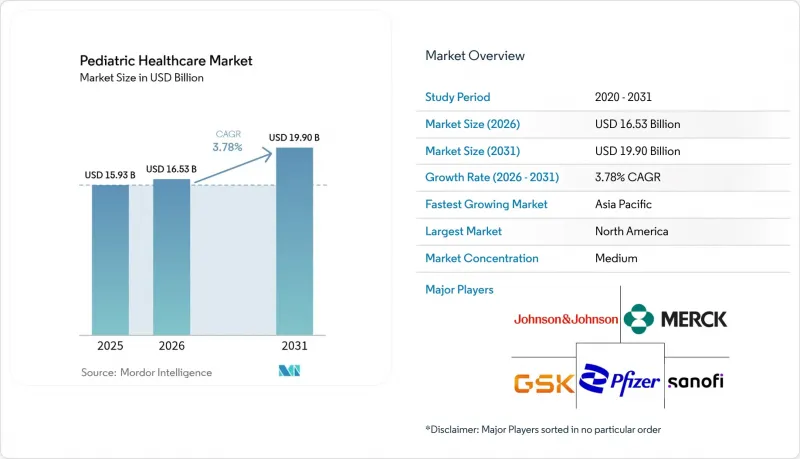
Mordor Intelligence에 의하면, 소아 의료 시장 규모는 2025년에 159억 3,000만 달러로 평가되었고 2026년 165억 3,000만 달러에서 2031년까지 199억 달러에 이를 것으로 추정되고 있어 2026년부터 2031년까지 CAGR 3.78%를 기록할 전망입니다.
본 보고서는 제품 유형(의약품, 백신 등), 치료 분야(감염병, 호흡기 질환 등), 연령대(신생아, 영아 등), 의료 환경(병원, 진료소 등), 최종 사용자(공공 의료 기관 등) 및 지역(북미, 유럽, 아시아태평양 등)별로 분류되어 있습니다. 시장 전망은 금액(달러) 기준으로 제시되어 있습니다.
전 세계 소아 의료 시장 동향 및 인사이트
정기 소아 예방접종에 대한 자금 투입의 기세
소아 예방접종 일정에 사상 최대 규모의 자금이 투입되고 있습니다. GAVI는 2024년부터 2025년까지 HPV 백신, 폐렴구균 결합형 백신, 로타바이러스 백신 지원금으로 90억 달러를 배정하여 제조업체들에게 다년간 수요를 보장했습니다. 미국에서는 ‘Vaccines for Children(VFC)’ 프로그램이 2024년에 8,400만 회분을 배포했으며, 팬데믹 기간 동안 예방접종을 미룬 사람들을 대상으로 한 보충 캠페인을 통해 2023년 공급량을 6% 상회했습니다. 조달 보증으로 인해 복합 백신 시장 출시 기간이 단축되고 있지만, 감염병에 초점이 지나치게 맞추어지면서 비감염성 질환에 대한 청소년용 백신 연구가 뒷전으로 밀리고 있습니다. 현재 제약사들은 기존 충전 라인의 처리 능력을 극대화하기 위해 여러 항원을 하나의 백신에 통합하는 것을 목표로 하고 있으며, 이 전략은 콜드체인의 부담 경감으로도 이어집니다. 하지만 일부 지역에서는 백신 접종 의무화에 대한 정치적 입장이 엇갈리고 있어, 새로 권장된 백신의 보급이 제한되고 있습니다.
희귀 소아 질환에 대한 유전자 치료 승인
2024년부터 2025년까지 5가지 소아용 유전자 치료제가 승인되었습니다. 이들 모두 환자 1인당 가격이 200만 달러를 초과함에 따라, 투여량에 기반한 청구 방식에서 마일스톤 기반 계약으로 논의의 초점이 옮겨가고 있습니다. 효소 활성 등의 대체 평가 지표를 통해 조기 시장 출시가 가능해졌으며, 이는 차세대 벡터 분야에 대한 벤처 캐피털의 투자를 촉진하고 있습니다. 신속 승인 절차의 도입으로 개발 주기가 18-24개월 단축되었으나, 장기 모니터링 인프라가 갖춰지지 않은 중소득 국가 시장에서 치료 효과의 지속성 및 공정한 보급에 대해서는 여전히 의문이 남아 있습니다. 병원은 시설 내에서 약제를 조제할 수 있도록 바이러스학 실험실을 업그레이드해야 하며, 보험사는 치료 효과의 불확실성에 대비하기 위해 5년에 걸친 연금 형태의 지급을 반복하고 있습니다. 제조 수율이 향상됨에 따라, 헬스케어 시장은 더 많은 일회성 완치 치료법을 수용할 준비가 점차 갖춰지고 있습니다.
부문 분석
CAGR은 해당 카테고리 중 가장 빠른 5.25%를 나타낼 것으로 예측됩니다. 백신은 2025년 매출의 38.55%를 차지하며, 국가 예방접종 일정에 연동된 안정적인 조달을 통해 소아 의료 시장의 기반을 지탱하고 있습니다. 디지털 헬스케어 솔루션의 소아 의료 시장 규모는 원격 모니터링이 비용이 많이 드는 입원을 억제한다는 점을 보험사들이 인정함에 따라, 해당 카테고리에서 가장 빠른 연평균 성장률(CAGR)인 5.25%로 확대될 것으로 예측됩니다. 의약품 매출은 바이오시밀러에 의한 시장 잠식이 희귀질환 치료제에서 발생하는 이익을 상쇄함에 따라 완만한 성장에 그칠 전망입니다. 의료기기 제조업체들은 소형화의 혜택을 누리고 있으며, 성인용 기술을 소아용 크기로 적용함으로써 치료 순응도 향상을 촉진하고 있습니다. 서비스 매출은 입원 치료, 외래 진료, 그리고 확대되는 재택치료 방문에 이르기까지 다양하며, 가상 체크인을 통해 최적화되고 있습니다.
디지털 플랫폼에는 AI가 통합되어 있어, 생체 신호의 악화를 경고함으로써 임상의가 위급한 상황이 되기 전에 개입할 수 있게 해줍니다. 자폐증 조기 선별 검사용 ‘Canvas Dx’가 FDA 승인을 받은 것은 규제 당국이 알고리즘에 의한 평가를 지지하는 태도를 보여주고 있습니다. 신종 병원체에 대한 백신은 점진적인 수익 증가를 가져오지만, 접종 일정의 제약으로 인해 상승폭은 제한적입니다. 제조업체들은 이에 대응하여 진료 예약 여유를 확보하고, 일괄 입찰을 유도하는 다가 제제를 개발하고 있습니다. 전반적으로 헬스케어 시장은 예방적 생물학적 제제와 기술을 활용한 만성 질환 관리 간의 균형을 계속 유지하고 있습니다.
2025년 치료비에서 감염성 질환이 차지하는 비중은 33.53%가 될 것으로 보이며, 이는 호흡기 질환 및 백신으로 예방 가능한 질환이 주도하고 있습니다. 종양학 분야는 CAR-T 요법 및 신생아 선별 검사의 확대에 힘입어 종양의 조기 발견이 가능해짐에 따라, 2031년까지 연평균 성장률(CAGR) 4.75%를 기록할 전망입니다. 호흡기 질환 분야에서는 투여 간격을 연장하는 단일클론항체가 효과를 발휘하고 있으며, 신경 질환 분야에서는 난치성 간질을 표적으로 하는 유전자 치료를 통해 제품 포트폴리오가 확대되고 있습니다. 심혈관 치료는 카테터를 이용한 복원술로 전환되어 입원 일수가 단축됩니다.
소아 헬스케어 시장은 아파미트레젠·오트로이셀 등 고형암 세포 치료법이 사춘기 환자들에게도 적용되기 시작함에 따라 확대될 전망입니다. 그러나 아페레시스 및 사이토카인 관리용 병상의 수용 능력 제약이 시장 침투의 병목 현상이 될 가능성이 있습니다. 감염병 분야에 대한 지출 비중은 RSV(호흡기 세포융합 바이러스) 예방 조치로 인해 입원 비용이 억제되면서 소폭 감소할 수 있지만, 정기 예방접종에 대한 지속적인 자금 지원으로 인해 이 부문은 여전히 지출 순위 1위를 유지할 것입니다.
지역별 분석
북미는 높은 1인당 의료비와 밀집된 소아 병원 네트워크에 힘입어 2025년 전 세계 매출의 35.23%를 차지했습니다. 가치 기반 계약을 통해 의료 제공업체들은 응급실 이용을 억제하는 예방적 개입으로 방향을 전환하고 있습니다. 이 지역의 헬스케어 시장은 주요 의료 기관에서 유전자 치료가 도입됨에 따라 꾸준히 성장할 것으로 예상되지만, 100만 달러 규모의 가격 책정에 대한 보험사 측의 심사는 점점 더 엄격해지고 있습니다.
아시아태평양은 중국과 인도가 소아과 의사 양성 체계를 확충하고 지방 병원의 설비를 현대화함에 따라, 2031년까지 연평균 성장률(CAGR) 6.12%를 기록할 전망입니다. 중산층의 고품질 의료 수요가 증가함에 따라 다국적 의료기기 제조업체와의 합작 사업이 활발해지고 있으며, 관세를 회피하기 위해 현지 생산이 추진되고 있습니다. 동남아시아에서는 소규모 보험사가 원격 의료 상담을 웰니스 앱과 함께 제공함으로써 긱 경제 노동자층에 대한 접근성이 확대되고 있습니다.
유럽에서는 국민건강보험 제도가 잘 갖춰져 있지만, 독일과 이탈리아는 출산율 정체에 직면해 있어 환자 수 증가세가 둔화되고 있습니다. 그럼에도 불구하고, EU의 자금 지원으로 동유럽 국가들의 신생아 집중 치료실(NICU)이 현대화되면서 동서 간 의료기기 격차가 점차 줄어들고 있습니다. 중동에서는 걸프 국가들이 석유 및 가스 수입으로 얻은 임시 수입을 소아 의료 거점에 투자하여 의료 관광 유치를 도모하고 있습니다. 아프리카에서는 인프라 미비로 인해 의료 접근성이 낮은 것이 과제이지만, 현재 시범적으로 도입된 드론 네트워크가 외딴 지역의 진료소에 백신을 수송하고 있어 의료 서비스의 커버 범위가 점차 확대되고 있습니다.
기타 혜택:
- 엑셀 형식 시장 예측(ME) 시트
- 3개월간의 애널리스트 지원
자주 묻는 질문
목차
제1장 서론
제2장 조사 방법
제3장 주요 요약
제4장 시장 구도
제5장 시장 규모와 성장 예측
제6장 경쟁 구도
제7장 시장 기회와 향후 전망
JHS 26.09.07According to Mordor Intelligence, the pediatric healthcare market size was valued at USD 15.93 billion in 2025 and estimated to grow from USD 16.53 billion in 2026 to reach USD 19.90 billion by 2031, registering a 3.78% CAGR between 2026 and 2031.
This report is Segmented by Product Type (Pharmaceuticals, Vaccines, and More), Therapeutic Area (Infectious Diseases, Respiratory Disorders, and More), Age Group (Neonates, Infants, and More), Care Setting (Hospitals, Clinics, and More), End User (Public Healthcare Providers and More), and Geography (North America, Europe, Asia-Pacific, and More). The Market Forecasts are Provided in Terms of Value (USD).
Global Pediatric Healthcare Market Trends and Insights
Routine Pediatric-Immunization Funding Momentum
Record sums are flowing into childhood immunization schedules. GAVI allocated USD 9 billion for 2024-2025 to subsidize HPV, pneumococcal conjugate, and rotavirus vaccines, assuring manufacturers of multi-year demand. In the United States, the Vaccines for Children program distributed 84 million doses in 2024, 6% above 2023 volumes, as catch-up campaigns recaptured pandemic-era defaulters. Guaranteed procurement compresses time-to-market for combination vaccines, yet the infectious-disease focus crowds out research on adolescent-specific shots for non-communicable threats. Manufacturers now aim to bundle multiple antigens to maximize throughput on established filling lines, a strategy that also reduces cold-chain burden. Still, divergent political attitudes toward mandates in some regions limit the penetration of newly recommended vaccines.
Gene-Therapy Approvals for Rare Pediatric Diseases
Five pediatric gene therapies were approved in 2024-2025, each priced above USD 2 million per patient, shifting conversations from dose-based billing to milestone-based contracts. Surrogate endpoints, such as enzyme activity, enable earlier launches, enticing venture capital into next-generation vectors. Accelerated pathways shave 18-24 months off development cycles, but questions remain on durability and equitable rollout in middle-income markets that lack long-term monitoring infrastructure. Hospitals must upgrade virology suites to handle on-site reconstitution, and payers are layering annuity payments over five years to hedge therapeutic uncertainty. The Pediatric healthcare market is poised to absorb more one-time curative modalities as manufacturing yields climb.
Other drivers and restraints analyzed in the detailed report include:
- AI-Assisted Pediatric Radiology Adoption
- Re-Emergence of RSV and Other Respiratory Outbreaks
- Rising Antimicrobial Resistance in Children
- Shortage of Pediatric Subspecialists in Low-Income Regions
For complete list of drivers and restraints, kindly check the Table Of Contents.
Segment Analysis
Vaccines accounted for 38.55% of 2025 revenue, anchoring the Pediatric healthcare market through stable procurement tied to national schedules. The Pediatric healthcare market size for digital health solutions is projected to advance at a 5.25% CAGR, the fastest among categories, as payers accept that remote monitoring curbs costly admissions. Pharmaceutical revenues grow modestly because biosimilar erosion offsets gains from orphan drugs. Device makers benefit from miniaturization, translating adult inventions into child-sized form factors that drive adherence. Services revenue spans inpatient care, outpatient consults, and expanding home health visits, optimized by virtual check-ins.
Digital platforms embed AI to flag deteriorating vitals, allowing clinicians to intervene before crises. FDA clearance of Canvas Dx for early autism screening showed regulators' willingness to back algorithmic assessments. Vaccines for emerging pathogens will deliver incremental gains, but finite schedules cap upside. Manufacturers respond with multivalent formulations that free clinic slots and attract bundled tenders. Overall, the Pediatric healthcare market continues to balance preventive biologics with technology-enabled chronic-care management.
Infectious diseases comprised 33.53% of therapeutic spending in 2025, driven by respiratory and vaccine-preventable illnesses. Oncology is on track for a 4.75% CAGR through 2031, driven by CAR-T therapies and earlier tumor detection enabled by expanded newborn screening. Respiratory disorders benefit from monoclonals that extend dosing intervals, while neurological portfolios grow as gene therapies target intractable epilepsies. Cardiovascular interventions shift toward catheter-based repairs, reducing hospital days.
The Pediatric healthcare market for oncology will expand as more solid-tumor cell therapies, such as afamitresgene autoleucel, reach adolescents. Yet capacity constraints for apheresis and cytokine-management beds could bottleneck penetration. Infectious-disease allocations may fall marginally as RSV prophylaxis dampens hospital costs, but persistent funding for routine vaccines keeps the category atop spending tables.
Complete Report Scope:
- By Product Type
- Pharmaceuticals
- Vaccines
- Medical Devices
- Digital Health Solutions
- By Therapeutic Area
- Infectious Diseases
- Respiratory Disorders
- Neurological Disorders
- Cardiovascular Disorders
- Oncology
- Gastro-intestinal Disorders
- By Age Group
- Neonates (0-28 days)
- Infants (1-23 months)
- Children (2-11 years)
- Adolescents (12-18 years)
- By Care Setting
- Hospitals
- Clinics
- Homecare
- Telehealth
- By End User
- Public Healthcare Providers
- Private Healthcare Providers
- By Geography
- North America
- United States
- Canada
- Mexico
- Europe
- Germany
- United Kingdom
- France
- Italy
- Spain
- Rest of Europe
- Asia-Pacific
- China
- India
- Japan
- Australia
- South Korea
- Rest of Asia-Pacific
- Middle East and Africa
- GCC
- South Africa
- Rest of Middle East and Africa
- South America
- Brazil
- Argentina
- Rest of South America
- North America
Geography Analysis
North America accounted for 35.23% of global revenue in 2025, driven by high per-capita outlays and a dense network of children's hospitals. Value-based contracts are nudging providers toward preventive interventions that curb emergency utilization. The Pediatric healthcare market in the region is expected to grow steadily as gene therapies debut at flagship centers, though payer scrutiny of million-dollar price tags intensifies.
Asia-Pacific will record a 6.12% CAGR to 2031 as China and India expand pediatrician pipelines and upgrade county-level hospitals. Middle-class demand for premium care sparks joint ventures with multinational device makers that localize production to sidestep tariffs. In Southeast Asia, micro-insurers bundle telehealth consults with wellness apps, widening access among gig-economy workers.
Europe enjoys universal coverage but faces stalling birth rates in Germany and Italy, tempering volume growth. Still, EU funds are modernizing neonatal ICUs in Eastern states, narrowing East-West equipment gaps. In the Middle East, Gulf states allocate hydrocarbon windfalls to pediatric care hubs to attract medical tourism. Africa's fragmented infrastructure limits reach, yet pilot drone networks now ferry vaccines to remote clinics, inching coverage upward.
- Abbott Laboratories
- AstraZeneca
- Cardinal Health
- Dr. Reddy's Laboratories Ltd.
- Roche
- Fresenius
- GE HealthCare Technologies Inc.
- GlaxoSmithKline
- Johnson & Johnson
- Koninklijke Philips
- Medtronic
- Merck
- Novartis
- Pfizer
- Sanofi
- Siemens Healthineers
- Takeda Pharmaceuticals
- Teladoc Health
Additional Benefits:
- The market estimate (ME) sheet in Excel format
- 3 months of analyst support
TABLE OF CONTENTS
1 Introduction
- 1.1 Study Assumptions & Market Definition
- 1.2 Scope of the Study
2 Research Methodology
3 Executive Summary
4 Market Landscape
- 4.1 Market Overview
- 4.2 Market Drivers
- 4.2.1 Routine Pediatric-Immunization Funding Momentum
- 4.2.2 Gene-Therapy Approvals for Rare Pediatric Diseases
- 4.2.3 AI-Assisted Pediatric Radiology Adoption
- 4.2.4 Re-Emergence of RSV and Other Respiratory Outbreaks
- 4.2.5 School-Based Telehealth Roll-Outs
- 4.2.6 Micro-Hospital Formats For Children
- 4.3 Market Restraints
- 4.3.1 Rising Antimicrobial Resistance in Children
- 4.3.2 Gap in Pediatric-Specific Device Reimbursement
- 4.3.3 Dearth of Long-Term Safety Data for mRNA Vaccines
- 4.3.4 Shortage of Pediatric Subspecialists in Low-Income Regions
- 4.4 Regulatory Landscape
- 4.5 Technological Outlook
- 4.6 Porter's Five Forces
- 4.6.1 Bargaining Power of Buyers
- 4.6.2 Bargaining Power of Suppliers
- 4.6.3 Threat of New Entrants
- 4.6.4 Threat of Substitutes
- 4.6.5 Competitive Rivalry
5 Market Size & Growth Forecasts (Value, USD)
- 5.1 By Product Type
- 5.1.1 Pharmaceuticals
- 5.1.2 Vaccines
- 5.1.3 Medical Devices
- 5.1.4 Digital Health Solutions
- 5.2 By Therapeutic Area
- 5.2.1 Infectious Diseases
- 5.2.2 Respiratory Disorders
- 5.2.3 Neurological Disorders
- 5.2.4 Cardiovascular Disorders
- 5.2.5 Oncology
- 5.2.6 Gastro-intestinal Disorders
- 5.3 By Age Group
- 5.3.1 Neonates (0-28 days)
- 5.3.2 Infants (1-23 months)
- 5.3.3 Children (2-11 years)
- 5.3.4 Adolescents (12-18 years)
- 5.4 By Care Setting
- 5.4.1 Hospitals
- 5.4.2 Clinics
- 5.4.3 Homecare
- 5.4.4 Telehealth
- 5.5 By End User
- 5.5.1 Public Healthcare Providers
- 5.5.2 Private Healthcare Providers
- 5.6 By Geography
- 5.6.1 North America
- 5.6.1.1 United States
- 5.6.1.2 Canada
- 5.6.1.3 Mexico
- 5.6.2 Europe
- 5.6.2.1 Germany
- 5.6.2.2 United Kingdom
- 5.6.2.3 France
- 5.6.2.4 Italy
- 5.6.2.5 Spain
- 5.6.2.6 Rest of Europe
- 5.6.3 Asia-Pacific
- 5.6.3.1 China
- 5.6.3.2 India
- 5.6.3.3 Japan
- 5.6.3.4 Australia
- 5.6.3.5 South Korea
- 5.6.3.6 Rest of Asia-Pacific
- 5.6.4 Middle East and Africa
- 5.6.4.1 GCC
- 5.6.4.2 South Africa
- 5.6.4.3 Rest of Middle East and Africa
- 5.6.5 South America
- 5.6.5.1 Brazil
- 5.6.5.2 Argentina
- 5.6.5.3 Rest of South America
- 5.6.1 North America
6 Competitive Landscape
- 6.1 Market Concentration
- 6.2 Market Share Analysis
- 6.3 Company Profiles (includes Global level Overview, Market level overview, Core Segments, Financials as available, Strategic Information, Market Rank/Share for key companies, Products & Services, and Recent Developments)
- 6.3.1 Abbott Laboratories
- 6.3.2 AstraZeneca plc
- 6.3.3 Cardinal Health, Inc.
- 6.3.4 Dr. Reddy's Laboratories Ltd.
- 6.3.5 F. Hoffmann-La Roche Ltd
- 6.3.6 Fresenius Medical Care AG & Co. KGaA
- 6.3.7 GE HealthCare Technologies Inc.
- 6.3.8 GSK plc
- 6.3.9 Johnson & Johnson
- 6.3.10 Koninklijke Philips N.V.
- 6.3.11 Medtronic plc
- 6.3.12 Merck & Co., Inc.
- 6.3.13 Novartis AG
- 6.3.14 Pfizer Inc.
- 6.3.15 Sanofi S.A.
- 6.3.16 Siemens Healthineers AG
- 6.3.17 Takeda Pharmaceutical Company Ltd.
- 6.3.18 Teladoc Health, Inc.
7 Market Opportunities & Future Outlook
- 7.1 White-space & Unmet-Need Assessment