

|
시장보고서
상품코드
2123729
니코틴 껌 시장 : 점유율 분석, 업계 동향과 통계, 성장 예측(2026-2031년)Nicotine Gum - Market Share Analysis, Industry Trends & Statistics, Growth Forecasts (2026 - 2031) |
||||||
 Mordor Intelligence
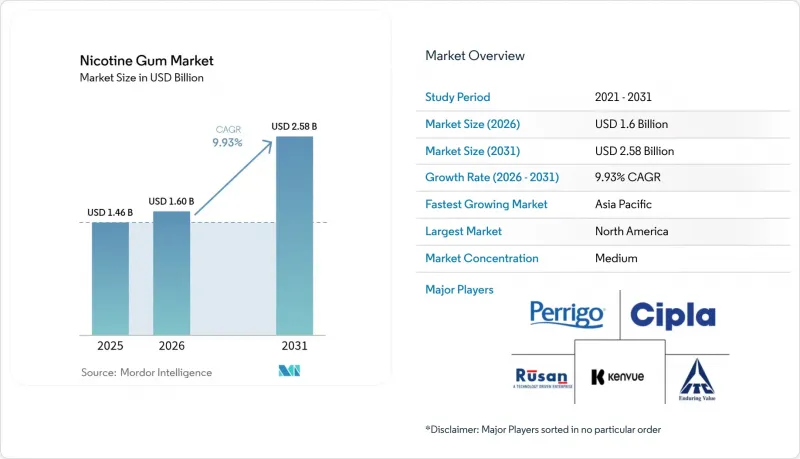
Mordor Intelligence에 의하면, 2026년 니코틴 껌 시장 규모는 16억 달러로 추정되고 있어 2025년 14억 6,000만 달러에서 확대되어, 2031년에는 25억 8,000만 달러에 이를 것으로 예측됩니다.
2026년부터 2031년까지 연평균 성장률(CAGR) 9.93%로 성장할 것으로 전망됩니다.
본 보고서는 투여량(3mg 미만 및 3mg 이상), 맛(민트, 과일, 기타),최종 사용자(남성 및 여성), 유통 채널(슈퍼마켓 및 하이퍼마켓, 드럭스토어/약국, 온라인 소매점, 기타 유통 채널), 지역(북미, 유럽, 아시아태평양, 남미 등)별로 분류되어 있습니다. 시장 전망은 금액(달러) 기준으로 제시되어 있습니다.
세계 니코틴 껌 시장 동향 및 인사이트
흡연의 유해성에 대한 인식 제고
흡연과 관련된 건강 위험에 대한 인식이 높아짐에 따라 금연 제품 및 서비스 시장의 성장이 촉진되고 있습니다. 폐암, 심장병, 호흡기 질환, 간접흡연의 영향 등 이러한 위험에 대한 소비자의 이해가 깊어짐에 따라, 의지력에만 의존하는 것이 아니라 과학적 근거에 기반한 해결책에 대한 수요가 증가하고 있습니다. 많은 지역에서 흡연율은 감소하고 있지만, 인구 증가에 따라 흡연자 총수는 증가하고 있어 니코틴 패치, 껌, 로젠지, 처방약 등의 금연 보조제에 대한 수요는 유지되고 있습니다. 의료계에서 니코틴 의존증이 단순한 생활 방식의 선택이 아니라 만성 질환으로 인식되면서, 장기간에 걸친 니코틴 대체 요법(NRT)의 사용이 정당화되었습니다. 이러한 의학적 관점에 따라 시장은 단기적인 해결책에 그치지 않고, 행동 지원, 상담 서비스, 디지털 헬스 용도를 접목한 종합적이고 장기적인 중독 관리 접근 방식으로 확대되고 있습니다.
전 세계 금연 이니셔티브 및 공중보건 캠페인
정부의 담배 규제 노력은 과세, 규제, 금연 지원을 결합한 프레임워크를 통해 니코틴 껌 수요를 견인하고 있습니다. 호주 정부는 2024년 4월 새로운 담배 규제를 도입했습니다. 이러한 규제는 향미 첨가물을 배제하고 제품 포장을 표준화함으로써 담배 제품의 매력과 호소력을 낮추는 것을 목적으로 합니다. 이러한 조치로 인해 담배 회사가 광고를 통해 취약 계층을 표적으로 삼는 능력이 제한됩니다. 또한, 규제에 따라 담배 팩, 파우치 및 롤링 담배의 크기를 표준화해야 합니다. 영국 정부는 2024년에 금연 지원 서비스에 연간 7,000만 파운드를 배정하여 매년 36만 명의 금연을 지원하고, 니코틴 대체 요법 시장을 확대하는 것을 목표로 하고 있습니다. 이 자금을 통해 무료 니코틴 대체 제품, 상담 서비스, 디지털 지원 도구 및 고위험군을 위한 전문 프로그램이 제공되고 있습니다. WHO의 ‘담배 규제 기본 협약’은 관할 구역을 초월한 표준화된 접근 방식을 통해 시장 발전을 지원하고, 가격 책정, 포장, 금연 지원 프로그램에 관한 지침을 마련하고 있습니다. 이 협약은 국제 협력, 연구 결과 공유, 그리고 담배 규제 조치에 관한 규제 기준의 조화를 촉진하고 있습니다.
대체 니코틴 대체 요법(NRT)을 둘러싼 치열한 경쟁
2025년 1월, FDA가 20유형의 ‘ZYN’ 니코틴 파우치 제품에 대한 판매 승인을 내린 것은 경구 니코틴 섭취 수단에서 큰 전환점이 되었습니다. 니코틴 파우치는 씹을 필요가 없어 턱의 피로를 방지하고, 입술 아래에 숨겨 눈에 띄지 않기 때문에 직장 환경에서 눈에 띄지 않아야 하는 전문직 종사자들에게 지지를 받고 있습니다. 흡연 행동을 재현하는 치료용 베이프 기기는 기존의 흡연 습관을 효과적으로 모방할 수 있어 금연 클리닉으로부터 지지를 얻고 있습니다. 이러한 새로운 제품 카테고리의 등장으로 소비자의 관심이 여러 니코틴 섭취 방식으로 분산되고 있으며, 니코틴 껌 제조업체들은 시장 내 입지를 유지하기 위해 확립된 임상적 배경, 입증된 안전성, 그리고 투여량 조절 메커니즘을 강조할 수밖에 없게 되었습니다. 이러한 대체 니코틴 섭취 시스템의 부상은 기존 니코틴 대체 요법 시장에 더욱 치열한 경쟁을 불러오고 있습니다.
부문 분석
2025년에는 3mg 미만 부문이 시장을 독점하며 니코틴 껌 시장 점유율의 66.85%를 차지했습니다. 이는 경증 및 중등도 흡연자들이 단계적인 금연 프로그램을 선택했기 때문입니다. 이러한 우위는 전신 노출을 최소화하고자 하는 사용자의 선호와 2mg 제품을 선호하는 약국의 재고 관리 패턴에서 기인합니다. 이 부문은 기존 제조업체에 안정적인 수익을 가져다주는 동시에, 금연을 시도하는 신규 사용자에게 첫 번째 선택지가 되고 있습니다. 그러나 임상적 처방 패턴은 변화하고 있습니다. 현재 의료 기관에서는 치료를 개인화하고 용량 부족을 방지하기 위해 ‘니코틴 의존도 파거스트롬 테스트’가 도입되고 있습니다. 연구에 따르면, 용량 부족은 재발의 일반적인 요인으로 지목되고 있습니다.
앞서 언급한 3mg 부문은 가장 높은 성장률을 보이고 있으며, 2031년까지의 연평균 성장률(CAGR)은 9.98%로 예측됩니다. 중증 흡연자는 금연 후 중요한 첫 72시간 동안의 금단 증상을 관리하기 위해 높은 초기 혈장 농도가 필요합니다. 퇴원 시 키트에 4mg 껌이 포함되어 있으면 금연 프로그램의 환자 지속률이 향상되고, 환자가 귀가한 후에도 처방전이 지속적으로 갱신되는 결과로 이어집니다. 각 제조업체는 맛이나 목의 불편함에 대한 기존 사용자들의 우려를 해소하기 위해 식감을 개선한 이중층 구조의 고용량 제제를 개발했습니다. 이러한 고용량화로의 전환에 따라 니코틴 껌 시장의 평균 판매 가격이 상승하고, 매출 총이익률이 개선되고 있습니다.
민트 맛은 깔끔한 뒷맛과 약국 유통 채널에서의 확고한 입지에 힘입어, 2025년 매출 점유율 44.97%로 시장을 계속 선도하고 있습니다. 민트 맛 니코틴 껌이 시장을 휩쓸고 있으며, 그 매력과 유효성을 높이는 몇 가지 요인이 이를 뒷받침하고 있습니다. 민트의 상쾌하고 청량감 있는 느낌은 니코틴의 쓴맛을 완화할 뿐만 아니라, 사용자가 껌을 더욱 즐겁게 즐길 수 있게 해줍니다. 주요 제조업체들은 강한 소비자 수요에 부응하기 위해 제품 라인업에서 민트 맛을 우선시하고 있으며, 확고한 브랜드 인지도와 폭넓은 접근성을 확보하고 있습니다. 2mg, 4mg, 6mg의 니코틴 함량을 지닌 민트 맛 껌은 다양한 수준의 니코틴 의존도에 대응하며, 금연을 목표로 하는 사람들에게 세심한 지원을 제공합니다. 또한, 시장 동향을 살펴보면 무설탕이나 저칼로리 민트 제품과 같은 혁신적인 상품의 급증세가 두드러지며, 특히 건강을 중시하는 소비자층에서 그 매력을 더욱 높이고 있습니다.
과일 카테고리는 풍미의 다양화로 연평균 성장률(CAGR) 9.99%로 성장을 지속하고, 있습니다. 프리미엄 과일 맛 제품은 재구매 빈도가 높으며, 금연 성공률 향상 효과도 나타나고 있습니다. 각 제조업체는 이에 대응하여 규제 범위 내에서 성인 소비자를 대상으로 은은한 온기를 느낄 수 있는 맛을 개발하고 있습니다. 첨단 코팅 코어 기술을 통해 풍미의 지속적인 방출이 가능해져 껌의 소비 시간을 연장함과 동시에 니코틴 흡수율을 높여, 니코틴 껌 시장에서 소비자의 충성도 향상에 기여하고 있습니다.
지역별 분석
2025년에는 종합적인 보험 적용, 병원 기반 옵트아웃 프로토콜, 그리고 확립된 소매 네트워크에 힘입어 북미가 매출의 84.12%를 차지했습니다. 인디애나주의 ‘Quit Now’ 프로그램에서 2023년 니코틴 대체 요법과 상담을 병행했을 때의 금연 성공률은 40%였던 반면, 지원 없이 시도했을 때는 4-7%에 그쳤습니다. 캐나다의 규정에 따르면 특정 제품에 대해 약사의 관여가 의무화되어 있어, 접근성을 유지하면서도 전문적인 감독이 이루어지고 있습니다. FDA 승인 파우치형 제품 및 의료용 베이프와의 경쟁이 치열해지는 한편, 니코틴 껌은 자가 투여의 편의성과 구강 내 만족감을 선호하는 견고한 사용자층을 유지하고 있습니다.
아시아태평양은 2031년까지 연평균 성장률(CAGR)이 10.44%로 가장 높은 성장률을 보이고 있습니다. 이러한 성장은 특히 중·저소득 국가의 높은 흡연율에 기인합니다. 남아시아 시장은 큰 잠재력을 가지고 있으며, 조사에 따르면 금연 프로그램에는 큰 격차가 존재하는 것으로 나타났습니다. 이러한 시장에서는 보다 효과적인 금연 전략을 수립하기 위해 금연 단체, 정책 입안자, 의료 전문가 간의 협력 강화가 요구되고 있습니다.
유럽에서는 확립된 의료 시스템 덕분에 수요가 안정적으로 유지되고 있습니다. 영국에서는 지역 금연 지원 서비스와 흡연자에게 니코틴 껌 등의 대체 수단을 제공하는 ‘Swap to Stop’ 프로그램에 매년 자금이 지원되고 있습니다. 동유럽에서는 구매력이 낮기 때문에 용량이 더 작고 가격이 저렴한 패키지 형태에 대한 수요가 예상됩니다. 남미, 아프리카, 중동에서는 각국 정부가 세계보건기구(WHO)의 권고 사항을 이행하고 있어 성장 기회가 예상되지만, 의료 제도의 확충은 여전히 매우 중요합니다. 다국적 기업들은 금연 이니셔티브에서 지역 비정부기구와 제휴하여 니코틴 껌 시장의 입지를 확대되고 있습니다.
기타 혜택:
- 엑셀 형식 시장 예측(ME) 시트
- 3개월간의 애널리스트 지원
자주 묻는 질문
목차
제1장 서론
제2장 조사 방법
제3장 주요 요약
제4장 시장 구도
제5장 시장 규모와 성장 예측
제6장 경쟁 구도
제7장 시장 기회와 향후 전망
JHS 26.09.07According to Mordor Intelligence, nicotine gum market size in 2026 is estimated at USD 1.6 billion, growing from 2025 value of USD 1.46 billion with 2031 projections showing USD 2.58 billion, growing at 9.93% CAGR over 2026-2031.
This report is Segmented by Dosage (Below 3 Mg and Above 3 Mg), by Flavor (Mint, Fruit, and Others), by End User (Male and Female), by Distribution Channel (Supermarkets/Hypermarkets, Drug Stores/Pharmacies, Online Retail Stores, and Other Distribution Channels), and by Geography (North America, Europe, Asia-Pacific, South America, and More). The Market Forecasts are Provided in Terms of Value (USD).
Global Nicotine Gum Market Trends and Insights
Growing Awareness about the Harmful Effects of Smoking
The increasing awareness of smoking-related health risks drives the growth of the smoking cessation products and services market. Consumers' understanding of these risks, including lung cancer, heart disease, respiratory problems, and secondhand smoke effects, has increased the demand for evidence-based solutions over reliance on willpower alone. While smoking prevalence has decreased in many regions, population growth has led to a higher total number of smokers, maintaining the demand for cessation aids such as nicotine patches, gums, lozenges, and prescription medications. The medical community's recognition of nicotine dependence as a chronic condition, rather than a lifestyle choice, has validated the use of long-term nicotine replacement therapies (NRTs). This medical perspective has expanded the market beyond short-term solutions to include comprehensive, long-term addiction management approaches, incorporating behavioral support, counseling services, and digital health applications.
Global Anti-Smoking Initiatives and Public Health Campaigns
Government tobacco control initiatives drive nicotine gum demand through frameworks that combine taxation, regulation, and cessation support. The Australian government implemented new tobacco control regulations in April 2024 . These regulations aim to reduce the appeal and attractiveness of tobacco products by eliminating flavor additives and standardizing product packaging. The measures restrict tobacco companies' ability to target vulnerable populations through advertising. The regulations mandate standardized dimensions for tobacco packs, pouches, and cigarette sticks. The UK government allocated GBP 70 million annually to stop smoking services in 2024, aiming to help 360,000 people quit each year, expanding the nicotine replacement therapy market . The funding provides free nicotine replacement products, counseling services, digital support tools, and specialized programs for high-risk populations. The WHO Framework Convention on Tobacco Control supports market development through standardized approaches across jurisdictions, establishing guidelines for pricing, packaging, and cessation support programs . The framework promotes international cooperation, research sharing, and harmonized regulatory standards for tobacco control measures.
Intense Competition from Alternative Nicotine Replacement Therapies (NRTs)
The FDA's marketing authorization for twenty ZYN nicotine pouch products in January 2025 marks a significant shift in oral nicotine delivery options . Nicotine pouches eliminate the need for chewing, prevent jaw fatigue, and remain discreet under the lip, appealing to professionals who require subtlety in their workplace environments. Therapeutic vaping devices that replicate smoking behaviors receive increasing support from cessation clinics due to their effectiveness in mimicking traditional smoking habits. These new product categories divide consumer attention across multiple nicotine delivery formats, compelling nicotine gum manufacturers to highlight their established clinical background, proven safety record, and controlled dosage mechanisms to maintain their market position. The emergence of these alternative nicotine delivery systems creates additional competitive pressure in the traditional nicotine replacement therapy market.
Other drivers and restraints analyzed in the detailed report include:
- Rising Demand for Convenient and Discreet Smoking-Cessation Products
- Innovations in Product Formulations and Flavored Gums
- Limited Consumer Awareness
For complete list of drivers and restraints, kindly check the Table Of Contents.
Segment Analysis
The below 3 mg tier dominated in 2025, capturing 66.85% of the nicotine gum market share as light and moderate smokers selected gradual tapering programs. This dominance stems from user preference for lower systemic exposure and established pharmacy inventory patterns favoring 2 mg products. The segment provides stable revenue for existing manufacturers and serves as an initial option for new users attempting to quit. However, clinical prescribing patterns are evolving. Healthcare facilities now implement the Fagerstrom Test for Nicotine Dependence to personalize treatment and prevent under-dosing, which studies have identified as a common relapse factor.
The above 3 mg segment demonstrates the highest growth rate, with a projected 9.98% CAGR through 2031. Heavy smokers require the elevated initial plasma concentration to manage withdrawal symptoms during the crucial first 72 hours after quitting. Improved patient retention occuers in cessation programs when 4 mg gum is included in discharge packages, resulting in continued prescription refills after patients return home. Manufacturers have developed bi-layer high-dose formulations with enhanced texture to address previous user concerns about taste and throat discomfort. This shift toward higher doses increases the average selling price and enhances gross margins in the nicotine gum market.
Mint maintains market leadership with 44.97% of 2025 sales value, supported by its clean aftertaste and established presence in pharmacy channels. Mint-flavored nicotine gums dominate the market, driven by several factors that enhance their appeal and effectiveness. The refreshing and cooling sensation of mint not only masks the bitter taste of nicotine but also makes the gum more enjoyable for users. Leading manufacturers, responding to strong consumer demand, prioritize mint variants in their portfolios, ensuring robust brand recognition and widespread availability. With nicotine strengths of 2 mg, 4 mg, and 6 mg, mint-flavored gums cater to varying levels of nicotine dependence, offering tailored support for those looking to quit. Additionally, market trends highlight a surge in innovations, such as sugar-free and low-calorie mint options, amplifying their allure, particularly among health-conscious consumers.
The fruit category exhibits 9.99% CAGR through flavor diversification. Premium fruit-flavored variants demonstrate higher repurchase frequency and improved cessation success rates. Manufacturers respond by developing subtle warming profiles that target adult consumers within regulatory parameters. Advanced coated-core technology enables sustained flavor release, promoting complete consumption time and enhanced nicotine absorption, contributing to increased consumer retention in the nicotine gum market.
Complete Report Scope:
- By Dosage
- Below 3 mg
- Above 3 mg
- By Flavor
- Mint
- Fruit
- Others
- By End User
- Male
- Female
- By Distribution Channel
- Supermarkets/Hypermarkets
- Drug Stores/Pharmacies
- Online Retail Stores
- Other Distribution Channels
- By Geography
- North America
- United States
- Canada
- Rest of North America
- Europe
- United Kingdom
- France
- Sweden
- Rest of Europe
- Asia-Pacific
- South America
- Middle East and Africa
- North America
Geography Analysis
North America accounted for 84.12% of revenue in 2025, driven by comprehensive insurance coverage, hospital-based opt-out protocols, and established retail networks. Indiana's "Quit Now" program reported 40% quit rates when combining nicotine replacement therapy with counseling, compared to 4-7% for unaided attempts in 2023. Canadian regulations require pharmacist involvement for specific products, providing professional oversight while maintaining accessibility. While FDA-cleared pouches and therapeutic vapes increase competition, nicotine gum maintains a strong user base who prefer its self-dosing capability and oral satisfaction.
The Asia-Pacific region demonstrates the highest growth rate at 10.44% CAGR through 2031. This growth stems from high smoking rates, particularly in lower-middle-income countries. South Asian markets offer significant potential, as research indicates major gaps in smoking cessation programs. These markets require improved coordination between anti-smoking organizations, policymakers, and healthcare professionals to develop more effective cessation strategies.
Europe maintains consistent demand through established healthcare systems. The United Kingdom provides annual funding for local smoking cessation services and the "Swap to Stop" program, which offers alternatives like nicotine gum to smokers. In Eastern Europe, lower purchasing power creates opportunities for smaller, more affordable packaging formats. South America, Africa, and the Middle East present growth potential as governments implement World Health Organization recommendations, though healthcare system development remains crucial. International companies partner with regional non-governmental organizations on smoking cessation initiatives to expand nicotine gum market presence.
- Kenvue Inc.
- Perrigo Company plc
- Cipla Limited
- Rusan Pharma Ltd
- ITC Limited
- Haleon plc
- PL Developments
- Tab Labs Ltd
- Sunmark (McKesson)
- Boots UK
- Dr Reddy's Laboratories Ltd.
- Fertin Pharma A/S
- Enorama Pharma AB
- Rogue Nicotine
- Lucy Goods Inc.
- CVS Health
- Revolymer plc
- Zydus Lifesciences Ltd.
- Blip Products, Inc.
- Nixit
Additional Benefits:
- The market estimate (ME) sheet in Excel format
- 3 months of analyst support
TABLE OF CONTENTS
1 INTRODUCTION
- 1.1 Study Assumptions and Market Definition
- 1.2 Scope of the Study
2 RESEARCH METHODOLOGY
3 EXECUTIVE SUMMARY
4 MARKET LANDSCAPE
- 4.1 Market Overview
- 4.2 Market Drivers
- 4.2.1 Growing Awareness about the Harmful Effects of Smoking
- 4.2.2 Global Anti-Smoking Initiatives and Public Health Campaigns
- 4.2.3 Rising Demand for Convenient and Discreet Smoking Cessation Products
- 4.2.4 Innovations in Product Formulations and Flavored Gums
- 4.2.5 Physician Recommendations and Medical Support
- 4.2.6 Collaborations with Healthcare Providers and Strategic Partnerships
- 4.3 Market Restraints
- 4.3.1 Intense Competition from Alternative Nicotine Replacement Therapies (NRTs)
- 4.3.2 Limited Consumer Awareness
- 4.3.3 Side Effects and User Discomfort
- 4.3.4 Public Perception Challenges
- 4.4 Consumer Behaviour Analysis
- 4.5 Regulatory Outlook
- 4.6 Porter's Five Forces Analysis
- 4.6.1 Bargaining Power of Suppliers
- 4.6.2 Bargaining Power of Buyers
- 4.6.3 Threat of New Entrants
- 4.6.4 Threat of Substitutes
- 4.6.5 Degree of Competition
5 MARKET SIZE AND GROWTH FORECASTS (VALUE)
- 5.1 By Dosage
- 5.1.1 Below 3 mg
- 5.1.2 Above 3 mg
- 5.2 By Flavor
- 5.2.1 Mint
- 5.2.2 Fruit
- 5.2.3 Others
- 5.3 By End User
- 5.3.1 Male
- 5.3.2 Female
- 5.4 By Distribution Channel
- 5.4.1 Supermarkets/Hypermarkets
- 5.4.2 Drug Stores/Pharmacies
- 5.4.3 Online Retail Stores
- 5.4.4 Other Distribution Channels
- 5.5 By Geography
- 5.5.1 North America
- 5.5.1.1 United States
- 5.5.1.2 Canada
- 5.5.1.3 Rest of North America
- 5.5.2 Europe
- 5.5.2.1 United Kingdom
- 5.5.2.2 France
- 5.5.2.3 Sweden
- 5.5.2.4 Rest of Europe
- 5.5.3 Asia-Pacific
- 5.5.4 South America
- 5.5.5 Middle East and Africa
- 5.5.1 North America
6 COMPETITIVE LANDSCAPE
- 6.1 Market Concentration
- 6.2 Strategic Moves
- 6.3 Market Share Analysis
- 6.4 Company Profiles (Includes Global-level Overview, Market-level Overview, Core Segments, Financials, Strategic Info, Market Rank/Share, Products and Services, Recent Developments)
- 6.4.1 Kenvue Inc.
- 6.4.2 Perrigo Company plc
- 6.4.3 Cipla Limited
- 6.4.4 Rusan Pharma Ltd
- 6.4.5 ITC Limited
- 6.4.6 Haleon plc
- 6.4.7 PL Developments
- 6.4.8 Tab Labs Ltd
- 6.4.9 Sunmark (McKesson)
- 6.4.10 Boots UK
- 6.4.11 Dr Reddy's Laboratories Ltd.
- 6.4.12 Fertin Pharma A/S
- 6.4.13 Enorama Pharma AB
- 6.4.14 Rogue Nicotine
- 6.4.15 Lucy Goods Inc.
- 6.4.16 CVS Health
- 6.4.17 Revolymer plc
- 6.4.18 Zydus Lifesciences Ltd.
- 6.4.19 Blip Products, Inc.
- 6.4.20 Nixit


