

|
시장보고서
상품코드
2123757
소아용 의약품 시장 : 점유율 분석, 업계 동향과 통계, 성장 예측(2026-2031년)Global Pediatric Drugs - Market Share Analysis, Industry Trends & Statistics, Growth Forecasts (2026 - 2031) |
||||||
 Mordor Intelligence
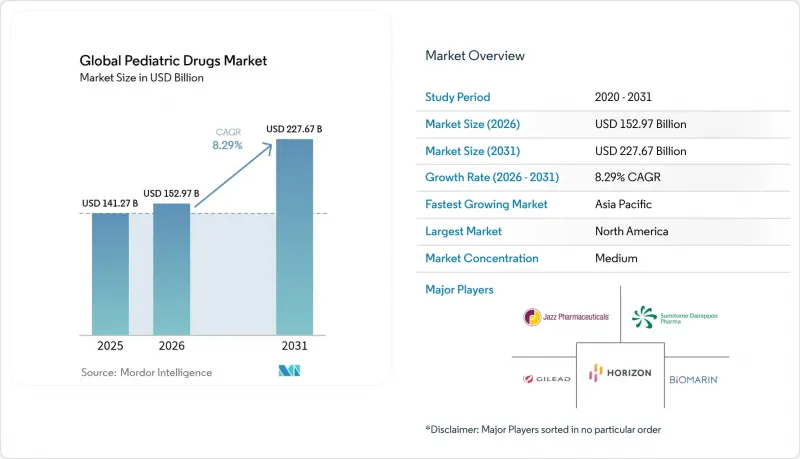
Mordor Intelligence에 의하면, 소아용 의약품 시장 규모는 2025년에 1,412억 7,000만 달러로 평가되었고 2026년 1,529억 7,000만 달러에서 성장하여 2031년까지 2,276억 7,000만 달러에 이를 것으로 추정되고 있습니다.
예측 기간(2026-2031년) 동안 연평균 성장률(CAGR)은 8.29%가 될 것으로 전망됩니다.
본 보고서에서는 업계를 약제 유형(호흡기 질환 치료제, 자가면역 질환 치료제, 소화기계 치료제, 심혈관계 치료제, 기타 약제), 투여 경로(경구, 외용, 비경구, 기타 투여 경로) 및 지역별로 분류하고 있습니다. 시장 규모 및 전망은 금액(달러)으로 표시되어 있습니다.
전 세계 소아용 의약품 시장 동향 및 인사이트
소아 만성 질환으로 인한 부담 증가
미국에서는 600만 명의 어린이가 소아 비만으로 고통받고 있으며, 릴라글루티드 등의 치료제는 현재 6-12세를 대상으로 하고 있습니다. 복잡한 신경 질환의 유병률 증가에 따라, 방향족 L-아미노산 탈카르복실화효소 결핍증에 대한 KEBILIDI 등의 승인이 진행되고 있습니다. 소아 종양학 분야에서도 마찬가지로 나노의학으로의 전환이 진행되고 있으며, 엑소좀 기반 운반체가 약물의 표적화를 촉진하고 전신 독성을 감소시키고 있습니다. 치료 기간의 장기화에 따라 안전하고 복용하기 쉬운 제형에 대한 수요가 높아지면서, 소아용 의약품 시장 수요가 더욱 강해지고 있습니다.
확대되는 연구개발 파이프라인과 소아 전용 지정
FDA는 2024년까지 38건의 희귀 소아 질환 우선 심사 바우처를 발급하여, 2013년 이후 569건의 지정을 유도했습니다. 그 대부분은 신경학, 대사 및 종양학 분야에 속합니다. 각 기업이 2024년 12월 프로그램 종료 전에 서둘러 신청을 제출함에 따라 거래의 기세가 가속화되었습니다. 그 대표적인 사례로, 머크 KGaA가 신경섬유종증 치료제 GOMEKLI를 확보하기 위해 SpringWorks를 39억 달러에 인수한 것을 들 수 있습니다. 현재 각 기업은 소아의 생리 기능에 특화된 의약품 개발을 추진하고 있으며, 그 일례로 바이오크리스트(BioCrest)가 12세 미만 소아용 ‘ORLADEYO’ 과립에 대한 신약 승인 신청(NDA)을 계획하고 있는 점을 들 수 있습니다. 이러한 움직임은 소아용 의약품 시장의 혁신 깊이를 강화하는 것입니다.
소아 임상시험에서의 윤리적·피험자 모집 관련 과제
적격한 소아 중 실제로 임상시험에 참여하는 비율은 고작 10%에 그치고 있습니다. 이는 보호자가 위험을 신중하게 검토하는 점과 시설마다 IRB(윤리심사위원회) 절차가 서로 다르기 때문입니다. 언어에 기인한 동의 획득의 장벽으로 인해 흑인이나 히스패닉계 가정의 참여율은 더욱 낮아지고 있습니다. 신생아를 대상으로 한 연구에서의 ‘동의 연기’ 모델은 긴급성과 윤리 간의 균형을 맞추는 것을 목적으로 합니다. 이러한 장벽들로 인해 소아용 의약품 시장에서 증거가 축적되는 속도가 늦어지고 있습니다.
부문 분석
소아용 의약품 시장에서 2025년 매출의 25.22%를 호흡기 치료제가 차지했습니다. 이는 코르티코스테로이드에 대한 의존도와 최근공급 부족이 수요를 뒷받침했기 때문입니다. 알부테롤/부데소니드 복합 흡입제의 출시로 공급 압박이 완화되면서 이중 작용 요법이 강화되고 있습니다. 신경학 및 ADHD 치료제는 진단이 명확해지고 비자극제 옵션이 지지를 얻음에 따라 2031년까지 연평균 성장률(CAGR) 8.96%로 성장하고 있습니다. 종양학 파이프라인에는 세포독성 약물의 치료 범위를 넓혀주는 엑소좀 기반 나노 캐리어가 포함되어 있습니다. 전반적으로 치료법의 다양화가 소아용 의약품 시장의 회복력을 보장하고 있습니다.
이 부문에는 초희귀질환인 백질 이영양증의 완치 가능성을 부각시키는 ‘LENMELDY’와 같은 자가면역 질환에 대한 획기적인 치료법도 포함되어 있습니다. 소화기계 의약품은 경험적 항생제 사용을 억제하는 적정 사용 프로그램의 영향을 받고 있는 반면, 순환기계 의약품은 새롭게 밝혀지고 있는 실제 임상 환경에서의 안전성 데이터로부터 혜택을 받고 있습니다. 모든 카테고리에서 기업들은 성인용 제품을 단순히 소형화하는 것이 아니라 소아 전용 제제를 설계하는 경향이 강해지고 있으며, 소아용 의약품 시장에 고유한 맛, 질감 및 투여량 유연성과 같은 요건을 충족시키고 있습니다.
지역별 분석
북미는 견고한 규제 체계, 특수 제형에 대한 보험 적용, 그리고 기술의 조기 도입을 배경으로 2025년 소아용 의약품 시장의 39.85%를 차지했습니다. FDA는 2024년에 XOLREMDI 및 DUVYZAT과 같은 제품에 대해 여러 건의 우선 심사 바우처를 부여하여 이 지역의 매력을 더욱 높였습니다. 입증된 흡입형 스테로이드제의 판매 중단과 같은 공급 충격은 단일 제품에 대한 의존으로 인한 취약성을 부각시켰지만, 원격 의료 및 재택 모니터링의 성숙화가 의료의 연속성과 향후 확장을 뒷받침하고 있습니다.
아시아태평양은 2031년까지 연평균 성장률(CAGR) 10.32%를 나타낼 것으로 예측되며, 소아용 의약품 시장에서 가장 빠르게 확대되는 지역이 될 전망입니다. 중국에서는 2013년부터 2022년 사이에 895건의 소아용 임상시험이 등록되었으며, 현재는 제네릭 의약품보다 혁신적인 의약품 파이프라인을 중시하고 있습니다. 인도는 2억 5,000만 달러 규모의 Gavi와의 파트너십을 통해 백신 미접종 아동을 30% 줄이는 것을 목표로 하고 있으며, 전국적인 규모로 폐렴구균 백신을 성공적으로 도입한 것은 규모 확대 능력을 입증하고 있습니다. 일본은 OTL-200 등의 유전자 치료제 승인을 추진 중이며, 이는 정밀 의학 분야에서 이 지역의 강점을 보여주고 있습니다.
유럽에서는 2001년부터 2015년까지 779종의 소아용 의약품에 영향을 미친 만성적인 공급 부족에도 불구하고 완만한 성장을 유지하고 있습니다. 유럽의약품청(EMA)은 소아용 의약품에 대한 통합적인 감독을 추진하고 있지만, 브렉시트 이후의 물류상의 복잡성으로 인해 새로운 공급 체제의 구축이 요구되고 있습니다. 독일에서는 영아를 대상으로 한 RSV 예방 조치가 도입되었으며, 근거에 기반한 신규 생물학적 제제의 도입이 진행되고 있는 것으로 나타났습니다. 중동 및 아프리카에서는 나이지리아의 시범 지역에서 조건부 현금 지원으로 예방접종률이 2배로 상승했으며, 이와 유사한 프로그램이 대륙 전체의 접종률 향상으로 이어질 가능성이 있습니다. 남미에서는 2021년 DTP3 접종률이 75%로 하락하는 등 역풍을 맞고 있지만, 콜롬비아와 페루의 혼합 백신 개혁은 회복을 위한 모범 사례가 되고 있습니다. 이러한 다양한 동향으로 인해 소아용 의약품 시장에서 지리적으로 다양한 기회가 창출되고 있습니다.
기타 혜택:
- 엑셀 형식 시장 전망(ME) 시트
- 3개월간의 애널리스트 지원
자주 묻는 질문
목차
제1장 서론
제2장 조사 방법
제3장 주요 요약
제4장 시장 구도
제5장 시장 규모와 성장 예측
제6장 경쟁 구도
제7장 시장 기회와 향후 전망
JHS 26.09.07According to Mordor Intelligence, the pediatric drugs market size was valued at USD 141.27 billion in 2025 and estimated to grow from USD 152.97 billion in 2026 to reach USD 227.67 billion by 2031, at a CAGR of 8.29% during the forecast period (2026-2031).
This report Segments the Industry Into Drug Type (Respiratory Disorder Drugs, Autoimmune Disorder Drugs, Gastrointestinal Drugs, Cardiovascular Drugs, Other Drug Types), Route of Administration (Oral, Topical, Parenteral, Other Routes of Administration) and Geography. The Market Sizes and Forecasts are Provided in Terms of Value (USD).
Global Pediatric Drugs Market Trends and Insights
Growing Burden of Chronic Pediatric Illnesses
Childhood obesity affects 6 million U.S. children, and therapies such as liraglutide now target ages 6-12 . Rising prevalence of complex neurological disorders has led to approvals like KEBILIDI for aromatic L-amino acid decarboxylase deficiency . Pediatric oncology similarly shifts toward nanomedicine, where exosome-based carriers enhance drug targeting and reduce systemic toxicity. Longer treatment horizons magnify the need for safe, palatable formulations and reinforce demand in the pediatric drugs market.
Expanding R&D Pipelines & Pediatric-Exclusive Designations
The FDA issued 38 rare pediatric disease priority review vouchers through 2024, sparking 569 designations since 2013, most in neurology, metabolism, and oncology. Companies rushed applications before the program sunset in December 2024, increasing deal-making momentum exemplified by Merck KGaA's USD 3.9 billion SpringWorks acquisition for the neurofibromatosis therapy GOMEKLI. Firms are now designing drugs specifically for pediatric physiology, illustrated by BioCryst's planned NDA for ORLADEYO granules for children under 12. These moves strengthen innovation depth within the pediatric drugs market.
Ethical & Recruitment Hurdles in Pediatric Trials
Only 10% of eligible children enroll in trials because parents weigh risks carefully and IRB processes vary across sites. Language-related consent barriers further lower participation among Black and Hispanic families . Deferred consent models in neonatal studies aim to reconcile urgency with ethics. These hurdles slow evidence generation for the pediatric drugs market.
Other drivers and restraints analyzed in the detailed report include:
- Government Incentives for Orphan & Pediatric Drugs
- Expansion of Pediatric Vaccination Schedules in Emerging Markets
- Real-World Evidence Accelerating Age-Appropriate Dosing
- Digital Adherence Platforms Boosting Treatment Outcomes
- High Palatability / Formulation Costs
For complete list of drivers and restraints, kindly check the Table Of Contents.
Segment Analysis
Respiratory treatments captured 25.22% of 2025 revenue in the pediatric drugs market as corticosteroid dependence and recent shortages sustained demand. The launch of albuterol / budesonide combination inhalers alleviates supply pressure and enhances dual-action therapy. Neurology and ADHD agents grow at 8.96% CAGR through 2031 as diagnostic clarity rises and non-stimulant options gain favor. Oncology pipelines integrate exosome-based nanocarriers that widen the therapeutic window for cytotoxics. Collectively, therapeutic diversification secures resilience in the pediatric drugs market.
The segment also includes autoimmune breakthrough therapies such as LENMELDY, which highlight curative potential in ultrarare leukodystrophies. Gastrointestinal drugs are affected by stewardship programs that keep empirical antibiotic usage in check, while cardiovascular agents benefit from emerging real-world safety data. Across categories, firms increasingly design pediatric-specific formulations rather than scaling down adult products, ensuring compliance with taste, texture, and dose-flexibility requirements intrinsic to the pediatric drugs market.
Complete Report Scope:
- By Drug Type
- Respiratory Disorder Drugs
- Autoimmune Disorder Drugs
- Gastrointestinal Drugs
- Cardiovascular Drugs
- Neurology & ADHD Drugs
- Oncology Drugs
- Other Drug Types
- By Route of Administration
- Oral
- Topical
- Parenteral
- Inhalation
- Other Routes
- By Distribution Channel
- Hospital Pharmacies
- Retail Pharmacies & Drug Stores
- Online Pharmacies
- By Geography
- North America
- United States
- Canada
- Mexico
- Europe
- Germany
- United Kingdom
- France
- Italy
- Spain
- Rest of Europe
- Asia-Pacific
- China
- Japan
- India
- Australia
- South Korea
- Rest of Asia-Pacific
- Middle East & Africa
- GCC
- South Africa
- Rest of Middle East & Africa
- South America
- Brazil
- Argentina
- Rest of South America
- North America
Geography Analysis
North America commanded 39.85% of the pediatric drugs market in 2025 on the back of robust regulatory frameworks, insurance coverage for specialty formulations, and early technology adoption. The FDA granted multiple priority review vouchers in 2024 for products such as XOLREMDI and DUVYZAT, reinforcing the region's attractiveness. Supply shocks like the withdrawal of established inhaled steroids highlighted vulnerability to single-product reliance, yet the maturity of telemedicine and home-based monitoring supports continuity of care and future expansion.
Asia-Pacific is forecast to grow at 10.32% CAGR to 2031, making it the fastest-expanding region in the pediatric drugs market. China registered 895 pediatric clinical trials between 2013-2022 and now emphasizes innovative over generic pipelines. India's USD 250 million Gavi partnership targets a 30% reduction in zero-dose children, while successful nationwide pneumococcal vaccine implementation underscores capability to scale. Japan advances gene therapy approvals such as OTL-200, signaling regional strength in precision medicine.
Europe sustains moderate growth despite chronic shortages that affected 779 pediatric medicines from 2001-2015. The EMA facilitates centralized pediatric oversight, yet logistical complexities post-Brexit necessitate new supply configurations. Germany adopted RSV prophylaxis for infants, evidencing evidence-driven uptake of novel biologics. In the Middle East and Africa, conditional cash transfers doubled immunization rates in Nigerian pilot areas, and similar programs could uplift coverage across the continent. South America faces headwinds as DTP3 rates dropped to 75% in 2021, but combination-vaccine reforms in Colombia and Peru offer templates for recovery. These divergent trajectories create geographically diverse opportunities within the pediatric drugs market.
- Pfizer
- Johnson & Johnson
- GlaxoSmithKline
- Sanofi
- Novartis
- PTC Therapeutics
- Biomarin Pharmaceutical
- Horizon Therapeutics
- Jazz Pharmaceuticals plc
- Gilead Sciences
- Sumitomo Pharma Co. Ltd.
- Boehringer Ingelheim
- Roche
- Eli Lilly and Company
- Amgen
- CSL Seqirus
- AstraZeneca
- Merck
- Abbvie
- Takeda Pharmaceutical Co.
Additional Benefits:
- The market estimate (ME) sheet in Excel format
- 3 months of analyst support
TABLE OF CONTENTS
1 Introduction
- 1.1 Study Assumptions & Market Definition
- 1.2 Scope of the Study
2 Research Methodology
3 Executive Summary
4 Market Landscape
- 4.1 Market Overview
- 4.2 Market Drivers
- 4.2.1 Growing burden of chronic pediatric illnesses
- 4.2.2 Expanding R&D pipelines & pediatric-exclusive designations
- 4.2.3 Government incentives for orphan & pediatric drugs
- 4.2.4 Expansion of pediatric vaccination schedules in emerging markets
- 4.2.5 Real-world evidence accelerating age-appropriate dosing
- 4.2.6 Digital adherence platforms boosting treatment outcomes
- 4.3 Market Restraints
- 4.3.1 Ethical & recruitment hurdles in pediatric trials
- 4.3.2 High palatability/formulation costs
- 4.3.3 Antibiotic-stewardship pressure on prescriptions
- 4.3.4 Supply-chain gaps for taste-masking excipients
- 4.4 Value / Supply-Chain Analysis
- 4.5 Regulatory Landscape
- 4.6 Technological Outlook
- 4.7 Porter's Five Forces Analysis
- 4.7.1 Threat of New Entrants
- 4.7.2 Bargaining Power of Buyers/Consumers
- 4.7.3 Bargaining Power of Suppliers
- 4.7.4 Threat of Substitute Products
- 4.7.5 Intensity of Competitive Rivalry
5 Market Size & Growth Forecasts (Value, USD Million)
- 5.1 By Drug Type
- 5.1.1 Respiratory Disorder Drugs
- 5.1.2 Autoimmune Disorder Drugs
- 5.1.3 Gastrointestinal Drugs
- 5.1.4 Cardiovascular Drugs
- 5.1.5 Neurology & ADHD Drugs
- 5.1.6 Oncology Drugs
- 5.1.7 Other Drug Types
- 5.2 By Route of Administration
- 5.2.1 Oral
- 5.2.2 Topical
- 5.2.3 Parenteral
- 5.2.4 Inhalation
- 5.2.5 Other Routes
- 5.3 By Distribution Channel
- 5.3.1 Hospital Pharmacies
- 5.3.2 Retail Pharmacies & Drug Stores
- 5.3.3 Online Pharmacies
- 5.4 By Geography
- 5.4.1 North America
- 5.4.1.1 United States
- 5.4.1.2 Canada
- 5.4.1.3 Mexico
- 5.4.2 Europe
- 5.4.2.1 Germany
- 5.4.2.2 United Kingdom
- 5.4.2.3 France
- 5.4.2.4 Italy
- 5.4.2.5 Spain
- 5.4.2.6 Rest of Europe
- 5.4.3 Asia-Pacific
- 5.4.3.1 China
- 5.4.3.2 Japan
- 5.4.3.3 India
- 5.4.3.4 Australia
- 5.4.3.5 South Korea
- 5.4.3.6 Rest of Asia-Pacific
- 5.4.4 Middle East & Africa
- 5.4.4.1 GCC
- 5.4.4.2 South Africa
- 5.4.4.3 Rest of Middle East & Africa
- 5.4.5 South America
- 5.4.5.1 Brazil
- 5.4.5.2 Argentina
- 5.4.5.3 Rest of South America
- 5.4.1 North America
6 Competitive Landscape
- 6.1 Market Concentration
- 6.2 Market Share Analysis
- 6.3 Company Profiles (includes Global level Overview, Market level overview, Core Segments, Financials as available, Strategic Information, Market Rank/Share for key companies, Products & Services, and Recent Developments)
- 6.3.1 Pfizer Inc.
- 6.3.2 Johnson & Johnson (Janssen)
- 6.3.3 GlaxoSmithKline plc
- 6.3.4 Sanofi SA
- 6.3.5 Novartis AG
- 6.3.6 PTC Therapeutics Inc.
- 6.3.7 BioMarin Pharmaceutical Inc.
- 6.3.8 Horizon Therapeutics plc
- 6.3.9 Jazz Pharmaceuticals plc
- 6.3.10 Gilead Sciences Inc.
- 6.3.11 Sumitomo Pharma Co. Ltd.
- 6.3.12 Boehringer Ingelheim GmbH
- 6.3.13 F. Hoffmann-La Roche Ltd
- 6.3.14 Eli Lilly and Company
- 6.3.15 Amgen Inc.
- 6.3.16 CSL Seqirus
- 6.3.17 AstraZeneca plc
- 6.3.18 Merck & Co., Inc.
- 6.3.19 AbbVie Inc.
- 6.3.20 Takeda Pharmaceutical Co.
7 Market Opportunities & Future Outlook
- 7.1 White-space & Unmet-need Assessment


