

|
시장보고서
상품코드
2124102
보트 렌탈 시장 : 시장 점유율 분석, 업계 동향 및 통계, 성장 예측(2026-2031년)Boat Rental - Market Share Analysis, Industry Trends & Statistics, Growth Forecasts (2026 - 2031) |
||||||
 Mordor Intelligence
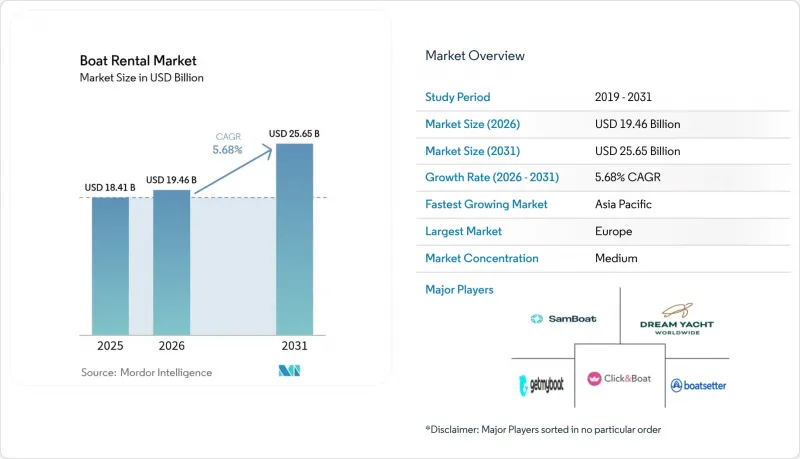
Mordor Intelligence에 의하면, 보트 렌탈 시장 규모는 2025년 184억 1,000만 달러로 평가되었고, 2026년에는 194억 6,000만 달러로 추정되고, 2031년까지 256억 5,000만 달러에 이를 것으로 예측되며, 예측 기간(2026-2031년) CAGR은 5.68%를 나타낼 전망입니다.
본 보고서는 보트 유형별(요트, 세일링 보트, 카타마란, 모터보트, RIB), 동력원별(내연기관, 하이브리드, 완전 전기식), 활동 유형별(낚시, 레저 세일링/크루징 등), 예약 채널별(온라인 통합 플랫폼 등), 렌탈 기간별(시간 단위 등), 지역별로 분류되어 있습니다. 시장 전망은 금액(달러) 기준으로 제시되어 있습니다.
세계의 보트 렌탈 시장 동향 및 인사이트
연안 및 해양 관광의 성장
2025년에는 국제 관광객 수가 15억 2,000만 명에 달한 것으로 평가되었으며, 단기 전세 및 당일치기 크루즈에 대한 수요가 증가하고 있습니다. 지중해 지역의 관광지는 긴 세일링 시즌 덕분에 선단의 가동률이 향상되는 혜택을 누리고 있는 반면, 카리브해와 동남아시아의 주요 거점은 겨울철 관광객의 몰림을 흡수하고 있습니다. 리조트 시설과의 제휴를 통해 선장이 동행하는 유람 투어가 숙박 패키지에 포함되면서, 보트 렌탈는 단순한 선택 사항에서 여행 일정의 핵심 요소로 위상이 높아지고 있습니다. 가족 단위 여행객들이 안정성을 중시하는 경향으로 인해 멀티헐 선박의 가동률이 상승하고 있으며, 이에 따라 선단 관리자들은 쌍동선으로의 전환을 추진하고 있습니다. 아시아 신흥 시장의 새로운 마리나는 계류 용량을 확대하여 성수기의 혼잡을 완화하고 있습니다.
온라인 개인 간(P2P) 렌탈 플랫폼의 급증
2025년, 2대 플랫폼인 Boatsetter와 GetMyBoat가 합병하여 연간 예약액이 5억 달러를 넘는 통합 마켓플레이스가 탄생했습니다. 이를 통해 네트워크 효과가 확립되었고, 공급원이 더욱 확대되었습니다. 보트 소유자는 수익의 대부분을 받을 수 있어, 운영자가 자본을 투입하지 않아도 새로운 보트를 등록할 유인이 되고 있습니다. 내장된 보험 제휴를 통해 기존의 장벽이 제거되었으며, 앱 내 리뷰 기능을 통해 투명성과 신뢰도가 높아지고 있습니다. 앱 기반 서비스에 익숙한 젊은 렌탈 이용자들은 현재 거래의 3분의 1 이상을 차지하고 있습니다. 하지만 플랫폼의 경제성은 밀도에 좌우되기 때문에 지역 내 유동성을 확보하기 위한 업계 재편이 가속화되고 있습니다.
계절적 수요 변동
온대 지역 사업자의 경우, 수익이 여름에 정점을 찍은 후 몇 달 동안 선단이 유휴 상태가 됩니다. 겨울에는 보관, 유지보수, 승무원 고정 계약과 같은 과제가 발생하며, 이 모든 것이 현금 흐름에 큰 부담이 됩니다. 일부 기업은 선박을 반구 간에 이동시켜 여름철 수요를 따라잡으려 시도하고 있지만, 운송 물류 비용이 이익률을 압박하는 경우가 많습니다. 구독료가 완충 역할을 하는 경우도 있지만, 비수기 이용은 여전히 타격을 입어 잠재적 이익이 제한되고 있습니다.
부문 분석
2025년 보트 렌탈 시장 점유율의 41.71%를 차지한 모터보트는 직관적인 조작성과 당일치기 이용에 있어 높은 범용성 덕분에 계속해서 엔트리 레벨 수요를 뒷받침하고 있습니다. 카타마란은 여행자들이 넓은 공간과 흔들림이 적은 점을 중요시하는 경향이 있어, 이 부문 내에서 가장 높은 연평균 성장률(CAGR) 8.27%를 나타낼 것으로 예측됩니다. 이 부문이 가진 편안함이라는 장점은 여러 세대가 함께 섬을 여행하는 그룹에게 지지를 받고 있으며, 크로아티아, 그리스, 카리브해 지역에서 예약 빈도를 높이고 있습니다. 요트는 기업 연수 및 특별 행사에 힘입어 고급 틈새 시장으로서의 입지를 유지하고 있는 반면, 세일링 보트는 면허를 소지한 선장 인력 부족에 직면해 있습니다. 팽창식 RIB는 다이빙 셔틀 및 연안 단거리 이동 수요를 충족시키고 있습니다.
운항 사업자들은 높은 취득 비용에도 불구하고 쌍동선 선단을 확대하고 있으며, 고가의 일일 이용 요금과 높은 가동률이 자본 지출을 상쇄할 것으로 기대하고 있습니다. 세일링 보트는 젊은 세대가 선장 자격 취득 과정을 기피하고 있어 다시 활기를 되찾는 데 어려움을 겪고 있으며, 일부 전세 업체에서는 선택형 선장 서비스를 패키지로 제공합니다. 모터보트의 전기화로 인해 이 부문은 세분화가 진행되고 있습니다. 배터리 구동 런어바웃을 조기에 도입한 사업자들은 제로 배출을 내세워 친환경을 지향하는 여행객을 유치하려 하고 있습니다. 요트 업계에서는 기술 인력 부족을 해소하기 위해 승무원이 동행하는 전세 모델의 운항이 증가하고 있습니다. 한편, RIB(경질 인플레이터블 보트) 제공업체들은 얕은 흘수(draught)와 우수한 연비 효율을 활용해 얕은 수심의 어드벤처 명소로 진출하고 있습니다.
2025년 보트 렌탈 시장 점유율의 83.93%를 차지했던 내연기관은 급유 편의성과 견실한 재판매 가치 덕분에 여전히 확고한 입지를 유지하고 있습니다. 하지만 신규 주문이 하이브리드 및 전기식으로 전환되고 있어 그 성장은 정체 국면에 접어들고 있습니다. 완전 전기 선박은 규제 측면의 호재와 배터리 가격 하락에 힘입어 2031년까지 연평균 성장률(CAGR) 16.01%를 나타낼 것으로 예측됩니다. 하이드로포일 설계는 선체를 물의 저항이 발생하는 수면 위로 들어 올려 항속 거리를 연장함으로써, 항속 거리에 대한 불안이라는 장벽을 완화합니다.
하이브리드 구성은 항구 내 조종 시에는 전기를, 장거리 크루즈 시에는 디젤을 사용하여, 항속 거리를 희생하지 않으면서도 배기가스 규제 구역에 대응할 수 있는 양자의 가교 역할을 하는 것입니다. 스칸디나비아 지역에서는 전력망에 대한 인센티브와 청정 에너지에 대한 지향으로 도입이 진행되고 있지만, 지중해 연안의 마리나에서는 인프라 부족으로 인해 도입이 지연되고 있습니다. 선박용 배터리 팩은 자동차용보다 크기가 크기 때문에 배터리 교체 구상은 여전히 이론적 단계에 머물러 있습니다. 그렇지만 대형 용선 그룹이 전기 모델에 대해 수년에 걸쳐 발주를 진행하고 있다는 점은 충전 네트워크가 점차 성숙해 나갈 것이라는 자신감을 보여줍니다.
지역별 분석
2025년, 유럽은 보트 렌탈 시장 매출의 39.43%를 차지했습니다. 이는 지중해 전역에 걸쳐 형성된 촘촘한 마리나 네트워크와 8개월 이상 이어지는 항해 시즌의 혜택을 받은 결과입니다. 통합된 면허 제도와 스테이지 V 배기가스 규제로 인해 하이브리드 및 전기 모델로의 선단 갱신이 촉진되면서, 이 지역은 지속 가능한 전세 사업의 최전선에 서 있습니다. 북유럽은 내륙 지역과 발트해에서 수요에 기여하고 있지만, 시즌이 짧기 때문에 남부 해역에 비해 이용량은 다소 적습니다. 유럽연합(EU) 역내에서의 국경을 초월한 렌탈 상호 이용으로 행정적 마찰이 완화되었으며, 플랫폼은 통일된 보험 및 선장 기준 하에 지역을 넘어 사업을 확장할 수 있게 되었습니다.
아시아태평양은 2031년까지 연평균 성장률(CAGR) 7.13%를 나타낼 것으로 예측되며, 이는 세계에서 가장 빠른 성장 속도입니다. 중국의 연안 성에서는 부상하는 중산층에 대응하기 위해 마리나에 대한 투자가 진행되고 있는 반면, 동남아시아의 휴양지에서는 다이빙이나 섬 투어와 전세 보트를 결합한 패키지 상품이 제공되고 있습니다. 외국 선박에 대한 규제 등 규제상의 복잡성은 여전히 남아 있지만, 현지 합작 투자를 통해 진입 장벽은 점차 완화되고 있습니다. 일본과 한국에서는 정부의 레저 보트 이용 촉진 정책을 뒷받침으로, 아직 초기 단계이긴 하지만 관심이 높아지고 있습니다. 충전 인프라가 여전히 부족하여 전기 보트의 보급은 유럽 수준에 뒤처져 있지만, 정책 동향을 보면 중기적으로 도입이 가속화될 조짐이 보입니다.
북미에서는 플로리다와 캘리포니아의 연중 수요에 더해, 오대호와 태평양 연안 북서부에서는 계절적 수요의 정점을 보입니다. 광범위한 마리나 네트워크와 선장 동반 서비스 제공을 간소화하는 해안경비대의 선장 면허 취득 요건 완화로 인해, 구독형 클럽이 시장 점유율을 장악하고 있습니다. 지자체에서 시행하는 워터프론트 재생 보조금을 통해 도시 지역의 계류 시설이 개방되면서, 자전거 공유 프로그램을 본뜬 시간 단위 렌탈 제도가 촉진되고 있습니다. 개인 간 거래에서의 보험료는 여전히 역풍을 맞고 있지만, 보험이 포함된 제휴를 통해 위험 가격 책정은 서서히 정상화되고 있습니다. 라틴아메리카, 중동 및 아프리카는 관광 인프라와 거시경제의 안정에 좌우되는 장기적인 기회를 내포하고 있습니다.
기타 혜택 :
- 엑셀 형식 시장 전망(ME) 시트
- 3개월간의 애널리스트 지원
자주 묻는 질문
목차
제1장 서론
제2장 조사 방법
제3장 주요 요약
제4장 시장 구도
제5장 시장 규모 및 성장 예측
제6장 경쟁 구도
제7장 시장 기회 및 향후 전망
AJY 26.09.11According to Mordor Intelligence, the boat rental market size is projected to expand from USD 18.41 billion in 2025 to USD 19.46 billion in 2026, reaching USD 25.65 billion by 2031, registering a 5.68% CAGR during the forecast period (2026-2031).
This report is Segmented by Boat Type (Yacht, Sailing Boat, Catamaran, Motorboat, and RIB), Power Source (IC Engine, Hybrid, and Full-Electric), Activity Type (Fishing, Leisure Sailing / Cruising, and More), Booking Channel (Online Aggregator Platforms and More), Rental Duration (Hourly and More), and Geography. The Market Forecasts are Provided in Terms of Value (USD).
Global Boat Rental Market Trends and Insights
Growth in Coastal and Marine Tourism
International tourist arrivals climbed to 1.52 billion in 2025, strengthening demand for short-term charters and day cruises. Mediterranean destinations benefit from long sailing seasons that improve fleet utilization, while Caribbean and Southeast Asian hubs capture winter overflow. Resort tie-ins now bundle skippered excursions with accommodation packages, elevating boat rentals from optional to core itinerary elements. Multi-hull craft post higher occupancy because families value stability, driving fleet managers to pivot toward catamarans. New marinas in emerging Asian markets are widening berth capacity and easing high-season congestion.
Proliferation of Online Peer-to-Peer Rental Platforms
The 2025 merger of two major platforms, Boatsetter and GetMyBoat, created a combined marketplace with annual bookings exceeding USD 500 million, establishing network effects and deepening supply pools. Owners retain a majority of revenue, incentivizing fresh listings without capital deployment from operators. Embedded insurance partnerships remove a historic barrier, while in-app reviews raise transparency and trust. Younger renters, comfortable with app-based services, now represent over one-third of transactions. Still, platform economics hinge on density; hence, consolidation is accelerating to shore up local liquidity.
Seasonal Demand Volatility
Operators in temperate zones see their revenues peak in summer, leading to months of idle fleets. Winter brings challenges: storage, maintenance, and fixed crew contracts all weigh heavily on cash flow. While some companies attempt to chase summer by repositioning vessels across hemispheres, transport logistics often eat into their margins. Though subscription dues provide a buffer, off-season usage still takes a hit, limiting potential gains.
Other drivers and restraints analyzed in the detailed report include:
- Millennial Preference for Access Over Ownership
- AI-Driven Dynamic Pricing Boosts Boat Utilization
- Stringent Emissions and Noise Regulations
For complete list of drivers and restraints, kindly check the Table Of Contents.
Segment Analysis
Motorboats, which captured 41.71% of the boat rental market share in 2025, continue to anchor entry-level demand due to their intuitive handling and versatile day-use appeal. Catamarans are projected to rise at an 8.27% CAGR, the fastest within this segmentation, as travelers prioritize spacious layouts and minimal heel. The segment's comfort advantage resonates with multi-generational groups exploring island chains, bolstering booking frequency in Croatia, Greece, and the Caribbean. Yachts maintain a luxury niche supported by corporate retreats and special events, whereas sailing boats face a shrinking pool of licensed skippers. Inflatable RIBs round out capacity for dive transfers and quick coastal hops.
Operators are enlarging catamaran fleets despite higher acquisition costs, betting that premium daily rates and elevated occupancy offset capital outlays. Sailing boats struggle to regain momentum as younger demographics forego certification courses, prompting some charter firms to bundle optional skipper services. Motorboat electrification is fragmenting the category; early adopters of battery-powered runabouts tout zero-emission branding to secure eco-travelers. Yachts increasingly operate under crewed-charter models to bypass skill shortages, while RIB providers leverage low draft and fuel thrift to penetrate shallow-water adventure hotspots.
Internal-combustion engines, which held 83.93% of the boat rental market share in 2025, remain entrenched due to their convenience for refueling and resilient resale values. Still, growth is plateauing as new orders tilt toward hybrid or electric. Full-electric vessels are forecast to post a 16.01% CAGR through 2031, buoyed by regulatory tailwinds and falling battery prices. Hydrofoil designs extend range by lifting hulls above drag, mitigating the range-anxiety barrier.
Hybrid configurations provide a bridge: electric for harbor maneuvering, diesel for extended cruises, and compliance with emission zones without sacrificing endurance. Scandinavia leads adoption thanks to grid incentives and a clean-energy ethos, while Mediterranean marinas lag amid infrastructure gaps. Battery-swap concepts remain theoretical because marine packs are larger than automotive equivalents. Nonetheless, major charter groups are placing multi-year orders for electric models, signaling confidence that charging networks will mature.
Complete Report Scope:
- By Boat Type
- Yacht
- Sailing Boat
- Catamaran
- Motorboat
- Inflatable / RIB
- By Power Source
- Internal Combustion Engine
- Hybrid
- Full-Electric
- By Activity Type
- Fishing
- Leisure Sailing / Cruising
- Watersports (towing, diving, etc.)
- Sight-seeing / Day-cruise
- By Booking Channel
- Online Aggregator Platforms
- Marina / Offline Desk
- Subscription and Club Models
- By Rental Duration
- Hourly
- Half-Day
- Full-Day
- Multi-Day / Weekly
- By Geography
- North America
- United States
- Canada
- Rest of North America
- South America
- Brazil
- Argentina
- Rest of South America
- Europe
- Germany
- United Kingdom
- France
- Italy
- Spain
- Greece
- Netherlands
- Denmark
- Rest of Europe
- Asia-Pacific
- China
- Japan
- India
- South Korea
- Rest of Asia-Pacific
- Middle East and Africa
- United Arab Emirates
- Saudi Arabia
- South Africa
- Rest of Middle East and Africa
- North America
Geography Analysis
Europe accounted for 39.43% of the boat rental market revenue in 2025, benefiting from dense marina networks across the Mediterranean and a sailing season that stretches over 8 months. Harmonized licensing frameworks and Stage V emission rules encourage fleet upgrades to hybrid and electric models, positioning the region at the forefront of sustainable charters. Northern Europe contributes inland and Baltic traffic, though shorter seasons temper volume relative to southern waters. Cross-border rental reciprocity within the European Union reduces administrative friction, allowing platforms to scale pan-regionally with uniform insurance and skipper standards.
Asia-Pacific is projected to record a 7.13% CAGR through 2031, the fastest globally. China's coastal provinces are investing in marinas to serve a rising middle class, while Southeast Asian resorts package charters with diving and island tours. Regulatory complexity, such as restrictions on foreign-flagged vessels, persists, yet local joint ventures are easing entry barriers. Japan and South Korea exhibit nascent but growing interest, spurred by government leisure-boating promotions. Charging networks remain sparse, so electric adoption lags European levels, but policy signals suggest accelerating rollout over the medium term.
North America combines year-round demand in Florida and California with seasonal spikes in the Great Lakes and Pacific Northwest. Subscription clubs dominate penetration due to extensive marina footprints and favorable Coast Guard captain-licensing thresholds that simplify skippered offerings. Municipal waterfront-revitalization grants unlock urban dockage, fuelling hourly rental schemes that mirror bike-share programs. Insurance premiums for peer-to-peer transactions remain a headwind, yet embedded-coverage partnerships are gradually normalizing risk pricing. Latin America, the Middle East, and Africa represent longer-dated opportunities contingent on tourism infrastructure and macroeconomic stability.
- Boatsetter Inc.
- GetMyBoat
- ClickandBoat
- Nautal
- Sailo Inc.
- SamBoat
- Zizooboats GmbH
- Boat Jump
- Incrediblue
- Globe Sailor
- Yachtico Inc.
- Le Boat
- Dream Yacht Charter
- Freedom Boat Club
- Anchor Rides
- Adventure Boat Rentals
- Blue Boat Yacht Entertainment Co.
Additional Benefits:
- The market estimate (ME) sheet in Excel format
- 3 months of analyst support
TABLE OF CONTENTS
1 Introduction
- 1.1 Study Assumptions and Market Definition
- 1.2 Scope of the Study
2 Research Methodology
3 Executive Summary
4 Market Landscape
- 4.1 Market Overview
- 4.2 Market Drivers
- 4.2.1 Growth in Coastal and Marine Tourism
- 4.2.2 Proliferation of Online Peer-to-Peer Rental Platforms
- 4.2.3 Millennial Preference for Access Over Ownership
- 4.2.4 AI-driven Dynamic Pricing Boosts Boat Utilisation
- 4.2.5 Telematics-Enabled Predictive Fleet Maintenance
- 4.2.6 Municipal Waterfront-Revitalization Grants
- 4.3 Market Restraints
- 4.3.1 Seasonal Demand Volatility
- 4.3.2 Stringent Emissions and Noise Regulations
- 4.3.3 Rising Insurance Premiums for P2P Rentals
- 4.3.4 Shortage of Qualified Skippers and Crew in Peak Season
- 4.4 Value / Supply-Chain Analysis
- 4.5 Technological Outlook
- 4.6 Porter's Five Forces Analysis
- 4.6.1 Threat of New Entrants
- 4.6.2 Bargaining Power of Buyers
- 4.6.3 Bargaining Power of Suppliers
- 4.6.4 Threat of Substitutes
- 4.6.5 Competitive Rivalry
5 Market Size and Growth Forecasts (Value (USD))
- 5.1 By Boat Type
- 5.1.1 Yacht
- 5.1.2 Sailing Boat
- 5.1.3 Catamaran
- 5.1.4 Motorboat
- 5.1.5 Inflatable / RIB
- 5.2 By Power Source
- 5.2.1 Internal Combustion Engine
- 5.2.2 Hybrid
- 5.2.3 Full-Electric
- 5.3 By Activity Type
- 5.3.1 Fishing
- 5.3.2 Leisure Sailing / Cruising
- 5.3.3 Watersports (towing, diving, etc.)
- 5.3.4 Sight-seeing / Day-cruise
- 5.4 By Booking Channel
- 5.4.1 Online Aggregator Platforms
- 5.4.2 Marina / Offline Desk
- 5.4.3 Subscription and Club Models
- 5.5 By Rental Duration
- 5.5.1 Hourly
- 5.5.2 Half-Day
- 5.5.3 Full-Day
- 5.5.4 Multi-Day / Weekly
- 5.6 By Geography
- 5.6.1 North America
- 5.6.1.1 United States
- 5.6.1.2 Canada
- 5.6.1.3 Rest of North America
- 5.6.2 South America
- 5.6.2.1 Brazil
- 5.6.2.2 Argentina
- 5.6.2.3 Rest of South America
- 5.6.3 Europe
- 5.6.3.1 Germany
- 5.6.3.2 United Kingdom
- 5.6.3.3 France
- 5.6.3.4 Italy
- 5.6.3.5 Spain
- 5.6.3.6 Greece
- 5.6.3.7 Netherlands
- 5.6.3.8 Denmark
- 5.6.3.9 Rest of Europe
- 5.6.4 Asia-Pacific
- 5.6.4.1 China
- 5.6.4.2 Japan
- 5.6.4.3 India
- 5.6.4.4 South Korea
- 5.6.4.5 Rest of Asia-Pacific
- 5.6.5 Middle East and Africa
- 5.6.5.1 United Arab Emirates
- 5.6.5.2 Saudi Arabia
- 5.6.5.3 South Africa
- 5.6.5.4 Rest of Middle East and Africa
- 5.6.1 North America
6 Competitive Landscape
- 6.1 Market Concentration
- 6.2 Strategic Moves
- 6.3 Market Share Analysis
- 6.4 Company Profiles (Includes Global-level Overview, Market-level Overview, Core Segments, Financials as available, Strategic Information, Market Rank/Share, Products and Services, Recent Developments)
- 6.4.1 Boatsetter Inc.
- 6.4.2 GetMyBoat
- 6.4.3 ClickandBoat
- 6.4.4 Nautal
- 6.4.5 Sailo Inc.
- 6.4.6 SamBoat
- 6.4.7 Zizooboats GmbH
- 6.4.8 Boat Jump
- 6.4.9 Incrediblue
- 6.4.10 Globe Sailor
- 6.4.11 Yachtico Inc.
- 6.4.12 Le Boat
- 6.4.13 Dream Yacht Charter
- 6.4.14 Freedom Boat Club
- 6.4.15 Anchor Rides
- 6.4.16 Adventure Boat Rentals
- 6.4.17 Blue Boat Yacht Entertainment Co.
7 Market Opportunities and Future Outlook
- 7.1 White-space & Unmet-need Assessment


