|
시장보고서
상품코드
2124354
유럽의 굴삭기 및 로더 시장 : 점유율 분석, 업계 동향과 통계, 성장 예측(2026-2031년)Europe Excavator And Loaders - Market Share Analysis, Industry Trends & Statistics, Growth Forecasts (2026 - 2031) |
||||||
 Mordor Intelligence
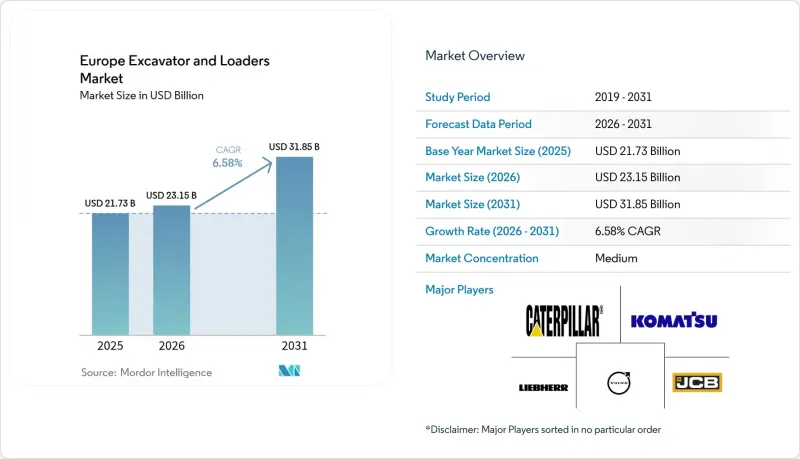
Mordor Intelligence에 의하면, 유럽 굴삭기 및 로더 시장 규모는 2025년에 217억 3,000만 달러, 2026년에 231억 5,000만 달러가 되어, 2031년까지 318억 5,000만 달러에 이를 것으로 예측되며, 2026-2031년까지 CAGR 6.58%로 성장할 전망입니다.
본 보고서는 기계 유형별(굴삭기, 로더), 구동 방식별(디젤/유압식, 전기식, 기타), 가동 중량별(6t 미만, 기타),최종 이용 산업별(건설, 광업, 기타), 용도별(굴착, 자재관리, 기타), 지역별로 분류되어 있습니다. 시장 예측은 금액(달러)과 수량(대)으로 표시되어 있습니다.
유럽 굴삭기 및 로더 시장 동향 및 인사이트
스테이지 V 배기가스 규제가 장비 교체를 촉진
유럽 건설기계 시장에서 스테이지 V 배기가스 규제가 특히 굴삭기 및 로더의 차량 교체 주기를 가속화하고 있습니다. 많은 사업자, 특히 중소규모 도급업체들은 첨단 후처리 시스템을 사후 장착하는 데 드는 막대한 비용을 이유로 예상보다 빨리 구형 기계를 매각하고 있습니다. 한편, 독일의 세제 혜택 및 지속가능성 관련 규제 덕분에 사후 개조 비용을 피할 수 있는 전기 구동 시스템이 탄력을 받고 있습니다. 이러한 변화하는 시장 환경은 조달 전략을 재구축할 뿐만 아니라, 리스 및 인증 중고 장비 프로그램의 확대도 촉진하고 있습니다. 또한, 이로 인해 각 OEM 기업들은 전동화, 하이브리드화, 최첨단 배터리 기술에 대한 투자를 가속화하고 있습니다.
EU 그린딜에 따른 인프라 자금 조달의 급증
‘유럽 연결 시설(CEF)’의 일환으로, 향후 몇 년간 교통 및 에너지 회랑에 막대한 자금이 투입될 전망입니다. 이러한 투자 급증은 중형 굴삭기 및 휠 로더 수요를 끌어올릴 것으로 예측됩니다. 특히 독일과 프랑스에서는 향후 10년 후반에 걸쳐 건설 기계의 대폭적인 증강이 필요한 프로젝트가 특정되어 있습니다. 또한, 제로 배출 자산에 대한 가속 상각으로 인해 임대 주기가 대폭 단축되어, 유럽의 굴삭기 및 로더 시장에서는 조기 기종 교체가 진행되는 추세입니다.
고금리 환경이 설비 투자를 억제
유럽 전역에서 높은 금리가 건설기계 시장, 특히 굴삭기와 로더에 대한 설비 투자를 억제하고 있습니다. 유럽중앙은행(ECB)의 긴축 통화 정책으로 인해 건설업체들은 자금 조달 비용 상승에 직면해 있으며, 일괄 구매의 매력이 줄어들고 있습니다. 그 결과, 많은 건설업체들은 상환 부담을 줄이기 위해 대출 기간을 연장하거나, 현재 보유 중인 기계의 사용 수명을 늘리기 위해 사용 기간 중반에 대대적인 정비를 선택하고 있습니다. 이러한 신중한 전략은 기계 교체 주기를 늦추고 신형 기계에 대한 수요를 감소시킬 뿐만 아니라, 유지보수 전략에 더욱 주력하게 하며, 차입 비용이 더 유리해질 때까지 조달 관행을 변화시키는 결과로 이어지고 있습니다.
부문 분석
유럽 굴삭기 및 로더 시장 점유율은 2025년에 55.71%로 정점을 찍었습니다. 6톤 미만의 미니 굴삭기는 좁은 보행자 구역에도 진입할 수 있는 제로 테일 스윙 설계가 선호되어 가장 빠른 성장세를 보이고 있습니다. 6톤에서 14톤 사이의 미디 클래스 장비는 부문 매출의 상당 부분을 차지하며, 기초 공사 및 도랑 파기 수요의 핵심을 이루고 있습니다. 로더는 그 뒤를 잇고 있지만, 골재 플랜트에서 휠 로더가 여전히 필수적이기 때문에 6.55%의 성장률을 유지하고 있습니다. 스키드 스티어 로더와 콤팩트 트랙 로더는 각각 건물 내부 철거 공사 및 연약 지반의 농업 부문에서 점유율을 확대하고 있으며, 이는 유럽 굴삭기 및 로더 시장 수요 다각화를 반영하고 있습니다.
백호 로더에서 전용 미니 굴삭기나 텔레핸들러로의 대체가 진행되면서, 백호 로더 시장 점유율은 축소되고 있습니다. 한편, 소형 아티큘레이트 로더는 지자체 제설 업무에서 시장 점유율을 확대되고 있습니다. 부착 장치의 범용성-90초 만에 공구를 교체할 수 있는 퀵 커플러-가 가동률을 높여, 유럽 굴삭기 및 로더 시장에서 각 OEM 업체들이 서비스 수익을 확보하는 데 기여하고 있습니다.
디젤 및 유압식 장비는 시장 점유율의 88.15%를 차지하고 있지만, 2031년까지 연평균 성장률(CAGR) 6.66%로 전기식 장비의 출하량이 확대됨에 따라 그 지배력은 점차 약화되고 있습니다. 가동 시간이 긴 차량군의 경우, 충전 비용이 디젤보다 저렴해진다는 점을 배경으로 2031년까지 유럽 굴삭기 및 로더 시장에서 전기식 장비의 점유율은 상승할 전망입니다. 충전 인프라가 잘 갖춰지지 않은 지역에서는 하이브리드 구동 시스템이 주목받고 있습니다.
수소 연료전지의 시범 도입 대수는 여전히 20대 미만에 그치고 있으며, 장기적인 가능성은 시사되고 있지만 2031년까지 판매 대수는 극히 소수에 그칠 것으로 예측됩니다. 케이블 연결식 굴삭기는 전력망 접근이 안정적인 노르웨이의 수력 발전 댐에서 널리 활용되고 있습니다. 바이오디젤 혼합 연료는 규제 준수를 용이하게 하지만, OEM(원천 장비 제조업체)의 승인이 없으면 보증이 무효화되므로, 많은 건설업체들이 배터리 구동 방식으로 직접 전환하는 경향을 보이고 있으며, 이는 유럽의 굴삭기 및 로더 시장에 있어 전략적인 전환점이 되고 있습니다.
기타 혜택
- 엑셀 형식 시장 예측(ME) 시트
- 3개월간의 애널리스트 지원
자주 묻는 질문
목차
제1장 서론
제2장 조사 방법
제3장 주요 요약
제4장 시장 구도
제5장 시장 규모와 성장 예측
제6장 경쟁 구도
제7장 시장 기회와 향후 전망
JHSAccording to Mordor Intelligence, the Europe excavator and loaders market size is projected to be USD 21.73 billion in 2025, USD 23.15 billion in 2026, and reach USD 31.85 billion by 2031, growing at a CAGR of 6.58% from 2026 to 2031.
This report is Segmented by Machinery Type (Excavators and Loaders), Drive Type (Diesel/Hydraulic, Electric, and More), Operating Weight (Below 6t and More), End-Use (Construction, Mining, and More), Application (Excavation, Material Handling, and More), and Geography. The Market Forecasts in Value (USD) and Volume (Units).
Europe Excavator And Loaders Market Trends and Insights
Stage V Emission Norms Driving Fleet Renewal
In Europe's construction equipment market, Stage V emission norms are accelerating fleet renewal, particularly for excavators and loaders. Many operators, especially small- and mid-sized contractors, are trading in their older machines sooner than anticipated due to the steep costs of retrofitting them with advanced after-treatment systems. Meanwhile, electric drivetrains are gaining momentum, sidestepping retrofit costs, thanks to Germany's tax incentives and sustainability mandates. This evolving landscape is not only reshaping procurement strategies but also amplifying leasing and certified pre-owned programs. Furthermore, it's spurring original equipment manufacturers (OEMs) to ramp up investments in electrification, hybridization, and cutting-edge battery technologies.
EU Green Deal Infrastructure Funding Boom
Under the Connecting Europe Facility, substantial funding is set to flow into transport and energy corridors over the next few years. This surge in investment is poised to boost the demand for mid-size excavators and wheel loaders. Notably, Germany and France have identified projects that will necessitate a significant increase in machinery during the latter part of the decade. Furthermore, with accelerated depreciation for zero-emission assets, rental cycles have shortened considerably, leading to a trend of early replacements in the European excavators and loaders market.
High Interest-Rate Environment Dampening CAPEX
Across Europe, high interest rates are curbing capital expenditure in the construction equipment market, especially for excavators and loaders. Due to the European Central Bank's tight monetary policy, contractors face higher financing costs, making outright purchases less appealing. As a result, many contractors are either extending loan tenors to alleviate repayment pressures or choosing mid-life overhauls to prolong the service life of their current fleets. This prudent strategy not only decelerates the equipment refresh cycle and diminishes demand for new machinery but also strengthens the focus on maintenance strategies, altering procurement habits until borrowing costs become more favorable.
Other drivers and restraints analyzed in the detailed report include:
- Post-Pandemic Construction Backlog Release
- Zero-Emission Site Mandates in Scandinavia
- Growth of Rental Fleets Suppressing Purchases
For complete list of drivers and restraints, kindly check the Table Of Contents.
Segment Analysis
Europe's excavator and loader market size peaked at 55.71% in 2025. Mini excavators below 6 tonnes post the fastest gains, favored by zero-tail-swing designs that slip into tight pedestrian zones. Midi units between 6 and 14 tonnes hold significant weight-segment revenue and anchor foundation and trenching needs. Loaders trail but still grow at 6.55% as wheel loaders remain indispensable at aggregate plants. Skid-steer and compact track loaders win share inside interior demolition and soft-ground agriculture, respectively, reflecting diversified pull on the European excavators & loaders market.
Replacement of backhoe loaders with dedicated mini excavators and telehandlers continues, shrinking the backhoe portion. At the same time, small articulated loaders carve out space in municipal snow removal. Attachment versatility-quick couplers that allow tool swaps in 90 seconds-elevates utilization, helping OEMs lock in service revenue in the European excavators & loaders market.
Diesel and hydraulic equipment account for 88.15% of the market share, yet their grip is easing as electric shipments expand at a 6.66% CAGR through 2031. Europe excavators & loaders market share for electric machines will climb by 2031 on the back of charging costs undercutting diesel on high-hour fleets. Hybrid drivetrains appeal where charging is scarce.
Hydrogen fuel-cell pilots remain below 20 units, signaling long-term optionality but negligible volume before 2031. Cable-tethered excavators thrive in Norway's hydropower dams, where grid access is stable. Biodiesel blends ease compliance but void warranties unless OEM-approved, leaving many contractors to leapfrog straight to battery power, a strategic inflection for the European excavators & loaders market.
Complete Report Scope:
- By Machinery Type
- Excavators
- Mini (Below 6 t)
- Midi (6 to 14 t)
- Crawler
- Wheeled
- Amphibious
- Large (Above 45 t)
- Loaders
- Wheel Loader
- Skid Steer Loader
- Compact Track Loader
- Backhoe Loader
- Small Articulated Loader
- Excavators
- By Drive Type
- Diesel / Hydraulic
- Electric
- Hybrid
- Hydrogen Fuel-Cell (emerging)
- Cable / Grid-tethered
- By Operating Weight (t)
- Below 6
- 6 to 14
- 14 to 30
- 30 to 45
- Above 45
- By End-Use Industry
- Construction
- Mining and Quarrying
- Agriculture and Forestry
- Waste and Recycling
- Utilities and Urban Infrastructure
- Rental Companies
- By Application
- Excavation and Earthmoving
- Material Handling
- Demolition
- Landscaping
- Snow Removal
- Road Building and Maintenance
- By Country
- Germany
- United Kingdom
- France
- Italy
- Spain
- Netherlands
- Sweden
- Norway
- Rest of Europe
List of Companies Covered in this Report:
- Caterpillar Inc.
- Komatsu Ltd.
- Volvo Construction Equipment
- CNH Industrial N.V. (CASE and New Holland)
- Deere and Company
- Hitachi Construction Machinery
- Liebherr-International Deutschland GmbH
- Doosan Bobcat Co.
- Kobelco Construction Machinery
- Manitou BF SA
- Yanmar Construction Equipment
- JCB Ltd.
- Kubota Corp.
- Sany Europe
- XCMG Europe
- Wacker Neuson SE
- Hyundai Construction Equipment Europe
- Mecalac SAS
- Wirtgen Group (John Deere)
- Avant Tecno Oy
Additional Benefits:
- The market estimate (ME) sheet in Excel format
- 3 months of analyst support
TABLE OF CONTENTS
1 Introduction
- 1.1 Study Assumptions & Market Definition
- 1.2 Scope of the Study
2 Research Methodology
3 Executive Summary
4 Market Landscape
- 4.1 Market Overview
- 4.2 Market Drivers
- 4.2.1 Stage V Emission Norms Driving Fleet Renewal
- 4.2.2 EU Green-Deal Infrastructure Funding Boom
- 4.2.3 Post-Pandemic Construction Backlog Release
- 4.2.4 Zero-Emission Site Mandates in Scandinavia
- 4.2.5 Equipment-as-a-Service Business Models
- 4.2.6 Digital-Twin Job-Site Automation Uptake
- 4.3 Market Restraints
- 4.3.1 High Interest-Rate Environment Dampening CAPEX
- 4.3.2 Growth of Rental Fleets Suppressing Purchases
- 4.3.3 Battery-Material Cost Volatility
- 4.3.4 Dealer-Network Consolidation Blocking New Entrants
- 4.4 Value / Supply-Chain Analysis
- 4.5 Regulatory Landscape
- 4.6 Technological Outlook
- 4.7 Porter's Five Forces
- 4.7.1 Threat of New Entrants
- 4.7.2 Bargaining Power of Suppliers
- 4.7.3 Bargaining Power of Buyers
- 4.7.4 Threat of Substitutes
- 4.7.5 Competitive Rivalry
5 Market Size & Growth Forecasts (Value (USD) and Volume (Units))
- 5.1 By Machinery Type
- 5.1.1 Excavators
- 5.1.1.1 Mini (Below 6 t)
- 5.1.1.2 Midi (6 to 14 t)
- 5.1.1.3 Crawler
- 5.1.1.4 Wheeled
- 5.1.1.5 Amphibious
- 5.1.1.6 Large (Above 45 t)
- 5.1.2 Loaders
- 5.1.2.1 Wheel Loader
- 5.1.2.2 Skid Steer Loader
- 5.1.2.3 Compact Track Loader
- 5.1.2.4 Backhoe Loader
- 5.1.2.5 Small Articulated Loader
- 5.1.1 Excavators
- 5.2 By Drive Type
- 5.2.1 Diesel / Hydraulic
- 5.2.2 Electric
- 5.2.3 Hybrid
- 5.2.4 Hydrogen Fuel-Cell (emerging)
- 5.2.5 Cable / Grid-tethered
- 5.3 By Operating Weight (t)
- 5.3.1 Below 6
- 5.3.2 6 to 14
- 5.3.3 14 to 30
- 5.3.4 30 to 45
- 5.3.5 Above 45
- 5.4 By End-Use Industry
- 5.4.1 Construction
- 5.4.2 Mining and Quarrying
- 5.4.3 Agriculture and Forestry
- 5.4.4 Waste and Recycling
- 5.4.5 Utilities and Urban Infrastructure
- 5.4.6 Rental Companies
- 5.5 By Application
- 5.5.1 Excavation and Earthmoving
- 5.5.2 Material Handling
- 5.5.3 Demolition
- 5.5.4 Landscaping
- 5.5.5 Snow Removal
- 5.5.6 Road Building and Maintenance
- 5.6 By Country
- 5.6.1 Germany
- 5.6.2 United Kingdom
- 5.6.3 France
- 5.6.4 Italy
- 5.6.5 Spain
- 5.6.6 Netherlands
- 5.6.7 Sweden
- 5.6.8 Norway
- 5.6.9 Rest of Europe
6 Competitive Landscape
- 6.1 Market Concentration
- 6.2 Strategic Moves
- 6.3 Market Share Analysis
- 6.4 Company Profiles (includes Global Level Overview, Market Level Overview, Core Segments, Financials as Available, Strategic Information, Market Rank/Share for Key Companies, Products and Services, SWOT Analysis, and Recent Developments)
- 6.4.1 Caterpillar Inc.
- 6.4.2 Komatsu Ltd.
- 6.4.3 Volvo Construction Equipment
- 6.4.4 CNH Industrial N.V. (CASE and New Holland)
- 6.4.5 Deere and Company
- 6.4.6 Hitachi Construction Machinery
- 6.4.7 Liebherr-International Deutschland GmbH
- 6.4.8 Doosan Bobcat Co.
- 6.4.9 Kobelco Construction Machinery
- 6.4.10 Manitou BF SA
- 6.4.11 Yanmar Construction Equipment
- 6.4.12 JCB Ltd.
- 6.4.13 Kubota Corp.
- 6.4.14 Sany Europe
- 6.4.15 XCMG Europe
- 6.4.16 Wacker Neuson SE
- 6.4.17 Hyundai Construction Equipment Europe
- 6.4.18 Mecalac SAS
- 6.4.19 Wirtgen Group (John Deere)
- 6.4.20 Avant Tecno Oy
7 Market Opportunities & Future Outlook
- 7.1 White-space & unmet-need assessment