|
시장보고서
상품코드
2124528
중동 및 아프리카의 펄프 및 종이 시장 : 시장 점유율 분석, 업계 동향과 통계, 성장 예측(2026-2031년)Middle East and Africa Pulp and Paper - Market Share Analysis, Industry Trends & Statistics, Growth Forecasts (2026 - 2031) |
||||||
 Mordor Intelligence
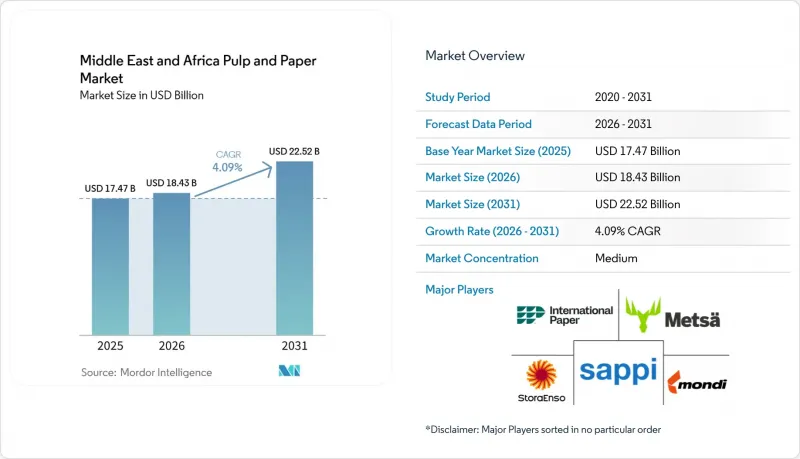
Mordor Intelligence에 의하면, 중동 및 아프리카의 펄프 및 종이 시장 규모는 2025년 174억 7,000만 달러, 2026년 184억 3,000만 달러에서 2031년까지 225억 2,000만 달러에 이르고, 2026-2031년 연평균 복합 성장률(CAGR)은 4.09%를 기록할 전망입니다.
본 보고서는 등급(미표백 크라프트 펄프, 기계 펄프, 재생 펄프 등), 용도(인쇄·필기용지, 신문용지, 티슈 등), 최종 이용 산업(식품 및 음료 포장 등), 제품 유형(그래픽 용지 등), 제조 기술(화학 펄프법 등) 및 지역별로 분류되어 있습니다. 시장 전망은 금액(달러) 기준으로 제시되어 있습니다.
중동 및 아프리카 펄프·제지 시장 동향과 인사이트
전자상거래 주문 처리량 증가
디지털 상거래는 이 두 하위 지역의 골판지 상자 수요를 변화시키고 있습니다. 사우디아라비아 및 UAE의 사업자들은 배송 중량을 줄이기 위해 적정 크기의 다이컷 골판지 형태를 채택하고 있습니다. 이러한 변화로 인해 동일한 생산 주기 내에서 경량 플루트 소재 및 고강도 테스트 라이너에 대한 수요가 증가하고 있습니다. 사우디아라비아의 비석유 민간 부문 활동 지수는 2025년 대부분 동안 53을 상회하며, 석유 사이클과 무관한 상업 활동 및 포장 수요를 뒷받침했습니다. 아프리카 대륙 자유무역협정(AfCFTA)의 디지털 무역 프로토콜은 내륙국의 라스트 마일 물류를 지원하고 있으며, 그동안 재사용이나 비공식적인 형태가 일반적이었던 분야에서 골판지 포장에 대한 추가 수요를 창출하고 있습니다. 중동 및 아프리카의 펄프·제지 시장은 제지 회사들이 변화하는 물류 수요를 충족시키기 위해 더 가볍고 강도가 높은 등급의 제품에 투자함으로써 혜택을 볼 수 있습니다.
정부의 플라스틱 단계적 폐지 규제
플라스틱 규제로 인해 일부 제품 카테고리에서는 종이 포장이 필수적이 되었습니다. 아랍에미리트(UAE)는 2025년과 2026년에 규제를 확대하여 컵, 뚜껑, 수저, 접시 등 더 많은 외식 산업용 품목을 규제 대상에 포함시켰습니다. 케냐, 나이지리아, 에티오피아, 이집트 역시 2025년에 포장재 및 제조업체의 책임에 관한 조치를 도입했습니다. 이러한 조치는 외식 산업, 소매, 소비재 포장에 영향을 미치고 있으며, 규제 대상 플라스틱 제품을 종이 제품으로 대체할 수 있게 되었습니다. 또한 이러한 변화는 생산자 책임 제도를 통해 사용 후 종이 회수 범위 확대에도 박차를 가하고 있습니다. 따라서 중동 및 아프리카의 펄프·제지 시장은 소비자의 선택적 선호가 아닌, 규제 준수 요건에 기인한 수요의 지지를 받게 될 것입니다.
재활용 섬유 수입 가격의 변동
많은 제지 공장은 유럽, 북미, 아시아에서 수입된 사용 후 골판지 상자나 혼합 폐지에 의존하고 있습니다. 이러한 의존 관계로 인해 비용 구조는 전 세계 섬유 가격 및 운송비 변동의 영향을 받기 쉽습니다. 이러한 비용 위험은 재활용 펄프를 사용하는 걸프 지역 제지 공장에 특히 중요한 문제이며, 저비용 수입품에 의존하고 있기 때문에 비용 상승분을 고객에게 전가할 수 있는 능력이 제한됩니다. 2026년의 해상 운송 노선 혼란 또한 펄프 운송 운임 및 보험료의 상승을 초래했습니다. 제지 공장은 이에 대응하기 위해 장기 공급 계약 체결, 혼합 베일을 처리할 수 있는 드럼 펄퍼 도입, 그리고 국내 회수 시스템과의 연계를 추진하고 있습니다. 이러한 조치들은 회복력을 높일 수 있지만, 운전 자본이 필요하며, 소규모 가공업체의 경우 자금 조달이 어렵습니다.
부문별 분석
2025년, 표백 화학 펄프는 매출의 32.07%를 차지하며 해당 지역의 주요 등급이 되었습니다. 이 펄프는 일관된 섬유 품질과 인장 강도가 필요한 티슈 및 고광택 골판지 공장에 공급되고 있습니다. MEPCO의 자회사인 Juthor사는 2025년 킹 압둘라 경제 도시에서 TM6 티슈 생산 라인 건설을 시작했습니다. 이 프로젝트는 9,200만 달러 규모의 투자로, 티슈 연간 생산 능력을 6만 톤 증설하는 것을 목표로 하고 있습니다. 이 라인은 ANDRITZ사의 설비를 채택했으며, 2,100 m/min의 가동 속도로 설계되었습니다. 용해용 목재 펄프의 규모는 여전히 작지만, 튀르키예 및 이집트의 비스코스 단섬유 클러스터에서는 추적 가능한 셀룰로오스 원료에 대한 수요가 증가하고 있습니다. 사이코아(Cykoa)사의 이번 11만 톤 규모의 생산 능력 증설은
Sappi가 이러한 수요에 대응할 수 있는 능력을 강화할 것입니다. 미표백 크라프트 펄프는 백도보다 파열 강도가 중시되는 자루나 견고한 운송용 포장 분야에서 여전히 중요한 역할을 하고 있습니다. 재생 펄프는 2031년까지 연평균 성장률(CAGR) 4.84%를 기록하며 가장 빠르게 성장하는 등급이 될 것으로 예측됩니다. 이러한 성장은 확대된 생산자 책임(EPR) 규정에 따른 회수 네트워크 구축 및 혼합 종이 베일을 처리하는 제지 공장의 설비 현대화와 밀접한 관련이 있습니다. 드럼 펄퍼와 개선된 선별 라인을 통해 더욱 다양한 원료로부터 상업용 펄프를 생산할 수 있게 됩니다. 재생 펄프는 높은 성능이 요구되는 용도에서 표백 화학 펄프를 대체하지는 않을 것으로 예측됩니다. 대신, 기계 펄프나 2차 등급 수입품의 사용을 줄일 수 있습니다. 사우디아라비아, 이집트, 튀르키예에서는 밀짚, 대추야자 잎, 사탕수수 찌꺼기를 활용한 농업 잔여물 시험이 진행 중입니다.
2025년, 중동 및 아프리카의 펄프·제지 시장에서 골판지용 원지는 32.12%를 차지하며 최대 용도 카테고리가 되었습니다. 또한 2031년까지 연평균 성장률(CAGR) 4.98%로 가장 빠른 성장세를 기록할 것으로 예측됩니다. 전자상거래 주문 처리 및 신선 식품 수출로 인해 골판지용 등급 수요가 증가하고 있습니다. 사우디아라비아와 UAE의 사업자들은 출하 중량을 줄일 수 있는 적정 크기의 포맷을 요구하고 있습니다. 이에 따라 경량 플루팅용 펄프와 강도가 더 높은 테스트 라이너에 대한 수요가 높아지고 있습니다. 티슈는 1인당 소비량이 제한적인 아프리카 시장에 GCC(걸프협력회의)의 생산 능력이 공급되고 있어, 두 번째로 빠르게 성장하는 용도로 자리 잡고 있습니다. 새로운 제조 설비에서는 스루에어(through-air) 건조 기술을 채택하여 뛰어난 부드러움을 실현하는 동시에, 현지에서 생산된 티슈의 경쟁력을 높이고 있습니다. 또한, 소비재 기업들이 플라스틱 감축 노력에 발맞추어 포장 사양을 재검토함에 따라 골판지 역시 혜택을 보고 있습니다.
인쇄·필기용지 및 신문용지는 광고와 독서가 점점 더 디지털 채널로 이동함에 따라 생산량 감소에 직면해 있습니다. 특수지는 의약품 라벨, 식품용 포장 필름, 산업용 박리 라이너용 등 규모는 작지만 수익성이 높은 카테고리로 자리 잡고 있습니다. 남아프리카와 튀르키예에서는 원래 인쇄·필기용지 등급에 사용되던 일부 가공 능력이 특수 배리어지 및 기능성 코팅용으로 전환되고 있습니다. 이를 통해 생산자는 기존 설비를 활용하면서도 확대되는 소비재 수요에 대응할 수 있게 됩니다. 유럽 소매 채널을 대상으로 농산물을 수출하는 기업은 2025년 7월 시행된 추적성 및 포장 요건을 충족해야 합니다. 이러한 요건은 컨테이너 보드의 인증 프리미엄을 뒷받침할 가능성이 있습니다. 중동 및 아프리카의 펄프·제지 시장에서는 수출 지향적인 농업 공급망을 대상으로 인증된 골판지용 등급에 대한 수요가 지속적으로 존재하고 있습니다. 이로 인해 저비용 등급에 대한 압박이 있는 상황에서도 고성능 포장재에 대한 수요는 유지되고 있습니다.
기타 혜택:
- 엑셀 형식 시장 전망(ME) 시트
- 3개월간의 애널리스트 지원
자주 묻는 질문
목차
제1장 서론
제2장 조사 방법
제3장 주요 요약
제4장 시장 구도
제5장 시장 규모와 성장 예측
제6장 경쟁 구도
제7장 시장 기회와 향후 전망
LSH 26.09.14According to Mordor Intelligence, the Middle East and Africa pulp and paper market size is projected to expand from USD 17.47 billion in 2025 and USD 18.43 billion in 2026 to USD 22.52 billion by 2031, registering a CAGR of 4.09% between 2026 and 2031.
This report is Segmented by Grade (Unbleached Kraft Pulp, Mechanical Pulp, Recycled Pulp, and More), Application (Printing and Writing, Newsprint, Tissue, and More), End-Use Industry (Food and Beverage Packaging, and More), Product Type (Graphic Papers, and More), Process Technology (Chemical Pulping, and More), and Geography. The Market Forecasts are Provided in Terms of Value (USD).
Middle East and Africa Pulp and Paper Market Trends and Insights
Accelerating E-Commerce Fulfillment Volumes
Digital commerce is changing corrugated-box demand across the two subregions. Operators in Saudi Arabia and the UAE are adopting right-sized and die-cut corrugated formats that reduce shipment weight. This shift increases demand for lightweight fluting media and stronger testliners within the same production cycle. Saudi Arabia's non-oil private-sector activity remained above 53 for much of 2025, which supported commercial activity and packaging demand outside the oil cycle. The AfCFTA digital trade protocol is supporting last-mile logistics in landlocked economies, creating additional demand for corrugated packaging, where reused or informal formats had been common. The Middle East and Africa pulp and paper markets can benefit as mills invest in lighter, stronger grades that meet changing logistics needs.
Government Plastic Phase-Out Regulations
Plastic restrictions are making paper-based packaging necessary in several product categories. The UAE extended its restrictions in 2025 and 2026 to cover more food-service items, including cups, lids, cutlery, and plates. Kenya, Nigeria, Ethiopia, and Egypt also introduced measures that affect packaging materials and producer responsibilities in 2025. These measures influence food service, retail, and consumer goods packaging, where paper formats can replace restricted plastic products. The change also supports wider post-consumer paper collection through producer-responsibility systems. The Middle East and Africa pulp and paper market, therefore, gains demand support linked to compliance requirements rather than discretionary consumer preferences.
Recycled-Fiber Import Price Volatility
Many mills depend on imported old corrugated containers and mixed wastepaper from Europe, North America, and Asia. This dependence makes their cost base sensitive to changes in global fiber prices and shipping costs. The cost exposure is particularly important for Gulf mills using recycled furnish, where low-cost imports limit the ability to pass increases through to customers. Disruption along maritime routes during 2026 also raised freight and insurance costs for fiber shipments. Mills are responding by offering longer supply contracts, drum pulpers capable of processing mixed bales, and links to domestic collection systems. These measures can improve resilience, but they require working capital and are harder for smaller converters to fund.
Other drivers and restraints analyzed in the detailed report include:
- Rising Hygiene and Tissue Consumption
- Fresh Produce Export Growth and Corrugated Demand
- Chronic Power Supply Instability in Sub-Saharan Manufacturing Hubs
For complete list of drivers and restraints, kindly check the Table Of Contents.
Segment Analysis
Bleached Chemical Pulp accounted for 32.07% of revenue in 2025, making it the leading grade in the regional mix. It supplies tissue and high-brightness cartonboard mills that require consistent fiber quality and tensile performance. MEPCO's Juthor subsidiary started construction of its TM6 tissue line at King Abdullah Economic City in 2025. The project is a USD 92 million investment and is designed to add 60,000 tonnes of annual tissue capacity. The line uses ANDRITZ equipment and was designed for an operating speed of 2,100 m/min. Dissolving Wood Pulp remains smaller, but Turkish and Egyptian viscose-staple-fiber clusters are increasing demand for traceable cellulose inputs. The 110,000-tonne Saiccor capacity addition supports
Sappi's ability to serve this demand. Unbleached Kraft Pulp remains important for sacks and heavy-duty transit packaging where burst strength is more valuable than brightness. Recycled Pulp is projected to be the fastest-growing grade at a 4.84% CAGR through 2031. Its expansion is linked to the development of collection networks under extended producer responsibility rules and to mill upgrades that process mixed-paper bales. Drum pulpers and improved screening lines can produce commercial furnish from a more varied range of input materials. Recycled Pulp is not expected to replace Bleached Chemical Pulp in applications that require premium performance. Instead, it can reduce use of Mechanical Pulp and secondary-grade imports. Agricultural-residue trials using wheat straw, date-palm fronds, and bagasse are under way in Saudi Arabia, Egypt, and Turkey.
Containerboard accounted for 32.12% of the Middle East and Africa pulp and paper market in 2025, making it the largest application category. It is also projected to record the fastest growth at a 4.98% CAGR through 2031. E-commerce fulfillment and fresh-produce exports are increasing demand for corrugated-board grades. Saudi Arabian and UAE operators are seeking right-sized formats that lower shipment weight. This raises demand for lightweight fluting media and stronger testliners. Tissue is the next-fastest-growing application, as GCC capacity serves African markets with limited per-capita consumption. New machines use through-air-drying technology to offer premium softness and improve the competitiveness of locally produced tissue. Cartonboard also benefits when consumer goods companies revise packaging specifications to meet plastic-reduction commitments.
Printing and Writing papers and Newsprint face declining volume as advertising and reading increasingly move to digital channels. Specialty Papers remain a smaller but higher-margin category for pharmaceutical labels, food-safe wraps, and industrial release liners. In South Africa and Turkey, some converting capacity originally used for Printing and Writing grades is being adapted for specialty barriers and functional coatings. This allows producers to use existing equipment while serving growing consumer-goods requirements. Produce exporters to European retail channels must meet traceability and packaging requirements that took effect in July 2025. These requirements can support a certification premium for Containerboard. The Middle East and Africa pulp and paper market continues to need certified corrugated grades for export-oriented agricultural supply chains. This protects demand for higher-performing packaging material despite pressure on lower-cost grades.
Complete Report Scope:
- By Grade
- Bleached Chemical Pulp (BCP)
- Dissolving Wood Pulp (DWP)
- Unbleached Kraft Pulp
- Mechanical Pulp
- Recycled Pulp
- By Application
- Printing and Writing
- Newsprint
- Tissue
- Cartonboard
- Containerboard
- Specialty Papers
- By End-use Industry
- Food and Beverage Packaging
- Consumer Goods Packaging
- Hygiene Products
- Publishing and Education
- Industrial and Specialty Applications
- By Product Type
- Graphic Papers
- Packaging Papers
- Tissue Papers
- Specialty Papers
- By Process Technology
- Chemical Pulping
- Mechanical Pulping
- Recycled Fibre Processing
- By Geography
- Middle East
- Saudi Arabia
- United Arab Emirates
- Turkey
- Rest of Middle East
- Africa
- South Africa
- Kenya
- Rest of Africa
- Middle East
List of Companies Covered in this Report:
- Metsa Group
- Smurfit WestRock plc
- International Paper Company
- Mondi plc
- Sappi Limited
- Middle East Paper Company
- Mpact Limited
- Billerud AB
- Stora Enso Oyj
- Svenska Cellulosa Aktiebolaget SCA
- Nine Dragons Paper (Holdings) Limited
- Asia Pulp & Paper Co., Ltd.
- Kimberly-Clark Corporation
- Huhtamaki Oyj
- Nampak Limited
- United Carton Industries Company
- Arabian Packaging Co. L.L.C.
- Napco National Company
- Obeikan Investment Group
Additional Benefits:
- The market estimate (ME) sheet in Excel format
- 3 months of analyst support
TABLE OF CONTENTS
1 INTRODUCTION
- 1.1 Study Assumptions and Market Definition
- 1.2 Scope of the Study
2 RESEARCH METHODOLOGY
3 EXECUTIVE SUMMARY
4 MARKET LANDSCAPE
- 4.1 Market Overview
- 4.2 Impact of Macroeconomic Factors on the Market
- 4.3 Market Drivers
- 4.3.1 Accelerating E-Commerce Fulfillment Volumes
- 4.3.2 Government Plastic Phase-Out Regulations
- 4.3.3 Rising Hygiene and Tissue Consumption
- 4.3.4 Fresh Produce Export Growth and Corrugated Demand
- 4.3.5 GCC Investment in Integrated Paper Capacity
- 4.3.6 Agricultural-Residue Fiber Commercialization
- 4.4 Market Restraints
- 4.4.1 Recycled-Fiber Import Price Volatility
- 4.4.2 Chronic Power Supply Instability in Sub-Saharan Manufacturing Hubs
- 4.4.3 Limited Regional Forestry Resources
- 4.4.4 Maritime Logistics Disruptions and Currency Fluctuations
- 4.5 Industry Value Chain Analysis
- 4.6 Regulatory Landscape
- 4.7 Technological Outlook
- 4.8 Porter's Five Forces Analysis
- 4.8.1 Threat of New Entrants
- 4.8.2 Bargaining Power of Suppliers
- 4.8.3 Bargaining Power of Buyers
- 4.8.4 Threat of Substitutes
- 4.8.5 Intensity of Competitive Rivalry
5 MARKET SIZE AND GROWTH FORECASTS (VALUE)
- 5.1 By Grade
- 5.1.1 Bleached Chemical Pulp (BCP)
- 5.1.2 Dissolving Wood Pulp (DWP)
- 5.1.3 Unbleached Kraft Pulp
- 5.1.4 Mechanical Pulp
- 5.1.5 Recycled Pulp
- 5.2 By Application
- 5.2.1 Printing and Writing
- 5.2.2 Newsprint
- 5.2.3 Tissue
- 5.2.4 Cartonboard
- 5.2.5 Containerboard
- 5.2.6 Specialty Papers
- 5.3 By End-use Industry
- 5.3.1 Food and Beverage Packaging
- 5.3.2 Consumer Goods Packaging
- 5.3.3 Hygiene Products
- 5.3.4 Publishing and Education
- 5.3.5 Industrial and Specialty Applications
- 5.4 By Product Type
- 5.4.1 Graphic Papers
- 5.4.2 Packaging Papers
- 5.4.3 Tissue Papers
- 5.4.4 Specialty Papers
- 5.5 By Process Technology
- 5.5.1 Chemical Pulping
- 5.5.2 Mechanical Pulping
- 5.5.3 Recycled Fibre Processing
- 5.6 By Geography
- 5.6.1 Middle East
- 5.6.1.1 Saudi Arabia
- 5.6.1.2 United Arab Emirates
- 5.6.1.3 Turkey
- 5.6.1.4 Rest of Middle East
- 5.6.2 Africa
- 5.6.2.1 South Africa
- 5.6.2.2 Kenya
- 5.6.2.3 Rest of Africa
- 5.6.1 Middle East
6 COMPETITIVE LANDSCAPE
- 6.1 Market Concentration
- 6.2 Strategic Moves
- 6.3 Market Share Analysis
- 6.4 Company Profiles (includes Global Level Overview, Market Level Overview, Core Segments, Financials as available, Strategic Information, Market Rank/Share, Products and Services, Recent Developments)
- 6.4.1 Metsa Group
- 6.4.2 Smurfit WestRock plc
- 6.4.3 International Paper Company
- 6.4.4 Mondi plc
- 6.4.5 Sappi Limited
- 6.4.6 Middle East Paper Company
- 6.4.7 Mpact Limited
- 6.4.8 Billerud AB
- 6.4.9 Stora Enso Oyj
- 6.4.10 Svenska Cellulosa Aktiebolaget SCA
- 6.4.11 Nine Dragons Paper (Holdings) Limited
- 6.4.12 Asia Pulp & Paper Co., Ltd.
- 6.4.13 Kimberly-Clark Corporation
- 6.4.14 Huhtamaki Oyj
- 6.4.15 Nampak Limited
- 6.4.16 United Carton Industries Company
- 6.4.17 Arabian Packaging Co. L.L.C.
- 6.4.18 Napco National Company
- 6.4.19 Obeikan Investment Group
7 MARKET OPPORTUNITIES AND FUTURE OUTLOOK
- 7.1 White-Space and Unmet-Need Assessment