

|
시장보고서
상품코드
2154215
중동 및 아프리카의 군용 헬리콥터 : 시장 점유율 분석, 업계 동향과 통계, 성장 예측(2026-2031년)Middle East and Africa Military Helicopters - Market Share Analysis, Industry Trends & Statistics, Growth Forecasts (2026 - 2031) |
||||||
 Mordor Intelligence
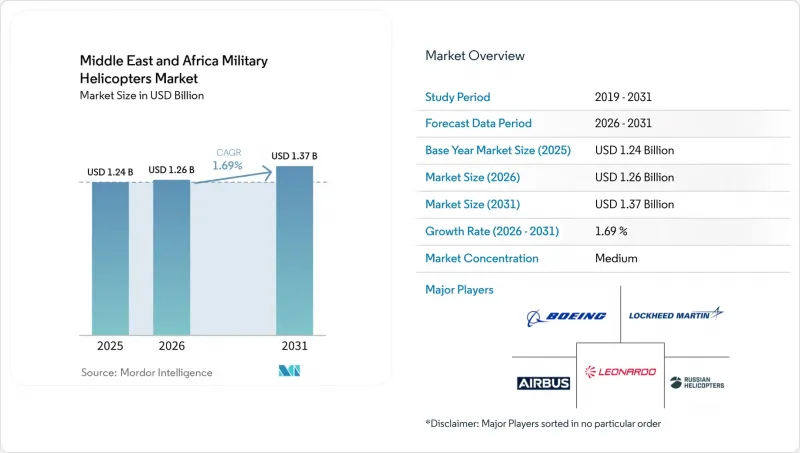
에 따르면 중동 및 아프리카의 군용 헬리콥터 시장 규모는 2025년에 12억 4,000만 달러로 평가되며, 2026년 12억 6,000만 달러에서 2031년까지 13억 7,000만 달러로 성장하며, 2026-2031년에 CAGR 1.69%를 기록할 것으로 예측됩니다.
중동 및 아프리카 군용 헬리콥터 시장의 동향과 인사이트
노후화된 회전익 항공기 기단의 교체
기체의 노후화로 인해 해당 지역 전체의 국방 조달 계획에서 교체 결정의 우선순위가 높아지고 있습니다. 구형 항공기는 더 많은 정비가 필요하며, 부품 조달의 어려움은 작전 준비 태세를 약화시킬 가능성이 있습니다. 또한 각국 정부는 항공기의 생존성, 통신 능력 및 임무용 장비 향상을 요구하는 압력에도 직면해 있습니다. 이집트에서 승인된 CH-47F 프로그램은 북아프리카에서 대형 수송 헬리콥터의 기체 갱신이 여전히 중요한 역할을 하고 있음을 보여줍니다. 따라서 중동 및 아프리카의 군용 헬리콥터 시장은 수송 및 작전 요건을 더 이상 충족하지 못하는 항공기를 운용자가 교체함에 따라 혜택을 보고 있습니다. 또한 교체 프로그램은 정비, 조종사 훈련 및 물류 지원 분야에서 더 장기적인 서비스 기회를 창출할 가능성도 있습니다.
기체 교체는 걸프 국가들의 대규모 공군에만 국한된 이야기가 아닙니다. 아프리카의 운용자들은 최신 능력 요건과 이용 가능한 기술 인력 및 운용 예산 간의 균형을 맞춰야 합니다. 신뢰할 수 있는 예비 부품과 훈련 계획이 지원된다면, 최첨단 플랫폼은 가동률을 향상시킬 수 있습니다. 단 한 대의 기체로 수송, 의료 후송, 치안 임무를 모두 수행할 수 있다면, 조달에 대한 설득력은 더욱 높아집니다. 장기적인 지원 체계를 구축하는 공급업체는 구형 기종에서 전환함에 따른 운용 위험을 완화할 수 있습니다. 따라서 중동 및 아프리카의 군용 헬리콥터 시장에서 수명 주기 계획은 항공기 도입만큼이나 중요합니다.
걸프 국가들이 주도하는 다목적 현대화
걸프 국가들의 운용자들은 단일 기체군으로 여러 임무를 수행할 수 있는 헬리콥터를 계속해서 선호하고 있습니다. 이러한 경향은 적응성이 높은 객실, 센서, 통신 장비, 임무 키트를 갖춘 기체의 구매를 촉진하고 있습니다. 또한 분산된 작전 지역 전체에서 제한된 기체 수를 효율적으로 활용하여야 할 필요성도 반영하고 있습니다. 사우디아라비아의 국방비는 2025년에 832억 달러에 달하며, 견고한 국방 자금 기반을 형성하고 있습니다. 중동 및 아프리카의 군용 헬리콥터 시장은 현대화 예산에 항공 기동 및 해상 작전이 포함될 경우, 이러한 지출의 혜택을 받고 있습니다. 조달 결정에 있어서는 성능뿐만 아니라 정비 용이성 및 현지 산업 참여가 점점 더 중요하게 여겨지고 있습니다.
다목적 기체를 도입함으로써 운용자는 여러 임무 세트에 걸쳐 공통된 훈련 및 지원 체계를 활용할 수 있게 됩니다. 이를 통해 수송, 구조, 감시 등 각 임무마다 다른 기종을 관리해야 하는 부담을 줄일 수 있습니다. 이러한 접근 방식은 작전상의 우선순위가 급격히 변화할 수 있는 상황에서 특히 효과적입니다. 또한 개별 유지보수 시스템을 구축하지 않고도 장비를 통합할 수 있는 항공기 공급업체를 우대하는 결과로 이어집니다. 걸프 지역 국가들의 조달 동향은 가용성과 임무의 유연성을 중시하는 태도를 지역 구매자들이 주목하고 있으므로 다른 지역의 기대 형성에도 영향을 미치고 있습니다. 이러한 상황은 시장에서 다목적 항공기에 대한 지속적인 수요를 지원하고 있습니다.
높은 수명 주기 비용과 예산상의 상충 관계
군용 헬리콥터의 경우, 초기 기체 계약 이상의 지출이 필요합니다. 운용자는 예비 부품, 정비 시설, 시뮬레이터, 승무원 훈련 및 임무용 장비에 자금을 투입해야 합니다. 이러한 비용은 국방 예산이 제한적인 국가의 경우 유지하기 어려울 수 있습니다. 아프리카에서 군사 지출이 증가한다고 해도, 방공, 지상군, 무인 시스템에 대한 경쟁적인 요구 사항이 사라지는 것은 아닙니다. 따라서 중동 및 아프리카의 군용 헬리콥터 시장에서는 항공기 프로그램이 다른 시급한 우선순위와 경쟁할 경우 지연이 발생할 가능성이 있습니다. 장기 지원 패키지는 불확실성을 완화할 수 있지만, 계약 금액의 명목상 규모를 증가시킬 가능성이 있습니다.
첨단 센서를 탑재한 쌍발기는 수명 기간 중의 운용 비용이 특히 높을 가능성이 있습니다. 운용자는 높은 성능과 지속적인 정비 및 훈련 비용을 저울질해야 합니다. 기종이 혼재된 기단은 기종마다 다른 부품, 공구, 기술적 숙련도가 필요하므로 복잡성이 증가할 수 있습니다. 저비용 항공기는 제한적인 수송이나 훈련 요구를 충족시킬 수는 있겠지만, 모든 유형의 임무를 대체할 수는 없습니다. 따라서 예산 결정에 있어서는 소수의 고성능 항공기를 도입하거나, 기체의 단계적 현대화가 우선시될 가능성이 있습니다. 이러한 제약은 조달 계획의 확대에 운영 자금이 따라가지 못하는 경우에 가장 두드러지게 나타납니다.
부문 분석
2025년, 중동 및 아프리카 군용 헬리콥터 시장 규모의 89.58%를 다목적 헬리콥터가 차지했습니다. 이러한 위상은 수송, 호위, 의료 후송, 해상 임무 등 폭넓은 용도에서의 유연한 운용을 운용 측이 중시하고 있음을 반영합니다. 공통 플랫폼을 채택함으로써 훈련, 정비 및 부품 계획이 간소화됩니다. 이는 제한된 기수로 다양한 요구 사항을 충족해야 하는 부대에게 유익합니다. 또한 이 부문은 적응성이 높은 항공기와 지속적인 지원을 추구하는 걸프 국가들의 조달 경향과도 부합합니다. 그 규모가 크기 때문에 확립된 다목적 헬리콥터 기단을 보유한 공급업체들은 해당 지역에서 견고한 기반을 구축하고 있습니다.
그 밖의 헬리콥터 유형은 2031년까지 연평균 성장률(CAGR) 3.62%로 성장할 것으로 예측됩니다. 이 범주에는 보다 특화된 공격 및 정찰 요건을 충족하기 위해 도입되는 기체가 포함됩니다. 수요는 대테러 작전 및 전용 전투 능력에 대한 필요성과 밀접하게 연관되어 있습니다. 특수 목적 기체는 다목적 기단을 대체하기보다는 이를 보완하는 역할을 수행합니다. 수송 헬리콥터 역시 중량물 수송 및 부대의 기동성 확보에 있으며, 여전히 중요한 역할을 수행하고 있습니다. 중동 및 아프리카의 군용 헬리콥터 시장에서는 다목적 기체군과 임무에 특화된 능력 간의 균형이 앞으로도 계속 요구될 것입니다.
2025년, 중동 및 아프리카 군용 헬리콥터 시장에서 육군 항공 부대가 43.87%를 차지했습니다. 대규모 지상 부대는 기동성, 지원, 보급, 긴급 대응을 위해 헬리콥터를 활용하고 있습니다. 이러한 역할은 광활한 사막, 외딴 국경지대, 분산된 치안 작전이 수행되는 국가들에서 여전히 중요합니다. 육군의 헬기 편대는 인원과 장비의 신속한 이동도 지원하고 있습니다. 그 광범위한 운용 범위가 이 부문이 주도적인 위치를 차지하는 이유 중 하나입니다. 수요는 지상 부대의 즉각적인 대응 태세와 헬기 편대의 운용 가능 여부와 밀접하게 관련되어 있습니다.
해군·해병대 항공 부문은 2031년까지 연평균 성장률(CAGR) 3.12%로 확대될 것으로 예측됩니다. 이 부문은 홍해 및 아덴만에서의 안보에 대한 관심이 높아짐에 따라 혜택을 보고 있습니다. 감시, 구조, 수송 및 해상 조정을 위해서는 함재기가 필요합니다. 이집트가 합동임무부대 153을 주도하고 있다는 사실은 지역적 해상 협력의 중요성이 여전히 높음을 보여줍니다. 해군 항공기 프로그램에는 함정과의 통합 및 전문 승무원 훈련도 포함됩니다. 이러한 요인들이 지역 시장에서의 지속적인 운용 수요를 지원하고 있습니다.
기타 혜택:
- 엑셀 형식의 시장 예측(ME) 시트
- 3개월간의 애널리스트 지원
자주 묻는 질문
목차
제1장 서론
- 조사 전제조건과 시장 정의
- 조사 범위
제2장 조사 방법
제3장 개요
제4장 시장 구도
- 시장 개요
- 시장 성장 촉진요인
- 시장 성장 억제요인
- 밸류체인 분석
- 규제 상황
- 기술 전망
- Porter's Five Forces 분석
제5장 시장 규모와 성장 예측
- 헬리콥터 유형별
- 최종사용자 서비스별
- 엔진 유형별
- 용도별
- 지역별
- 남아프리카공화국
- 나이지리아
- 카타르
- 사우디아라비아
- 아랍에미리트
- 기타 중동 및 아프리카 국가
제6장 경쟁 구도
- 시장 집중도
- 전략적 동향
- 시장 점유율 분석
- 기업 개요
- Airbus SE
- Leonardo S.p.A.
- Lockheed Martin Corporation
- The Boeing Company
- Bell Textron Inc.
- Russian Helicopters(Rostec)
- Turkish Aerospace Industries, Inc.
- Hindustan Aeronautics Limited
- Korea Aerospace Industries, Ltd.
- Aviation Industry Corporation of China, Ltd.
- MD Helicopters, LLC
- Kawasaki Heavy Industries, Ltd.
- Mitsubishi Heavy Industries, Ltd.
- Safran SA
- Saudi Arabian Military Industries
- Denel SOC Ltd.
제7장 시장 기회와 향후 전망
KSA 26.10.23According to Mordor Intelligence, the Middle East and Africa military helicopters market size was valued at USD 1.24 billion in 2025 and is forecast to grow from USD 1.26 billion in 2026 to USD 1.37 billion by 2031, registering a 1.69% CAGR between 2026 and 2031.
Middle East and Africa Military Helicopters Market Trends and Insights
Replacement of Aging Rotorcraft Fleets
Aging fleets are moving replacement decisions up the defense procurement agenda across the region. Older aircraft require more maintenance, and parts availability can weaken operational readiness. Governments also face pressure to improve aircraft survivability, communications, and mission equipment. Egypt's approved CH-47F program illustrates the continuing role of heavy-lift fleet replacement in North Africa. The Middle East and Africa military helicopters market, therefore, benefits from operators replacing aircraft that no longer meet transport or operational requirements. Replacement programs can also create longer service opportunities for maintenance, pilot training, and logistics support.
Fleet replacement is not limited to large Gulf air arms. African operators must balance modern capability requirements against available technical staff and operating budgets. A modern platform can improve availability when a dependable spares and training plan supports it. The procurement case is stronger when one airframe can support transport, medical evacuation, and security missions. Suppliers that structure long-term support commitments can reduce the operational risk of moving away from legacy fleets. This makes lifecycle planning as important as aircraft acquisition in the Middle East and Africa military helicopters market.
Gulf-Led Multi-Mission Modernization
Gulf operators continue to favor helicopters capable of performing multiple tasks with a single fleet. This preference supports purchases of aircraft with adaptable cabins, sensors, communications equipment, and mission kits. It also reflects the need to use limited aircraft inventories across dispersed operational areas. Saudi Arabia's defense spending reached USD 83.2 billion in 2025, providing a substantial defense funding base. The Middle East and Africa military helicopters market gains from this spending when modernization budgets include air mobility and maritime operations. Procurement choices increasingly consider maintenance access and local industrial participation alongside performance.
Multi-mission fleets allow operators to use common training and support arrangements across several mission sets. This can reduce the burden of managing separate aircraft types for transport, rescue, and surveillance. The approach is particularly relevant where operational priorities can change quickly. It also favors aircraft suppliers that can integrate equipment without creating separate sustainment systems. Gulf procurement is shaping expectations elsewhere because regional buyers observe its emphasis on availability and mission flexibility. These conditions support continued demand for versatile aircraft in the market.
High Lifecycle Cost and Budget Trade-Offs
Military helicopters require spending beyond the initial aircraft contract. Operators must fund spare parts, maintenance facilities, simulators, crew training, and mission equipment. These costs can be difficult for smaller defense budgets to sustain. Africa's rise in military expenditure does not remove competing requirements for air defense, ground forces, and unmanned systems. The Middle East and Africa military helicopters market can therefore face delays when aircraft programs compete with other urgent priorities. Long-term support packages can reduce uncertainty but may increase the visible contract value.
Twin-engine aircraft with advanced sensors can be especially expensive to operate over their service lives. Operators must weigh their higher capability against recurring maintenance and training costs. Mixed fleets can add complexity because each type needs separate parts, tools, and technical skills. Lower-cost aircraft may meet limited transport or training needs, but they cannot replace every mission type. Budget decisions can therefore favor fewer highly capable aircraft or gradual fleet modernization. This restraint is strongest where operating funds do not rise with acquisition ambitions.
Other drivers and restraints analyzed in the detailed report include:
- Counter-terrorism and Border Security Operations
- Indigenous Manufacturing, MRO, and Technology Transfer Mandates
- Export Controls and Technology Transfer Friction
For complete list of drivers and restraints, kindly check the Table Of Contents.
Segment Analysis
Multi-mission helicopters accounted for 89.58% of the Middle East and Africa military helicopters market size in 2025. Their position reflects the value operators place on flexible use across transport, escort, medical evacuation, and maritime roles. A common platform can simplify training, maintenance, and parts planning. This is useful for forces managing diverse requirements with limited fleet numbers. The segment also fits Gulf procurement preferences for adaptable aircraft and enduring support. Its scale gives suppliers with established multi-mission fleets a strong base in the region.
Other helicopter types are forecast to grow at a 3.62% CAGR through 2031. This category includes aircraft acquired for more focused attack and reconnaissance requirements. Demand is linked to counter-terrorism operations and the need for a dedicated combat capability. Specialized aircraft can complement multi-mission fleets rather than replace them. Transport helicopters also remain relevant for heavy lift and force mobility. The Middle East and Africa military helicopters market will continue to require a balance between versatile fleets and mission-specific capability.
Army Aviation accounted for 43.87% of the Middle East and Africa military helicopters market in 2025. Large land forces use helicopters for mobility, support, resupply, and emergency response. This role remains important in countries with expansive deserts, remote borders, and dispersed security operations. Army fleets also support the rapid movement of personnel and equipment. Their operational breadth helps explain the segment's leading position. Demand remains linked to ground-force readiness and fleet availability.
Naval/Marine Corps Aviation is forecast to expand at a 3.12% CAGR through 2031. The segment benefits from increased attention to security in the Red Sea and the Gulf of Aden. Shipborne aircraft are needed for surveillance, rescue, transport, and maritime coordination. Egypt's leadership of Combined Task Force 153 shows the continuing importance of regional maritime cooperation. Naval aircraft programs also involve ship integration and specialized crew training. These factors support a sustained service requirement in the regional market.
Complete Report Scope:
- By Helicopter Type
- Multi-mission Helicopter
- Transport Helicopter
- Other Helicopter
- By End-User Service
- Air Force
- Army Aviation
- Naval/Marine Corps Aviation
- Joint/Special Operations
- Paramilitary and Coast Guard
- By Engine Type
- Single-Engine
- Twin-Engine
- By Application
- Combat and Close Air Support
- Troop Transport
- Humanitarian and Disaster Relief
- Pilot Training
- By Geography
- South Africa
- Nigeria
- Qatar
- Saudi Arabia
- United Arab Emirates
- Rest of Middle East and Africa
List of Companies Covered in this Report:
- Airbus SE
- Leonardo S.p.A.
- Lockheed Martin Corporation
- The Boeing Company
- Bell Textron Inc.
- Russian Helicopters (Rostec)
- Turkish Aerospace Industries, Inc.
- Hindustan Aeronautics Limited
- Korea Aerospace Industries, Ltd.
- Aviation Industry Corporation of China, Ltd.
- MD Helicopters, LLC
- Kawasaki Heavy Industries, Ltd.
- Mitsubishi Heavy Industries, Ltd.
- Safran SA
- Saudi Arabian Military Industries
- Denel SOC Ltd.
Additional Benefits:
- The market estimate (ME) sheet in Excel format
- 3 months of analyst support
TABLE OF CONTENTS
1 INTRODUCTION
- 1.1 Study Assumptions and Market Definition
- 1.2 Scope of the Study
2 RESEARCH METHODOLOGY
3 EXECUTIVE SUMMARY
4 MARKET LANDSCAPE
- 4.1 Market Overview
- 4.2 Market Drivers
- 4.2.1 Replacement of aging rotorcraft fleets
- 4.2.2 Gulf-led multi-mission modernization
- 4.2.3 Counter-terrorism and border-security operations
- 4.2.4 Indigenous manufacturing, MRO, and technology-transfer mandates
- 4.2.5 Maritime security demand in the Red Sea, the Gulf of Aden, and Coastal Africa
- 4.2.6 Manned-unmanned teaming and networked precision effects
- 4.3 Market Restraints
- 4.3.1 High lifecycle cost and budget trade-offs
- 4.3.2 Export controls and technology-transfer friction
- 4.3.3 Armed-UAV substitution in selected strike and ISR missions
- 4.3.4 Maintenance skills and readiness gaps in Tier-2 African markets
- 4.4 Value Chain Analysis
- 4.5 Regulatory Landscape
- 4.6 Technological Outlook
- 4.7 Porter's Five Forces Analysis
- 4.7.1 Threat of New Entrants
- 4.7.2 Bargaining Power of Suppliers
- 4.7.3 Bargaining Power of Buyers
- 4.7.4 Threat of Substitutes
- 4.7.5 Intensity of Competitive Rivalry
5 MARKET SIZE AND GROWTH FORECASTS (VALUE)
- 5.1 By Helicopter Type
- 5.1.1 Multi-mission Helicopter
- 5.1.2 Transport Helicopter
- 5.1.3 Other Helicopter
- 5.2 By End-User Service
- 5.2.1 Air Force
- 5.2.2 Army Aviation
- 5.2.3 Naval/Marine Corps Aviation
- 5.2.4 Joint/Special Operations
- 5.2.5 Paramilitary and Coast Guard
- 5.3 By Engine Type
- 5.3.1 Single-Engine
- 5.3.2 Twin-Engine
- 5.4 By Application
- 5.4.1 Combat and Close Air Support
- 5.4.2 Troop Transport
- 5.4.3 Humanitarian and Disaster Relief
- 5.4.4 Pilot Training
- 5.5 By Geography
- 5.5.1 South Africa
- 5.5.2 Nigeria
- 5.5.3 Qatar
- 5.5.4 Saudi Arabia
- 5.5.5 United Arab Emirates
- 5.5.6 Rest of Middle East and Africa
6 COMPETITIVE LANDSCAPE
- 6.1 Market Concentration
- 6.2 Strategic Moves
- 6.3 Market Share Analysis
- 6.4 Company Profiles (includes Global level Overview, Market level overview, Core Segments, Financials as available, Strategic Information, Market Rank/Share for key companies, Products and Services, and Recent Developments)
- 6.4.1 Airbus SE
- 6.4.2 Leonardo S.p.A.
- 6.4.3 Lockheed Martin Corporation
- 6.4.4 The Boeing Company
- 6.4.5 Bell Textron Inc.
- 6.4.6 Russian Helicopters (Rostec)
- 6.4.7 Turkish Aerospace Industries, Inc.
- 6.4.8 Hindustan Aeronautics Limited
- 6.4.9 Korea Aerospace Industries, Ltd.
- 6.4.10 Aviation Industry Corporation of China, Ltd.
- 6.4.11 MD Helicopters, LLC
- 6.4.12 Kawasaki Heavy Industries, Ltd.
- 6.4.13 Mitsubishi Heavy Industries, Ltd.
- 6.4.14 Safran SA
- 6.4.15 Saudi Arabian Military Industries
- 6.4.16 Denel SOC Ltd.
7 MARKET OPPORTUNITIES AND FUTURE OUTLOOK
- 7.1 White-space and Unmet-Need Assessment


