

|
시장보고서
상품코드
2155211
남미의 유제품 포장 : 시장 점유율 분석, 업계 동향과 통계, 성장 예측(2026-2031년)South America Dairy Packaging - Market Share Analysis, Industry Trends & Statistics, Growth Forecasts (2026 - 2031) |
||||||
 Mordor Intelligence
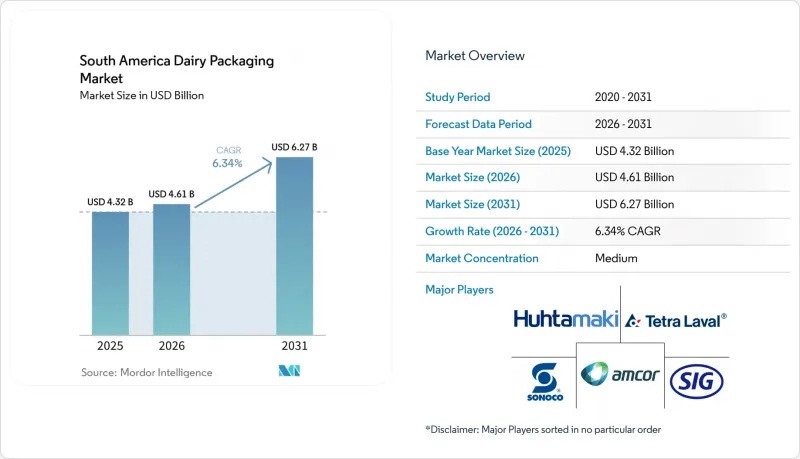
에 따르면 남미의 유제품 포장 시장 규모는 2025년에 43억 2,000만 달러로 평가되며, 2026년 45억 9,000만 달러에서 2031년까지 62억 7,000만 달러에 달할 것으로 예측되고 있으며, 예측 기간(2026-2031년)에 CAGR은 6.34%에 달할 전망입니다.
남미 유제품 포장 시장의 동향 및 인사이트
무균 포장 및 UHT 유제품의 유통 확대
무균 포장 및 UHT 유제품의 유통은 잘 구축된 콜드 체인의 범위를 넘어 유제품에 대한 접근성을 확대함으로써 남미 유제품 포장 시장을 지원하고 있습니다. 브라질 장기 보존 유제품 협회에 따르면 2024년 UHT 우유 부문은 3.9%의 성장률을 기록했습니다. 이러한 성장은 다층 카톤 및 관련 무균 포장재에 대한 지속적인 수요를 지원하고 있습니다. 학교 급식 프로그램 또한 포장 유제품 및 카톤 형태의 제품에 있으며, 신뢰할 수 있는 판매 채널로 자리 잡고 있습니다. 무균 충전 설비에는 막대한 설비 투자가 필요하며, 이로 인해 협동조합은 12-15년 동안 특정 충전 플랫폼에 묶일 가능성이 있습니다. 따라서 가공업체와의 조기 제휴 관계는 호환 가능한 포장 시스템에 대한 수요를 확보하는 데 도움이 됩니다.
정규 소매 및 콜드 체인 네트워크의 확대
정규 소매업은 대용량 유제품 판매를 전용 포장을 사용한 브랜드 상품으로 전환하고 있습니다. 2025년, 브라질 가구의 19.7%를 1인 가구가 차지했습니다. 이러한 가구 구조는 1리터당 포장 사용량이 많은 소용량 팩에 대한 수요를 지원하고 있습니다. 콜롬비아 내륙 및 브라질 북동부 지역의 냉장 유통망 또한 요거트, 신선한 치즈, 냉장 병, 필름 제품의 유통을 지원하고 있습니다. 소매 채널이 정규화됨에 따라 슈퍼마켓에 상품을 진열할 때는 식품 접촉 재료 및 표시 관련 규정 준수가 필수적입니다. 체인점이 통일된 공급업체 요건을 적용할 경우, 인증된 기재를 취급하는 가공업체는 경쟁 우위를 확보할 수 있습니다.
환율 변동과 수입 수지에 대한 의존도
수입 수지에 대한 의존은 남미 유제품 포장 시장에 있으며, 여전히 단기적인 과제로 남아 있습니다. 브라질은 2025년에 332만 톤의 폴리에틸렌을 수입했습니다. 2025년 국내 화학 산업의 설비 가동률은 64%에 그쳐, 공급 압박의 영향을 완화하기 위한 현지 생산 능력에는 한계가 있었습니다. 브라질은 2026년 3월부터 미국산 폴리에틸렌에 톤당 199.04달러, 캐나다산 폴리에틸렌에 톤당 238.49달러의 확정 관세를 부과했습니다. 수지 원가 상승은 가공업체의 이익률을 압박하거나, 유제품 가공업체에 대한 가격 인상을 초래하거나, 혹은 경량 포장 설계를 촉진할 가능성이 있습니다. 소규모 지역 가공업체는 환율 리스크 관리를 위한 자원이 부족하므로 더 큰 위험에 노출되어 있습니다.
부문별 분석
플라스틱은 우유병, 플렉서블 파우치, 요거트 용기에서의 확고한 사용에 힘입어 2025년 남미 유제품 포장 시장 점유율의 58.41%를 차지했습니다. HDPE 병, LDPE 파우치, 폴리프로필렌 용기는 기존 가공업체의 생산 능력과 소매 업계에서의 높은 인지도 덕분에 혜택을 보고 있습니다. 수입 수지 비용 상승과 플라스틱 폐기물에 대한 브랜드의 우려가 이러한 검증된 포장 형태에 대한 압박을 가중시키고 있습니다. 2025년에 발효된 브라질 정부령 제12,688호는 플라스틱 포장에 대한 역물류 요건과 2026년까지 32%라는 회수 목표를 설정했습니다. 이 정부령은 추적성, 회수 및 소재 선택과 관련된 조달 협의에 영향을 미치고 있습니다. 그럼에도 불구하고 플라스틱은 유제품 포장의 중심적인 위치를 계속 차지하고 있습니다. 그 이유는 플라스틱 포장이 저비용, 제품의 가시성, 그리고 확립된 충전 공정에 부합하기 때문입니다. 또한 이 소재의 도입 기반이 광범위하므로 포장 변경을 검토할 때는 일반적으로 기존의 블로우 성형, 성형, 밀봉, 충진 설비와의 호환성이 고려됩니다. 이에 따라 식품과의 접촉 및 공급 조건이 허용하는 한, 점진적인 경량화나 재생재 함유율 향상과 같은 접근 방식이 우선시됩니다. 따라서 남미의 유제품 포장 시장에서는 구매자들이 대안을 검토하고 있음에도 불구하고 여전히 플라스틱에 대한 수요가 상당한 규모로 유지되고 있습니다.
종이와 판지는 2031년까지 연평균 성장률(CAGR) 7.21%로 성장할 것으로 예측됩니다. 남미 유제품 포장 시장에서 종이와 판지 시장 규모는 무균 카톤 포장의 성장과 브랜드 소유주들의 재활용 가능한 구조에 대한 관심에 힘입어 견인되고 있습니다. 브라질의 법규에 따른 회수 목표에서는 식품 접촉 포장재에 재생 소재의 사용을 의무화하지 않고 있으므로, 섬유계 카톤의 채택은 브랜드 전략에 크게 좌우됩니다. 바이오 기반 코팅은 유제품용 카톤의 유통기한 성능을 유지하면서 기존의 폴리에틸렌 층을 대체할 가능성이 있습니다. 칠레와 브라질의 도시 지역에서는 유리 용기가 여전히 프리미엄 및 유기농 유제품에 사용되고 있습니다. 금속 용기는 특히 상온 보관 가능한 제품이나 식품 서비스 채널에서 연유 및 농축 우유 포장으로 여전히 중요한 역할을 하고 있습니다. 섬유계 대체 소재가 기존 구조를 대체하기 위해서는 식품 안전, 차단성, 유통 기한 및 충전 라인 요건을 충족해야 합니다. 이러한 소재의 채택은 무균 유통과 브랜드의 재활용 노력이 중첩되는 분야에서 가장 활발하게 진행되고 있습니다. 유리와 금속은 종이팩이나 플라스틱의 광범위한 대체재라기보다는 여전히 특수한 선택지에 그치고 있습니다.
기타 장점:
- 엑셀 형식의 시장 예측(ME) 시트
- 3개월간의 애널리스트 지원
자주 묻는 질문
목차
제1장 서론
- 조사 전제조건과 시장 정의
- 조사 범위
제2장 조사 방법
제3장 개요
제4장 시장 구도
- 시장 개요
- 시장 성장 촉진요인
- 시장 성장 억제요인
- 업계 밸류체인 분석
- 규제 상황
- 기술 전망
- Porter's Five Forces 분석
- 거시경제 요인이 시장에 미치는 영향
제5장 시장 규모와 성장 예측
- 소재별
- 제품별
- 패키지 유형별
- 지역별
- 브라질
- 아르헨티나
- 칠레
- 콜롬비아
- 기타 남미 국가
제6장 경쟁 구도
- 시장 집중도
- 전략적 동향
- 시장 점유율 분석
- 기업 개요
- Amcor plc
- SIG Group AG
- Tetra Laval Holdings & Finance S.A.
- Elopak ASA
- Mondi plc
- Huhtamaki Oyj
- Sonoco Products Company
- Sealed Air Corporation
- Winpak Ltd.
- AptarGroup, Inc.
- Silgan Holdings Inc.
- CANPACK S.A.
- Stora Enso Oyj
- Pactiv Evergreen Inc.
- Coveris Management GmbH
- Goglio S.p.A.
- Ecolean AB
- Greatview Aseptic Packaging Co., Ltd.
- Klockner Pentaplast Group
- Videplast Industria de Embalagens Ltda.
- Canguru Embalagens Ltda.
- Zaraplast S.A.
- Santa Rosa Embalagens Flexiveis Ltda.
제7장 시장 기회와 향후 동향
- 화이트 스페이스 및 미충족 수요 평가
According to Mordor Intelligence, the South America dairy packaging market size was valued at USD 4.32 billion in 2025 and estimated to grow from USD 4.59 billion in 2026 to reach USD 6.27 billion by 2031, at a CAGR of 6.34% during the forecast period (2026-2031).
South America Dairy Packaging Market Trends and Insights
Growth of Aseptic and UHT Dairy Distribution
Aseptic and UHT distribution supports the South America dairy packaging market by expanding dairy access beyond well-developed cold chains. Brazil's long-life dairy association reported 3.9% growth in the UHT milk segment during 2024. This growth supports continued demand for multilayer cartons and related aseptic materials. School nutrition programs also provide a dependable channel for packaged dairy and carton formats. Aseptic equipment requires significant capital spending, which can keep a cooperative tied to a filling platform for 12-15 years. Early relationships with processors can therefore protect demand for the compatible package system.
Expansion of Formal Retail and Cold-Chain Coverage
Formal retail converts bulk dairy sales into branded units with dedicated packaging. In 2025, single-person households represented 19.7% of Brazilian households. This household structure supports smaller packs with greater packaging use per liter. Refrigerated distribution in inland Colombia and northeastern Brazil also supports the distribution of yogurt, fresh cheese, chilled bottles, and films. Food-contact and labeling compliance becomes necessary for supermarket placement as retail channels formalize. Converters with certified substrates can gain an advantage when chains apply consistent supplier requirements.
Currency Volatility and Imported Resin Exposure
Imported resin exposure remains a near-term challenge for the South America dairy packaging market. Brazil imported 3.32 million tonnes of polyethylene in 2025. Domestic chemical capacity utilization was 64% in 2025, limiting the local output's ability to cushion the impact of supply pressure. Brazil imposed definitive duties of USD 199.04 per tonne on U.S. polyethylene and USD 238.49 per tonne on Canadian polyethylene from March 2026. Higher resin costs can compress converter margins, raise prices for dairy processors, or encourage lighter package designs. Smaller regional converters face greater exposure because they have fewer resources for foreign-exchange risk management.
Other drivers and restraints analyzed in the detailed report include:
- Rising Demand for Functional and High-Protein Dairy Products
- Shift From Loose to Hygienically Packaged Dairy
- Uneven Rural Logistics and Refrigeration Infrastructure
For complete list of drivers and restraints, kindly check the Table Of Contents.
Segment Analysis
Plastic accounted for 58.41% of the 2025 South America Dairy Packaging Market share, supported by its established use in milk bottles, flexible pouches, and yogurt containers. HDPE bottles, LDPE pouches, and polypropylene containers benefit from existing converter capacity and retail familiarity. Imported resin costs and brand concerns about plastic waste are increasing pressure on these established formats. Brazil's Decree No. 12,688, issued in 2025, established reverse logistics requirements for plastic packaging and a 32% recovery target for 2026. The decree is influencing procurement discussions around traceability, recovery, and material choice. Plastic nevertheless remains central to dairy packaging because its formats address low cost, product visibility, and established filling processes. The material's broad installed base also means that package changes are usually considered alongside existing blowing, forming, sealing, and filling equipment. This favors incremental lightweighting or recycled-content approaches where food-contact and supply conditions allow them. The South America dairy packaging market, therefore, retains a substantial plastic requirement even as buyers assess alternatives.
Paper and paperboard are projected to grow at a 7.21% CAGR through 2031. The South America Dairy Packaging Market size for paper and paperboard is driven by growth in aseptic carton packaging and brand owners' interest in recyclable structures. The recovery target under Brazil's decree does not require recycled content in food-contact packaging, so adoption of fiber-based cartons depends substantially on brand strategy. Biobased coatings may replace conventional polyethylene layers while preserving shelf-life performance in dairy cartons. Glass continues to serve premium and organic dairy products in urban Chile and Brazil. Metal remains relevant for condensed and evaporated milk, particularly in shelf-stable and institutional channels. Fiber-based alternatives need to meet food safety, barrier, shelf-life, and filling-line requirements before they can replace established structures. Their adoption is strongest where aseptic distribution and brand recycling commitments overlap. Glass and metal remain specialized choices rather than broad substitutes for cartons or plastic.
Complete Report Scope:
- By Material
- Plastic
- Paper and Paperboard
- Glass
- Metal
- By Product
- Milk
- Cheese
- Frozen Foods
- Yogurt
- Cultured Products
- By Package Type
- Bottles
- Pouches
- Cartons and Boxes
- Bags and Wraps
- Other Package Types
- By Geography
- Brazil
- Argentina
- Chile
- Colombia
- Rest of South America
List of Companies Covered in this Report:
- Amcor plc
- SIG Group AG
- Tetra Laval Holdings & Finance S.A.
- Elopak ASA
- Mondi plc
- Huhtamaki Oyj
- Sonoco Products Company
- Sealed Air Corporation
- Winpak Ltd.
- AptarGroup, Inc.
- Silgan Holdings Inc.
- CANPACK S.A.
- Stora Enso Oyj
- Pactiv Evergreen Inc.
- Coveris Management GmbH
- Goglio S.p.A.
- Ecolean AB
- Greatview Aseptic Packaging Co., Ltd.
- Klockner Pentaplast Group
- Videplast Industria de Embalagens Ltda.
- Canguru Embalagens Ltda.
- Zaraplast S.A.
- Santa Rosa Embalagens Flexiveis Ltda.
Additional Benefits:
- The market estimate (ME) sheet in Excel format
- 3 months of analyst support
TABLE OF CONTENTS
1 INTRODUCTION
- 1.1 Study Assumptions and Market Definition
- 1.2 Scope of the Study
2 RESEARCH METHODOLOGY
3 EXECUTIVE SUMMARY
4 MARKET LANDSCAPE
- 4.1 Market Overview
- 4.2 Market Drivers
- 4.2.1 Growth of Aseptic and UHT Dairy Distribution
- 4.2.2 Expansion of Formal Retail and Cold-Chain Coverage
- 4.2.3 Rising Demand for Functional and High-Protein Dairy Products
- 4.2.4 Shift from Loose to Hygienically Packaged Dairy
- 4.2.5 Lightweight Flexible Formats for Cost-Constrained Distribution
- 4.2.6 Recyclability and Recycled-Content Commitments by Brand Owners
- 4.3 Market Restraints
- 4.3.1 Currency Volatility and Imported Resin Exposure
- 4.3.2 Uneven Rural Logistics and Refrigeration Infrastructure
- 4.3.3 Packaging Recovery and Recycling Gaps
- 4.3.4 Compliance Cost of EPR, Labeling, and Food-Contact Rules
- 4.4 Industry Value Chain Analysis
- 4.5 Regulatory Landscape
- 4.6 Technological Outlook
- 4.7 Porter's Five Forces Analysis
- 4.7.1 Bargaining Power of Suppliers
- 4.7.2 Bargaining Power of Buyers
- 4.7.3 Threat of New Entrants
- 4.7.4 Threat of Substitutes
- 4.7.5 Competitive Rivalry
- 4.8 Impact of Macroeconomic Factors on the Market
5 MARKET SIZE AND GROWTH FORECASTS (VALUES)
- 5.1 By Material
- 5.1.1 Plastic
- 5.1.2 Paper and Paperboard
- 5.1.3 Glass
- 5.1.4 Metal
- 5.2 By Product
- 5.2.1 Milk
- 5.2.2 Cheese
- 5.2.3 Frozen Foods
- 5.2.4 Yogurt
- 5.2.5 Cultured Products
- 5.3 By Package Type
- 5.3.1 Bottles
- 5.3.2 Pouches
- 5.3.3 Cartons and Boxes
- 5.3.4 Bags and Wraps
- 5.3.5 Other Package Types
- 5.4 By Geography
- 5.4.1 Brazil
- 5.4.2 Argentina
- 5.4.3 Chile
- 5.4.4 Colombia
- 5.4.5 Rest of South America
6 COMPETITIVE LANDSCAPE
- 6.1 Market Concentration
- 6.2 Strategic Moves
- 6.3 Market Share Analysis
- 6.4 Company Profiles (includes Global Level Overview, Market Level Overview, Core Segments, Financials as available, Strategic Information, Market Rank/Share, Products and Services, Recent Developments)
- 6.4.1 Amcor plc
- 6.4.2 SIG Group AG
- 6.4.3 Tetra Laval Holdings & Finance S.A.
- 6.4.4 Elopak ASA
- 6.4.5 Mondi plc
- 6.4.6 Huhtamaki Oyj
- 6.4.7 Sonoco Products Company
- 6.4.8 Sealed Air Corporation
- 6.4.9 Winpak Ltd.
- 6.4.10 AptarGroup, Inc.
- 6.4.11 Silgan Holdings Inc.
- 6.4.12 CANPACK S.A.
- 6.4.13 Stora Enso Oyj
- 6.4.14 Pactiv Evergreen Inc.
- 6.4.15 Coveris Management GmbH
- 6.4.16 Goglio S.p.A.
- 6.4.17 Ecolean AB
- 6.4.18 Greatview Aseptic Packaging Co., Ltd.
- 6.4.19 Klockner Pentaplast Group
- 6.4.20 Videplast Industria de Embalagens Ltda.
- 6.4.21 Canguru Embalagens Ltda.
- 6.4.22 Zaraplast S.A.
- 6.4.23 Santa Rosa Embalagens Flexiveis Ltda.
7 MARKET OPPORTUNITIES AND FUTURE TRENDS
- 7.1 White-Space and Unmet-Need Assessment


