|
시장보고서
상품코드
1592787
자동차용 공기 청정기 시장 : 유형별, 휴대성별, 기술별, 차량 유형별, 판매 채널별, 지역별, 기회, 예측(2017-2031년)Automotive Air Purifier Market Assessment, By Type, By Portability, By Technology, By Vehicle Type, By Sales Channel, By Region, Opportunities and Forecast, 2017-2031F |
||||||
 Markets & Data
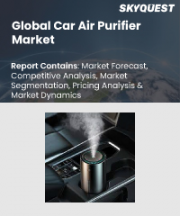
세계의 자동차용 공기 청정기 시장 규모는 2024년부터 2031년까지 예측기간 동안 14.38%의 연평균 복합 성장률(CAGR)로 확대될 전망이며, 2023년 20억 1,000만 달러에서 2031년에는 58억 9,000만 달러로 성장할 것으로 예측됩니다. 공기의 질에 대한 의식 증가, 오염 수준의 상승, 소비자의 건강 지향 증가가 자동차용 공기 청정기 시장을 견인합니다.
세계의 자동차용 공기 청정기 시장 수요는 도시화의 진전, 자동차의 배기 가스에 대한 의식의 고조, 대기 오염에 의한 악영향의 동향 급증, 급속한 커스터마이즈화 경향에 의해 증가할 것으로 예측됩니다. HEPA 필터와 활성탄 여과 기술은 공기 청정기의 효율성을 업그레이드하고 있습니다. 또한 자동차 공기 청정기의 앱 연결 기능을 통해 사용자는 취향과 특정 조건에 따라 팬 속도 및 정화 모드 등의 설정을 사용자 정의할 수 있어 세계의 자동차용 공기 청정기 시장 수요를 견인하고 있습니다. 많은 커넥티드 공기 청정기는 필터 교환 알림을 제공하고 사용자가 필터 교환을 잊을 위험 없이 최적의 성능을 유지할 수 있도록 지원합니다. 모바일 앱으로 공기 청정기를 제어할 수 있는 편의성은 전반적인 사용자 만족도를 향상시켜 소비자가 공기 청정을 일상적인 루틴에 통합할 수 있게 하고 자동차용 공기 청정기의 세계 채용률이 급상승하고 있습니다. 호흡기 질환과 알레르기에 대한 소비자의 관심이 커지고 있습니다. 공기 청정기는 일상 생활에서 더 건강한 환경을 유지하려는 광범위한 동향을 반영하여 모든 자동차 소유자의 액세서리가 되었습니다. 또한 세계 시장의 각 기업은 새롭고 혁신적인 자동차 공기 청정기를 발표하고 있으며 자동차 제조업체는 이산화탄소 배출량을 줄이고 최종 사용자의 건강을 보호하기 위해 고급 공기 청정 기계를 자동차에 통합해야합니다.
2024년 6월 MANN HUMMEL International GmbH &Co.KG는 초미립자, 오염물질, 알레르겐, 박테리아, 곰팡이 및 기타 건강 문제를 일으키는 위험한 입자를 여과할 수 있는 나노섬유 기술을 사용한 Mann-Filter FreciousPlus 출시했습니다. 여기에는 2024년 1월에 발매된 BMW 5 시리즈, 7 시리즈 살롱 및 5 시리즈 투어링 왜건용 Mann-Filter FreciousPlus FP38004가 포함됩니다.
본 보고서에서는 세계의 자동차용 공기 청정기 시장에 대해 조사했으며, 시장 개요와 함께 유형별, 휴대성별, 기술별, 차량 유형별, 판매 채널별, 지역별 동향 및 시장 진출기업 프로파일 등의 정보를 제공합니다.
목차
제1장 프로젝트의 범위와 정의
제2장 조사 방법
제3장 주요 요약
제4장 고객의 목소리
제5장 세계의 자동차용 공기 청정기 시장 전망(2017-2031년)
- 시장 규모의 분석 및 예측
- 시장 점유율 분석 및 예측
- 시장 맵 분석(2023년)
- 유형별
- 휴대성별
- 기술별
- 차량 유형별
- 판매 채널별
- 지역별
제6장 북미의 자동차용 공기 청정기 시장 전망(2017-2031년)
제7장 유럽의 자동차용 공기 청정기 시장 전망(2017-2031년)
제8장 아시아태평양 자동차용 공기 청정기 시장 전망(2017-2031년)
제9장 남미의 자동차용 공기 청정기 시장 전망(2017-2031년)
제10장 중동 및 아프리카의 자동차용 공기 청정기 시장 전망(2017-2031년)
제11장 수요 공급 분석
제12장 수출입 분석
제13장 밸류체인 분석
제14장 Porter's Five Forces 분석
제15장 PESTLE 분석
제16장 가격 분석
제17장 시장 역학
제18장 시장 동향 및 발전
제19장 사례 연구
제20장 경쟁 구도
- 시장 리더 톱 5의 경쟁 매트릭스
- 참가 기업 톱 5의 SWOT 분석
- 시장 진출기업 톱 10의 정세
- Panasonic Holdings Corporation
- DENSO Corporation
- Koninklijke Philips NV
- LUFTRUM 2024(Wen & New AB.)
- KENT RO SYSTEMS LTD
- Pure Enrichment(Bear Down Brands, LLC.)
- Westinghouse Electric & Manufacturing Company, LLC
- Sharp Corporation
- Bosch Thermotechnology Corp.
- VATASHI purifiers
제21장 전략적 제안
제22장 문의 및 면책사항
AJY 24.11.27Global automotive air purifier market is projected to witness a CAGR of 14.38% during the forecast period 2024-2031, growing from USD 2.01 billion in 2023 to USD 5.89 billion in 2031. Increasing awareness of air quality, rising pollution levels, and growing emphasis on health and wellness among consumers will drive the market for automotive air purifiers. The global automotive air purifier market demand is projected to rise owing to increased urbanization, rising awareness concerning vehicle emissions, the surge in the negative impact of air pollution, and the rapid customization trend. HEPA filters and activated carbon filtration technologies have upgraded the efficiency of air purifiers. Also, the app connectivity feature in automotive air purifiers allows users to customize settings such as fan speed and purification modes based on their preferences or specific conditions, driving the global market demand for automotive air purifiers. Many connected air purifiers provide notifications for filter replacements, helping users maintain optimal performance without the risk of forgetting to change filters. The convenience of controlling the air purifier via a mobile app improves overall user satisfaction, making it easier for consumers to integrate air purification into their daily routines, surging the adoption rate for automotive air purifiers globally. Consumer concern over respiratory diseases and allergies has risen. Air purifiers have become an accessory for every vehicle owner, reflecting a broader trend toward maintaining healthier environments in everyday life. Furthermore, companies in the global market are introducing new and innovative automotive air purifiers that compel automakers to integrate advanced air purifiers in the vehicle to reduce carbon emissions and protect end-user health.
In June 2024, MANN+HUMMEL International GmbH & Co. KG launched Mann-Filter FreciousPlus using nanofiber technology that can filter ultra-fine particles, pollutants, allergens, bacteria, mold, and other dangerous particles that can cause health problems. It includes Mann-Filter FreciousPlus FP38004, launched in January 2024, for the BMW 5 Series and 7 Series saloons and 5 Series Touring wagon.
Growing Awareness of Air Quality Drives the Automotive Air Purifier Market Demand
Increasing air quality awareness is a significant driver for this market, in which people have evolved to become more sensitive toward their health, pollution, and its subsequent ill effects. As the levels of pollution increase with respiratory problems and allergies, people concentrate on the air they breathe in, especially while traveling in a vehicle. Also, with the information about possible health damage from poor air quality, consumers have been empowered to take proactive steps to control the situation by installing an air purifier in a car.
Rapid urbanization has increased emissions from vehicles and industries, leading to poor air quality in cities. This further prompts consumers to invest in products that result in healthier living, like in-car air purifiers. India is the most populous country, according to the data of the air quality index (AQI) by Purelogic Labs India Pvt. Ltd. and ranks in the fourth position among the poorest AQI holders, with an average of 84 in 2023. Moreover, the country suffers from the poorest air quality during winter, with AQI as unhealthy as 217 in Delhi. In return, the move towards healthier air transforms life patterns, and a call for air purifiers in autos creates a path for consumerism and affects the market prospects. Furthermore, companies in the market are introducing highly advanced air purifiers for vehicles that promote cleaner air.
For instance, in June 2024, UNO Minda Limited launched a new line of cabin air filters in the Indian aftermarket. It is now available at leading online and offline retail stores. Cabin air filters promote cleaner air in vehicles. Particulate matter, nitrogen oxides, carbon monoxide, and volatile organic compounds infiltrate the air, posing risks to respiratory health and overall well-being. These pollutants can accumulate within vehicles, potentially exacerbating health issues for drivers and passengers alike.
Technological Advancements to Fuel the Automotive Air Purifier Market Growth
With compact designs and energy-saving capabilities, air purifiers can be installed easily into vehicles without occupying much space or consuming power. Advancements in filtration technologies, including HEPA filters, activated carbon, and ionization, have significantly improved the efficacy of air purifiers to remove pollutants, allergens, and harmful particles from inside the atmosphere of vehicles. Most contemporary air purifiers are equipped with smarter technologies, including real-time air quality monitoring and smart wireless connectivity to smartphone applications for tracking and monitoring the air quality from anywhere at any time. Nowadays, car manufacturers install advanced filtration systems in the HVAC system of vehicles to ensure clean air.
In February 2024, Lumileds Holding B.V. announced the release of the Philips GoPure GP5611 automotive air purifier, designed to clean air quickly and efficiently to reduce the transmission of airborne viruses, bacteria, and allergens. The GP5611 is USB-powered and whisper-quiet and designed to fit most vehicle cup holders. It filters the cabin air with three advanced technologies, a Philips SaniFilter Plus filter, a HESAMax filtration cartridge, and a powerful UVC light.
HEPA Filters to Dominate Market Share
High-Efficiency Particulate Air (HEPA) filters have become dominant in the automotive air purifier market as they can capture extremely small particles and allergens. It can trap up to 99.97% of particles as small as 0.3 microns, from dust and pollen to pet dander, bacteria, and viruses. This efficiency makes HEPA filters highly demanded by health-conscious consumers seeking a healthy and safe indoor air environment, driving growth in the global HEPA filter market. Increasing interest in health and wellness, coupled with growing awareness about air quality, has compelled car manufacturers to introduce HEPA filtration systems in their vehicles. Advanced HEPA filters are featured in high-end models, providing an improved in-car environment and uplifting demands from health-conscious consumers. For instance, Tesla has advertised its HEPA filter system as part of its Bioweapon Defense Mode, demonstrating the ability to provide better air quality protection.
Additionally, as regulations surrounding air quality and vehicle emissions tighten globally, car manufacturers are compelled to adopt HEPA filtration technology to meet consumer expectations and compliance standards. This trend further solidifies the dominance of HEPA filters in the automotive air purifier market, positioning them as the preferred choice for effective air purification in vehicles worldwide.
For instance, in November 2022, Hero MotoCorp Ltd. electronics consumer technology brand Qubo launched a car air purifier, a HEPA grade H13 filter. Qubo Car Air Purifier features a powerful, efficient, and fast-acting air filtration system. The unique 3-stage filtration system removes up to 125 harmful pollutants and exhaust gases through its HEPA and HESA layers, removing up to 90% of airborne pollen allergens.
North America to Dominate Automotive Air Purifier Market Share
North America dominates the share of the automotive air purifiers market for several interlinked reasons. There is a significant rise in awareness concerning health and wellness among consumers, who increasingly give preference to purified air in their cars, especially in towns where pollution levels are high. A well-developed automotive industry that introduces cutting-edge technologies, such as advanced filtration systems like HEPA filters, helps to meet increasingly demanding consumers. Moreover, regulatory frameworks in North America, especially in states such as California, enforce strict air quality standards that require adequate air purification solutions in vehicles. The presence of key automotive players and an enormously strong aftermarket for vehicle accessories further support the growth of this market. Also, with the increasing adoption of electric vehicles (EVs), which come with additional air quality features, the trend toward clean air solutions is likely to fasten up. All these factors together establish North America as the leader in the automotive air purifiers market.
For instance, in January 2023, Panasonic Automotive Systems Company of America, a subsidiary of Panasonic Holdings Corporation, an original equipment manufacturer (OEM) of automobiles and tier-one supplier of the automotive industry, announced the launch of its nanoe X portable in-vehicle air cleaner and purifier at CES 2023 in North America that provides and protects cabin air purity. This air purifier uses HEPA filters and activated carbon filtration technology to eliminate odors and stop viruses, bacteria, mold, and allergens that can be airborne and on surfaces. Removing hazardous materials ensures overall healthier driving with cleaner air for all people within the vehicle.
Future Market Scenario (2024 - 2031F)
With growing health concerns around air quality, the consumer is bound to look for vehicles providing clean air going ahead. In addition, consumers who are concerned about health and family safety will prefer automotive air purifiers.
Next-generation HEPA filters, UV light purification, smart air quality monitoring, and other technologies will push the boundaries of automotive air purifiers to higher efficacy and appeal.
The future is aligned with sustainable living by incorporating eco-friendly materials and energy-efficient air purification systems. However, consumers will demand products that are environmentally beneficial and stay value for money.
Key Players Landscape and Outlook
The landscape of the automotive air purifier market is highly diverse, with several major players, such as the traditional companies for automobiles, which are heavily investing in introducing advanced air purification systems in their respective vehicles. Most companies collaborate with specialist air purifier companies specializing in air quality technology. Furthermore, tech innovators and startups are entering the market with solutions that include smart technology and connecting options. Positive trends fuel market growth due to the adoption of EVs, which will elevate the demand for integrated air purification systems as consumers push more for sustainability and health. In a post-pandemic world wherein the health and wellness ecosystem is gaining increasing attention, demand for automotive air purifiers will be driven even higher by stricter global air quality regulations that force manufacturers to opt for better filtration technologies in the air.
Further enriching the offering of products for consumers will be the technological enhancements of HEPA filters, UV purification, and air quality monitoring in real time. There is potential from emerging markets such as North America, Asia-Pacific, and Latin America, where vehicle ownership is high and fast-rising. The automotive air purifier market has huge growth potential with favorable consumer demand, government support, and innovation in the race.
For instance, in January 2024, researchers at the University of Bath developed a new air purifier design utilizing FOAM3R filter technology that offers virus-stopping performance and boasts a zero harmful waste feature. The FOAM3R technology, patented by the University, is a highly adaptable disruptor for microbial, CO2, and volatile organic compound (VOC) odor removal. This innovation can be used in Automotive air purifier technology.
For instance, in January 2022, VALEO, a European automotive supplier, received a CES innovation award for its automotive air purifier that uses ultraviolet light to kill viruses and bacteria. The new air purifier is effective against microbes and other viruses. It is the world's most powerful air sterilization system.
Table of Contents
1. Project Scope and Definitions
2. Research Methodology
3. Executive Summary
4. Voice of Customer
- 4.1. Product and Market Intelligence
- 4.2. Brand Awareness
- 4.3. Factors Considered in Purchase Decisions
- 4.3.1. Features and Other Value-added Service
- 4.3.2. Efficiency of Solutions
- 4.3.3. After-sales Support
- 4.4. Consideration of Privacy and Regulations
5. Global Automotive Air Purifier Market Outlook, 2017-2031F
- 5.1. Market Size Analysis & Forecast
- 5.1.1. By Value
- 5.1.2. By Volume
- 5.2. Market Share Analysis & Forecast
- 5.2.1. By Type
- 5.2.1.1. Purifier
- 5.2.1.2. Ionized
- 5.2.1.3. Hybrid
- 5.2.2. By Portability
- 5.2.2.1. Portable Air Purifiers
- 5.2.2.2. Built-in Air Purifiers
- 5.2.3. By Technology
- 5.2.3.1. High-Efficiency Particulate Air Filters
- 5.2.3.2. Activated Carbon Filters
- 5.2.3.3. Ionizers
- 5.2.3.4. Ultraviolet Technology
- 5.2.4. By Vehicle Type
- 5.2.4.1. Passenger Vehicle
- 5.2.4.2. Commercial Vehicle
- 5.2.5. By Sales Channel
- 5.2.5.1. Original Equipment Manufacturer
- 5.2.5.2. Aftermarket
- 5.2.6. By Region
- 5.2.6.1. North America
- 5.2.6.2. Europe
- 5.2.6.3. Asia-Pacific
- 5.2.6.4. South America
- 5.2.6.5. Middle East and Africa
- 5.2.7. By Company Market Share Analysis (Top 5 Companies and Others - By Value, 2023)
- 5.2.1. By Type
- 5.3. Market Map Analysis, 2023
- 5.3.1. By Type
- 5.3.2. By Portability
- 5.3.3. By Technology
- 5.3.4. By Vehicle Type
- 5.3.5. By Sales Channel
- 5.3.6. By Region
6. North America Automotive Air Purifier Market Outlook, 2017-2031F*
- 6.1. Market Size Analysis & Forecast
- 6.1.1. By Value
- 6.1.2. By Volume
- 6.2. Market Share Analysis & Forecast
- 6.2.1. By Type
- 6.2.1.1. Purifier
- 6.2.1.2. Ionized
- 6.2.1.3. Hybrid
- 6.2.2. By Portability
- 6.2.2.1. Portable Air Purifiers
- 6.2.2.2. Built-in Air Purifiers
- 6.2.3. By Technology
- 6.2.3.1. High-Efficiency Particulate Air Filters
- 6.2.3.2. Activated Carbon Filters
- 6.2.3.3. Ionizers
- 6.2.3.4. Ultraviolet Technology
- 6.2.4. By Vehicle Type
- 6.2.4.1. Passenger Vehicle
- 6.2.4.2. Commercial Vehicle
- 6.2.5. By Sales Channel
- 6.2.5.1. Original Equipment Manufacturer
- 6.2.5.2. Aftermarket
- 6.2.6. By Country Share
- 6.2.6.1. United States
- 6.2.6.2. Canada
- 6.2.6.3. Mexico
- 6.2.1. By Type
- 6.3. Country Market Assessment
- 6.3.1. United States Automotive Air Purifier Market Outlook, 2017-2031F*
- 6.3.1.1. Market Size Analysis & Forecast
- 6.3.1.1.1. By Value
- 6.3.1.1.2. By Volume
- 6.3.1.2. Market Share Analysis & Forecast
- 6.3.1.2.1. By Type
- 6.3.1.2.1.1. Purifier
- 6.3.1.2.1.2. Ionized
- 6.3.1.2.1.3. Hybrid
- 6.3.1.2.2. By Portability
- 6.3.1.2.2.1. Portable Air Purifiers
- 6.3.1.2.2.2. Built-in Air Purifiers
- 6.3.1.2.3. By Technology
- 6.3.1.2.3.1. High-Efficiency Particulate Air Filters
- 6.3.1.2.3.2. Activated Carbon Filters
- 6.3.1.2.3.3. Ionizers
- 6.3.1.2.3.4. Ultraviolet Technology
- 6.3.1.2.4. By Vehicle Type
- 6.3.1.2.4.1. Passenger Vehicle
- 6.3.1.2.4.2. Commercial Vehicle
- 6.3.1.2.5. By Sales Channel
- 6.3.1.2.5.1. Original Equipment Manufacturer
- 6.3.1.2.5.2. Aftermarket
- 6.3.1.2.1. By Type
- 6.3.1.1. Market Size Analysis & Forecast
- 6.3.2. Canada
- 6.3.3. Mexico
- 6.3.1. United States Automotive Air Purifier Market Outlook, 2017-2031F*
All segments will be provided for all regions and countries covered
7. Europe Automotive Air Purifier Market Outlook, 2017-2031F
- 7.1. Germany
- 7.2. France
- 7.3. Italy
- 7.4. United Kingdom
- 7.5. Russia
- 7.6. Netherlands
- 7.7. Spain
- 7.8. Turkey
- 7.9. Poland
8. Asia-Pacific Automotive Air Purifier Market Outlook, 2017-2031F
- 8.1. India
- 8.2. China
- 8.3. Japan
- 8.4. Australia
- 8.5. Vietnam
- 8.6. South Korea
- 8.7. Indonesia
- 8.8. Philippines
9. South America Automotive Air Purifier Market Outlook, 2017-2031F
- 9.1. Brazil
- 9.2. Argentina
10. Middle East and Africa Automotive Air Purifier Market Outlook, 2017-2031F
- 10.1. Saudi Arabia
- 10.2. UAE
- 10.3. South Africa
11. Demand Supply Analysis
12. Import and Export Analysis
13. Value Chain Analysis
14. Porter's Five Forces Analysis
15. PESTLE Analysis
16. Pricing Analysis
17. Market Dynamics
- 17.1. Market Drivers
- 17.2. Market Challenges
18. Market Trends and Developments
19. Case Studies
20. Competitive Landscape
- 20.1. Competition Matrix of Top 5 Market Leaders
- 20.2. SWOT Analysis for Top 5 Players
- 20.3. Key Players Landscape for Top 10 Market Players
- 20.3.1. Panasonic Holdings Corporation
- 20.3.1.1. Company Details
- 20.3.1.2. Key Management Personnel
- 20.3.1.3. Products and Services
- 20.3.1.4. Financials (As Reported)
- 20.3.1.5. Key Market Focus and Geographical Presence
- 20.3.1.6. Recent Developments/Collaborations/Partnerships/Mergers and Acquisition
- 20.3.2. DENSO Corporation
- 20.3.3. Koninklijke Philips N.V.
- 20.3.4. LUFTRUM 2024 (Wen & New AB.)
- 20.3.5. KENT RO SYSTEMS LTD
- 20.3.6. Pure Enrichment (Bear Down Brands, LLC.)
- 20.3.7. Westinghouse Electric & Manufacturing Company, LLC
- 20.3.8. Sharp Corporation
- 20.3.9. Bosch Thermotechnology Corp.
- 20.3.10. VATASHI purifiers
- 20.3.1. Panasonic Holdings Corporation
Companies mentioned above DO NOT hold any order as per market share and can be changed as per information available during research work.