|
시장보고서
상품코드
1642860
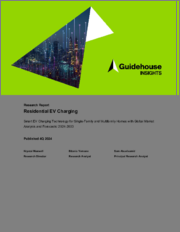
주거용 EV 충전 시장 분석과 예측(2024-2033년) : 단독주택 및 집합주거용 스마트 EV 충전 기술Residential EV Charging: Smart EV Charging Technology for Single-Family and Multifamily Homes with Global Market Analysis and Forecasts, 2024-2033 |
||||||

세계 가정용 전기자동차 충전 시장은 향후 10년간 제조업체, 정부, 규제 당국 및 환경 커뮤니티의 전기자동차 보급 장려를 반영하여 성장할 것으로 예상되며, 전기자동차 보급의 중요한 부분인 공공 충전소 도입은 많은 잠재적 전기자동차 고객들이 시장 장벽으로 꼽는 주행거리에 대한 매우 현실적인 우려를 해소하는 데 필수적입니다. 그러나 전 세계적으로 전기자동차 보급이 확대됨에 따라 전기자동차 소유자가 공공 충전소에만 의존하지 않도록 단독주택과 공동주택에 더 많은 전기자동차 충전기를 설치해야 하며, Wi-Fi 연결 및 재생에너지 통합과 같은 스마트 충전 기능을 통해 충전기를 보다 효율적이고 편리하게 사용할 수 있도록 해야 합니다.
주거용 전기자동차 충전은 충전기와 그 설치에 드는 높은 비용, 송전망과의 호환성, 주택의 전기 계통 등의 장벽이 남아 있지만, 이러한 설치를 촉진하는 정부의 인센티브가 향후 10년 동안 주거용 전기자동차 충전기 시장을 발전시킬 것으로 보입니다. 보급을 촉진하기 위해 업계는 고객 인지도를 높일 수 있는 교육 및 지원 프로그램을 실시해야 할 것입니다. 또한, 전기자동차 제조업체와 전기자동차 충전기 제조업체 등 이해관계자 간의 격차를 해소하기 위해 제휴 및 협력 체계를 우선시하고, 호환성 및 소비자 인식과 같은 장벽을 해결해야 합니다.
이 보고서는 세계 가정용 전기자동차 충전 시장을 조사하고, 기술, 전기자동차 소유자의 충전 습관, 시장 촉진요인 및 저해요인, 산업 가치사슬 등을 분석합니다. 또한, 세계 5개 지역(북미, 유럽, 아시아태평양, 라틴아메리카, 중동 및 아프리카)의 2024년부터 2033년까지 10년간의 시장을 예측하고 있습니다. 이 예측은 단독주택과 공동주택의 최종사용자별, 레벨 1, 레벨 2, 직류(DC), 무선 충전기로 구성된 하드웨어 충전기 기술별로 구분되어 있습니다.
목차
제1장 주요 요약
제2장 시장 문제
- 충전 기술 개요와 시나리오
- 주거용 EV 충전 기술 결정
- EV 충전 그리드에 관한 인사이트 : 소비자에게 영향을 미칠 가능성이 있다.
- 충전 시나리오
- 성장 촉진요인
- EV 보급 확대
- EV 추진을 향한 정부 정책
- 전체적인 편리성
- 기술의 진보
- 부동산 가치
- 장벽
- 초기 비용과 지속 비용
- 그리드 용량과 호환성
- 적절한 설비와 인식의 부족
- 기술적인 문제
- 규제상 장벽
- 가격
- 기타 사업상 문제
- 유지관리와 지원
- 이해관계자의 과제와 커뮤니케이션 부족
- CEO에 의한 전방위적 견해
제3장 산업 밸류체인
- 경쟁 구도
- M&A
- 비즈니스 모델의 진화
제4장 시장 예측
- 예측 방법
- 세계 시장 예측
- 북미
- 유럽
- 아시아태평양
- 라틴아메리카
- 중동 및 아프리카
제5장 결론과 제안
- 3개 항목의 주요 요점
- 추천사항
- 제조업체
- 유틸리티
- 설치자
제6장 두문자어 및 약어 리스트
제7장 목차
제8장 도표
제9장 조사 범위·정보 출처와 조사 방법·주석
ksm 25.02.26Over the next 10 years, the global market for residential EV chargers is expected to experience growth mirroring the EV adoption that manufacturers, governments, regulators, and the environmental community are encouraging. A major part of EVs' widespread adoption is the implementation of public charging stations, which are essential for addressing the very real concerns about range anxiety that many potential EV customers cite as a market barrier. However, as EV adoption continues to rise globally, more EV chargers must be installed in single-family and multifamily homes so that EV owners do not need to rely solely on public charging stations. Smart charging features such as Wi-Fi connectivity and renewable energy integration are making chargers even more efficient and convenient for homeowners.
While barriers to residential EV chargers remain-including high costs for the charger and its installation, grid compatibility, and a residence's electrical system-government incentives to promote these installations will drive the residential EV charging market forward into the next decade. To increase adoption, industry players must implement educational and outreach programs that improve customer awareness. They must also prioritize partnerships and collaboration efforts to bridge the gap between stakeholders, such as EV automakers and EV charger manufacturers, to address barriers like compatibility and consumers awareness.
This Guidehouse Insights report focuses on the EV charger market, including the technology, EV owners' charging habits, market drivers and barriers, and the industry value chain. Global forecasts for five geographic areas (North America, Europe, Asia Pacific, Latin America, and Middle East & Africa) cover the 10-year forecast period of 2024-2033. Forecasts for residential EV chargers are segmented by single-family and multifamily end users and by hardware charger technology consisting of Level 1, Level 2, direct current (DC), and wireless chargers.
Table of Contents
1. Executive Summary
- 1.1 Market Introduction
- 1.2 Report Scope
- 1.3 Market Highlights
2. Market Issues
- 2.1 Charging Technology Overview and Scenarios
- 2.1.1 Determining an EV Charging Technology for a Home
- 2.1.2 Grid Considerations for EV Charging Can Affect Consumers
- 2.1.3 Charging Scenarios
- 2.1.3.1 Current Charging Behaviors in Single-Family Homes
- 2.1.3.2 Anticipated Future Charging Behaviors in Single-Family Homes
- 2.1.3.3 Current Charging Behaviors in Multifamily Homes
- 2.1.3.4 Anticipated Future Charging Behaviors in Multifamily Homes
- 2.2 Drivers
- 2.2.1 Increasing Adoption of EVs
- 2.2.2 Government Initiatives to Promote EVs
- 2.2.3 Overall Convenience
- 2.2.4 Technological Advances
- 2.2.5 Real Estate Value
- 2.3 Barriers
- 2.3.1 Initial and Ongoing Costs
- 2.3.2 Grid Capacity and Compatibility
- 2.3.3 Lack of Suitable Facilities and Awareness
- 2.3.4 Technological Issues
- 2.3.5 Regulatory Barriers
- 2.4 Pricing
- 2.5 Other Business Issues
- 2.5.1 Maintenance and Support
- 2.5.2 Stakeholder Challenges and Lack of Communication
- 2.6 CEO 360 Degree View
3. Industry Value Chain
- 3.1 Competitive Landscape
- 3.1.1 Merger and Acquisition Activities
- 3.1.2 Business Model Evolution
4. Market Forecasts
- 4.1 Forecast Methodology
- 4.2 Global Market Forecast
- 4.2.1 North America
- 4.2.2 Europe
- 4.2.3 Asia Pacific
- 4.2.4 Latin America
- 4.2.5 Middle East & Africa
5. Conclusions and Recommendations
- 5.1 Three Big Takeaways
- 5.2 Recommendations
- 5.2.1 Manufacturers
- 5.2.2 Utilities
- 5.2.3 Installers