
|
시장보고서
상품코드
1883724
양자 컴퓨팅 시장 : 업계 동향과 세계 예측(-2035년) - 제공되는 Drug Discovery 서비스 유형별, 치료 영역별, 주요 지역별Quantum Computing Market: Industry Trends and Global Forecasts,Till 2035 - Distribution by Type of Drug Discovery Service Offered, Therapeutic Area and Key Geographical Regions |
||||||

세계의 양자 컴퓨팅 시장 - 개요
Roots Analysis의 조사에 따르면 세계의 양자 컴퓨팅 시장 규모는 예측 기간 중 CAGR 14.5%로 성장하며, 현재 4억 2,200만 달러에서 16억 3,300만 달러에 달할 것으로 전망되고 있습니다.
시장 규모 및 기회 분석은 다음 매개 변수별로 분류됩니다.
제공되는 신약개발 서비스 유형
- 표적 식별/검증
- 히트 창출/리드 화합물 식별
- 리드 최적화
치료 영역
- 심혈관 질환
- 중추신경계 질환
- 피부질환
- 내분비 질환
- 소화기 질환
- 면역계 질환
- 감염성 질환
- 근골격계 질환
- 종양성 질환
- 호흡기 질환
- 기타
주요 지역
- 북미
- 유럽
- 아시아태평양
- 중동 및 북아프리카
- 라틴아메리카
세계 양자컴퓨팅 시장 - 성장과 동향
의약품을 시장에 출시하기 위해서는 평균 10-15년, 40억-100억 달러 규모의 투자가 필요하며, 신약 개발 과정은 장기적이고 자원 집약적인 과정입니다. 이러한 문제를 해결하기 위해 개발자들은 기존 방식에서 벗어나 혁신적인 신약개발 접근법을 도입하고 있습니다. 신약개발 분야에서 양자컴퓨팅은 필요한 물리화학적 특성과 약동학적 특성을 갖춘 유망한 후보물질을 발굴하고, 대규모 스크리닝 과정을 생략할 수 있는 중요한 기술이 되고 있습니다. 양자컴퓨팅은 전압 구동 원리에 의존하는 기존의 2진법 컴퓨터와는 근본적으로 다른 방식으로 작동합니다. 기존 컴퓨팅의 단일 비트의 명확한 0과 1의 상태와는 달리, 양자 컴퓨팅은 양자 역학의 개념을 활용하고 초전도 회로, 이온 트랩 등의 기법을 사용합니다. 이를 통해 양자 중첩 상태(양자 비트(큐비트)가 0과 1의 상태를 동시에 가질 수 있는 상태)를 구현합니다.
최근 수년간 양자 컴퓨팅은 의약품과 대상 환자 간의 상호 작용 매핑을 개선하고 개발 프로세스와 관련된 시간과 비용을 줄임으로써 제약 및 의료 분야에 영향을 미치고 있습니다. 또한 양자컴퓨팅의 장점과 수요 증가, 특히 신약 개발 및 생산 분야의 바이오의약품 분야에서 양자컴퓨팅에 대한 수요가 증가함에 따라 이 분야는 서비스 프로바이더에게 수익성 높은 비즈니스 기회를 창출할 것으로 예측됩니다.
세계 양자 컴퓨팅 시장 - 주요 인사이트
이 보고서는 세계 양자 컴퓨팅 시장의 현황을 자세히 분석하고 업계의 잠재적인 성장 기회를 식별합니다. 주요 조사 결과는 다음과 같습니다.
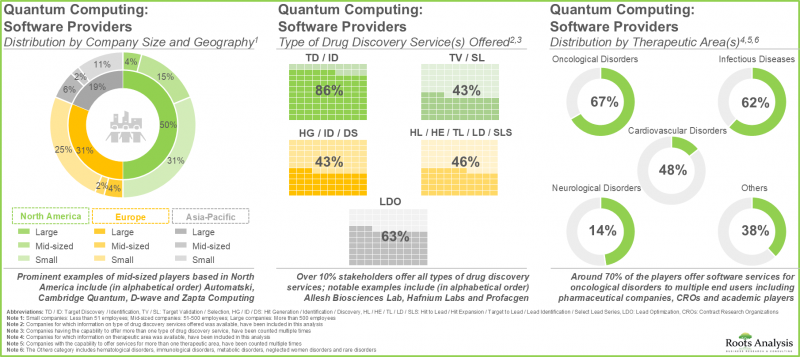
- 현재 전 세계 45개 이상의 기업이 신약개발 과정의 각 단계에서 양자컴퓨팅 서비스를 제공하겠다고 밝혔습니다.
- 전문 지식을 활용하여 86%의 이해관계자가 표적 발견 및 식별 프로세스 전반에 걸쳐 서비스를 제공하고 있으며, 주로 종양 질환에 초점을 맞추었습니다.
- 경쟁 우위를 확보하기 위해 각 업체들은 양자컴퓨팅 관련 서비스 포트폴리오를 강화하기 위해 기존 역량을 꾸준히 확장하고 있다고 주장하고 있습니다.
- 신약개발에서 양자컴퓨팅의 잠재력을 평가하기 위한 연구개발을 적극적으로 추진하고 있는 여러 기관에 7,000만 달러 이상의 보조금이 수여되었습니다.
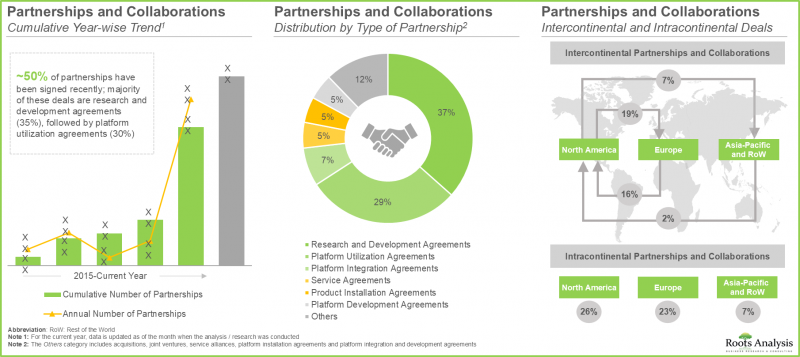
- 최근 수년간 제휴 활동이 크게 증가하고 있으며, 제휴의 50% 가까이가 같은 지역에 기반을 둔 기업 간에 체결되고 있습니다.
- 이들 계약의 대부분은 연구개발 계약(35%)이며, 그 다음으로는 플랫폼 이용 계약(30%)이 뒤를 이었습니다.
- 전 세계 30개 이상의 기업이 신약개발 분야에서 양자컴퓨팅의 서비스형 하드웨어(Hardware-as-a-Service, HaaS) 제공을 주장하고 있으며, 다양한 컴퓨팅 접근 방식에 필요한 전문성을 개발하고 있습니다.
- 대부분의 양자 컴퓨팅 하드웨어 공급업체는 북미에 본사를 두고 있으며, 2000년 이전에 설립되었습니다. 실제로 시장 상황의 약 50%는 대기업이 차지하고 있습니다.
- 바이오 제약 산업에서 양자컴퓨팅의 채택이 확대되면 소프트웨어 및 하드웨어 공급업체 모두에게 수익성 높은 비즈니스 기회를 창출할 것으로 예측됩니다.
- 파이오니어, 마이그레이션, 정착자 분류도에 따라 소프트웨어 프로바이더를 각기 다른 카테고리로 분류했습니다. 선정된 파이오니어 기업은 장기적으로 시장을 선도하는 가치 있는 서비스를 제공할 것으로 기대됩니다.
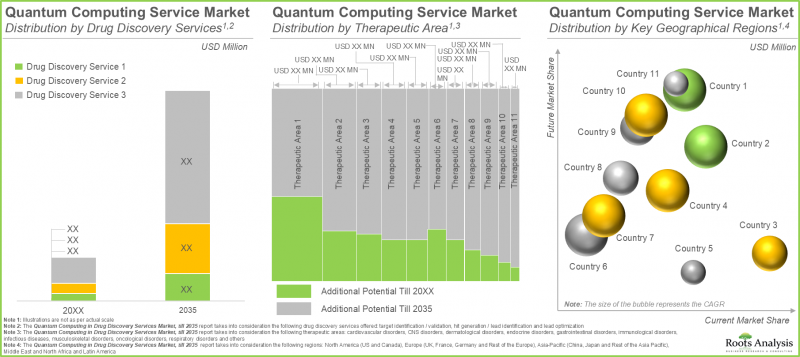
- 향후 10년간 시장은 연간 14.5%의 성장률을 보일 것으로 예측됩니다. 이 기회는 신약개발 서비스 유형, 치료 영역, 주요 지역별로 고르게 분배될 가능성이 높습니다.
세계 양자 컴퓨팅 시장 - 주요 분야
양자 컴퓨팅 시장에서 리드 최적화 부문이 가장 큰 점유율을 차지하고 있습니다.
제공되는 신약개발 서비스별로 시장은 타겟 식별/검증, 히트 창출/리드 식별, 리드 최적화 부문으로 구분됩니다. 현재 시장 점유율의 대부분(약 62%)을 리드 최적화 부문이 차지하고 있습니다. 또한 이 부문은 다른 부문에 비해 더 빠른 속도로 성장할 가능성이 높을 것으로 예측됩니다.
양자컴퓨팅 시장에서 가장 빠르게 성장하는 치료 분야는 중추신경계 질환입니다.
치료 영역별로 시장은 심혈관계 질환, 중추신경계 질환, 피부 질환, 내분비 질환, 소화기 질환, 면역 질환, 감염성 질환, 근골격계 질환, 종양 질환, 호흡기 질환, 기타로 분류됩니다. 현재 양자컴퓨팅 시장에서 가장 높은 비중을 차지하고 있는 분야는 종양질환 분야입니다. 또한 중추신경계 질환 부문은 상대적으로 높은 CAGR로 성장할 것으로 예측됩니다.
북미가 시장에서 가장 큰 점유율을 차지하고 있습니다.
주요 지역별로 북미, 유럽, 아시아태평양, 중동 및 북아프리카, 라틴아메리카로 구분됩니다. 현재 북미(48%)가 양자컴퓨팅 시장을 주도하고 있으며, 가장 큰 매출 점유율을 차지하고 있습니다. 그러나 아시아태평양 시장은 더 높은 CAGR로 성장할 것으로 예측됩니다.
세계 양자컴퓨팅 시장을 대표하는 기업
- Accenture
- Amazon Web Services
- Atos
- Fujitsu
- Huawei
- IBM
- Microsoft
- Xanadu
- XtalPi
세계 양자 컴퓨팅 시장 - 조사 범위
- 시장 규모 및 기회 분석 : 이 보고서는 세계 양자컴퓨팅 시장에 대해(A) 제공되는 신약개발 서비스 유형,(B) 치료 분야,(C) 주요 지역 등 주요 시장 부문에 초점을 맞춘 상세한 분석을 담고 있습니다.
- 소프트웨어 프로바이더 시장 상황: 양자컴퓨팅 소프트웨어 기업을 종합적으로 평가하여(A) 설립연도,(B) 기업 규모,(C) 본사 소재지,(D) 사업 역량,(E) 플랫폼 역량,(F) 제공되는 신약개발 서비스 유형,(G) 대응 분자 유형,(H) 호환 가능한 계산 접근법,(I) 최종사용자,(J) 치료 영역 등 다양한 파라미터를 고려하여 종합적으로 평가합니다.
- 기업 경쟁력 분석 : 양자 컴퓨팅 소프트웨어 기업에 대한 인사이트 있는 경쟁력 분석. A) 기업 역량,(B) 포트폴리오의 강점,(C) 포트폴리오의 다양성 등을 검증합니다.
- 기업 개요: 양자 컴퓨팅 소프트웨어/하드웨어 기업의 상세 프로파일.(A) 기업 개요,(B) 재무 정보(가능한 경우),(C) 서비스 포트폴리오,(E) 최근 동향 및 미래 전망에 초점을 맞추었습니다.
- 소프트웨어 프로바이더 시장 상황: 양자컴퓨팅 하드웨어 기업을 종합적으로 평가하여(A) 설립연도,(B) 기업 규모,(C) 본사 소재지,(D) 제공 서비스 유형,(E) 클라우드 상의 데이터 저장,(F) 대응 가능한 계산 방법 등 다양한 파라미터를 고려합니다.
- 보조금 분석 : 신약개발 분야의 양자컴퓨팅에 초점을 맞춘 170개 이상의 학술 보조금을 다음과 같은 관련 매개변수에 따라 상세하게 분석합니다. (A)보조금 지급 연도,(B)보조금 금액,(C)지원 기간,(D)연구 섹션 유형,(E)관리기관 센터,(F)보조금 유형,(G)활동 코드,(H)지원 메커니즘 및 지원 금액,(I)지원 기관 및 지원 기간,(J)주요 프로그램 담당자 G) 활동코드,(H) 자금조달 메커니즘 및 지원금액,(I) 지원기관 및 지원기간,(J) 주요 프로그램 담당자,(K) 수혜기관 소재지,(L) 주요 수혜기관,(M) 기관 유형,(N) 주요 수혜기관에 대한 지원금액.
- 파트너십 및 협력관계: 이 분야의 이해관계자들 간에 체결된 다양한 협력관계 및 파트너십에 대한 종합적인 분석.(A) 파트너십 체결 연도,(B) 파트너십 유형,(C) 지역별 활동을 기준으로 분석합니다.
- 이용 사례 연구: 양자컴퓨팅의 적용 사례를 자세히 분석하여(A) 화학 산업,(B) 사이버 보안,(C) 금융 모델링,(D) 우주 과학,(E) 석유 및 가스 산업,(F) 기상 예측 등 다양한 산업 분야에서의 적용 사례를 밝힙니다.
- Portre's Five Forces 분석 : 신약개발을 지원하는 양자컴퓨팅 시장에 존재하는 5가지 경쟁력에 대한 인사이트 분석. 신규 시장 진출기업의 위협, 구매자의 협상력, 공급기업의 협상력, 대체품의 위협, 기존 경쟁사 간의 경쟁력 등을 포함합니다.
- 블루오션 전략: 경쟁이 치열한 시장에 진입하려는 스타트업을 위한 전략적 가이드: 블루오션 전략에 기반한 현재 및 미래 시장에 대한 심층 분석. 이 업계의 신흥 기업이 미개발 시장을 개발하기 위한 전략적 계획/가이드를 다루고 있습니다.
목차
제1장 서문
제2장 개요
제3장 서론
제4장 시장 구도 : 소프트웨어 프로바이더
- 양자 컴퓨팅 소프트웨어 프로바이더 : 시장 구도
제5장 기업 경쟁력 분석
- 조사 방법과 주요 파라미터
- 채점 기준
- 기업 경쟁력 분석 : 북미에 기반을 둔 기업(피어 그룹 I)
- 기업 경쟁력 분석 : 유럽에 기반을 둔 기업(피어 그룹 II)
- 기업 경쟁력 분석 : 아시아태평양 및 기타 지역에 기반을 둔 기업(피어 그룹 III)
제6장 기업 개요 : 소프트웨어 프로바이더
- Accenture
- Atos
- Fujitsu
- Huawei
- Microsoft
- Xanadu
- XtalPi
제7장 시장 구도 : 하드웨어 프로바이더
- 양자 컴퓨팅 하드웨어 프로바이더 : 시장 구도
제8장 기업 개요 하드웨어 프로바이더
- Amazon Web Services
- IBM
- Microsoft
제9장 학술 보조금 분석
제10장 파트너십과 협업
제11장 사용 사례 스터디
- 양자 컴퓨팅의 개요
- 다양한 업계에서 양자 컴퓨팅의 응용
- 양자 컴퓨팅 향후 동향
- 향후 전망
제12장 Porter's Five Forces 분석
제13장 블루 오션 전략 : 경쟁이 치열한 시장에 참여하는 스타트업을 위한 전략 가이드
- 블루 오션 전략의 개요
제14장 시장 규모 평가와 기회 분석
- 예측 조사 방법과 주요 전제조건
- Drug Discovery 서비스용 양자 컴퓨팅 시장 : 2035년까지
- Drug Discovery 서비스용 양자 컴퓨팅 시장(-2035년) : 제공되는 Drug Discovery 서비스 유형별 분석
- Drug Discovery 서비스용 양자 컴퓨팅 시장(-2035년) : 치료 영역별 분석
- Drug Discovery 서비스용 양자 컴퓨팅 시장(-2035년) : 주요 지역별 분석
제15장 이그제큐티브 인사이트
제16장 부록 1 : 표형식 데이터
제17장 부록 2 : 기업·단체 리스트
KSA 25.12.17Global Quantum Computing Market: Overview
As per Roots Analysis, the global quantum computing market is expected to grow from USD 422 million in the current year to USD 1,633 million, at a CAGR of 14.5% during the forecast period.
The market sizing and opportunity analysis has been segmented across the following parameters:
Type of Drug Discovery Service Offered
- Target Identification / Validation
- Hit Generation / Lead Identification
- Lead Optimization
Therapeutic Area
- Cardiovascular Disorders
- CNS Disorders
- Dermatological Disorders
- Endocrine Disorders
- Gastrointestinal Disorders
- Immunological Disorders
- Infectious Diseases
- Musculoskeletal Disorders
- Oncological Disorders
- Respiratory Disorders
- Others
Key Geographical Regions
- North America
- Europe
- Asia-Pacific
- Middle East and North Africa
- Latin America
Global Quantum Computing Market: Growth and Trends
On average, it requires 10-15 years and investments ranging from USD 4-10 billion to bring a drug to market, which renders the drug discovery process lengthy and resource intensive. To tackle these issues, developers are moving away from conventional methods towards the implementation of innovative discovery approaches. Quantum computing in drug discovery has become a key technology that helps identify promising lead candidates with the necessary physiochemical and pharmacokinetic properties, eliminating the need for extensive screening processes. Quantum computing functions in a fundamentally different manner compared to conventional binary computers, which depend on voltage-driven principles. In contrast to the distinct 0 and 1 states of single bits in conventional computing. Quantum computing leverages the concepts of quantum mechanics, using methods such as superconducting circuits or ion traps. This allows them to attain quantum superposition - a condition where quantum bits (qubits) can be in a concurrent state of both 0 and 1.
In recent years, quantum computing has advanced considerably and influenced the pharmaceutical and healthcare sectors by improving the mapping of interactions between a medication and its intended patient while decreasing the time and expenses related to the development processes. Moreover, due to the advantages linked to quantum computing and its growing demand, particularly in the biopharmaceutical sector for drug discovery and production, this area is anticipated to generate profitable business prospects for service providers.
Global Quantum Computing Market: Key Insights
The report delves into the current state of global quantum computing market and identifies potential growth opportunities within industry. Some key findings from the report include:
- Presently, over 45 players around the globe claim to offer quantum computing services across different steps of drug discovery.
- Leveraging their expertise, 86% stakeholders offer such services across target discovery / identification, primarily focusing on oncological disorders.
- In pursuit of gaining a competitive edge, manufacturers claim to be steadily expanding their existing capabilities in order to enhance their service portfolios related to quantum computing.
- Grants worth over USD 70 million have been awarded to various organizations that have actively undertaken R&D efforts to evaluate the potential of quantum computing in drug discovery.
- A considerable increase in the partnership activity has been witnessed in the past few years; close to 50% of the collaborations were inked by firms based in the same region.
- Majority of these deals are research and development agreements (35%), followed by platform utilization agreements (30%).
- More than 30 players, worldwide, claim to offer hardware-as-a-service for quantum computing in drug discovery, and have developed the required expertise in different types of computational approaches.
- Majority of the quantum computing hardware providers, headquartered in North America, were established before the year 2000; in fact, ~50% of the overall market landscape is catered by large companies.
- The rise in the adoption of quantum computing in the biopharmaceutical industry is anticipated to create profitable business opportunities for both software and hardware providers.
- Based on the pioneer-migrator-settler map, we have classified the software providers into different categories; a selection of pioneers is expected to provide valuable offerings to lead the market in the long term.
- We expect the market to grow at an annualized rate of 14.5% in the coming decade; the opportunity is likely to be well distributed across types of drug discovery services, therapeutic areas and key geographical regions.
Global Quantum Computing Market: Key Segments
Lead Optimization Segment Occupies the Largest Share of the Quantum Computing Market
In terms of drug discovery service offered, the market is segmented into target identification / validation, hit generation / lead identification and lead optimization. At present, majority (~62%) of the market share is captured by lead optimization segment. Additionally, this segment is likely to grow at a faster pace compared to the other segments.
CNS Disorders are the Fastest Growing Therapeutic Area Segment in the Quantum Computing Market
In terms of the therapeutic area, the market is segmented into cardiovascular disorders, CNS disorders, dermatological disorders, endocrine disorders, gastrointestinal disorders, immunological disorders, infectious diseases, musculoskeletal disorders, oncological disorders, respiratory disorders and others. Currently, oncological disorders segment captures the highest proportion of quantum computing market. Further, the CNS disorders segment is expected to grow at a relatively higher CAGR.
North America Accounts for the Largest Share of the Market
In terms of key geographical regions, the market is segmented into North America, Europe, Asia- Pacific, Middle East and North Africa, and Latin America. Currently, North America (48%) dominates the quantum computing market and accounts for the largest revenue share. However, the market in Asia Pacific is expected to grow at a higher CAGR.
Example Players in the Global Quantum Computing Market
- Accenture
- Amazon Web Services
- Atos
- Fujitsu
- Huawei
- IBM
- Microsoft
- Xanadu
- XtalPi
Global Quantum Computing Market: Research Coverage
- Market Sizing and Opportunity Analysis: The report features an in-depth analysis of the global quantum computing market, focusing on key market segments, including [A] type of drug discovery service offered, [B] therapeutic area and [C] key geographical regions.
- Software Providers Market Landscape: A comprehensive evaluation of quantum computing software companies, considering various parameters, such as [A] year of establishment, [B] company size, [C] location of headquarters, [D] business capabilities, [E] platform capabilities, [F] type of drug discovery service(s) offered, [G] type of molecule(s) supported, [H] compatible computational approaches, [I] end user(s) and [J] therapeutic area(s).
- Company Competitiveness Analysis: An insightful competitive analysis of quantum computing software companies, examining factors, such as [A] company strength, [B] portfolio strength and [C] portfolio diversity.
- Company Profiles: In-depth profiles of quantum computing software / hardware companies, focusing on [A] company overview, [B] financial information (if available), [C] service portfolio, and [E] recent developments and an informed future outlook.
- Software Providers Market Landscape: A comprehensive evaluation of quantum computing hardware companies, considering various parameters, such as [A] year of establishment, [B] company size, [C] location of headquarters, [D] type of offering(s), [E] data storage on cloud and [F] compatible computational approaches.
- Grant Analysis: An in-depth analysis of over 170 academic grants focused on quantum computing in drug discovery across various relevant parameters, such as [A] year of grants awarded, [B] amount awarded, [C] support period, [D] type of study section, [E] administering institute center, [F] type of grant, [G] activity code, [H] funding mechanism and amount granted, [I] funding institute and support period, [J] prominent program officers, [K] location of recipient organizations, [L] popular recipient organizations, [M] organization type and [N] amount granted to popular recipient.
- Partnerships and Collaborations: A comprehensive analysis of various collaborations and partnerships that have been inked amongst stakeholders in this domain, based on [A] year of partnership, [B] type of partnership and [C] regional activity.
- Use Case Study: A detailed analysis of quantum computing use cases highlighting the applications of quantum computing across various industries, such as [A] chemical industry, [B] cybersecurity, [C] financial modeling, [D] space sciences, [E] oil and gas industry and [F] weather forecasting.
- Porter's Five Forces Analysis: An insightful analysis of the five competitive forces prevalent in quantum computing market supporting drug discovery, including threats for new entrants, bargaining power of buyers, bargaining power of suppliers, threats of substitute product and rivalry among existing competitors.
- Blue Ocean Strategy: A Strategic Guide for Start-Ups to Enter into Highly Competitive Market: A detailed analysis of the current and future market based on blue ocean strategy, covering a strategic plan / guide for emerging players in this industry to help unlock an uncontested market.
Key Questions Answered in this Report
- How many companies are currently engaged in this market?
- Which are the leading companies in this market?
- What factors are likely to influence the evolution of this market?
- What is the current and future market size?
- What is the CAGR of this market?
- How is the current and future market opportunity likely to be distributed across key market segments?
Reasons to Buy this Report
- The report provides a comprehensive market analysis, offering detailed revenue projections of the overall market and its specific sub-segments. This information is valuable to both established market leaders and emerging entrants.
- Stakeholders can leverage the report to gain a deeper understanding of the competitive dynamics within the market. By analyzing the competitive landscape, businesses can make informed decisions to optimize their market positioning and develop effective go-to-market strategies.
- The report offers stakeholders a comprehensive overview of the market, including key drivers, barriers, opportunities, and challenges. This information empowers stakeholders to stay abreast of market trends and make data-driven decisions to capitalize on growth prospects.
Additional Benefits
- Complimentary Excel Data Packs for all Analytical Modules in the Report
- 15% Free Content Customization
- Detailed Report Walkthrough Session with Research Team
- Free Updated report if the report is 6-12 months old or older
TABLE OF CONTENTS
1. PREFACE
- 1.1. Scope of the Report
- 1.2. Research Methodology
- 1.2.1. Research Assumptions
- 1.2.2. Project Methodology
- 1.2.3. Forecast Methodology
- 1.2.4. Robust Quality Control
- 1.2.5. Key Considerations
- 1.2.5.1. Demographics
- 1.2.5.2. Economic Factors
- 1.2.5.3. Government Regulations
- 1.2.5.4. Supply Chain
- 1.2.5.5. COVID Impact / Related Factors
- 1.2.5.6. Market Access
- 1.2.5.7. Healthcare Policies
- 1.2.5.8. Industry Consolidation
- 1.3 Key Questions Answered
- 1.4. Chapter Outlines
2. EXECUTIVE SUMMARY
3. INTRODUCTION
- 3.1. Chapter Overview
- 3.2. Overview of Quantum Computing in Drug Discovery
- 3.3. Drug Discovery and Development Timeline
- 3.4. Historical Evolution of Computational Drug Discovery Approaches
- 3.5. Classification of Quantum Computing Approaches
- 3.6. Applications of Quantum Computing in Drug Discovery Process
- 3.7. Advantages of Quantum Computing in Drug Discovery
- 3.8. Challenges Associated with Quantum Computing in Drug Discovery
- 3.9. Future Perspectives
4. MARKET LANDSCAPE: SOFTWARE PROVIDERS
- 4.1. Quantum Computing Software Providers: Overall Market Landscape
- 4.1.1. Analysis by Year of Establishment
- 4.1.2. Analysis by Company Size
- 4.1.3. Analysis by Location of Headquarters
- 4.1.4. Analysis by Business Capabilities
- 4.1.5. Analysis by Platform Capabilities
- 4.1.6. Analysis by Type of Drug Discovery Service(s) Offered
- 4.1.7. Analysis by Type of Molecule(s) Supported
- 4.1.8. Analysis by Compatible Computational Approaches
- 4.1.9. Analysis by End User(s)
- 4.1.10. Analysis by Therapeutic Area(s)
5. COMPANY COMPETITIVENESS ANALYSIS
- 5.1. Methodology and Key Parameters
- 5.2. Scoring Criteria
- 5.3. Company Competitiveness Analysis: Players based in North America (Peer Group I)
- 5.4. Company Competitiveness Analysis: Players based in Europe (Peer Group II)
- 5.5. Company Competitiveness Analysis: Players based in Asia-Pacific and Rest of the World (Peer Group III)
6. COMPANY PROFILES: SOFTWARE PROVIDERS
- 6.1. Accenture
- 6.1.1. Company Overview
- 6.1.2. Financial Information
- 6.1.3. Service Portfolio
- 6.1.4. Recent Developments and Future Outlook
- 6.2. Atos
- 6.2.1. Company Overview
- 6.2.2. Financial Information
- 6.2.3. Service Portfolio
- 6.2.4. Recent Developments and Future Outlook
- 6.3. Fujitsu
- 6.3.1. Company Overview
- 6.3.2. Financial Information
- 6.3.3. Service Portfolio
- 6.3.4. Recent Developments and Future Outlook
- 6.4. Huawei
- 6.4.1. Company Overview
- 6.4.2. Financial Information
- 6.4.3. Service Portfolio
- 6.4.4. Recent Developments and Future Outlook
- 6.5. Microsoft
- 6.5.1. Company Overview
- 6.5.2. Financial Information
- 6.5.3. Service Portfolio
- 6.5.4. Recent Developments and Future Outlook
- 6.6. Xanadu
- 6.6.1. Company Overview
- 6.6.2. Service Portfolio
- 6.6.3. Recent Developments and Future Outlook
- 6.7. XtalPi
- 6.7.1. Company Overview
- 6.7.2. Service Portfolio
- 6.7.3. Recent Developments and Future Outlook
7. MARKET LANDSCAPE: HARDWARE PROVIDERS
- 7.1. Quantum Computing Hardware Providers: Overall Market Landscape
- 7.1.1. Analysis by Year of Establishment
- 7.1.2. Analysis by Company Size
- 7.1.3. Analysis by Region of Headquarters
- 7.1.4. Analysis by Location of Headquarters
- 7.1.5. Analysis by Type of Offering(s)
- 7.1.6. Analysis by Data Storage on Cloud
- 7.1.7. Analysis by Compatible Computational Approaches
- 7.1.8. Analysis by Type of Offering(s) and Compatible Computational Approaches
8. COMPANY PROFILES: HARDWARE PROVIDERS
- 8.1. Amazon Web Services
- 8.1.1. Company Overview
- 8.1.2. Financial Information
- 8.1.3. Service Portfolio
- 8.1.4. Recent Developments and Future Outlook
- 8.2. IBM
- 8.2.1. Company Overview
- 8.2.2. Financial Information
- 8.2.3. Service Portfolio
- 8.2.4. Recent Developments and Future Outlook
- 8.3. Microsoft
- 8.3.1. Company Overview
- 8.3.2. Financial Information
- 8.3.3. Service Portfolio
- 8.3.4. Recent Developments and Future Outlook
9. ACADEMIC GRANTS ANALYSIS
- 9.1. Analysis Methodology
- 9.2. Key Parameters
- 9.3. Analysis by Year of Grant
- 9.4. Analysis by Amount Awarded
- 9.5. Analysis by Support Period
- 9.6. Analysis by Study Section
- 9.7. Word Cloud Analysis: Emerging Focus Areas
- 9.8. Analysis by Administering Institute Center
- 9.9. Analysis by Type of Grant
- 9.10. Analysis by Activity Code
- 9.11. Analysis by Purpose of Grant
- 9.12. Analysis by Administering Institute Center and Support Period
- 9.13. Prominent Program Officers: Analysis by Number of Grants
- 9.14. Analysis by Location of Recipient Organizations
- 9.15. Analysis by Type of Organization
- 9.16. Popular Recipient Organizations: Analysis by Number of Grants
- 9.17. Popular Recipient Organizations: Analysis by Amount Awarded
10. PARTNERSHIPS AND COLLABORATIONS
- 10.1. Partnership Models
- 10.2. Quantum Computing in Drug Discovery, Drug Manufacturing and Other Services: Partnerships and Collaborations
- 10.3. Analysis by Year of Partnership
- 10.4. Analysis by Type of Partnership
- 10.5. Analysis by Year and Type of Partnership
- 10.6. Most Active Players: Analysis by Number of Partnerships
- 10.7. Word Cloud Analysis: Key Focus Areas
- 10.8. Analysis by Type of Continent
- 10.9. Analysis by Company Size and Type of Partnership
- 10.10. Local and Intercontinental Agreements
- 10.11. Intercontinental and Intracontinental Agreements
11. USE CASE STUDY
- 11.1. Overview of Quantum Computing
- 11.2. Applications of Quantum Computing Across Various Industries
- 11.3. Upcoming Trends in Quantum Computing
- 11.4. Future Perspectives
12. PORTER'S FIVE FORCES ANALYSIS
- 12.1. Methodology and Assumptions
- 12.2. Key Parameters
- 12.2.1. Threats of New Entrants
- 12.2.2. Bargaining Power of Buyers
- 12.2.3. Bargaining Power of Suppliers
- 12.2.4. Threats of Substitute Products
- 12.2.5. Rivalry among Existing Competitors
13. BLUE OCEAN STRATEGY: A STRATEGIC GUIDE FOR START-UPS TO ENTER INTO HIGHLY COMPETITIVE MARKET
- 13.1. Overview of Blue Ocean Strategy
- 13.1.1. Red Oceans
- 13.1.2. Blue Oceans
- 13.1.3. Comparison of Red Ocean Strategy and Blue Ocean Strategy
- 13.1.4. Quantum Computing in Drug Discovery Services Market: Blue Ocean Strategy and Shift Tools
- 13.1.4.1. Value Innovation
- 13.1.4.2. Strategy Canvas
- 13.1.4.3. Four Action Framework
- 13.1.4.4. Eliminate-Raise-Reduce-Create (ERRC) Grid
- 13.1.4.5. Six Path Framework
- 13.1.4.6. Pioneer-Migrator-Settler (PMS) Map
- 13.1.4.7. Three Tiers of Non-customers
- 13.1.4.8. Sequence of Blue Ocean Strategy
- 13.1.4.9. Buyer Utility Map
- 13.1.4.10. The Price Corridor of the Mass
- 13.1.4.11. Four Hurdles to Strategy Execution
- 13.1.4.12. Tipping Point Leadership
- 13.1.4.13. Fair Process
14. MARKET SIZING AND OPPORTUNITY ANALYSIS
- 14.1. Forecast Methodology and Key Assumptions
- 14.2. Quantum Computing in Drug Discovery Services Market, Till 2035
- 14.2.1. Quantum Computing in Drug Discovery Services Market, Till 2035: Analysis by Type of Drug Discovery Service Offered
- 14.2.1.1. Quantum Computing in Drug Discovery Services Market for Target Identification / Validation, Till 2035
- 14.2.1.2. Quantum Computing in Drug Discovery Services Market for Hit Generation / Lead Identification, Till 2035
- 14.2.1.3. Quantum Computing in Drug Discovery Services Market for Target Lead Optimization, Till 2035
- 14.2.2. Quantum Computing in Drug Discovery Services Market, Till 2035: Analysis by Therapeutic Area
- 14.2.2.1. Quantum Computing in Drug Discovery Services Market for Cardiovascular Disorders, Till 2035
- 14.2.2.2. Quantum Computing in Drug Discovery Services Market for CNS Disorders, Till 2035
- 14.2.2.3. Quantum Computing in Drug Discovery Services Market for Dermatological Disorders, Till 2035
- 14.2.2.4. Quantum Computing in Drug Discovery Services Market for Endocrine Disorders, Till 2035
- 14.2.2.5. Quantum Computing in Drug Discovery Services Market for Gastrointestinal Disorders, Till 2035
- 14.2.2.6. Quantum Computing in Drug Discovery Services Market for Immunological Disorders, Till 2035
- 14.2.2.7. Quantum Computing in Drug Discovery Services Market for Infectious Diseases, Till 2035
- 14.2.2.8. Quantum Computing in Drug Discovery Services Market for Musculoskeletal Disorders, Till 2035
- 14.2.2.9. Quantum Computing in Drug Discovery Services Market for Oncological Disorders, Till 2035
- 14.2.2.10. Quantum Computing in Drug Discovery Services Market for Respiratory Disorders, Till 2035
- 14.2.2.11. Quantum Computing in Drug Discovery Services Market for Others, Till 2035
- 14.2.3. Quantum Computing in Drug Discovery Services Market, Till 2035: Analysis by Key Geographical Regions
- 14.2.3.1. Quantum Computing in Drug Discovery Services Market in North America, Till 2035
- 14.2.3.1.1. Quantum Computing in Drug Discovery Services Market in the US, Till 2035
- 14.2.3.1.2. Quantum Computing in Drug Discovery Services Market in Canada, Till 2035
- 14.2.3.2. Quantum Computing in Drug Discovery Services Market for Europe, Till 2035
- 14.2.3.2.1. Quantum Computing in Drug Discovery Services Market in the UK, Till 2035
- 14.2.3.2.2. Quantum Computing in Drug Discovery Services Market in France, Till 2035
- 14.2.3.2.3. Quantum Computing in Drug Discovery Services Market in Germany, Till 2035
- 14.2.3.2.4. Quantum Computing in Drug Discovery Services Market in Rest of Europe, Till 2035
- 14.2.3.3. Quantum Computing in Drug Discovery Services Market in Asia-Pacific, Till 2035
- 14.2.3.3.1. Quantum Computing in Drug Discovery Services Market in China, Till 2035
- 14.2.3.3.2. Quantum Computing in Drug Discovery Services Market in Japan, Till 2035
- 14.2.3.3.3. Quantum Computing in Drug Discovery Services Market in Rest of Asia-Pacific, Till 2035
- 14.2.3.4. Quantum Computing in Drug Discovery Services Market in Latin America, Till 2035
- 14.2.3.5. Quantum Computing in Drug Discovery Services Market in Middle East and North Africa, Till 2035
- 14.2.3.1. Quantum Computing in Drug Discovery Services Market in North America, Till 2035
- 14.2.1. Quantum Computing in Drug Discovery Services Market, Till 2035: Analysis by Type of Drug Discovery Service Offered