

|
시장보고서
상품코드
2028467
ADC 기술 시장(제3판) : 기술 세대별, 결합 방식별, 링커 유형별, 지역별 - 업계 동향과 예측(-2040년)ADC Technology Market (3rd Edition) by Generation of Technology, Type of Conjugation, Type of Linker, and Geographical Regions - Industry Trends and Global Forecasts, Till 2040 |
||||||

ADC 기술 시장 : 개요
항체약물접합체(ADC) 기술 시장 규모는 2040년까지 CAGR 7.5%로 확대하며, 현재 34억 4,000만 달러에서 2040년에는 95억 1,000만 달러에 달할 것으로 추정되고 있습니다.
ADC 기술 시장 : 성장과 동향
항체약물접합체(ADC)는 기존 항암치료의 대안으로 떠오르고 있습니다. 이러한 첨단 생물제제는 링커를 통해 세포독성 페이로드와 모노클로널 항체를 결합시킨 것입니다. 그러나 구조의 복잡성으로 인해 최적의 내약성과 유효성을 달성하는 데 어려움이 있으며, 우수한 안전성 프로파일을 유지하면서 제어된 조립을 가능하게 하는 첨단 결합 기술이 필요합니다.
ADC의 결합 접근법에서는 일반적으로 링커, 약물, 페이로드의 정밀한 결합을 가능하게 하는 항체 엔지니어링이 이루어집니다. 한편, 링커 기술은 효율적이고 목표 지향적인 페이로드 전달을 보장하는 안정적인 구조 단위 개발에 초점을 맞추고 있습니다. 이러한 요소들의 지속적인 최적화를 통해 높은 약물상호작용비(DAR)를 가진 균일한 ADC를 제조할 수 있으며, 그 결과 종양미세환경 내에서의 안정성 향상과 치료 효과의 증강을 가져올 수 있습니다.
또한 고급 링커 화학을 도입한 균일한 ADC는 면역원성을 낮추고 표적 특이성을 향상시켜 오프타겟 효과를 최소화하면서 정밀한 전달을 가능하게 합니다. 이러한 장점에 힘입어 스타트업과 기존 기업 모두 혁신적인 결합 플랫폼, 더 강력한 페이로드, 차세대 링커 기술에 적극적으로 투자하고 있습니다.
또한 ADC 개발 기업은 첨단 기술력과 전문 지식을 활용하기 위해 전문 기술 제공업체와의 전략적 제휴를 점점 더 많이 추진하고 있습니다. 표적 지향적 암 치료제에 대한 수요 증가에 힘입어 ADC 링커 및 결합 기술 시장은 향후 수년간 큰 폭의 성장이 예상됩니다.
성장 요인: 시장 확대의 전략적 원동력
ADC 기술 시장은 전 세계 암 유병률의 급증, 고령화 및 비만 인구의 증가, 그리고 건강한 조직을 보존하면서 종양 세포에 선택적으로 강력한 활성 성분을 전달하는 정밀 암 치료제에 대한 수요 증가에 의해 주도되고 있습니다. 설계된 시스테인, 효소적 트랜스글루타미나제(enzymatic transglutaminase) 및 화학적 효소 플랫폼과 같은 부위별 결합 방법의 발전으로 기존의 확률적 리신 또는 시스테인 결합에 비해 약동학적 프로파일, 치료 기간 및 전반적인 안전성을 극적으로 개선하는 균일한 약물상대비율(DAR)이 가능해졌습니다. (DAR)을 실현하고 있습니다. 동시에, 절단 가능한 시스템이 주류가 될 차세대 링커 화학은 세포 내에서 약물의 정밀한 방출을 가능하게 하여 전신 독성 및 오프 타겟 효과를 최소화합니다. 이는 막대한 R&D 투자, 풍부한 임상 파이프라인, 제약사와 바이오테크 기업의 전략적 제휴, 확장 가능한 제조를 위한 CDMO 파트너십, 그리고 신속한 규제에 의해 더욱 강화되고 있으며, 이 모든 것이 결합되어 안정적인 종양 활성화 설계의 혁신을 촉진하고 시장 성장을 촉진하고 있습니다. 촉진하고 시장 성장을 촉진하고 있습니다.
시장 과제: 발전을 가로막는 심각한 장벽들
ADC 제조에서 배치 간 편차는 여전히 중요한 문제입니다. 이는 여러 가지 결합 화학이 사용되므로 결합되지 않은 항체, 유리 독소 및 ADC 제품으로 구성된 불균일한 혼합물이 생성되는 경우가 많기 때문입니다. 이러한 불균일성은 약물의 결합 부위 및 결합 비율(DAR)의 불균일성으로 이어져 배치 간 불일치를 유발합니다. 또한 표적 외 독성은 여전히 심각한 안전 문제가 되고 있습니다. 이는 세포독성 페이로드가 의도치 않게 방출되면 간, 골수, 신경계 등 건강한 조직에 영향을 미칠 수 있기 때문입니다. 항체 및 링커 기술의 발전에도 불구하고 안전성과 치료 효과의 최적 균형을 유지하는 것은 여전히 어렵습니다. 이러한 문제들은 임상 결과에 부정적인 영향을 미치고 개발 일정을 지연시킬 수 있으며, 보다 정밀하고 통제된 결합 접근법의 필요성을 강조하고 있습니다.
ADC 기술 시장 : 주요 인사이트
이 보고서는 ADC 기술 시장의 현황을 상세히 분석하고 업계내 잠재적인 성장 기회를 파악합니다. 보고서의 주요 조사 결과는 다음과 같습니다. :
- 현재 전 세계 다양한 기업에서 130여 종의 항체약물접합체(ADC) 기술이 제공되고 있습니다. 그 중 60% 이상의 기술이 항체 단편의 결합에 화학적 조건을 이용하고 있습니다.
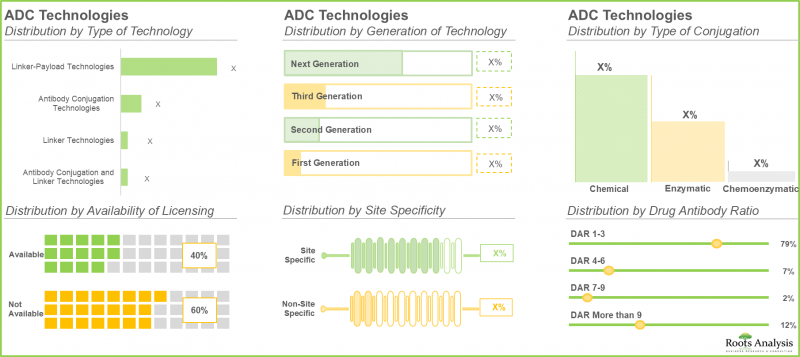
- 해당 기간 중 이 분야의 특허 활동은 꾸준히 증가하고 있으며, 특허의 대부분(약 50%)이 북미 지역에서 출원 또는 등록되었습니다.
- 최근 수년간 제휴 활동이 꾸준히 증가하고 있으며, 이 분야에서 라이선스 계약이 가장 두드러진 제휴 모델로 부상하고 있습니다.
- 기술 제공 기업의 50% 이상이 자사 기술 라이센싱을 위해 여러 제휴 계약을 체결하고 있으며, 이는 링커, 페이로드, 부위별 기술을 포함한 특수 ADC 플랫폼에 대한 높은 수요를 반영하고 있습니다.
- 장기적으로는 화학적 결합법을 이용한 기술이 전체 시장을 주도할 것으로 예상되며, 특히 아시아태평양이 가장 빠르게 성장하는 지역이 될 것으로 예상됩니다.
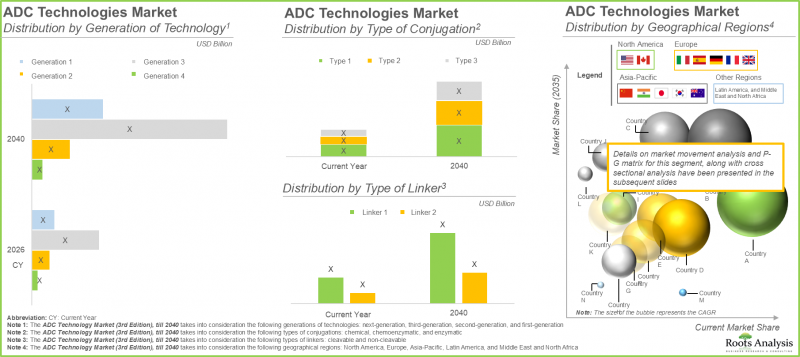
- 북미 ADC 기술 시장은 2040년까지 가장 큰 점유율을 차지할 것으로 예상됩니다. 또한 기술의 대부분은 차세대 기술입니다.
- 만성질환 및 유전성 질환의 유병률이 증가함에 따라 첨단 ADC 기술에 대한 수요가 크게 증가하고 있으며, 이에 따라 ADC 기술의 시장 기회도 확대되고 있습니다.
ADC 기술 시장
시장 규모 및 기회 분석은 다음 매개 변수를 기반으로 세분화됩니다. :
기술 세대별
- 차세대
- 3세대
- 2세대
- 1세대
결합 방식별
- 화학적
- 화학적 효소적
- 효소법
링커 유형별
- 절단 가능
- 절단 불가
지역별
- 북미
- 북미
- 아시아태평양
- 라틴아메리카
- 중동 및 북아프리카
ADC 기술 시장 : 주요 부문
어떤 유형의 링커가 가장 큰 시장 점유율을 차지하고 있는가?
올해 ADC 기술 시장에서 가장 큰 점유율을 차지할 것으로 예상되는 부문은 절단형 링커 부문입니다. 이는 세포내 트리거를 통해 표적 세포 내에서 선택적 페이로드 방출을 가능하게 하고, 전신적 안정성과 종양 부위에서의 효율적인 약물 활성화 사이의 균형을 맞출 수 있는 능력에 의해 지원됩니다. 반면, 비절단형 링커 부문은 예측 기간 중 더 높은 CAGR을 기록할 것으로 예상됩니다.
시장에서 가장 큰 점유율을 차지하는 결합 방식은 무엇인가?
현재 시장 분석에 따르면 확장성, 비용 효율성, 승인된 치료법에서 입증된 임상적 성과로 인해 올해 화학적 결합법이 ADC 기술 시장을 독점할 것으로 예상됩니다. 이 방법은 신뢰할 수 있는 약물상호작용비(DAR)를 가진 ADC를 일관성 있게 제조할 수 있습니다. 또한 화학적 효소 결합 기술은 정확성과 제어성 향상 가능성에 힘입어 예측 기간 중 높은 CAGR을 기록할 것으로 예상됩니다.
ADC 기술 시장에서 가장 큰 점유율을 차지하는 기술은 어떤 세대 기술일까요?
3세대 ADC 기술 부문은 올해 가장 큰 시장 점유율을 차지할 것으로 예상되며, 이러한 추세는 당분간 지속될 것으로 보입니다. 이러한 우위는 부위 특이적 결합과 토포이소머라제 I 억제제를 포함한 고활성 페이로드의 통합과 같은 기술적 진보에 기인합니다. 이는 유효성을 극대화하고 표적 외 독성을 최소화하여 치료 지수를 향상시킵니다. 또한 엔하투(성분명: 트라스투주맙 데렉스테칸)와 트로델비(성분명: 사시투주맙 고비테칸)와 같은 치료제의 임상 성과와 규제 당국의 승인은 이해관계자들의 신뢰를 높이고 시장 보급을 가속화하고 있습니다.
북미: 최대 점유율 확보, 시장 선도
북미는 올해 가장 큰 점유율을 차지하며 ADC 기술 시장을 독점할 것으로 예상됩니다. 한편, 아시아태평양은 강력하고 진화하는 ADC 생태계, 규제 당국의 승인 증가, 활발한 R&D 활동, 암 환자 수 증가에 힘입어 2040년까지 가장 빠른 성장세를 보일 것으로 예상됩니다.
ADC 기술 시장 주요 기업 사례
- Ajinomoto Bio-Pharma Services
- Alteogen
- Antikor Biopharma
- Catalent Biologics
- Debiopharm
- Heidelberg Pharma
- Iksuda Therapeutics
- LigaChem Biosciences
- Mersana Therapeutics
- NBE Therapeutics
- Sutro Biopharma
- Synaffix
ADC 기술 시장 : 조사 범위
- 시장 규모 및 기회 분석: 이 보고서는 의료기기 수탁제조 시장에 대한 상세한 분석을 통해 [A] 기술 세대, [B] 결합 유형, [C] 링커 유형, [D] 지역과 같은 주요 시장 부문에 초점을 맞추고 있습니다.
- ADC 기술 시장 현황: ADC 기술 시장 전체에 대한 상세한 평가와 함께 [A] 기업 개요, [B] 기술 유형, [C] 라이선스 여부, [D] 기술 세대, [E] 부위 특이성, [F] 결합 방식, [G] 약물 항체 비율, [H] 적합 링커, [I] 결합 화학, [J] 결합 부위, [K] 링커 유형을 분석. 링커 유형.
- 기술 경쟁 분석: 각 제공업체의 본사 소재지를 기준으로 [A] 포트폴리오의 강점, [B] 기술경쟁력, [C] 제휴 건수 등 다양한 관련 파라미터를 기준으로 분류한 ADC 기술에 대한 상세한 기술 경쟁 분석.
- 기업 개요: [A] 설립연도, [B] 본사 소재지, [C] 제품 포트폴리오, [D] 최근 동향, [E] 정보에 입각한 미래 전망 등 여러 매개변수를 기반으로 ADC 기술 제공에 종사하는 주요 기업의 상세한 프로파일을 제공합니다.
- 특허 분석: [A] 특허 유형, [B] 공개 연도, [C] 출원 연도, [D] 특허권 부여 수 및 특허 출원 수, [E] 특허 관할권, [F] CPC 기호, [G] 특허 경과 기간, [H] 출원인 유형, [I] 개별 특허권자(지적재산권 포트폴리오의 규모 측면에서) 등의 중요한 매개변수를 기반으로 합니다.
- 제휴 및 협업: 이 분야의 다양한 이해관계자 간 체결된 제휴에 대한 상세한 분석으로, [A] 제휴 연도, [B] 제휴 유형, [C] 제휴 상대 유형, [D] 가장 널리 보급된 기술, [E] 가장 활발한 진입 기업, [F] 제휴 활동의 지역별 분석 등 다양한 매개변수를 기반으로 한 상세한 분석이 포함됩니다. 기반한 상세한 분석이 포함되어 있습니다.
- 비즈니스 모델 분석: 이 분야에 종사하는 다양한 기술 제공업체들이 채택하고 있는 비즈니스 모델에 대한 인사이트 분석입니다. 여기에는 [A] 제휴 연도, [B] 제휴 목적, [C] 채택된 비즈니스 모델 유형, [D] 투자 유형(선불 및 마일스톤 지급), [E] 투자 금액, [F] 가장 활발하게 참여한 기업 등의 매개변수에 대한 정보가 포함됩니다.
- 제휴 후보 기업 분석: 가까운 시일 내에 ADC 기술 제공업체와 제휴할 가능성이 높은 여러 항체약물접합체(ADC) 치료제 개발 기업에 대해 [A] 개발 기업 점수(설립 연도 및 기업 규모 기준), [B] 포트폴리오 점수(링커 유형 및 항체 구조 기준), [C] 파이프라인 점수(약물 개발 단계 및 전임상 분자 수 기준), [D] 치료 영역 파이프라인 점수(개발 단계 및 전임상 단계의 분자 수 기준), [D] 치료 영역.
- 브랜드 포지셔닝 분석: 주요 항체 결합 기술 제공업체에 대한 상세한 브랜드 포지셔닝 분석입니다. [A] 기술 제공자의 경험, B] 제공 기술 수, C] 제품의 다양성, D] 특허 수, E] 제휴 건수 등 여러 측면을 고려하여 각 회사의 고유 기술에 대한 현재 인식을 파악합니다.
- 사례연구: [A] 개발 단계, [B] 대상 질환, [C] 치료 영역, [D] 치료 라인, [E] 투여 빈도, [F] 치료법 유형, [G] 표적 항원, [H] 항체 아이소타입, [I] 페이로드/세포독성 물질/탄두, [J] 페이로드 유형, [K] 링커 유형, [L] 링커 유형(절단 가능/비절단 가능) 등 다양한 매개변수를 기반으로 ADC 치료제 시장의 전반적인 현황에 대한 상세한 사례 연구입니다.
- 시장 영향 분석: 시장 성장에 영향을 미칠 수 있는 요인에 대한 상세한 분석입니다. 또한 이 분야의 주요 촉진요인, 잠재적 제약, 새로운 기회 및 기존 과제에 대한 식별 및 분석도 포함되어 있습니다.
목차
제1장 서문
제2장 조사 방법
제3장 시장 역학
제4장 거시경제 지표
제5장 개요
제6장 서론
제7장 시장 구도 : ADC 결합 및 링커 기술
제8장 기술 경쟁력 분석
제9장 기업 개요
제10장 특허 분석
제11장 파트너십과 협력 관계
제12장 비즈니스 모델 분석
제13장 유망한 파트너의 분석
제14장 브랜드 포지셔닝 분석
제15장 사례 연구 : 항체약물접합체
제16장 시장 영향 분석
제17장 세계의 ADC 기술 시장
제18장 ADC 기술 시장(기술 세대별)
제19장 ADC 기술 시장(결합 유형별)
제20장 ADC 기술 시장(링커 유형별)
제21장 ADC 기술 시장(지역별)
제22장 결론
제23장 경영 임원의 인사이트
제24장 부록 1 : 표형식 데이터
제25장 부록 2 : 기업 및 조직 리스트
KSA 26.05.20ADC Technology Market: Overview
As per Roots Analysis, the antibody drug conjugate (ADC) technology market is estimated to grow from USD 3.44 billion in the current year to USD 9.51 billion by 2040, at a CAGR of 7.5% during the forecast period, till 2040.
ADC Technology Market: Growth and Trends
Antibody-drug conjugates (ADCs) have emerged as a compelling alternative to conventional anticancer therapies. These advanced biotherapeutics combine a cytotoxic payload with a monoclonal antibody via a linker; however, their structural complexity presents challenges in achieving optimal tolerability and efficacy, necessitating advanced conjugation technologies that enable controlled assembly while maintaining favorable safety profiles.
ADC conjugation approaches typically involve antibody engineering to facilitate precise attachment of linker-drug payloads, while linker technologies focus on developing stable moieties that ensure efficient and targeted payload delivery. Continuous optimization of these elements enables the production of homogeneous ADCs with high drug-to-antibody ratios (DARs), resulting in improved stability and enhanced therapeutic performance within the tumor microenvironment.
Furthermore, homogeneous ADCs incorporating advanced linker chemistries demonstrate reduced immunogenicity and improved target specificity, enabling precise delivery with minimal off-target effects. Driven by these advantages, both emerging companies and established players are actively investing in innovative conjugation platforms, more potent payloads, and next-generation linker technologies.
In addition, ADC developers are increasingly forming strategic partnerships with specialized technology providers to access advanced capabilities and domain expertise. Supported by the rising demand for targeted oncology therapies, the ADC linker and conjugation technologies market is poised for significant growth in the coming years.
Growth Drivers: Strategic Enablers of Market Expansion
The ADC technology market is propelled by surging global cancer prevalence, an aging and increasingly obese population, and an intensifying demand for precision oncology therapies that deliver potent payloads selectively to tumor cells while sparing healthy tissue. Advancements in site-specific conjugation methods such as engineered cysteines, enzymatic transglutaminase approaches, and chemoenzymatic platforms are enabling homogeneous drug-to-antibody ratios (DARs) that dramatically enhance pharmacokinetic profiles, therapeutic windows, and overall safety compared to traditional stochastic lysine or cysteine linkages. Concurrently, next-generation linker chemistries, dominated by cleavable systems facilitate precise intracellular payload release, minimizing systemic toxicity and off-target effects; these are amplified by heavy R&D investments, prolific clinical pipelines, strategic pharma-biotech collaborations, CDMO partnerships for scalable manufacturing, and regulatory accelerations that together foster innovation in stable, tumor-activated designs and propel market growth.
Market Challenges: Critical Barriers Impeding Progress
Batch-to-batch variability remains a key challenge in ADC manufacturing due to the use of multiple conjugation chemistries, which often yield heterogeneous mixtures comprising unconjugated antibodies, free toxins, and ADC products. This heterogeneity leads to variability in drug-to-antibody ratios (DARs) and conjugation sites, resulting in inconsistencies across batches. In addition, off-target toxicity continues to pose significant safety concerns, as unintended release of cytotoxic payloads can impact healthy tissues, including the liver, bone marrow, and nervous system. Despite advancements in antibody and linker technologies, maintaining an optimal balance between safety and therapeutic efficacy remains complex. These challenges can adversely affect clinical outcomes and hinder development timelines, underscoring the need for more precise and controlled conjugation approaches.
ADC Technology Market: Key Insights
The report delves into the current state of the ADC technology market and identifies potential growth opportunities within industry. Some key findings from the report include:
- At present, over 130 antibody drug conjugate technologies are being offered by various companies across the globe; of these, over 60% of the technologies use chemical conditions for conjugation of antibody fragment.
- The patent activity in the domain has increased at a steady pace during the given period; majority (~50%) of the patents were filed / granted in North America.
- A steady growth in the partnership activity has been observed in recent years; licensing agreements emerged as the most prominent type of partnership model in this domain.
- More than 50% of the technology providers have signed multiple partnerships to out-license their technologies, reflecting high demand for specialized ADC platforms, including linkers, payloads, and site-specific technologies.
- In the long term, technologies utilizing chemical conjugation methods are likely to drive the overall market; notably, Asia-pacific is anticipated to be the fastest growing region.
- The ADC technologies market in North America is expected to capture maximum share by 2040; further, majority of the technologies are next-generation technologies.
- Given the increasing prevalence of chronic as well as genetic diseases, the need for advanced ADC technologies has increased considerably, thereby increasing the market opportunity for these technologies.
ADC Technology Market
The market sizing and opportunity analysis has been segmented across the following parameters:
By Generation of Technology
- Next-Generation
- Third-Generation
- Second-Generation
- First-Generation
By Type of Conjugation
- Chemical
- Chemoenzymatic
- Enzymatic
By Type of Linker
- Cleavable
- Non-cleavable
By Geographical Regions
- North America
- Europe
- Asia-Pacific
- Latin America
- Middle East and North Africa
ADC Technology Market: Key Segments
Which Type of Linker Accounts for the Largest Share of Market?
In the current year, the cleavable linker segment is expected to account for the largest share of the ADC technology market, driven by its ability to enable selective payload release within target cells through intracellular triggers, thereby balancing systemic stability with efficient drug activation at tumor sites. In contrast, the non-cleavable linker segment is projected to register a higher CAGR over the forecast period.
Which Type of Conjugation Holds the Highest Share in the Market?
Based on current market analysis, chemical conjugation is anticipated to dominate the ADC technology market in the current year, owing to its established scalability, cost-effectiveness, and proven clinical performance in approved therapies. This approach facilitates the consistent production of ADCs with reliable drug-to-antibody ratios (DARs). Additionally, chemoenzymatic conjugation technologies are expected to witness a higher CAGR during the forecast period, supported by their potential for enhanced precision and control.
Which Generation of Technology Accounts for the Largest Share in the ADC Technology Market?
The third-generation ADC technologies segment is projected to hold the largest market share in the current year, a trend expected to persist in the near term. This dominance is attributed to advancements such as site-specific conjugation and the incorporation of highly potent payloads, including topoisomerase I inhibitors, which offer improved therapeutic indices by maximizing efficacy while minimizing off-target toxicity. Furthermore, successful clinical outcomes and regulatory approvals of therapies such as Enhertu (trastuzumab deruxtecan) and Trodelvy (sacituzumab govitecan) have strengthened stakeholder confidence and accelerated market adoption.
North America: Dominating the Market by Securing Highest Share
North America is projected to dominate the ADC technology market, capturing the largest share in the current year. Meanwhile, the Asia-Pacific region is expected to exhibit the fastest growth through 2040, driven by a strong and evolving ADC ecosystem, increasing regulatory approvals, robust research and development activity, and a rising oncology burden.
Example Players in ADC Technology Market
- Ajinomoto Bio-Pharma Services
- Alteogen
- Antikor Biopharma
- Catalent Biologics
- Debiopharm
- Heidelberg Pharma
- Iksuda Therapeutics
- LigaChem Biosciences
- Mersana Therapeutics
- NBE Therapeutics
- Sutro Biopharma
- Synaffix
ADC Technology Market: Research Coverage
- Market Sizing and Opportunity Analysis: The report features an in-depth analysis of the medical device contract manufacturing market, focusing on key market segments, including [A] generation of technology [B] type of conjugation, [C] type of linker, and [D] geographical regions.
- ADC Technology Market Landscape: A detailed assessment of the overall ADC technology market landscape, along with information on several relevant parameters, such as [A] company overview, [B] type of technology, [C] availability of licensing, [D] generation of technology, [E] site specificity, [F] type of conjugation, [G] drug antibody ratio, [H] compatible linker, [I] conjugation chemistry, [J] conjugation site, and [K] type of linker.
- Technology Competitiveness Analysis: An in-depth technology competitiveness analysis of ADC technologies segregated based on their location of headquarters of their respective providers based on various relevant parameters, such as [A] portfolio strength, [B] technology competitiveness, as well as [C] partnership activity in terms of number of partnerships.
- Company Profiles: In-depth profiles of leading players engaged in engaged in offering ADC technologies based on several parameters such as [A] year of establishment, [B] location of headquarters, [C] product portfolio, [D] recent developments and [E] an informed future outlook.
- Patent Analysis: A detailed analysis of the patents that have been filed / granted for ADC technologies, based on important parameters such as, [A] type of patent, [B] publication year, [C] application year, [D] number of granted patents and patent applications, [E] patent jurisdiction, [F] CPC symbols, [G] patent age, [H] type of applicant, and [I] individual patent assignees (in terms of size of intellectual property portfolio).
- Partnerships and Collaborations: An in-depth analysis of the partnerships inked between various stakeholders in this domain, featuring a detailed set of analyses based on various parameters, such as [A] year of partnership, [B] type of partnership, [C] type of partner, [D] most popular technologies, [E] most active players and [F] regional analysis of the partnership activity.
- Business Model Analysis: An insightful analysis on business models adopted by various technology providers engaged in this domain along with the information on parameters, such as [A] year of partnership, [B] purpose of partnership, [C] type of business model adopted, [D] type of investment (upfront payments and milestone payments), [E] amount of investment and [F] most active players.
- Likely Partners Analysis: An in-depth analysis of several antibody drug conjugate therapeutics developers that are likely to partner with ADC technology providers in the near future, based on several relevant parameters, such as [A] developer score (based on year of establishment and company size), [B] portfolio score (based on type of linker and antibody structure), [C] pipeline score (based on stage of development of a drug and number of pre-clinical molecules) and [D] therapeutic area.
- Brand Positioning Analysis: A detailed brand positioning analysis of prominent antibody conjugation technology providers, highlighting the current perceptions regarding their proprietary technologies by taking into consideration several relevant aspects, such as [A] experience of the technology provider, [B] number of technologies offered, [C] product diversity, [D] number of patents and [E] number of partnerships.
- Case Study: A detailed case study on overall landscape of the ADC therapeutics market, based on a number of parameters, such as [A] stage of development, [B] target disease indication, [C] therapeutic area, [D] line of treatment, [E] dosing frequency, [F] type of therapy, [G] target antigen, [H] antibody isotype, [I] payload / cytotoxin / warhead, [J] payload type, [K] type of linker, [L] type of linker (cleavable / non-cleavable).
- Market Impact Analysis: An in-depth analysis of the factors that can impact the growth of the market. It also features identification and analysis of key drivers, potential restraints, emerging opportunities, and existing challenges in this domain.
Key Questions Answered in this Report
- Which are the leading companies in the ADC technology market?
- Which region dominates the ADC technology market?
- What are the key trends observed in the ADC technology market?
- What factors are likely to influence the evolution of this market?
- What are the primary challenges faced by ADC technology providers?
- What is the current and future market size?
- What is the CAGR of this market?
- How is the current and future market opportunity likely to be distributed across key market segments?
Reasons to Buy this Report
- The report provides a comprehensive market analysis, offering detailed revenue projections of the overall market and its specific sub-segments. This information is valuable to both established market leaders and emerging entrants.
- The report offers stakeholders a comprehensive overview of the market, including key drivers, barriers, opportunities, and challenges. This information empowers stakeholders to stay abreast of market trends and make data-driven decisions to capitalize on growth prospects.
- The report can aid businesses in identifying future opportunities in any sector. It also helps in understanding if those opportunities are worth pursuing.
- The report helps in identifying customer demand by understanding the needs, preferences, and behavior of the target audience in order to tailor products or services effectively.
- The report equips new entrants with requisite information regarding a particular market to help them build successful business strategies.
- The report allows for more effective communication with the audience and in building strong business relations.
Additional Benefits
- Complimentary Excel Data Packs for all Analytical Modules in the Report
- 15% Free Content Customization
- Detailed Report Walkthrough Session with Research Team
- Free Updated report if the report is 6-12 months old or older
TABLE OF CONTENTS
1. PREFACE
- 1.1. Introduction
- 1.2. Market Share Insights
- 1.3. Key Market Insights
- 1.4. Report Coverage
- 1.5. Key Questions Answered
- 1.6. Chapter Outlines
2. RESEARCH METHODOLOGY
- 2.1. Chapter Overview
- 2.2. Research Assumptions
- 2.2.1. Market Landscape and Market Trends
- 2.2.2. Market Forecast and Opportunity Analysis
- 2.2.3. Comparative Analysis
- 2.3. Database Building
- 2.3.1. Data Collection
- 2.3.2. Data Validation
- 2.3.3. Data Analysis
- 2.4. Project Methodology
- 2.4.1. Secondary Research
- 2.4.1.1. Annual Reports
- 2.4.1.2. Academic Research Papers
- 2.4.1.3. Company Websites
- 2.4.1.4. Investor Presentations
- 2.4.1.5. Regulatory Filings
- 2.4.1.6. White Papers
- 2.4.1.7. Industry Publications
- 2.4.1.8. Conferences and Seminars
- 2.4.1.9. Government Portals
- 2.4.1.10. Media and Press Releases
- 2.4.1.11. Newsletters
- 2.4.1.12. Industry Databases
- 2.4.1.13. Roots Proprietary Databases
- 2.4.1.14. Paid Databases and Sources
- 2.4.1.15. Social Media Portals
- 2.4.1.16. Other Secondary Sources
- 2.4.2. Primary Research
- 2.4.2.1. Types of Primary Research
- 2.4.2.1.1. Qualitative Research
- 2.4.2.1.2. Quantitative Research
- 2.4.2.1.3. Hybrid Approach
- 2.4.2.2. Advantages of Primary Research
- 2.4.2.3. Techniques for Primary Research
- 2.4.2.3.1. Interviews
- 2.4.2.3.2. Surveys
- 2.4.2.3.3. Focus Groups
- 2.4.2.3.4. Observational Research
- 2.4.2.3.5. Social Media Interactions
- 2.4.2.4. Key Opinion Leaders Considered in Primary Research
- 2.4.2.4.1. Company Executives (CXOs)
- 2.4.2.4.2. Board of Directors
- 2.4.2.4.3. Company Presidents and Vice Presidents
- 2.4.2.4.4. Research and Development Heads
- 2.4.2.4.5. Technical Experts
- 2.4.2.4.6. Subject Matter Experts
- 2.4.2.4.7. Scientists
- 2.4.2.4.8. Doctors and Other Healthcare Providers
- 2.4.2.5. Ethics and Integrity
- 2.4.2.5.1. Research Ethics
- 2.4.2.5.2. Data Integrity
- 2.4.2.1. Types of Primary Research
- 2.4.3. Analytical Tools and Databases
- 2.4.1. Secondary Research
- 2.5. Robust Quality Control
3. MARKET DYNAMICS
- 3.1. Chapter Overview
- 3.2. Forecast Methodology
- 3.2.1. Top-down Approach
- 3.2.2. Bottom-up Approach
- 3.2.3. Hybrid Approach
- 3.3. Market Assessment Framework
- 3.3.1. Total Addressable Market (TAM)
- 3.3.2. Serviceable Addressable Market (SAM)
- 3.3.3. Serviceable Obtainable Market (SOM)
- 3.3.4. Currently Acquired Market (CAM)
- 3.4. Forecasting Tools and Techniques
- 3.4.1. Qualitative Forecasting
- 3.4.2. Correlation
- 3.4.3. Regression
- 3.4.4. Extrapolation
- 3.4.5. Convergence
- 3.4.6. Sensitivity Analysis
- 3.4.7. Scenario Planning
- 3.4.8. Data Visualization
- 3.4.9. Time Series Analysis
- 3.4.10. Forecast Error Analysis
- 3.5. Key Considerations
- 3.5.1. Demographics
- 3.5.2. Government Regulations
- 3.5.3. Reimbursement Scenarios
- 3.5.4. Market Access
- 3.5.5. Supply Chain
- 3.5.6. Industry Consolidation
- 3.5.7. Pandemic / Unforeseen Disruptions Impact
- 3.6. Limitations
4. MACRO-ECONOMIC INDICATORS
- 4.1. Chapter Overview
- 4.2. Market Dynamics
- 4.2.1. Time Period
- 4.2.1.1. Historical Trends
- 4.2.1.2. Current and Forecasted Estimates
- 4.2.2. Currency Coverage
- 4.2.2.1. Major Currencies Affecting the Market
- 4.2.2.2. Factors Affecting Currency Fluctuations on the Industry
- 4.2.2.3. Impact of Currency Fluctuations on the Industry
- 4.2.3. Foreign Currency Exchange Rate
- 4.2.3.1. Impact of Foreign Exchange Rate Volatility on the Market
- 4.2.3.2. Strategies for Mitigating Foreign Exchange Risk
- 4.2.4. Recession
- 4.2.4.1. Assessment of Current Economic Conditions and Potential Impact on the Market
- 4.2.4.2. Historical Analysis of Past Recessions and Lessons Learnt
- 4.2.5. Inflation
- 4.2.5.1. Measurement and Analysis of Inflationary Pressures in the Economy
- 4.2.5.2. Potential Impact of Inflation on the Market Evolution
- 4.2.6. Interest Rates
- 4.2.6.1. Interest Rates and Their Impact on the Market
- 4.2.6.2. Strategies for Managing Interest Rate Risk
- 4.2.7. Commodity Flow Analysis
- 4.2.7.1. Type of Commodity
- 4.2.7.2. Origins and Destinations
- 4.2.7.3. Values and Weights
- 4.2.7.4. Modes of Transportation
- 4.2.8. Global Trade Dynamics
- 4.2.8.1. Import Scenario
- 4.2.8.2. Export Scenario
- 4.2.8.3. Trade Policies
- 4.2.8.4. Strategies for Mitigating the Risks Associated with Trade Barriers
- 4.2.8.5. Impact of Trade Barriers on the Market
- 4.2.9. War Impact Analysis
- 4.2.9.1. Russian-Ukraine War
- 4.2.9.2. Israel-Hamas War
- 4.2.10. COVID Impact / Related Factors
- 4.2.10.1. Global Economic Impact
- 4.2.10.2. Industry-specific Impact
- 4.2.10.3. Government Response and Stimulus Measures
- 4.2.10.4. Future Outlook and Adaptation Strategies
- 4.2.11. Other Indicators
- 4.2.11.1. Fiscal Policy
- 4.2.11.2. Consumer Spending
- 4.2.11.3. Gross Domestic Product
- 4.2.11.4. Employment
- 4.2.11.5. Taxes
- 4.2.11.6. Stock Market Performance
- 4.2.11.7. Cross Border Dynamics
- 4.2.1. Time Period
- 4.3. Conclusion
5. EXECUTIVE SUMMARY
6. INTRODUCTION
- 6.1. Chapter Overview
- 6.2. Antibody Drug Conjugates
- 6.2.1. Components of an ADC
- 6.2.1.1. Antibody
- 6.2.1.2. Cytotoxin
- 6.2.1.3. Linker
- 6.2.1. Components of an ADC
- 6.3. Advantages of ADCs over Conventional Therapeutics
- 6.4. ADC Linker Technologies
- 6.4.1. Non-cleavable Linkers
- 6.4.2. Cleavable Linkers
- 6.5. ADC Conjugation Technologies
- 6.5.1. Chemical Conjugation
- 6.5.2. Enzymatic Conjugation
- 6.6. Future Perspective
7. MARKET LANDSCAPE: ADC CONJUGATION AND LINKER TECHNOLOGIES
- 7.1. Chapter Overview
- 7.2. ADC Conjugation and Linker Technologies: Overall Market Landscape
- 7.2.1. Analysis by Type of Technology
- 7.2.2. Analysis by Availability of Licensing
- 7.2.3. Analysis by Generation of Technology
- 7.3.4. Analysis by Type of Conjugation
- 7.3.5. Analysis by Site Specificity
- 7.3.6. Analysis by Drug Antibody Ratio (DAR)
- 7.3.7. Analysis by Conjugation Chemistry
- 7.3.8. Analysis by Conjugation Site
- 7.3.9. Analysis by Type of Linker
- 7.3. ADC Conjugation and Linker Technology Providers
- 7.3.1. Analysis by Year of Establishment
- 7.3.2. Analysis by Company Size
- 7.3.3. Analysis by Location of Headquarters
- 7.3.4. Analysis by Year of Establishment and Location of Headquarters
8. TECHNOLOGY COMPETITIVENESS ANALYSIS
- 8.1. Chapter Overview
- 8.2. Assumptions and Key Parameters
- 8.3. Methodology
- 8.4. ADC Technologies: Technology Competitiveness Analysis
- 8.4.1. Technologies Offered by Providers based in North America (Peer Group I)
- 8.4.2. Technologies Offered by Providers based in Europe (Peer Group II)
- 8.4.3. Technologies Offered by Providers based in Asia-Pacific (Peer Group III)
9. COMPANY PROFILES
- 9.1. Chapter Overview
- 9.2. ADC Technology Developers Headquartered in North America
- 9.2.1. Ajinomoto Bio-Pharma Services
- 9.2.1.2. Company Overview
- 9.2.1.3. Financial Information
- 9.2.1.4. Technology Portfolio
- 9.2.1.5. Recent Developments and Future Outlook
- 9.2.2. Catalent Biologics
- 9.2.2.1. Company Overview
- 9.2.2.2. Financial Information
- 9.2.2.3. Technology Portfolio
- 9.2.2.4. Recent Developments and Future Outlook
- 9.2.3. Mersana Therapeutics
- 9.2.3.1. Company Overview
- 9.2.3.2. Financial Information
- 9.2.3.3. Technology Portfolio
- 9.2.3.4. Recent Developments and Future Outlook
- 9.2.4. Sutro Biopharma
- 9.2.4.1. Company Overview
- 9.2.4.2. Financial Information
- 9.2.4.3. Technology Portfolio
- 9.2.4.4. Recent Developments and Future Outlook
- 9.2.1. Ajinomoto Bio-Pharma Services
- 9.3. ADC Technology Developers Headquartered in Europe
- 9.3.1. Antikor Biopharma
- 9.3.1.1. Company Overview
- 9.3.1.2. Technology Portfolio
- 9.3.1.3. Recent Developments and Future Outlook
- 9.3.2. Debiopharm
- 9.3.2.1. Company Overview
- 9.3.2.2. Technology Portfolio
- 9.3.2.3. Recent Developments and Future Outlook
- 9.3.3. Heidelberg Pharma
- 9.3.3.1. Company Overview
- 9.3.3.2. Financial Information
- 9.3.3.3. Technology Portfolio
- 9.3.3.4. Recent Developments and Future Outlook
- 9.3.4. Iksuda Therapeutics
- 9.3.4.1. Company Overview
- 9.3.4.2. Technology Portfolio
- 9.3.4.3. Recent Developments and Future Outlook
- 9.3.5. NBE-Therapeutics
- 9.3.5.1. Company Overview
- 9.3.5.2. Financial Information
- 9.3.5.3. Technology Portfolio
- 9.3.5.4. Recent Developments and Future Outlook
- 9.3.6. Synaffix (a Lonza Company)
- 9.3.6.1. Company Overview
- 9.3.6.2. Financial Information
- 9.3.6.3. Technology Portfolio
- 9.3.6.4. Recent Developments and Future Outlook
- 9.3.1. Antikor Biopharma
- 9.4. ADC Technology Developers Headquartered in Asia-Pacific and Rest of the World
- 9.4.1. Alteogen
- 9.4.1.1. Company Overview
- 9.4.1.2. Technology Portfolio
- 9.4.1.3. Recent Developments and Future Outlook
- 9.5.2. LigaChem Biosciences
- 9.5.2.1. Company Overview
- 9.5.2.2. Technology Portfolio
- 9.5.2.3. Recent Developments and Future outlook
- 9.4.1. Alteogen
10. PATENT ANALYSIS
- 10.1. Chapter Overview
- 10.2. Scope and Methodology
- 10.3. ADC Conjugation and Linker Technologies: Patent Analysis
- 10.3.1. Analysis by Patent Publication Year
- 10.3.2. Analysis by Type of Patent and Publication Year
- 10.3.3. Analysis by Patent Application Year
- 10.3.4. Analysis by Patent Jurisdiction
- 10.3.5. Analysis by CPC Symbols
- 10.3.6. Analysis by Type of Applicant
- 10.3.7. Leading Industry Players: Analysis by Number of Patents
- 10.3.8. Leading Non-Industry Players: Analysis by Number of Patents
- 10.4. Patent Benchmarking Analysis
- 10.4.1. Analysis by Patent Characteristics
- 10.5. Patent Valuation
- 10.6. Leading Patents by Number of Citations
11. PARTNERSHIPS AND COLLABORATIONS
- 11.1. Chapter Overview
- 11.2. Partnership Models
- 11.3. ADC Linker and Conjugation Technologies: Partnerships and Collaborations
- 11.3.1. Analysis by Year of Partnership
- 11.3.2. Analysis by Type of Partnership
- 11.3.3. Analysis by Year of Partnership and Type of Partnership
- 11.3.4. Analysis by Purpose of Partnership
- 11.3.5. Analysis by Type of Partner
- 11.3.6. Most Active Players: Analysis by Number of Partnerships
- 11.3.7. Most Popular Technologies: Analysis by Number of Partnerships
- 11.4. Analysis by Geography
- 11.4.1. Local and International Agreements
- 11.4.12. Intercontinental and Intracontinental Agreements
12. BUSINESS MODEL ANALYSIS
- 12.1. Chapter Overview
- 12.2 Business Models
- 12.3. ADC Technology Providers: Business Model Analysis
- 12.3.1. Analysis by Purpose of Partnership
- 12.3.2. Analysis by Year of Partnership and Purpose of Partnership
- 12.3.3. Analysis by Type of Business Model Adopted
- 12.3.4. Analysis by Deal Value
- 12.3.5. Analysis by Type of Business Model Adopted and Deal Value
- 12.4. Most Active Players: Analysis by Number of Partnerships
- 12.4.1. Lonza
- 12.4.1.1. Analysis by Purpose of Partnership
- 12.4.1.2. Analysis of Year of Partnership and Business Model Adopted
- 12.4.2. LigaChem Biosciences
- 12.4.2.1. Analysis by Purpose of Partnership
- 12.4.2.2. Analysis by Year of Partnership and Business Model Adopted
- 12.4.3. Debiopharm
- 12.4.3.1. Analysis by Purpose of Partnership
- 12.4.3.2. Analysis by Year of Partnership and Business Model Adopted
- 12.4.4. Duality Biologics
- 12.4.4.1. Analysis by Year of Partnership and Business Model Adopted
- 12.4.5. IntoCell
- 12.4.5.1. Analysis by Purpose of Partnership
- 12.4.5.2. Analysis by Year of Partnership and Business Model Adopted
- 12.4.1. Lonza
- 12.5. Concluding Remarks
13. LIKELY PARTNER ANALYSIS
- 13.1. Chapter Overview
- 13.2. Assumptions and Key Parameters
- 13.3. Scope and Methodology
- 13.4. Potential Strategic Partners in North America
- 13.4.1. Most Likely Partners
- 13.4.2. Likely Partners
- 13.4.3. Less Likely Partners
- 13.5. Potential Strategic Partners in Europe
- 13.5.1. Most Likely Partners
- 13.5.2. Likely Partners
- 13.5.3. Less Likely Partners
- 13.6. Potential Strategic Partners in Asia-Pacific and Rest of the World
- 13.6.1. Most Likely Partners
- 13.6.2. Likely Partners
- 13.6.3. Less Likely Partners
14. BRAND POSITIONING ANALYSIS
- 14.1. Chapter Overview
- 14.2 Scope and Methodology
- 14.3. Key Parameters
- 14.4. Brand Positioning Matrix: ADC Technology Providers
- 14.4.1. Brand Positioning Matrix: Byondis
- 14.4.2. Brand Positioning Matrix: Catalent Biologics
- 14.4.3. Brand Positioning Matrix: Creative Biolabs
- 14.4.4. Brand Positioning Matrix: Duality Biologics
- 14.4.5. Brand Positioning Matrix: GeneQuantum Healthcare
- 14.4.6. Brand Positioning Matrix: Mersana Therapeutics
- 14.4.7. Brand Positioning Matrix: OBI Pharma
- 14.4.8. Brand Positioning Matrix: Synaffix
- 14.4.9. Brand Positioning Matrix: Tubulis
- 14.4.10. Brand Positioning Matrix: Zymeworks
15. CASE STUDY: ANTIBODY DRUG CONJUGATES
- 15.1. Chapter Overview
- 15.2. Antibody-Drug Conjugates: Overall Market Landscape
- 15.2.1. Analysis by Stage of Development
- 15.2.2. Analysis by Target Indication
- 15.2.3. Analysis by Therapeutics Area
- 15.2.4. Analysis by Line of Treatment
- 15.2.5. Analysis by Dosing Frequency
- 15.2.6. Analysis by Type of Therapy
- 15.2.7. Analysis by Target Antigen
- 15.2.8. Analysis by Antibody Isotypes
- 15.2.9. Analysis by Type of Linker (Cleavable / Non-cleavable)
- 15.2.10. Analysis by Payload / Cytotoxin / Warhead
- 15.2.11. Analysis by Type of Payload
- 15.3. Antibody-Drug Conjugate Developers: Overall Landscape
- 15.3.1. Analysis by Year of Establishment
- 15.3.2. Analysis by Company Size
- 15.3.3. Analysis by Location of Headquarters
- 15.3.4. Most Active Player: Analysis by Number of Therapies
16. MARKET IMPACT ANALYSIS
- 16.1. Chapter Overview
- 16.2. Market Drivers
- 16.3. Market Restraints
- 16.4. Market Opportunities
- 16.5. Market Challenges
- 16.6. Conclusion
17. GLOBAL ADC TECHNOLOGY MARKET
- 17.1. Chapter Overview
- 17.2. Key Assumptions and Methodology
- 17.3. Global ADC Technology Market: Historical Trends (since 2025) and Forecasted Estimates (till 2040)
- 17.3.1. Roots Analysis Perspective on Market Growth
- 17.3.2. Scenario Analysis
- 17.3.1.1. Conservative Scenario
- 17.3.1.2. Optimistic Scenario
- 17.4. Key Market Segmentations
18. ADC TECHNOLOGY MARKET, BY GENERATION OF TECHNOLOGY
- 18.1. Chapter Overview
- 18.2. Key Assumptions and Methodology
- 18.3. ADC Technology Market: Distribution by Generation of Technology
- 18.3.1. ADC Technology Market for Next-Generation: Historical Trends (since 2025) and Forecasted Estimates (till 2040)
- 18.3.2. ADC Technology Market for Third-Generation: Historical Trends (since 2025) and Forecasted Estimates (till 2040)
- 18.3.3. ADC Technology Market for Second-Generation: Historical Trends (since 2025) and Forecasted Estimates (till 2040)
- 18.3.4. ADC Technology Market for First-Generation: Historical Trends (since 2025) and Forecasted Estimates (till 2040)
- 18.4. Data Triangulation and Validation
19. ADC TECHNOLOGY MARKET, BY TYPE OF CONJUGATION
- 19.1. Chapter Overview
- 19.2. Key Assumptions and Methodology
- 19.3. ADC Technology Market: Distribution by Type of Conjugation
- 19.3.1. ADC Technology Market for Chemical Conjugation: Historical Trends (since 2025) and Forecasted Estimates (till 2040)
- 19.3.2. ADC Technology Market for Chemoenzymatic Conjugation: Historical Trends (since 2025) and Forecasted Estimates (till 2040)
- 19.3.3. ADC Technology Market for Enzymatic Conjugation: Historical Trends (since 2025) and Forecasted Estimates (till 2040)
- 19.4. Data Triangulation and Validation
20. ADC TECHNOLOGY MARKET, BY TYPE OF LINKER
- 20.1. Chapter Overview
- 20.2. Key Assumptions and Methodology
- 20.3. ADC Technology Market: Distribution by Type of Linker
- 20.3.1. ADC Technology Market for Cleavable Linker: Historical Trends (since 2025) and Forecasted Estimates (till 2040)
- 20.3.2. ADC Technology Market for Non-cleavable Linker: Historical Trends (since 2025) and Forecasted Estimates (till 2040)
- 20.4. Data Triangulation and Validation
21. ADC TECHNOLOGY MARKET, BY GEOGRAPHICAL REGIONS
- 21.1. Chapter Overview
- 21.2. Key Assumptions and Methodology
- 21.3. ADC Technology Market: Distribution by Geographical Regions
- 21.3.1. ADC Technology Market in North America: Historical Trends (since 2025) and Forecasted Estimates (till 2040)
- 21.3.2. ADC Technology Market in Europe: Historical Trends (since 2025) and Forecasted Estimates (till 2040)
- 21.3.3. ADC Technology Market in Asia-Pacific: Historical Trends (since 2025) and Forecasted Estimates (till 2040)
- 21.3.4. ADC Technology Market in Latin America: Historical Trends (since 2025) and Forecasted Estimates (till 2040)
- 21.3.5. ADC Technology Market in Middle East and North Africa: Historical Trends (since 2025) and Forecasted Estimates (till 2040)
- 21.4. Data Triangulation and Validation
- *Detailed information on cross sectional analysis is available in the Excel Data Packs shared along with the report**
22. CONCLUSION
23. EXECUTIVE INSIGHTS
- 23.1. Chapter Overview
- 23.2. Company A
- 23.2.1. Company Snapshot
- 23.2.2. Interview Transcript: * Oncology Business Development and Preclinical Project Leader, R&D Oncology
- 23.3. Company B
- 23.3.1. Company Snapshot
- 23.3.2. Interview Transcript: Associate General Manager
- 2.4. Company C
- 23.4.1. Company Snapshot
- 23.4.2. Interview Transcript: Scientist II
- 23.5. Company D
- 23.5.1. Company Snapshot
- 23.5.2. Interview Transcript: Co-Founder and Chief Scientific Officer
- 23.6. Company E
- 23.6.1. Company Snapshot
- 23.6.2. Interview Transcript: Head of Strategy and Business Development
- 23.7. Company F
- 23.7.1. Company Snapshot
- 23.7.2. Interview Transcript: Board Member
- 23.8. Company G
- 23.8.1. Company Snapshot
- 23.8.2. Interview Transcript: General Manager, Research and Development, Director of ADC Process Development and Tech Transfer
- 23.9. Company H
- 23.9.1. Company Snapshot
- 23.9.2. Interview Transcript: Head of Research and Development
- 23.10. Company I
- 23.10.1. Company Snapshot
- 23.10.2. Interview Transcript: Former Chief Business Officer
- 23.11. Company J
- 23.11.1. Company Snapshot
- 23.11.2. Interview Transcript: Chief Executive Officer
- 23.12. Company K
- 23.12.1. Company Snapshot
- 23.12.2. Interview Transcript: Chief Scientific Officer


