

|
시장보고서
상품코드
2037813
차세대 면역관문억제제 시장(제2판) : 표적 면역관문별, 대상 질환별, 분자 유형별, 지역별, 주요 기업 및 치료법 판매 예측 - 동향과 예측(-2035년)Next Generation Immune Checkpoint Inhibitors Market (2nd Edition), by Target Immune Checkpoint, Target Disease Indication, Type of Molecule, Geographical Regions, Leading Players and Sales Forecast of Therapies - Trends and Forecast Till 2035 |
||||||

차세대 면역관문 억제제 시장 - 개요
세계의 차세대 면역관문억제제 시장 규모는 올해 번 175억 달러에서 2035년까지 209억 달러로 성장할 것으로 추정되고 있습니다.
차세대 면역관문억제제 시장 - 성장과 동향
암은 여전히 전 세계 주요 사망원인이며, 주요 지역에서의 암 발병률 증가는 보다 지속적이고 효과적인 치료법의 필요성을 다시 한 번 강조하고 있습니다. 표적치료, 화학요법, 방사선 치료는 특정 임상현장에서 치료성적의 개선을 가져왔지만, 많은 종양 유형에서 여전히 반응이 제한적이거나 일시적인 수준에 머물러 있습니다. 1세대 면역관문억제제(ICI), 특히 CTLA-4와 PD-1/PD-L1 경로를 표적으로 하는 1세대 면역관문억제제는 항종양 면역 활성을 증가시켜 암 치료에 큰 변화를 가져왔습니다. 그러나 반응률에 편차가 있고, 치료 저항성은 여전히 중요한 임상적 과제로 남아있습니다.
이러한 한계에 대응하기 위해 차세대 면역관문억제제(NGICI)에 대한 관심이 높아지고 있습니다. LAG-3, TIM-3, TIGIT, CD47, VISTA, CD38 및 아데노신 수용체를 포함한 새로운 표적은 종양 미세환경내 추가적인 면역회피 기전을 다루도록 설계되어 효능을 향상시키고 환자들에게 더 많은 혜택을 제공할 것으로 기대됩니다. 탄탄한 R&D 파이프라인, 활발한 임상 시험 활동, 전략적 산업 협력의 증가에 힘입어 이러한 혁신 기술은 큰 상업적 모멘텀을 창출하고 있으며, 글로벌 면역종양학 시장의 주요 촉진요인으로 부상할 것으로 예상됩니다.
성장의 원동력 - 시장 확대의 전략적 촉진요인
최신 면역항암요법에 대한 지지가 높아지는 배경에는 기존 암 치료의 한계와 전 세계에서 증가하는 암 부담이 큰 영향을 미치고 있습니다. 화학요법이나 방사선 치료와 같은 전통적 접근법은 독성, 장기적 효과의 한계, 종양의 내성으로 인한 진행성 질환에서의 효과 감소 등의 문제에 직면하는 경우가 많습니다. 반면, 면역관문억제제는 체내 면역체계를 활성화시켜 보다 표적화된 지속적 치료 접근법을 제공함으로써 임상적 결과를 개선하고 전신 부작용을 감소시키는 효과가 있습니다.
이러한 변화는 전 세계 암 발병률의 증가로 인해 더욱 가속화되고 있으며, 2025년에는 약 2,000만 명의 신규 환자와 1,000만 명 이상의 사망자가 보고될 것으로 예상됩니다. 증가하는 질병 부담으로 인해 보다 효과적인 치료법에 대한 요구가 증가하고 있으며, 면역종양학 치료는 중요한 해결책으로 자리매김하고 있습니다. 우수한 임상 결과와 여러 종양 유형에 대한 승인 확대에 힘입어, 이 치료법은 계속해서 시장 채택과 투자를 크게 견인하고 있습니다.
시장 과제 - 발전을 가로막는 심각한 장애물
면역관문억제제 시장은 환자 선택과 안전성 측면에서 여전히 상당한 제약에 직면해 있습니다. 주요 과제 중 하나는 환자의 반응을 정확하게 예측할 수 있는 보편적으로 통용되는 확실한 바이오마커가 없다는 것입니다. 그 결과, 임상시험에 비반응자가 포함되어 시간과 자원을 비효율적으로 사용하는 결과를 초래하고 있습니다. 또한 치료 효과는 종양 돌연변이, 면역미세환경, 인간 백혈구 항원(HLA) 프로파일, 마이크로바이옴의 구성, 환자의 유전적 요인 등 생물학적 요인의 복잡한 상호작용에 영향을 받기 때문에 단일 마커를 이용한 접근법의 효과에는 한계가 있습니다.
또한 면역 관련 이상반응(irAE)은 여전히 심각한 안전 문제가 되고 있습니다. 면역 활성화 강화는 갑상선염, 대장염, 폐렴 등 의도하지 않은 장기 독성을 유발할 수 있기 때문입니다. 중증 환자의 경우, 이러한 사건으로 인해 치료 중단이나 면역 억제 요법이 필요할 수 있으며, 이는 임상 결과에 영향을 미치고 의료비 증가로 이어질 수 있습니다. 전반적으로 이러한 문제들은 차세대 체크포인트 억제제의 광범위한 도입과 최적의 활용을 가로막는 장벽으로 작용하고 있습니다.
차세대 면역관문 억제제 시장 - 주요 인사이트
이 보고서는 차세대 면역관문 억제제 시장의 현황을 상세히 분석하고, 업계내 잠재적인 성장 기회를 파악합니다. 보고서의 주요 내용은 다음과 같습니다. :
- 1세대 치료제에 대한 후천적 내성을 극복하고 면역 관련 부작용을 관리할 필요성에 힘입어, 각 제약사들은 차세대 면역관문억제제 파이프라인 개발에 적극 나서고 있습니다.
- 현재 면역관문억제제 파이프라인에는 약 475개의 치료 프로그램이 포함되어 있으며, 종양학 분야에서 지속적인 치료 효과를 내기 위한 경로 조절 강화에 초점을 맞추고 있습니다.
- 면역관문억제제의 45%는 임상 2상 단계에 있으며, 이는 임상 개발 초기 단계의 ICI의 양호한 시험 결과에 영향을 받아 현재 파이프라인의 성숙도를 반영합니다.
- 현재 차세대 면역관문억제제 파이프라인에는 약 150개의 치료 프로그램이 있으며, 표적화된 약물전달과 표적 외 효과 감소를 통해 암 치료의 개선에 기여하고 있습니다.
- 차세대 면역관문억제제(NGICI)의 40% 이상이 병용요법(방사선요법, 화학요법, 표적치료제 포함)으로 평가되고 있으며, 항종양 반응을 개선하고 임상결과를 개선하는 치료법으로의 전환이 두드러지고 있습니다.
- 임상시험의 대부분(약 30%)이 지난 2년간 등록되었으며, 차세대 면역관문억제제(NGICI) 분야 임상시험의 50% 이상이 제약사별로 진행되어 이 분야의 혁신을 촉진하는 데 있으며, 제약사들의 적극적인 역할을 확인할 수 있습니다.
- 차세대 면역관문억제제 시장은 전 세계 암 발병률 증가에 따라 첨단 표적치료 접근법이 요구되면서 괄목할 만한 성장세를 보이고 있습니다.
- 면역관문억제제의 인기가 빠르게 증가하고 있는 점을 감안할 때, 시장은 2035년까지 CAGR 30%로 성장할 것으로 예상된다(Darzalex 제외). 현재 CD38을 표적으로 하는 치료제가 차세대 면역관문억제제(NGICI) 시장 점유율의 대부분을 차지하고 있습니다.
- 미국의 면역관문억제제 시장은 종양 질환 치료에 대한 선택성 향상과 임상 적용 확대에 힘입어 예측 기간 중 안정적인 CAGR로 성장할 것으로 예상됩니다.
- 미국 차세대 면역관문억제제 시장은 임상 적용 확대와 면역요법 도입 확대에 힘입어 지속적인 성장이 예상됩니다.
차세대 면역관문 억제제 시장
시장 규모 및 기회 분석은 다음 매개 변수를 기반으로 세분화됩니다. :
표적 면역관문별
- C CD38
- B7-H3
- TIGIT
- LAG-3
- CD73
대상 질환별
- 다발성골수종
- 폐암
- 흑색종
- 경쇄 아밀로이드증
- 면역성 혈소판 감소증
- 전립선암
- 식도암
- 췌장암
분자 유형별
- 생물제제
- 저분자 화합물
지역별
- 북미
- 북미
- 아시아태평양
- 라틴아메리카
- 중동 및 북아프리카
주요 기업별
치료법별 매출 예측
- 달자렉스
- 살크리사
- ONO-4882
- 이피나타마브 델크스테칸/MK-2400
- GSK5764227
- 메자지타맙(TAK-079)
- 피안리맙
- 켐리클스탯
- 돔바나리맙
차세대 면역관문 억제제 시장 - 주요 부문
타깃별 세분화: 시장점유율 분석
차세대 면역관문억제제 시장은 CD38, B7-H3, TIGIT, LAG-3, CD73 등 다양한 표적에 광범위하게 분포되어 있습니다. 2035년까지 CD38 부문이 시장을 독점하여 전체 점유율의 50% 이상을 차지할 것으로 예상됩니다. 한편, B7-H3 부문은 예측 기간 중 가장 빠른 성장을 기록할 것으로 예상됩니다. 이러한 성장은 B7-H3가 가진 독특한 이중 기능성에 의해 주도되고 있습니다. B7-H3는 면역계에 자극과 면역억제 작용을 모두 할 수 있지만, 임상적 증거에 따르면 특히 교모세포종에서 면역억제 작용이 우세한 것으로 나타났습니다. 이러한 특성으로 인해 B7-H3는 현재와 미래의 임상 개발에서 매우 유망한 타깃으로 평가받고 있습니다.
분자 유형별 분석 - 시장 주도권 및 성장 추세
분자 유형별로는 시장 세분화에서 바이오로직스와 저분자 의약품으로 분류됩니다. 바이오로직스는 높은 표적 특이성, 낮은 투여 빈도, 낮은 오프타겟 효과 발생률 등으로 환자의 순응도를 종합적으로 향상시켜 2035년까지 시장의 약 95%를 차지하며 가장 큰 점유율을 차지할 것으로 예상됩니다. 반면, 저분자 약물은 여러 항종양 경로를 동시에 조절할 수 있는 능력과 경구 생체 이용률 및 낮은 면역원성 등의 장점에 힘입어 예측 기간 중 높은 CAGR을 보일 것으로 예상됩니다. 이러한 요인들은 임상적 유연성 향상, 환자 편의성 향상, 그리고 상업적 매력의 증가에 기여하고 있습니다.
지역별 분석 - 성장과 시장 확대
북미는 첨단 의료 인프라, 강력한 연구 역량, 광범위한 임상 개발을 촉진하는 확립된 규제 프레임워크에 힘입어 2035년까지 전 세계 점유율의 60% 이상을 차지하며 주요 지역 시장으로 남을 것으로 예측됩니다. 반면, 아시아태평양 및 기타 지역은 예측 기간 중 가장 빠른 성장을 보일 것으로 예상됩니다. 이러한 성장은 특히 동남아시아의 대규모 암 환자 수와 질병 부담의 증가, 그리고 빠르게 진화하는 임상 연구 생태계에 의해 주도되고 있습니다. 이러한 요인들로 인해 이들 지역 전체에서 차세대 면역관문 억제제 요법에 대한 수요가 크게 증가할 것으로 예상됩니다.
차세대 면역관문억제제 시장 주요 기업 예시
- Arcus Biosciences
- Aurigene Oncology
- Genetech
- GlaxoSmithKline
- Johnson and Johnson
- Merck
- NovaBridge Biotherapeutics
- ONO Pharmaceuticals
- Regeneron Pharmaceuticals
- Sanofi
- Takeda
차세대 면역관문억제제 시장 - 조사 범위
- 시장 규모 및 기회 분석: 이 보고서는 차세대 면역관문 억제제 시장을 상세히 분석하여, [A] 표적 면역관문, [B] 대상 질환, [C] 분자 유형, [D] 지역, [E] 주요 기업, [F] 주요 시장 세분화, [F] 치료법 매출 예측에 초점을 맞추고 있습니다. 세분화에 초점을 맞추고 있습니다.
- 면역관문억제제 시장 현황: 면역관문억제제 전체 시장 동향에 대한 상세한 평가와 함께 [A]표적 면역관문, [B]개발 단계, [C]치료법, [D]투여 경로, [E]대상 질환, [F]치료 영역, [G]설립 연도, [H]기업 규모, [I] 본사 소재지 등 다양한 매개변수에 대한 정보도 제공합니다. 본사 소재지 등 여러 관련 파라미터에 대한 정보를 제공하고 있습니다.
- 차세대 면역관문억제제 시장 현황: 면역관문억제제 시장의 전반적인 시장 상황에 대한 상세한 평가와 함께 [A]표적 면역관문, [B]개발 단계, [C]치료법, [D]투여 경로, [E]대상 질환, [F]치료 영역, [G]설립 연도, [H]기업 규모, [I]본사 소재지 등의 정보를 제공합니다. I] 본사 소재지 등 몇 가지 관련 파라미터에 대한 정보를 제공합니다.
- 타겟 경쟁 분석: [A] 치료제 수, [B] 고유 적응증 수, [C] 파이프라인 성숙도, [D] 최고 개발 단계, [E] 임상 시험 수, [F] 참여 대형 제약사 및 스타트업/중소기업 수 등 다양한 관련 파라미터를 기반으로 한 차세대 면역항암제 경쟁 분석 타겟에 대한 인사이트 있는 경쟁 분석.
- 임상시험 분석: 차세대 면역관문억제제 요법, 완료 및 진행 중인 임상시험, [A]임상시험 등록 연도, [B]임상시험 현황, [C]임상시험 단계, [D]등록 환자 수, [E]임상시험 설계, [F]스폰서 유형, [G]환자 성별, [H]가장 활발한 업계 및 비업계(시험 수 기준), [I] 지역적 분포.
- 기업 개요: 북미, 유럽, 아시아태평양에 기반을 둔 주요 기업의 상세한 프로필입니다. 이는 [A] 설립연도, [B] 본사 소재지, [C] 의약품 포트폴리오, [D] 최근 동향, [E] 미래 전망 등 여러 가지 변수를 기반으로 합니다.
- 시장 영향 분석: 시장 성장에 영향을 미칠 수 있는 요인에 대한 상세한 분석입니다. 또한 이 분야의 주요 촉진요인, 잠재적 제약, 새로운 기회, 기존 과제에 대한 식별 및 분석도 포함되어 있습니다.
목차
제1장 서문
제2장 조사 방법
제3장 경제적 및 기타 프로젝트 고유의 고려 사항
제4장 거시경제 지표
제5장 개요
제6장 서론
제7장 시장 구도 : 면역관문억제제
제8장 시장 구도 : 차세대 면역관문억제제
제9장 표적 경쟁력 분석
제10장 임상시험 분석
제11장 기업 개요 : 차세대 면역관문억제제 개발 기업
제12장 시장 영향 분석
제13장 차세대 면역관문억제제 세계 시장
제14장 차세대 면역관문억제제 시장(표적 면역관문별)
제15장 차세대 면역관문억제제 시장(대상 질환별)
제16장 차세대 면역관문억제제 시장(분자 유형별)
제17장 차세대 면역관문억제제 시장(지역별)
제18장 차세대 면역관문억제제 시장, 주요 기업별 분석
제19장 차세대 면역관문억제제 시장 - 치료제 판매 예측
제20장 결론
제21장 경영 임원의 인사이트
제22장 부록 I : 표형식 데이터
제23장 부록 II : 기업 및 조직 리스트
KSA 26.06.01Next Generation Immune Checkpoint Inhibitors Market: Overview
As per Roots Analysis, the global next generation immune checkpoint inhibitors market is estimated to grow from USD 17.5 billion in the current year to USD 20.9 billion by 2035.
Next Generation Immune Checkpoint Inhibitors Market: Growth and Trends
Cancer remains a leading cause of mortality worldwide, and its increasing incidence across major geographies continues to underscore the urgent need for more durable and effective therapeutic solutions. While targeted therapies, chemotherapy, and radiation have delivered improved outcomes in certain clinical settings, many tumor types still exhibit limited or transient responses. First-generation immune checkpoint inhibitors (ICIs), particularly those targeting CTLA-4 and PD-1/PD-L1 pathways, have significantly transformed cancer treatment by enhancing antitumor immune activity; however, response rates remain inconsistent, and treatment resistance persists as a critical clinical challenge.
In response to these limitations, there is growing interest in next-generation immune checkpoint inhibitors (NGICIs). Novel targets, including LAG-3, TIM-3, TIGIT, CD47, VISTA, CD38, and adenosine receptors, are designed to address additional immune evasion mechanisms within the tumor microenvironment, thereby offering the potential for enhanced efficacy and expanded patient benefit. Backed by robust R&D pipelines, increasing clinical trial activity, and a rise in strategic industry collaborations, these innovations are driving significant commercial momentum and are expected to emerge as a key growth driver within the global immuno-oncology market.
Growth Drivers: Strategic Enablers of Market Expansion
The growing preference for modern immuno-oncology therapies is largely driven by the limitations of conventional cancer treatments and the rising global cancer burden. Traditional approaches such as chemotherapy and radiotherapy often face challenges related to toxicity, limited long-term efficacy, and reduced effectiveness in advanced disease due to tumor resistance. In contrast, immune checkpoint inhibitors offer a more targeted and durable treatment approach by activating the body's immune system, resulting in improved clinical outcomes and fewer systemic side effects.
This shift is further supported by the increasing incidence of cancer worldwide, with approximately 20 million new cases and over 10 million deaths reported in 2025. The expanding disease burden is intensifying the need for more effective therapies, positioning immuno-oncology treatments as a key solution. Backed by strong clinical performance and expanding approvals across multiple tumor types, these therapies continue to drive significant market adoption and investment.
Market Challenges: Critical Barriers Impeding Progress
The immune checkpoint inhibitor market continues to encounter notable constraints related to both patient selection and safety. A key challenge is the absence of robust and universally accepted biomarkers capable of accurately predicting patient response, resulting in the inclusion of non-responders in clinical trials and inefficient utilization of time and resources. Moreover, treatment efficacy is influenced by a complex interplay of biological factors, including tumor mutations, immune microenvironment, Human Leukocyte Antigen (HLA) profiles, microbiome composition, and patient genetics, limiting the effectiveness of single-marker approaches.
In addition, immune-related adverse events (irAEs) remain a significant safety concern, as enhanced immune activation can lead to unintended organ toxicities such as thyroiditis, colitis, and pneumonitis. In severe cases, these events may necessitate treatment interruption or immunosuppressive interventions, potentially impact clinical outcomes and increasing healthcare costs. Collectively, these challenges continue to pose barriers to broader adoption and optimal utilization of next-generation checkpoint inhibitors.
Next Generation Immune Checkpoint Inhibitors Market: Key Insights
The report delves into the current state of the next generation immune checkpoint inhibitors market and identifies potential growth opportunities within industry. Some key findings from the report include:
- Driven by the need for overcoming acquired resistance to first generation therapies, along with the necessity to manage immune-related adverse events, companies are actively advancing their next generation immune checkpoint inhibitor pipelines.
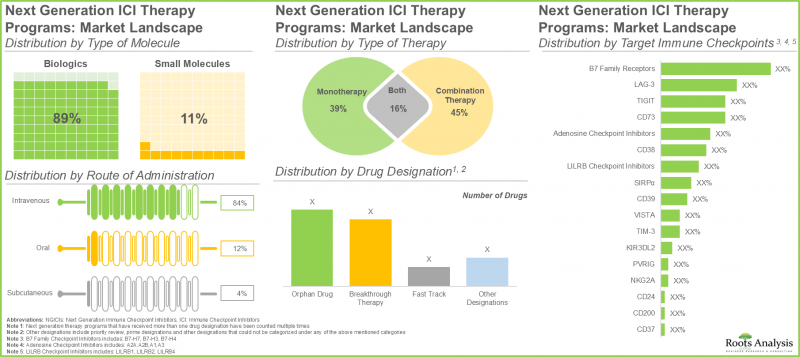
- The current immune checkpoint inhibitor pipeline features ~475 therapy programs, emphasizing on enhanced pathway modulation to deliver sustained therapeutic benefit in the oncology domain.
- 45% of the immune checkpoint inhibitors are in phase II of clinical trials, reflecting the maturity of the current pipeline, which is influenced by the positive study trial outcomes of ICIs in early stages of clinical development.
- The current next generation immune checkpoint inhibitor pipeline features ~150 therapy programs, facilitating enhanced cancer treatment by ensuring targeted drug delivery and reduced off target effects.
- >40% of NGICIs are being evaluated in combination therapy (including radiation, chemotherapy and targeted therapies), highlighting the shift toward regimens that improve antitumor response and enhance clinical outcomes.
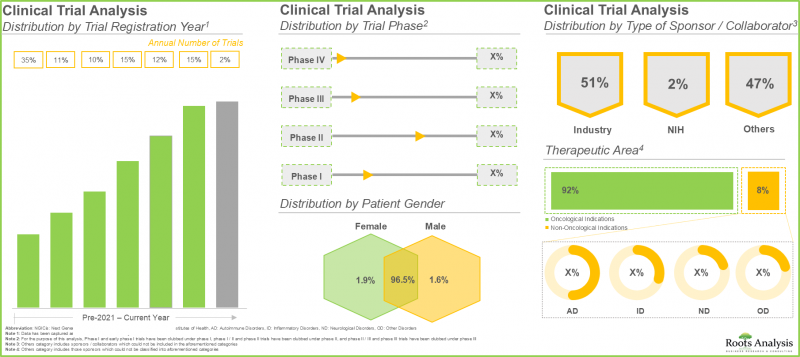
- Majority of the trials (nearly 30%) were registered in the last two years; >50% of the clinical trials in NGICIs domain are being conducted by industry players, highlighting their active role in driving innovation in this segment.
- The next generation immune checkpoint inhibitors market is experiencing significant growth, owing to the rise in the incidence of cancer, worldwide, demanding advanced targeted treatment approaches.
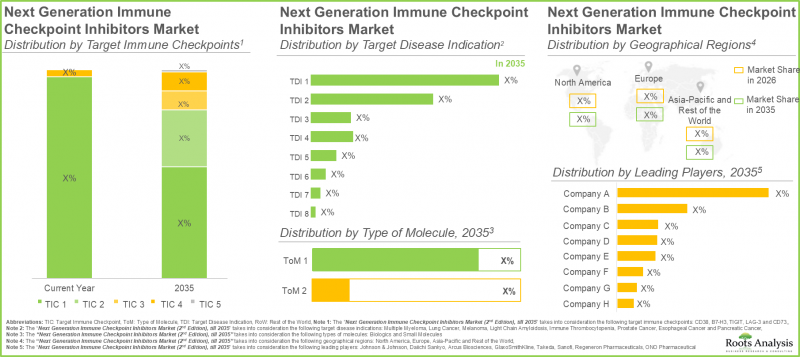
- Given the rapid increase in popularity of immune checkpoint inhibitors, the market is poised to grow at a CAGR of 30% till 2035 (excluding Darzalex); CD38 targeting therapies currently capture majority of NGICIs market share.
- The immune checkpoint inhibitors market in the US is expected to grow at a steady CAGR during the forecast period due to their enhanced selectivity and expanding clinical use for the treatment of oncological disorders.
- Driven by expanding clinical use and growing adoption of immunotherapies, the next generation immune checkpoint inhibitors market in the US expected to witness sustained progress.
Next Generation Immune Checkpoint Inhibitors Market
The market sizing and opportunity analysis has been segmented across the following parameters:
By Target Immune Checkpoint
- C CD38
- B7-H3
- TIGIT
- LAG-3
- CD73
By Target Disease Indication
- Multiple Myeloma
- Lung Cancer
- Melanoma
- Light Chain Amyloidosis
- Immune Thrombocytopenia
- Prostate Cancer
- Esophageal Cancer
- Pancreatic Cancer
By Type of Molecule
- Biologics
- Small Molecules
By Geographical Regions
- North America
- Europe
- Asia-Pacific
- Latin America
- Middle East and North Africa
By Leading Players
- Leading Player 1
- Leading Player 2
- Leading Player 3
- Leading Player 4
- Leading Player 5
By Sales Forecast of Therapies
- Darzalex
- Sarclisa
- ONO-4882
- Ifinatamab Deruxtecan / MK-2400
- GSK5764227
- Mezagitamab (TAK-079)
- Fianlimab
- Quemliclustat
- Domvanalimab
Next Generation Immune Checkpoint Inhibitors Market: Key Segments
Target-Based Segmentation: Market Share Insights
The next-generation immune checkpoint inhibitors market is broadly distributed across multiple targets, including CD38, B7-H3, TIGIT, LAG-3, and CD73. By 2035, the CD38 segment is expected to dominate the market, accounting for over 50% of the overall share. Meanwhile, the B7-H3 segment is projected to register the fastest growth during the forecast period. This growth is driven by the unique dual functionality of B7-H3, which can exert both stimulatory and immunosuppressive effects on the immune system, with clinical evidence indicating a predominance of immunosuppressive activity, particularly in glioblastoma. These attributes position B7-H3 as a highly promising target for ongoing and future clinical development.
Type of Molecule Analysis: Market Leadership and Growth Trends
Based on the type of molecule, the market is segmented into biologics and small molecules. Biologics are anticipated to capture the largest share, accounting for nearly 95% of the market by 2035, primarily due to their high target specificity, reduced dosing frequency, and lower incidence of off-target effects, which collectively enhance patient compliance. Conversely, small molecules are expected to witness a higher CAGR over the forecast period, supported by their ability to modulate multiple anti-tumor pathways simultaneously, along with advantages such as oral bioavailability and low immunogenicity. These factors contribute to greater clinical flexibility, improved patient convenience, and increasing commercial attractiveness.
Regional Analysis: Growth and Market Expansion
North America is projected to remain the dominant regional market, capturing over 60% of the global share by 2035, supported by its advanced healthcare infrastructure, strong research capabilities, and well-established regulatory framework that facilitates extensive clinical development. In contrast, Asia-Pacific and the Rest of the World are expected to experience the fastest growth during the forecast period. This growth is driven by a large and expanding cancer patient population, particularly in Southeast Asia, coupled with a rising disease burden and a rapidly evolving clinical research ecosystem. These factors are anticipated to significantly increase the demand for next-generation immune checkpoint inhibitor therapies across these regions.
Example Players in Next Generation Immune Checkpoint Inhibitors Market
- Arcus Biosciences
- Aurigene Oncology
- Genetech
- GlaxoSmithKline
- Johnson and Johnson
- Merck
- NovaBridge Biotherapeutics
- ONO Pharmaceuticals
- Regeneron Pharmaceuticals
- Sanofi
- Takeda
Next Generation Immune Checkpoint Inhibitors Market: Research Coverage
- Market Sizing and Opportunity Analysis: The report features an in-depth analysis of the next generation immune checkpoint inhibitors market, focusing on key market segments, including [A] target immune checkpoint, [B] target disease indication, [C] type of molecule [D] geographical regions, [E] leading players, [F] and sales forecast of therapies.
- Immune Checkpoint Inhibitors Market Landscape: A detailed assessment of the overall landscape of immune checkpoint inhibitors, along with information on several relevant parameters, such as [A] target immune checkpoint, [B] stage of development, [C] therapeutic modality, [D] route of administration, [E] target disease indication, [F] therapeutic area, [G] year of establishment, [H] company size and [I] location of headquarters.
- Next Generation Immune Checkpoint Inhibitors Market Landscape: A detailed assessment of the overall landscape of immune checkpoint inhibitors market landscape, along with information on several relevant parameters, such as [A] target immune checkpoint, [B] stage of development, [C] therapeutic modality, [D] route of administration, [E] target disease indication, [F] therapeutic area, [G] year of establishment, [H] company size and [I] location of headquarters.
- Target Competitiveness Analysis: An insightful competitiveness analysis of next generation immune checkpoint targets, based on various relevant parameters, such as [A] number of therapies, [B] number of unique target indications, [C] pipeline maturity, [D] highest phase of development, [E] number of clinical trials, [F] number of unique big pharma and start-ups / small sized companies involved.
- Clinical Trial Analysis: An in-depth analysis of completed and ongoing clinical trials investigating next generation immune checkpoint inhibitor therapies, based on several relevant parameters, such as [A] trial registration year, [B] trial status, [C] trial phase, [D] patients enrolled, [E] trial study design, [F] type of sponsor, [G] patient gender, [H] most active industry and non-industry players (in terms of number of trials) and [I] geographical distribution.
- Company Profiles: In-depth profiles of key companies based in North America, Europe and Asia-Pacific based on several parameters such as [A] year of establishment, [B] location of headquarters, [C] drug portfolio, [D] recent developments and [E] an informed future outlook.
- Market Impact Analysis: An in-depth analysis of the factors that can impact the growth of the market. It also features identification and analysis of key drivers, potential restraints, emerging opportunities, and existing challenges in this domain.
Key Questions Answered in this Report
- Which are the leading companies in the next generation immune checkpoint market?
- Which region dominates the next generation immune checkpoint market?
- What are the key trends observed in the next generation immune checkpoint market?
- What factors are likely to influence the evolution of this market?
- What are the primary challenges faced by next generation immune checkpoint developers?
- What is the current and future market size?
- What is the CAGR of this market?
- How is the current and future market opportunity likely to be distributed across key market segments?
Reasons to Buy this Report
- The report provides a comprehensive market analysis, offering detailed revenue projections of the overall market and its specific sub-segments. This information is valuable to both established market leaders and emerging entrants.
- The report offers stakeholders a comprehensive overview of the market, including key drivers, barriers, opportunities, and challenges. This information empowers stakeholders to stay abreast of market trends and make data-driven decisions to capitalize on growth prospects.
- The report can aid businesses in identifying future opportunities in any sector. It also helps in understanding if those opportunities are worth pursuing.
- The report helps in identifying customer demand by understanding the needs, preferences, and behavior of the target audience in order to tailor products or services effectively.
- The report equips new entrants with requisite information regarding a particular market to help them build successful business strategies.
- The report allows for more effective communication with the audience and in building strong business relations.
Additional Benefits
- Complementary PPT Insights Pack
- Complimentary Excel Data Packs for all Analytical Modules in the Report
- 15% Free Content Customization
- Detailed Report Walkthrough Session with Research Team
- Free Updated report if the report is 6-12 months old or older
TABLE OF CONTENTS
1. PREFACE
- 1.1. Introduction
- 1.2. Market Share Insights
- 1.3. Key Market Insights
- 1.4. Report Coverage
- 1.5. Key Questions Answered
- 1.6. Chapter Outlines
2. RESEARCH METHODOLOGY
- 2.1. Chapter Overview
- 2.2. Research Assumptions
- 2.2.1. Market Landscape and Market Trends
- 2.2.2. Market Forecast and Opportunity Analysis
- 2.2.3. Comparative Analysis
- 2.3. Database Building
- 2.3.1. Data Collection
- 2.3.2. Data Validation
- 2.3.3. Data Analysis
- 2.4. Project Methodology
- 2.4.1. Secondary Research
- 2.4.1.1. Annual Reports
- 2.4.1.2. Academic Research Papers
- 2.4.1.3. Company Websites
- 2.4.1.4. Investor Presentations
- 2.4.1.5. Regulatory Filings
- 2.4.1.6. White Papers
- 2.4.1.7. Industry Publications
- 2.4.1.8. Conferences and Seminars
- 2.4.1.9. Government Portals
- 2.4.1.10. Media and Press Releases
- 2.4.1.11. Newsletters
- 2.4.1.12. Industry Databases
- 2.4.1.13. Roots Proprietary Databases
- 2.4.1.14. Paid Databases and Sources
- 2.4.1.15. Social Media Portals
- 2.4.1.16. Other Secondary Sources
- 2.4.2. Primary Research
- 2.4.2.1. Types of Primary Research
- 2.4.2.1.1. Qualitative Research
- 2.4.2.1.2. Quantitative Research
- 2.4.2.1.3. Hybrid Approach
- 2.4.2.2. Advantages of Primary Research
- 2.4.2.3. Techniques for Primary Research
- 2.4.2.3.1. Interviews
- 2.4.2.3.2. Surveys
- 2.4.2.3.3. Focus Groups
- 2.4.2.3.4. Observational Research
- 2.4.2.3.5. Social Media Interactions
- 2.4.2.4. Key Opinion Leaders Considered in Primary Research
- 2.4.2.4.1. Company Executives (CXOs)
- 2.4.2.4.2. Board of Directors
- 2.4.2.4.3. Company Presidents and Vice Presidents
- 2.4.2.4.4. Research and Development Heads
- 2.4.2.4.5. Technical Experts
- 2.4.2.4.6. Subject Matter Experts
- 2.4.2.4.7. Scientists
- 2.4.2.4.8. Doctors and Other Healthcare Developers
- 2.4.2.5. Ethics and Integrity
- 2.4.2.5.1. Research Ethics
- 2.4.2.5.2. Data Integrity
- 2.4.2.1. Types of Primary Research
- 2.4.3. Analytical Tools and Databases
- 2.4.1. Secondary Research
- 2.5. Robust Quality Control
3. ECONOMIC AND OTHER PROJECT-SPECIFIC CONSIDERATIONS
- 3.1. Chapter Overview
- 3.2. Forecast Methodology
- 3.2.1. Top-down Approach
- 3.2.2. Bottom-up Approach
- 3.2.3. Hybrid Approach
- 3.3. Market Assessment Framework
- 3.3.1. Total Addressable Market (TAM)
- 3.3.2. Serviceable Addressable Market (SAM)
- 3.3.3. Serviceable Obtainable Market (SOM)
- 3.3.4. Currently Acquired Market (CAM)
- 3.4. Forecasting Tools and Techniques
- 3.4.1. Qualitative Forecasting
- 3.4.2. Correlation
- 3.4.3. Regression
- 3.4.4. Extrapolation
- 3.4.5. Convergence
- 3.4.6. Sensitivity Analysis
- 3.4.7. Scenario Planning
- 3.4.8. Data Visualization
- 3.4.9. Time Series Analysis
- 3.4.10. Forecast Error Analysis
- 3.5. Key Considerations
- 3.5.1. Demographics
- 3.5.2. Government Regulations
- 3.5.3. Reimbursement Scenarios
- 3.5.4. Market Access
- 3.5.5. Supply Chain
- 3.5.6. Industry Consolidation
- 3.5.7. Pandemic / Unforeseen Disruptions Impact
- 3.6. Limitations
4. MACRO-ECONOMIC INDICATORS
- 4.1. Chapter Overview
- 4.2. Market Dynamics
- 4.2.1. Time Period
- 4.2.1.1. Historical Trends
- 4.2.1.2. Current and Forecasted Estimates
- 4.2.2. Currency Coverage
- 4.2.2.1. Major Currencies Affecting the Market
- 4.2.2.2. Factors Affecting Currency Fluctuations
- 4.2.2.3. Impact of Currency Fluctuations on the Industry
- 4.2.3. Foreign Currency Exchange Rate
- 4.2.3.1. Impact of Foreign Exchange Rate Volatility on the Market
- 4.2.3.2. Strategies for Mitigating Foreign Exchange Risk
- 4.2.4. Recession
- 4.2.4.1. Assessment of Current Economic Conditions and Potential Impact on the Market
- 4.2.4.2. Historical Analysis of Past Recessions and Lessons Learnt
- 4.2.5. Inflation
- 4.2.5.1. Measurement and Analysis of Inflationary Pressures in the Economy
- 4.2.5.2. Potential Impact of Inflation on the Market Evolution
- 4.2.6. Interest Rates
- 4.2.6.1. Interest Rates and Their Impact on the Market
- 4.2.6.2. Strategies for Managing Interest Rate Risk
- 4.2.7. Commodity Flow Analysis
- 4.2.7.1. Type of Commodity
- 4.2.7.2. Origins and Destinations
- 4.2.7.3. Value and Weights
- 4.2.7.4. Modes of Transportation
- 4.2.8. Global Trade Dynamics
- 4.2.8.1. Import Scenario
- 4.2.8.2. Export Scenario
- 4.2.8.3. Trade Policies
- 4.2.8.4. Strategies for Mitigating the Risks Associated with Trade Barriers
- 4.2.8.5. Impact of Trade Barriers on the Market
- 4.2.9. War Impact Analysis
- 4.2.9.1. Russian-Ukraine War
- 4.2.9.2. Israel-Hamas War
- 4.2.10. COVID Impact / Related Factors
- 4.2.10.1. Global Economic Impact
- 4.2.10.2. Industry-specific Impact
- 4.2.10.3. Government Response and Stimulus Measures
- 4.2.10.4. Future Outlook and Adaptation Strategies
- 4.2.11. Other Indicators
- 4.2.11.1. Fiscal Policy
- 4.2.11.2. Consumer Spending
- 4.2.11.3. Gross Domestic Product (GDP)
- 4.2.11.4. Employment
- 4.2.11.5. Taxes
- 4.2.11.6. Stock Market Performance
- 4.2.11.7. Cross-Border Dynamics
- 4.2.1. Time Period
- 4.3. Conclusion
5. EXECUTIVE SUMMARY
- 5.1. Immune Checkpoint Inhibitors: Market Landscape
- 5.2. Immune Checkpoint Inhibitors: Market Trends
- 5.3. Immune Checkpoint Inhibitors: Market Forecast and Opportunity Analysis
6. INTRODUCTION
- 6.1. Chapter Overview
- 6.2. Introduction to Cancer Immunotherapy
- 6.3. Fundamentals of Cancer Immunotherapy
- 6.4. Immune Checkpoint Inhibitors
- 6.5. First Generation Immune Checkpoint Modulators
- 6.6. Next Generation Immune Checkpoint Modulators
- 6.6.1. Types of Next Generation Modulators
- 6.7. Challenges Related to Immune Checkpoint Inhibitors
- 6.8. Future Perspective
7. MARKET LANDSCAPE: IMMUNE CHECKPOINT INHIBITORS
- 7.1. Chapter Overview
- 7.2. Immune Checkpoint Inhibitors: Overall Market Landscape
- 7.2.1. Analysis by Stage of Development
- 7.2.2. Analysis by Target Immune Checkpoint
- 7.2.3. Analysis by Therapeutic Modality
- 7.2.4. Analysis by Route of Administration
- 7.2.5. Analysis by Target Disease Indication
- 7.2.6. Analysis by Therapeutic Area
- 7.2.7. Analysis by Popular Oncological Indications and Target Immune Checkpoints
- 7.2.8. Analysis by Popular Non-Oncological Indications and Target Immune Checkpoints
- 7.3. Immune Checkpoint Inhibitors: Developer Landscape
- 7.3.1. Analysis by Year of Establishment
- 7.3.2. Analysis by Company Size
- 7.3.3. Analysis by Location of Headquarters
- 7.3.4. Analysis by Company Size and Location of Headquarters
- 7.3.5. Most Active Players: Analysis by Number of Immune Checkpoint Inhibitors Developed
- 7.3.6. Prominent First Generation Targets: Distribution by Number of Developers
8. MARKET LANDSCAPE: NEXT GENERATION IMMUNE CHECKPOINT INHIBITORS
- 8.1. Chapter Overview
- 8.2. Next Generation Immune Checkpoint Inhibitors: Overall Market Landscape
- 8.2.1. Analysis by Stage of Development
- 8.2.2. Analysis by Target Immune Checkpoint
- 8.2.3. Analysis by Therapeutic Modality
- 8.2.4. Analysis by Route of Administration
- 8.2.5. Analysis by Target Disease Indication
- 8.2.6. Analysis by Therapeutic Area
- 8.2.7. Analysis by Popular Oncological Indications and Popular Target Immune Checkpoint
- 8.2.8. Analysis by Popular Non-Oncological Indications and Target Immune Checkpoint
- 8.3. Next Generation Immune Checkpoint Inhibitors: Developer Landscape
- 8.3.1. Analysis by Year of Establishment
- 8.3.2. Analysis by Company Size
- 8.3.3. Analysis by Location of Headquarters
- 8.3.4. Analysis by Company Size and Location of Headquarters
- 8.3.5. Most Active Players: Analysis by Number of Immune Checkpoint Inhibitors Developed
- 8.3.6. Prominent Next Generation Targets: Distribution by Number of Developers
9. TARGET COMPETITIVENESS ANALYSIS
- 9.1. Chapter Overview
- 9.2. Scope and Methodology
- 9.3. Key Parameters
- 9.4. Target Competitiveness Analysis: Key Targets for Next Generation Immune Checkpoint Inhibitors
- 9.4.1. Target Competitiveness Analysis: 3D Bubble Analysis
- 9.4.2. Target Competitiveness Analysis: Spider Web Analysis
10. CLINICAL TRIAL ANALYSIS
- 10.1. Chapter Overview
- 10.2. Scope and Methodology
- 10.3. Immune Checkpoint Inhibitors: Clinical Trial Analysis
- 10.3.1. Analysis by Trial Registration Year
- 10.3.2. Analysis by Trial Status
- 10.3.3. Analysis by Trial Registration Year and Trial Status
- 10.3.4. Analysis by Trial Registration Year and Patients Enrolled
- 10.3.5. Analysis by Trial Status and Patients Enrolled
- 10.3.6. Analysis by Trial Phase
- 10.3.7. Analysis by Patients Enrolled and Trial Phase
- 10.3.8. Analysis by Study Design
- 10.3.9. Analysis by Type of Sponsor
- 10.3.10. Analysis by Patient Gender
- 10.3.11. Most Active Industry Players: Analysis by Number of Trials
- 10.3.12. Most Active Non-Industry Players: Analysis by Number of Trials
- 10.3.13. Analysis by Geography
- 10.3.13.1. Analysis by Trial Status, Trial Phase and Geography
- 10.3.13.2. Analysis by Trial Status and Geography
- 10.3.14. Geographical Distribution of Trials and Number of Patients Enrolled
11. COMPANY PROFILES: NEXT GENERATION IMMUNE CHECKPOINT INHIBITOR DEVELOPERS
- 11.1. Chapter Overview
- 11.2. Immune Checkpoint Inhibitors Offered by Drug Developers Based in North America
- 11.2.1. Arcus
- 11.2.1.1. Company Overview
- 11.2.1.2. Next Generation Immune Checkpoint Therapeutics Portfolio
- 11.2.1.2.1. Domvanalimab
- 11.2.1.2.2. Quemliclustat
- 11.2.1.3. Recent Developments and Future Outlook
- 11.2.2. Genentech
- 11.2.2.1. Company Overview
- 11.2.2.2. Next Generation Immune Checkpoint Therapeutics Portfolio
- 11.2.2.2.1. Tiragolumab
- 11.2.2.3. Recent Developments and Future Outlook
- 11.2.3. Johnson & Johnson
- 11.2.3.1. Company Overview
- 11.2.3.2. Next Generation Immune Checkpoint Therapeutics Portfolio
- 11.2.3.2.1. Daratumumab
- 11.2.3.3. Recent Developments and Future Outlook
- 11.2.4. Merck
- 11.2.4.1. Company Overview
- 11.2.4.2. Next Generation Immune Checkpoint Therapeutics Portfolio
- 11.2.4.2.1. Ifinatamab Deruxtecan
- 11.2.4.3. Recent Developments and Future Outlook
- 11.2.5. NovaBridge Biosciences
- 11.2.5.1. Company Overview
- 11.2.5.2. Next Generation Immune Checkpoint Therapeutics Portfolio
- 11.2.5.2.1. Uliledlimab
- 11.2.5.3. Recent Developments and Future Outlook
- 11.2.6. Regeneron Pharmaceuticals
- 11.2.6.1. Company Overview
- 11.2.6.2. Next Generation Immune Checkpoint Therapeutics Portfolio
- 11.2.6.2.1. FIANLIMAB
- 11.2.6.3. Recent Developments and Future Outlook
- 11.2.1. Arcus
- 11.3. Immune Checkpoint Inhibitors Offered by Drug Developers Based in Europe
- 11.3.1. GlaxoSmithKline
- 11.3.1.1. Company Overview
- 11.3.1.2. Next Generation Immune Checkpoint Therapeutics Portfolio
- 11.3.1.2.1. GSK5764227
- 11.3.1.2.2. GSK5733584
- 11.3.1.3. Recent Developments and Future Outlook
- 11.3.2. Sanofi
- 11.3.2.1. Company Overview
- 11.3.2.2. Next Generation Immune Checkpoint Therapeutics Portfolio
- 11.3.2.2.1. Sarclisa
- 11.3.2.3. Recent Developments and Future Outlook
- 11.3.1. GlaxoSmithKline
- 11.4. Immune Checkpoint Inhibitors Offered by Drug Developers Based in Asia-Pacific
- 11.4.1. Aurigene Oncology
- 11.4.1.1. Company Overview
- 11.4.1.2. Next Generation Immune Checkpoint Therapeutics Portfolio
- 11.4.1.2.1. Cenopodlin
- 11.4.1.3. Recent Developments and Future Outlook
- 11.4.2. Ono Pharmaceutical
- 11.4.2.1. Company Overview
- 11.4.2.2. Next Generation Immune Checkpoint Therapeutics Portfolio
- 11.4.2.2.1. ONO-4482
- 11.4.2.3. Recent Developments and Future Outlook
- 11.4.3. Takeda Pharmaceutical
- 11.4.3.1. Company Overview
- 11.4.3.2. Next Generation Immune Checkpoint Therapeutics Portfolio
- 11.4.3.2.1. Mezagitamab
- 11.4.3.3. Recent Developments and Future Outlook
- 11.4.1. Aurigene Oncology
12. MARKET IMPACT ANALYSIS
- 12.1. Chapter Overview
- 12.2. Market Drivers
- 12.3. Market Restraints
- 12.4. Market Opportunities
- 12.5. Market Challenges
- 12.6. Conclusion
13. GLOBAL NEXT GENERATION IMMUNE CHECKPOINT INHIBITORS MARKET
- 13.1. Chapter Overview
- 13.2. Key Assumptions and Methodology
- 13.3. Global Next Generation Immune Checkpoint Inhibitors Market, Historical Trends (Since 2022) and Forecasted Estimates (Till 2035)
- 13.4. Multivariate Scenario Analysis
- 13.4.1. Conservative Scenario
- 13.4.2. Optimistic Scenario
- 13.5. Key Market Segmentations
14. NEXT GENERATION IMMUNE CHECKPOINT INHIBITORS MARKET, BY TARGET IMMUNE CHECKPOINT
- 14.1. Chapter Overview
- 14.2. Key Assumptions and Methodology
- 14.3. Next Generation Immune Checkpoint Inhibitors Market: Distribution by Target Immune Checkpoint
- 14.3.1. Next Generation Immune Checkpoint Inhibitors Market for CD38, Historical Trends (Since 2022) and Forecasted Estimates (Till 2035)
- 14.3.2. Next Generation Immune Checkpoint Inhibitors Market for B7-H3, Forecasted Estimates (till 2035)
- 14.3.3. Next Generation Immune Checkpoint Inhibitors Market for TIGIT, Forecasted Estimates (till 2035)
- 14.3.4. Next Generation Immune Checkpoint Inhibitors Market for LAG-3, Historical Trends (Since 2022) and Forecasted Estimates (Till 2035)
- 14.3.5. Next Generation Immune Checkpoint Inhibitors Market for CD73, Forecasted Estimates (till 2035)
- 14.4. Data Triangulation and Validation
15. NEXT GENERATION IMMUNE CHECKPOINT INHIBITORS MARKET, BY TARGET DISEASE INDICATIONS
- 15.1. Chapter Overview
- 15.2. Key Assumptions and Methodology
- 15.3. Next Generation Immune Checkpoint Inhibitors Market: Distribution by Target Disease Indications
- 15.3.1. Next Generation Immune Checkpoint Inhibitors Market for Multiple Myeloma, Historical Trends (Since 2022) and Forecasted Estimates (Till 2035)
- 15.3.2. Next Generation Immune Checkpoint Inhibitors Market for Lung Cancer, Forecasted Estimates (Till 2035)
- 15.3.3. Next Generation Immune Checkpoint Inhibitors Market for Immune Thrombocytopenia, Forecasted Estimates (Till 2035)
- 15.3.4. Next Generation Immune Checkpoint Inhibitors Market for Melanoma, Historical Trends (Since 2022) and Forecasted Estimates (Till 2035)
- 15.3.4. Next Generation Immune Checkpoint Inhibitors Market for Prostate Cancer, Forecasted Estimates (Till 2035)
- 15.3.6. Next Generation Immune Checkpoint Inhibitors Market for Esophageal Cancer, Forecasted Estimates (Till 2035)
- 15.3.7. Next Generation Immune Checkpoint Inhibitors Market for Light Chain Amyloidosis, Historical Trends (Since 2022) and Forecasted Estimates (Till 2035)
- 15.3.8. Next Generation Immune Checkpoint Inhibitors Market for Pancreatic Cancer, Forecasted Estimates (Till 2035)
- 15.4. Data Triangulation and Validation
16. NEXT GENERATION IMMUNE CHECKPOINT INHIBITORS MARKET, BY TYPE OF MOLECULE
- 16.1. Chapter Overview
- 16.2. Key Assumptions and Methodology
- 16.3. Next Generation Immune Checkpoint Inhibitors Market: Distribution by Type of Molecule
- 16.3.1. Next Generation Immune Checkpoint Inhibitors Market for Biologics, Historical Trends (Since 2022) and Forecasted Estimates (Till 2035)
- 16.3.2. Next Generation Immune Checkpoint Inhibitors Market for Small Molecules, Historical Trends (Since 2022) and Forecasted Estimates (Till 2035)
- 16.4. Data Triangulation and Validation
17. NEXT GENERATION IMMUNE CHECKPOINT INHIBITORS MARKET, BY GEOGRAPHICAL REGIONS
- 17.1. Chapter Overview
- 17.2. Assumptions and Methodology
- 17.3. Next Generation Immune Checkpoint Inhibitors Market: Distribution by Geographical Regions
- 17.3.1. Next Generation Immune Checkpoint Inhibitors Market in North America, Historical Trends (Since 2022) and Forecasted Estimates (Till 2035)
- 17.3.1.1. Next Generation Immune Checkpoint Inhibitors Market in the US, Historical Trends (Since 2022) and Forecasted Estimates (Till 2035)
- 17.3.1.2. Next Generation Immune Checkpoint Inhibitors Market in Canada, Historical Trends (Since 2022) and Forecasted Estimates (Till 2035)
- 17.3.2. Next Generation Immune Checkpoint Inhibitors Market in Europe, Historical Trends (Since 2022) and Forecasted Estimates (Till 2035)
- 17.3.2.1. Next Generation Immune Checkpoint Inhibitors Market in EU5, Historical Trends (Since 2022) and Forecasted Estimates (Till 2035)
- 17.3.2.2. Next Generation Immune Checkpoint Inhibitors Market in the Rest of Europe, Historical Trends (Since 2022) and Forecasted Estimates (Till 2035)
- 17.3.3. Next Generation Immune Checkpoint Inhibitors Market in Asia-Pacific and Rest of the World, Historical Trends (Since 2022) and Forecasted Estimates (Till 2035)
- 17.3.3.1. Next Generation Immune Checkpoint Inhibitors Market in China, Historical Trends (Since 2022) and Forecasted Estimates (Till 2035)
- 17.3.3.2. Next Generation Immune Checkpoint Inhibitors Market in Japan, Historical Trends (Since 2022) and Forecasted Estimates (Till 2035)
- 17.3.3.3. Next Generation Immune Checkpoint Inhibitors Market in Brazil, Historical Trends (Since 2022) and Forecasted Estimates (Till 2035)
- 17.3.3.4. Next Generation Immune Checkpoint Inhibitors Market in Australia, Historical Trends (Since 2022) and Forecasted Estimates (Till 2035)
- 17.3.3.5. Next Generation Immune Checkpoint Inhibitors Market in South Korea, Historical Trends (Since 2022) and Forecasted Estimates (Till 2035)
- 17.3.3.6. Next Generation Immune Checkpoint Inhibitors Market in India, Historical Trends (Since 2022) and Forecasted Estimates (Till 2035)
- 17.3.3.7. Next Generation Immune Checkpoint Inhibitors Market in Argentina, Historical Trends (Since 2022) and Forecasted Estimates (Till 2035)
- 17.3.3.8. Next Generation Immune Checkpoint Inhibitors Market in Israel, Historical Trends (Since 2022) and Forecasted Estimates (Till 2035)
- 17.3.3.9. Next Generation Immune Checkpoint Inhibitors Market in Saudi Arabia, Historical Trends (Since 2022) and Forecasted Estimates (Till 2035)
- 17.3.1. Next Generation Immune Checkpoint Inhibitors Market in North America, Historical Trends (Since 2022) and Forecasted Estimates (Till 2035)
- 17.4. Data Triangulation and Validation
18. NEXT GENERATION IMMUNE CHECKPOINT INHIBITORS MARKET, BY LEADING PLAYERS
- 18.1. Chapter Overview
- 18.2. Key Assumptions and Methodology
- 18.3. Next Generation Immune Checkpoint Inhibitors Market: Distribution by Leading Players
- 18.3.1. Next Generation Immune Checkpoint Inhibitors Market for Arcus Biosciences, Historical Trends (Since 2022) and Forecasted Estimates (Till 2035)
- 18.3.2. Next Generation Immune Checkpoint Inhibitors Market for Daiichi Sankyo, Historical Trends (Since 2022) and Forecasted Estimates (Till 2035)
- 18.3.3. Next Generation Immune Checkpoint Inhibitors Market for GlaxoSmithKline, Historical Trends (Since 2022) and Forecasted Estimates (Till 2035)
- 18.3.4. Next Generation Immune Checkpoint Inhibitors Market for Johnson and Johnson, Historical Trends (Since 2022) and Forecasted Estimates (Till 2035)
- 18.3.5. Next Generation Immune Checkpoint Inhibitors Market for ONO Pharmaceuticals, Historical Trends (Since 2022) and Forecasted Estimates (Till 2035)
- 18.3.6. Next Generation Immune Checkpoint Inhibitors Market for Regeneron Pharmaceuticals, Historical Trends (Since 2022) and Forecasted Estimates (Till 2035)
- 18.3.7. Next Generation Immune Checkpoint Inhibitors Market for Sanofi, Historical Trends (Since 2022) and Forecasted Estimates (Till 2035)
- 18.3.8. Next Generation Immune Checkpoint Inhibitors Market for Takeda, Historical Trends (Since 2022) and Forecasted Estimates (Till 2035)
- 18.4. Data Triangulation and Validation
19. NEXT GENERATION IMMUNE CHECKPOINT INHIBITORS MARKET: SALES FORECAST OF THERAPIES
- 19.1. Chapter Overview
- 19.2. Key Assumptions and Methodology
- 19.3. Next Generation Immune Checkpoint Inhibitors Market: Sales Forecast of Therapies
- 19.3.1. Darzalex: Sales Forecast (USD Million)
- 19.3.2. Sarclisa: Sales Forecast (USD Million)
- 19.3.3. ONO-4482: Sales Forecast (USD Million)
- 19.3.4. Ifinatamab Deruxtecan / MK-2400: Sales Forecast (USD Million)
- 19.3.5. GSK5764227: Sales Forecast (USD Million)
- 19.3.6. Mezagitamab (TAK-079): Sales Forecast (USD Million)
- 19.3.7. Fianlimab: Sales Forecast (USD Million)
- 19.3.8. Quemliclustat: Sales Forecast (USD Million)
- 19.3.9. Domvanalimab: Sales Forecast (USD Million)
- 19.4. Data Triangulation and Validation
20. CONCLUDING REMARKS
21. EXECUTIVE INSIGHTS
- 21.1. Chapter Overview
- 21.2. Percheron Therapeutics
- 21.2.1 Company Snapshot
- 21.2.2. Interview Transcript: James Garner (Chief Executive Officer)
- 21.3. Merck
- 21.3.1 Company Snapshot
- 21.3.2. Interview Transcript: Rob Davis (Chief Executive Officer)


