

|
시장보고서
상품코드
2072253
생세포 캡슐화 시장(제2판) : 제조 기술 유형별, 캡슐화 방법별, 캡슐화 재료 유형별, 용도별, 치료 분야별, 지불 형태별, 주요 지역별 - 동향과 예측(-2035년)Live Cell Encapsulation Market (2nd Edition) by Type of Manufacturing Technique, Method of Encapsulation, Type of Encapsulation Material, Application Area, Therapeutic Area, Type of Payment and Key Geographical Regions - Trends and Forecast, Till 2035 |
||||||

생세포 캡슐화 시장 : 개요
생세포 캡슐화 시장 규모는 2035년까지 CAGR 12.1%로 확대되어 금년도 6억 4,200만 달러에서 2035년에는 17억 8,700만 달러에 달할 것으로 추정됩니다.
생세포 캡슐화 시장 - 성장 및 동향
생세포 캡슐화는 생존 가능한 세포를 반투과성 고분자 막이나 하이드로겔 매트릭스(예 : 알긴산염) 내에 봉입하는 첨단 생명공학 기술입니다. 이러한 시스템은 산소, 영양소, 성장 인자, 치료용 단백질의 선택적 교환을 가능하게 하는 동시에, 세포를 숙주의 면역 반응으로부터 보호합니다. 이를 통해 장기적인 면역 억제가 필요 없이 세포의 지속적인 생존과 기능을 유지할 수 있습니다.
1930년대에 처음 연구된 이 기술은 조직 공학, 재생 의학, 제어된 약물전달, 그리고 세포 기반 치료법을 위한 다목적 플랫폼으로 발전해 왔습니다. 이 기술은 캡슐화된 췌도 이식을 통한 1형 당뇨병을 비롯해 신경 질환 및 대사성 질환 등 만성 질환의 관리에 있어 큰 가능성을 보여주고 있습니다.
생세포 캡슐화에서는 특히 캡슐화 후 생세포의 생물학적 활성, 증식 능력 및 치료적 분비 능력을 유지하는 데 중점을 두고 있습니다. 이에 따라, 표적화된 줄기세포나 전구세포의 전달을 목적으로 하는 재생의학은 물론, 암 면역요법이나 신경 보호와 같은 새로운 용도에 대한 관심이 높아지고 있습니다.
면역 보호 강화, 생체분자의 지속적인 분비를 통한 치료 효과의 장기화, 세포 생존율 향상, 면역 억제 요법에 대한 의존도 감소 등 이 기술과 관련된 수많은 치료적·임상적 이점을 고려할 때, 생세포 캡슐화 시장은 예측 기간 동안 상당한 성장을 이룰 것으로 전망됩니다. 이러한 장점들이 예측 기간 동안 생세포 캡슐화 시장의 성장을 견인할 것으로 예상됩니다.
성장 요인 - 시장 확대를 전략적으로 촉진하는 요인
생세포 캡슐화 시장의 성장은 주로 당뇨병, 암, 자가면역질환 등 만성 질환의 유병률 증가에 힘입어 이루어지고 있습니다. 이에 따라 치료 효과를 높이고 조직 재생을 돕는 첨단 치료법에 대한 수요가 크게 증가하고 있습니다. 이처럼 높아지는 임상적 수요에 부응하기 위해 재생의학 및 세포 치료 연구 개발에 대한 공공 및 민간 부문의 막대한 투자가 확장 가능하고 임상적으로 실용적인 캡슐화 기술의 개발을 가속화하고 있습니다. 또한, 생체 재료, 미세유체 공학 및 나노캡슐화 기술 분야의 지속적인 발전으로 인해 세포의 생존율, 정확도, 안정성 및 생체적합성이 향상되었으며, 그 결과 약물전달, 조직 공학, 재생 의학 등 각 분야에서 캡슐화된 세포 시스템의 적용 가능성이 강화되고 있습니다. 이러한 요인들이 복합적으로 작용함에 따라, 생세포 캡슐화 기술은 충족되지 않은 의료 수요에 대응하기 위한 중요한 기반 기술로서의 위상을 확립해 가고 있으며, 전 세계 헬스케어 시장 전반에서 이 기술의 도입 확대를 주도하고 있습니다.
시장의 과제 - 진전을 가로막는 중대한 장벽
그러한 막대한 치료적 잠재력에도 불구하고, 생세포 캡슐화 시장은 광범위한 보급과 상용화를 저해할 수 있는 몇 가지 과제에 직면해 있습니다. 주요 제약 사항 중 하나는, 특히 생리학적 조건 하에서 캡슐화 시스템 내에서 세포의 장기적인 생존율, 안정성 및 기능성을 유지하는 것이 복잡하다는 점입니다. 또한, 생체적합성, 면역 반응, 영양소 및 산소 확산 부족, 그리고 치료 효과의 편차와 관련된 한계들이 임상적 성공을 향한 기술적 장벽으로 계속 작용하고 있습니다. 또한, 이 시장은 대규모 생산, 공정 표준화, 그리고 높은 생산 비용과 관련된 과제에 직면해 있으며, 이러한 요인들은 확장성이나 상업적 실현 가능성을 제한할 가능성이 있습니다. 게다가, 세포 치료에 대한 엄격한 규제 요건 외에도, 승인까지 걸리는 긴 기간과 장기적인 임상 데이터의 부족이 시장에 진입하려는 기업들에게 또 다른 걸림돌이 되고 있습니다. 이러한 과학적, 운영상 및 규제상의 과제들이 복합적으로 작용하여, 의료 산업 전반에 걸친 생세포 캡슐화 기술의 혁신 속도와 더 광범위한 보급에 영향을 미칠 가능성이 있습니다.
생세포 캡슐화 시장 - 주요 인사이트
본 보고서에서는 생세포 캡슐화 시장의 현황을 상세히 분석하고, 업계 내 잠재적인 성장 기회를 파악하고 있습니다. 보고서의 주요 조사 결과는 다음과 같습니다:
- 생세포 캡슐화 기술은 생체적합성이 있는 미세 환경 내에서 생세포를 정확하게 전달하고, 그 기능을 장기간 유지할 수 있게 하여, 첨단 치료 분야로의 응용이 기대되고 있습니다.
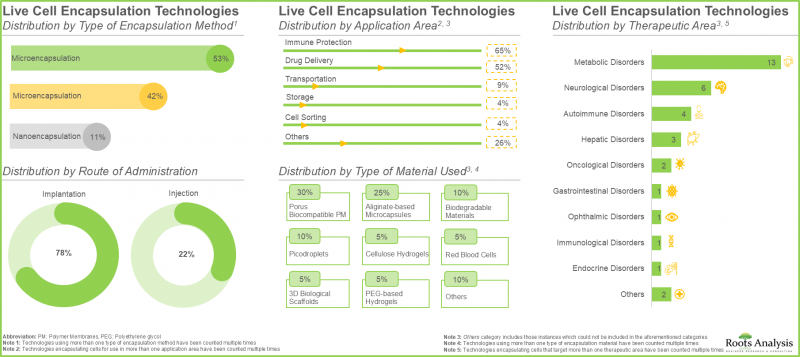
- 현재 시장 상황은 이식된 세포를 면역 체계로부터 보호하고, 치료용 생체분자의 지속적이고 국소적인 전달을 촉진하도록 설계된 약 25가지의 생세포 캡슐화 기술로 구성되어 있습니다.
- 기술의 55% 가까이가 마이크로캡슐화 방식을 채택하고 있어, 해당 기술이 업계에서 지배적인 위치를 차지하고 있음이 드러나고 있습니다. 특히, 이러한 기술의 40%는 주로 1형 당뇨병을 비롯한 대사성 질환을 표적으로 하는 세포를 캡슐화하고 있습니다.
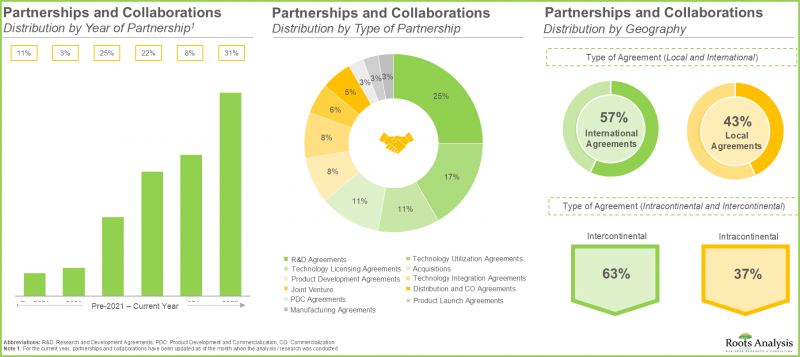
- 계약의 대부분은 1형 당뇨병, 황반 모세혈관 확장증, 기타 만성 질환 등의 적응증을 대상으로 한 캡슐화 세포 치료법의 연구 개발에 관한 것으로 체결되었습니다.
- 투자의 50% 가까이가 지난 2년 동안 이루어졌으며, 특히 벤처 캐피털이 가장 주요한 자금 조달 모델로 부상하고 있으며, 해당 거래의 30%를 시리즈 A 라운드가 차지하고 있습니다.
- 세포 내 도입 기술과 관련된 특허의 20% 이상이 최근 몇 년 사이에 공개되었습니다. 이는 다양한 질환의 치료를 위한 봉입 세포 치료법에 대한 관심이 높아지고 있음을 보여줍니다.
- 보조금의 대부분은 SBIR/STTR 이외의 목적으로 지급되었습니다. 그중 비교적 큰 비중을 차지한 것은 연구 지원금(R 시리즈)이었으며, 타입 5가 주요 지원금 범주로 부상하고 있습니다.
- 만성 질환 유병률의 증가와 급속한 기술 발전을 배경으로, 생세포 캡슐화 시장은 당분간 꾸준한 성장을 이룰 것으로 예상됩니다.
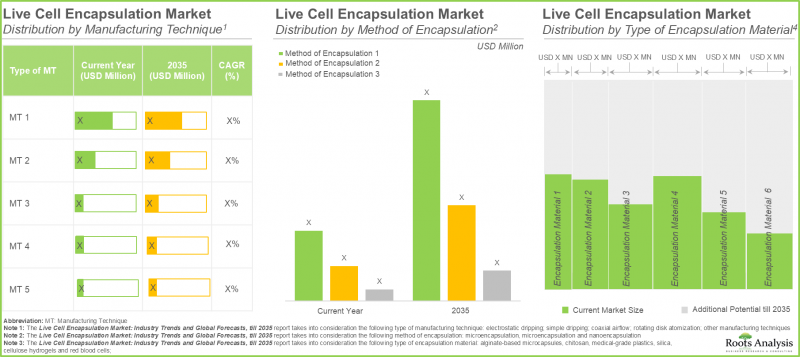
- 현재 시장 점유율의 대부분은 항체 하위 부문이 차지하고 있는데, 이는 암, 자가면역질환, 감염증의 표적 치료에서 중요한 역할을 하는 단클론항체가 널리 사용되고 있기 때문입니다.
- 탄수화물 하위 부문은 생물학적 제제의 안정제나 증량제로서, 의약품 제제에 전분, 자당, 포도당이 널리 사용되고 있기 때문에 올해 시장 점유율의 대부분을 차지할 것으로 추정됩니다.
- 미국 내 맞춤형 의료의 확산에 힘입어, 생세포 캡슐화 시장은 예측 기간 동안 더 높은 연평균 성장률(CAGR)을 기록하며 성장할 것으로 전망됩니다.
생세포 캡슐화 시장
시장 규모 및 기회 분석은 다음 매개변수를 기준으로 세분화되어 있습니다:
캡슐화 방법별
- 마이크로캡슐화
- 매크로 캡슐화
- 나노캡슐화
제조 기술 유형별
- 정전기적 적하법
- 단순 드립핑
- 동축 기류법
- 회전 디스크 분무
- 기타 제조 기술
캡슐화 재료 유형별
- 알긴산계 마이크로캡슐
- 키토산
- 의료용 플라스틱
- 실리카
- 셀룰로오스 하이드로겔
- 적혈구
용도별
- 약물전달
- 면역 보호
- 프로바이오틱스 및 기능성 식품
- 기타
치료 분야별
- 대사성 질환
- 종양성 질환
- 신경계 질환
- 안과 질환
- 순환기 질환
- 신장질환
- 기타 질환
지불 방식별
- 선불
- 마일스톤 지급
주요 지역별
- 북미
- 미국
- 캐나다
- 유럽
- 프랑스
- 네덜란드
- 영국
- 벨기에
- 아시아태평양
- 일본
- 싱가포르
생세포 캡슐화 시장 - 주요 부문
제조 기술별 시장 점유율 : 정전기적 적하 부문이 가장 큰 점유율을 차지하고 있습니다.
올해, 정전기적 적하 부문은 생세포 캡슐화 시장에서 가장 큰 점유율(약 40%)을 차지할 것으로 예상됩니다. 이 부문이 우위를 점하고 있는 이유는, 캡슐화 공정 중 높은 세포 생존율을 유지하면서 전단 응력을 최소화하고, 크기 분포가 좁은 매우 균일한 마이크로캡슐을 제조할 수 있다는 점에 있습니다. 또한, 이 기술은 기존 규제 요건과의 높은 부합성을 보여주고 있어, 임상 및 연구 분야에서의 광범위한 도입을 더욱 촉진하고 있습니다.
특히 주목할 점은, 동축 기류 부문이 예측 기간 동안 연평균 성장률(CAGR) 13.0%를 기록하며 가장 빠른 성장이 예상된다는 점입니다.
캡슐화 유형별 시장 점유율 : 마이크로캡슐화 부문이 시장을 계속 주도할 전망
현재, 마이크로캡슐화 부문은 생세포 캡슐화 시장에서 가장 큰 점유율(약 60%)을 차지할 것으로 예상되며, 예측 기간 동안 11.8%라는 비교적 높은 연평균 성장률(CAGR)을 기록하며 더욱 확대될 것으로 전망됩니다. 이 부문의 성장은 주로 치료 분야에서의 폭넓은 적용 가능성, 제어된 약물 방출을 가능하게 하는 능력, 그리고 다양한 고분자 소재와의 높은 호환성에 힘입어 이루어지고 있습니다.
캡슐화 소재별 시장 점유율 : 알긴산계 마이크로캡슐 부문이 가장 큰 수익을 창출할 전망
알긴산계 마이크로캡슐은 올해 생세포 캡슐화 시장에서 가장 큰 점유율(약 45%)을 차지할 것으로 예상됩니다. 이는 해당 소재의 높은 생체적합성, 낮은 면역원성, 높은 비용 대비 효과, 그리고 생리적 조건에서 이온성 겔화를 일으켜 세포 생존율을 유지할 수 있는 능력에 기인하는 것으로 보입니다. 또한, 의료용 플라스틱 부문은 내구성이 뛰어나고 확장성이 높으며 용도에 특화된 봉입 재료에 대한 수요가 증가함에 따라, 예측 기간 동안 가장 빠른 성장세를 보일 것으로 예상되며, 연평균 성장률(CAGR)은 13.0%에 달할 것으로 전망됩니다.
용도별 시장 점유율 : 약물전달 부문이 시장을 주도
올해, 약물전달 부문은 생세포 내포 시장에서 가장 큰 점유율을 차지할 것으로 예상되며, 예측 기간 동안 연평균 성장률(CAGR) 12.3%로 성장할 것으로 전망됩니다. 이 부문의 성장은 주로, 캡슐화된 생세포가 치료용 분자의 제어된 지속 방출을 가능하게함으로써 치료 효과를 높이고, 투여 빈도를 줄이며, 환자의 치료 순응도를 향상시키는 능력에 기인합니다.
치료 분야별 시장 점유율 : 대사성 질환 부문이 시장을 주도
대사성 질환 부문은 올해 가장 높은 시장 점유율(약 42%)을 차지할 것으로 예상되며, 예측 기간 동안 연평균 성장률(CAGR) 12.3%로 성장할 것으로 전망됩니다. 이러한 성장은 주로 대사성 질환, 특히 1형 당뇨병의 전 세계적 부담 증가와 더불어, 장기적인 질환 관리 성과를 향상시키기 위한 캡슐화된 췌장 섬 세포 및 β세포 치료법의 지속적인 발전에 힘입어 이루어지고 있습니다.
지역별 분석
북미 - 최대의 지역 시장
시장 전망에 따르면, 북미는 올해 생세포 캡슐화 시장에서 가장 큰 점유율(약 50%)을 차지할 것으로 예상됩니다. 해당 지역이 주도적인 위치를 차지하고 있는 배경으로는 확립된 의료·연구 인프라, 꾸준한 민관 투자, 그리고 NIH나 FDA 등의 기관을 통한 강력한 정부 지원이 꼽힙니다.
또한, 수많은 주요 생명공학 기업과 제약 기업의 존재는 물론, 세포 치료에 대한 유리한 규제 체계와 맞춤형 의료 및 재생의료에 대한 관심 증가가 맞물려 해당 지역의 시장 성장을 지속적으로 뒷받침하고 있습니다.
아시아태평양 : 신흥 고성장 지역
아시아태평양의 생세포 캡슐화 시장은 2035년까지 연평균 성장률(CAGR)이 11.84%에 달할 것으로 예측되며, 가장 높은 성장률을 보일 것으로 전망됩니다. 이러한 성장은 주로 의료 인프라 확충, 비용 효율이 높은 임상시험 환경, 첨단 세포 치료법에 대한 수요 증가, 그리고 의료 종사자와 환자의 인식 제고에 힘입어 이루어지고 있습니다. 또한, 중국, 일본, 인도, 한국 등 주요 시장에서 전략적인 연구개발 활동을 통해 예측 기간 동안 해당 지역 시장에서의 입지가 더욱 공고해질 것으로 전망됩니다.
생세포 캡슐화 시장의 주요 기업 사례
- Algorae Pharmaceuticals
- AltuCell
- Austrianova
- BIO INX
- Encellin
- Likarda
- Sphere Bio
- TreeFrog Therapeutics
1차 조사 개요
본 조사에서 제시된 견해와 인사이트는 여러 이해관계자들과의 논의를 바탕으로 한 것입니다. 본 조사 보고서에는 다음 업계 관계자들과의 인터뷰에 대한 상세한 기록이 수록되어 있습니다:
- 미국, 중소기업 창업자 겸 최고경영자
- 이스라엘의 한 중소기업 전 최고경영자
또한, 본 시장 보고서에는 다음과 같은 제3자와의 논의 기록도 포함되어 있습니다.
- 미국 중견 기업의 최고경영자(CEO)
- 미국 대기업, 종양내과 담당 부사장
- 미국 중견 기업의 최고경영자
생세포 캡슐화 시장 : 조사 범위
- 시장 규모 및 기회 분석 : 본 보고서에서는 생세포 캡슐화 시장에 대한 상세한 분석을 수행하고 있으며, [A] 제조 기술 유형, [B] 캡슐화 재료 유형, [C] 용도, [D] 지불 방식, [E] 및 주요 지역과 같은 주요 시장 부문에 초점을 맞추고 있습니다.
- 생세포 캡슐화 시장의 시장 동향 : 생세포 캡슐화 시장 전체의 시장 동향에 대한 상세한 평가 외에도, [A] 캡슐화 기법 유형, [B] 투여 경로, [C] 용도, [D] 사용되는 소재 유형, [E] 치료 분야, [F] 치료법 유형, [G] 설립 연도, [H] 기업 규모, 그리고 [I] 본사 소재지 등 관련 여러 매개변수에 대한 정보를 수록하고 있습니다.
- 기술 경쟁 분석 : [A] 기업의 강점, [B] 포트폴리오의 강점 등 다양한 관련 매개변수를 바탕으로 한, 각종 생세포 캡슐화 기술에 관한 상세한 기술 경쟁 분석입니다.
- 기업 개요 : [A] 설립 연도, [B] 본사 소재지, [C] 제품 포트폴리오, [D] 최근 동향, 그리고 [E] 정보에 기반한 향후 전망 등 여러 가지 지표를 바탕으로, 북미, 유럽, 아시아태평양에 거점을 둔 주요 기업의 상세한 프로필을 제공합니다.
- 제휴·협력 분석 : 이 분야에 종사하는 이해관계자들 간에 체결된 제휴에 관한 분석입니다. 여기에는 다양한 제휴 모델의 개요 외에도 [A] 제휴 연도, [B] 제휴 유형 및 [C] 지역 분석을 바탕으로 한 제휴에 대한 상세한 분석이 포함됩니다.
- 자금 조달 및 투자 분석 : 생세포 캡슐화 분야에 대한 상세한 투자 평가입니다. 여기에는 시드 자금, 벤처 캐피털, IPO를 통한 자금 조달, 세컨더리 오퍼링, 보조금·상, 그 외 주식 및 채무를 통한 자금 조달이 포함되며, [A] 투자 연도, [B] 투자 금액, [C] 자금 조달 유형, [D] 지역, [E] 가장 활발한 참여자(자금 조달 건수 및 투자 금액 측면에서), 그리고 [F] 주요 투자자(자금 조달 건수 기준)와 같은 여러 매개변수를 바탕으로 분석합니다.
- 특허 분석 : [A]특허 유형, [B]공개 연도, [C]출원 연도, [D]특허권 부여 건수 및 특허 출원 건수, [E]특허 관할 구역, [F]CPC 코드, [G]특허 경과 연수, [H]출원인 유형, 그리고 [I]개별 특허권자(지적재산 포트폴리오 규모 측면에서)와 같은 중요한 매개변수를 바탕으로 수행됩니다.
- 연구비 분석 : [A] 연구비 수여 연도, [B] 수여 금액, [C] 연구비 지원 기관·센터, [D] 연구비 목적, [E] 연구비 신청 유형, [F] 가장 인기 있는 NIH 부서 등 여러 요인을 바탕으로, 생세포 캡슐화 분야에서 수여된 연구비에 대해 상세히 분석합니다.
- 시장 영향 분석 : 시장 성장에 영향을 미칠 수 있는 요인에 대한 상세한 분석입니다. 또한, 이 분야의 주요 시장 촉진요인, 잠재적 제약요인, 새로운 기회 및 기존 과제를 파악하고 분석하는 내용도 포함되어 있습니다.
목차
제1장 서문
제2장 조사 방법
제3장 시장 역학
제4장 거시경제 지표
제5장 주요 요약
제6장 소개
제7장 시장 구도
제8장 기술 경쟁력 분석
제9장 기업 개요
제10장 파트너십과 협력 관계
제11장 자금 조달과 투자
제12장 특허 분석
제13장 조성금 분석
제14장 시장 영향 분석 : 촉진요인, 저해요인, 기회, 과제
제15장 세계의 생세포 캡슐화 시장
제16장 생세포 캡슐화 시장(제조 기술 유형별)
제17장 생세포 캡슐화 시장(캡슐화 방법별)
제18장 생세포 캡슐화 시장(캡슐화 재료 유형별)
제19장 생세포 캡슐화 시장(용도별)
제20장 생세포 캡슐화 시장(치료 분야별)
제21장 생세포 캡슐화 시장(지불 형태별)
제22장 생세포 캡슐화 시장(지역별)
제23장 생세포 캡슐화 시장 기회 분석 : 북미
제24장 생세포 캡슐화 시장 기회 분석 : 유럽
제25장 생세포 캡슐화 시장 기회 분석 : 아시아태평양
제26장 Porter's Five Forces
제27장 결론
제28장 경영진 인사이트
제29장 부록 I : 표형식 데이터
제30장 부록 II : 기업 및 조직 리스트
KSM 26.07.03Live Cell Encapsulation Market: Overview
As per Roots Analysis, the live cell encapsulation market is estimated to grow from USD 642 million in the current year to USD 1,787 million by 2035, at a CAGR of 12.1% during the forecast period, till 2035.
Live Cell Encapsulation Market: Growth and Trends
Live cell encapsulation is an advanced bioengineering technique in which viable cells are enclosed within semi-permeable polymeric membranes or hydrogel matrices (e.g., alginate). These systems allow selective exchange of oxygen, nutrients, growth factors, and therapeutic proteins while shielding cells from host immune responses, thereby supporting sustained cell viability and function without long-term immunosuppression.
First explored in the 1930s, the technology has evolved into a versatile platform for tissue engineering, regenerative medicine, controlled drug delivery, and cell-based therapies. It has shown strong potential in managing chronic conditions such as type 1 diabetes via encapsulated pancreatic islet transplantation, as well as neurological and metabolic disorders.
In live cell encapsulation, the focus is specifically on preserving the biological activity, proliferative capacity, and therapeutic secretion of living cells post-encapsulation. This has driven growing interest in regenerative medicine for targeted stem and progenitor cell delivery, and in emerging applications such as cancer immunotherapy and neuroprotection.
Given the multiple therapeutic and clinical advantages associated with the technology, including enhanced immune protection, prolonged therapeutic efficacy through sustained biomolecule secretion, improved cell survival, and reduced dependency on immunosuppressive treatments, the live cell encapsulation market is anticipated to witness significant growth during the forecast period. These advantages are expected to drive the growth of the live cell encapsulation market during the forecast period.
Growth Drivers: Strategic Enablers of Market Expansion
The growth of the live cell encapsulation market is primarily driven by the rising prevalence of chronic diseases, including diabetes, cancer, and autoimmune disorders, which has significantly increased the demand for advanced therapeutic approaches capable of improving treatment efficacy and supporting tissue regeneration. In response to this growing clinical need, substantial public and private sector investments in regenerative medicine and cell-based therapy research have accelerated the development of scalable and clinically viable encapsulation technologies. Additionally, continuous advancements in biomaterials, microfluidics, and nanoencapsulation technologies have enhanced cell viability, precision, stability, and biocompatibility, thereby strengthening the applicability of encapsulated cell systems across drug delivery, tissue engineering, and regenerative medicine. Collectively, these factors are positioning live cell encapsulation as a critical enabling technology for addressing unmet medical needs and driving its expanding adoption across the global healthcare market.
Market Challenges: Critical Barriers Impeding Progress
Despite its significant therapeutic potential, the live cell encapsulation market faces several challenges that may hinder its widespread adoption and commercialization. One of the primary constraints is the complexity associated with maintaining long-term cell viability, stability, and functionality within encapsulation systems, particularly under physiological conditions. Additionally, limitations related to biocompatibility, immune response, insufficient nutrient and oxygen diffusion, and inconsistent therapeutic output continue to pose technical barriers to clinical success. The market also faces challenges associated with large-scale manufacturing, process standardization, and high production costs, which can restrict scalability and commercial feasibility. Further, stringent regulatory requirements for cell-based therapies, coupled with lengthy approval timelines and limited long-term clinical data, create additional hurdles for market participants. Collectively, these scientific, operational, and regulatory challenges may impact the pace of innovation and broader adoption of live cell encapsulation technologies across the healthcare industry.
Live Cell Encapsulation Market: Key Insights
The report delves into the current state of the live cell encapsulation market and identifies potential growth opportunities within industry. Some key findings from the report include:
- Live cell encapsulation technologies enable the precise delivery and prolonged functionality of living cells within biocompatible microenvironments for advanced therapeutic applications.
- The current landscape comprises of ~25 live cell encapsulation technologies designed to provide immune protection for transplanted cells, facilitating the sustained, localized delivery of therapeutic biomolecules.
- Close to 55% of the technologies use microencapsulation method, highlighting its dominance in the industry; notably, 40% of these technologies encapsulate cells targeting metabolic disorders, primarily type 1 diabetes.
- Majority of the agreements have been inked for the research and development of encapsulated cell therapies to target indications, such as type 1 diabetes, macular telangiectasia, and other chronic conditions.
- Close to 50% of the investments have been made in the last two years; notably venture capital emerged as the most prominent funding model, with Series A rounds accounting for 30% of its transactions.
- More than 20% of the patents related to cell encapsulation technologies have been published in a recent year; this is indicative of the rising focus on encapsulated cell therapies for the treatment of various disorders.
- Majority of the grants were awarded for Non-SBIR / STTR purposes; of these, a relatively larger proportion were research grants (R series) with type 5 emerging as the primary grants category.
- Given the rising prevalence of chronic diseases, coupled with rapid technological advancements, the live cell encapsulation market is anticipated to witness a steady growth in the foreseen future.
- Currently, majority of the market share is captured by antibodies subsegment owing to the widespread use of monoclonal antibodies, which play a vital role in targeted therapies for cancer, autoimmune, and infectious diseases.
- Carbohydrates sub-segment is estimated to capture most of the market share in the current year, due to the extensive use of starch, sucrose, and dextrose in drug formulations as stabilizers and bulking agents for biologics.
- Driven by the growing adoption of personalized medicine in the US, the live cell encapsulation market is poised to grow at a higher CAGR over the forecast period.
Live Cell Encapsulation Market
The market sizing and opportunity analysis has been segmented across the following parameters:
By Method of Encapsulation
- Microencapsulation
- Macroencapsulation
- Nanoencapsulation
By Type of Manufacturing Technique
- Electrostatic Dripping
- Simple Dripping
- Coaxial Airflow
- Rotating Disk Atomization
- Other Manufacturing Techniques
By Type of Encapsulation Material
- Alginate-based Microcapsules
- Chitosan
- Medical-grade Plastics
- Silica
- Cellulose Hydrogels
- Red Blood Cells
By Application Area
- Drug Delivery
- Immune Protection
- Probiotics and Functional Food
- Others
By Therapeutic Area
- Metabolic Disorders
- Oncological Disorders
- Neurological Disorders
- Ophthalmic Disorders
- Cardiovascular Disorders
- Nephrological Disorders
- Other Disorders
By Type of Payment
- Upfront Payments
- Milestone Payments
By Key Geographical Regions
- North America
- US
- Canada
- Europe
- France
- Netherlands
- UK
- Belgium
- Asia-Pacific
- Japan
- Singapore
Live Cell Encapsulation Market: Key Segments
Market Share by Manufacturing Technique: Electrostatic Dripping Segment Holds the Largest Share
In the current year, the electrostatic dripping segment is expected to account for the largest share (~40%) of the live cell encapsulation market. The segment's dominance can be attributed to its capability to produce highly uniform microcapsules with narrow size distribution while maintaining high cell viability and minimizing shear stress during the encapsulation process. Additionally, the technique demonstrates strong compatibility with established regulatory requirements, further supporting its widespread adoption across clinical and research applications.
It is worth highlighting that the coaxial airflow segment is anticipated to witness the fastest growth, with a projected CAGR of 13.0% during the forecast period.
Market Share by Encapsulation Type: Microencapsulation Segment to Maintain Market Leadership
Currently, the microencapsulation segment is projected to capture the highest share (~60%) of the live cell encapsulation market and is further anticipated to expand at a comparatively higher CAGR of 11.8% over the forecast period. The segment's growth is primarily supported by its broad applicability across therapeutic areas, ability to enable controlled therapeutic release, and enhanced compatibility with a wide range of polymeric materials.
Market Share by Encapsulation Material: Alginate-based Microcapsules Segment to Generate Highest Revenue
Alginate-based microcapsules are expected to account for the largest share (~45%) of the live cell encapsulation market in the current year. This can be attributed to the material's high biocompatibility, low immunogenicity, cost-effectiveness, and ability to undergo ionic gelation under physiological conditions, thereby preserving cell viability. In addition, the medical-grade plastics segment is anticipated to witness the fastest growth during the forecast period, with a projected CAGR of 13.0%, driven by increasing demand for durable, scalable, and application-specific encapsulation materials.
Market Share by Application: Drug Delivery Segment to Dominate the Market
In the current year, the drug delivery segment is expected to hold the largest share of the live cell encapsulation market and is projected to grow at a CAGR of 12.3% during the forecast period. The segment's growth is primarily driven by the ability of encapsulated live cells to provide controlled and sustained release of therapeutic molecules, thereby enhancing treatment efficacy, reducing dosing frequency, and improving patient compliance.
Market Share by Therapeutic Area: Metabolic Disorders Segment to Lead the Market
The metabolic disorders segment is anticipated to account for the highest market share (~42%) in the current year and is expected to witness a CAGR of 12.3% during the forecast period. This growth is largely driven by the increasing global burden of metabolic diseases, particularly type 1 diabetes, alongside ongoing advancements in encapsulated islet cell and beta-cell therapies aimed at improving long-term disease management outcomes.
Regional Analysis
North America: Largest Regional Market
According to market projections, North America is expected to capture the largest share (~50%) of the live cell encapsulation market in the current year. The region's leadership can be attributed to its well-established healthcare and research infrastructure, robust public-private investments, and strong government support through organizations such as the NIH and FDA.
Additionally, the presence of a large number of leading biotechnology and pharmaceutical companies, coupled with favorable regulatory frameworks for cell-based therapies and increasing focus on personalized and regenerative medicine, continues to support regional market growth.
Asia-Pacific: Emerging High-Growth Region
The Asia-Pacific live cell encapsulation market is projected to witness the highest growth rate, with an anticipated CAGR of 11.84% through 2035. This growth is primarily driven by expanding healthcare infrastructure, cost-efficient clinical trial environments, increasing demand for advanced cell-based therapies, and growing awareness among healthcare providers and patients. Furthermore, strategic research and development initiatives across key markets, including China, Japan, India, and South Korea, are expected to further strengthen the region's market position during the forecast period.
Example Players in Live Cell Encapsulation Market
- Algorae Pharmaceuticals
- AltuCell
- Austrianova
- BIO INX
- Encellin
- Likarda
- Sphere Bio
- TreeFrog Therapeutics
Primary Research Overview
The opinions and insights presented in this study were influenced by discussions conducted with multiple stakeholders. The research report features detailed transcripts of interviews held with the following industry stakeholders:
- Founder and Chief Executive Officer, Small Company, US
- Former Chief Executive Officer, Small Company, Israel
In addition, the market report includes transcripts of the following other third-party discussions:
- Chief Executive Officer, Mid-sized Company, US
- Vice President, Medical Oncology, Large Company, US
- Chief Executive Officer, Mid-sized Company, US
Live Cell Encapsulation Market: Research Coverage
- Market Sizing and Opportunity Analysis: The report features an in-depth analysis of the live cell encapsulation market, focusing on key market segments, including [A] type of manufacturing technique, [B] type of encapsulation material, [C] application area, [D] type of payment, [E] and key geographical regions.
- Live Cell Encapsulation Market Landscape: A detailed assessment of the overall live cell encapsulation market landscape, along with information on several relevant parameters, such as [A] type of encapsulation method, [B] route of administration, [C] application area, [D] type of material used, [E] therapeutic area, [F] type of therapy, [G] year of establishment [H] company size, and [I] location of headquarters.
- Technology Competitiveness Analysis: An in-depth technology competitiveness analysis of various live cell encapsulation technologies based on various relevant parameters, such as [A] company strength, and [B] portfolio strength.
- Company Profiles: In-depth profiles of key companies based in North America, Europe and Asia-Pacific based on several parameters such as [A] year of establishment, [B] location of headquarters, [C] product portfolio, [D] recent developments and [E] an informed future outlook.
- Partnerships and Collaborations Analysis: An analysis of the partnerships that have been inked by stakeholders engaged in this domain. It includes a brief description of various partnership models and includes a detailed analysis of partnerships based on [A] year of partnership, [B] type of partnership, and [C] geographical analysis.
- Funding and Investment Analysis: A detailed evaluation of the investments made in the the live cell encapsulation domain, encompassing seed financing, venture capital, capital raised from IPOs, secondary offerings, grants / awards, other equity and debt financing, based on several parameters, such as [A] year of investment, [B] amount invested, [C] type of funding, [D] geography, [E] most active players (in terms of number of funding instances and amount invested) and [F] leading investors (in terms of number of funding instances).
- Patent Analysis: A detailed analysis of the patents that have been filed / granted based on important parameters such as, [A] type of patent, [B] publication year, [C] application year, [D] number of granted patents and patent applications, [E] patent jurisdiction, [F] CPC symbols, [G] patent age, [H] type of applicant, and [I] individual patent assignees (in terms of size of intellectual property portfolio).
- Grants Analysis: An in-depth analysis of the grants received in the live cell encapsulation domain based on several factors such as [A] Year of Grant Award, [B] Amount Awarded, [C] Funding Institute Center, [D] Purpose of Grant Award, [E] Type of Grant Application and [F] Most Popular NIH Departments.
- Market Impact Analysis: An in-depth analysis of the factors that can impact the growth of the market. It also features identification and analysis of key drivers, potential restraints, emerging opportunities, and existing challenges in this domain.
Key Questions Answered in this Report
- Which are the leading companies in the live cell encapsulation market?
- Which region dominates the live cell encapsulation market?
- What are the key trends observed in the live cell encapsulation market?
- What factors are likely to influence the evolution of this market?
- What are the primary challenges faced by live cell encapsulation providers?
- What is the current and future market size?
- What is the CAGR of this market?
- How is the current and future market opportunity likely to be distributed across key market segments?
Reasons to Buy this Report
- The report provides a comprehensive market analysis, offering detailed revenue projections of the overall market and its specific sub-segments. This information is valuable to both established market leaders and emerging entrants.
- The report offers stakeholders a comprehensive overview of the market, including key drivers, barriers, opportunities, and challenges. This information empowers stakeholders to stay abreast of market trends and make data-driven decisions to capitalize on growth prospects.
- The report can aid businesses in identifying future opportunities in any sector. It also helps in understanding if those opportunities are worth pursuing.
- The report helps in identifying customer demand by understanding the needs, preferences, and behavior of the target audience in order to tailor products or services effectively.
- The report equips new entrants with requisite information regarding a particular market to help them build successful business strategies.
- The report allows for more effective communication with the audience and in building strong business relations.
Additional Benefits
- Complimentary Excel Data Packs for all Analytical Modules in the Report
- 15% Free Content Customization
- Detailed Report Walkthrough Session with Research Team
- Free Updated report if the report is 6-12 months old or older
TABLE OF CONTENTS
1. PREFACE
- 1.1. Introduction
- 1.2. Market Share Insights
- 1.3. Key Market Insights
- 1.4. Report Coverage
- 1.5. Key Questions Answered
- 1.6. Chapter Outlines
2. RESEARCH METHODOLOGY
- 2.1. Chapter Overview
- 2.2. Research Assumptions
- 2.2.1. Market Landscape and Market Trends
- 2.2.2. Market Forecast and Opportunity Analysis
- 2.2.3. Comparative Analysis
- 2.3. Database Building
- 2.3.1. Data Collection
- 2.3.2. Data Validation
- 2.3.3. Data Analysis
- 2.4. Project Methodology
- 2.4.1. Secondary Research
- 2.4.1.1. Annual Reports
- 2.4.1.2. Academic Research Papers
- 2.4.1.3. Company Websites
- 2.4.1.4. Investor Presentations
- 2.4.1.5. Regulatory Filings
- 2.4.1.6. White Papers
- 2.4.1.7. Industry Publications
- 2.4.1.8. Conferences and Seminars
- 2.4.1.9. Government Portals
- 2.4.1.10. Media and Press Releases
- 2.4.1.11. Newsletters
- 2.4.1.12. Industry Databases
- 2.4.1.13. Roots Proprietary Databases
- 2.4.1.14. Paid Databases and Sources
- 2.4.1.15. Social Media Portals
- 2.4.1.16. Other Secondary Sources
- 2.4.2. Primary Research
- 2.4.2.1. Types of Primary Research
- 2.4.2.1.1. Qualitative Research
- 2.4.2.1.2. Quantitative Research
- 2.4.2.1.3. Hybrid Approach
- 2.4.2.2. Advantages of Primary Research
- 2.4.2.3. Techniques for Primary Research
- 2.4.2.3.1. Interviews
- 2.4.2.3.2. Surveys
- 2.4.2.3.3. Focus Groups
- 2.4.2.3.4. Observational Research
- 2.4.2.3.5. Social Media Interactions
- 2.4.2.4. Key Opinion Leaders Considered in Primary Research
- 2.4.2.4.1. Company Executives (CXOs)
- 2.4.2.4.2. Board of Directors
- 2.4.2.4.3. Company Presidents and Vice Presidents
- 2.4.2.4.4. Research and Development Heads
- 2.4.2.4.5. Technical Experts
- 2.4.2.4.6. Subject Matter Experts
- 2.4.2.4.7. Scientists
- 2.4.2.4.8. Doctors and Other Healthcare Providers
- 2.4.2.5. Ethics and Integrity
- 2.4.2.5.1. Research Ethics
- 2.4.2.5.2. Data Integrity
- 2.4.2.1. Types of Primary Research
- 2.4.3. Analytical Tools and Databases
- 2.4.1. Secondary Research
- 2.5. Robust Quality Control
3. MARKET DYNAMICS
- 3.1. Chapter Overview
- 3.2. Forecast Methodology
- 3.2.1. Top-down Approach
- 3.2.2. Bottom-up Approach
- 3.2.3. Hybrid Approach
- 3.3. Market Assessment Framework
- 3.3.1. Total Addressable Market (TAM)
- 3.3.2. Serviceable Addressable Market (SAM)
- 3.3.3. Serviceable Obtainable Market (SOM)
- 3.3.4. Currently Acquired Market (CAM)
- 3.4. Forecasting Tools and Techniques
- 3.4.1. Qualitative Forecasting
- 3.4.2. Correlation
- 3.4.3. Regression
- 3.4.4. Extrapolation
- 3.4.5. Convergence
- 3.4.6. Sensitivity Analysis
- 3.4.7. Scenario Planning
- 3.4.8. Data Visualization
- 3.4.9. Time Series Analysis
- 3.4.10. Forecast Error Analysis
- 3.5. Key Considerations
- 3.5.1. Demographics
- 3.5.2. Government Regulations
- 3.5.3. Reimbursement Scenarios
- 3.5.4. Market Access
- 3.5.5. Supply Chain
- 3.5.6. Industry Consolidation
- 3.5.7. Pandemic / Unforeseen Disruptions Impact
- 3.6. Limitations
4. MACRO-ECONOMIC INDICATORS
- 4.1. Chapter Overview
- 4.2. Market Dynamics
- 4.2.1. Time Period
- 4.2.1.1. Historical Trends
- 4.2.1.2. Current and Forecasted Estimates
- 4.2.2. Currency Coverage
- 4.2.2.1. Major Currencies Affecting the Market
- 4.2.2.2. Factors Affecting Currency Fluctuations
- 4.2.2.3. Impact of Currency Fluctuations on the Industry
- 4.2.3. Foreign Currency Exchange Rate
- 4.2.3.1. Impact of Foreign Exchange Rate Volatility on the Market
- 4.2.3.2. Strategies for Mitigating Foreign Exchange Risk
- 4.2.4. Recession
- 4.2.4.1. Assessment of Current Economic Conditions and Potential Impact on the Market
- 4.2.4.2. Historical Analysis of Past Recessions and Lessons Learnt
- 4.2.5. Inflation
- 4.2.5.1. Measurement and Analysis of Inflationary Pressures in the Economy
- 4.2.5.2. Potential Impact of Inflation on the Market Evolution
- 4.2.6. Interest Rates
- 4.2.6.1. Interest Rates and Their Impact on the Market
- 4.2.6.2. Strategies for Managing Interest Rate Risk
- 4.2.7. Commodity Flow Analysis
- 4.2.7.1. Type of Commodity
- 4.2.7.2. Origins and Destinations
- 4.2.7.3. Values and Weights
- 4.2.7.4. Modes of Transportation
- 4.2.8. Global Trade Dynamics
- 4.2.8.1. Import Scenario
- 4.2.8.2. Export Scenario
- 4.2.8.3. Trade Policies
- 4.2.8.4. Strategies for Mitigating the Risks Associated with Trade Barriers
- 4.2.8.5. Impact of Trade Barriers on the Market
- 4.2.9. War Impact Analysis
- 4.2.9.1. Russian-Ukraine War
- 4.2.9.2. Israel-Hamas War
- 4.2.10. COVID Impact / Related Factors
- 4.2.10.1. Global Economic Impact
- 4.2.10.2. Industry-specific Impact
- 4.2.10.3. Government Response and Stimulus Measures
- 4.2.10.4. Future Outlook and Adaptation Strategies
- 4.2.11. Other Indicators
- 4.2.11.1. Fiscal Policy
- 4.2.11.2. Consumer Spending
- 4.2.11.3. Gross Domestic Product
- 4.2.11.4. Employment
- 4.2.11.5. Taxes
- 4.2.11.6. Stock Market Performance
- 4.2.11.7. Cross Border Dynamics
- 4.2.1. Time Period
- 4.3. Conclusion
5. EXECUTIVE SUMMARY
- 5.1. Executive Summary: Market Landscape
- 5.2. Executive Summary: Market Trends
- 5.3. Executive Summary: Market Forecast and Opportunity Analysis
6. INTRODUCTION
- 6.1. Overview of Cell Encapsulation
- 6.2. Type of Encapsulation Materials
- 6.3. Methods of Encapsulation
- 6.4. Application Area of Cell Encapsulation
- 6.5. Advantages of Cell Encapsulation Technologies
- 6.6. Future Trends
7. MARKET LANDSCAPE
- 7.1. Chapter Overview
- 7.2. Live Cell Encapsulation Technologies: Overall Market Landscape
- 7.2.1. Analysis by Type of Encapsulation Method
- 7.2.2. Analysis by Route of Administration
- 7.2.3. Analysis by Application Area
- 7.2.4. Analysis by Type of Material Used
- 7.2.5. Analysis by Therapeutic Area
- 7.2.6. Analysis by Year of Establishment
- 7.2.7. Analysis by Company Size
- 7.2.8. Analysis by Location of Headquarters
8. TECHNOLOGY COMPETITIVENESS ANALYSIS
- 8.1. Chapter Overview
- 8.2. Methodology and Key Parameters
- 8.3.. Scoring Criteria
- 8.4. Overview of Peer Groups
- 8.5. Live Cell Encapsulation Technologies: Technology Competitiveness Analysis
- 8.5.1. Live Cell Encapsulation Technologies: Provided by Players Headquartered in North America (Peer Group I)
- 8.5.1.1. Live Cell Encapsulation Technologies: Overview of Players Providing Leading Technologies (Peer Group I)
- 8.5.2. Live Cell Encapsulation Technologies: Provided by Players Headquartered in Europe (Peer Group II)
- 8.5.2.1. Live Cell Encapsulation Technologies: Overview of Players Providing Leading Technologies (Peer Group II)
- 8.5.3. Live Cell Encapsulation Technologies: Provided by Players Headquartered in Asia-Pacific and Rest of the World (Peer Group III)
- 8.5.3.1. Live Cell Encapsulation Technologies: Overview of Players Providing Leading Technologies (Peer Group III)
- 8.5.1. Live Cell Encapsulation Technologies: Provided by Players Headquartered in North America (Peer Group I)
9. COMPANY PROFILES
- 9.1. Chapter Overview
- 9.2. Algorae Pharmaceuticals
- 9.2.1. Company Overview
- 9.2.2. Technology Portfolio
- 9.2.3. Recent Initiatives
- Similar details are presented for other companies mentioned below (based on information in the public domain)
- 9.3. Altucell
- 9.4. Austrianova
- 9.5. BIO INX
- 9.6. Encellin
- 9.7. Likarda
- 9.8. Sphere Bio
- 9.9. TreeFrog Therapeutics
10. PARTNERSHIPS AND COLLABORATIONS
- 10.1. Chapter Overview
- 16.2. Partnership Models
- 16.3. Live Cell Encapsulation: List of Partnerships and Collaborations
- 16.3.1. Analysis by Year of Partnership
- 16.3.2. Analysis by Type of Partnership
- 16.3.3. Analysis by Year and Type of Partnership
- 16.3.4. Key Technology: Analysis by Number of Partnerships
- 16.3.5. Key Therapeutic Area: Analysis by Number of Partnerships
- 16.3.6. Most Active Players: Analysis by Number of Partnerships
- 16.4. Analysis by Geography
- 16.4.1. Local and International Agreements
- 16.4.2. Intracontinental and Intercontinental Agreements
11. FUNDING AND INVESTMENTS
- 11.1. Chapter Overview
- 11.2. Funding Models
- 11.3. Funding Lifecycle Analysis
- 11.4. Investment Case: Risk and Returns
- 11.5. Live Cell Encapsulation: List of Funding and Investments
- 11.5.1 Analysis by Year of Investment
- 11.5.2. Analysis by Type of Funding
- 11.5.3. Analysis by Year of Investment and Type of Funding
- 11.5.4. Analysis by Year of Amount Invested
- 11.5.5. Analysis by Amount Invested and Type of Funding
- 11.5.6. Analysis by Geography
- 11.5.7. Most Active Players: Analysis by Number of Instances
- 11.5.8. Most Active Players: Analysis by Amount Invested
- 11.5.9. Most Active Investors: Analysis by Number of Instances
- 11.5.10. Most Active Investors: Analysis by Number of Instances
12. PATENT ANALYSIS
- 12.1. Chapter Overview
- 12.2. Scope and Methodology
- 12.3. Live Cell Encapsulation Market: Patent Analysis
- 12.3.1. Analysis by Publication Year
- 12.3.2. Analysis by Type of Patent
- 12.3.3. Analysis by Type of Patent and Publication Year
- 12.3.4. Analysis by Type of Applicant
- 12.3.5. Analysis by Application Year
- 12.3.6. Analysis by Patent Jurisdiction (Region)
- 12.3.7. Analysis by Patent Jurisdiction (Country)
- 12.3.8. Analysis by Patent Age
- 12.3.9. Leading Industry Players: Analysis by Number of Patents
- 12.3.10. Leading Non-Industry Players: Analysis by Number of Patents
- 12.3.11. Leading Individual Assignees: Analysis by Number of Patents
- 12.3.12. Analysis by CPC Symbols
- 12.4. Live Cell Encapsulation: Patent Benchmarking Analysis
- 12.5. Patent Valuation Analysis
13. GRANT ANALYSIS
- 13.1. Chapter Overview
- 13.2. Types of Grants
- 13.3. Types of Grants Applications
- 13.4. Key Factors for Consideration
- 13.5. Stages of Grants
- 13.6. Methodology and Key Parameters
- 13.7. Live Cell Encapsulation: Grants Analysis
- 13.7.1. Analysis by Year of Grant Award
- 13.7.2. Analysis by Amount Awarded
- 13.7.3. Analysis by Funding Institute Center
- 13.7.4. Analysis by Purpose of Grant Award
- 13.7.5. Analysis by Type of Grant Application
- 13.7.6. Analysis by Activity Code
- 13.7.7. Analysis by Study Section Involved
- 13.7.8. Analysis by Support Period
- 13.7.9. Most Popular NIH Departments: Analysis by Number of Grants
- 13.7.10. Type of Recipient Organizations: Analysis by Number of Grants
- 13.7.11. Prominent Program Officers: Analysis by Number of Grants
- 13.7.12. Popular Recipient Organizations: Analysis by Number of Grants
- 13.7.13. Popular Recipient Organizations: Analysis by Grant Amount
14. MARKET IMPACT ANALYSIS: DRIVERS, RESTRAINTS, OPPORTUNITIES AND CHALLENGES
- 14.1. Chapter Overview
- 14.2. Market Drivers
- 14.3. Market Restraints
- 14.4. Market Opportunities
- 14.5. Market Challenges
- 14.6. Conclusion
15. GLOBAL LIVE CELL ENCAPSULATION MARKET
- 15.1. Chapter Overview
- 15.2. Assumptions and Methodology
- 15.3. Global Live Cell Encapsulation Market, Forecasted Estimates (till 2035)
- 15.4. Roots Analysis Perspective on Market Growth
- 15.5. Scenario Analysis
- 15.5.1. Conservative Scenario
- 15.5.2. Optimistic Scenario
- 15.6. Key Market Segmentations
16. LIVE CELL ENCAPSULATION MARKET, BY TYPE OF MANUFACTURING TECHNIQUE
- 16.1. Chapter Overview
- 16.2. Key Assumptions and Methodology
- 16.3. Live Cell Encapsulation Market: Distribution by Type of Manufacturing Technique
- 16.3.1. Live Cell Encapsulation Market for Electrostatic Dripping, Forecasted Estimates (till 2035)
- 16.3.2. Live Cell Encapsulation Market for Simple Dripping, Forecasted Estimates (till 2035)
- 16.3.3. Live Cell Encapsulation Market for Coaxial Airflow, Forecasted Estimates (till 2035)
- 16.3.4. Live Cell Encapsulation Market for Rotating Disk Atomization, Forecasted Estimates (till 2035)
- 16.3.5. Live Cell Encapsulation Market for Other Manufacturing Techniques, Forecasted Estimates (till 2035)
- 16.4. Data Triangulation and Validation
17. LIVE CELL ENCAPSULATION MARKET, BY METHOD OF ENCAPSULATION
- 17.1. Chapter Overview
- 17.2. Key Assumptions and Methodology
- 17.3. Live Cell Encapsulation Market: Distribution by Method of Encapsulation
- 17.3.1. Live Cell Encapsulation Market for Microencapsulation, Forecasted Estimates (till 2035)
- 17.3.2. Live Cell Encapsulation Market for Microencapsulation, Forecasted Estimates (till 2035)
- 17.3.3. Live Cell Encapsulation Market for Nanoencapsulation, Forecasted Estimates (till 2035)
- 17.4. Data Triangulation and Validation
18. LIVE CELL ENCAPSULATION MARKET, BY TYPE OF ENCAPSULATION MATERIAL
- 18.1. Chapter Overview
- 18.2. Key Assumptions and Methodology
- 18.3. Live Cell Encapsulation Market: Distribution by Type of Encapsulation Material
- 18.3.1. Live Cell Encapsulation Market for Alginate-based Microcapsules, Forecasted Estimates (till 2035)
- 18.3.2. Live Cell Encapsulation Market for Chitosan, Forecasted Estimates (till 2035)
- 18.3.3. Live Cell Encapsulation Market for Medical-grade Plastics, Forecasted Estimates (till 2035)
- 18.3.4. Live Cell Encapsulation Market for Silica, Forecasted Estimates (till 2035)
- 18.3.5. Live Cell Encapsulation Market for Cellulose Hydrogels, Forecasted Estimates (till 2035)
- 18.3.6. Live Cell Encapsulation Market for Red Blood Cells, Forecasted Estimates (till 2035)
- 18.4. Data Triangulation and Validation
19. LIVE CELL ENCAPSULATION MARKET, BY APPLICATION AREA
- 19.1. Chapter Overview
- 19.2. Key Assumptions and Methodology
- 19.3. Live Cell Encapsulation Market: Distribution by Application Area
- 19.3.1. Live Cell Encapsulation Market for Drug Delivery, Forecasted Estimates (till 2035)
- 19.3.2. Live Cell Encapsulation Market for Immune Protection, Forecasted Estimates (till 2035)
- 19.3.3. Live Cell Encapsulation Market for Probiotics and Functional Food, Forecasted Estimates (till 2035)
- 19.3.4. Live Cell Encapsulation Market for Others, Forecasted Estimates (till 2035)
- 19.4. Data Triangulation and Validation
20. LIVE CELL ENCAPSULATION MARKET, BY THERAPEUTIC AREA
- 20.1. Chapter Overview
- 20.2. Key Assumptions and Methodology
- 20.3. Live Cell Encapsulation Market: Distribution by Therapeutic Area
- 20.3.1. Live Cell Encapsulation Market for Metabolic Disorders, Forecasted Estimates (till 2035)
- 20.3.2. Live Cell Encapsulation Market for Oncological Disorders, Forecasted Estimates (till 2035)
- 20.3.3. Live Cell Encapsulation Market for Neurological Disorders, Forecasted Estimates (till 2035)
- 20.3.4. Live Cell Encapsulation Market for Ophthalmic Disorders, Forecasted Estimates (till 2035)
- 20.3.5. Live Cell Encapsulation Market for Cardiovascular Disorders, Forecasted Estimates (till 2035)
- 20.3.6. Live Cell Encapsulation Market for Nephrological Disorders, Forecasted Estimates (till 2035)
- 20.3.7. Live Cell Encapsulation Market for Other Disorders, Forecasted Estimates (till 2035)
- 20.4. Data Triangulation and Validation
21. LIVE CELL ENCAPSULATION MARKET, BY TYPE OF PAYMENT
- 21.1. Chapter Overview
- 21.2. Key Assumptions and Methodology
- 21.3. Live Cell Encapsulation Market: Distribution by Type of Payment
- 21.3.1. Live Cell Encapsulation Market for Milestone Payments, Forecasted Estimates (till 2035)
- 21.3.2. Live Cell Encapsulation Market for Upfront Payments, Forecasted Estimates (till 2035)
- 21.4. Data Triangulation and Validation
22. LIVE CELL ENCAPSULATION MARKET, BY GEOGRAPHY
- 22.1. Chapter Overview
- 22.2. Key Assumptions and Methodology
- 22.3. Live Cell Encapsulation Market: Distribution by Geography
- 22.3.1. Antibody Contract Manufacturing Market in North America: Forecasted Estimates (till 2035)
- 22.3.1.1. Antibody Contract Manufacturing Market in the US: Forecasted Estimates (till 2035)
- 22.3.1.2. Antibody Contract Manufacturing Market in Canada: Forecasted Estimates (till 2035)
- 22.3.2. Antibody Contract Manufacturing Market in Europe: Forecasted Estimates (till 2035)
- 22.3.2.1. Antibody Contract Manufacturing Market in France: Forecasted Estimates (till 2035)
- 22.3.2.2. Antibody Contract Manufacturing Market in Netherlands: Forecasted Estimates (till 2035)
- 22.3.2.3. Antibody Contract Manufacturing Market in the UK: Forecasted Estimates (till 2035)
- 22.3.2.4. Antibody Contract Manufacturing Market in Belgium: Forecasted Estimates (till 2035)
- 22.3.3. Antibody Contract Manufacturing Market in Asia-Pacific: Forecasted Estimates (till 2035)
- 22.3.3.1. Antibody Contract Manufacturing Market in Japan: Forecasted Estimates (till 2035)
- 22.3.3.2. Antibody Contract Manufacturing Market in Singapore: Forecasted Estimates (till 2035)
- 22.3.1. Antibody Contract Manufacturing Market in North America: Forecasted Estimates (till 2035)
- 22.4. Market Dynamics Assessment
- 22.4.1. Penetration-Growth (P-G) Matrix
- 22.5. Data Triangulation and Validation
23. LIVE CELL ENCAPSULATION MARKET OPPORTUNITY ANALYSIS: NORTH AMERICA
- 23.1. Live Cell Encapsulation Market in North America: Distribution by Type of Manufacturing Technique
- 23.1.1. Live Cell Encapsulation Market in North America for Electrostatic Dripping, Forecasted Estimates (till 2035)
- 23.1.2. Live Cell Encapsulation Market in North America for Simple Dripping, Forecasted Estimates (till 2035)
- 23.1.3. Live Cell Encapsulation Market in North America for Coaxial Airflow, Forecasted Estimates (till 2035)
- 23.1.4. Live Cell Encapsulation Market in North America for Rotating Disk Atomization, Forecasted Estimates (till 2035)
- 23.1.5. Live Cell Encapsulation Market in North America for Other Manufacturing Techniques, Forecasted Estimates (till 2035)
- 23.2. Live Cell Encapsulation Market in North America: Distribution by Method of Encapsulation
- 23.2.1. Live Cell Encapsulation Market in North America for Microencapsulation, Forecasted Estimates (till 2035)
- 23.2.2. Live Cell Encapsulation Market in North America for Macroencapsulation, Forecasted Estimates (till 2035)
- 23.2.3. Live Cell Encapsulation Market in North America for Nanoencapsulation, Forecasted Estimates (till 2035)
- 23.3. Live Cell Encapsulation Market in North America: Distribution by Encapsulation Material
- 23.3.1. Live Cell Encapsulation Market in North America for Alginate-based Microcapsules, Forecasted Estimates (till 2035)
- 23.3.2. Live Cell Encapsulation Market in North America for Chitosan, Forecasted Estimates (till 2035)
- 23.3.3. Live Cell Encapsulation Market in North America for Medica-grade Plastics, Forecasted Estimates (till 2035)
- 23.3.4. Live Cell Encapsulation Market in North America for Silica, Forecasted Estimates (till 2035)
- 23.3.5. Live Cell Encapsulation Market in North America for Cellulose Hydrogels, Forecasted Estimates (till 2035)
- 23.3.6. Live Cell Encapsulation Market in North America for Red Blood Cells, Forecasted Estimates (till 2035)
- 23.4. Live Cell Encapsulation Market in North America: Distribution by Application Area
- 23.4.1. Live Cell Encapsulation Market in North America for Drug Delivery, Forecasted Estimates (till 2035)
- 23.4.2. Live Cell Encapsulation Market in North America for Immune Protection, Forecasted Estimates (till 2035)
- 23.4.3. Live Cell Encapsulation Market in North America for Probiotics and Functional Food, Forecasted Estimates (till 2035)
- 23.4.4. Live Cell Encapsulation Market in North America for Others, Forecasted Estimates (till 2035)
- 23.5. Live Cell Encapsulation Market in North America: Distribution by Therapeutic Area
- 23.5.1. Live Cell Encapsulation Market in North America for Metabolic Disorders, Forecasted Estimates (till 2035)
- 23.5.2. Live Cell Encapsulation Market in North America for Oncological Disorders, Forecasted Estimates (till 2035)
- 23.5.3. Live Cell Encapsulation Market in North America for Neurological Disorders, Forecasted Estimates (till 2035)
- 23.5.4. Live Cell Encapsulation Market in North America for Ophthalmic Disorders, Forecasted Estimates (till 2035)
- 23.5.5. Live Cell Encapsulation Market in North America for Cardiovascular Disorders, Forecasted Estimates (till 2035)
- 23.5.6. Live Cell Encapsulation Market in North America for Nephrological Disorders, Forecasted Estimates (till 2035)
- 23.6. Live Cell Encapsulation Market in North America: Distribution by Type of Payment
- 23.6.1. Live Cell Encapsulation Market in North America for Milestone Payments, Forecasted Estimates (till 2035)
- 23.6.2. Live Cell Encapsulation Market in North America for Upfront Payments, Forecasted Estimates (till 2035)
24. LIVE CELL ENCAPSULATION MARKET OPPORTUNITY ANALYSIS: EUROPE
- 24.1. Live Cell Encapsulation Market in Europe: Distribution by Type of Manufacturing Technique
- 24.1.1. Live Cell Encapsulation Market in Europe for Electrostatic Dripping, Forecasted Estimates (till 2035)
- 24.1.2. Live Cell Encapsulation Market in Europe for Simple Dripping, Forecasted Estimates (till 2035)
- 24.1.3. Live Cell Encapsulation Market in Europe for Coaxial Airflow, Forecasted Estimates (till 2035)
- 24.1.4. Live Cell Encapsulation Market in Europe for Rotating Disk Atomization, Forecasted Estimates (till 2035)
- 24.1.5. Live Cell Encapsulation Market in Europe for Other Manufacturing Techniques, Forecasted Estimates (till 2035)
- 24.2. Live Cell Encapsulation Market in Europe: Distribution by Method of Encapsulation
- 24.2.1. Live Cell Encapsulation Market in Europe for Microencapsulation, Forecasted Estimates (till 2035)
- 24.2.2. Live Cell Encapsulation Market in Europe for Macroencapsulation, Forecasted Estimates (till 2035)
- 24.2.3. Live Cell Encapsulation Market in Europe for Nanoencapsulation, Forecasted Estimates (till 2035)
- 24.3. Live Cell Encapsulation Market in Europe: Distribution by Encapsulation Material
- 24.3.1. Live Cell Encapsulation Market in Europe for Alginate-based Microcapsules, Forecasted Estimates (till 2035)
- 24.3.2. Live Cell Encapsulation Market in Europe for Chitosan, Forecasted Estimates (till 2035)
- 24.3.3. Live Cell Encapsulation Market in Europe for Medica-grade Plastics, Forecasted Estimates (till 2035)
- 24.3.4. Live Cell Encapsulation Market in Europe for Silica, Forecasted Estimates (till 2035)
- 24.3.5. Live Cell Encapsulation Market in Europe for Cellulose Hydrogels, Forecasted Estimates (till 2035)
- 24.3.6. Live Cell Encapsulation Market in Europe for Red Blood Cells, Forecasted Estimates (till 2035)
- 24.4. Live Cell Encapsulation Market in Europe: Distribution by Application Area
- 24.4.1. Live Cell Encapsulation Market in Europe for Drug Delivery, Forecasted Estimates (till 2035)
- 24.4.2. Live Cell Encapsulation Market in Europe for Immune Protection, Forecasted Estimates (till 2035)
- 24.4.3. Live Cell Encapsulation Market in Europe for Probiotics and Functional Food, Forecasted Estimates (till 2035)
- 24.4.4. Live Cell Encapsulation Market in Europe for Others, Forecasted Estimates (till 2035)
- 24.5. Live Cell Encapsulation Market in Europe: Distribution by Therapeutic Area
- 24.5.1. Live Cell Encapsulation Market in Europe for Metabolic Disorders, Forecasted Estimates (till 2035)
- 24.5.2. Live Cell Encapsulation Market in Europe for Oncological Disorders, Forecasted Estimates (till 2035)
- 24.5.3. Live Cell Encapsulation Market in Europe for Neurological Disorders, Forecasted Estimates (till 2035)
- 24.5.4. Live Cell Encapsulation Market in Europe for Ophthalmic Disorders, Forecasted Estimates (till 2035)
- 24.5.5. Live Cell Encapsulation Market in Europe for Cardiovascular Disorders, Forecasted Estimates (till 2035)
- 24.5.6. Live Cell Encapsulation Market in Europe for Nephrological Disorders, Forecasted Estimates (till 2035)
- 24.6. Live Cell Encapsulation Market in Europe: Distribution by Type of Payment
- 24.6.1. Live Cell Encapsulation Market in Europe for Milestone Payments, Forecasted Estimates (till 2035)
- 24.6.2. Live Cell Encapsulation Market in Europe for Upfront Payments, Forecasted Estimates (till 2035)
25. LIVE CELL ENCAPSULATION MARKET OPPORTUNITY ANALYSIS: ASIA-PACIFIC
- 25.1. Live Cell Encapsulation Market in Asia-Pacific: Distribution by Type of Manufacturing Technique
- 25.1.1. Live Cell Encapsulation Market in Asia-Pacific for Electrostatic Dripping, Forecasted Estimates (till 2035)
- 25.1.2. Live Cell Encapsulation Market in Asia-Pacific for Simple Dripping, Forecasted Estimates (till 2035)
- 25.1.3. Live Cell Encapsulation Market in Asia-Pacific for Coaxial Airflow, Forecasted Estimates (till 2035)
- 25.1.4. Live Cell Encapsulation Market in Asia-Pacific for Rotating Disk Atomization, Forecasted Estimates (till 2035)
- 25.1.5. Live Cell Encapsulation Market in Asia-Pacific for Other Manufacturing Techniques, Forecasted Estimates (till 2035)
- 25.2. Live Cell Encapsulation Market in Asia-Pacific: Distribution by Method of Encapsulation
- 25.2.1. Live Cell Encapsulation Market in Asia-Pacific for Microencapsulation, Forecasted Estimates (till 2035)
- 25.2.2. Live Cell Encapsulation Market in Asia-Pacific for Macroencapsulation, Forecasted Estimates (till 2035)
- 25.2.3. Live Cell Encapsulation Market in Asia-Pacific for Nanoencapsulation, Forecasted Estimates (till 2035)
- 25.3. Live Cell Encapsulation Market in Asia-Pacific: Distribution by Encapsulation Material
- 25.3.1. Live Cell Encapsulation Market in Asia-Pacific for Alginate-based Microcapsules, Forecasted Estimates (till 2035)
- 25.3.2. Live Cell Encapsulation Market in Asia-Pacific for Chitosan, Forecasted Estimates (till 2035)
- 25.3.3. Live Cell Encapsulation Market in Asia-Pacific for Medica-grade Plastics, Forecasted Estimates (till 2035)
- 25.3.4. Live Cell Encapsulation Market in Asia-Pacific for Silica, Forecasted Estimates (till 2035)
- 25.3.5. Live Cell Encapsulation Market in Asia-Pacific for Cellulose Hydrogels, Forecasted Estimates (till 2035)
- 25.3.6. Live Cell Encapsulation Market in Asia-Pacific for Red Blood Cells, Forecasted Estimates (till 2035)
- 25.4. Live Cell Encapsulation Market in Asia-Pacific: Distribution by Application Area
- 25.4.1. Live Cell Encapsulation Market in Asia-Pacific for Drug Delivery, Forecasted Estimates (till 2035)
- 25.4.2. Live Cell Encapsulation Market in Asia-Pacific for Immune Protection, Forecasted Estimates (till 2035)
- 25.4.3. Live Cell Encapsulation Market in Asia-Pacific for Probiotics and Functional Food, Forecasted Estimates (till 2035)
- 25.4.4. Live Cell Encapsulation Market in Asia-Pacific for Others, Forecasted Estimates (till 2035)
- 25.5. Live Cell Encapsulation Market in Asia-Pacific: Distribution by Therapeutic Area
- 25.5.1. Live Cell Encapsulation Market in Asia-Pacific for Metabolic Disorders, Forecasted Estimates (till 2035)
- 25.5.2. Live Cell Encapsulation Market in Asia-Pacific for Oncological Disorders, Forecasted Estimates (till 2035)
- 25.5.3. Live Cell Encapsulation Market in Asia-Pacific for Neurological Disorders, Forecasted Estimates (till 2035)
- 25.5.4. Live Cell Encapsulation Market in Asia-Pacific for Ophthalmic Disorders, Forecasted Estimates (till 2035)
- 25.5.5. Live Cell Encapsulation Market in Asia-Pacific for Cardiovascular Disorders, Forecasted Estimates (till 2035)
- 25.5.6. Live Cell Encapsulation Market in Asia-Pacific for Nephrological Disorders, Forecasted Estimates (till 2035)
- 25.6. Live Cell Encapsulation Market in Asia-Pacific: Distribution by Type of Payment
- 25.6.1. Live Cell Encapsulation Market in Asia-Pacific for Milestone Payments, Forecasted Estimates (till 2035)
- 25.6.2. Live Cell Encapsulation Market in Asia-Pacific for Upfront Payments, Forecasted Estimates (till 2035)
- *Detailed information on Chapters 25-27 is available in the Excel Data Packs shared along with the report**
26. PORTER'S FIVE FORCES
- 26.1. Chapter Overview
- 26.2. Methodology and Assumptions
- 26.3. Key Parameters
- 26.3.1. Threat of New Entrants
- 26.3.2. Bargaining Power of Buyers
- 26.3.3. Bargaining Power of Service Providers
- 26.3.4. Threats of Substitute Products
- 26.3.5. Rivalry Among Existing Competitors
- 26.4. Concluding Remarks


