|
시장보고서
상품코드
1895588
방음재 시장 규모, 점유율, 성장 분석 : 소재별, 최종 이용 산업별, 지역별 - 업계 예측(2026-2033년)Acoustic Insulation Market Size, Share, and Growth Analysis, By Material (Foamed Plastic, Glass Wool), By End-Use Industry (Building & Construction, Transportation), By Region - Industry Forecast 2026-2033 |
||||||

방음재 시장 규모는 2024년에 168억 6,000만 달러로 평가되었고, 2025년 176억 5,000만 달러에서 2033년까지 254억 9,000만 달러로 성장할 전망이며, 예측 기간(2026년-2033년) CAGR은 4.7%를 보일 것으로 예측됩니다.
방음재 시장은 특히 신흥국 건설 부문의 급격한 성장과 소음 규제를 위한 정부 규제 강화에 의해 주도되고 있습니다. 소음 공해가 건강에 미치는 악영향에 대한 인식이 높아지면서 운송, 의료, 산업 제조 등 다양한 산업 분야에서 효과적인 방음 솔루션에 대한 수요가 증가하고 있습니다. 이 시장은 소리의 전달을 최소화하고 보다 조용하고 안전한 환경을 조성하기 위해 설계된 패널, 폼, 장벽 등 다양한 제품군을 포함하고 있습니다. 또한, 에너지 절약형 건축의 추세는 방음성과 단열성을 겸비한 재료가 에너지 절약 효과를 높이기 때문에 혁신의 큰 기회를 가져다주고 있습니다. 다양한 용도의 진화하는 요구에 대응하고, 표준을 준수하며, 전반적인 사용자 편의성을 향상시키기 위해서는 지속적인 기술 발전이 필수적입니다.
방음재 시장 부문 분석
방음재 시장 성장 촉진요인
다양한 산업과 지역의 소음 규제가 강화되면서 방음재에 대한 수요가 크게 증가하고 있습니다. 보다 엄격한 환경 가이드라인으로 인해 기업들은 효과적인 소음 감소 전략을 실행해야 하며, 고품질 방음 솔루션에 대한 투자를 장려하고 있습니다. 이러한 추세는 소음 공해를 최소화하기 위한 규정 준수를 보장하고 음향 관리를 개선하기 위한 보다 광범위한 노력을 반영하고 있습니다. 산업계가 직원과 주변 지역사회를 위해 보다 조용한 환경을 조성하는 것이 중요하다는 것을 인식함에 따라 첨단 방음 솔루션에 대한 필요성이 계속 증가하고 있으며, 이는 방음재 시장의 성장세를 주도하는 주요 요인으로 작용하고 있습니다.
방음재 시장 성장 억제요인
세계 방음재 시장은 공급망 혼란으로 인한 심각한 문제에 직면하여 전반적인 성능에 영향을 미치고 있습니다. 무역 제한, 물류 장벽 등 다양한 요인으로 인해 생산에 필수적인 원자재 및 부품의 조달난이 심화되고 있습니다. 이러한 상황은 자재 수급의 어려움뿐만 아니라 비용 상승을 초래하여 결과적으로 방음 제품의 제조 및 유통 프로세스에 지장을 초래하고 있습니다. 이로 인해 업계는 정체 상태에 빠졌고, 경쟁이 치열한 시장 환경에서 기업이 수요를 충족하고 성장을 유지하는 데 어려움을 겪고 있습니다.
방음재 현장 동향
방음재 시장에서는 친환경적이고 재활용이 가능한 소재를 찾는 소비자 수요를 배경으로 지속가능성에 대한 큰 흐름이 형성되고 있습니다. 환경 규제가 강화됨에 따라 제조업체들은 재활용 소재와 바이오 대체재를 사용한 제품을 포함한 지속 가능한 방음 솔루션 개발에 주력하고 있습니다. 이러한 변화는 친환경 건축을 추구하는 고객의 취향에 부합할 뿐만 아니라, 지속가능성을 우선시하는 연구개발 활동을 통한 혁신을 촉진하고 있습니다. 이에 따라 시장 경쟁은 더욱 치열해지고 있으며, 각 기업들은 효과적이고 친환경적인 고성능 방음 솔루션을 제공함으로써 차별화를 꾀하고 있습니다.
자주 묻는 질문
목차
서론
- 조사 목적
- 조사 범위
- 정의
조사 방법
- 정보 조달
- 2차와 1차 데이터 방법
- 시장 규모 예측
- 시장 전제조건과 제한
주요 요약
- 세계 시장 전망
- 공급과 수요 동향 분석
- 부문별 기회 분석
시장 역학과 전망
- 시장 규모
- 시장 역학
- 성장 촉진요인과 기회
- 성장 억제요인과 과제
- Porter의 Five Forces 분석
주요 시장 인사이트
- 중요 성공 요인
- 경쟁 정도
- 주요 투자 기회
- 시장 생태계
- 시장의 매력 지수(2025년)
- PESTEL 분석
- 거시경제 지표
- 밸류체인 분석
- 가격 분석
- 기술 분석
- 사례 연구
세계의 방음재 시장 규모 : 소재별&CAGR(2026년-2033년)
- 발포 플라스틱
- 글라스울
- 암면
- 엘라스토머 폼
- 기타 소재
세계의 방음재 시장 규모 : 최종 이용 산업별&CAGR(2026년-2033년)
- 건축 및 건설
- 운송
- 석유 및 가스 및 석유화학
- 에너지 및 유틸리티
- 산업 및 OEM
세계의 방음재 시장 규모&CAGR(2026년-2033년)
- 북미
- 미국
- 캐나다
- 유럽
- 독일
- 스페인
- 프랑스
- 영국
- 이탈리아
- 기타 유럽
- 아시아태평양
- 중국
- 인도
- 일본
- 한국
- 기타 아시아태평양
- 라틴아메리카
- 브라질
- 기타 라틴아메리카
- 중동 및 아프리카
- GCC 국가
- 남아프리카공화국
- 기타 중동 및 아프리카
경쟁 정보
- 주요 5개사 비교
- 주요 기업의 시장 포지셔닝(2025년)
- 주요 시장 기업이 채택한 전략
- 최근 시장 동향
- 기업의 시장 점유율 분석(2025년)
- 주요 기업 개요
- 기업 상세
- 제품 포트폴리오 분석
- 기업 부문별 점유율 분석
- 매출 전년대비 비교(2023년-2025년)
주요 기업 개요
- Saint-Gobain(France)
- Rockwool International(Denmark)
- Owens Corning(US)
- Knauf Insulation(Germany)
- BASF SE(Germany)
- Kingspan Group(Ireland)
- Fletcher Insulation(Australia)
- L'ISOLANTE K-FLEX S.p.A.(Italy)
- Acoustiblok UK Ltd.(UK)
- Cellecta Ltd.(UK)
- Beijing New Building Material(Group) Co., Ltd.(China)
- Troldtekt A/S(Denmark)
- Sontext Pty Ltd.(Australia)
- ROCKWOOL Group(Denmark)
- Aspen Aerogels, Inc.(US)
- Quietstone UK Ltd.(UK)
- Polyglass S.p.A.(Italy)
- FIBRAN S.A.(Greece)
- Hush Acoustics Ltd.(UK)
결론과 제안
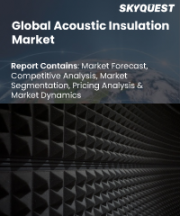
LSH 26.01.07Acoustic Insulation Market size was valued at USD 16.86 Billion in 2024 and is poised to grow from USD 17.65 Billion in 2025 to USD 25.49 Billion by 2033, growing at a CAGR of 4.7% during the forecast period (2026-2033).
The acoustic insulation market is driven by the burgeoning construction sector, particularly in emerging economies, alongside increasing government regulations aimed at noise control. Rising awareness of noise pollution's detrimental health effects is amplifying demand for effective acoustic solutions across industries, including transportation, healthcare, and industrial manufacturing. This market encompasses a wide array of products such as panels, foams, and barriers designed to minimize sound transmission, fostering quieter and safer environments. Additionally, the trend towards energy-efficient buildings presents a significant opportunity for innovation, as materials that offer both acoustic and thermal insulation can enhance energy savings. Continuous advancements in technology are essential for meeting the evolving needs of diverse applications, ensuring compliance with standards, and improving overall user comfort.
Top-down and bottom-up approaches were used to estimate and validate the size of the Acoustic Insulation market and to estimate the size of various other dependent submarkets. The research methodology used to estimate the market size includes the following details: The key players in the market were identified through secondary research, and their market shares in the respective regions were determined through primary and secondary research. This entire procedure includes the study of the annual and financial reports of the top market players and extensive interviews for key insights from industry leaders such as CEOs, VPs, directors, and marketing executives. All percentage shares split, and breakdowns were determined using secondary sources and verified through Primary sources. All possible parameters that affect the markets covered in this research study have been accounted for, viewed in extensive detail, verified through primary research, and analyzed to get the final quantitative and qualitative data.
Acoustic Insulation Market Segments Analysis
Global Acoustic Insulation Market is segmented by Material, End-Use Industry and region. Based on Material, the market is segmented into Foamed Plastic, Glass Wool, Rock Wool, Elastomeric Foam and Other Materials. Based on End-Use Industry, the market is segmented into Building & Construction, Transportation, Oil & Gas and Petrochemical, Energy & Utilities and Industrial & OEM. Based on region, the market is segmented into North America, Europe, Asia Pacific, Latin America and Middle East & Africa.
Driver of the Acoustic Insulation Market
The growing enforcement of noise regulations throughout various industries and geographical areas is significantly boosting demand for acoustic insulation. Stricter environmental guidelines require businesses to implement effective noise reduction strategies, prompting them to invest in high-quality acoustic insulation solutions. This trend reflects a broader commitment to improving sound management and ensuring compliance with regulations aimed at minimizing noise pollution. As industries acknowledge the importance of creating quieter environments for both their workers and surrounding communities, the need for advanced acoustic insulation solutions continues to rise, making it a key driver in the expanding acoustic insulation market.
Restraints in the Acoustic Insulation Market
The global acoustic insulation market has encountered significant challenges stemming from supply chain disruptions that have impacted its overall performance. Various factors, including trade restrictions and logistical hurdles, have led to increased difficulties in sourcing raw materials and components essential for production. This situation has not only affected the availability of these materials but has also led to rising costs, ultimately hindering the manufacturing and distribution processes of acoustic insulation products. As a result, the industry has experienced stagnation, making it difficult for companies to meet demand and maintain growth in this competitive market landscape.
Market Trends of the Acoustic Insulation Market
The acoustic insulation market is witnessing a significant trend towards sustainability, driven by consumer demand for eco-friendly and recyclable materials. As environmental regulations become more stringent, manufacturers are increasingly focusing on developing sustainable acoustic insulation solutions, including products crafted from recycled materials and bio-based alternatives. This shift not only aligns with customer preferences for green building practices but also encourages innovation through research and development initiatives that prioritize sustainability. As a result, the market is becoming more competitive, with businesses striving to differentiate themselves by offering high-performance acoustic solutions that are both effective and environmentally responsible.
Table of Contents
Introduction
- Objectives of the Study
- Scope of the Report
- Definitions
Research Methodology
- Information Procurement
- Secondary & Primary Data Methods
- Market Size Estimation
- Market Assumptions & Limitations
Executive Summary
- Global Market Outlook
- Supply & Demand Trend Analysis
- Segmental Opportunity Analysis
Market Dynamics & Outlook
- Market Overview
- Market Size
- Market Dynamics
- Drivers & Opportunities
- Restraints & Challenges
- Porters Analysis
- Competitive rivalry
- Threat of substitute
- Bargaining power of buyers
- Threat of new entrants
- Bargaining power of suppliers
Key Market Insights
- Key Success Factors
- Degree of Competition
- Top Investment Pockets
- Market Ecosystem
- Market Attractiveness Index, 2025
- PESTEL Analysis
- Macro-Economic Indicators
- Value Chain Analysis
- Pricing Analysis
- Technology Analysis
- Case Studies
Global Acoustic Insulation Market Size by Material & CAGR (2026-2033)
- Market Overview
- Foamed Plastic
- Glass Wool
- Rock Wool
- Elastomeric Foam
- Other Materials
Global Acoustic Insulation Market Size by End-Use Industry & CAGR (2026-2033)
- Market Overview
- Building & Construction
- Transportation
- Oil & Gas and Petrochemical
- Energy & Utilities
- Industrial & OEM
Global Acoustic Insulation Market Size & CAGR (2026-2033)
- North America (Material, End-Use Industry)
- US
- Canada
- Europe (Material, End-Use Industry)
- Germany
- Spain
- France
- UK
- Italy
- Rest of Europe
- Asia Pacific (Material, End-Use Industry)
- China
- India
- Japan
- South Korea
- Rest of Asia-Pacific
- Latin America (Material, End-Use Industry)
- Brazil
- Rest of Latin America
- Middle East & Africa (Material, End-Use Industry)
- GCC Countries
- South Africa
- Rest of Middle East & Africa
Competitive Intelligence
- Top 5 Player Comparison
- Market Positioning of Key Players, 2025
- Strategies Adopted by Key Market Players
- Recent Developments in the Market
- Company Market Share Analysis, 2025
- Company Profiles of All Key Players
- Company Details
- Product Portfolio Analysis
- Company's Segmental Share Analysis
- Revenue Y-O-Y Comparison (2023-2025)
Key Company Profiles
- Saint-Gobain (France)
- Company Overview
- Business Segment Overview
- Financial Updates
- Key Developments
- Rockwool International (Denmark)
- Company Overview
- Business Segment Overview
- Financial Updates
- Key Developments
- Owens Corning (US)
- Company Overview
- Business Segment Overview
- Financial Updates
- Key Developments
- Knauf Insulation (Germany)
- Company Overview
- Business Segment Overview
- Financial Updates
- Key Developments
- BASF SE (Germany)
- Company Overview
- Business Segment Overview
- Financial Updates
- Key Developments
- Kingspan Group (Ireland)
- Company Overview
- Business Segment Overview
- Financial Updates
- Key Developments
- Fletcher Insulation (Australia)
- Company Overview
- Business Segment Overview
- Financial Updates
- Key Developments
- L'ISOLANTE K-FLEX S.p.A. (Italy)
- Company Overview
- Business Segment Overview
- Financial Updates
- Key Developments
- Acoustiblok UK Ltd. (UK)
- Company Overview
- Business Segment Overview
- Financial Updates
- Key Developments
- Cellecta Ltd. (UK)
- Company Overview
- Business Segment Overview
- Financial Updates
- Key Developments
- Beijing New Building Material (Group) Co., Ltd. (China)
- Company Overview
- Business Segment Overview
- Financial Updates
- Key Developments
- Troldtekt A/S (Denmark)
- Company Overview
- Business Segment Overview
- Financial Updates
- Key Developments
- Sontext Pty Ltd. (Australia)
- Company Overview
- Business Segment Overview
- Financial Updates
- Key Developments
- ROCKWOOL Group (Denmark)
- Company Overview
- Business Segment Overview
- Financial Updates
- Key Developments
- Aspen Aerogels, Inc. (US)
- Company Overview
- Business Segment Overview
- Financial Updates
- Key Developments
- Quietstone UK Ltd. (UK)
- Company Overview
- Business Segment Overview
- Financial Updates
- Key Developments
- Polyglass S.p.A. (Italy)
- Company Overview
- Business Segment Overview
- Financial Updates
- Key Developments
- FIBRAN S.A. (Greece)
- Company Overview
- Business Segment Overview
- Financial Updates
- Key Developments
- Hush Acoustics Ltd. (UK)
- Company Overview
- Business Segment Overview
- Financial Updates
- Key Developments