|
시장보고서
상품코드
1898697
바이오뱅크 시장 규모, 점유율, 성장 분석 : 제품 및 서비스별, 바이오뱅크 유형별, 샘플 유형별, 보존 방법별, 소유별, 용도별, 최종사용자별, 지역별 - 업계 예측(2026-2033년)Biobanking Market Size, Share, and Growth Analysis, By Product &Service (Equipment, Consumables), By Biobanks Type, By Sample Type, By Storage Type, By Ownership, By Application, By End user, By Region - Industry Forecast 2026-2033 |
||||||

바이오뱅크 시장 규모는 2024년에 769억 달러로 평가되며, 2025년 821억 2,000만 달러에서 2033년까지 1,390억 1,000만 달러로 성장할 전망입니다. 예측 기간(2026-2033년)의 CAGR은 6.8%로 예측됩니다.
바이오뱅크 분야는 기술 혁신, 데이터 분석, 자동화를 원동력으로 하여 괄목할 만한 성장을 거듭하고 있습니다. 이러한 진화를 통해 기존 바이오뱅크의 운영 효율성을 높이고, 큰 시장 가능성을 개발하는 가상 바이오뱅크가 등장했습니다. 질병 관련, 인체유래, 조직, 혈액은행 등 다양한 유형의 바이오뱅크가 다양한 시장 상황을 형성하고 있으며, 특히 퇴행성 질환 증가로 인해 큰 수혜를 받고 있습니다. 첨단 기술의 통합은 조사 방법의 가속화, 처리 시간 최소화, 바이오뱅크의 수익성 향상으로 이어져 전체 시장의 가치를 높일 수 있습니다. 또한 바이오뱅크 업무의 최적화와 가상 시스템 도입 촉진을 위한 소프트웨어 개발 노력이 증가하고 있으며, 이러한 노력은 바이오뱅크 시장의 견고한 성장을 촉진하고 있습니다.
바이오뱅크 시장 활성화 요인
바이오뱅크 시장의 중요한 촉진요인은 유전체 연구의 확대와 맞춤형 의료의 발전입니다. 유전자 마커와 질병 진행의 연관성에 대한 이해가 깊어짐에 따라 유전체 분석을 위한 고품질 생체 샘플을 저장하는 바이오뱅크의 필요성이 높아지고 있습니다. 이러한 생체 샘플은 연구자들이 표적 치료법을 개발하는 데 중요한 역할을 하고 있으며, 바이오뱅크가 신흥 의료 혁신의 최전선에 서고 있습니다. 바이오 뱅킹에 대한 의존도가 높아짐에 따라 바이오뱅크가 개인 맞춤형 치료 접근법의 획기적인 발전을 촉진하고 전반적인 의료 성과를 향상시키는 데 있으며, 매우 중요하다는 것을 보여줍니다.
바이오뱅크 시장 성장 억제요인
바이오뱅크 시장에서는 바이오 샘플의 수집, 보관, 이용과 관련된 윤리적, 법적 고려사항으로 인해 심각한 제약이 발생하고 있습니다. 환자의 프라이버시, 사전 동의, 민감한 데이터의 악용 가능성에 대한 우려는 바이오뱅크의 설립과 운영에 큰 도전이 되고 있습니다. 이러한 문제들은 대중의 신뢰와 수용을 저해하고, 기존 규제 상황에서 바이오뱅크가 효과적으로 기능하는 것을 어렵게 합니다. 엄격한 윤리 기준 준수와 투명성 및 기밀성 보장 사이의 균형을 맞출 필요가 여전히 중요한 장벽으로 작용하고 있으며, 이는 바이오 뱅킹 사업의 전반적인 성장과 지속가능성에 영향을 미치고 있습니다.
바이오뱅크 시장 동향
바이오뱅크 시장에서는 인공지능(AI)과 빅데이터 분석의 통합이라는 두드러진 추세가 관찰되고 있습니다. 이 기술 융합을 통해 시료 추적의 정확도 향상, 데이터 관리 최적화, 시료 보관 품질 향상을 실현할 수 있습니다. AI 기반 분석은 연구자들이 방대한 바이오 샘플 데이터세트에서 패턴을 발견하고 인사이트를 도출하여 새로운 바이오마커를 식별하고 신약 개발 구상을 가속화할 수 있도록 돕습니다. 바이오뱅크가 이러한 첨단 기술을 활용함으로써 업무 효율성 향상뿐만 아니라 맞춤형 의료와 혁신적인 치료 솔루션의 획기적인 발전에 기여하며, 바이오 의학 연구 분야에서 핵심적인 역할을 담당하고 있습니다.
자주 묻는 질문
목차
서론
- 조사의 목적
- 조사 범위
- 정의
조사 방법
- 정보 조달
- 2차와 1차 데이터 방법
- 시장 규모 예측
- 시장 전제조건과 제한
개요
- 세계 시장 전망
- 공급과 수요 동향 분석
- 부문별 기회 분석
시장 역학과 전망
- 시장 규모
- 시장 역학
- 촉진요인과 기회
- 억제요인과 과제
- Porter의 산업 분석
주요 시장 인사이트
- 주요 성공 요인
- 경쟁의 정도
- 주요 투자 기회
- 시장 에코시스템
- 시장의 매력 지수(2025년)
- PESTEL 분석
- 거시경제 지표
- 밸류체인 분석
- 가격 분석
세계의 바이오뱅크 시장 규모 : 제품·서비스별;& CAGR(2026-2033)
- 장비
- 보존 장비
- 샘플 분석 장비
- 검체 처리 장비
- 검체 운송 장비
- 소모품
- 보존용 소모품
- 분석용 소모품
- 처리용 소모품
- 채취용 소모품
- 서비스
- 보관 서비스
- 처리 서비스
- 운송 서비스
- 공급 서비스
- 소프트웨어
세계의 바이오뱅크 시장 규모 : 바이오뱅크 유형별 & CAGR(2026-2033)
- 물리적/실체 바이오뱅크
- 조직 바이오뱅크
- 인구 기반 바이오뱅크
- 유전자(DNA/RNA)
- 질환 기반 바이오뱅크
- 가상 바이오뱅크
세계의 바이오뱅크 시장 규모 : 샘플 유형별 & CAGR(2026-2033)
- 혈액제제
- 인체조직
- 세포주
- 핵산
- 생체액
- 인간 배설물
세계의 바이오뱅크 시장 규모 : 보존 유형별 & CAGR(2026-2033)
- 수동 보관
- 자동화 보관
세계의 바이오뱅크 시장 규모 : 소유별 & CAGR(2026-2033)
- 대학
- 국립·지역 기관
- 비영리단체
- 민간 조직
세계의 바이오뱅크 시장 규모 : 용도별 & CAGR(2026-2033)
- 재생의료
- 생명과학 연구
- 임상 연구
세계의 바이오뱅크 시장 규모 : 최종사용자별 & CAGR(2026-2033)
- 제약회사
- 바이오테크놀러지 기업 및 CRO
- 학술기관
- 연구기관
- 병원
세계의 바이오뱅크 시장 규모 & CAGR(2026-2033)
- 북미
- 미국
- 캐나다
- 유럽
- 독일
- 스페인
- 프랑스
- 영국
- 이탈리아
- 기타 유럽 지역
- 아시아태평양
- 중국
- 인도
- 일본
- 한국
- 기타 아시아태평양
- 라틴아메리카
- 브라질
- 기타 라틴아메리카 지역
- 중동 및 아프리카
- GCC 국가
- 남아프리카공화국
- 기타 중동 및 아프리카
경쟁 정보
- 상위 5사의 비교
- 주요 기업의 시장 포지셔닝(2025년)
- 주요 시장 기업이 채택한 전략
- 최근 시장 동향
- 기업의 시장 점유율 분석(2025년)
- 주요 기업의 기업 개요
- 기업의 상세
- 제품 포트폴리오 분석
- 기업의 부문별 점유율 분석
- 매출의 전년대비 비교(2023-2025년)
주요 기업 개요
- Thermo Fisher Scientific Inc.(United States)
- Merck KGaA(Germany)
- QIAGEN N.V.(Netherlands)
- Hamilton Company(United States)
- Tecan Trading AG(Switzerland)
- Becton, Dickinson and Company(BD)(United States)
- Lonza Group AG(Switzerland)
- Charles River Laboratories International, Inc.(United States)
- BioLife Solutions, Inc.(United States)
- Brooks Automation, Inc.(United States)
- Greiner Bio-One International GmbH(Austria)
- STEMCELL Technologies Inc.(Canada)
- Chart Industries, Inc.(United States)
- BioIVT(United States)
- Firalis S.A.(France)
- Celltex Therapeutics Corporation(United States)
- Sigma-Aldrich Corporation(United States)
- Hope Biosciences(United States)
- 54Gene(Nigeria)
결론과 제안
KSA 26.01.16Biobanking Market size was valued at USD 76.9 Billion in 2024 and is poised to grow from USD 82.12 Billion in 2025 to USD 139.01 Billion by 2033, growing at a CAGR of 6.8% during the forecast period (2026-2033).
The biobanking sector is experiencing significant expansion, fueled by technological advancements, data analytics, and automation. This evolution has led to the emergence of virtual biobanks, which enhance the operational efficiency of traditional biobanks, unlocking substantial market potential. Various types of biobanks, including disease-related, human-based, tissue, and blood banks, contribute to a diverse landscape, particularly benefiting from the increasing prevalence of degenerative diseases. The integration of cutting-edge technologies accelerates the research process, minimizes processing times, and enhances revenue generation for biobanks, subsequently elevating the overall market value. Furthermore, software development initiatives are on the rise, aimed at optimizing biobanking operations and promoting the adoption of virtual systems, which collectively drive robust growth within the biobanking market.
Top-down and bottom-up approaches were used to estimate and validate the size of the Biobanking market and to estimate the size of various other dependent submarkets. The research methodology used to estimate the market size includes the following details: The key players in the market were identified through secondary research, and their market shares in the respective regions were determined through primary and secondary research. This entire procedure includes the study of the annual and financial reports of the top market players and extensive interviews for key insights from industry leaders such as CEOs, VPs, directors, and marketing executives. All percentage shares split, and breakdowns were determined using secondary sources and verified through Primary sources. All possible parameters that affect the markets covered in this research study have been accounted for, viewed in extensive detail, verified through primary research, and analyzed to get the final quantitative and qualitative data.
Biobanking Market Segments Analysis
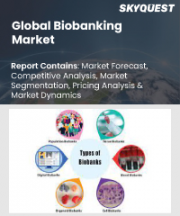
Global Biobanking Market is segmented by Product &Service, Biobanks Type, Sample Type, Storage Type, Ownership, Application, End user and region. Based on Product &Service, the market is segmented into Equipment, Consumables, Services and Software. Based on Biobanks Type, the market is segmented into Physical/Real Biobanks, Tissue Biobanks, Population Based Biobanks, Genetic (DNA/RNA), Disease Based Biobanks and Virtual Biobanks. Based on Sample Type, the market is segmented into Blood Products, Human Tissues, Cell Lines, Nucleic Acids, Biological Fluids and Human Waste Products. Based on Storage Type, the market is segmented into Manual Storage and Automated Storage. Based on Ownership, the market is segmented into Universities, National/Regional Agencies, Non-Profit Organizations and Private Organizations. Based on Application, the market is segmented into Regenerative Medicine, Life Science Research and Clinical Research. Based on End user, the market is segmented into Pharmaceutical, Biotechnology Companies and CROs, Academic, Research Institutes and Hospitals. Based on region, the market is segmented into North America, Europe, Asia Pacific, Latin America and Middle East & Africa.
Driver of the Biobanking Market
A significant catalyst for the biobanking market is the expanding landscape of genomics research and the advancement of personalized medicine. With increased comprehension of genetic markers and their relation to disease progression, there is a heightened need for biobanks that preserve high-quality biosamples for genomic analysis. These biosamples play a critical role in enabling researchers to develop targeted therapies, thereby positioning biobanks at the forefront of emerging healthcare innovations. This growing reliance on biobanking underscores its vital importance in facilitating breakthroughs in personalized treatment approaches and enhancing overall healthcare outcomes.
Restraints in the Biobanking Market
In the biobanking market, significant constraints arise from the ethical and legal considerations associated with the collection, storage, and utilization of biospecimens. Concerns regarding patient privacy, informed consent, and potential misuse of sensitive data pose considerable challenges to the establishment and operation of biobanks. These issues can hinder public trust and acceptance, making it difficult for biobanks to function effectively within the existing regulatory landscape. The need to balance stringent compliance with ethical standards while ensuring transparency and confidentiality remains a critical obstacle, impacting the overall growth and sustainability of biobanking initiatives.
Market Trends of the Biobanking Market
The biobanking market is witnessing a significant trend characterized by the integration of artificial intelligence (AI) and big data analytics. This technological fusion enhances specimen tracking, optimizes data management, and elevates the quality of specimen storage. AI-driven analytics empower researchers to uncover patterns and derive insights from extensive biosample datasets, thereby facilitating the identification of new biomarkers and expediting drug development initiatives. As biobanks harness these advanced technologies, they not only improve operational efficiencies but also contribute to groundbreaking advancements in personalized medicine and innovative therapeutic solutions, positioning themselves as pivotal players in the biomedical research landscape.
Table of Contents
Introduction
- Objectives of the Study
- Scope of the Report
- Definitions
Research Methodology
- Information Procurement
- Secondary & Primary Data Methods
- Market Size Estimation
- Market Assumptions & Limitations
Executive Summary
- Global Market Outlook
- Supply & Demand Trend Analysis
- Segmental Opportunity Analysis
Market Dynamics & Outlook
- Market Overview
- Market Size
- Market Dynamics
- Drivers & Opportunities
- Restraints & Challenges
- Porters Analysis
- Competitive rivalry
- Threat of substitute
- Bargaining power of buyers
- Threat of new entrants
- Bargaining power of suppliers
Key Market Insights
- Key Success Factors
- Degree of Competition
- Top Investment Pockets
- Market Ecosystem
- Market Attractiveness Index, 2025
- PESTEL Analysis
- Macro-Economic Indicators
- Value Chain Analysis
- Pricing Analysis
Global Biobanking Market Size by Product &Service & CAGR (2026-2033)
- Market Overview
- Equipment
- Storage Equipment
- Sample Analysis Equipment
- Sample Processing Equipment
- Sample Transport Equipment
- Consumables
- Storage Consumables
- Analysis Consumables
- Processing Consumables
- Collection Consumables
- Services
- Storage Services
- Processing Services
- Transport Services
- Supply Services
- Software
Global Biobanking Market Size by Biobanks Type & CAGR (2026-2033)
- Market Overview
- Physical/Real Biobanks
- Tissue Biobanks
- Population Based Biobanks
- Genetic (DNA/RNA)
- Disease Based Biobanks
- Virtual Biobanks
Global Biobanking Market Size by Sample Type & CAGR (2026-2033)
- Market Overview
- Blood Products
- Human Tissues
- Cell Lines
- Nucleic Acids
- Biological Fluids
- Human Waste Products
Global Biobanking Market Size by Storage Type & CAGR (2026-2033)
- Market Overview
- Manual Storage
- Automated Storage
Global Biobanking Market Size by Ownership & CAGR (2026-2033)
- Market Overview
- Universities
- National/Regional Agencies
- Non-Profit Organizations
- Private Organizations
Global Biobanking Market Size by Application & CAGR (2026-2033)
- Market Overview
- Regenerative Medicine
- Life Science Research
- Clinical Research
Global Biobanking Market Size by End user & CAGR (2026-2033)
- Market Overview
- Pharmaceutical
- Biotechnology Companies and CROs
- Academic
- Research Institutes
- Hospitals
Global Biobanking Market Size & CAGR (2026-2033)
- North America (Product &Service, Biobanks Type, Sample Type, Storage Type, Ownership, Application, End user)
- US
- Canada
- Europe (Product &Service, Biobanks Type, Sample Type, Storage Type, Ownership, Application, End user)
- Germany
- Spain
- France
- UK
- Italy
- Rest of Europe
- Asia Pacific (Product &Service, Biobanks Type, Sample Type, Storage Type, Ownership, Application, End user)
- China
- India
- Japan
- South Korea
- Rest of Asia-Pacific
- Latin America (Product &Service, Biobanks Type, Sample Type, Storage Type, Ownership, Application, End user)
- Brazil
- Rest of Latin America
- Middle East & Africa (Product &Service, Biobanks Type, Sample Type, Storage Type, Ownership, Application, End user)
- GCC Countries
- South Africa
- Rest of Middle East & Africa
Competitive Intelligence
- Top 5 Player Comparison
- Market Positioning of Key Players, 2025
- Strategies Adopted by Key Market Players
- Recent Developments in the Market
- Company Market Share Analysis, 2025
- Company Profiles of All Key Players
- Company Details
- Product Portfolio Analysis
- Company's Segmental Share Analysis
- Revenue Y-O-Y Comparison (2023-2025)
Key Company Profiles
- Thermo Fisher Scientific Inc. (United States)
- Company Overview
- Business Segment Overview
- Financial Updates
- Key Developments
- Merck KGaA (Germany)
- Company Overview
- Business Segment Overview
- Financial Updates
- Key Developments
- QIAGEN N.V. (Netherlands)
- Company Overview
- Business Segment Overview
- Financial Updates
- Key Developments
- Hamilton Company (United States)
- Company Overview
- Business Segment Overview
- Financial Updates
- Key Developments
- Tecan Trading AG (Switzerland)
- Company Overview
- Business Segment Overview
- Financial Updates
- Key Developments
- Becton, Dickinson and Company (BD) (United States)
- Company Overview
- Business Segment Overview
- Financial Updates
- Key Developments
- Lonza Group AG (Switzerland)
- Company Overview
- Business Segment Overview
- Financial Updates
- Key Developments
- Charles River Laboratories International, Inc. (United States)
- Company Overview
- Business Segment Overview
- Financial Updates
- Key Developments
- BioLife Solutions, Inc. (United States)
- Company Overview
- Business Segment Overview
- Financial Updates
- Key Developments
- Brooks Automation, Inc. (United States)
- Company Overview
- Business Segment Overview
- Financial Updates
- Key Developments
- Greiner Bio-One International GmbH (Austria)
- Company Overview
- Business Segment Overview
- Financial Updates
- Key Developments
- STEMCELL Technologies Inc. (Canada)
- Company Overview
- Business Segment Overview
- Financial Updates
- Key Developments
- Chart Industries, Inc. (United States)
- Company Overview
- Business Segment Overview
- Financial Updates
- Key Developments
- BioIVT (United States)
- Company Overview
- Business Segment Overview
- Financial Updates
- Key Developments
- Firalis S.A. (France)
- Company Overview
- Business Segment Overview
- Financial Updates
- Key Developments
- Celltex Therapeutics Corporation (United States)
- Company Overview
- Business Segment Overview
- Financial Updates
- Key Developments
- Sigma-Aldrich Corporation (United States)
- Company Overview
- Business Segment Overview
- Financial Updates
- Key Developments
- Hope Biosciences (United States)
- Company Overview
- Business Segment Overview
- Financial Updates
- Key Developments
- 54Gene (Nigeria)
- Company Overview
- Business Segment Overview
- Financial Updates
- Key Developments