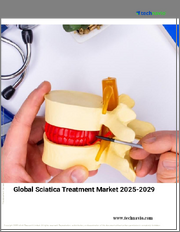
|
시장보고서
상품코드
1899235
좌골 신경통 치료 시장 규모, 점유율, 성장 분석 : 유형별, 약제 클래스별, 유통경로별, 지역별 - 업계 예측(2026-2033년)Sciatica Treatment Market Size, Share, and Growth Analysis, By Type (Acute, Chronic), By Drug Class (Nonsteroidal Anti-Inflammatory Drugs (NSAIDs), Corticosteroids), By Distribution Channel, By Region - Industry Forecast 2026-2033 |
||||||

세계의 좌골 신경통 치료 시장 규모는 2024년에 7억 6,486만 달러로 평가되었고, 2025년 7억 9,622만 달러에서 2033년까지 10억 9,810만 달러로 성장할 전망이며, 예측 기간(2026-2033년) CAGR은 4.1%를 보일 것으로 예측됩니다.
허리에서 다리까지 좌골 신경을 따라 퍼지는 통증이 특징인 좌골 신경통의 유병률 증가는 치료 분야의 중요한 시장 동향을 반영하고 있습니다. 앉아서 생활하는 습관 증가, 비만율 증가, 고령화 등의 요인이 이러한 급증의 주요 요인입니다. 또한, 진단 기술의 발전으로 좌골신경통의 식별이 용이해지면서 보고되는 환자 수가 증가하고 있습니다. 통계에 따르면, 인구의 약 40%가 평생 동안 좌골신경통 증상을 경험하고 있으며, 특히 40-50대 연령층에서 두드러집니다. 또한, 남성이 여성보다 발병률이 더 높은 경향이 있습니다. 이러한 결과는 효과적인 치료 솔루션에 대한 수요가 꾸준히 증가하고 있으며, 업계 관계자들이 이 흔한 질병을 관리하기 위해 새로운 과제를 해결해야 할 필요성을 강조하고 있습니다.
세계 좌골신경통 치료제 시장을 이끄는 요인들
세계 좌골신경통 치료제 시장의 주요 시장 성장 촉진요인 중 하나는 좌식 생활 방식과 그에 따른 건강 문제 증가입니다. 장시간 앉아서 일하는 직장인과 건강에 좋지 않은 습관, 운동 부족으로 인해 좌골신경통 및 관련 질환의 발병률이 증가하고 있습니다. 이러한 추세는 척추 질환의 위험이 높은 고령화 인구로 인해 더욱 악화되고 있습니다. 그 결과, 약물 치료, 물리치료, 최소침습수술 등 효과적인 치료법과 요법에 대한 수요가 증가하고 있으며, 이는 좌골신경통 치료 분야의 혁신과 투자를 촉진하고 있습니다.
세계 좌골신경통 치료제 시장의 제약 조건
세계 좌골신경통 치료제 시장의 주요 시장 성장 억제요인 중 하나는 치료 효과의 편차와 표준화된 치료 프로토콜의 확립이 어렵다는 점입니다. 좌골신경통은 다양한 기저질환에 의해 유발되는 경우가 많아 진단과 치료 접근이 복잡해집니다. 이러한 변동성은 환자의 치료 결과에 편차를 발생시켜 치료에 대한 불만족을 초래할 수 있으며, 치료를 받는 것을 망설이게 하는 요인이 될 수 있습니다. 또한, 고급 치료 옵션의 높은 비용과 특정 치료법에 대한 보험 적용 범위의 제한이 결합되어 치료 접근성을 더욱 제한할 수 있습니다. 이러한 요인들이 복합적으로 작용하여 환자가 비용이 많이 드는 좌골신경통 치료에 투자하려는 의욕을 제한하고 시장 성장을 저해하고 있습니다.
세계 좌골신경통 치료제 시장 동향
세계 좌골신경통 치료 시장은 진단 영상 기술, 특히 MRI와 CT 스캔의 눈부신 발전에 힘입어 견조한 성장세를 보이고 있습니다. 이러한 혁신 기술은 좌골신경통의 근본 원인을 파악하는 정확도를 크게 향상시켜 보다 신속하고 정확한 진단을 가능하게 하고, 적시에 개입할 수 있도록 돕고 있습니다. 조기 진단의 중요성은 좌골신경통이 만성화되는 것을 방지하고 환자의 예후를 개선하고 관련 장애의 위험을 줄이는 데 매우 중요합니다. 좌골신경통의 발병률 증가로 효과적인 치료법에 대한 수요가 증가함에 따라 의료 전문가들이 첨단 영상 진단을 활용하여 치료 효과를 높이기 위해 개입을 개별화함에 따라 시장은 지속적으로 확대될 것으로 예측됩니다.
자주 묻는 질문
목차
서론
- 조사 목적
- 조사 범위
- 정의
조사 방법
- 정보 조달
- 2차와 1차 데이터 방법
- 시장 규모 예측
- 시장 전제조건과 제한
주요 요약
- 세계 시장 전망
- 공급과 수요 동향 분석
- 부문별 기회 분석
시장 역학과 전망
- 시장 규모
- 시장 역학
- 성장 촉진요인과 기회
- 성장 억제요인과 과제
- Porter의 Five Forces 분석
주요 시장 인사이트
- 중요 성공 요인
- 경쟁 정도
- 주요 투자 기회
- 시장 생태계
- 시장의 매력 지수(2025년)
- PESTEL 분석
- 거시경제 지표
- 밸류체인 분석
- 가격 분석
세계의 좌골 신경통 치료 시장 규모 : 유형별&CAGR(2026-2033)
- 급성
- 만성
- 기타
세계의 좌골 신경통 치료 시장 규모 : 약제 클래스별&CAGR(2026-2033)
- 비스테로이드성 항염증제(NSAIDs)
- 코르티코스테로이드
- 항우울제
- 기타
세계의 좌골 신경통 치료 시장 규모 : 유통 채널별&CAGR(2026-2033)
- 병원 약국
- 소매 및 온라인 약국
세계의 좌골 신경통 치료 시장 규모&CAGR(2026-2033)
- 북미
- 미국
- 캐나다
- 유럽
- 독일
- 스페인
- 프랑스
- 영국
- 이탈리아
- 기타 유럽
- 아시아태평양
- 중국
- 인도
- 일본
- 한국
- 기타 아시아태평양
- 라틴아메리카
- 브라질
- 기타 라틴아메리카
- 중동 및 아프리카
- GCC 국가
- 남아프리카공화국
- 기타 중동 및 아프리카
경쟁 정보
- 주요 5개사 비교
- 주요 기업의 시장 포지셔닝(2025년)
- 주요 시장 기업이 채택한 전략
- 최근 시장 동향
- 기업의 시장 점유율 분석(2025년)
- 주요 기업 개요
- 기업 상세
- 제품 포트폴리오 분석
- 기업 부문별 점유율 분석
- 매출 전년대비 비교(2023-2025년)
주요 기업 개요
- Pfizer Inc.(United States)
- Novartis AG(Switzerland)
- Johnson & Johnson(United States)
- Teva Pharmaceutical Industries Ltd.(Israel)
- Endo Pharmaceuticals(United States)
- Stryker Corporation(United States)
- Medtronic PLC(Ireland)
- Abbott Laboratories(United States)
- Bayer AG(Germany)
- Sanofi S.A.(France)
- AstraZeneca PLC(United Kingdom)
- Amneal Pharmaceuticals, Inc.(United States)
- Aurobindo Pharma Limited(India)
- Sun Pharmaceutical Industries Ltd.(India)
- Sorrento Therapeutics, Inc.(United States)
- Alkem Laboratories Ltd.(India)
- Eliem Therapeutics, Inc.(United States)
- Sinfonia Biotherapeutics(United States)
- Omega Laser Systems Ltd.(United Kingdom)
결론과 제안
LSH 26.01.16Global Sciatica Treatment Market size was valued at USD 764.86 Million in 2024 and is poised to grow from USD 796.22 Million in 2025 to USD 1098.1 Million by 2033, growing at a CAGR of 4.1% during the forecast period (2026-2033).
The growing prevalence of sciatica, marked by pain radiating along the sciatic nerve from the lower back through the legs, reflects significant market trends in the treatment sector. Factors such as increased sedentary lifestyles, rising obesity rates, and an aging population are major contributors to this surge. Additionally, advancements in diagnostic technologies have improved sciatica identification, resulting in higher reported cases. Evidence indicates that around 40% of the population experiences sciatica symptoms during their lifetime, particularly in individuals in their 40s and 50s, with men being more frequently affected than women. These insights highlight a robust demand for effective treatment solutions and emphasize the need for industry players to address emerging challenges in managing this prevalent condition.
Top-down and bottom-up approaches were used to estimate and validate the size of the Global Sciatica Treatment market and to estimate the size of various other dependent submarkets. The research methodology used to estimate the market size includes the following details: The key players in the market were identified through secondary research, and their market shares in the respective regions were determined through primary and secondary research. This entire procedure includes the study of the annual and financial reports of the top market players and extensive interviews for key insights from industry leaders such as CEOs, VPs, directors, and marketing executives. All percentage shares split, and breakdowns were determined using secondary sources and verified through Primary sources. All possible parameters that affect the markets covered in this research study have been accounted for, viewed in extensive detail, verified through primary research, and analyzed to get the final quantitative and qualitative data.
Global Sciatica Treatment Market Segments Analysis
Global Sciatica Treatment Market is segmented by Type, Drug Class, Distribution Channel and region. Based on Type, the market is segmented into Acute, Chronic and Others. Based on Drug Class, the market is segmented into Nonsteroidal Anti-Inflammatory Drugs (NSAIDs), Corticosteroids, Antidepressants and Others. Based on Distribution Channel, the market is segmented into Hospital Pharmacies and Retail & Online Pharmacies. Based on region, the market is segmented into North America, Europe, Asia Pacific, Latin America and Middle East & Africa.
Driver of the Global Sciatica Treatment Market
One of the key market drivers for the global sciatica treatment market is the increasing prevalence of sedentary lifestyles and related health issues in the population. As more individuals engage in prolonged sitting due to desk jobs, unhealthy habits, and a lack of physical activity, the incidence of sciatica and associated conditions rises. This trend is further exacerbated by the aging population, which experiences a higher likelihood of spinal issues. Consequently, there is a growing demand for effective treatments and therapies, including medications, physical rehabilitation, and minimally invasive surgeries, driving innovation and investment in the sciatica treatment sector.
Restraints in the Global Sciatica Treatment Market
One significant market restraint for the global sciatica treatment market is the variability in treatment efficacy and the challenge of creating standardized treatment protocols. Sciatica is often caused by various underlying conditions, leading to complexities in diagnosis and treatment approaches. This variability can result in inconsistent patient outcomes and dissatisfaction, which may deter individuals from seeking treatment. Additionally, the high cost of advanced treatment options, coupled with limited insurance coverage for certain therapies, can further restrict access to care. These factors collectively hinder market growth by limiting the willingness of patients to invest in potentially costly sciatica treatments.
Market Trends of the Global Sciatica Treatment Market
The Global Sciatica Treatment market is experiencing robust growth driven by significant advancements in diagnostic imaging technologies, particularly MRI and CT scans. These innovations greatly enhance the precision of identifying the underlying causes of sciatica, which facilitates quicker and more accurate diagnoses, leading to timely interventions. The emphasis on early diagnosis is pivotal in preventing the progression of sciatica into chronic conditions, thereby promoting better patient outcomes and reducing the risk of associated disabilities. With the rising incidence of sciatica fueling demand for effective treatments, the market is poised for continued expansion as healthcare professionals leverage advanced imaging to tailor interventions for improved efficacy.
Table of Contents
Introduction
- Objectives of the Study
- Scope of the Report
- Definitions
Research Methodology
- Information Procurement
- Secondary & Primary Data Methods
- Market Size Estimation
- Market Assumptions & Limitations
Executive Summary
- Global Market Outlook
- Supply & Demand Trend Analysis
- Segmental Opportunity Analysis
Market Dynamics & Outlook
- Market Overview
- Market Size
- Market Dynamics
- Drivers & Opportunities
- Restraints & Challenges
- Porters Analysis
- Competitive rivalry
- Threat of substitute
- Bargaining power of buyers
- Threat of new entrants
- Bargaining power of suppliers
Key Market Insights
- Key Success Factors
- Degree of Competition
- Top Investment Pockets
- Market Ecosystem
- Market Attractiveness Index, 2025
- PESTEL Analysis
- Macro-Economic Indicators
- Value Chain Analysis
- Pricing Analysis
Global Sciatica Treatment Market Size by Type & CAGR (2026-2033)
- Market Overview
- Acute
- Chronic
- Others
Global Sciatica Treatment Market Size by Drug Class & CAGR (2026-2033)
- Market Overview
- Nonsteroidal Anti-Inflammatory Drugs (NSAIDs)
- Corticosteroids
- Antidepressants
- Others
Global Sciatica Treatment Market Size by Distribution Channel & CAGR (2026-2033)
- Market Overview
- Hospital Pharmacies
- Retail & Online Pharmacies
Global Sciatica Treatment Market Size & CAGR (2026-2033)
- North America (Type, Drug Class, Distribution Channel)
- US
- Canada
- Europe (Type, Drug Class, Distribution Channel)
- Germany
- Spain
- France
- UK
- Italy
- Rest of Europe
- Asia Pacific (Type, Drug Class, Distribution Channel)
- China
- India
- Japan
- South Korea
- Rest of Asia-Pacific
- Latin America (Type, Drug Class, Distribution Channel)
- Brazil
- Rest of Latin America
- Middle East & Africa (Type, Drug Class, Distribution Channel)
- GCC Countries
- South Africa
- Rest of Middle East & Africa
Competitive Intelligence
- Top 5 Player Comparison
- Market Positioning of Key Players, 2025
- Strategies Adopted by Key Market Players
- Recent Developments in the Market
- Company Market Share Analysis, 2025
- Company Profiles of All Key Players
- Company Details
- Product Portfolio Analysis
- Company's Segmental Share Analysis
- Revenue Y-O-Y Comparison (2023-2025)
Key Company Profiles
- Pfizer Inc. (United States)
- Company Overview
- Business Segment Overview
- Financial Updates
- Key Developments
- Novartis AG (Switzerland)
- Company Overview
- Business Segment Overview
- Financial Updates
- Key Developments
- Johnson & Johnson (United States)
- Company Overview
- Business Segment Overview
- Financial Updates
- Key Developments
- Teva Pharmaceutical Industries Ltd. (Israel)
- Company Overview
- Business Segment Overview
- Financial Updates
- Key Developments
- Endo Pharmaceuticals (United States)
- Company Overview
- Business Segment Overview
- Financial Updates
- Key Developments
- Stryker Corporation (United States)
- Company Overview
- Business Segment Overview
- Financial Updates
- Key Developments
- Medtronic PLC (Ireland)
- Company Overview
- Business Segment Overview
- Financial Updates
- Key Developments
- Abbott Laboratories (United States)
- Company Overview
- Business Segment Overview
- Financial Updates
- Key Developments
- Bayer AG (Germany)
- Company Overview
- Business Segment Overview
- Financial Updates
- Key Developments
- Sanofi S.A. (France)
- Company Overview
- Business Segment Overview
- Financial Updates
- Key Developments
- AstraZeneca PLC (United Kingdom)
- Company Overview
- Business Segment Overview
- Financial Updates
- Key Developments
- Amneal Pharmaceuticals, Inc. (United States)
- Company Overview
- Business Segment Overview
- Financial Updates
- Key Developments
- Aurobindo Pharma Limited (India)
- Company Overview
- Business Segment Overview
- Financial Updates
- Key Developments
- Sun Pharmaceutical Industries Ltd. (India)
- Company Overview
- Business Segment Overview
- Financial Updates
- Key Developments
- Sorrento Therapeutics, Inc. (United States)
- Company Overview
- Business Segment Overview
- Financial Updates
- Key Developments
- Alkem Laboratories Ltd. (India)
- Company Overview
- Business Segment Overview
- Financial Updates
- Key Developments
- Eliem Therapeutics, Inc. (United States)
- Company Overview
- Business Segment Overview
- Financial Updates
- Key Developments
- Sinfonia Biotherapeutics (United States)
- Company Overview
- Business Segment Overview
- Financial Updates
- Key Developments
- Omega Laser Systems Ltd. (United Kingdom)
- Company Overview
- Business Segment Overview
- Financial Updates
- Key Developments