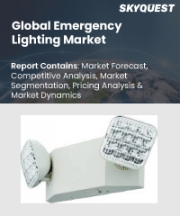
|
시장보고서
상품코드
1899361
비상 조명 시장 규모, 점유율, 성장 분석 : 구성부품별, 전력 시스템별, 배터리 유형별, 광원별, 용도별, 지역별-업계 예측(2026-2033년)Emergency Lighting Market Size, Share, and Growth Analysis, By Components (Hardware, Software), By Power System (Self-Contained, Central), By Battery Type, By Light Source, By Application, By Region - Industry Forecast 2026-2033 |
||||||

세계의 비상 조명 시장 규모는 2024년에 78억 7,000만 달러로 평가되었고, 2025년 86억 달러에서 2033년까지 175억 2,000만 달러로 성장할 전망이며, 예측 기간(2026년-2033년) CAGR은 9.3%를 보일 것으로 예측됩니다.
세계 비상 조명 시장은 다양한 분야의 안전에 대한 인식이 높아지고 엄격한 규제가 강화됨에 따라 크게 성장하고 있습니다. 정전 시 사람들을 안전한 장소로 유도하는 데 필수적인 비상 조명 시스템은 주거, 상업시설, 산업시설, 의료시설, 교통기관 등 다양한 환경에서 매우 중요한 역할을 합니다. 이러한 수요의 급증은 공공장소 및 직장에서의 사용자 안전에 대한 관심과 관련이 있습니다. LED 기술의 혁신은 우수한 에너지 효율과 긴 수명을 제공함으로써 업계를 변화시키고 있으며, 스마트 기술과 IoT 솔루션의 통합은 원격 관리 및 유지보수를 강화하고 있습니다. 또한, 지속 가능한 실천 트렌드와 미적 디자인 개발이 제품 제공을 형성하고 있습니다. 이러한 경쟁 환경은 제조업체를 혁신, 전략적 제휴, 시장 통합으로 이끌며 견고한 성장 궤도를 보이고 있습니다.
세계 비상 조명 시장 활성화 요인
세계 비상 조명 시장을 이끄는 주요 요인은 안전 규제에 대한 관심이 높아지고 있다는 점입니다. 전 세계 여러 정부 및 규제 기관은 상업 및 공공시설에 비상 조명 시스템 설치를 의무화하는 엄격한 안전 기준을 수립하고 있습니다. 이러한 주민 안전 강화를 위한 공동의 노력은 비상 조명 솔루션에 대한 강력한 수요를 창출하고 시장 성장을 효과적으로 촉진하고 있습니다. 이러한 규제가 확산됨에 따라 신뢰성과 효율성이 뛰어난 비상 조명 시스템에 대한 수요는 지속적으로 증가하여 시장을 더욱 발전시키고 다양한 분야의 규제 준수를 보장하고 있습니다.
세계 비상 조명 시장 성장 억제요인
세계 비상 조명 시장이 직면한 큰 과제 중 하나는 설치에 필요한 막대한 초기 투자 비용입니다. LED, 스마트 기능 등 첨단 기술이 적용된 비상 조명 시스템은 기존 조명 옵션에 비해 초기 비용이 높은 경향이 있습니다. 이러한 재정적 부담은 특히 예산이 한정된 최종 사용자, 재정적 자원이 제한된 지역, 또는 비용이 중요한 고려사항인 산업에서 큰 장벽이 될 수 있습니다. 이러한 첨단 시스템에 따른 높은 초기비용은 잠재고객을 주저하게 만들고, 결국 시장 확대와 발전에 영향을 미칠 수 있습니다.
세계 비상 조명 시장 동향
세계 비상 조명 시장에서 비상 조명 시스템의 기능성과 효율성을 높이기 위한 스마트 기술의 통합이 두드러진 추세로 나타나고 있습니다. 이러한 첨단 시스템은 원격 모니터링, 자동 테스트, 중앙 집중식 제어 등의 기능을 제공하여 안전성과 신뢰성 향상에 기여합니다. IoT 플랫폼에 연결된 스마트 비상 조명은 실시간 성능 추적 및 상태 업데이트를 통해 신속한 유지보수 및 문제 해결을 가능하게 합니다. 또한, 사용자 정의 가능한 조명 설정으로 다양한 비상 시나리오에 대응할 수 있어 위기 상황에서 최적의 대응을 보장합니다. 이러한 스마트 솔루션으로의 전환은 혁신적이고 효율적인 비상 조명 시스템을 찾는 시장의 추세를 뒷받침합니다.
자주 묻는 질문
목차
서론
- 조사 목적
- 조사 범위
- 정의
조사 방법
- 정보 조달
- 2차와 1차 데이터 방법
- 시장 규모 예측
- 시장 전제조건과 제한
주요 요약
- 세계 시장 전망
- 공급과 수요 동향 분석
- 부문별 기회 분석
시장 역학과 전망
- 시장 규모
- 시장 역학
- 성장 촉진요인과 기회
- 성장 억제요인과 과제
- Porter의 Five Forces 분석
주요 시장 인사이트
- 중요 성공 요인
- 경쟁 정도
- 주요 투자 기회
- 시장 생태계
- 시장의 매력 지수(2025년)
- PESTEL 분석
- 거시경제 지표
- 밸류체인 분석
- 가격 분석
세계의 비상 조명 시장 규모 : 컴포넌트별&CAGR(2026-2033)
- 하드웨어
- 소프트웨어
- 서비스
세계의 비상 조명 시장 규모 : 전력 시스템별&CAGR(2026-2033)
- 독립형
- 중앙형
- 하이브리드형
세계의 비상 조명 시장 규모 : 배터리 유형별&CAGR(2026-2033)
- Ni-Cd
- Ni-MH
- LiFePO4
- 납축전지
세계의 비상 조명 시장 규모 : 광원별&CAGR(2026-2033)
- 형광등
- LED
- 백열등
- 유도등
세계의 비상 조명 시장 규모 : 용도별&CAGR(2026-2033)
- 주택용
- 상업용
- 산업용
세계의 비상 조명 시장 규모&CAGR(2026-2033)
- 북미
- 미국
- 캐나다
- 유럽
- 독일
- 스페인
- 프랑스
- 영국
- 이탈리아
- 기타 유럽
- 아시아태평양
- 중국
- 인도
- 일본
- 한국
- 기타 아시아태평양
- 라틴아메리카
- 브라질
- 기타 라틴아메리카
- 중동 및 아프리카
- GCC 국가
- 남아프리카공화국
- 기타 중동 및 아프리카
경쟁 정보
- 주요 5개사 비교
- 주요 기업의 시장 포지셔닝(2025년)
- 주요 시장 기업이 채택한 전략
- 최근 시장 동향
- 기업의 시장 점유율 분석(2025년)
- 주요 기업 개요
- 기업 상세
- 제품 포트폴리오 분석
- 기업 부문별 점유율 분석
- 매출 전년대비 비교(2023-2025년)
주요 기업 개요
- GE(United States)
- Philips(Netherlands)
- Schneider Electric(France)
- Eaton(Ireland)
- Emerson Electric(United States)
- Acuity Brands(United States)
- Zumtobel Group(Austria)
- Cooper Industries(Ireland)
- Toshiba(Japan)
- Osram(Germany)
- Signify(Netherlands)
- Lithonia Lighting(United States)
- Dialight(United Kingdom)
- Cooper Lighting Solutions(United States)
- Trilux(Germany)
- Larsen & Toubro(India)
- Havells India(India)
결론과 제안
LSH 26.01.12Global Emergency Lighting Market size was valued at USD 7.87 Billion in 2024 and is poised to grow from USD 8.6 Billion in 2025 to USD 17.52 Billion by 2033, growing at a CAGR of 9.3% during the forecast period (2026-2033).
The Global Emergency Lighting Market is witnessing noteworthy expansion, fueled by heightened safety awareness and strict regulations across various sectors. Emergency lighting systems, essential for guiding individuals to safety during power failures, are critical in diverse environments like residential, commercial, industrial, healthcare, and transportation. The surge in demand is linked to the focus on occupant safety in public spaces and workplaces. Innovations in LED technology have transformed the sector by offering superior energy efficiency and longevity, while the integration of smart and IoT solutions enhances remote management and maintenance. Additionally, the trend towards sustainable practices and the creation of aesthetically pleasing designs are shaping product offerings. This competitive landscape drives manufacturers toward innovation, strategic partnerships, and market mergers, signifying a robust growth trajectory.
Top-down and bottom-up approaches were used to estimate and validate the size of the Global Emergency Lighting market and to estimate the size of various other dependent submarkets. The research methodology used to estimate the market size includes the following details: The key players in the market were identified through secondary research, and their market shares in the respective regions were determined through primary and secondary research. This entire procedure includes the study of the annual and financial reports of the top market players and extensive interviews for key insights from industry leaders such as CEOs, VPs, directors, and marketing executives. All percentage shares split, and breakdowns were determined using secondary sources and verified through Primary sources. All possible parameters that affect the markets covered in this research study have been accounted for, viewed in extensive detail, verified through primary research, and analyzed to get the final quantitative and qualitative data.
Global Emergency Lighting Market Segments Analysis
Global Emergency Lighting Market is segmented by Components, Power System, Battery Type, Light Source, Application and region. Based on Components, the market is segmented into Hardware, Software and Services. Based on Power System, the market is segmented into Self-Contained, Central and Hybrid. Based on Battery Type, the market is segmented into Ni-Cd, Ni-MH, LiFePO4 and Lead-Acid. Based on Light Source, the market is segmented into Fluorescent, LED, Incandescent and Induction. Based on Application, the market is segmented into Residential, Commercial and Industrial. Based on region, the market is segmented into North America, Europe, Asia Pacific, Latin America and Middle East & Africa.
Driver of the Global Emergency Lighting Market
A major factor fueling the Global Emergency Lighting Market is the heightened focus on safety regulations. Various governments and regulatory organizations around the world have established rigorous safety standards that necessitate the installation of emergency lighting systems in both commercial and public environments. This concerted effort to bolster occupant safety generates a compelling need for emergency lighting solutions, effectively driving market growth. As these regulations become more prevalent, the demand for reliable and efficient emergency lighting systems continues to rise, further propelling the market forward and ensuring compliance across numerous sectors.
Restraints in the Global Emergency Lighting Market
One of the significant challenges faced by the global emergency lighting market is the substantial initial investment required for installation. Emergency lighting systems, particularly those that utilize cutting-edge technologies such as LEDs and smart features, often come with higher upfront costs than conventional lighting options. This financial burden can be particularly daunting for end-users operating within tight budgets, especially in areas with constrained financial resources or in industries where cost is a critical consideration. The high initial expenditure associated with these advanced systems may discourage potential customers, ultimately influencing market expansion and development.
Market Trends of the Global Emergency Lighting Market
The Global Emergency Lighting Market is witnessing a notable trend towards the integration of smart technologies that enhance the functionality and effectiveness of emergency lighting systems. These advanced systems offer features such as remote monitoring, automatic testing, and centralized control, all of which contribute to improved safety and reliability. Connected to IoT platforms, smart emergency lighting allows for real-time performance tracking and status updates, enabling prompt maintenance and troubleshooting. Additionally, customizable lighting settings can be tailored to suit various emergency scenarios, ensuring optimal response in critical situations. This shift towards smart solutions underscores the market's drive for innovative and efficient emergency lighting systems.
Table of Contents
Introduction
- Objectives of the Study
- Scope of the Report
- Definitions
Research Methodology
- Information Procurement
- Secondary & Primary Data Methods
- Market Size Estimation
- Market Assumptions & Limitations
Executive Summary
- Global Market Outlook
- Supply & Demand Trend Analysis
- Segmental Opportunity Analysis
Market Dynamics & Outlook
- Market Overview
- Market Size
- Market Dynamics
- Drivers & Opportunities
- Restraints & Challenges
- Porters Analysis
- Competitive rivalry
- Threat of substitute
- Bargaining power of buyers
- Threat of new entrants
- Bargaining power of suppliers
Key Market Insights
- Key Success Factors
- Degree of Competition
- Top Investment Pockets
- Market Ecosystem
- Market Attractiveness Index, 2025
- PESTEL Analysis
- Macro-Economic Indicators
- Value Chain Analysis
- Pricing Analysis
Global Emergency Lighting Market Size by Components & CAGR (2026-2033)
- Market Overview
- Hardware
- Software
- Services
Global Emergency Lighting Market Size by Power System & CAGR (2026-2033)
- Market Overview
- Self-Contained
- Central
- Hybrid
Global Emergency Lighting Market Size by Battery Type & CAGR (2026-2033)
- Market Overview
- Ni-Cd
- Ni-MH
- LiFePO4
- Lead-Acid
Global Emergency Lighting Market Size by Light Source & CAGR (2026-2033)
- Market Overview
- Fluorescent
- LED
- Incandescent
- Induction
Global Emergency Lighting Market Size by Application & CAGR (2026-2033)
- Market Overview
- Residential
- Commercial
- Industrial
Global Emergency Lighting Market Size & CAGR (2026-2033)
- North America (Components, Power System, Battery Type, Light Source, Application)
- US
- Canada
- Europe (Components, Power System, Battery Type, Light Source, Application)
- Germany
- Spain
- France
- UK
- Italy
- Rest of Europe
- Asia Pacific (Components, Power System, Battery Type, Light Source, Application)
- China
- India
- Japan
- South Korea
- Rest of Asia-Pacific
- Latin America (Components, Power System, Battery Type, Light Source, Application)
- Brazil
- Rest of Latin America
- Middle East & Africa (Components, Power System, Battery Type, Light Source, Application)
- GCC Countries
- South Africa
- Rest of Middle East & Africa
Competitive Intelligence
- Top 5 Player Comparison
- Market Positioning of Key Players, 2025
- Strategies Adopted by Key Market Players
- Recent Developments in the Market
- Company Market Share Analysis, 2025
- Company Profiles of All Key Players
- Company Details
- Product Portfolio Analysis
- Company's Segmental Share Analysis
- Revenue Y-O-Y Comparison (2023-2025)
Key Company Profiles
- GE (United States)
- Company Overview
- Business Segment Overview
- Financial Updates
- Key Developments
- Philips (Netherlands)
- Company Overview
- Business Segment Overview
- Financial Updates
- Key Developments
- Schneider Electric (France)
- Company Overview
- Business Segment Overview
- Financial Updates
- Key Developments
- Eaton (Ireland)
- Company Overview
- Business Segment Overview
- Financial Updates
- Key Developments
- Emerson Electric (United States)
- Company Overview
- Business Segment Overview
- Financial Updates
- Key Developments
- Acuity Brands (United States)
- Company Overview
- Business Segment Overview
- Financial Updates
- Key Developments
- Zumtobel Group (Austria)
- Company Overview
- Business Segment Overview
- Financial Updates
- Key Developments
- Cooper Industries (Ireland)
- Company Overview
- Business Segment Overview
- Financial Updates
- Key Developments
- Toshiba (Japan)
- Company Overview
- Business Segment Overview
- Financial Updates
- Key Developments
- Osram (Germany)
- Company Overview
- Business Segment Overview
- Financial Updates
- Key Developments
- Signify (Netherlands)
- Company Overview
- Business Segment Overview
- Financial Updates
- Key Developments
- Lithonia Lighting (United States)
- Company Overview
- Business Segment Overview
- Financial Updates
- Key Developments
- Dialight (United Kingdom)
- Company Overview
- Business Segment Overview
- Financial Updates
- Key Developments
- Cooper Lighting Solutions (United States)
- Company Overview
- Business Segment Overview
- Financial Updates
- Key Developments
- Trilux (Germany)
- Company Overview
- Business Segment Overview
- Financial Updates
- Key Developments
- Larsen & Toubro (India)
- Company Overview
- Business Segment Overview
- Financial Updates
- Key Developments
- Havells India (India)
- Company Overview
- Business Segment Overview
- Financial Updates
- Key Developments