|
시장보고서
상품코드
1902018
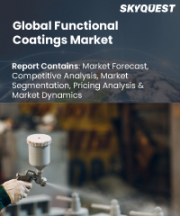
기능성 코팅 시장 규모, 점유율, 성장 분석 : 제품 유형별, 최종사용자별, 지역별 - 업계 예측(2026-2033년)Functional Coatings Market Size, Share, and Growth Analysis, By Product Type (Corrosion-resistant coatings, wear-resistant coatings), By End-User (Automotive, Aerospace), By Region - Industry Forecast 2026-2033 |
||||||

기능성 코팅 시장 규모는 2024년에 5억 3,000만 달러로 평가되었고, 2025년 5억 6,000만 달러에서 2033년까지 8억 2,000만 달러로 성장할 전망이며, 예측 기간(2026-2033년) CAGR은 5%를 보일 것으로 예측됩니다.
기능성 코팅 시장은 자동차, 항공우주, 건설, 전자, 해양 등 여러 산업 분야 수요 급증에 힘입어 견조한 성장세를 보이고 있습니다. 이러한 특수 코팅은 기판의 성능 향상을 목적으로 설계되어 내식성, 내마모성, 열관리, 방오성 등의 장점을 가지고 있습니다. 조성은 폴리머, 세라믹, 금속, 나노입자 등을 이용하여 스프레이에서 전기도금까지 용도에 따른 시공방법에 따라 다양한 구성으로 맞춤형 성능 요구에 대응하고 있습니다. 기술의 발전에 따라 스마트 코팅, 나노 코팅, 자가복구 기능 등 뛰어난 기능성을 제공하는 혁신적인 기술이 등장하고 있습니다. 경량 소재로의 전환은 내구성과 보호성을 보장하는 코팅의 필요성을 높이고 있습니다. 또한, 규제 압력은 환경 친화적 인 코팅의 개발을 촉진하고 시장은 더 안전하고 지속 가능한 솔루션으로 향하고 있습니다.
기능성 코팅 시장 활성화 요인
다양한 산업 분야에서 알루미늄, 복합재, 플라스틱 등 경량화 소재의 채용 확대 추세가 기능성 코팅 시장을 크게 견인하고 있습니다. 이러한 경량 소재는 자동차, 항공우주, 건설, 전자기기 등의 분야에서 연비 향상과 배기가스 저감 등의 장점으로 인해 수요가 증가하고 있습니다. 그러나 강재와 같은 기존 소재에 비해 손상이나 부식에 취약한 경우가 많습니다. 예를 들어, 알루미늄은 가볍고 강하지만 특정 환경에서는 부식될 수 있습니다. 마찬가지로, 복합재료는 충격에 의한 손상에 취약하고, 플라스틱은 자외선이나 화학물질에 의해 열화될 수 있습니다. 기능성 코팅은 내식성 부여, 내구성 향상, 성능 강화를 통해 이러한 경량 소재를 보호하는 데 중요한 역할을 하며, 산업계가 첨단 소재의 장점을 최대한 활용할 수 있도록 합니다.
기능성 코팅 시장 성장 억제요인
기능성 코팅 시장은 주로 원자재 가격의 변동성으로 인해 심각한 제약에 직면해 있습니다. 원자재 가격은 최종 제품의 품질과 특성을 결정하는 데 필수적이며, 가격 변동은 생산 비용에 큰 영향을 미칩니다. 이로 인해 제조업체는 수익성 유지와 소비자를 위한 안정적인 가격 책정에 어려움을 겪고 있습니다. 결과적으로 생산자가 필요한 물량을 경쟁력 있는 가격으로 조달하는 것이 어려워져 공급망에 혼란을 초래하고, 생산 지연과 고객 만족도 저하를 초래할 수 있습니다. 경쟁 구도에서는 구매자를 유치하기 위해 가격을 낮춰야 하는 상황이 더욱 악화되어 수익성을 해치는 가격 경쟁을 초래할 수 있습니다. 또한, 재료의 가용성 변화로 인해 대체 공급원을 사용해야 할 수도 있으며, 이는 제품 품질 저하 및 고객 충성도 감소를 초래할 수 있습니다. 한편, 재료의 혁신은 전통적인 공급망을 혼란에 빠뜨리고 시장 내 수요 동향에 영향을 미칠 수 있습니다.
기능성 코팅 시장 동향
기능성 코팅 시장에서는 나노기술의 발전을 배경으로 고성능 솔루션으로의 전환이 눈에 띄게 진행되고 있습니다. 이러한 추세는 나노 입자를 활용하여 내구성, 내스크래치성, 내식성을 향상시키는 나노 코팅의 개발을 촉진하고 있으며, 자동차, 항공우주 등 까다로운 분야에서 점점 더 많이 채택되고 있습니다. 이 혁신적인 코팅은 기계적 강도뿐만 아니라 자체 세척 및 항균성을 갖추고 있어 의료 및 식품 산업의 엄격한 위생 기준을 충족합니다. 또한, 나노 코팅의 우수한 표면 밀착력은 효과를 높이는 동시에 재료 사용량 감소로 지속가능성 확보에 기여하고 있으며, 이 모든 것이 나노 기술을 기능성 코팅 시장 성장의 주요 원동력으로 자리매김하고 있습니다.
자주 묻는 질문
목차
서론
- 조사 목적
- 조사 범위
- 정의
조사 방법
- 정보 조달
- 2차와 1차 데이터 방법
- 시장 규모 예측
- 시장 전제조건과 제한
주요 요약
- 세계 시장 전망
- 공급과 수요 동향 분석
- 부문별 기회 분석
시장 역학과 전망
- 시장 규모
- 시장 역학
- 성장 촉진요인과 기회
- 성장 억제요인과 과제
- Porter의 Five Forces 분석
주요 시장 인사이트
- 중요 성공 요인
- 경쟁 정도
- 주요 투자 기회
- 시장 생태계
- 시장의 매력 지수(2025년)
- PESTEL 분석
- 거시경제 지표
- 밸류체인 분석
- 가격 분석
- 원재료 분석
세계의 기능성 코팅 시장 규모 : 제품 유형별&CAGR(2026년-2033년)
- 내식성 코팅
- 내마모성 코팅
- 열차폐(TBC) 코팅
- 방오 코팅
- 셀프 클리닝 코팅
- 기타
세계의 기능성 코팅 시장 규모 : 최종사용자별&CAGR(2026년-2033년)
- 자동차
- 항공우주
- 건설
- 전자기기
- 선박
- 기타
세계의 기능성 코팅 시장 규모&CAGR(2026년-2033년)
- 북미
- 미국
- 캐나다
- 유럽
- 독일
- 스페인
- 프랑스
- 영국
- 이탈리아
- 기타 유럽
- 아시아태평양
- 중국
- 인도
- 일본
- 한국
- 기타 아시아태평양
- 라틴아메리카
- 브라질
- 기타 라틴아메리카
- 중동 및 아프리카
- GCC 국가
- 남아프리카공화국
- 기타 중동 및 아프리카
경쟁 정보
- 주요 5개사 비교
- 주요 기업의 시장 포지셔닝(2025년)
- 주요 시장 기업이 채택한 전략
- 최근 시장 동향
- 기업의 시장 점유율 분석(2025년)
- 주요 기업 개요
- 기업 상세
- 제품 포트폴리오 분석
- 기업 부문별 점유율 분석
- 매출 전년대비 비교(2023년-2025년)
주요 기업 개요
- Sherwin-Williams(USA)
- PPG Industries(USA)
- AkzoNobel(Netherlands)
- Nippon Paint Holdings(Japan)
- RPM International(USA)
- Axalta Coating Systems(USA)
- BASF SE(Germany)
- Asian Paints(India)
- Kansai Paint(Japan)
- Masco Corporation(USA)
- Jotun A/S(Norway)
- Hempel A/S(Denmark)
- Benjamin Moore & Co.(USA)
- SKSHU Paint Co., Ltd.(China)
- Berger Paints India(India)
- DAW SE(Germany)
- KCC Corporation(South Korea)
- ICP Group(USA)
- Chugoku Marine Paints, Ltd.(Japan)
- Maydos Paint(China)
결론과 제안
LSH 26.01.27Functional Coatings Market size was valued at USD 0.53 Billion in 2024 and is poised to grow from USD 0.56 Billion in 2025 to USD 0.82 Billion by 2033, growing at a CAGR of 5% during the forecast period (2026-2033).
The functional coatings market is witnessing robust growth, driven by burgeoning demand across multiple industries, including automotive, aerospace, construction, electronics, and marine. These specialized coatings are designed to enhance substrate performance and include benefits such as corrosion and wear resistance, thermal management, and anti-fouling properties. Compositionally diverse, they utilize polymers, ceramics, metals, and nanoparticles, with application methods ranging from spraying to electroplating to meet tailored performance needs. As technologies advance, innovations like smart coatings, nanocoatings, and self-healing options are emerging to provide superior functionality. The shift toward lightweight materials boosts the necessity for coatings that ensure durability and protection. Furthermore, regulatory pressures are fostering the development of eco-friendly coatings, steering the market towards safer, more sustainable solutions.
Top-down and bottom-up approaches were used to estimate and validate the size of the Functional Coatings market and to estimate the size of various other dependent submarkets. The research methodology used to estimate the market size includes the following details: The key players in the market were identified through secondary research, and their market shares in the respective regions were determined through primary and secondary research. This entire procedure includes the study of the annual and financial reports of the top market players and extensive interviews for key insights from industry leaders such as CEOs, VPs, directors, and marketing executives. All percentage shares split, and breakdowns were determined using secondary sources and verified through Primary sources. All possible parameters that affect the markets covered in this research study have been accounted for, viewed in extensive detail, verified through primary research, and analyzed to get the final quantitative and qualitative data.
Functional Coatings Market Segments Analysis
Global Functional Coatings Market is segmented by Product Type, End-User and region. Based on Product Type, the market is segmented into Corrosion-resistant coatings, wear-resistant coatings, thermal barrier coatings, anti-fouling coatings, self-cleaning coatings and others. Based on End-User, the market is segmented into Automotive, Aerospace, Construction, Electronics, Marine and others. Based on region, the market is segmented into North America, Europe, Asia Pacific, Latin America and Middle East & Africa.
Driver of the Functional Coatings Market
The growing trend towards the adoption of lightweight materials such as aluminum, composites, and plastics across diverse industries is significantly propelling the functional coatings market. These lightweight materials are sought after in sectors like automotive, aerospace, construction, and electronics due to their benefits, including enhanced fuel efficiency and lower emissions. However, they are often more vulnerable to damage and corrosion compared to traditional materials like steel. For instance, while aluminum is both lightweight and strong, it can corrode in specific environments. Similarly, composites may be prone to impact damage, and plastics can deteriorate from UV exposure and chemicals. Functional coatings play a crucial role in safeguarding these lightweight materials by providing corrosion resistance, improving durability, and enhancing performance, thereby allowing industries to maximize the benefits of these advanced materials.
Restraints in the Functional Coatings Market
The functional coatings market faces significant restraints primarily due to the volatility of raw material prices, which are essential for determining the quality and characteristics of the final products. These price fluctuations can significantly affect production costs, posing challenges for manufacturers in maintaining profitability and stable pricing for consumers. Consequently, such instability may lead to supply chain disruptions, as producers struggle to source materials in required quantities and at competitive prices, resulting in delayed production and compromised customer satisfaction. In a competitive landscape, the need to lower prices to attract buyers can further exacerbate this situation, potentially leading to price wars that undermine profitability. Additionally, shifts in material availability may necessitate the use of alternative sources, which can degrade product quality and diminish customer loyalty, while innovations in materials could disrupt traditional supply chains and impact demand dynamics within the market.
Market Trends of the Functional Coatings Market
The functional coatings market is experiencing a notable shift towards high-performance solutions driven by advancements in nanotechnology. This trend emphasizes the development of nanocoatings, which leverage nanoparticles to enhance durability, resistance to scratches, and protection against corrosion, making them increasingly favored in demanding sectors such as automotive and aerospace. Beyond mechanical resilience, these innovative coatings offer self-cleaning and antimicrobial properties, catering to stringent hygiene standards in healthcare and food industries. Additionally, the superior adhesion of nanocoatings to various surfaces enhances their effectiveness, while the reduced material usage contributes to sustainability efforts, all of which position nanotechnology as a key driver of growth in the functional coatings market.
Table of Contents
Introduction
- Objectives of the Study
- Scope of the Report
- Definitions
Research Methodology
- Information Procurement
- Secondary & Primary Data Methods
- Market Size Estimation
- Market Assumptions & Limitations
Executive Summary
- Global Market Outlook
- Supply & Demand Trend Analysis
- Segmental Opportunity Analysis
Market Dynamics & Outlook
- Market Overview
- Market Size
- Market Dynamics
- Drivers & Opportunities
- Restraints & Challenges
- Porters Analysis
- Competitive rivalry
- Threat of substitute
- Bargaining power of buyers
- Threat of new entrants
- Bargaining power of suppliers
Key Market Insights
- Key Success Factors
- Degree of Competition
- Top Investment Pockets
- Market Ecosystem
- Market Attractiveness Index, 2025
- PESTEL Analysis
- Macro-Economic Indicators
- Value Chain Analysis
- Pricing Analysis
- Raw Material Analysis
Global Functional Coatings Market Size by Product Type & CAGR (2026-2033)
- Market Overview
- Corrosion-resistant coatings
- Wear-resistant Coatings
- Thermal Barrier Coatings
- Anti-fouling Coatings
- Self-cleaning Coatings
- Others
Global Functional Coatings Market Size by End-User & CAGR (2026-2033)
- Market Overview
- Automotive
- Aerospace
- Construction
- Electronics
- Marine
- Others
Global Functional Coatings Market Size & CAGR (2026-2033)
- North America (Product Type, End-User)
- US
- Canada
- Europe (Product Type, End-User)
- Germany
- Spain
- France
- UK
- Italy
- Rest of Europe
- Asia Pacific (Product Type, End-User)
- China
- India
- Japan
- South Korea
- Rest of Asia-Pacific
- Latin America (Product Type, End-User)
- Brazil
- Rest of Latin America
- Middle East & Africa (Product Type, End-User)
- GCC Countries
- South Africa
- Rest of Middle East & Africa
Competitive Intelligence
- Top 5 Player Comparison
- Market Positioning of Key Players, 2025
- Strategies Adopted by Key Market Players
- Recent Developments in the Market
- Company Market Share Analysis, 2025
- Company Profiles of All Key Players
- Company Details
- Product Portfolio Analysis
- Company's Segmental Share Analysis
- Revenue Y-O-Y Comparison (2023-2025)
Key Company Profiles
- Sherwin-Williams (USA)
- Company Overview
- Business Segment Overview
- Financial Updates
- Key Developments
- PPG Industries (USA)
- Company Overview
- Business Segment Overview
- Financial Updates
- Key Developments
- AkzoNobel (Netherlands)
- Company Overview
- Business Segment Overview
- Financial Updates
- Key Developments
- Nippon Paint Holdings (Japan)
- Company Overview
- Business Segment Overview
- Financial Updates
- Key Developments
- RPM International (USA)
- Company Overview
- Business Segment Overview
- Financial Updates
- Key Developments
- Axalta Coating Systems (USA)
- Company Overview
- Business Segment Overview
- Financial Updates
- Key Developments
- BASF SE (Germany)
- Company Overview
- Business Segment Overview
- Financial Updates
- Key Developments
- Asian Paints (India)
- Company Overview
- Business Segment Overview
- Financial Updates
- Key Developments
- Kansai Paint (Japan)
- Company Overview
- Business Segment Overview
- Financial Updates
- Key Developments
- Masco Corporation (USA)
- Company Overview
- Business Segment Overview
- Financial Updates
- Key Developments
- Jotun A/S (Norway)
- Company Overview
- Business Segment Overview
- Financial Updates
- Key Developments
- Hempel A/S (Denmark)
- Company Overview
- Business Segment Overview
- Financial Updates
- Key Developments
- Benjamin Moore & Co. (USA)
- Company Overview
- Business Segment Overview
- Financial Updates
- Key Developments
- SKSHU Paint Co., Ltd. (China)
- Company Overview
- Business Segment Overview
- Financial Updates
- Key Developments
- Berger Paints India (India)
- Company Overview
- Business Segment Overview
- Financial Updates
- Key Developments
- DAW SE (Germany)
- Company Overview
- Business Segment Overview
- Financial Updates
- Key Developments
- KCC Corporation (South Korea)
- Company Overview
- Business Segment Overview
- Financial Updates
- Key Developments
- ICP Group (USA)
- Company Overview
- Business Segment Overview
- Financial Updates
- Key Developments
- Chugoku Marine Paints, Ltd. (Japan)
- Company Overview
- Business Segment Overview
- Financial Updates
- Key Developments
- Maydos Paint (China)
- Company Overview
- Business Segment Overview
- Financial Updates
- Key Developments