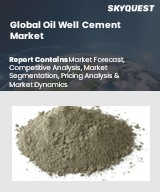
|
시장보고서
상품코드
1902684
유정 시멘트 시장 규모, 점유율, 성장 분석 : 제품별, 유형별, 용도별, 지역별 - 업계 예측(2026-2033년)Oil Well Cement Market Size, Share, and Growth Analysis, By Product (Class A, Class G), By Type (High Sulfate Resistant, Moderate Sulfate Resistant), By Application, By Region - Industry Forecast 2026-2033 |
||||||

세계의 유정 시멘트 시장 규모는 2024년에 19억 4,000만 달러로 평가되며, 2025년 21억 달러에서 2033년까지 39억 7,000만 달러로 성장할 전망입니다. 예측 기간(2026-2033년)의 CAGR은 8.3%로 예측됩니다.
유정 시멘트 시장은 에너지 수요 증가와 이에 따른 석유 및 가스 인프라 투자를 배경으로 괄목할 만한 성장세를 보이고 있습니다. 이 특수 시멘트는 시추 작업에서 분출 사고 방지, 케이스 부식 방지 및 유층, 가스층, 수층의 효과적인 격리에 매우 중요한 역할을 합니다. 전 세계에서 진행 중인 해양 및 육상 탐사 활동 증가는 유정 시멘트에 대한 수요를 더욱 증가시킬 것으로 예측됩니다. 또한 뛰어난 절연 내력도 석유 및 가스 산업에서 이 제품의 매력을 높이는 요인으로 작용하고 있습니다. 석유 및 가스 운영 효율화에 대한 강한 집중도 유정 시멘트 수요에 긍정적인 영향을 미칠 것으로 예상되며, 시장 확대에 대한 유망한 궤도를 제시합니다.
세계 유정 시멘트 시장 성장 촉진요인
세계 인구의 지속적인 증가에 따라 에너지 수요가 크게 증가하고 있으며, 석유 및 가스 부문이 그 수요의 대부분을 담당하고 있습니다. 이에 따라 에너지 수요의 급격한 증가는 유정 시멘트 수요 증가를 촉진할 것으로 예측됩니다. 또한 석유 및 가스 인프라 강화가 지속적으로 강조되고 있는 점도 유정 시멘트 시장 확대에 긍정적인 영향을 미치고 있습니다. 에너지 수요 증가와 인프라 개발이라는 이중의 효과가 유정 시멘트 산업의 예상 성장을 지원하고 있으며, 전 세계에서 변화하는 에너지 환경 속에서 유리한 위치를 점하고 있습니다.
세계 유정 시멘트 시장 성장 억제요인
세계 유정 시멘트 시장은 제조 및 공급에 많은 자본 투자가 필요하므로 신규 진입 장벽으로 작용하는 등 몇 가지 제약에 직면해 있습니다. 또한 원자재 가격의 변동은 생산 비용을 더욱 증가시켜 시장 확대에 추가적인 장벽으로 작용하고 있습니다. 이러한 재정적 문제는 산업내 성장과 혁신을 저해하고 궁극적으로 유정 시멘트 제품의 전반적인 경쟁력과 가용성에 영향을 미칠 수 있습니다. 결과적으로 시장은 기존 기업과 신규 진출기업 모두에게 보다 역동적인 환경을 조성하기 위해 이러한 장벽을 극복해야 합니다.
세계 유정 시멘트 시장 동향
세계 유정 시멘트 시장은 육상 및 해양을 막론하고 석유 및 가스 탐사 활동의 강화로 인해 뚜렷한 상승세를 보이고 있습니다. 세계 에너지 수요 증가에 따라 각 업체들은 전략적으로 시추 작업을 확대하고 있으며, 신규 유정 설치 및 고갈된 유정의 폐기가 진행되고 있습니다. 이러한 탐사 활동의 급증은 유정의 건전성을 확보하고 누출을 방지하는 데 필수적인 요소인 유정 시멘트에 대한 수요 증가와 직결되어 있습니다. 에너지 인프라에 대한 투자 확대가 이 시장을 더욱 부추기고 있으며, 산업이 변화하는 에너지 수요에 적응하면서 견고한 성장 전망을 보이고 있습니다.
자주 묻는 질문
목차
서론
- 조사의 목적
- 조사 범위
- 정의
조사 방법
- 정보 조달
- 1차와 2차 데이터 방법
- 시장 규모 예측
- 시장 전제조건과 제한
개요
- 세계 시장 전망
- 공급과 수요 동향 분석
- 부문별 기회 분석
시장 역학과 전망
- 시장 규모
- 시장 역학
- 촉진요인과 기회
- 억제요인과 과제
- Porter의 산업 분석
주요 시장 인사이트
- 주요 성공 요인
- 경쟁의 정도
- 주요 투자 기회
- 시장 에코시스템
- 시장의 매력 지수(2025년)
- PESTEL 분석
- 거시경제 지표
- 밸류체인 분석
- 가격 분석
세계의 유정 시멘트 시장 규모 : 제품별 & CAGR(2026-2033년)
- 클래스 A
- 클래스 G
- 클래스 H
- 기타
세계의 유정 시멘트 시장 규모 : 유형별 & CAGR(2026-2033년)
- 고황산염 내성
- 중간 황산염 내성
세계의 유정 시멘트 시장 규모 : 용도별 & CAGR(2026-2033년)
- 오프쇼어
- 온쇼어
세계의 유정 시멘트 시장 규모 & CAGR(2026-2033년)
- 북미
- 미국
- 캐나다
- 유럽
- 독일
- 스페인
- 프랑스
- 영국
- 이탈리아
- 기타 유럽
- 아시아태평양
- 중국
- 인도
- 일본
- 한국
- 기타 아시아태평양
- 라틴아메리카
- 브라질
- 기타 라틴아메리카
- 중동 및 아프리카
- GCC
- 남아프리카공화국
- 기타 중동 및 아프리카
경쟁 정보
- 상위 5사의 비교
- 주요 기업의 시장 포지셔닝(2025년)
- 주요 시장 기업이 채택한 전략
- 최근 시장 동향
- 기업의 시장 점유율 분석(2025년)
- 주요 기업의 기업 개요
- 기업의 상세
- 제품 포트폴리오 분석
- 기업의 부문별 점유율 분석
- 매출의 전년대비 비교(2023-2025년)
주요 기업 개요
- LafargeHolcim Ltd.(스위스)
- CEMEX S.A.B. de C.V.(멕시코)
- HeidelbergCement AG(독일)
- China National Building Material Company Limited(CNBM)(중국)
- Anhui Conch Cement Company Limited(중국)
- Taiwan Cement Corporation(대만)
- UltraTech Cement Limited(인도)
- Votorantim Cimentos S.A.(브라질)
- CRH plc(아일랜드)
- Italcementi S.p.A.(이탈리아)
- Aditya Birla Group(Grasim Industries Limited)(인도)
- Dalmia Bharat Limited(인도)
- JSW Cement Limited(인도)
- Ambuja Cements Limited(인도)
- Shree Cement Limited(인도)
- Dangote Cement Plc(나이지리아)
- CIMPOR-Cimentos de Portugal, SGPS, S.A.(포르투갈)
- Holcim Philippines, Inc.(필리핀)
- Cementos Argos S.A.(Colombia)
- Saudi Cement Company(사우디아라비아)
결론과 제안
KSA 26.01.26Global Oil Well Cement Market size was valued at USD 1.94 Billion in 2024 and is poised to grow from USD 2.1 Billion in 2025 to USD 3.97 Billion by 2033, growing at a CAGR of 8.3% during the forecast period (2026-2033).
The market for oil well cement is witnessing significant growth driven by heightened energy demand and subsequent investments in oil and gas infrastructure. This specialized cement plays a critical role in preventing blowouts, protecting casings from corrosion, and effectively isolating oil, gas, and water zones in drilling operations. The ongoing increase in both offshore and onshore exploration activities globally is expected to further enhance the demand for oil well cement. Additionally, its exceptional dielectric strength contributes to its appeal within the oil and gas industry. A strong emphasis on increasing the efficiency of oil and gas operations is also poised to positively influence the demand for oil well cement, suggesting a promising trajectory for market expansion.
Top-down and bottom-up approaches were used to estimate and validate the size of the Global Oil Well Cement market and to estimate the size of various other dependent submarkets. The research methodology used to estimate the market size includes the following details: The key players in the market were identified through secondary research, and their market shares in the respective regions were determined through primary and secondary research. This entire procedure includes the study of the annual and financial reports of the top market players and extensive interviews for key insights from industry leaders such as CEOs, VPs, directors, and marketing executives. All percentage shares split, and breakdowns were determined using secondary sources and verified through Primary sources. All possible parameters that affect the markets covered in this research study have been accounted for, viewed in extensive detail, verified through primary research, and analyzed to get the final quantitative and qualitative data.
Global Oil Well Cement Market Segments Analysis
Global Oil Well Cement Market is segmented by Product, Type, Application and region. Based on Product, the market is segmented into Class A, Class G, Class H and Others. Based on Type, the market is segmented into High Sulfate Resistant and Moderate Sulfate Resistant. Based on Application, the market is segmented into Offshore and Onshore. Based on region, the market is segmented into North America, Europe, Asia Pacific, Latin America and Middle East & Africa.
Driver of the Global Oil Well Cement Market
The continuous growth of the global population has significantly heightened the demand for energy, with the oil and gas sector fulfilling a substantial portion of these energy requirements. As a result, this surge in energy needs is anticipated to boost the demand for oil well cement. Furthermore, the ongoing emphasis on enhancing oil and gas infrastructure contributes positively to the expansion of the oil well cement market. This dual impact of rising energy demands and infrastructure development underpins the projected growth of the oil well cement industry, positioning it favorably in the evolving energy landscape around the world.
Restraints in the Global Oil Well Cement Market
The Global Oil Well Cement market faces several constraints, primarily due to the high capital investment required for manufacturing and supplying oil well cement, which limits the ability of new companies to enter the market. Additionally, the volatility in raw material prices further elevates production costs, creating additional barriers to market expansion. These financial challenges can impede growth and innovation within the sector, ultimately affecting the overall competitiveness and accessibility of oil well cement products. As a result, the market must navigate these hurdles to foster a more dynamic environment for both established players and prospective entrants.
Market Trends of the Global Oil Well Cement Market
The Global Oil Well Cement market is witnessing a significant upward trend driven by an intensified focus on oil and gas exploration activities across both onshore and offshore sites. As energy demand continues to rise globally, companies are strategically increasing their drilling operations, leading to the establishment of new wells and the decommissioning of depleted ones. This surge in exploration efforts directly correlates with a heightened need for oil well cement, a critical component in securing well integrity and preventing leaks. The escalating investment in energy infrastructure further propels this market, indicating robust growth prospects as industries adapt to evolving energy demands.
Table of Contents
Introduction
- Objectives of the Study
- Scope of the Report
- Definitions
Research Methodology
- Information Procurement
- Secondary & Primary Data Methods
- Market Size Estimation
- Market Assumptions & Limitations
Executive Summary
- Global Market Outlook
- Supply & Demand Trend Analysis
- Segmental Opportunity Analysis
Market Dynamics & Outlook
- Market Overview
- Market Size
- Market Dynamics
- Drivers & Opportunities
- Restraints & Challenges
- Porters Analysis
- Competitive rivalry
- Threat of substitute
- Bargaining power of buyers
- Threat of new entrants
- Bargaining power of suppliers
Key Market Insights
- Key Success Factors
- Degree of Competition
- Top Investment Pockets
- Market Ecosystem
- Market Attractiveness Index, 2025
- PESTEL Analysis
- Macro-Economic Indicators
- Value Chain Analysis
- Pricing Analysis
Global Oil Well Cement Market Size by Product & CAGR (2026-2033)
- Market Overview
- Class A
- Class G
- Class H
- Others
Global Oil Well Cement Market Size by Type & CAGR (2026-2033)
- Market Overview
- High Sulfate Resistant
- Moderate Sulfate Resistant
Global Oil Well Cement Market Size by Application & CAGR (2026-2033)
- Market Overview
- Offshore
- Onshore
Global Oil Well Cement Market Size & CAGR (2026-2033)
- North America (Product, Type, Application)
- US
- Canada
- Europe (Product, Type, Application)
- Germany
- Spain
- France
- UK
- Italy
- Rest of Europe
- Asia Pacific (Product, Type, Application)
- China
- India
- Japan
- South Korea
- Rest of Asia-Pacific
- Latin America (Product, Type, Application)
- Brazil
- Rest of Latin America
- Middle East & Africa (Product, Type, Application)
- GCC Countries
- South Africa
- Rest of Middle East & Africa
Competitive Intelligence
- Top 5 Player Comparison
- Market Positioning of Key Players, 2025
- Strategies Adopted by Key Market Players
- Recent Developments in the Market
- Company Market Share Analysis, 2025
- Company Profiles of All Key Players
- Company Details
- Product Portfolio Analysis
- Company's Segmental Share Analysis
- Revenue Y-O-Y Comparison (2023-2025)
Key Company Profiles
- LafargeHolcim Ltd. (Switzerland)
- Company Overview
- Business Segment Overview
- Financial Updates
- Key Developments
- CEMEX S.A.B. de C.V. (Mexico)
- Company Overview
- Business Segment Overview
- Financial Updates
- Key Developments
- HeidelbergCement AG (Germany)
- Company Overview
- Business Segment Overview
- Financial Updates
- Key Developments
- China National Building Material Company Limited (CNBM) (China)
- Company Overview
- Business Segment Overview
- Financial Updates
- Key Developments
- Anhui Conch Cement Company Limited (China)
- Company Overview
- Business Segment Overview
- Financial Updates
- Key Developments
- Taiwan Cement Corporation (Taiwan)
- Company Overview
- Business Segment Overview
- Financial Updates
- Key Developments
- UltraTech Cement Limited (India)
- Company Overview
- Business Segment Overview
- Financial Updates
- Key Developments
- Votorantim Cimentos S.A. (Brazil)
- Company Overview
- Business Segment Overview
- Financial Updates
- Key Developments
- CRH plc (Ireland)
- Company Overview
- Business Segment Overview
- Financial Updates
- Key Developments
- Italcementi S.p.A. (Italy)
- Company Overview
- Business Segment Overview
- Financial Updates
- Key Developments
- Aditya Birla Group (Grasim Industries Limited) (India)
- Company Overview
- Business Segment Overview
- Financial Updates
- Key Developments
- Dalmia Bharat Limited (India)
- Company Overview
- Business Segment Overview
- Financial Updates
- Key Developments
- JSW Cement Limited (India)
- Company Overview
- Business Segment Overview
- Financial Updates
- Key Developments
- Ambuja Cements Limited (India)
- Company Overview
- Business Segment Overview
- Financial Updates
- Key Developments
- Shree Cement Limited (India)
- Company Overview
- Business Segment Overview
- Financial Updates
- Key Developments
- Dangote Cement Plc (Nigeria)
- Company Overview
- Business Segment Overview
- Financial Updates
- Key Developments
- CIMPOR - Cimentos de Portugal, SGPS, S.A. (Portugal)
- Company Overview
- Business Segment Overview
- Financial Updates
- Key Developments
- Holcim Philippines, Inc. (Philippines)
- Company Overview
- Business Segment Overview
- Financial Updates
- Key Developments
- Cementos Argos S.A. (Colombia)
- Company Overview
- Business Segment Overview
- Financial Updates
- Key Developments
- Saudi Cement Company (Saudi Arabia)
- Company Overview
- Business Segment Overview
- Financial Updates
- Key Developments


