|
시장보고서
상품코드
1902993
스마트 산소포화도측정기 시장 규모, 점유율, 성장 분석 : 제품별, 유형별, 기술별, 연령층별, 용도별, 최종 용도별, 지역별 - 업계 예측(2026-2033년)Smart Pulse Oximeters Market Size, Share, and Growth Analysis, By Product (Equipment, Sensors), By Type, By Technology, By Age Group, By Application, By End Use, By Region - Industry Forecast 2026-2033 |
||||||

스마트 산소포화도측정기 시장 규모는 2024년에 31억 3,000만 달러로 평가되었으며, 2025년 33억 1,000만 달러에서 2033년까지 52억 달러로 성장할 전망입니다. 예측 기간(2026-2033년) 동안 CAGR은 5.8%로 예측됩니다.
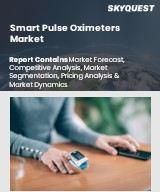
스마트 산소포화도측정기는 소형의 비침습적 장치로, 빛의 파장을 이용하여 혈중 산소포화도를 측정하고 맥박수를 평가합니다. 일반적으로 손가락, 발가락, 코 또는 귀에 부착할 수 있습니다. 주로 병원이나 응급실과 같은 집중 치료 환경에서 사용되며, 중증 호흡기질환을 앓고 있는 환자를 모니터링하는 데 필수적입니다. 이 시장은 호흡기질환의 유병률 증가와 장비의 효능을 높이는 기술 발전에 힘입어 괄목할 만한 성장세를 보이고 있습니다. 또한, 혁신적인 제품의 도입과 산소포화도측정기 사용을 지원하는 새로운 규정의 출현은 시장의 추가 확장을 촉진할 것으로 예상됩니다. 전반적으로, 건강에 대한 관심의 증가와 기술 발전이 결합되어 스마트 산소포화도측정기는 의료 모니터링 솔루션에서 중요한 도구로 자리 매김하고 있습니다.
스마트 산소포화도측정기 시장 촉진요인
스마트 산소포화도측정기 시장의 성장은 의료 기술의 지속적인 발전으로 기기의 기능이 향상되고 있기 때문입니다. 소형화, 무선 연결, 웨어러블 기기 및 스마트폰과의 연동 등의 혁신으로 스마트 맥박 산소 농도계의 기능이 크게 향상되었습니다. 이러한 발전은 장치의 실용성, 정확성, 사용 편의성 향상에 기여하고 있습니다. 또한, 첨단 센서 기술이 내장되어 있어 생체 신호를 보다 정밀하게 모니터링할 수 있기 때문에 의료진과 개인 모두에게 이러한 장치는 점점 더 필수 불가결한 요소가 되고 있습니다. 이러한 진화하는 상황이 수요를 견인하여 스마트 산소포화도측정기의 전체 시장을 확대시키고 있습니다.
스마트 산소포화도측정기 시장 억제요인
스마트 산소포화도측정기 시장은 기존 모델에 비해 높은 가격이라는 심각한 문제에 직면해 있습니다. 이는 주로 스마트폰 애플리케이션, 블루투스 연결, 고급 데이터 분석 기능 등 첨단 기능에 기인합니다. 이 높은 비용은 특히 의료 예산이 한정된 지역에서는 도입을 방해하는 요인이 될 수 있습니다. 많은 개발도상국에서는 낮은 인지도, 인프라 부족, 너무 높은 가격 등의 장벽으로 인해 이러한 첨단 장비에 대한 접근이 더욱 어려워지고 있습니다. 결과적으로, 이러한 시장에서 스마트 산소포화도측정기를 구하기 어렵기 때문에 환자가 최신 의료 기술을 이용할 수 있는 기회를 제한하고, 궁극적으로 전체 시장의 성장을 저해할 수 있습니다.
스마트 산소포화도측정기 시장 동향
스마트 산소포화도측정기 시장은 원격 건강 모니터링과 환자 관리에 대한 관심 증가를 배경으로 괄목할 만한 성장세를 보이고 있습니다. 호흡기질환과 만성질환에 대한 전 세계적인 인식이 높아지면서 실시간 데이터와 연결 기능을 제공하는 첨단적이고 사용하기 쉬운 기기에 대한 수요가 증가하고 있습니다. 모바일 애플리케이션 및 웨어러블 기술과의 연계를 통해 사용자가 건강 지표를 원활하게 추적할 수 있도록함으로써 그 매력을 더욱 높이고 있습니다. 또한, 재택의료 솔루션과 예방의료에 대한 선호도가 변화하면서 디자인 및 기능의 혁신을 주도하고 있습니다. 이러한 추세는 건강 모니터링의 정확성, 편의성, 접근성이 중심이 되는 진화하는 상황을 보여줍니다.
자주 묻는 질문
목차
소개
- 조사 목적
- 조사 범위
- 정의
조사 방법
- 정보 조달
- 2차와 1차 데이터 방법
- 시장 규모 예측
- 시장 가정과 제한
주요 요약
- 세계 시장 전망
- 공급과 수요 동향 분석
- 부문별 기회 분석
시장 역학과 전망
- 시장 규모
- 시장 역학
- 성장 촉진요인과 기회
- 성장 억제요인과 과제
- Porters 분석
주요 시장 인사이트
- 핵심성공요인
- 경쟁 정도
- 주요 투자 기회
- 시장 생태계
- 시장 매력 지수(2025년)
- PESTEL 분석
- 거시경제 지표
- 밸류체인 분석
- 가격 분석
- 기술적 진보
세계의 스마트 산소포화도측정기 시장 규모 : 제품별, CAGR(2026-2033년)
- 장비
- 센서
- 재사용 가능 센서
- 일회용 센서
세계의 스마트 산소포화도측정기 시장 규모 : 유형별, CAGR(2026-2033년)
- 휴대용 산소포화도측정기
- 손가락형 산소포화도측정기
- 핸드헬드 산소포화도측정기
- 웨어러블 산소포화도측정기
- 탁상/베드사이드 산소포화도측정기
세계의 스마트 산소포화도측정기 시장 규모 : 기술별, CAGR(2026-2033년)
- 기존 디바이스
- 커넥티드 디바이스
세계의 스마트 산소포화도측정기 시장 규모 : 연령층별, CAGR(2026-2033년)
- 성인
- 소아
- 신생아
- 유아/어린이
세계의 스마트 산소포화도측정기 시장 규모 : 용도별, CAGR(2026-2033년)
- 수면 진단
- 원격 환자 케어
- 장기간병
- 급성기 케어
- 호흡기
세계의 스마트 산소포화도측정기 시장 규모 : 최종 용도별, CAGR(2026-2033년)
- 병원
- 재택의료
- 외래 시설
- 기타
세계의 스마트 산소포화도측정기 시장 규모 : 지역별, CAGR(2026-2033년)
- 북미
- 미국
- 캐나다
- 유럽
- 독일
- 스페인
- 프랑스
- 영국
- 이탈리아
- 기타 유럽
- 아시아태평양
- 중국
- 인도
- 일본
- 한국
- 기타 아시아태평양
- 라틴아메리카
- 브라질
- 기타 라틴아메리카
- 중동 및 아프리카
- GCC 국가
- 남아프리카공화국
- 기타 중동 및 아프리카
경쟁 정보
- 상위 5개사의 비교
- 주요 기업의 시장 포지셔닝(2025년)
- 주요 시장 기업이 채용한 전략
- 최근의 시장 동향
- 기업의 시장 점유율 분석(2025년)
- 주요 기업 개요
- 기업 상세
- 제품 포트폴리오 분석
- 기업 부문별 점유율 분석
- 매출 전년비 비교(2021-2023년)
주요 기업 개요
- Masimo Corporation(United States)
- Medtronic plc(Ireland)
- Koninklijke Philips N.V.(Netherlands)
- Nihon Kohden Corporation(Japan)
- GE HealthCare(United States)
- Nonin Medical, Inc.(United States)
- Beurer GmbH(Germany)
- Omron Corporation(Japan)
- Dragerwerk AG & Co. KGaA(Germany)
- ICU Medical, Inc.(United States)
- Smiths Medical(ICU Medical Inc.)(United States)
- Welch Allyn Inc.(United States)
- Becton, Dickinson and Company(United States)
- Edwards Lifesciences Corporation(United States)
- Criticare Systems, Inc.(United States)
- Spacelabs Healthcare Inc.(United States)
- CAS Medical Systems, Inc.(United States)
- Vyaire Medical, Inc.(United States)
- CONTEC Medical Systems Co., Ltd.(China)
- Opto Circuits Limited(India)
결론과 제안
KSM 26.01.22Smart Pulse Oximeters Market size was valued at USD 3.13 Billion in 2024 and is poised to grow from USD 3.31 Billion in 2025 to USD 5.2 Billion by 2033, growing at a CAGR of 5.8% during the forecast period (2026-2033).
Smart pulse oximeters, compact and non-invasive devices, measure blood oxygen saturation by utilizing light wavelengths to assess pulse rates, typically attached to fingers, toes, noses, or ears. Predominantly employed in critical care settings like hospitals and emergency rooms, these devices are essential for monitoring patients with severe respiratory conditions. The market is experiencing notable growth driven by increasing prevalence of respiratory diseases, alongside advancements in technology that enhance device efficacy. Furthermore, the introduction of innovative products and emerging regulations supporting the use of pulse oximeters are expected to further propel market expansion. Overall, the combination of rising health concerns and technological progress positions smart pulse oximeters as a vital tool in healthcare monitoring solutions.
Top-down and bottom-up approaches were used to estimate and validate the size of the Smart Pulse Oximeters market and to estimate the size of various other dependent submarkets. The research methodology used to estimate the market size includes the following details: The key players in the market were identified through secondary research, and their market shares in the respective regions were determined through primary and secondary research. This entire procedure includes the study of the annual and financial reports of the top market players and extensive interviews for key insights from industry leaders such as CEOs, VPs, directors, and marketing executives. All percentage shares split, and breakdowns were determined using secondary sources and verified through Primary sources. All possible parameters that affect the markets covered in this research study have been accounted for, viewed in extensive detail, verified through primary research, and analyzed to get the final quantitative and qualitative data.
Smart Pulse Oximeters Market Segments Analysis
Global Smart Pulse Oximeters Market is segmented by product, type, technology, age group, application, end use and region. Based on product, the market is segmented into equipment and sensors. Based on type, the market is segmented into portable pulse oximeter and tabletop/bed side pulse oximeter. Based on technology, the market is segmented into conventional devices and connected devices. Based on age group, the market is segmented into adult and pediatric. Based on application, the market is segmented into sleep diagnostics, remote patient care, long term care, acute care and respiratory. Based on end use, the market is segmented into hospitals, home care, outpatient facilities and others. Based on region, the market is segmented into North America, Europe, Asia Pacific, Latin America and Middle East & Africa.
Driver of the Smart Pulse Oximeters Market
The growth of the smart pulse oximeters market can be attributed to continuous advancements in medical technology that enhance device functionality. Innovations such as miniaturization, wireless connectivity, and integration with wearable devices and smartphones are significantly enhancing the features of smart pulse oximeters. These advancements contribute to improved practicality, accuracy, and user-friendliness of the devices. Additionally, the incorporation of sophisticated sensor technologies is enabling more precise monitoring of vital signs, making these devices increasingly essential for both healthcare professionals and individuals. This evolving landscape is driving demand and expanding the overall market for smart pulse oximeters.
Restraints in the Smart Pulse Oximeters Market
The market for smart pulse oximeters faces significant challenges due to their higher price point compared to traditional models, largely attributed to advanced features such as smartphone applications, Bluetooth connectivity, and enhanced data analytics capabilities. This elevated cost can deter adoption, particularly in regions with constrained healthcare budgets. In many developing countries, barriers such as limited awareness, insufficient infrastructure, and prohibitive pricing further hinder access to these advanced devices. As a result, the lack of availability of smart pulse oximeters in these markets may restrict patients' access to modern medical technology, ultimately hindering overall market growth.
Market Trends of the Smart Pulse Oximeters Market
The Smart Pulse Oximeters market is witnessing significant growth, driven by an increasing focus on remote health monitoring and patient management. As global awareness of respiratory conditions and chronic diseases rises, there is a heightened demand for advanced, user-friendly devices that offer real-time data and connectivity features. Integration with mobile applications and wearable technologies enhances the appeal, allowing users to track their health metrics seamlessly. Furthermore, the shifting preference towards home healthcare solutions and preventive care is propelling innovations in design and functionality. This trend indicates an evolving landscape where accuracy, convenience, and accessibility in health monitoring take center stage.
Table of Contents
Introduction
- Objectives of the Study
- Scope of the Report
- Definitions
Research Methodology
- Information Procurement
- Secondary & Primary Data Methods
- Market Size Estimation
- Market Assumptions & Limitations
Executive Summary
- Global Market Outlook
- Supply & Demand Trend Analysis
- Segmental Opportunity Analysis
Market Dynamics & Outlook
- Market Overview
- Market Size
- Market Dynamics
- Drivers & Opportunities
- Restraints & Challenges
- Porters Analysis
- Competitive rivalry
- Threat of substitute
- Bargaining power of buyers
- Threat of new entrants
- Bargaining power of suppliers
Key Market Insights
- Key Success Factors
- Degree of Competition
- Top Investment Pockets
- Market Ecosystem
- Market Attractiveness Index, 2025
- PESTEL Analysis
- Macro-Economic Indicators
- Value Chain Analysis
- Pricing Analysis
- Technological Advancement
Global Smart Pulse Oximeters Market Size by Product & CAGR (2026-2033)
- Market Overview
- Equipment
- Sensors
- Reusable Sensors
- Disposable Sensors
Global Smart Pulse Oximeters Market Size by Type & CAGR (2026-2033)
- Market Overview
- Portable Pulse Oximeter
- Fingertip Pulse Oximeter
- Handheld Pulse Oximeter
- Wearable Pulse Oximeter
- Tabletop/Bed Side Pulse Oximeter
Global Smart Pulse Oximeters Market Size by Technology & CAGR (2026-2033)
- Market Overview
- Conventional Devices
- Connected Devices
Global Smart Pulse Oximeters Market Size by Age Group & CAGR (2026-2033)
- Market Overview
- Adult
- Pediatric
- Neonatal
- Infant/ Children
Global Smart Pulse Oximeters Market Size by Application & CAGR (2026-2033)
- Market Overview
- Sleep Diagnostics
- Remote Patient Care
- Long Term Care
- Acute Care
- Respiratory
Global Smart Pulse Oximeters Market Size by End Use & CAGR (2026-2033)
- Market Overview
- Hospitals
- Home Care
- Outpatient Facilities
- Others
Global Smart Pulse Oximeters Market Size & CAGR (2026-2033)
- North America (Product, Type, Technology, Age Group, Application, End Use)
- US
- Canada
- Europe (Product, Type, Technology, Age Group, Application, End Use)
- Germany
- Spain
- France
- UK
- Italy
- Rest of Europe
- Asia Pacific (Product, Type, Technology, Age Group, Application, End Use)
- China
- India
- Japan
- South Korea
- Rest of Asia-Pacific
- Latin America (Product, Type, Technology, Age Group, Application, End Use)
- Brazil
- Rest of Latin America
- Middle East & Africa (Product, Type, Technology, Age Group, Application, End Use)
- GCC Countries
- South Africa
- Rest of Middle East & Africa
Competitive Intelligence
- Top 5 Player Comparison
- Market Positioning of Key Players, 2025
- Strategies Adopted by Key Market Players
- Recent Developments in the Market
- Company Market Share Analysis, 2025
- Company Profiles of All Key Players
- Company Details
- Product Portfolio Analysis
- Company's Segmental Share Analysis
- Revenue Y-O-Y Comparison (2021-2023)
Key Company Profiles
- Masimo Corporation (United States)
- Company Overview
- Business Segment Overview
- Financial Updates
- Key Developments
- Medtronic plc (Ireland)
- Company Overview
- Business Segment Overview
- Financial Updates
- Key Developments
- Koninklijke Philips N.V. (Netherlands)
- Company Overview
- Business Segment Overview
- Financial Updates
- Key Developments
- Nihon Kohden Corporation (Japan)
- Company Overview
- Business Segment Overview
- Financial Updates
- Key Developments
- GE HealthCare (United States)
- Company Overview
- Business Segment Overview
- Financial Updates
- Key Developments
- Nonin Medical, Inc. (United States)
- Company Overview
- Business Segment Overview
- Financial Updates
- Key Developments
- Beurer GmbH (Germany)
- Company Overview
- Business Segment Overview
- Financial Updates
- Key Developments
- Omron Corporation (Japan)
- Company Overview
- Business Segment Overview
- Financial Updates
- Key Developments
- Dragerwerk AG & Co. KGaA (Germany)
- Company Overview
- Business Segment Overview
- Financial Updates
- Key Developments
- ICU Medical, Inc. (United States)
- Company Overview
- Business Segment Overview
- Financial Updates
- Key Developments
- Smiths Medical (ICU Medical Inc.) (United States)
- Company Overview
- Business Segment Overview
- Financial Updates
- Key Developments
- Welch Allyn Inc. (United States)
- Company Overview
- Business Segment Overview
- Financial Updates
- Key Developments
- Becton, Dickinson and Company (United States)
- Company Overview
- Business Segment Overview
- Financial Updates
- Key Developments
- Edwards Lifesciences Corporation (United States)
- Company Overview
- Business Segment Overview
- Financial Updates
- Key Developments
- Criticare Systems, Inc. (United States)
- Company Overview
- Business Segment Overview
- Financial Updates
- Key Developments
- Spacelabs Healthcare Inc. (United States)
- Company Overview
- Business Segment Overview
- Financial Updates
- Key Developments
- CAS Medical Systems, Inc. (United States)
- Company Overview
- Business Segment Overview
- Financial Updates
- Key Developments
- Vyaire Medical, Inc. (United States)
- Company Overview
- Business Segment Overview
- Financial Updates
- Key Developments
- CONTEC Medical Systems Co., Ltd. (China)
- Company Overview
- Business Segment Overview
- Financial Updates
- Key Developments
- Opto Circuits Limited (India)
- Company Overview
- Business Segment Overview
- Financial Updates
- Key Developments