|
시장보고서
상품코드
1915843
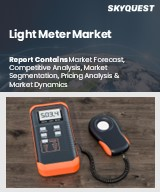
조도계 시장 규모, 점유율, 성장 분석 : 표시 방식별, 유형별, 룩스 범위별, 용도별, 지역별 - 업계 예측(2026-2033년)Light Meter Market Size, Share, and Growth Analysis, By Display (Digital, Analog), By Type (General-Purpose Light Meters, LED Light Meters), By Lux Range, By Application, By Region - Industry Forecast 2026-2033 |
||||||

세계의 조도계 시장 규모는 2024년에 4억 5,984만 달러로 평가되며, 2025년 5억 215만 달러에서 2033년까지 10억 1,534만 달러로 성장할 전망입니다. 예측 기간(2026-2033년)의 CAGR은 9.2%로 예측됩니다.
세계 조도계 시장은 정부의 장려책, 기술 혁신, 변화하는 소비자 취향에 힘입어 괄목할 만한 성장을 거듭하고 있습니다. 각국이 에너지 최적화와 도시 개발을 위해 스마트 조명 인프라에 투자하고 있는 가운데, 첨단 조도계는 스마트 시티 구상에 필수적인 요소로 자리 잡고 있습니다. 이 스마트 미터는 교통량, 자연광 조건 등의 요소를 실시간으로 분석하여 밝기를 동적으로 조정함으로써 안전과 에너지 효율을 향상시킵니다. 머신러닝, AI 등의 혁신 기술로 다양한 변수에 따른 실시간 적응형 조명이 가능해지면서 조명 환경의 측정 및 최적화 방식이 변화하고 있습니다. 또한 5G 기술의 도입으로 커넥티드 조도계의 기능이 강화되어 스마트그리드와의 연계가 향상되고 효율적인 원격 모니터링 솔루션의 실현이 촉진되고 있습니다.
세계 조도계 시장 성장 촉진요인
세계 조도계 시장은 IoT 지원 조도계 수요 증가, 특히 스마트 빌딩의 급속한 확장에 힘입어 괄목할 만한 성장을 보이고 있습니다. 이러한 커넥티드 조명 시스템은 조도계를 활용하여 점유 상황, 자연광의 양, 지정된 시간 일정 등의 요인에 따라 조정되는 적응형 조명 솔루션을 제공합니다. 이러한 경향은 현대의 상업시설과 주택 구조에서 특히 두드러집니다. 또한 스마트 시티 구상의 추진과 기업의 환경, 사회, 지배구조(ESG) 목표에 대한 관심이 높아지면서 데이터베이스 조명 솔루션은 아시아태평양, 북미, 유럽 등 전 세계에서 확산되고 있습니다.
세계 조도계 시장 성장 억제요인
첨단 AI 지원 및 IoT 통합형 조도계 도입에는 많은 초기 투자가 필요하며, 이는 세계 조도계 시장의 성장을 저해하는 요인으로 작용하고 있습니다. 이러한 최신 조도계는 무선 연결성, 실시간 데이터 분석, 스마트 조명 시스템과의 통합과 같은 첨단 기능을 자랑하지만, 이러한 기술적 진보에는 종종 많은 선행 비용이 수반됩니다. 이러한 재정적 부담은 한정된 예산으로 운영되는 지자체나 중소기업에게는 장벽이 될 수 있습니다. 또한 오래된 인프라와 건물을 업데이트할 때 발생하는 통합 비용과 필요한 시스템 업그레이드에 따른 추가 비용으로 인해 전반적인 재정적 어려움이 가중되어 시장의 광범위한 보급을 제한하고 있습니다.
세계 조도계 시장 동향
세계 조도계 시장은 특히 AI를 활용한 예측 분석 도입을 통해 첨단 기술과의 통합을 향한 큰 전환이 진행되고 있습니다. AI와 엣지 컴퓨팅 기능을 갖춘 새로운 조도계는 다양한 분야에서 조명을 관리하고 최적화하는 방식을 변화시키고 있습니다. 이 혁신적인 장치는 첨단 알고리즘을 사용하여 센서 데이터와 과거 조명 설정을 분석하여 이상적인 조명 배치 및 환경 변화에 대한 동적 조정에 대한 권장 사항을 제공합니다. 이러한 추세는 특히 라이브 방송, 가상 프로덕션, 스마트 리테일 디스플레이와 같은 용도에 유용하며, 매끄러운 조명 전환과 일관된 영상 품질을 제공합니다. 그 결과, 조명 관리의 자동화 및 지능형 솔루션으로의 광범위한 전환을 반영하여 스마트 조도계에 대한 수요가 증가할 것으로 예측됩니다.
자주 묻는 질문
목차
서론
- 조사의 목적
- 조사 범위
- 정의
조사 방법
- 정보 조달
- 2차와 1차 데이터 방법
- 시장 규모 예측
- 시장 전제조건과 제한
개요
- 세계 시장 전망
- 공급과 수요 동향 분석
- 부문별 기회 분석
시장 역학과 전망
- 시장 규모
- 시장 역학
- 촉진요인과 기회
- 억제요인과 과제
- Porter의 산업 분석
주요 시장 인사이트
- 주요 성공 요인
- 경쟁의 정도
- 주요 투자 기회
- 시장 에코시스템
- 시장의 매력 지수(2025년)
- PESTEL 분석
- 거시경제 지표
- 밸류체인 분석
- 가격 분석
- 사례 연구
- 고객 구매 행동 분석
세계의 조도계 시장 규모 : 표시 방식별, CAGR(2026-2033년)
- 디지털
- 아날로그
세계의 조도계 시장 규모 : 유형별, CAGR(2026-2033년)
- 범용 조도계
- LED 조도계
- 자외선 조도계
세계의 조도계 시장 규모 : 룩스 범위별, CAGR(2026-2033년)
- 0-200k 룩스
- 200k 룩스 초과
세계의 조도계 시장 규모 : 용도별, CAGR(2026-2033년)
- 사진·영상 촬영
- 상업 시설
- 제조 공장 및 창고
- 대학 캠퍼스 및 학교
- 진료소 및 병원
- 기타
세계의 조도계 시장 규모, CAGR(2026-2033년)
- 북미
- 미국
- 캐나다
- 유럽
- 독일
- 스페인
- 프랑스
- 영국
- 이탈리아
- 기타 유럽
- 아시아태평양
- 중국
- 인도
- 일본
- 한국
- 기타 아시아태평양
- 라틴아메리카
- 브라질
- 기타 라틴아메리카
- 중동 및 아프리카
- GCC 국가
- 남아프리카공화국
- 기타 중동 및 아프리카
경쟁 정보
- 상위 5사의 비교
- 주요 기업의 시장 포지셔닝(2025년)
- 주요 시장 기업이 채택한 전략
- 최근 시장 동향
- 기업의 시장 점유율 분석(2025년)
- 주요 기업의 기업 개요
- 기업의 상세
- 제품 포트폴리오 분석
- 기업의 부문별 점유율 분석
- 매출의 전년대비 비교(2023-2025년)
주요 기업 개요
- Konica Minolta Sensing Americas
- Sekonic
- Testo SE
- Hioki
- Amprobe(Danaher Corporation)
- Kern & Sohn
- B&K Precision
- Line Seiki
- PCE Deutschland
- Hanna Instruments
- Lutron Electronics
- Kyoritsu Electrical Instruments Works
- Martindale Electric Co Ltd
- TQC B.V.
- Kimo Instruments UK
- Center Technology
- Tenmars Electronics
- Shenzhen Sanpo Instrument
- Huato Electric
결론과 제안
KSA 26.02.19Global Light Meter Market size was valued at USD 459.84 Million in 2024 and is poised to grow from USD 502.15 Million in 2025 to USD 1015.34 Million by 2033, growing at a CAGR of 9.2% in the forecast period (2026-2033).
The global light meter market is experiencing significant growth fueled by government incentives, technological innovations, and evolving consumer preferences. As nations invest in smart lighting infrastructures for energy optimization and urban development, advanced light meters are becoming essential for smart city initiatives. These smart meters enhance safety and energy efficiency by dynamically adjusting brightness based on real-time analysis of factors like traffic flow and natural light conditions. Innovations such as machine learning and AI now enable real-time adaptive lighting tailored to various variables, transforming how lighting environments are measured and optimized. Furthermore, the deployment of 5G technology is enhancing the capabilities of connected light meters, allowing for improved smart grid interactions and facilitating efficient remote monitoring solutions.
Top-down and bottom-up approaches were used to estimate and validate the size of the Global Light Meter market and to estimate the size of various other dependent submarkets. The research methodology used to estimate the market size includes the following details: The key players in the market were identified through secondary research, and their market shares in the respective regions were determined through primary and secondary research. This entire procedure includes the study of the annual and financial reports of the top market players and extensive interviews for key insights from industry leaders such as CEOs, VPs, directors, and marketing executives. All percentage shares split, and breakdowns were determined using secondary sources and verified through Primary sources. All possible parameters that affect the markets covered in this research study have been accounted for, viewed in extensive detail, verified through primary research, and analyzed to get the final quantitative and qualitative data.
Global Light Meter Market Segments Analysis
The global light meter market is segmented into product, application, organization size, end user, and region. By product, the market is classified into general-purpose light meters, LED light meters, and UV light meters. Depending on organization size, it is bifurcated into large & medium enterprises and small enterprises. According to the application, the market is divided into industrial, commercial, and residential. As per end user, it is categorized into photography & cinematography, architectural lighting, healthcare & medical, agriculture, manufacturing, automotive, and research & laboratories. Regionally, it is analyzed across North America, Europe, Asia-Pacific, Latin America, and the Middle East & Africa.
Driver of the Global Light Meter Market
The Global Light Meter market is experiencing significant growth driven by the increasing demand for IoT-enabled light meters, particularly fueled by the rapid expansion of smart buildings. These connected lighting systems utilize light meters to offer adaptive lighting solutions that adjust according to factors such as occupancy, available natural light, and designated time schedules. This trend is especially pronounced in contemporary commercial and residential structures. Moreover, data-driven lighting solutions are gaining traction across regions like Asia-Pacific, North America, and Europe, owing to the push for smart city initiatives and the growing emphasis on corporate Environmental, Social, and Governance (ESG) objectives.
Restraints in the Global Light Meter Market
The substantial initial investment required for advanced AI-enabled and IoT-integrated light meters significantly hinders the growth of the global light meter market. These contemporary light meters boast sophisticated features such as wireless connectivity, real-time data analytics, and integration with smart lighting systems, yet this technological advancement often comes with considerable upfront costs. Such financial burdens may deter municipal entities and small to medium-sized businesses that operate on tight budgets. Furthermore, the additional expenses associated with integration fees and necessary system upgrades when updating older infrastructure or buildings further contribute to the overall financial challenge, limiting broader market adoption.
Market Trends of the Global Light Meter Market
The Global Light Meter market is experiencing a significant shift towards advanced technology integration, particularly through the adoption of AI-powered predictive analysis. Emerging light meters equipped with AI and edge computing capabilities are transforming the way lighting is managed and optimized across various sectors. These innovative devices utilize sophisticated algorithms to analyze sensor data and past lighting preferences, offering recommendations for ideal light placement and dynamic adjustments to environmental changes. This trend is particularly beneficial in applications like live broadcasting, virtual production, and smart retail displays, enabling seamless lighting transitions and consistent cinematographic quality. As a result, the demand for smart light meters is expected to grow, reflecting a broader move towards automation and intelligent solutions in lighting management.
Table of Contents
Introduction
- Objectives of the Study
- Scope of the Report
- Definitions
Research Methodology
- Information Procurement
- Secondary & Primary Data Methods
- Market Size Estimation
- Market Assumptions & Limitations
Executive Summary
- Global Market Outlook
- Supply & Demand Trend Analysis
- Segmental Opportunity Analysis
Market Dynamics & Outlook
- Market Overview
- Market Size
- Market Dynamics
- Drivers & Opportunities
- Restraints & Challenges
- Porters Analysis
- Competitive rivalry
- Threat of substitute
- Bargaining power of buyers
- Threat of new entrants
- Bargaining power of suppliers
Key Market Insights
- Key Success Factors
- Degree of Competition
- Top Investment Pockets
- Market Ecosystem
- Market Attractiveness Index, 2025
- PESTEL Analysis
- Macro-Economic Indicators
- Value Chain Analysis
- Pricing Analysis
- Case Studies
- Customer Buying Behavior Analysis
Global Light Meter Market Size by Display & CAGR (2026-2033)
- Market Overview
- Digital
- Analog
Global Light Meter Market Size by Type & CAGR (2026-2033)
- Market Overview
- General-Purpose Light Meters
- LED Light Meters
- UV Light Meters
Global Light Meter Market Size by Lux Range & CAGR (2026-2033)
- Market Overview
- 0-200k Lux
- Above 200k Lux
Global Light Meter Market Size by Application & CAGR (2026-2033)
- Market Overview
- Photography and Cinematography
- Commercial Spaces
- Manufacturing Plants and Warehouses
- University Campuses and Schools
- Clinics and Hospitals
- Others
Global Light Meter Market Size & CAGR (2026-2033)
- North America (Display, Type, Lux Range, Application)
- US
- Canada
- Europe (Display, Type, Lux Range, Application)
- Germany
- Spain
- France
- UK
- Italy
- Rest of Europe
- Asia Pacific (Display, Type, Lux Range, Application)
- China
- India
- Japan
- South Korea
- Rest of Asia-Pacific
- Latin America (Display, Type, Lux Range, Application)
- Brazil
- Rest of Latin America
- Middle East & Africa (Display, Type, Lux Range, Application)
- GCC Countries
- South Africa
- Rest of Middle East & Africa
Competitive Intelligence
- Top 5 Player Comparison
- Market Positioning of Key Players, 2025
- Strategies Adopted by Key Market Players
- Recent Developments in the Market
- Company Market Share Analysis, 2025
- Company Profiles of All Key Players
- Company Details
- Product Portfolio Analysis
- Company's Segmental Share Analysis
- Revenue Y-O-Y Comparison (2023-2025)
Key Company Profiles
- Konica Minolta Sensing Americas
- Company Overview
- Business Segment Overview
- Financial Updates
- Key Developments
- Sekonic
- Company Overview
- Business Segment Overview
- Financial Updates
- Key Developments
- Testo SE
- Company Overview
- Business Segment Overview
- Financial Updates
- Key Developments
- Hioki
- Company Overview
- Business Segment Overview
- Financial Updates
- Key Developments
- Amprobe (Danaher Corporation)
- Company Overview
- Business Segment Overview
- Financial Updates
- Key Developments
- Kern & Sohn
- Company Overview
- Business Segment Overview
- Financial Updates
- Key Developments
- B&K Precision
- Company Overview
- Business Segment Overview
- Financial Updates
- Key Developments
- Line Seiki
- Company Overview
- Business Segment Overview
- Financial Updates
- Key Developments
- PCE Deutschland
- Company Overview
- Business Segment Overview
- Financial Updates
- Key Developments
- Hanna Instruments
- Company Overview
- Business Segment Overview
- Financial Updates
- Key Developments
- Lutron Electronics
- Company Overview
- Business Segment Overview
- Financial Updates
- Key Developments
- Kyoritsu Electrical Instruments Works
- Company Overview
- Business Segment Overview
- Financial Updates
- Key Developments
- Martindale Electric Co Ltd
- Company Overview
- Business Segment Overview
- Financial Updates
- Key Developments
- TQC B.V.
- Company Overview
- Business Segment Overview
- Financial Updates
- Key Developments
- Kimo Instruments UK
- Company Overview
- Business Segment Overview
- Financial Updates
- Key Developments
- Center Technology
- Company Overview
- Business Segment Overview
- Financial Updates
- Key Developments
- Tenmars Electronics
- Company Overview
- Business Segment Overview
- Financial Updates
- Key Developments
- Shenzhen Sanpo Instrument
- Company Overview
- Business Segment Overview
- Financial Updates
- Key Developments
- Huato Electric
- Company Overview
- Business Segment Overview
- Financial Updates
- Key Developments