|
시장보고서
상품코드
1945684
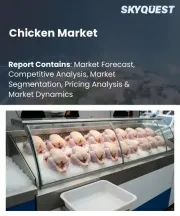
닭고기 시장 규모, 점유율, 성장 분석 : 닭고기 유형별, 제품 형태별, 판매채널별, 품질 등급별, 지역별 - 업계 예측(2026-2033년)Chicken Market Size, Share, and Growth Analysis, By Chicken Meat Type (Whole Chicken, Chicken Parts), By Product Form (Fresh Chicken, Frozen Chicken), By Sales Channel, By Quality Grade, By Region - Industry Forecast 2026-2033 |
||||||

세계의 닭고기 시장 규모는 2024년에 1,624억 달러로 평가되었고, 2025년 1,710억 달러에서 2033년까지 2,583억 달러로 성장할 전망입니다. 또한, 예측 기간(2026-2033년) CAGR은 5.3%를 나타낼 것으로 예측됩니다.
저렴한 단백질 공급원에 대한 수요가 증가함에 따라 세계 닭고기 시장은 견조한 성장세를 보이고 있습니다. 닭고기는 가성비가 뛰어나고 필수 영양소를 제공할 뿐만 아니라, 다양한 지역의 농가 소득 향상과 식량 안보 강화에 기여하고 있습니다. 브라질, 미국 등의 국가에서는 소규모 농가 사육에서 상업적 생산 시스템으로의 전환이 진행되어 비용 절감과 수출 역량 강화로 이어지고 있습니다. 유전학, 사료 효율, 콜드체인 물류의 발전은 시장 확대를 더욱 촉진하고 소매 유통을 강화하고 있습니다. 닭고기 산업의 통합 생산 방식은 업무 효율성을 향상시키고, 가공업체가 안정적인 공급과 품질을 확보할 수 있게 해줍니다. 또한, 간편식 시장에서 닭고기 제품에 대한 수요가 증가함에 따라 제조업체들은 혁신적인 제품 개발에 투자하고 있으며, 이는 이 분야의 역동적인 진화를 강조하고 있습니다.
닭고기 시장은 제품 유형, 절단 유형, 유통 경로, 최종 용도, 지역별로 구분됩니다. 제품 유형별로는 신선/냉장 닭고기, 냉동 닭고기, 가공 닭고기(즉석섭취형: RTE, 조리용: RTC), 통조림/보존식품으로 분류됩니다. 부위별로는 통닭, 다진 닭고기, 내장 등으로 구분됩니다. 유통 채널별로는 소매업과 외식업으로 나뉩니다. 최종 용도별로는 가정용, 상업용, 산업용으로 분류됩니다.
세계 닭고기 시장 성장 요인
저렴한 저지방 단백질에 대한 소비자 수요를 충족시키기 위해 생산자들이 사육 규모를 확대하고 공급망 운영을 개선한 결과, 세계 닭고기 시장은 괄목할 만한 성장세를 보이고 있습니다. 소매업체들도 다양한 단백질 공급원을 찾는 가정의 요구에 부응하기 위해 제품 라인업을 확장하고 진열 공간을 늘리고 있으며, 이는 생산 능력에 대한 추가 투자를 촉진하고 있습니다. 생산자와 유통업체의 이러한 협력은 시너지 효과를 창출하고, 생산 수준을 변화하는 소비 패턴에 맞게 조정하여 시장 확대를 촉진합니다. 그 결과, 이러한 역동적인 접근 방식은 제품 부족을 최소화하고 계절적, 지역적 수요 변동에 대한 시장의 대응력을 높이고 있습니다.
세계 닭고기 시장 성장 억제요인
세계 닭고기 시장은 사료 원료 가격과 공급량의 예측 불가능한 변동으로 인해 심각한 문제에 직면해 있습니다. 이러한 변동은 생산 비용을 크게 증가시켜 생산자의 수익률에 영향을 미치고, 확장 및 현대화에 대한 투자 의욕을 떨어뜨릴 수 있습니다. 중소규모 농장의 경우, 수익성을 위협하는 투입 비용의 상승에 직면했을 때, 생산 능력의 개선을 늦추는 선택을 하는 경우가 종종 있습니다. 반면, 대규모 생산자는 성장보다 비용 절감을 우선시할 수 있습니다. 또한, 사료 가격의 불확실성은 더 엄격한 신용 조건과 소비자 가격 상승으로 이어져 수요를 억제하고 궁극적으로 시장 성장을 저해하고 업계의 다양한 분야에 불안정성을 가져옵니다.
세계 닭고기 시장 동향
세계 닭고기 시장은 생산자와 소매업체들이 프리미엄급 부위, 조리된 제품, 브랜드 냉장 제품 등 변화하는 소비자 기호에 적응하면서 큰 전환기를 맞이하고 있습니다. 맛의 기원, 깨끗한 라벨, 편리한 포장에 대한 수요가 증가하면서 생산자, 가공업체, 소매업체가 협력하여 시장 점유율을 강화하고 고객 충성도를 향상시키고 있습니다. 주요 통합 기업들은 제품 혁신, 콜드체인 최적화, 맞춤형 구색 전략에 투자를 집중하고 있습니다. 반면, 소규모 틈새 생산자들은 장인적 포지셔닝을 통해 자사 제품의 차별화를 꾀하고 있습니다. 이러한 추세는 품질과 편의성에 대한 보다 광범위한 움직임을 보여주며, 닭고기 시장 경쟁 구도를 재정의하고 있습니다.
자주 묻는 질문
목차
서론
조사 방법
주요 요약
시장 역학과 전망
주요 시장 인사이트
세계의 닭고기 시장 규모 : 닭고기 유형별&CAGR(2026-2033)
세계의 닭고기 시장 규모 : 제품 형태별&CAGR(2026-2033)
세계의 닭고기 시장 규모 : 판매채널별&CAGR(2026-2033)
세계의 닭고기 시장 규모 : 품질 등급별&CAGR(2026-2033)
세계의 닭고기 시장 규모&CAGR(2026-2033)
경쟁 정보
주요 기업 개요
결론과 제안
LSH 26.03.10Global Chicken Market size was valued at USD 162.4 Billion in 2024 and is poised to grow from USD 171.0 Billion in 2025 to USD 258.3 Billion by 2033, growing at a CAGR of 5.3% during the forecast period (2026-2033).
The global chicken market is experiencing robust growth due to the rising demand for affordable protein sources. Chicken's cost-effectiveness not only provides essential nutrition but also bolsters farm incomes and enhances food security in diverse regions. The transition from smallholder flocks to commercial production systems, notably in countries like Brazil and the United States, has led to reduced costs and increased export capabilities. Advances in genetics, feed efficiency, and cold-chain logistics have further fueled market expansion and enhanced retail distribution. Integrated production methods within the chicken sector improve operational efficiency, enabling processors to ensure consistent supply and quality. Additionally, the convenience food market's growing appetite for chicken products encourages manufacturers to invest in innovative product development, highlighting the sector's dynamic evolution.
Top-down and bottom-up approaches were used to estimate and validate the size of the Global Chicken market and to estimate the size of various other dependent submarkets. The research methodology used to estimate the market size includes the following details: The key players in the market were identified through secondary research, and their market shares in the respective regions were determined through primary and secondary research. This entire procedure includes the study of the annual and financial reports of the top market players and extensive interviews for key insights from industry leaders such as CEOs, VPs, directors, and marketing executives. All percentage shares split, and breakdowns were determined using secondary sources and verified through Primary sources. All possible parameters that affect the markets covered in this research study have been accounted for, viewed in extensive detail, verified through primary research, and analyzed to get the final quantitative and qualitative data.
Global Chicken Market Segments Analysis
The chicken market is segmented into product type, cut type, distribution channel, end use, and region. By product type, the market is classified into fresh/chilled chicken,frozen chicken, processed chicken ready-to-eat (RTE), ready-to-cook (RTC), and canned/preserved. Depending on cut type, it is divided into whole chicken, minced/ground chicken, and offal. According to the distribution channel, the market is bifurcated into retail and food service. As per end use, it is categorized into household consumption, commercial, and industrial.
Driver of the Global Chicken Market
The global chicken market is experiencing significant growth as producers have expanded their flock sizes and improved supply chain operations in response to consumer demand for affordable lean protein. Retailers are also responding by broadening their product offerings and increasing shelf space to cater to households seeking diverse protein options, which drives further investment in production capacity. This collaborative effort between producers and distributors generates synergistic benefits that facilitate market expansion by aligning production levels with evolving consumption patterns. Consequently, this dynamic approach helps to minimize product shortages and enhances the market's ability to cope with seasonal and regional demand variations.
Restraints in the Global Chicken Market
The global chicken market faces significant challenges due to the unpredictable fluctuations in prices and availability of essential feed inputs. These variations can substantially increase production costs, thereby impacting the profit margins for producers and deterring them from pursuing investments in expansion or modernization. Smaller and medium-sized farms often choose to delay capacity improvements when faced with rising input costs that jeopardize their profitability. In contrast, larger producers may prioritize cost containment over growth. Additionally, the uncertainty surrounding feed prices can lead to stricter credit conditions and rising consumer prices, which dampen demand and ultimately hinder market growth, creating instability across various segments of the industry.
Market Trends of the Global Chicken Market
The global chicken market is experiencing a significant shift as producers and retailers adapt to evolving consumer preferences for premium quality cuts, ready-to-cook options, and branded chilled products. Increasing demand for taste provenance, clean labeling, and convenient packaging is prompting collaboration among farmers, processors, and retailers, fostering stronger market shares and enhanced customer loyalty. Major integrators are channeling investments into product innovation, cold chain optimization, and tailored assortment strategies, while smaller niche producers leverage artisanal positioning to differentiate their offerings. This trend indicates a broader movement toward quality and convenience, redefining the competitive landscape of the chicken market.
Table of Contents
Introduction
- Objectives of the Study
- Market Definition & Scope
Research Methodology
- Research Process
- Secondary & Primary Data Methods
- Market Size Estimation Methods
Executive Summary
- Global Market Outlook
- Key Market Highlights
- Segmental Overview
- Competition Overview
Market Dynamics & Outlook
- Macro-Economic Indicators
- Drivers & Opportunities
- Restraints & Challenges
- Supply Side Trends
- Demand Side Trends
- Porters Analysis & Impact
- Competitive Rivalry
- Threat of Substitute
- Bargaining Power of Buyers
- Threat of New Entrants
- Bargaining Power of Suppliers
Key Market Insights
- Key Success Factors
- Market Impacting Factors
- Top Investment Pockets
- Ecosystem Mapping
- Market Attractiveness Index, 2025
- PESTEL Analysis
- Value Chain Analysis
- Pricing Analysis
- Case Studies
- Regulatory Landscape
- Technology Assessment
- Customer & Buying Criteria Analysis
- Raw Material Analysis
Global Chicken Market Size by Chicken Meat Type & CAGR (2026-2033)
- Market Overview
- Whole Chicken
- Chicken Parts
- Breasts
- Thighs
- Others
- Processed Chicken
- Nuggets
- Tenders
- Others
Global Chicken Market Size by Product Form & CAGR (2026-2033)
- Market Overview
- Fresh Chicken
- Frozen Chicken
- Cooked Chicken
Global Chicken Market Size by Sales Channel & CAGR (2026-2033)
- Market Overview
- Retail
- Supermarkets
- Local Markets
- Food Service
- Restaurants
- Catering Services
Global Chicken Market Size by Quality Grade & CAGR (2026-2033)
- Market Overview
- Organic
- Conventional
- Free-range
Global Chicken Market Size & CAGR (2026-2033)
- North America (Chicken Meat Type, Product Form, Sales Channel, Quality Grade)
- US
- Canada
- Europe (Chicken Meat Type, Product Form, Sales Channel, Quality Grade)
- Germany
- Spain
- France
- UK
- Italy
- Rest of Europe
- Asia Pacific (Chicken Meat Type, Product Form, Sales Channel, Quality Grade)
- China
- India
- Japan
- South Korea
- Rest of Asia-Pacific
- Latin America (Chicken Meat Type, Product Form, Sales Channel, Quality Grade)
- Mexico
- Brazil
- Rest of Latin America
- Middle East & Africa (Chicken Meat Type, Product Form, Sales Channel, Quality Grade)
- GCC Countries
- South Africa
- Rest of Middle East & Africa
Competitive Intelligence
- Top 5 Player Comparison
- Market Positioning of Key Players, 2025
- Strategies Adopted by Key Market Players
- Recent Developments in the Market
- Company Market Share Analysis, 2025
- Company Profiles of All Key Players
- Company Details
- Product Portfolio Analysis
- Company's Segmental Share Analysis
- Revenue Y-O-Y Comparison (2023-2025)
Key Company Profiles
- Tyson Foods
- Company Overview
- Business Segment Overview
- Financial Updates
- Key Developments
- Pilgrim's Pride
- Company Overview
- Business Segment Overview
- Financial Updates
- Key Developments
- Sanderson Farms
- Company Overview
- Business Segment Overview
- Financial Updates
- Key Developments
- Perdue Farms
- Company Overview
- Business Segment Overview
- Financial Updates
- Key Developments
- Koch Foods
- Company Overview
- Business Segment Overview
- Financial Updates
- Key Developments
- Wayne Farms
- Company Overview
- Business Segment Overview
- Financial Updates
- Key Developments
- Mountaire Farms
- Company Overview
- Business Segment Overview
- Financial Updates
- Key Developments
- Foster Farms
- Company Overview
- Business Segment Overview
- Financial Updates
- Key Developments
- Fieldale Farms
- Company Overview
- Business Segment Overview
- Financial Updates
- Key Developments
- Simmons Foods
- Company Overview
- Business Segment Overview
- Financial Updates
- Key Developments
- Butterball LLC
- Company Overview
- Business Segment Overview
- Financial Updates
- Key Developments
- Claussa Farms
- Company Overview
- Business Segment Overview
- Financial Updates
- Key Developments
- Gold'n Plump
- Company Overview
- Business Segment Overview
- Financial Updates
- Key Developments
- Pilgrim's Pride Corporation
- Company Overview
- Business Segment Overview
- Financial Updates
- Key Developments
- Amick Farms
- Company Overview
- Business Segment Overview
- Financial Updates
- Key Developments
- Bell & Evans
- Company Overview
- Business Segment Overview
- Financial Updates
- Key Developments
- Murray's Chicken
- Company Overview
- Business Segment Overview
- Financial Updates
- Key Developments
- Smart Chicken
- Company Overview
- Business Segment Overview
- Financial Updates
- Key Developments
- Gogo's Crazy Bones
- Company Overview
- Business Segment Overview
- Financial Updates
- Key Developments
- Happy Hen Chicken
- Company Overview
- Business Segment Overview
- Financial Updates
- Key Developments